Z

8.1K posts

Z

Z

@zorian

PE | Investor | CEO | Board Director | #PE #PrivateEquity #Investing | Interests: family, fitness, friends, team sports, tennis, golf, travel, history, books.

USA Katılım Şubat 2009
5.8K Takip Edilen2.6K Takipçiler
Z retweetledi
Invest Like the Best
Invest Like the Best@InvestLikeBest·
The incredible daily routine of Paul Tudor Jones: 2:30 AM Wake up, work for 30 minutes 3:00–3:45 Watch the London open, analytical work 3:45 Back to sleep 6:15 Wake up, repeat 6:15 Wake up 6:15–7:00 Work 7:00–7:45 Workout, 45 minutes of hard cardio 8:00 At the screens for the market open 8:00–10:00 AM Screens, no meetings 10:00–12:00 Meetings 12:00 Lunch 1:00 Meeting 3:00–4:00 Hour before the close: map out the next day 4:00 Market close 4:00–5:00 Hour after the close: think about Tokyo and Hong Kong, map out tomorrow 5:00–6:00 PM Walk with wife 6:00–7:00 PM Work 7:00 Eat and watch the news 8:00–9:30 Netflix / mindless entertainment 9:30–10:15 Work 10:15 Bed 2:30 Wake up, repeat He's had the same routine for over 40 years.
Invest Like the Best tweet media
Patrick OShaughnessy@patrick_oshag

My guest today is Paul Tudor Jones (@ptj_official), one of the greatest macro traders of all time. He correctly predicted the 1987 stock market crash and shorted the Japanese bubble in 1990. For over 40 years, his flagship fund has had a negative correlation to the S&P 500. 100% of his returns are alpha. He says today's market has so many similarities to 2000, "the easiest bear market I've ever seen in my whole life." He makes the case for going long dollar-yen, why Bitcoin beats gold as an inflation hedge, and why he was wrong about Warren Buffett. But what I'll remember most from this conversation is Paul's zest for life. He's 71 and still wakes at 2:30 every morning to trade the London open. He works out for two hours a day. He walks with his wife every evening. He travels the country chasing peak spring and peak fall. He's so excited about the songs picked for his funeral that he wishes he could be there to hear them. Paul has lived five lifetimes in one. He's one of the most entertaining and interesting people I've met, and the conversation will leave you searching to be as passionate about what you do as he is about what he does. Enjoy! Timestamps: 0:00 Intro 1:00 The Kindest Thing 13:19 Trading vs. Investing 17:33 Lessons from Warren Buffet 22:24 The Existential Risks of AI 29:54 The Nature of Trading 31:46 Bitcoin 35:55 Bubbles 42:08 A Day in the Life of PTJ 46:00 Information Overload 47:07 Passion for Markets 50:49 The Robin Hood Foundation 54:18 The Workless World 56:03 Journalism 1:00:00 Principal Components of a Great Life 1:05:06 Kill Them With Kindness

English
39
100
1.2K
366.4K
Z retweetledi
Patrick OShaughnessy
Patrick OShaughnessy@patrick_oshag·
Paul Tudor Jones says the US is more dependent on equity prices than ever, and explains what a 35% correction would trigger in the economy: "We're 252% of stock market cap to GDP. In 1929 we were 65%. In 1987 we got to ~85-90%. In 2000, 170%. If you think about the periodicity of significant bear markets. Since 1970, we get a mean reversion about every 10 years. Let's say mean revert to the past 25 or 30-year PE. That would be a 30, 35% decline. Well, 35% on 250% of GDP is 80, 90% of GDP. 10% of our tax revenues are capital gains, they go to zero. So you can see the budget deficit blowing up. You can see the bond market getting smoked. You can see this kind of negative self-reinforcing effect. In the stock market, we're over-equitized as a country. We have the highest individual equity weightings in the history of the country. And then the real problem is if you look at private equity in 2007-2008, that was about 7% of institutional portfolios. Now it's about 16% of the institutional portfolios. We're so much more illiquid than we were in 2008. The problem is that if you buy the S&P at this current valuation, the 10-year forward return is negative when you buy the S&P with a PE of 22. That's what history shows. So yes, the S&P is spectacular long-term, if you have a hundred-year view. But that's because that's an average of a hundred years, including times when the S&P 500 PE was 6, 7 and 8, or one third of what it is right now. Valuation matters a lot, and the stock market's really high and it's gonna be really hard to make money from here with any kind of long-term view."
Patrick OShaughnessy@patrick_oshag

My guest today is Paul Tudor Jones (@ptj_official), one of the greatest macro traders of all time. He correctly predicted the 1987 stock market crash and shorted the Japanese bubble in 1990. For over 40 years, his flagship fund has had a negative correlation to the S&P 500. 100% of his returns are alpha. He says today's market has so many similarities to 2000, "the easiest bear market I've ever seen in my whole life." He makes the case for going long dollar-yen, why Bitcoin beats gold as an inflation hedge, and why he was wrong about Warren Buffett. But what I'll remember most from this conversation is Paul's zest for life. He's 71 and still wakes at 2:30 every morning to trade the London open. He works out for two hours a day. He walks with his wife every evening. He travels the country chasing peak spring and peak fall. He's so excited about the songs picked for his funeral that he wishes he could be there to hear them. Paul has lived five lifetimes in one. He's one of the most entertaining and interesting people I've met, and the conversation will leave you searching to be as passionate about what you do as he is about what he does. Enjoy! Timestamps: 0:00 Intro 1:00 The Kindest Thing 13:19 Trading vs. Investing 17:33 Lessons from Warren Buffet 22:24 The Existential Risks of AI 29:54 The Nature of Trading 31:46 Bitcoin 35:55 Bubbles 42:08 A Day in the Life of PTJ 46:00 Information Overload 47:07 Passion for Markets 50:49 The Robin Hood Foundation 54:18 The Workless World 56:03 Journalism 1:00:00 Principal Components of a Great Life 1:05:06 Kill Them With Kindness

English
292
1.4K
8.1K
2.4M
Z retweetledi
The Masters
The Masters@TheMasters·
Early afternoon at Augusta National. #themasters
The Masters tweet media
English
40
258
3.8K
204.8K
Z
Z@zorian·
ZXX
0
0
1
83
Z
Z@zorian·
Same for PE
Brett Caughran@FundamentEdge

AI won't kill fundamental investing because more information doesn't kill alpha. We have decades of priors here (Excel, Bloomberg, alt data...all democratized analysis & information gathering, and didn't kill alpha). As measured by factor volatility, stocks are less efficient and more alpha-rich than ever (and empirically, the ability of multi-eight figure market neutral multi-managers to consistently grind out 10-15% returns in an idio-maximized way proves this point...15 years ago a $10bn hedge fund was considered to be impossibly large). Innovations in investment process have shifted alpha pools, for sure, and systematic investors have arbitraged many old, reliable fundamental alpha pools. But as the players at the poker table have shifted, the constraints of those new players have created new alpha pools. Long duration fundamental investing has been gutted, and definitionally competing against a group of non-fundamental (quants, factor/thematic investors, indexers) and duration-constrained (multi's) investors should be a huge competitive advantage, long term (however frustrating in the near term). To wit, a 9-month thesis where I "look through" the next two prints is now considered a long-term thesis. Rigorous investment process serves investment judgment, but the real alpha generation fits a power-law distribution and there is some ineffable "nose for money" that the great investors have, that cannot be trained necessarily. Investing is a very hard game, that cannot be distilled to a reinforcement learning sandbox (by the time it is, the regime will have shifted and new drivers move stocks). AI has no sense of materiality, no true discernment, and the lack of context of N of 1 situations (if you haven't noticed, we are living in an N of 1 world!). There is a irreducible element of humanness that is critical to success in fundamental investing, and that won't change. What does this all mean? In my opinion, there is no better time to be starting a careers as an investor. My first year on the desk, I spent a lot of time doing grunt work: updating Nielsen files, updating models for my PM, creating same store sales master files, building question lists for CEO meetings, etc. This is grunt work. I can automate this all now, and get more quickly to the deep, value added parts of learning the investment process. Will AI drive alpha? This is a debate people are having, which I find sort of silly. When used correctly, by the right investor, of course it will. Ask any great investor if they had another 4 hours of research time per day whether the quality of their research would improve? That's kind of a dumb question...of course it will. Compressing the mechanical part of your job to focus more on the artisanal part of the job is Step 1, and with agentic systems accelerating fast is now in the strike zone of possibility. This is before we start to layer in a broader monitoring net and use cases to go deeper and build more rigor, finding signals in unstructured data that were missed before, as well as turning your investment genius into a co-pilot pattern recognition system. The future is very bright for fundamental investing, in my opinion.

English
0
0
1
228
Z retweetledi
Mohamed A. El-Erian
Mohamed A. El-Erian@elerianm·
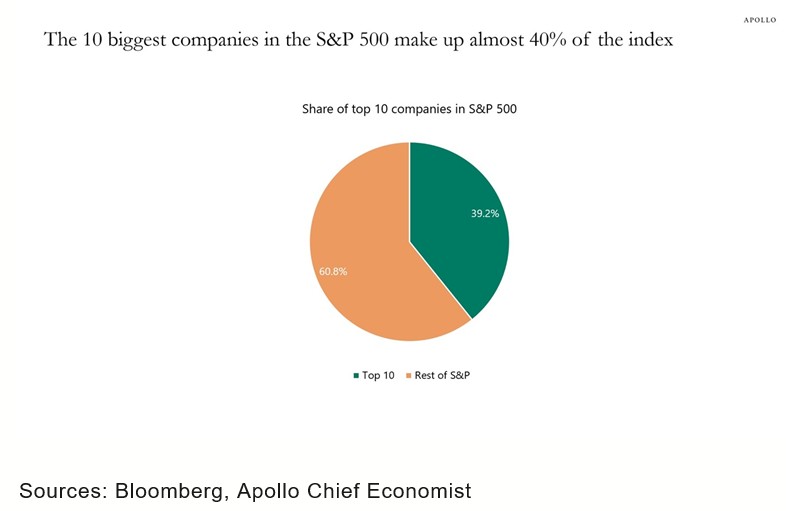
Apollo's Torsten Slok: "The 10 biggest companies in the S&P 500 make up almost 40% of the index, and if Anthropic, OpenAI and SpaceX are added later this year, the concentration could approach 50%, see chart below. The bottom line is that the S&P 500 basically doesn’t offer much diversification anymore." #economy #markets #investors #investing
Mohamed A. El-Erian tweet media
English
59
139
714
102.3K
Z retweetledi
Demis Hassabis
Demis Hassabis@demishassabis·
Ten years ago, AlphaGo’s legendary match in Seoul heralded the start of the modern era in AI. Its famous ‘Move 37’ signaled to us that AI techniques were ready to tackle real-world problems in areas like science - and ideas inspired by these methods are critical to building AGI
English
175
505
3.6K
715.3K
Z retweetledi
Curious Minds
Curious Minds@CuriousMindsHub·
1. The key to a happy life is quality relationships
Curious Minds tweet media
English
1
3
12
1.1K
Z retweetledi
LinksGems
LinksGems@LinksGems·
Today I was asked: what’s the best golf course in New England? As you guys know, I don’t like talking “best.” But I’ll give you my favorite: The Myopia Hunt Club, a half-hour north of Boston, is an ancient charmer by Herbert Leeds that hosted 4 early U.S. Opens in much the same form as it exists today. There are so many great clubs and courses in New England - Eastward Ho, Ekwanok, Essex County, Kittansett, Brookline, Newport, Old Sandwich, Boston Golf, Yale, Fairfield and many more brilliant gems come to mind - but if I had one round to play anywhere I want on a crisp September day, I’m making my way to Myopia.
LinksGems tweet mediaLinksGems tweet mediaLinksGems tweet mediaLinksGems tweet media
English
23
16
227
32.4K
Z retweetledi
Z retweetledi
Bartosz Naskręcki
Bartosz Naskręcki@nasqret·
It finally happened-my personal move 37 or more. I am deeply impressed. The solution is very nice, clean, and feels almost human. While testing new models in the last few weeks, I felt this coming, but it's an eerie feeling to see an algorithm solve a task one has curated for about 20 years. But at least I have gained a tool that understands my idea on par with the top experts in the field. And I am now working on a completely new level. My singularity has just happened… and there is life on the other side, off to infinity!
Epoch AI@EpochAIResearch

We ran GPT-5.4 (xhigh) an additional ten times on Tier 4 to get a pass@10 score. This was 38%. In one of these runs, it solved another problem no model had solved before. This problem was by @nasqret.

English
102
449
3.6K
1.1M
Z retweetledi
Gavin Baker
Gavin Baker@GavinSBaker·
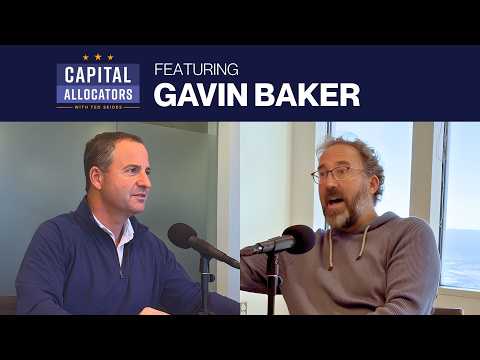
Fun to do this with my friend @tseides Minimal discussion of AI; much more of a focus on investing. Background, philosophy, process, etc. youtu.be/CFtlGhmAeM0?si…
YouTube video
YouTube
English
16
44
509
162.7K
Z
Z@zorian·
Unique talent makes a big difference.
Ian Cassel@iancassel

So good by @GavinSBaker In Michael Jordan’s second to last year with the Chicago Bulls, Jerry Krause, GM of the Bulls said, “Listen players don’t win championships, organizations do. It isn’t just Jordan or Pippen. It’s how we scout, draft, train, it’s our system." Well… after Michael Jordan left they never won another championship. The thing allocators struggle with is it feels safe and good to say there is a process and its repeatable. Yes, it is important to have a process that is repeatable that works for you, but any process that is repeatable that generates significant alpha will be quickly arbed away in a competitive world. So where does repeatable outperformance come from? I would submit that any investment organization no matter how big, there are somewhere between 2-10 people where if you took those people out, and that organization would have the exact same process, the results would be dramatically different. podcasts.apple.com/us/podcast/cap…

English
0
0
0
79
Z retweetledi
Greg Ip
Greg Ip@greg_ip·
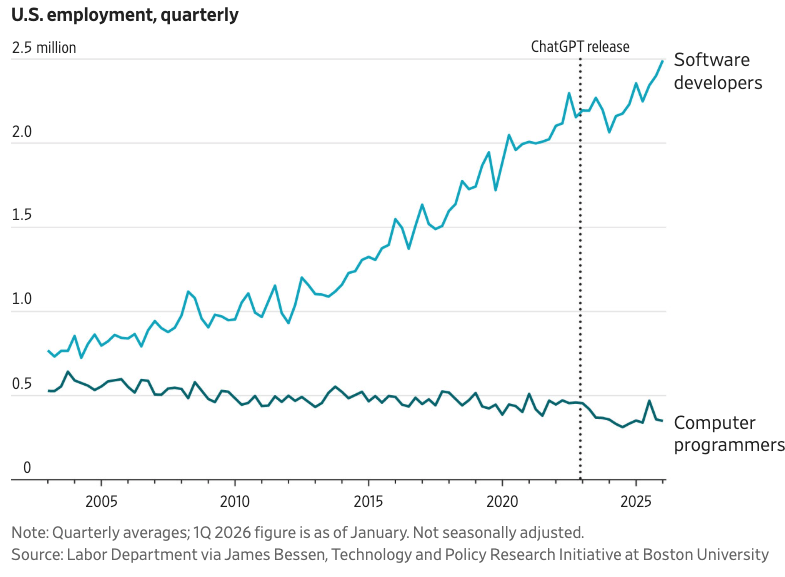
This column counters doomers who say AI could raise unemployment broadly. First, rarely has any technology directly destroyed more jobs than it creates, and I don't see it now. This chart (H/T @JamesBessen) surprised me: software employment still rising /1 wsj.com/economy/jobs/t…
Greg Ip tweet media
English
46
166
611
327.7K
Z
Z@zorian·
@cblatts This is great. Did you do this with Claude Cowork or Code?
English
0
0
0
79
Chris Blattman
Chris Blattman@cblatts·
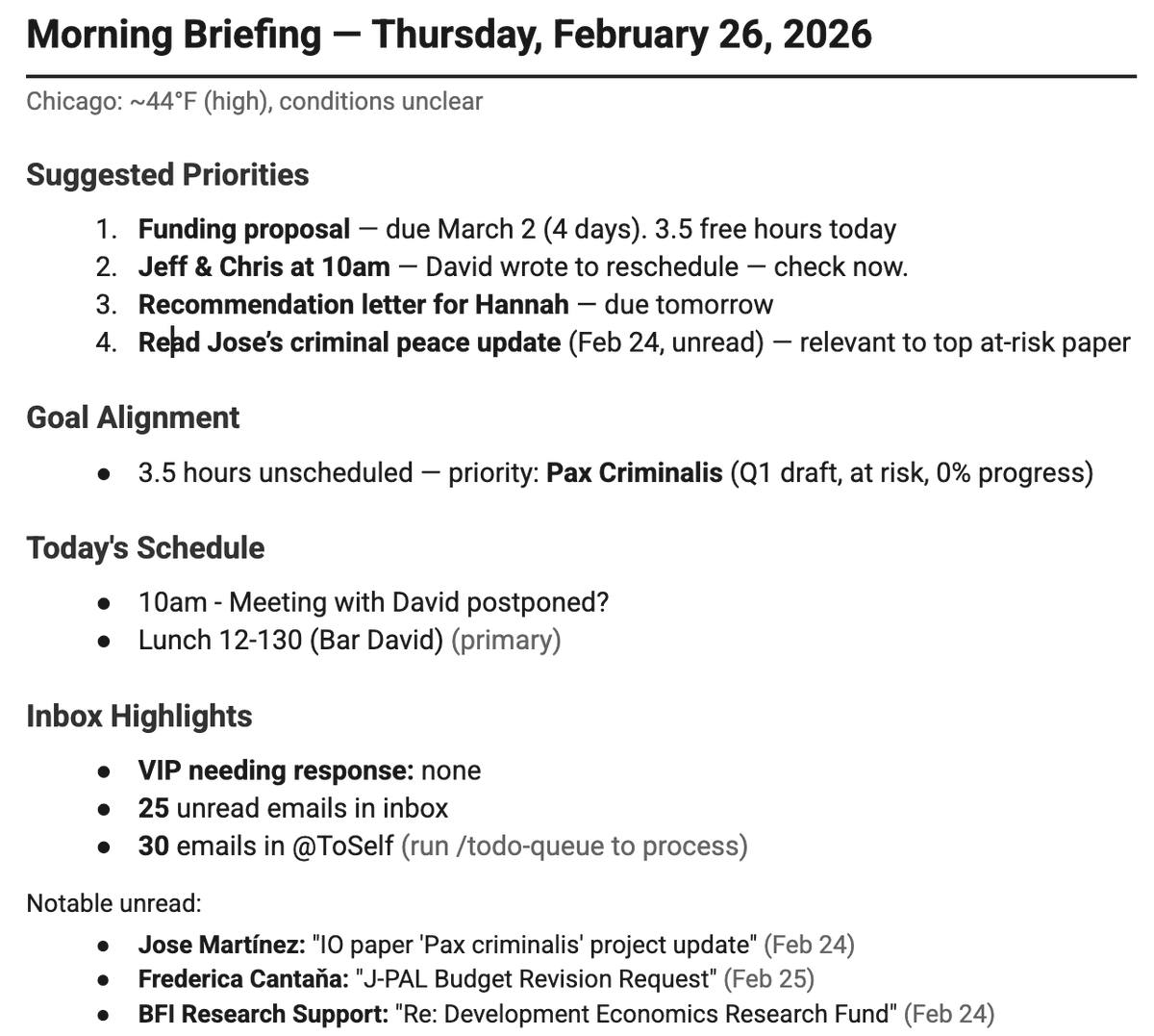
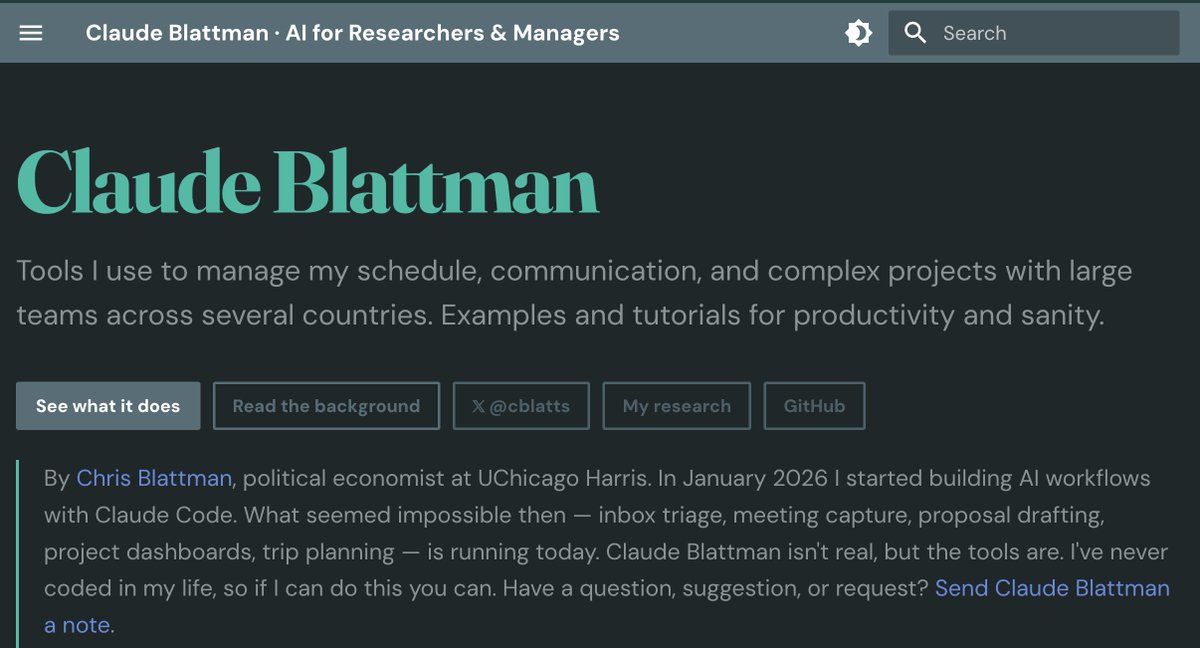
My /morning-brief skill triages mail, focusing me on high-priority tasks (with draft replies). A /checkin skill during the day tells me if there's anything urgent to respond to, triages my reminders, and reminds me to stay focused on the writing/research goals I set that month.
Chris Blattman tweet media
English
3
3
121
43.8K
Chris Blattman
Chris Blattman@cblatts·
4w ago I was a Claude Code skeptic. I'm not a coder. None of the use cases were relevant. I managed teams & projects, drowning in email & overdue reminders. So I tried creating tools that would help me and... holy crap. Now I'm sharing the tools I built: claudeblattman.com
Chris Blattman tweet media
English
41
278
2.4K
897.1K
Z
Z@zorian·
In PE, the key success factor is focusing on Revenue & EBITDA Growth. PE firms who focus on building real in-house deep expertise in Growth will solve many of these issues (not all, but many).
Will Schryver@Will_Schryver

More private equity-backed companies deferred cash interest payments 58% of loans featured “Bad PIK”, meaning borrowers delay interest payments, and are considered “shadow defaults” Debt-to-equity ratios increased from 40% to 76% - a sign of stress Full article @Bloomberg

English
3
0
5
418