
Tweet fixado
BookFly 🔥❤️
161.4K posts

BookFly 🔥❤️
@Al_B_Done
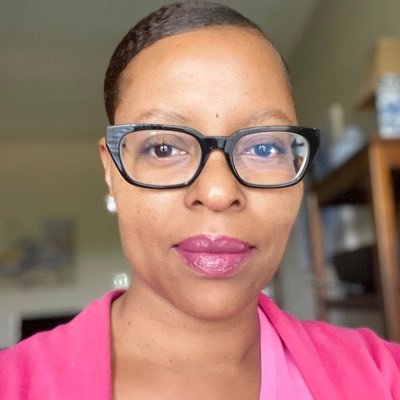
Dedicated and passionate about a Black Agenda centered around Reparations!! Disenfranchised because my Jesuit education has brought me 0. 🙄 https://t.co/Jlj3lRo6ot
St Louis, MO Entrou em Mayıs 2020
1.5K Seguindo1.2K Seguidores
BookFly 🔥❤️ retweetou


BookFly 🔥❤️ retweetou

'Trump has failed Black America, entire nation'
🖋 Brandon Weathersby
📸 Photo from Briscoe Center for American History
#stlamerican #stlnews #stlouis #BlackHistory #DEI #Commentary #EconomicOpportunity #Politics
stlamerican.com/news/editorial…
English
BookFly 🔥❤️ retweetou

He in the trenches…at all. Typically one of the most privileged in a Black community to be found🤣🤣 braces, instruments and tutoring.
D@bredfrm_
@count_qua Yea, that’s basically all of SoundCloud. I remember having this argument w/ a potna in 2019. Gay aesthetic mixed w/ subtle hints at being Blood, but never outright claiming it so you seem mysterious. The “kid in the trenches that likes vans & mascara” type aesthetic.
English
BookFly 🔥❤️ retweetou

HATE CRIME? Black Retired War Veteran Beaten To Death By a 22 year old Phillip Fraczek — who was then sentenced Life in prison With Only 20 Years Min.
The 20-year minimum for beating an elderly veteran to death in his own home feels completely inadequate.
Justice should mean life without early release.
English
BookFly 🔥❤️ retweetou

@FTrilliams @abreezeclayton As long as you are pro-open borders, you can readily join conservatives in whatever other goals they have. Make no mistake, in the south conservatives will run the show on "business".
English
BookFly 🔥❤️ retweetou
@MS_Neg @Al_B_Done Mind you, no one ever said Holocaust survivors & their heirs didn’t deserve reparations because they were better off anywhere else in the world than Nazi Germany.
English
BookFly 🔥❤️ retweetou
😂😂 If parents only knew that they could just drop little Timmy or Rebecca off immediately upon high school graduation to a HVAC or plumbing company and they would get a apprentice job in 2 days after applying on LinkedIn for FREE.
Conor Sen@conorsen
Looks like AI is already creating a new type of job:
English
BookFly 🔥❤️ retweetou

Moses “Whispering” Smith - I Tried So Hard (1964)
#BMH365 🎶🎤@BlackMusicHstry
Remembering Moses “Whispering” Smith (Tuesday, January 25, 1932 — Saturday, April 28, 1984) Born to a sharecropper family, Moses “Whispering” Smith was a Mississippi‑born, Baton Rouge–rooted swamp‑blues singer and harmonica player whose thunderous voice and bold, rounded harp tone made him one of the most distinctive carriers of the Louisiana blues tradition. Despite the softness implied by his nickname, Smith’s sound was anything but soft. In fact, it was muscular, rhythmic, and deeply tied to the juke‑joint culture that shaped him. As documented by Sundayblues.org, Smith’s career took a decisive turn in the late 1950s when he met Lightnin’ Slim at a gas station — a chance encounter that led to him joining Slim’s band. Slim’s famous command, “Blow your harmonica, son!”, became part of Smith’s musical identity as he grew into a fixture of the Baton Rouge club scene. This placed him squarely within the swamp‑blues lineage alongside Slim Harpo, Lazy Lester, Silas Hogan, and other regional giants who defined the Louisiana sound. Working under producer J.D. “Jay” Miller in Crowley, Louisiana, Smith recorded tough, unvarnished sides for Excello Records, including “Mean Woman Blues,” “Don’t Leave Me Baby,” “Cryin’ Blues,” “I Tried So Hard,” “Live Jive,” and “Hound Dog Twist.” His harmonica work also strengthened key recordings by Silas Hogan, helping shape the hypnotic, percussive feel that distinguished Louisiana swamp blues from Delta and Chicago styles. Even as swamp blues declined commercially in the mid‑1960s, Smith remained one of its strongest representatives. His version of “A Thousand Miles from Nowhere” stands among the era’s great reinterpretations, and his 1971 album Over Easy captured his voice and harp at full power. In 1972, he appeared at the Montreux Blues Festival as part of a multi-artist Louisiana blues lineup, giving European audiences an early glimpse of the swamp-blues sound he carried so powerfully. In 1973, he toured Europe with American Blues Legends ’73, giving international audiences a direct encounter with the Louisiana blues tradition he embodied so fully. Smith passed on Saturday, April 28, 1984, after a long illness. His later induction into the Louisiana Blues Hall of Fame affirms what his recordings already make clear: he was one of the most authentic, regionally rooted voices of the swamp‑blues tradition and a musician who represented Louisiana blues with pride, grit, and unmistakable identity.
English
BookFly 🔥❤️ retweetou

Rep. Tom Kean Jr. voted to cut $1 trillion from Medicaid, along with every Republican in Congress.
Why?
To give trillions in tax handouts to the richest people in the history of the world.
English
BookFly 🔥❤️ retweetou

The U.S. Government Doesn’t Care About Black Farmers🪖❤️🩹🇺🇸
English
BookFly 🔥❤️ retweetou
@FTrilliams @abreezeclayton I guess Dems figure that "pro-business"/"pro-energy"/"pro-infrastructure"(which usually entails anti-union stances, deregulation, anti-public transportation, and helping oil and natural gas companies) is less harmful than ICE or really any type of immigration enforcement.
English
BookFly 🔥❤️ retweetou

It is that deep, our entire system is built on racism‼️
English
BookFly 🔥❤️ retweetou

Antonio Moore@tonetalks
This is what I have told you about California #prop13. It’s a tax policy putting the burden of older California homeowners on the younger working class. One day the youth will stand up and demand change over it. Most people don’t grasp that it exists. Nor its consequences.
QAM
BookFly 🔥❤️ retweetou


BookFly 🔥❤️ retweetou

🚨 THE DEEP STATE JUST GOT CAUGHT RED-HANDED AGAIN!
CIA OFFICIALLY ADMITS CANCER IS BIOLOGICALLY IDENTICAL TO PARASITES…
Johns Hopkins BURIED cheap anti-parasitic drugs that CURE cancer in weeks…
While the Medical Cartel (Pfizer, Bayer, AstraZeneca, Merck, J&J & Roche) OWNS the entire trillion-dollar cancer industry and profits off your suffering!
FOLLOW ME, THE NEXT DROP WILL BE SHOCKING.
English
BookFly 🔥❤️ retweetou

The government is actively trying to REDUCE DISABILITY BENEFITS for people who can’t live alone, so your benefits will be slashed if you do not live on your own and pay rent. Which btw most of us can’t do bc they don’t PAY ENOUGH. We NEED to fight this HARD
English
BookFly 🔥❤️ retweetou

The Pentagon has failed its audit for the 8th time in a row. The Pentagon controls nearly $4.65 TRILLION Dollars, but can not account for it. The Pentagon literally doesn't know where the money has gone
English
BookFly 🔥❤️ retweetou

English
BookFly 🔥❤️ retweetou
BookFly 🔥❤️ retweetou
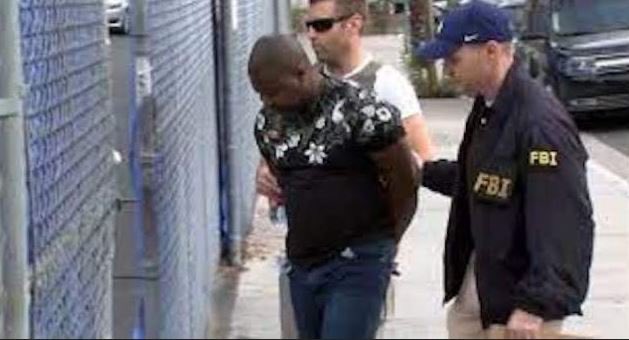
It's a choice not to show Nigerian doctor’s Patrick Nwaokwu face.
FBI@FBI
CASE UPDATE from @FBIBaltimore: Maryland Man Sentenced for Selling Fraudulent Nursing Diplomas, Transcripts, and Nursing Licenses. According to his plea agreement, Patrick Nwaokwu conspired with others to sell fraudulent nursing diplomas and educational transcripts to individuals. He also assisted the purchasers with fraudulently obtaining nursing licensures they needed to attain employment in the health care field. Read more: justice.gov/usao-md/pr/mar…
English