Limas

106 posts

Limas banner
Limas

Limas

@jlimase

Staff Software Engineer + product geek. Built for startups, hardened in enterprise. I share thoughts on programming as a craft and life as a daily dev.

Mexico Entrou em Eylül 2008
63 Seguindo106 Seguidores
Limas
Limas@jlimase·
@lennysan That last bit it’s huge, happy more people are expressing that feeling.
English
0
0
0
376
Lenny Rachitsky
Lenny Rachitsky@lennysan·
Important read
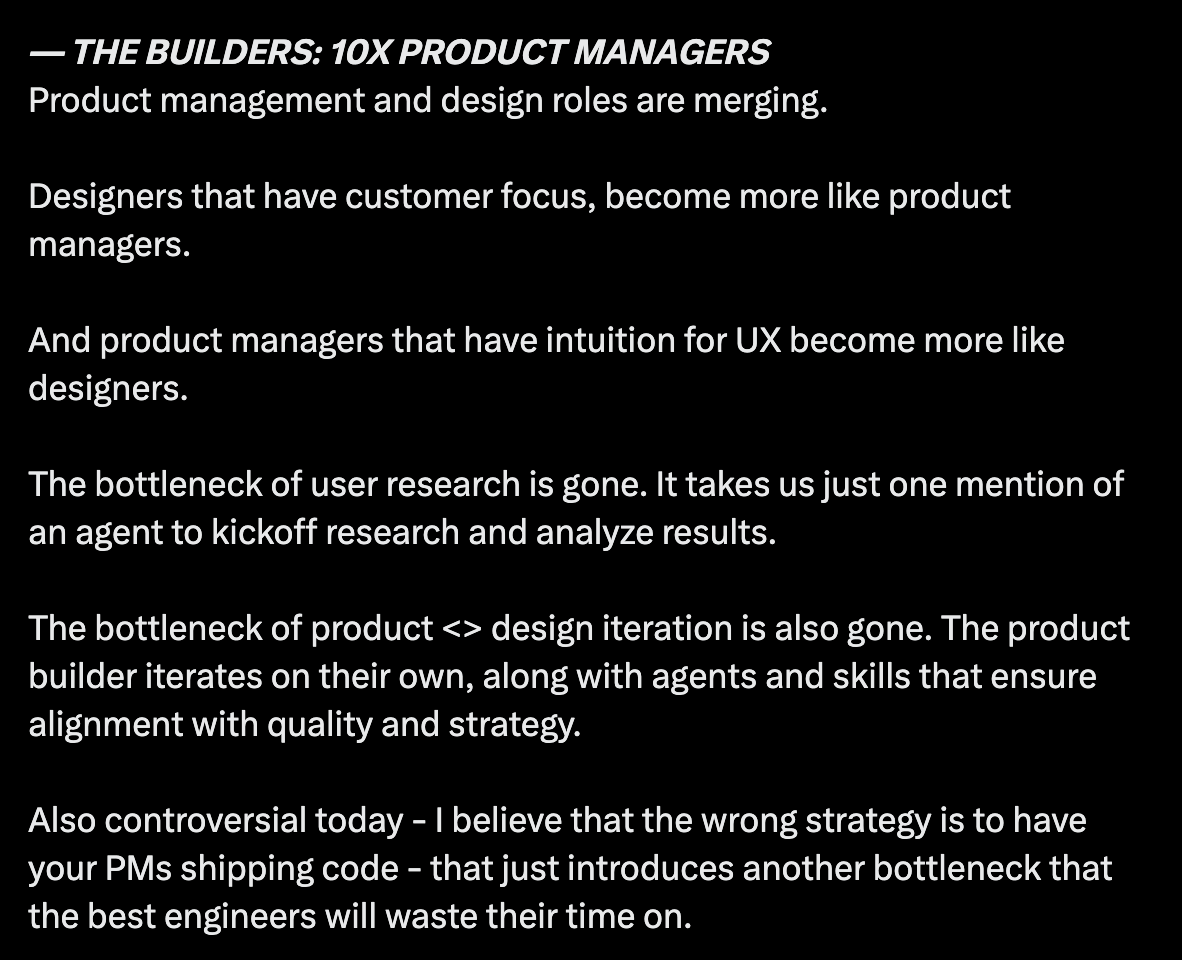
Lenny Rachitsky tweet media
Zeb Evans@DJ_CURFEW

Today we reduced headcount by 22%. The business is the strongest it's ever been. So I think it's important to be direct about what I'm seeing and why. First, I made this decision and I own it. I did it because the way to operate at the highest level of productivity is changing, and to win the future, ClickUp needs to change with it. Second, this wasn't about cutting costs. Most savings from this change will flow directly back into the people who stay. We'll be introducing million-dollar salary bands. If you create outsized impact using AI, you'll be paid outside of traditional bands. Most importantly, I have the deepest gratitude for those affected. We're doing this from a position of strength specifically so we can take care of people properly. Everyone affected receives a package aimed at honoring their contributions and easing the transition. I only see two options: wait for this to play out gradually in the market or be honest about what I'm seeing and act proactively. THE 100X ORGANIZATION The primary change is that we're restructuring around what I call 100x org. The goal is 100x output. The roles required to build at the highest level are fundamentally different than they were a year ago. Incremental improvements to existing systems won't get us there. We need new ones. That means creating enough disruption to rebuild rather than iterate on what's already broken. The common narrative is that AI makes everyone more productive. It doesn't. Many of the workflows of today, if left unchanged, create bottlenecks in AI systems. These roles will evolve. But waiting for that to happen naturally means falling behind now. The 100x org is actually heavily dependent on people - infinitely more than today. This is only possible with 10x people that have embraced and adopted new ways of working. THE BUILDERS, AGENT MANAGERS, AND FRONT-LINERS — THE BUILDERS: 10X ENGINEERS I don't think most companies have internalized what's actually happening with AI in engineering. The common narrative is that AI makes all engineers more productive. That may be true in isolation, but at an organization level - that is the farthest thing from reality. Here's what we've validated recently at ClickUp: the great engineers, the ones who can orchestrate, architect, and review, are becoming 100x engineers. They're not writing code. They're directing agents that write code. The skill is judgment. AI makes the best engineers wildly more productive, and everyone else using AI slows these engineers down. Think about it - the bottlenecks are (1) orchestration - telling AI what to do, and (2) reviewing - what AI did. Everything is leapfrogged and no longer needed. So who do you want orchestrating and reviewing code? And how do you want your best engineers to spend their time? If your best engineers are spending time reviewing other people's code, then this is inherently an inefficient bottleneck. These engineers can review their agent's code much faster than reviewing human code. The new world is about enabling your 10x engineers to become 100x. The wrong strategy is to push every engineer to use infinite tokens. Companies doing this are celebrating 500% more pull requests. But customer outcomes don't match the volume of code being generated. I call this the great reckoning of AI coding, and every company will face this soon if not already. More code is just another bottleneck to the best engineers, and ultimately to your company's impact as well. — THE BUILDERS: 10X PRODUCT MANAGERS Product management and design roles are merging. Designers that have customer focus, become more like product managers. And product managers that have intuition for UX become more like designers. The bottleneck of user research is gone. It takes us just one mention of an agent to kickoff research and analyze results. The bottleneck of product <> design iteration is also gone. The product builder iterates on their own, along with agents and skills that ensure alignment with quality and strategy. Also controversial today - I believe that the wrong strategy is to have your PMs shipping code - that just introduces another bottleneck that the best engineers will waste their time on. To be clear, PMs should be coding but they should do this in a playground to iterate, validate, and scope. That code should not go to production. Everything outside of managing systems, orchestrating AI, and reviewing output becomes a bottleneck. That's why the other roles that are critical along with these are the systems managers (to reduce bottlenecks) along with a bottleneck you can't replace - customer meeting time. — THE SYSTEM MANAGERS Ironically, the people that automate their jobs with AI will always have a job. They become owners of the AI systems - agent managers. We have many examples of these people at ClickUp. The underlying systems in which we operate are absolutely critical to get right. I think most companies are delusional to think they can iterate on existing systems and compete in this new world. You must create enough disruption so that old systems are deprecated entirely. If there's any definition for 'AI native' that's what it is. — THE FRONT-LINERS In a world that will become saturated with AI communication, the human touch will matter more than anything to customers. This is a bottleneck that you shouldn't replace - even when agents are high enough quality to do video meetings. One-on-one meeting time with customers is something that shouldn't be automated. The systems around the meetings should be - so that front-liners spend nearly 100% of their time with customers. REWARDING 100X IMPACT In a world where companies are able to do so much more with less, where does that excess money go? In our case, much of the savings in this new operating model will flow directly back to those that enabled it. We must reward people that create productivity accordingly. This aligns incentives on both sides. Plus, in a world where your best people create 100x impact, you can't afford to lose them. You should aim to retain these employees for decades. The context they have and their ability to efficiently orchestrate and review will be nearly impossible to replace. Compensation bands of today should be thrown out the door. We're introducing $1 million cash/year salary bands with a path available to nearly everyone in the company if they produce 100x impact by creating or managing AI systems. THE FUTURE Nearly every company will make changes like these. The ones that do it proactively will define what comes next. The future is not fewer people. It's different work, new roles, and better rewards for those who embrace it. We're already seeing entirely new roles emerge, like Agent Managers, that didn't exist a year ago. ClickUp is positioning to lead this shift, not just internally, but for our customers too. I've never been more certain about where we're headed.


English
41
56
756
149.4K
Limas
Limas@jlimase·
@badlogicgames My interpretation is that code written by another agent or human is harder to understand when you don’t have the context of the prompt or request that led to it.
English
1
0
4
816
Mario Zechner
Mario Zechner@badlogicgames·
> These engineers can review their agent's code much faster than reviewing human code. wat
Zeb Evans@DJ_CURFEW

Today we reduced headcount by 22%. The business is the strongest it's ever been. So I think it's important to be direct about what I'm seeing and why. First, I made this decision and I own it. I did it because the way to operate at the highest level of productivity is changing, and to win the future, ClickUp needs to change with it. Second, this wasn't about cutting costs. Most savings from this change will flow directly back into the people who stay. We'll be introducing million-dollar salary bands. If you create outsized impact using AI, you'll be paid outside of traditional bands. Most importantly, I have the deepest gratitude for those affected. We're doing this from a position of strength specifically so we can take care of people properly. Everyone affected receives a package aimed at honoring their contributions and easing the transition. I only see two options: wait for this to play out gradually in the market or be honest about what I'm seeing and act proactively. THE 100X ORGANIZATION The primary change is that we're restructuring around what I call 100x org. The goal is 100x output. The roles required to build at the highest level are fundamentally different than they were a year ago. Incremental improvements to existing systems won't get us there. We need new ones. That means creating enough disruption to rebuild rather than iterate on what's already broken. The common narrative is that AI makes everyone more productive. It doesn't. Many of the workflows of today, if left unchanged, create bottlenecks in AI systems. These roles will evolve. But waiting for that to happen naturally means falling behind now. The 100x org is actually heavily dependent on people - infinitely more than today. This is only possible with 10x people that have embraced and adopted new ways of working. THE BUILDERS, AGENT MANAGERS, AND FRONT-LINERS — THE BUILDERS: 10X ENGINEERS I don't think most companies have internalized what's actually happening with AI in engineering. The common narrative is that AI makes all engineers more productive. That may be true in isolation, but at an organization level - that is the farthest thing from reality. Here's what we've validated recently at ClickUp: the great engineers, the ones who can orchestrate, architect, and review, are becoming 100x engineers. They're not writing code. They're directing agents that write code. The skill is judgment. AI makes the best engineers wildly more productive, and everyone else using AI slows these engineers down. Think about it - the bottlenecks are (1) orchestration - telling AI what to do, and (2) reviewing - what AI did. Everything is leapfrogged and no longer needed. So who do you want orchestrating and reviewing code? And how do you want your best engineers to spend their time? If your best engineers are spending time reviewing other people's code, then this is inherently an inefficient bottleneck. These engineers can review their agent's code much faster than reviewing human code. The new world is about enabling your 10x engineers to become 100x. The wrong strategy is to push every engineer to use infinite tokens. Companies doing this are celebrating 500% more pull requests. But customer outcomes don't match the volume of code being generated. I call this the great reckoning of AI coding, and every company will face this soon if not already. More code is just another bottleneck to the best engineers, and ultimately to your company's impact as well. — THE BUILDERS: 10X PRODUCT MANAGERS Product management and design roles are merging. Designers that have customer focus, become more like product managers. And product managers that have intuition for UX become more like designers. The bottleneck of user research is gone. It takes us just one mention of an agent to kickoff research and analyze results. The bottleneck of product <> design iteration is also gone. The product builder iterates on their own, along with agents and skills that ensure alignment with quality and strategy. Also controversial today - I believe that the wrong strategy is to have your PMs shipping code - that just introduces another bottleneck that the best engineers will waste their time on. To be clear, PMs should be coding but they should do this in a playground to iterate, validate, and scope. That code should not go to production. Everything outside of managing systems, orchestrating AI, and reviewing output becomes a bottleneck. That's why the other roles that are critical along with these are the systems managers (to reduce bottlenecks) along with a bottleneck you can't replace - customer meeting time. — THE SYSTEM MANAGERS Ironically, the people that automate their jobs with AI will always have a job. They become owners of the AI systems - agent managers. We have many examples of these people at ClickUp. The underlying systems in which we operate are absolutely critical to get right. I think most companies are delusional to think they can iterate on existing systems and compete in this new world. You must create enough disruption so that old systems are deprecated entirely. If there's any definition for 'AI native' that's what it is. — THE FRONT-LINERS In a world that will become saturated with AI communication, the human touch will matter more than anything to customers. This is a bottleneck that you shouldn't replace - even when agents are high enough quality to do video meetings. One-on-one meeting time with customers is something that shouldn't be automated. The systems around the meetings should be - so that front-liners spend nearly 100% of their time with customers. REWARDING 100X IMPACT In a world where companies are able to do so much more with less, where does that excess money go? In our case, much of the savings in this new operating model will flow directly back to those that enabled it. We must reward people that create productivity accordingly. This aligns incentives on both sides. Plus, in a world where your best people create 100x impact, you can't afford to lose them. You should aim to retain these employees for decades. The context they have and their ability to efficiently orchestrate and review will be nearly impossible to replace. Compensation bands of today should be thrown out the door. We're introducing $1 million cash/year salary bands with a path available to nearly everyone in the company if they produce 100x impact by creating or managing AI systems. THE FUTURE Nearly every company will make changes like these. The ones that do it proactively will define what comes next. The future is not fewer people. It's different work, new roles, and better rewards for those who embrace it. We're already seeing entirely new roles emerge, like Agent Managers, that didn't exist a year ago. ClickUp is positioning to lead this shift, not just internally, but for our customers too. I've never been more certain about where we're headed.

English
70
36
1.2K
137.6K
Limas
Limas@jlimase·
I agree 100% with the section in — THE BUILDERS: 10X ENGINEERS. -- If your best engineers are spending time reviewing other people's code, then this is inherently an inefficient bottleneck. These engineers can review their agent's code much faster than reviewing human code. -- Also controversial today - I believe that the wrong strategy is to have your PMs shipping code - that just introduces another bottleneck that the best engineers will waste their time on. To be clear, PMs should be coding but they should do this in a playground to iterate, validate, and scope. That code should not go to production. -- It sucks to live in a timeline where layoffs are happening daily, but at the same time it's hard to disagree with the state of things with AI productivity in the right hands.
Zeb Evans@DJ_CURFEW

Today we reduced headcount by 22%. The business is the strongest it's ever been. So I think it's important to be direct about what I'm seeing and why. First, I made this decision and I own it. I did it because the way to operate at the highest level of productivity is changing, and to win the future, ClickUp needs to change with it. Second, this wasn't about cutting costs. Most savings from this change will flow directly back into the people who stay. We'll be introducing million-dollar salary bands. If you create outsized impact using AI, you'll be paid outside of traditional bands. Most importantly, I have the deepest gratitude for those affected. We're doing this from a position of strength specifically so we can take care of people properly. Everyone affected receives a package aimed at honoring their contributions and easing the transition. I only see two options: wait for this to play out gradually in the market or be honest about what I'm seeing and act proactively. THE 100X ORGANIZATION The primary change is that we're restructuring around what I call 100x org. The goal is 100x output. The roles required to build at the highest level are fundamentally different than they were a year ago. Incremental improvements to existing systems won't get us there. We need new ones. That means creating enough disruption to rebuild rather than iterate on what's already broken. The common narrative is that AI makes everyone more productive. It doesn't. Many of the workflows of today, if left unchanged, create bottlenecks in AI systems. These roles will evolve. But waiting for that to happen naturally means falling behind now. The 100x org is actually heavily dependent on people - infinitely more than today. This is only possible with 10x people that have embraced and adopted new ways of working. THE BUILDERS, AGENT MANAGERS, AND FRONT-LINERS — THE BUILDERS: 10X ENGINEERS I don't think most companies have internalized what's actually happening with AI in engineering. The common narrative is that AI makes all engineers more productive. That may be true in isolation, but at an organization level - that is the farthest thing from reality. Here's what we've validated recently at ClickUp: the great engineers, the ones who can orchestrate, architect, and review, are becoming 100x engineers. They're not writing code. They're directing agents that write code. The skill is judgment. AI makes the best engineers wildly more productive, and everyone else using AI slows these engineers down. Think about it - the bottlenecks are (1) orchestration - telling AI what to do, and (2) reviewing - what AI did. Everything is leapfrogged and no longer needed. So who do you want orchestrating and reviewing code? And how do you want your best engineers to spend their time? If your best engineers are spending time reviewing other people's code, then this is inherently an inefficient bottleneck. These engineers can review their agent's code much faster than reviewing human code. The new world is about enabling your 10x engineers to become 100x. The wrong strategy is to push every engineer to use infinite tokens. Companies doing this are celebrating 500% more pull requests. But customer outcomes don't match the volume of code being generated. I call this the great reckoning of AI coding, and every company will face this soon if not already. More code is just another bottleneck to the best engineers, and ultimately to your company's impact as well. — THE BUILDERS: 10X PRODUCT MANAGERS Product management and design roles are merging. Designers that have customer focus, become more like product managers. And product managers that have intuition for UX become more like designers. The bottleneck of user research is gone. It takes us just one mention of an agent to kickoff research and analyze results. The bottleneck of product <> design iteration is also gone. The product builder iterates on their own, along with agents and skills that ensure alignment with quality and strategy. Also controversial today - I believe that the wrong strategy is to have your PMs shipping code - that just introduces another bottleneck that the best engineers will waste their time on. To be clear, PMs should be coding but they should do this in a playground to iterate, validate, and scope. That code should not go to production. Everything outside of managing systems, orchestrating AI, and reviewing output becomes a bottleneck. That's why the other roles that are critical along with these are the systems managers (to reduce bottlenecks) along with a bottleneck you can't replace - customer meeting time. — THE SYSTEM MANAGERS Ironically, the people that automate their jobs with AI will always have a job. They become owners of the AI systems - agent managers. We have many examples of these people at ClickUp. The underlying systems in which we operate are absolutely critical to get right. I think most companies are delusional to think they can iterate on existing systems and compete in this new world. You must create enough disruption so that old systems are deprecated entirely. If there's any definition for 'AI native' that's what it is. — THE FRONT-LINERS In a world that will become saturated with AI communication, the human touch will matter more than anything to customers. This is a bottleneck that you shouldn't replace - even when agents are high enough quality to do video meetings. One-on-one meeting time with customers is something that shouldn't be automated. The systems around the meetings should be - so that front-liners spend nearly 100% of their time with customers. REWARDING 100X IMPACT In a world where companies are able to do so much more with less, where does that excess money go? In our case, much of the savings in this new operating model will flow directly back to those that enabled it. We must reward people that create productivity accordingly. This aligns incentives on both sides. Plus, in a world where your best people create 100x impact, you can't afford to lose them. You should aim to retain these employees for decades. The context they have and their ability to efficiently orchestrate and review will be nearly impossible to replace. Compensation bands of today should be thrown out the door. We're introducing $1 million cash/year salary bands with a path available to nearly everyone in the company if they produce 100x impact by creating or managing AI systems. THE FUTURE Nearly every company will make changes like these. The ones that do it proactively will define what comes next. The future is not fewer people. It's different work, new roles, and better rewards for those who embrace it. We're already seeing entirely new roles emerge, like Agent Managers, that didn't exist a year ago. ClickUp is positioning to lead this shift, not just internally, but for our customers too. I've never been more certain about where we're headed.

English
0
0
1
10
Limas
Limas@jlimase·
@thdxr Basically effect all the things
English
0
0
0
26
dax
dax@thdxr·
having a thorough test suite deeply deeply deeply decoupled from implementation seems more useful than ever decoupled to the point where you're testing your backend by executing the frontend
English
60
21
878
62.4K
dax
dax@thdxr·
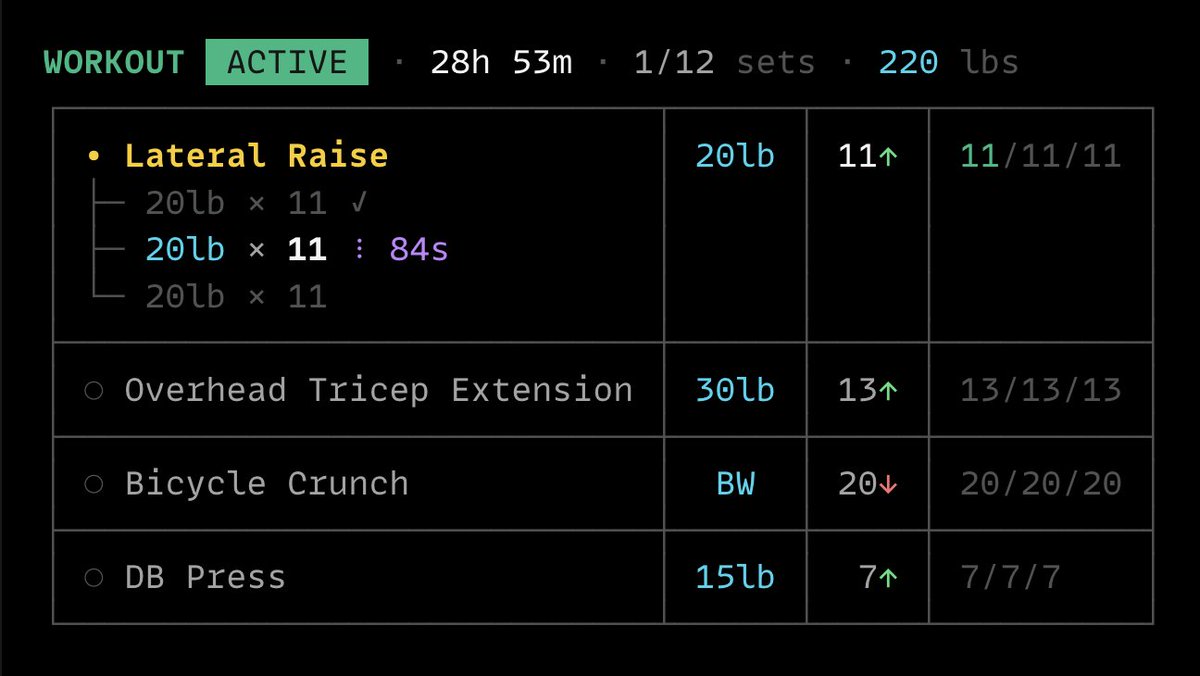
my new workout tracker is an always alive tmux session with an opencode session and a sqlite db
English
36
1
422
36.4K
Limas
Limas@jlimase·
@_nasch_ Has probado pi.dev? Yo era fiel OpenCode hasta que empecé a jugar con tener más control sobre la extensibilidad del harness.
Español
0
2
3
384
Nicolás Schürmann
Nicolás Schürmann@_nasch_·
Cuántos de acá usan neovim con opencode? Preséntense!!
Español
35
0
126
15.6K
Javier Añorga
Javier Añorga@javieranorgab·
@_nasch_ Aquí!! Pero últimamente manejo más un panel tmux a la derecha y consola opencode. Viene de lujo tener un keybinding para pasar al portapapeles el path del archivo y el rango de líneas seleccionado para poder luego pergalo en el prompt.
Español
5
0
6
883
Limas
Limas@jlimase·
@zeeg For me personally TUI means I can live inside my terminal longer, it’s true that they are limited in capabilities but usually they are more than enough for example, lazygit and k9s.
English
0
0
0
74
David Cramer
David Cramer@zeeg·
TUIs are not good sorry yall a CLI is a utility, and situational. this should not be confused with stuffing a full interactive GUI into a low capability platform. "lets ignore all the great UI technology of the last 20 years and build some caveman shit"
English
246
59
1.3K
209.1K
Limas
Limas@jlimase·
@stripe Of course it’s not 🫩
Limas tweet media
English
0
0
1
1.4K
Stripe
Stripe@stripe·
Introducing the new Stripe Treasury: • Hold funds in multiple currencies and stablecoins. • Instantly transfer money to US businesses on Stripe for free. • Pay anyone in 160 countries with just their email address. • Earn credits on balances to apply towards Stripe fees. • Spend funds with a Stripe card. • Get 2% cash back on card purchases. • View balances in the Stripe mobile app. • Use Treasury from any AI app with the Stripe MCP.
English
218
537
5.4K
1.5M
Limas
Limas@jlimase·
@thdxr What's the font name? It looks really clean.
English
0
0
0
24
dax
dax@thdxr·
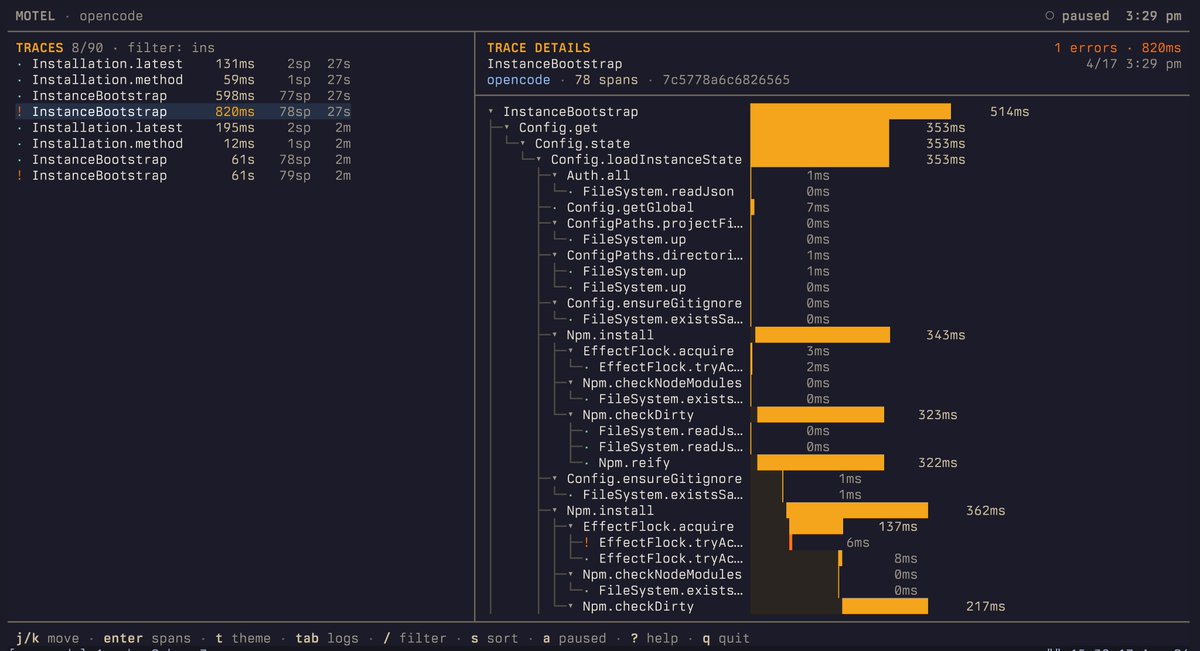
we've done instrumentation work in opencode recently so we can get traces out they get shipped to a local otel tui (by kit) which also has endpoints for the agent to read this data provides a good feedback loop for the agent to analyze issues - will do a video soon
dax tweet media
English
24
16
750
96.5K
Limas
Limas@jlimase·
@sebgoddijn @buchan_sm Thanks for sharing it’s really insightful, I was expecting a little more details in the harness used or the technical implementations but I guess that’s the secret sauce haha
English
0
0
0
155
Seb Goddijn
Seb Goddijn@sebgoddijn·
For those who've asked, sharing a great write up from @buchan_sm on how we built glass! No big engineering team or massive investment, just a small crew having a lot of fun and pushing vibe coding to its limits. Vibe coding is a skill like any other and you can build some pretty cool things once you get good at it 🔥
Shane Buchan@buchan_sm

x.com/i/article/2044…

English
11
6
168
42.3K
ThePrimeagen
ThePrimeagen@ThePrimeagen·
The new Dell XPS Linux battery test and HOLY COW, the battery life is EXCELLENT. A little background: Intel + dell + omarchy team worked together to get everything working perfectly for the new XPS. I am honestly shocked that I am having a "mac" experience with linux as far as battery life goes. Here is my test timeline: Saturday: 99% - 10:07am computer fully charged and on, walking to gate, suspend mode in backpack 99% - 11:00am - compiling rust, running agents, MiMo running on youtube, writing this tweet 80% - 2:00pm - forced to shutdown due landing the plane :( No more work, almost done setting up my machine! Very excited. Vim is there and so is tmux and zsh, but not my wall paper :( And i want to try Aether 75% - 2:30 - 3pm - i watched the new moist critical videos on the guy who threaten to kill people via ring doorbell. woah that was weird. Sunday: 5PM 75% -> 62% - Sat in suspend mode in my back pack for ~14 hours. I wanted to see where I was at, will open back up in another ~14 hours. Monday: 7AM 55% -> 5% - Monday: 3 hours of work. Agents are coding, neovim motions flying, youtube playing MiMo. Even took a 40 minute discord team video call and the microphone worked FIRST TRY?? Did... Linux just get a computer where you don't have to worry about battery life? It honestly felt better than my way back in the day Mac Air experiences. ---- Things I did not like: * when the computer wakes up from suspend, its "chunky" for about ~30 seconds. * the touch pad is annoying. the right click seems like its ~95% of the touch pad and i have a bit of a trouble getting left click regularly. The new Dell is actually good. I am shocked right now. Omarchy also took 3 minutes to install and I was up and running in 5. The primary reason why I am using omarchy is because 2 reasons: 1. everyone on my team is using it, makes certain aspects of life easier when everyone is on the *almost* same distro 2. intel + dell are working with each other and omarchy has a seat at the table to make things happen. this means i am using the super latest hardware with it perfectly integrated. pretty awesome. Thanks Dell for sending me the computer for Omacon! I am genuinely stoked for the computer.
English
121
47
2.3K
222.1K
Limas
Limas@jlimase·
@eglyman would love to know a bit more about the tech stack you are using for the harness, currently experimenting with pi.dev to built something exactly like this in our company. waiting for the next post with more details!
English
2
0
14
14K
Eric Glyman
Eric Glyman@eglyman·
99% of Ramp uses ai daily. but we noticed most people were stuck — not because the models weren't good enough, but because the setup was too painful and unintuitive for most. terminal configs, mcp servers, everyone figuring it out alone. so we built Glass. every employee gets a fully configured ai workspace on day one — integrations connected via sso, a marketplace of 350+ reusable skills built by colleagues, persistent memory, scheduled automations. when one person on a team figures out a better workflow, everyone on that team gets it and gets more productive. the companies that make every employee effective with ai will compound advantages their competitors can't match. most are waiting for vendors to solve this. we decided to own it.
Seb Goddijn@sebgoddijn

x.com/i/article/2042…

English
131
169
3.6K
1.4M
SATMX
SATMX@SATMX·
#ComunicadoSAT El SAT informa que, derivado del avance de la Declaración Anual 2025 de personas, se han autorizado devoluciones de saldo a favor por ISR: ✅ 2 mil 179 millones de pesos 👥 608 mil 119 contribuyentes beneficiados ⏱️ Tiempo promedio de devolución de tres días, menor a los 40 días que establece el CFF Gracias al cumplimiento de las y los contribuyentes, con corte a las 8:00 horas del 7 de abril, se han presentado 2 millones 628 mil 571 declaraciones.
SATMX tweet mediaSATMX tweet media
Español
155
63
314
77.9K
Scott Tolinski - Syntax.fm
Scott Tolinski - Syntax.fm@stolinski·
Is there anything as good as Superwhisper that is much faster and more reliable? I’m finding it to be a pain to use.
English
42
0
63
30.6K
Limas
Limas@jlimase·
@MelkeyDev Could you share how it looks like? I didn’t knew about many of those options
English
0
0
0
497
Melkey
Melkey@MelkeyDev·
A few people have been asking for my Ghostty config so here it is: github.com/Melkeydev/ghos… if you have any suggestions of what to improve or tips, would love to hear them
English
17
19
452
42.2K