Erika 

21.8K posts

Erika  banner
Erika 

Erika 

@ExploreCosmos_

Astrophysicist studying orbital evolution • Seeking mountain peaks • Breathing with the Earth through yoga • Writing what the soul whispers.

Cosmos Присоединился Ekim 2020
907 Подписки52.8K Подписчики
Erika 
Erika @ExploreCosmos_·
Researchers have reached a significant milestone in the study of dark matter by developing a new experimental approach that uses ultracold atoms to simulate and probe its behavior under controlled laboratory conditions. Dark matter, which makes up most of the matter in the universe yet does not emit or absorb light, remains one of the central unresolved problems in physics. Because it cannot be observed directly, scientists rely on indirect evidence, such as gravitational effects on galaxies and large-scale cosmic structures. In this work, physicists used ultracold atomic systems, cooled to temperatures near absolute zero, to create highly tunable quantum environments that can mimic the properties expected of dark matter particles and their interactions. These systems allow researchers to explore how dark matter might cluster, evolve, and influence surrounding matter over time. By carefully adjusting the interactions between atoms and observing their collective behavior, the team was able to reproduce key features that resemble theoretical predictions of dark matter dynamics, including how it might form structures or exhibit collective quantum effects. This represents a shift from purely theoretical or astrophysical approaches toward experimental platforms where hypotheses about dark matter can be tested more directly. Although this method does not detect dark matter itself, it provides a powerful analogue system that can help refine models, constrain possible particle properties, and guide future observations. The achievement highlights how advances in quantum simulation and ultracold physics are opening new pathways to investigate phenomena that are otherwise inaccessible, bringing researchers closer to understanding the fundamental nature of the unseen mass shaping the universe. 👉 share.google/o4fUUyg9QSuP7c…
Erika  tweet media
English
2
11
80
1.6K
Erika 
Erika @ExploreCosmos_·
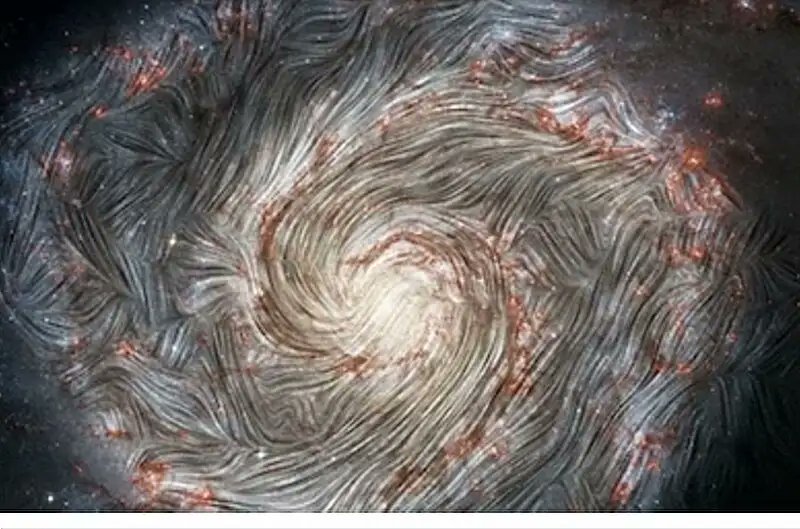
Recent observations are forcing us to rethink how magnetic fields emerged in galaxies. According to standard models, galaxies should require several billion years to build up large-scale, coherent magnetic fields through gradual processes such as dynamo amplification. However, when we look at very young galaxies in the early universe, we already see magnetic fields that appear surprisingly strong and organized, far earlier than those models would predict. The new study suggests that the growth of these fields must have been much more rapid and efficient. Instead of relying only on slow, large-scale dynamo processes, early galaxies likely amplified weak “seed” magnetic fields through intense turbulence. This turbulence was driven by violent conditions typical of the early universe: rapid gas inflows, high rates of star formation, and frequent supernova explosions. These processes can stretch, twist, and amplify magnetic fields on relatively short timescales, allowing galaxies to become magnetized quickly while they are still assembling. Another key implication is that magnetic fields are not just a late byproduct of galaxy evolution but may play an active role from very early stages. Once established, these fields influence how gas moves, how stars form, and how energy and particles propagate through galaxies. In other words, magnetism becomes part of the fundamental architecture of galaxies, shaping their evolution rather than simply tracing it. Overall, the findings indicate that the early universe was able to organize itself more quickly than expected, not only in terms of stars and galaxies but also in the invisible magnetic structures that permeate them. This forces a revision of existing models and suggests that magnetism has been a key ingredient in cosmic evolution from much earlier times than previously assumed. 👉 share.google/YYCzijRCBrvUls…
Erika  tweet media
English
7
14
107
2K
Erika 
Erika @ExploreCosmos_·
There are people who speak with absolute confidence about topics they have barely explored, as if a few articles or videos were enough to master a complex field. This phenomenon has a name in psychology: the Dunning–Kruger effect, described by researchers David Dunning and Justin Kruger. Its central idea is uncomfortable but revealing: those with low ability in a given area often lack the very skills needed to recognize their own limitations. In their studies, they found that participants who performed worst in tasks such as logic, grammar, or even humor tended to rate themselves far above their actual level. In other words, the less they knew, the more they overestimated their competence. This is not simply arrogance, but a lack of metacognition, the ability to accurately assess what one knows and does not know. And this is the key point: to evaluate a skill properly, you largely need that same skill. Later research has shown that this effect becomes more pronounced when the subject is particularly complex or when personal or ideological beliefs are involved. In such contexts, it is common to see individuals with very superficial knowledge in areas like medicine, climate science, or economics expressing themselves with disproportionate confidence, while those who have spent years studying the topic tend to be far more cautious, precisely because they understand the depth and uncertainties involved. The most important aspect, however, is that this bias does not only affect “other people.” We are all susceptible to it in some domain. We may be highly competent in our professional field while having a completely distorted self-assessment in others without realizing it. Moreover, the effect also works in the opposite direction: those with greater expertise often underestimate their own knowledge, because they are fully aware of how much they still do not know. At its core, this effect highlights a clear relationship: deep knowledge tends to be accompanied by humility, whereas ignorance, unable to perceive its own limits, often presents itself with a level of certainty that is not always justified.
English
46
34
209
6.8K
Erika 
Erika @ExploreCosmos_·
At a distance of about 5,500 light-years, Messier 4 (M4) stands as arguably the closest known globular cluster to Earth, offering astronomers a uniquely detailed window into one of the oldest stellar populations in our galaxy. Unlike open clusters, which are relatively loose and short-lived, globular clusters like M4 are densely packed, gravitationally bound systems containing hundreds of thousands of stars. Their roughly spherical structure is not just a visual feature, it reflects a long history of dynamical evolution, where countless gravitational interactions have gradually driven the system toward equilibrium over billions of years. M4 is estimated to be around 12 to 13 billion years old, meaning its stars formed very early in the history of the Milky Way. Because of this, it serves as a kind of fossil record of the early universe. Most of its stars are chemically “primitive,” possessing low concentrations of what astronomers collectively term “metals”, any element heavier than hydrogen or helium. This indicates they were born before successive generations of stars enriched the interstellar medium through supernova explosions. Studying these stars allows astronomers to reconstruct conditions in the early galaxy and refine models of stellar evolution. Observations from the @NASAHubble have been particularly valuable in dissecting the internal structure of M4. By capturing light across a wide range of wavelengths, Hubble can distinguish subtle differences in stellar temperature, composition, and evolutionary stage. In the resulting images, the cluster reveals a rich diversity: hot, blue stars; cooler red giants; and numerous white dwarfs, the dense remnants of stars that have exhausted their nuclear fuel. M4 was in fact one of the first globular clusters where a significant population of white dwarfs was clearly identified, providing direct observational evidence of how such systems age over time. The high stellar density in M4 leads to frequent gravitational interactions between its members. Over time, more massive stars tend to migrate toward the center, a process known as mass segregation, while lighter stars are displaced outward. This ongoing dynamical evolution can produce exotic systems such as tight binaries and millisecond pulsars, and may even result in stellar collisions. In this sense, globular clusters function as natural laboratories for studying gravitational dynamics under extreme conditions. Despite its relative proximity, M4 is not easily visible to the naked eye because it lies in the direction of the constellation Scorpius, where interstellar dust partially obscures it. Through telescopes, however, it appears as a dense, luminous sphere whose outer regions gradually dissolve into the stellar background of the Milky Way. Its closeness makes it an essential reference object for calibrating distance measurements and testing theoretical models of stellar populations. The catalog designation “M4” comes from the work of Charles Messier, who compiled his list of diffuse celestial objects in the 18th century to help comet hunters avoid confusion. What was once a source of observational inconvenience has become one of the most valuable tools in modern astrophysics. In essence, M4 is not just a cluster of stars but a tightly bound, ancient system that encodes the history of stellar formation, chemical evolution, and gravitational dynamics across nearly the entire age of the universe. Its proximity allows us to resolve individual stars with exceptional clarity, transforming it into a cornerstone for understanding how galaxies, including our own, assembled and evolved over cosmic time.
Erika  tweet media
English
6
27
194
2.8K
Erika 
Erika @ExploreCosmos_·
From a physics point of view, our thoughts, dreams, and consciousness are processes that emerge from the brain, which is made of ordinary matter. Antimatter isn’t “non-material”, it’s still matter in the physical sense, just with opposite charge, and it behaves almost identically. So dreams and the mind aren’t made of antimatter or something non-physical in that sense, but they are an emergent phenomenon, patterns of activity in matter that give rise to subjective experience. The deeper question of consciousness itself, though, is still something we don’t fully understand.
English
2
1
2
29
(RYB) Culture of Peace
(RYB) Culture of Peace@RYBCulture·
@ExploreCosmos_ Hi Erika, great to read your post. What is your opinion about the following question: And our dreams (mind, soul, spirit), are they made of matter or antimatter (non-material)? I decided to also ask Claude AI 😃
(RYB) Culture of Peace tweet media
English
1
1
1
32
Erika 
Erika @ExploreCosmos_·
One of the deepest questions in modern physics can be phrased in a surprisingly simple way: why does anything exist at all? According to the laws of particle physics, the early universe should have produced matter and antimatter in almost perfectly equal amounts. Yet the universe we observe today is clearly dominated by matter. Galaxies, stars, planets, and people are all made of it, while antimatter is extraordinarily rare. Somewhere in the earliest moments of cosmic history, something tipped the balance. Antimatter itself is not exotic or speculative. It is a well-established part of modern physics. For almost every known particle of matter there exists a corresponding antiparticle with the same mass but opposite electric charge and other quantum properties. An electron has a positron. A proton has an antiproton. When a particle meets its antiparticle, they annihilate each other, converting their mass into pure energy. There are a few subtle exceptions. Some particles, such as photons, are their own antiparticles. Physicists are also intensely interested in whether neutrinos might belong to this category as well. If neutrinos turn out to be their own antiparticles, so-called Majorana particles, it could provide important clues about the origin of the matter–antimatter imbalance. In the extremely hot environment of the early universe, energy should have produced particles and antiparticles in pairs. The basic interactions governing their creation are largely symmetric. As the universe cooled, matter and antimatter should have collided and annihilated each other almost completely. If that process had played out perfectly, the universe today would be filled with radiation and almost no matter at all. But that is not what happened. We are here. One of the reasons we know the universe around us is made almost entirely of ordinary matter is surprisingly simple. If the Moon were made of antimatter, the moment Neil Armstrong stepped onto its surface the contact between his spacesuit and the lunar dust would have produced a flash of gamma rays. Clearly, that did not happen. On larger scales, astronomers also see no evidence of the intense radiation that would appear where large regions of matter and antimatter meet. Everything we observe, from nearby planets to distant galaxies, appears to be made of matter. Observations indicate that a tiny excess of matter survived the early universe. For roughly every billion pairs of matter and antimatter particles that annihilated each other, one extra particle of matter remained. That tiny imbalance, about one part in a billion, was enough to build everything we see today. Galaxies, stars, planets, and life itself exist because of what might be described as a cosmic rounding error. Physicists refer to this mystery as baryogenesis, the origin of the matter–antimatter asymmetry. In 1967 the Russian physicist Andrei Sakharov identified three basic conditions that must be satisfied for such an imbalance to arise. First, there must be processes that can change the number of baryons, the family of particles that includes protons and neutrons. Second, the laws of physics must treat matter and antimatter slightly differently, a phenomenon known as CP violation. Third, these processes must occur outside of thermal equilibrium so that the imbalance can grow rather than cancel out. You can think of these three requirements as the rules needed to subtly “rig” the cosmic game in favor of matter. The second requirement, CP violation, is particularly important. Under perfect symmetry, the laws of physics should behave the same if particles are replaced by antiparticles and left and right are swapped like a mirror reflection. But nature does not follow that rule perfectly. Certain particle decays show small differences between matter and antimatter. A helpful way to picture this is to imagine looking into a mirror that should reflect reality exactly, but the image is ever so slightly distorted. The reflection is almost perfect, but not quite. That tiny imperfection is what physicists call CP violation. Experiments have confirmed that CP violation exists. It was first observed in particles called kaons and later studied in detail in B mesons. Modern experiments such as LHCb at CERN and Belle II in Japan continue measuring these asymmetries with increasing precision. Yet there is a problem. The amount of CP violation predicted by the Standard Model appears far too small to explain the enormous imbalance that ultimately produced the matter-dominated universe. Something else must have happened. One possible explanation involves neutrinos, the ghostlike particles that stream through the universe in vast numbers. Some theories suggest that heavy versions of neutrinos in the early universe may have decayed in ways that produced more matter than antimatter. This idea, known as leptogenesis, is one of the leading candidates for explaining the asymmetry. Other possibilities involve new particles or interactions that existed only at extremely high energies shortly after the Big Bang. In these scenarios, the imbalance between matter and antimatter could have been generated during phase transitions in the early universe, when fundamental forces and fields were settling into the forms we observe today. Despite decades of work, the precise mechanism that produced the cosmic imbalance remains unknown. Experiments around the world continue searching for clues: precision measurements of particle decays, studies of neutrino properties, and attempts to detect rare processes that could reveal new sources of CP violation. What makes this mystery so profound is how small the original asymmetry was. The entire visible universe depends on a difference of roughly one extra particle of matter for every billion particle–antiparticle pairs created in the early universe. A tiny imbalance. A cosmic rounding error. And yet it was enough to shape the entire history of the universe. Understanding why matter won over antimatter remains one of the central goals of modern physics. If scientists can uncover the mechanism behind this imbalance, they will not only solve a long-standing puzzle but also gain deeper insight into the laws that governed the universe at its very beginning.
Erika  tweet media
English
37
41
208
5.5K
Erika 
Erika @ExploreCosmos_·
@AvishekBasu18 It’s all math, simulations based on the laws of gravity that calculate where each planet should be at every moment.
English
0
0
0
10
Erika 
Erika @ExploreCosmos_·
Patterns are cool 😎 Sun-Mercury-Earth-Jupiter.
English
35
203
999
36.4K
Erika  ретвитнул
Erika 
Erika @ExploreCosmos_·
The Hawking Star is a theoretical concept born from the mind of Stephen Hawking himself. According to Hawking, black holes are not entirely black; instead, they emit a faint radiation, known as Hawking radiation. 1/ 👉 iopscience.iop.org/article/10.384… Video: YT/ PBS Space Time
English
16
76
310
12.3K
Erika 
Erika @ExploreCosmos_·
TOI-1452 b is an exoplanet located about 100 light-years from Earth, orbiting a red dwarf star, and although it is only slightly larger than our planet, its nature appears to be fundamentally different. Current observations suggest it may be a true ocean world, entirely covered by water, with no continents or exposed land. On Earth, water covers about 70% of the surface but accounts for less than 1% of the planet’s total mass; in contrast, on TOI-1452 b, water could make up as much as 30% of its mass, implying a radically different internal structure. This enormous water content would not only produce vast oceans but also extreme depths, potentially reaching hundreds of kilometers. Under such conditions, pressure increases dramatically, and water behaves in unfamiliar ways: in the deepest layers, it likely forms exotic high-pressure ice phases that remain solid even at relatively high temperatures, while liquid water exists above. This points to a complex internal layering, with a global liquid ocean sitting atop a dense ice layer that separates it from the rocky core. Whether water can remain liquid depends strongly on temperature and atmospheric composition, both of which are influenced by the host star. Since TOI-1452 b orbits a red dwarf, it may experience conditions quite different from Earth, including possible tidal locking and variations in stellar radiation, which add uncertainty to its actual climate. Ocean worlds like this are of particular interest in astrobiology because liquid water is a key requirement for life as we understand it. However, the absence of continents and the presence of deep high-pressure ice layers could limit chemical exchange between the ocean and the rocky interior, a process that has been crucial for sustaining complex ecosystems on Earth. Even so, these planets significantly broaden our understanding of where life could potentially exist and highlight the diversity of habitable environments in the universe. In essence, TOI-1452 b represents an extreme scenario: a world with no shores, no solid ground, and an endless global ocean beneath an alien sky, something with no direct equivalent in our solar system, yet possibly common throughout the galaxy.
English
8
31
170
3.2K
Erika 
Erika @ExploreCosmos_·
Astronomers have uncovered a vast, previously hidden structure in the early universe by mapping faint light emitted by hydrogen gas, allowing them to trace not just individual galaxies but the large-scale network that connects them. Instead of focusing only on bright, easily detectable galaxies, they measured the combined glow of hydrogen across enormous regions of space, capturing a period roughly 9 to 11 billion years ago when galaxy formation was highly active. This approach reveals a more complete picture of the cosmic web, including faint galaxies and diffuse gas that are normally invisible to conventional observations. The resulting three-dimensional map shows that even at these early stages, matter was already organized into filamentary structures, with galaxies forming along these dense threads while gas flowed through them, fueling their growth. By directly observing this underlying structure, the study bridges an important gap between theory and observation, confirming that the large-scale architecture predicted by cosmological models was already in place relatively early in the universe’s history. It also provides new insight into how galaxies evolved within this interconnected framework, shaped by the distribution of matter on the largest scales. 👉share.google/sguRPrzLQgQINH…
Erika  tweet media
English
7
49
240
5.5K
Erika 
Erika @ExploreCosmos_·
Rather than standing out for its brightness or mass, the star PicII-503 draws attention because of its chemistry. Located in the ultra-faint dwarf galaxy Pictor II, it contains an extraordinarily low amount of iron, less than one forty-thousandth of the Sun’s, making it one of the most chemically primitive stars ever identified outside the Milky Way. That extreme lack of heavy elements is the key: in astrophysics, elements heavier than hydrogen and helium are produced inside stars and dispersed through supernova explosions. The very first generation of stars formed from pristine gas left over from the Big Bang, and when they died, they seeded the universe with the first “metals.” A second generation of stars then formed from this slightly enriched material. PicII-503 appears to belong to this second generation, meaning it formed shortly after the first stars lived and died, preserving a nearly untouched chemical record of that early epoch. What makes this detection particularly important is its environment. Ultra-faint dwarf galaxies like Pictor II are considered relic systems that have undergone very little chemical evolution over cosmic time. Unlike larger galaxies, where multiple generations of star formation quickly mix and enrich the gas, these small systems can retain the chemical signatures of the earliest stellar processes. Finding such a star there provides unusually clean evidence of early nucleosynthesis and supports the idea that these galaxies act as fossil records of the early universe. In practical terms, this kind of object allows us to probe conditions just a few hundred million years after the Big Bang, a period that is otherwise extremely difficult to observe directly. By analyzing its elemental abundances, researchers can infer the properties of the first stars, such as their masses, explosion mechanisms, and how efficiently they enriched their surroundings, without needing to observe those first stars themselves, which have long since disappeared. 👉 share.google/uetZuNItyoXqxB…
Erika  tweet media
English
4
18
145
2.5K
Erika 
Erika @ExploreCosmos_·
@RedInTheWine Why even bother with books? Everything is so simple if you just say 'God' and call it a day. 😒
English
2
0
2
89
Rosario in Paris ᥫ᭡
Terminando el lunes. ¡Qué sea una excelente semana! 🫂
Rosario in Paris ᥫ᭡ tweet media
Español
71
10
751
5.7K
Erika 
Erika @ExploreCosmos_·
Before the Large Hadron Collider (LHC) began operating at @CERN in 2008, a wave of public concern and speculation appeared online and in the media claiming that the experiment might accidentally destroy the Earth, or even the universe. These fears were largely based on misunderstandings of speculative physics ideas that, while interesting in theory, were extremely unlikely to occur in practice. One of the most widely discussed scenarios involved microscopic black holes. Some theoretical models suggested that extremely high-energy particle collisions might briefly create tiny black holes. The fear was that such objects could grow by absorbing surrounding matter and eventually consume the planet. In reality, if such black holes were produced, they would be extraordinarily small and would evaporate almost instantly through Hawking radiation. Moreover, cosmic rays have been striking Earth’s atmosphere with energies comparable to or higher than those produced in the LHC for billions of years, and no catastrophic effects have ever occurred. Another hypothetical danger involved “strangelets,” a proposed exotic form of matter containing strange quarks. Some worried that if stable strangelets were created, they could convert normal matter into strange matter in a chain reaction. However, theoretical work and data from previous particle experiments indicate that producing stable strangelets in such collisions is extremely unlikely, and observations of cosmic-ray interactions again show no evidence that such a process happens naturally. A third, more exotic possibility was the idea of false vacuum decay. In quantum field theory, the vacuum state of the universe might not represent the lowest possible energy configuration. If a lower-energy “true vacuum” existed, a sufficiently energetic event could theoretically trigger a transition, creating a bubble that expands at the speed of light and rewrites the laws of physics as it spreads. While fascinating theoretically, physicists consider the LHC incapable of triggering such an event, because natural particle collisions with far higher energies occur throughout the universe all the time without causing such a transition. Because these concerns were taken seriously by the public, CERN and independent physicists conducted detailed safety analyses before the collider began operating. These studies concluded that none of the proposed catastrophic scenarios were physically plausible. In fact, nature has already performed vastly more energetic particle collisions through cosmic rays hitting planets and stars for billions of years without destroying them. In the end, the fears surrounding the LHC illustrate a common pattern in frontier science: speculative theoretical ideas can be misunderstood outside the scientific context. While concepts like microscopic black holes, strange matter, or vacuum decay are legitimate topics of theoretical research, the energies required to trigger dangerous versions of these phenomena are far beyond anything produced by human-built accelerators.
Erika  tweet media
English
14
27
174
5.6K
Erika 
Erika @ExploreCosmos_·
Not really. The Sun does gain tiny amounts of dust and small objects over time, but the amount is negligible. Even if you added all the planets, asteroids, and comets, the Solar System still wouldn’t reach 1.4 solar masses, the Sun already contains about 99.86% of the total mass. Also, the 1.4 solar-mass limit applies to white dwarfs, not normal stars. Type Ia supernovae happen when a white dwarf in a binary system steals mass from a companion. Our Sun is single, so there’s no realistic way it could gain enough mass to explode as a supernova.
English
1
0
3
58
alfasilin
alfasilin@onur_ozyar·
@ExploreCosmos_ Is there a way the sun would get mass from outside over time? Is the entire mass of the solar system enough to reach 1,4 solar masses? If the entire mass falls to sun over time could that trigger a supernova explosion?
English
1
0
0
32
Erika 
Erika @ExploreCosmos_·
If the Sun were somehow able to explode like a supernova, something that cannot actually happen because the Sun is far too small and lacks the required mass, it would have dramatic consequences for the entire Solar System. Imagining this scenario is still useful, because it helps illustrate how strongly everything here depends on the Sun’s gravity and energy. In a real supernova, a star releases an enormous amount of energy and ejects its outer layers outward at extreme velocities, often several percent of the speed of light. If we imagine the Sun doing this, the first thing that would reach Earth would not be the expanding debris but the radiation. Light, gamma rays, and other high-energy radiation would travel at the speed of light and reach Earth in about eight minutes, the same time sunlight takes to arrive today. That intense burst alone would be catastrophic. The atmosphere would be heavily ionized and stripped, the surface bombarded by radiation, and nearly all life on the planet would be eliminated almost immediately. The physical shock wave of stellar material would arrive later. If the expanding debris moved at roughly five percent of the speed of light, it would take a few hours to reach Earth. When it did, a violent front of plasma and energetic particles would slam into the planet, melting and eroding much of the surface. Despite the devastation, Earth itself would probably remain as a heavily damaged rocky body rather than being completely destroyed. Mercury, Venus, and Mars would likely experience similar outcomes, scorched, partially melted, but still gravitationally intact. The giant planets would experience something different. Because Jupiter and Saturn are composed mostly of hydrogen and helium gas, the supernova blast could strip away part of their atmospheres. Underneath those thick envelopes lie dense cores made of heavier elements. However, the immense gravity of planets like Jupiter means they would likely retain a significant fraction of their gas, and some material could even fall back after the initial blast. Even so, the outer Solar System would be dramatically altered. Another key question is what remains at the center after the explosion. In many real supernovae, the collapsing stellar core survives as a neutron star. The Sun, however, currently has only one solar mass, while forming a neutron star typically requires a core exceeding the Chandrasekhar limit of about 1.4 solar masses. For this thought experiment we must therefore imagine that the Sun somehow gained enough mass to leave behind such a dense remnant. If a compact object remained near the Sun’s original location, its gravity could continue to hold parts of the Solar System together. The surviving planets might end up orbiting a dark stellar remnant instead of a shining star. But supernova explosions are often asymmetric. If the explosion were uneven, the remaining stellar core could receive a powerful “kick,” accelerating away at hundreds of kilometers per second. In that case the planets would lose their central gravitational anchor. Each world would continue moving along the velocity it had in its orbit, but instead of circling a star it would drift freely through interstellar space. The Solar System would dissolve, and its planets would become rogue worlds wandering through the galaxy. Interestingly, we know that planetary systems can sometimes survive the death of their stars. The first confirmed exoplanets ever discovered were found orbiting a pulsar, the dense neutron-star remnant left behind after a supernova. This discovery showed that under certain circumstances planets can remain gravitationally bound even after one of the most violent events in the universe. Of course, the Sun will never explode as a supernova. Stars like the Sun simply do not have enough mass to undergo such a violent end. 1/2
Erika  tweet media
English
8
20
143
3.3K
Erika 
Erika @ExploreCosmos_·
In recent years cosmology has been enjoying an extraordinary success story. A relatively simple framework known as ΛCDM, short for Lambda Cold Dark Matter, has managed to explain an enormous range of observations with remarkable accuracy. From the faint afterglow of the Big Bang to the distribution of galaxies across billions of light-years, this model has provided a coherent narrative of how the universe evolved. But as measurements become more precise, even successful theories sometimes reveal small cracks. One of the most discussed today is something known as the S8​ tension. To understand the issue, it helps to begin with a simple question: how “clumpy” is the universe? Shortly after the Big Bang, matter was distributed almost perfectly evenly, with only tiny fluctuations in density. Over billions of years gravity amplified those slight irregularities. Regions that were just a bit denser attracted more matter, eventually forming galaxies, clusters of galaxies, and the vast filamentary network known as the cosmic web. The degree to which these initial ripples grew into today's large-scale structures is one of the key predictions of cosmology. Cosmologists summarize this growth using a parameter called S8​. In simple terms, S8 measures how strongly matter has clustered on large cosmic scales. A higher value means matter has gathered into denser, more pronounced structures. A lower value implies a smoother universe where clustering is somewhat weaker. If our understanding of the universe is correct, different observational methods should converge on the same value of S8​. The first estimate comes from the cosmic microwave background (CMB), the faint radiation released when the universe was only about 380,000 years old. The Planck satellite mapped this radiation with extraordinary precision. By studying the tiny temperature fluctuations imprinted in the CMB, cosmologists can infer the conditions of the early universe and then use the ΛCDM model to predict how cosmic structure should grow over billions of years. Those calculations produce a relatively high value of S8​, implying a universe where matter eventually gathers into strongly clustered structures. The math was beautiful. The universe, however, turned out to be messier. When we attempt to measure the present-day universe directly, we often obtain slightly different results. Large surveys mapping galaxy distributions or measuring weak gravitational lensing, the subtle distortion of distant galaxies caused by intervening mass, tend to produce somewhat lower values of S8​. In other words, these observations suggest that matter today may be a bit less clumped than the CMB-based predictions imply. This difference is what cosmologists call the S8​ tension. At the moment it is not large enough to declare a crisis. Most analyses place the discrepancy at roughly two to three standard deviations, meaning it could still arise from statistical fluctuations or subtle measurement biases. Yet the pattern has persisted across several independent surveys, including projects such as DES, KiDS, and HSC. As newer datasets arrive from experiments like Euclid and other next-generation sky surveys, the issue is receiving increasing scrutiny. One explanation is that the tension arises from systematic uncertainties in the measurements themselves. Weak lensing analyses require extremely precise calibrations of galaxy shapes, distances, and instrumental effects. Small biases in photometric measurements or intrinsic alignments between galaxies could slightly shift the inferred clustering amplitude. In addition, the behavior of ordinary matter, especially the energetic feedback from supernovae and supermassive black holes, can alter the distribution of matter on the relevant scales in ways that are difficult to model perfectly. But there is another possibility, and it is the one that excites many cosmologists: the discrepancy could hint at new physics beyond ΛCDM. Several theoretical ideas have been proposed that would slightly suppress the growth of cosmic structure. One possibility involves more massive neutrinos. Because neutrinos move extremely fast, they tend to smooth out density fluctuations, reducing the degree of clustering that develops over time. Another idea suggests that dark matter might slowly decay over cosmic timescales, subtly altering the evolution of structure. Some researchers have even explored whether modifications to gravity on very large scales could change how matter responds to gravitational attraction. None of these explanations has yet emerged as the clear answer. Each proposal must simultaneously explain the S8​ measurements while remaining consistent with the many other observations that ΛCDM already explains extremely well. That constraint is what makes cosmology both difficult and fascinating: any new idea must fit within a remarkably precise web of data. It is also important to remember that cosmology has encountered tensions before. Sometimes they fade as measurements improve or previously hidden systematic effects are uncovered. Occasionally, however, they signal something deeper. The discovery of cosmic acceleration in the late 1990s, which eventually led to the concept of dark energy, began with observations that initially looked like small discrepancies. For now, the S8​ tension remains a puzzle rather than a confirmed breakdown of the standard cosmological model. The ΛCDM framework continues to describe the universe with impressive success across an enormous range of observations. Yet the increasing precision of modern surveys means that even subtle differences between prediction and measurement are becoming visible. And sometimes, in science, the smallest mismatches turn out to be the most interesting. Whether the S8​ tension ultimately disappears or grows into a genuine challenge for ΛCDM is still unknown. But it highlights a new era in cosmology, one where the universe is measured so precisely that even tiny deviations can point toward deeper insights about dark matter, gravity, and the formation of cosmic structure.
Erika  tweet media
English
17
46
252
7K
Erika 
Erika @ExploreCosmos_·
Not quite. Electric charge and gravity describe different interactions, so the symmetry you’re suggesting doesn’t really apply. Electric charge doesn’t change an object’s rest mass in any meaningful way, but the energy stored in electromagnetic fields does contribute slightly to the total mass-energy of a system. And gravity doesn’t change the value of electric charge either, charge is conserved. What gravity does affect is how charged particles move. A charged particle still follows the curvature of spacetime, while at the same time responding to electromagnetic forces. So the two interactions coexist, but they influence motion in different ways rather than directly changing each other’s fundamental properties.
English
0
0
0
19
Erika 
Erika @ExploreCosmos_·
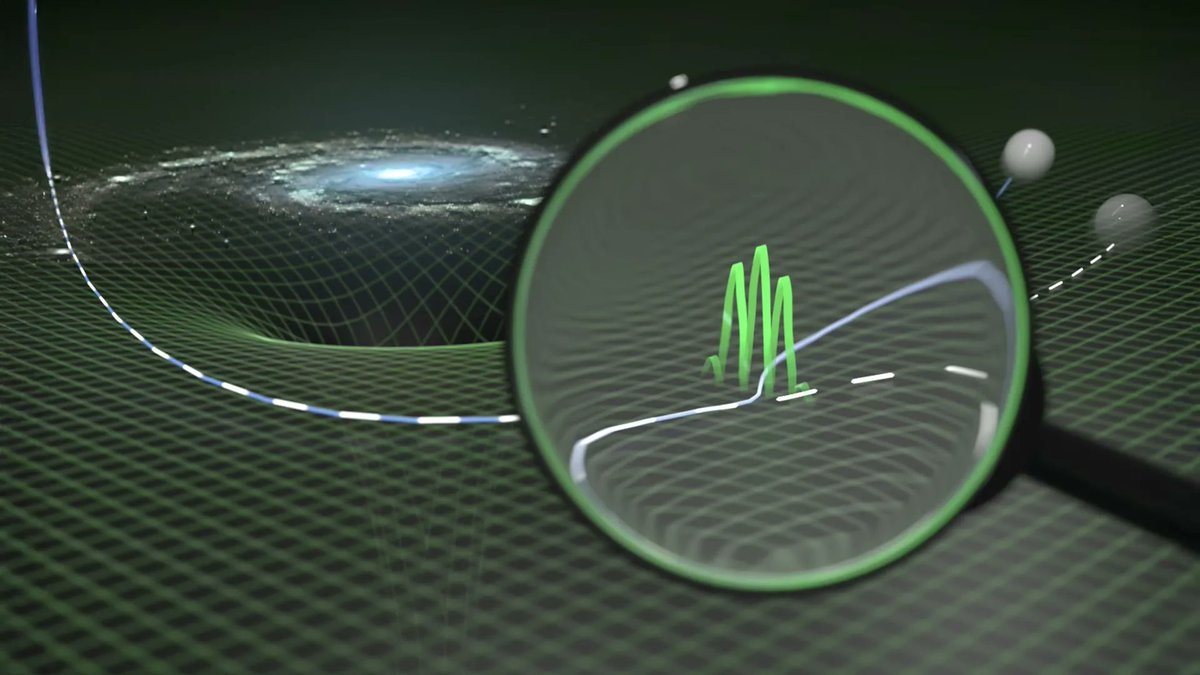
A persistent challenge in modern physics is reconciling two extraordinarily successful but fundamentally different frameworks: quantum mechanics, which describes the behavior of particles at the smallest scales, and general relativity, which explains gravity and the large-scale structure of the universe. While both theories work extremely well in their respective domains, they are mathematically incompatible in their current forms. A new theoretical study from researchers at TU Wien proposes a way to explore this conflict by reconsidering one of the core ideas of general relativity: the paths that objects follow through spacetime, known as geodesics. In Einstein’s theory, massive objects such as stars or galaxies curve spacetime, and smaller objects move along the shortest possible path within that curved geometry. This is why planets orbit stars and why falling objects follow predictable trajectories. The researchers investigated what happens if the geometry of spacetime itself is treated not as a perfectly defined structure but as something subject to quantum uncertainty. In quantum physics, particles do not have exact positions or momenta; instead, their properties are described by probability distributions encoded in wave functions. Applying a similar idea to gravity means that the mathematical object describing spacetime curvature, the metric, would also become a quantum quantity rather than a fixed background. This leads to a situation in which spacetime is slightly “fuzzy,” and therefore the trajectories of particles may no longer match the classical geodesics predicted by general relativity. To study this possibility, the team developed a mathematical framework that quantizes the metric for a specific but physically relevant situation: a gravitational field that is spherically symmetric and constant in time, similar to the field around a star like the Sun. Within this setting, they derived a modified equation describing particle motion, which they call the “q-desic equation.” This equation is the quantum analogue of the classical geodesic equation. It predicts that particles moving through a quantum version of spacetime can deviate slightly from the paths that classical relativity would expect. At ordinary gravitational strengths, these deviations are extraordinarily small, on the order of about 10^-35 meters, far beyond any conceivable experimental detection. However, when the cosmological constant is included in the calculations, which is associated with dark energy and the accelerating expansion of the universe, the situation changes significantly. Under these conditions the predicted differences between classical geodesics and quantum-corrected paths become much larger on extremely large cosmic scales, around 10^21 meters. At intermediate scales, such as planetary orbits within the Solar System, the two predictions remain essentially identical. 👉share.google/xDldtV2mUh4kIh…
Erika  tweet media
English
28
48
235
7.8K
Erika 
Erika @ExploreCosmos_·
La localización es poco precisa porque las ondas gravitacionales no se detectan con un “telescopio” que apunte al cielo, sino con interferómetros que miden pequeñas deformaciones del espacio-tiempo cuando la onda pasa por la Tierra. Para saber de dónde viene la señal se comparan los tiempos de llegada y la forma de la onda en varios detectores (como LIGO y Virgo). Con solo unos pocos instrumentos separados por miles de kilómetros, la triangulación todavía deja regiones del cielo bastante grandes. Se puede mejorar añadiendo más detectores a la red y aumentando su sensibilidad. De hecho, cuando más observatorios participan (por ejemplo con KAGRA o el futuro Einstein Telescope) la región posible en el cielo se reduce mucho. LISA, que será un detector espacial con tres satélites separados por millones de kilómetros, debería mejorar bastante la localización para muchas fuentes. Al moverse alrededor del Sol durante meses o años mientras observa una señal, puede reconstruir mejor la dirección de origen. En algunos casos incluso permitirá avisar con antelación a los telescopios antes de que ocurra la fusión.
Español
0
1
3
286
Astroman
Astroman@NewAstroman·
@ExploreCosmos_ Poca precisión en la ubicación. ¿A qué se debe esta imprecisión? ¿Hay forma de mejorarla? ¿Con LISA mejorará?
Español
1
0
0
303
Erika 
Erika @ExploreCosmos_·
Astronomers have reported the detection of an unusually massive merger between two stellar-mass black holes, an event that sent powerful gravitational waves rippling across the universe. The collision involved two black holes whose combined mass exceeded roughly 100 times the mass of the Sun, making it one of the most massive stellar-mass black hole mergers recorded so far. Most mergers previously detected by observatories such as @LIGO and @ego_virgo involve systems totaling only a few tens of solar masses, so the sheer scale of this event immediately attracted attention. The gravitational-wave signal allowed researchers to reconstruct the masses and dynamics of the binary system as the two black holes spiraled together and finally merged into a single, more massive remnant. Events like this produce a characteristic “chirp” in gravitational-wave detectors as the orbit shrinks and the frequency of the waves rapidly increases just before the final collision. The newly formed black hole then briefly vibrates in what physicists call the ringdown phase, emitting gravitational waves that encode information about its mass and spin. What makes this event particularly intriguing is that black holes of this size are not easily produced by the collapse of ordinary massive stars. Stellar evolution models predict a range of masses where black holes should be rare or even absent because extremely massive stars lose much of their material through violent stellar winds or pair-instability supernovae before they can collapse. The fact that both objects in this system appear to fall into this unusually high-mass regime suggests that they may themselves be the products of earlier mergers. In other words, they could be “second-generation” black holes that formed when smaller black holes previously collided in dense stellar environments such as globular clusters. Another intriguing possibility raised by the researchers is that such a merger might produce not only gravitational waves but also a burst of electromagnetic radiation, potentially in the form of gamma rays, if the collision occurred in a region containing gas or other matter. While black hole mergers are usually expected to be “dark” events, interactions with surrounding material could briefly light them up, offering astronomers a rare opportunity to observe the same cosmic event using both gravitational-wave detectors and traditional telescopes. 👉 share.google/cQHwKbfxfOUgWz…
Erika  tweet media
English
16
51
222
7.3K