Wess Mitchell

69 posts

Wess Mitchell banner
Wess Mitchell

Wess Mitchell

@AWessMitchell

Principal and Co-Founder of The Marathon Initiative. Author of Great Power Diplomacy: The Skill of Statecraft from Attila the Hun to Kissinger. Views my own.

Virginia, USA เข้าร่วม Mayıs 2025
59 กำลังติดตาม456 ผู้ติดตาม
ทวีตที่ปักหมุด
Wess Mitchell
Wess Mitchell@AWessMitchell·
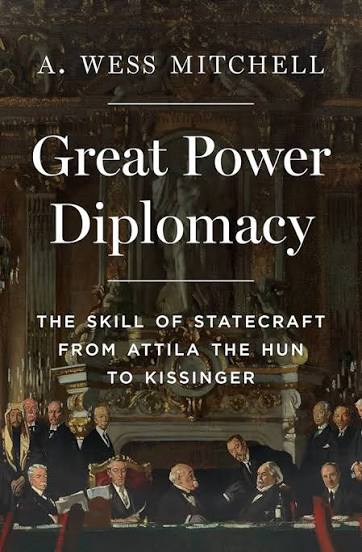
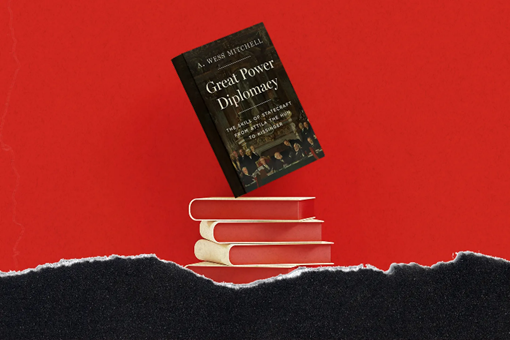
Great Power Diplomacy published today! Thanks to Eric Crahan & his colleagues @Princeton for what turned out to be a beautiful book. Available at: tinyurl.com/5czmkhs5
Wess Mitchell tweet media
English
2
0
13
1.1K
Wess Mitchell รีทวีตแล้ว
Jarrett Stepman
Jarrett Stepman@JarrettStepman·
@ConservaWonk @AWessMitchell I’ve just started reading it. Excellent book. His book about the strategy of the Hapsburg empire was also very much worth reading if you haven’t picked that one up yet.
English
0
1
2
77
Wess Mitchell
Wess Mitchell@AWessMitchell·
OTD in 1650 the infamous Capt. William Mitchell, 1st of my family to arrive in the new world, set sail from England for the colonies on the ship ‘Thomas & John.’
English
0
0
5
86
Wess Mitchell รีทวีตแล้ว
Justin Overbaugh 🇺🇸
Justin Overbaugh 🇺🇸@JustinOverbaugh·
Great article by @AWessMitchell in Imprimis. As we re-imagine our relationships with partners and allies, this particular section was thought-provoking: "A corollary has to do with allies. America has a larger number of allies than any great power in history. As a maritime power in the style of Venice and Britain, America benefits from having allies at the world’s chokepoints and in strategic regions. But diplomacy with allies, too, must be judged by its outcomes. Does the behavior of a particular ally ease or increase the concentration of U.S. military power against the main threat? Does it relieve or add to America’s burden in wartime? Does its trade policy help or hinder the goal of reindustrialization here at home in the face of the growing threat from China? Alliances that lack reciprocity in trade or do not share the burden in security need to be fixed. The goal is strategic renovation: to rebalance the ledger of burdens and benefits in U.S. alliances so that they are more favorable to the U.S. and therefore more sustainable." - A. Wess Mitchell imprimis.hillsdale.edu/recovering-the…
English
1
4
9
700
Patrick Porter
Patrick Porter@PatPorter76·
I've reviewed A. Wess Mitchell's formidable book for @firstthingsmag, out in April. He calls for a rediscovery of diplomacy's core, not superficially as "comms" or as handmaiden to military force, but as art of arranging power in space & time, to concentrate it & limit threats.
Patrick Porter tweet media
English
11
131
751
36.4K
Wess Mitchell
Wess Mitchell@AWessMitchell·
@PatPorter76 @firstthingsmag Thanks @PatPorter76 for your generous appraisal & for reviewing GPD! Diplomacy doesn't get the attention it deserves (esp in modern times) as a component of grand strategy. Hopefully the book gives a start in remedying that.
English
0
1
11
2.8K
Wess Mitchell รีทวีตแล้ว
Greg R. Lawson
Greg R. Lawson@ConservaWonk·
#Diplomacy is an art America needs to rediscover in an era of great power politics & growing diffusion of power. @AWessMitchell has excellent thoughts of this in @HCimprimis. #Strategy imprimis.hillsdale.edu/recovering-the… Excerpt, "I should also define what I mean by strategy: it is the matching of national means, in the form of military and economic resources, to national ends, in the form of foreign threats and opportunities. Danger arises when gaps emerge between the means at a nation’s disposal and the ends to which those means must be applied. Diplomacy is critical when a state faces enemies too numerous or powerful to be deterred or defeated by military means alone. Diplomacy’s role in strategy is to increase the external means at the nation’s disposal by building coalitions and to reduce the threats arrayed against it through détente. Effective diplomacy permits states to avoid tests of strength that are beyond their ability to bear. There are two erroneous conceptions of diplomacy that have become entrenched in the modern mind, one mostly on the left and the other mostly on the right. The main error on the left is thinking that diplomacy’s purpose is to build rule-making institutions that transcend nation-states and that will eventually expunge war from the human experience. A historical example of this is seen in the policies of President Woodrow Wilson after the First World War, as in his promotion of a League of Nations. This way of thinking persists today in the liberal institutionalism of those who advocate for a rules-based international order. The main error on the right is thinking that human societies can only find true safety and honor in a preponderance of military power, and that diplomacy is more often than not a form of surrender. This view finds expression in the perennial accusations of appeasement or comparisons to Neville Chamberlain and the Munich Agreement of 1938—when the British Prime Minister agreed to Nazi Germany’s annexation of the Sudetenland as a means of preventing war—anytime an American president engages in direct diplomacy with a U.S. adversary. Both of these misconceptions are built on the notion that we can find a cleaner or more efficient substitute to the messiness of compromise, which is diplomacy’s stock-in-trade. The entrenchment of these views can be traced to the unusual circumstances that existed after the Cold War. American power was unmatched, liberal institutions were in the ascendancy, and history—in the famous formulation of Francis Fukuyama—had supposedly come to an end. There seemed to be no need for classical diplomacy, because the U.S. had no peer competitor with whom it needed to negotiate or compromise. As a result, American foreign policy embraced a transformationalist agenda of remaking the world—including our adversaries—in our image, through the spread of democracy and liberal economics. It is clear today, however, that what Fukuyama called history is in fact an ongoing reality and that our vacation from it is over. All the international institutions in the world cannot stop a war, should it come, between China and the U.S. Nor does the U.S. hold the margin of military superiority it did 30 years ago. Like past great powers, therefore, we will need skill in diplomacy to bring national means and national ends into alignment."
English
3
2
5
318
Wess Mitchell
Wess Mitchell@AWessMitchell·
My letter to the editor in today’s WSJ: the munitions crunch validates years of warnings by Elbridge Colby. “He foresaw the current predicament long before most others & had the courage to confront it long before it was politically convenient to do so.” wsj.com/opinion/elbrid…
English
1
3
14
936
Wess Mitchell
Wess Mitchell@AWessMitchell·
Thanks to @GrahamTAllison and Meghan O'Sullivan @BelferCenter for hosting me this past week to discuss my book Great Power Diplomacy , as well as U.S.-China competition, the war in Iran and U.S. grand strategy.
English
0
1
4
195
Wess Mitchell
Wess Mitchell@AWessMitchell·
Worth reading yesterday’s clear-eyed SASC testimony by @USWPColby. His call for the US to navigate between isolationism & “unfettered use of military force” recalls HAK's observation that Nixon steered a prudential path between “overextension & isolation." armed-services.senate.gov/imo/media/doc/…
English
0
1
4
259
Wess Mitchell
Wess Mitchell@AWessMitchell·
Thanks to Larry Rifkin for hosting me on @trendspodcast. We talked about why the US became over-reliant on sanctions & military power after the Cold War—and how the Trump administration is putting diplomacy back at the forefront of US grand strategy. americatrendspodcast.com/2026/01/28/ep-…
English
0
0
2
175
Wess Mitchell
Wess Mitchell@AWessMitchell·
My oped comparing remarks by @SecRubio & AOC at Munich. Rubio’s vision is civilizational rejuvenation; AOC’s is technocratic restoration. Rubio sees the West as a sacred inheritance; AOC sees it as administrative construct to promote abstract social goals. washingtonpost.com/opinions/2026/…
English
20
1
3
255
Wess Mitchell
Wess Mitchell@AWessMitchell·
@SecRubio’s MSC speech was a historic reaffirmation of the civilizational West as something worth fighting for & the organizing reason for NATO. Evokes an oft-overlooked passage of the 1949 NATO charter: to safeguard our “common heritage & civilization”. state.gov/releases/offic…
English
0
0
4
197
Wess Mitchell
Wess Mitchell@AWessMitchell·
@USWPColby’s NATO 3.0 speech outlines a compelling & attainable vision for renovating NATO for an era of great power competition. Strategic subsidiarity in the secondary theater enables deterrence in the primary theater. Historic shift on par w/ Harmel 67. war.gov/News/Speeches/…
English
2
7
21
1.4K
Wess Mitchell
Wess Mitchell@AWessMitchell·
Thanks to @JoeriSchasfoort at Money & Macro for hosting me to talk about geopolitics. In our discussion, I argue that the Trump administration's NSS & NDS reflect a strategy of consolidation that is a logical response to the simultaneity problem: youtube.com/watch?v=BWG1i4…
YouTube video
YouTube
English
0
0
3
317
Wess Mitchell รีทวีตแล้ว
Michael Lucci
Michael Lucci@Michael7ucci·
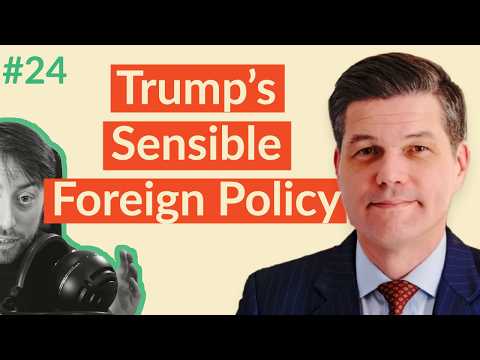
Bonus: @AWessMitchell's book Great Power Diplomacy & article "The Grand Strategy Behind Trump's Foreign Policy"👇 Mitchell steel-mans Trump strategy, sewing current events into historical coherence. He partnered w/ Colby at Marathon Initiative. foreignpolicy.com/2026/01/14/tru…
Michael Lucci tweet media
English
1
1
6
516
Wess Mitchell
Wess Mitchell@AWessMitchell·
My latest article on Trump NSS/grand strategy. I argue that the administration is pursuing a consolidationist strategy aimed at proactively shoring up US power for long-term competition. This is a logical strategy for a power in America's position. foreignpolicy.com/2026/01/14/tru…
English
0
2
6
240