Per Amlie

4.6K posts

Per Amlie

Per Amlie

@AmliePer

Faster

Singapore เข้าร่วม Nisan 2021
820 กำลังติดตาม400 ผู้ติดตาม
Per Amlie
Per Amlie@AmliePer·
@rationalaussie Get dogman and rigger tickets. Lot's of work to support crane operations in mine sites, construction sites etc.
English
0
0
7
800
Rational Aussie
Rational Aussie@rationalaussie·
I'm hearing on the grapevine that trying to get a job right now if you're unemployed is like trying to get through the Strait of Hormuz in one piece. Does anyone care to share some anecdotes?
English
102
5
374
34.5K
Per Amlie
Per Amlie@AmliePer·
My understanding of SWAP lines is that countries connected to US FED SWAP lines can print local currency which will be purchased by US FED and paid in USD which will be used to cover local government costs. This way a country can print money with less or no debasement of local currency as they piggyback on the debasement of the global reserve currency which is slower due to bigger monetary volume.
English
0
0
1
17
Asymmetric Insight
Asymmetric Insight@billheckler1·
Can someone confirm mechanics of SWAPs? 1. UAE needs USD to fund USD deonominated debt. 2. If UAE buys on USD on the open market dirham collapses. 3. Treasury/Fed provides USD with SWAPs to prevent plunge in the dirham (and corresponding spike in USD prices). TLDR I: USD swaps = US buying foreign currencies at below market prices. TLDR II: US taxpayers subsidize UAE sheiks.
English
5
0
37
5.9K
Jamie Coutts CMT
Jamie Coutts CMT@Jamie1Coutts·
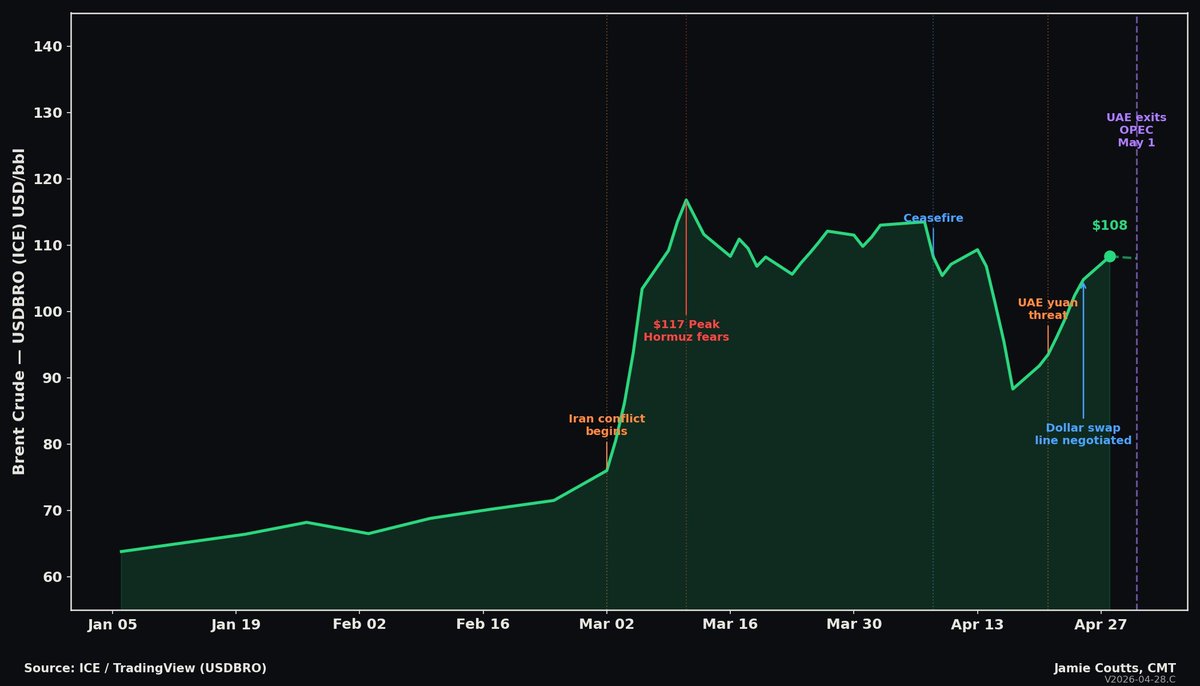
UAE threatened to price oil in yuan. Got a dollar swap line from Bessent within weeks. Exiting OPEC May 1.
Jamie Coutts CMT tweet media
English
29
151
1.6K
159.4K
Per Amlie รีทวีตแล้ว
🇦🇺Craig Tindale
The people who offshored our petrochemical and refining capacity are the same people who offshored our industrial base. They are the people who imagined that Australia could prosper in an asset-inflated, debt-driven economy, where we sold houses to one another, served coffee to one another, and called it prosperity. They are the people who built vast domestic schemes while allowing the productive base that funds them to decay. They are the central bankers who treated consumption as the measure of success, while the goods we consumed, the machines we needed, and the materials we depended upon were increasingly sourced from China. They are the people who speak solemnly of “net zero” while ignoring the fact that much of our carbon burden has simply been exported, manufactured elsewhere, and then consumed here with clean hands and dirty supply chains. They are the people who insist that Australian workers must have rights, protections, safety standards, and wages, while accepting that those same rights are extinguished for the workers who make our goods overseas. That is the modern colonial mind. It no longer arrives with a flag and a gunboat. It arrives with ideology, moral absolutism, and a lecture. It tells us what to think. It tells us what words to use. It tells us what industries we may have, what energy we may use, what history we must despise, and what future we must accept. And it did all this without ever asking the Australian people the central question: Do we wish to remain a serious country, capable of making, refining, building, repairing and defending itself? Or are we content to become a nation of consumers, administrators and moralists, living off assets we don’t build, supply chains we do not control, and energy systems we no longer understand?
English
59
161
574
15.5K
Per Amlie รีทวีตแล้ว
Big Brain Philosophy
Big Brain Philosophy@BigBrainPhiloso·
Former Singapore PM Lee Kuan Yew on the fundamental difference between American and Chinese society:** Why do America and China see the world so differently? Lee Kuan Yew argues it comes down to one thing: history. "The difference in the core philosophy between the American and the Chinese... it's a reflection of your history." He traces America's worldview back to its origins: "You came over in the Mayflower. You were seeking religious freedom so much so that you refused to allow it to be taught in the schools. You believed in the individual as the creator of all things." That belief in the individual shaped everything that followed: "You captured the wild west. I mean, on horseback. New town, main street, you be mayor, I'm sheriff, you're saloon keeper. We build a gold rush town or cattle or whatever it is." And then came extraordinary fortune: "You have been immensely fortunate and successful. Two world wars left Europe in a shambles and you emerged as the undamaged technological and industrial power." China's story, Lee explains, looks nothing like this. "China has a completely different and a checkered history. 4,000 to 5,000 years of ups and downs. Long periods when there was no governments, anarchy, warlords." He shares a personal moment that brought this reality home to him: "I once had a Chinese masseur when I was in Beijing working my game shoulder and we were talking and I said during the war, Japanese time, what currency did you use? So Japanese currency if it's in Japanese controlled areas or other currencies in other areas. So I said how many currencies are there? Two, three? Says 14 or 15 depending on which warlord's area you're in." So how did the Chinese people survive centuries of chaos, when the state itself kept collapsing? "Why have they survived in spite of anarchy, disaster, floods, famines? Because there was a social network independent of government that sustained them. The immediate family, the extended family, the clan. You owed them an obligation. You cannot turn them away. That's how they survived." This is the philosophical fork in the road. America placed the individual at the centre. China placed the family. Lee describes the system Singapore deliberately chose to preserve: "If we keep those family bonds, those traditional life raft systems not dependent on the state, which places the emphasis on family, extended family, and then the government, and not the individual at the expense of the family and the state, which is the American system." He acknowledges what the American system produces: "So you have Bill Gates or John Chambers of Cisco... you look up Forbes or Fortune or whatever and 50 of the best and the brightest and the wealthiest. That's your experience. That's not China's experience." But the goal in Asia is different: "Yes, we also now want to try and get our little Bill Gates going, but in the context of keeping our society solid so that we will survive as a people." He closes with a sharp reminder of why these two civilisations may never fully understand each other: "You have never been occupied. You have only had one civil war. So you will never understand what it is." The takeaway is uncomfortable but worth sitting with: a society's values aren't chosen in the abstract. They're forged by what that society had to survive. Individualism is a luxury of stability. Family-first collectivism is the inheritance of centuries of collapse.
English
103
638
2.7K
183.6K
Per Amlie รีทวีตแล้ว
Simons
Simons@Simon_Ingari·
Wife explaining her husband's job to her close friend. Wife: "He sells software to companies." Her friend: "Oh nice, like apps?" Wife: "No. Big software. For running whole businesses." Friend: "Oh, like Microsoft?" Wife: "No. A German company. SAP." Friend: "What's SAP?" Long pause.↓↓↓
English
22
20
408
761.8K
Per Amlie
Per Amlie@AmliePer·
@TOzgokmen Nobody will give up world reserve currency without a fight. I believe it's called an exorbitant privelege. We are at the end of a debt cycle and what's happening is not a surprise but still shitty.
English
0
0
0
8
471TO
471TO@TOzgokmen·
@AmliePer I see, because nobody else has any debt? Only the "US" does, because they create all the money? wtf...
English
1
0
0
33
471TO
471TO@TOzgokmen·
HORMUZ BLOCKADE IS THE MAIN OBJECTIVE, NOT WAR: IMO, the idea that US did not expect Hormuz blockade is a total nonsense. Everybody studied this matter endlessly for the past 50 years; I knew it when I was 10 years old. Pentagon machinery has incredible expertise; do not be fooled by UI (Useful Idiots = US presidents). Deep State runs the US foreign policy w/o significant changes for the past 150 years. So, US totally expected Hormuz blockade and counted on it. In fact, we know now that when Iran started modulating Hormuz in order to send oil to China & others, that is exactly when US blockaded the partial blockade to close the oil shipments in full. This idea, which took me some time to grasp, is rather brilliant. Iran willingly destroyed O&G of GCC, which is an added & tremendous bonus towards the US strategy of destroying China and greater BRICS. Slow strangulation, but it will be very effective because there is no way around it. I expect years of blockade...
Robert A. Pape@ProfessorPape

“Two blockades, two clocks.” That’s how Washington is framing the Iran war. It’s wrong. A century of evidence shows economic pressure alone almost never forces states to concede on core security issues. Here’s what everyone is missing:


English
23
5
42
4.9K
Per Amlie
Per Amlie@AmliePer·
@TOzgokmen It feels like US is putting a gun to the head of the world to secure refinancing of their debt??
English
1
0
0
19
471TO
471TO@TOzgokmen·
@AmliePer Debt is an asset for the US. Your equation is not correct.
English
1
0
0
40
Per Amlie
Per Amlie@AmliePer·
The west can learn a lot from Singapore and LKY. A functional multicultural society built for progress and prosperity. Challenge is to keep up over several generations as good times creates weak men and so on....
Alexandre Allegret-Pilot@AllegretPilot

🇸🇬 Immigration : ce que tout le monde sait… mais que personne n’ose dire Lee Kuan Yew l’expliquait sans détour : 👉 Un pays ne tient que par un noyau dur de citoyens prêts à le défendre, le faire vivre et s’y reconnaître. Pas une addition d’individus. Pas une juxtaposition de communautés. 👉 Une colonne vertébrale. Et c’est précisément là que le débat migratoire est mal posé. On parle de : - quotas - pénuries de main-d’œuvre - accueil - droits Mais on évite la seule question qui compte vraiment : 👉 combien de diversité une nation peut-elle absorber sans se fragmenter ? Quel est la fiabilité de quelqu’un qui méprise la nation à laquelle il appartient officiellement, tout en promouvant manifestement des intérêts extérieurs à celle-ci ? Parce que oui, il existe une limite. Et non, elle n’est pas uniquement économique. Une société, ce n’est pas un marché. C’est un équilibre fragile entre : - culture commune - confiance - sentiment d’appartenance Quand cet équilibre casse, tout le reste suit. 👉 Moins de confiance 👉 Plus de tensions 👉 Moins de capacité à décider collectivement Singapour n’a pas fait semblant : ✔️ ouverture, oui ✔️ naïveté, jamais ✔️ assimilation exigeante, non négociable 🧭Une seule boussole : l’intérêt de Singapour et des Singapouriens. Tout le reste y est subordonné. Il n’est pas question de grandes envolées lyriques sur le sauvetage de l’humanité. Charité bien ordonnée commence par soi-même. En Europe, on fait souvent l’inverse : 👉 beaucoup de discours 👉 peu d’exigence 👉 et une peur constante de nommer les choses Résultat ? On découvre progressivement qu’une nation peut se déliter… sans crise brutale, sans effondrement visible, mais par érosion lente du commun. Une nation qui devient peu à peu incapable de réaliser un centième des desseins grandiloquents que certains lui assignent pourtant volontiers. 👉 Le vrai sujet n’est peut être pas tant « être pour ou contre l’immigration ». Le vrai sujet, c’est : voulons-nous encore être un peuple … ou simplement des populations qui se partagent un territoire ?

English
0
0
0
7
Per Amlie รีทวีตแล้ว
Josh Man
Josh Man@JoshMandell6·
Tick tock Another block The new Fed chairman Is not a sock He says he's not a fan of quantitative easing but what if he must do it to keep the gov't from seizing? Some of the tougher questions he might have ducked But if somebody doesn't do something, we're all _______
English
36
16
405
23.4K
Per Amlie รีทวีตแล้ว
Capitalist Exploits
Capitalist Exploits@capitalistexp·
1/11 The Iran war just cemented the most important investing framework for the next decade. Not the Mag 7. Not AI. Not the SpaceX IPO. Maslow's pyramid. The base is where the big returns will come from.
Capitalist Exploits tweet media
English
2
18
61
3.1K
Per Amlie รีทวีตแล้ว
Jaynit
Jaynit@jaynitx·
In 1942, the Japanese rounded up all Chinese men in Singapore. They were filtering out the healthy young ones to execute. Lee Kuan Yew was 18. A guard pointed at him and said: "Go to that lorry." He knew what that meant. The lorry went to the beaches. The beaches meant machine guns. He asked: "Can I collect my other things?" They said yes. He walked away, found his family's gardener, and hid in his quarters for two days. When they changed the screening inspectors, he tried again. This time, he got through. The ones sent to that lorry were taken to the beaches and shot. Somewhere between 50,000 and 100,000 didn't survive. 60 years later, he sat down at Harvard to explain how he built Singapore from a tiny island into one of the wealthiest nations on Earth: On what the war did to him: "We lived in happy, placid colonial Singapore in the 1920s and 30s. The British Empire would have lasted another thousand years, so we thought." Then the Japanese came. In less than one and a half months, the British collapsed. "Three and a half years of hell. Butchery. Brutality. Many didn't survive. I was fortunate. I did." "But it changed us." "What right did they have to do this to us? Why did the British let us down so badly?" When the war ended, Lee went to Cambridge to study law. But he was watching with different eyes. "Can they govern me better than I can govern myself? Because they scooted when the Japanese came in. And why shouldn't I be running the place?" On learning languages to lead: Lee was the best speaker in English. But only 20% of Singapore spoke English. The masses spoke Hokkien, Mandarin, and Malay. "So every day at lunchtime, instead of having lunch, I would sit down with a Hokkien teacher and laboriously and painfully learn to convert my Mandarin into Hokkien." "Had I not mastered that, the battle would be lost by default." His first speech in Hokkien, the kids laughed at him. "I said, please don't laugh. Help me. I'm trying to get you to understanding." By 6 months, he could get his ideas across. By 2 years, he was fluent. "Believe it or not, at the end of two years I could speak better than most of them." "That came respect." It showed two things: how determined he was, and how sincere. Here was a man doing all these other things and still learning their language just to talk to them. On fighting the Communists: The Communists had been organizing since 1923. The year Lee was born. "Here we were in the 1950s trying to beat them. And they are professionals at organization." They had elimination squads. Guerrillas in the jungle. Killer squads in the towns. Lee stood up and said no. "They denied that they were Communists. 'We're just left-wing socialists.' So I did a series of 12 broadcasts to set the scene. And I made it in three languages." English. Malay. Mandarin. 20 minutes each. "When I finished each broadcast, the director of the station couldn't see me. Went into the room and found me lying on the floor trying to recover my breath." "But it was a fight for survival. Life or death." On where trust comes from: "It's difficult to establish trust in times of calm. You just say, 'Well, it's an argument, therefore I'm a better guy than you.'" "But when the chips are down and you can get eliminated in a very unpleasant way and you show that you're prepared for it and you'll fight for them, it makes a difference." "Without that trust, we could not have built Singapore." On IQ vs EQ: Harvard asked him: would you prefer high IQ or high EQ in a leader? "IQ, you can get beautiful paper done. Complex formulas worked out. Elegant solutions." "But when you've got to get a team to work and put that formula into practice, you're dealing with human beings." "If you're not good at EQ, you can't sense that A doesn't get on with B, and you put them in the same team. It's no good." He rated his own EQ as 7 or 8 out of 10. His IQ as "maybe 120." But he had colleagues who could sense a person instantly. "He shook hands with the man and said, 'I recoiled when I felt his palm. Evil man.' And he was. How does he know? I don't know." "So I learned whenever I had to do interviews to choose people, I would get people who are very good at seeing through a candidate." On corruption: Singapore in the 1950s was full of deals, bribes, and organized crime. "When we took over, we decided that this was the critical factor. If we did not make it so that every dollar put in at the top reaches the ground as one dollar, we're not going to succeed." "We came in and made a symbolic act. We dressed in white shirts, white trousers, and said we will be what we represent." He put the anti-corruption bureau under his personal portfolio. "I gave the director the authority to investigate everybody and everything. All ministers. Including myself." One of his own colleagues took half a million in bribes. When the investigation started, he asked to see Lee. "I said, if I see you then I'll be a witness in court. So best not see me. Better see your lawyer." The man committed suicide. Left a note saying: "As an oriental gentleman who believes in honor, I have to pay the supreme price." "It's a heavy price. But it reminds every minister that there are no exceptions." On consistency: Lee had three journalists analyze 40 years of his speeches. He asked them: what was the dominant theme? All three said the same thing: consistency. "What I said at the beginning, throughout all that period, the theme stayed loud and clear." "That made it simple. Because you know where you stand with me. And you know what I want to do." On delivering results: "We deliver the homes, the schools, the jobs, the hospitals." "Today, 98% of our people own their own homes. The smallest would be about $100,000 US. The biggest about $300,000." "Once you own that amount of assets, you are not in favor of risking it with a crazy government. Your assets will go down in value." "But that was planned." Why? Because Singapore is small. Everyone does national service. If you're going to fight, you better be fighting for something you own. "So we give everybody a stake." On changing culture slowly: Lee wanted Singapore to speak English. But he couldn't force it. "Had I passed a law and said you will all learn English, we would have had mayhem. Riots." Instead, he let parents watch who got the best jobs. The jobs were already there, from the multinationals and banks. They all used English. "They watched and saw who got the best jobs. And they switched." It took 16 years. "I did not want to have said 16 years. Because in those 16 years I lost 20,000 Chinese graduates who had poor jobs. I wanted to make it shorter. I couldn't. I would have run into flack." On whether leadership can be taught: Lee quoted Isaac Singer, the Nobel Prize winner for Yiddish literature. Someone asked Singer: "Can you make a writer write great literature?" He paused. Then said: "If he has the writer in him, I will make him a good writer in a shorter time." Lee's version: "Can you make a leader of anybody? I don't think so." "He must have some of the ingredients. He must have that high energy level. He must have the ability to project himself, his ideas. He must have the desire, almost instinctively, to say 'let's do something better.' Of wanting to do something for his fellow men and not just for himself and his family." "You can't teach those things. He's either got it or he hasn't got it." "But if he's got that, then you can save him a lot of trouble." On sustaining yourself: Harvard asked how he managed despair over decades of leadership. "If your message is one of despair, then you should not be a leader. You must give people hope." "But there are moments when you feel very down. Either because you're physically down, or emotionally down, or because the world has turned adverse against you." "When you are in that condition, the first thing you do is get a good night's sleep. Then get a swim or chase a ball. Get the cobwebs out of your mind." "If you're not fit, you're going to make mistakes. Physically fit. You must stay physically and mentally fit." In his later years, he learned to meditate. "At the end of 20 minutes to half an hour, my pulse rate can go down from 100 to about 60. You can feel yourself subside. You still your mind. You empty your mind." "Then when you are rested, you resume quietly. You still got the same problems. Maybe you sleep on it. Come back. Look at it for a few days. Then decide." This 2 hour Harvard interview will teach you more about leadership than every business book you've read combined. Bookmark & give it 2 hours this weekend, no matter what.
English
95
1.4K
6.4K
943.4K
Per Amlie รีทวีตแล้ว
Handre
Handre@Handre·
Sweden's socialist experiment collapsed so spectacularly in the 1990s that even the Social Democrats had to abandon their own system and embrace free markets. By 1990, Sweden faced a full-blown economic crisis. Government spending had ballooned to 67% of GDP. Marginal tax rates hit 102% (literally paying the state to work). Public debt exploded. The banking system collapsed under the weight of government-directed credit allocation. Unemployment skyrocketed to 12%. The Swedish model had delivered exactly what free market economists predicted: economic stagnation, capital flight, and fiscal collapse. The government had no choice but to deregulate. They privatized telecommunications, postal services, railways, and electricity. They abolished exchange controls and financial market regulations. They cut government spending from 67% to 49% of GDP. They reduced the top marginal tax rate from 87% to 57%. They opened domestic markets to foreign competition and eliminated price controls across entire sectors. The results were immediate and undeniable. GDP growth accelerated from near-zero to 4% annually through the late 1990s. Unemployment plummeted to 4% by 2000. Productivity surged as companies like Ericsson and Volvo competed globally without government interference. Swedish startups like Skype and Spotify emerged from the newly liberalized economy. Foreign investment flooded back as Sweden transformed from socialist basket case to competitive market economy. Capitalism worked once Sweden removed socialist barriers to growth and competition. Yet, today it is paraded as a socialist success story😂.
Handre tweet media
English
163
1K
3.4K
318.4K
Per Amlie รีทวีตแล้ว
Peter Gregor
Peter Gregor@GregorPepe·
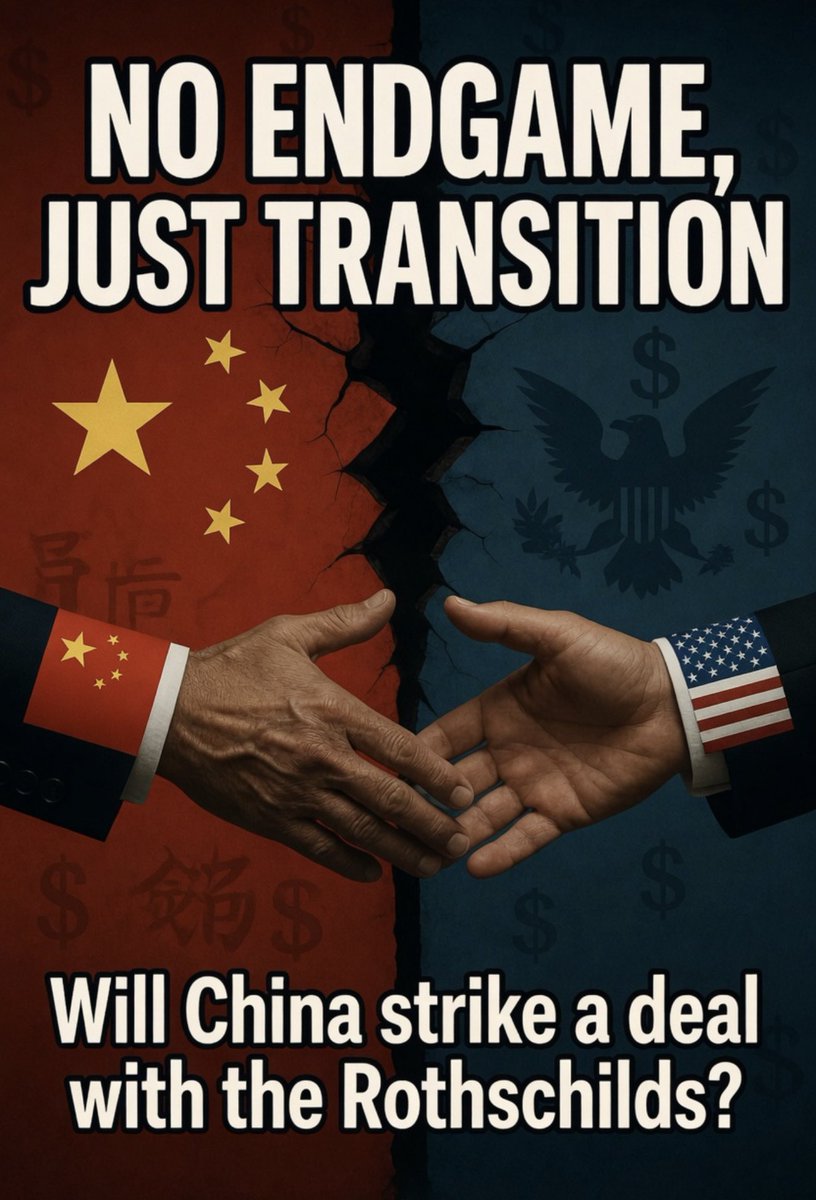
Will China strike a deal with the Rothschilds? Or, more bluntly: will Iran/China/Russia cut a deal with the US/Israel? Pragmatic observers and political scientists tend to see some kind of agreement as inevitable. Financial and power elites have always been remarkably flexible—supporting multiple sides when it suits them, regardless of ideology or geopolitics. Profit tends to decide: divide the spoils, carve up the territory, move on. Why should this time be any different? I see it differently. At first glance, there’s little difference between the Chinese and Western economic—especially monetary—systems: both are controlled by a narrow group at the top of the pyramid. But the crucial difference is this: in the West, corporations sit at the top, buying influence, politicians, and power. In China, corporate influence is tightly constrained. The state—presented as both technocratic and merit-based—keeps a firm grip on the economy and the financial system. China’s leadership will never open the door to external financial power structures that could hollow out its sovereignty. They went through a brutal learning curve. After the 1911 revolution, they experimented with Western-style parliamentary democracy. The result? Chaos—ten heads of state, forty-five cabinets, fifty-nine prime ministers in just sixteen years. The subsequent one-party attempt under the Kuomintang also ended in collapse and defeat. The current system, whatever one thinks of it, has proven resilient—and they intend to keep it. When the West managed to dismantle the Soviet bloc at the end of the last millennium and China was still weak, it entered a golden era and became the hegemon. Regime changes, destabilizations, resource grabs—standard operating procedure. That era is now running out of road. Multipolarity—built on cooperation, mutual respect, and non-interference—is emerging, and the West will resist it hard. Which is why I don’t expect any lasting deal in the Gulf. There will be no World War III—but neither will there be a durable truce or genuine mutual respect. Tensions between East and West—call it BRICS vs. G7, or the Global South vs. the Global North—will keep rising.  The current conflicts, along with new cold wars, will continue. And the process will end the way it so often has for empires, most recently the Soviet one:  not with a negotiated equilibrium, but with financial, moral, and social exhaustion of the Empire of Chaos. #Iran #BRICS #multipolarity
Peter Gregor tweet media
English
2
12
26
3.3K
Per Amlie รีทวีตแล้ว
Homer Pavlos
Homer Pavlos@HomerPavlos·
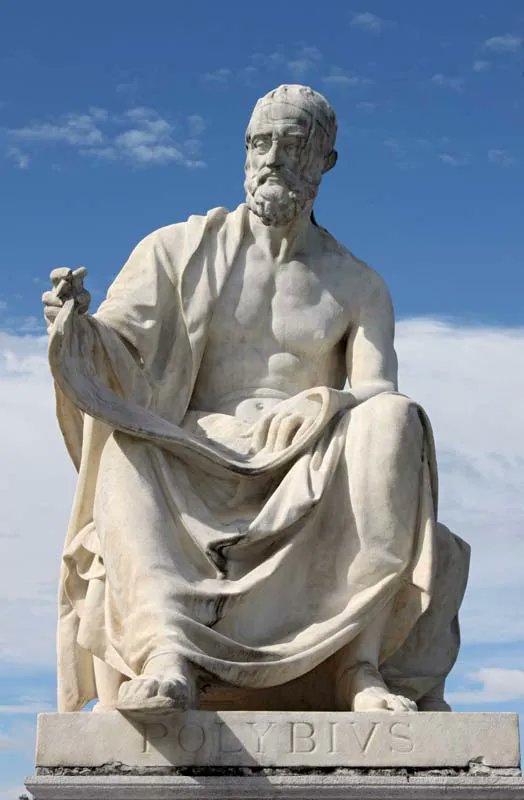
There was a demographic problem 2,200 years ago, and Polybius wrote exactly what caused it. Read carefully: "In our times, Greece as a whole is experiencing a lack of children and, more generally, a decrease in population. Because of this, cities have become deserted and there is a lack of productivity, even though we do not suffer from constant wars or epidemics. So if someone advised that we send priests to the gods to ask them what we should say or do to become more numerous and better inhabit our cities, he would not seem foolish, since the cause is obvious and the solution lies in our own hands. People have turned to arrogance, greed, and laziness, and they neither want to marry, nor, if they do marry, to raise their children. Instead, they have only one or two children with difficulty, just to leave them wealth and raise them in luxury. This evil grew rapidly, and we did not notice. For when there are only one or two children, and one is lost to war and the other to illness, it is obvious that the cities will inevitably become deserted, just as a beehive weakens little by little, so too do cities that lack population become unable to survive." Work: Histories Author: Polybius Book: 36 (ΛΣΤ) The similarities after 2,200 years. People prefer partying, doing drugs, and living for today rather than having a purpose, building a family, and leaving a positive footprint in this world. They choose the easy life. At this point, it’s a form of natural selection between those who are worthy and those who are not to continue.
Homer Pavlos tweet mediaHomer Pavlos tweet media
English
64
583
2.8K
112K
Per Amlie
Per Amlie@AmliePer·
@tomorrowtweetin How nice it will be to buy fresh meat and consume it the same day it was cut and wrapped in paper.
English
1
0
0
91
Bailey Robin
Bailey Robin@tomorrowtweetin·
Last weekend: chaos call from one of the largest plastics packaging suppliers to the U.S. meat industry. Their feedstock was stuck on ships in the Middle East. Here’s what most people don’t realize: if that packaging plant doesn’t get material, the slaughterhouses downstream can’t package meat. But the next lot of animals is already in transit. So they kill the animals and throw them in the trash. The supply chain is plumbing. When a pipe backs up or breaks, everything below it floods. It waits for no one - it’s physics. We tapped Matium’s network of suppliers and converters. Materials delivered in 7 days. Customer happy. Animals processed. Meat on shelves. This is what happens when you combine experience, software, and infrastructure - and it’s why emails and phone calls don’t cut it anymore. A few things the market is waking up to: → Even with the Strait normalizing, plastics supply chains have multi-layer dependencies that are still breaking. The market popped another 10% this week. We’re not at the top. → Volatility will run another 6-9 months. A new margin standard is getting baked in, and that takes years to erode. → Matium is filling these gaps and taking share at a pace the industry hasn’t seen. As our infrastructure scales, I expect margins to compress faster than in previous cycles. The plastics supply chain is being rewritten in real time. Most people won’t notice until it’s done.
English
3
3
19
7.4K
Per Amlie
Per Amlie@AmliePer·
@AndreasSteno Really? US/Israel chicken out or Iran/China give up? I think we just got started.....
English
1
0
3
306
Per Amlie รีทวีตแล้ว
Evan
Evan@EvanWritesOnX·
I am surprised how my tweet below entered the political spheres of Australians. It means that many Australians actually care about their country. But if you want to do something about it, the first thing to understand is that the answer is not the other party. The two parties run the visible layer. The operators underneath is the same regardless of who is in office. Same mining multinationals. Same four banks. Same supermarket duopoly. Same media owners. Same property speculation engine. Same gas exporters paying almost no resource rent. The faces rotate. The arrangement does not. So voting harder for Labor when the Liberals disappoint you, or harder for the Liberals when Labor disappoints you, is not resistance. It is the trap. It is the pressure-release valve doing exactly what it was built to do. The way to move the operators in Australia, is how you move any operator in any country. Stop voting tribally. Strengthen the cross bench. Vote for community independents and minor parties willing to put structural questions on the table that the majors have agreed never to discuss. A senate full of crossbenchers extracting concessions is worth more than another majority for either side. Learn who owns what. Find out who owns your bank, your supermarket, your toll road, your energy retailer, your superannuation, your media. Most Australians have no idea how much of the country routes back to a small handful of foreign asset managers and resource multinationals. Once you see it, the arguments between the parties stop looking like a contest and start looking like theatre. Build parallel structures. Move your money to a credit union or mutual bank. Buy from local cooperatives where you can. Read independent media. Put solar and battery on your own roof so you stop buying back your own gas at a markup from the people who exported it. Demand specific reforms, not vague good intentions. Ask every candidate, federal and state, whether they will support a real Petroleum Resource Rent Tax. Whether they will support a Norway-style sovereign wealth fund built on actual resource royalties. Whether they will support ending negative gearing and the capital gains discount. Whether they will support breaking up the media monopolies. Whether they will support foreign investment screening with teeth. Whether they will support rebuilding domestic refining capacity and downstream processing of the minerals that's shipped out raw. Vote on the answers. Politicians respond to specificity. They absorb and neutralise vagueness. Tell the truth in your daily conversations. The deepest defense of the system is the conditioning that tells Australians their own sovereignty over their own resources, their own currency, their own land and their own future is the unrealistic option. Norway did it. South Korea did it. Singapore did it. Australia chose, repeatedly, through both parties, not to. That is a choice. Choices can be made differently. Saying so out loud, in private and in public, in conversations with family and friends and colleagues, slowly breaks the spell. Australia is managed. That is the bad news and that is also the good news. Anything that can be managed can be unmanaged. But not by waiting for the next election to deliver a saviour from inside the same recruiting pipeline that produced the current arrangement. The change starts when enough citizens stop voting for the marketing departments and start asking who actually owns the building.
Evan@EvanWritesOnX

Australia was not established as a nation-building project. It was established as an extraction platform. The British did not colonize Australia to build a civilization. They colonized it to extract l; first convict labor, then wool, then gold, then minerals, then gas. The political architecture was built around that extraction logic from day one, and it has never been restructured away from it. You assume the state exists to serve the population, and therefore bad outcomes must mean the state is being run poorly. Australia is not a sovereign state that happens to have a mining sector. It is a private sector extraction platform that happens to have citizens. Every Australian who “owns” a home is servicing a debt instrument that enriches the FIC. The minerals get dug up by foreign-owned multinationals. The profits get distributed to global shareholders. The taxation office is structured; by design, through decades of lobbying, to ensure the extraction proceeds leave the country with minimal sovereign capture. The politicians are doing exactly what the structure requires of them: absorbing public anger, rotating every few years to reset the pressure valve. Australia is not mismanaged. Australia is managed perfectly, just not for Australians.

English
112
794
2.2K
107.8K
Per Amlie รีทวีตแล้ว
Bogachan Ozdemir
Bogachan Ozdemir@Bogachan_1971·
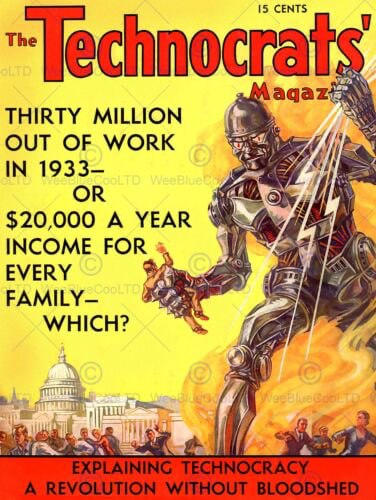
I hope more people realize the futility of following #Trump lies, #media parrots and fake experts... Trump is an extreme scenario, therefore he helps more people to understand. If this was Clinton, people would not discount him 100% like we do with the Liar In Chief. There is no wisdom in Trump's lies, no intelligence... just blatant bs.... that is very common among constructors. Most lie very stupidly because they are not smart. There is no point in focusing on Trump because he is just a distraction. I called him Agent of Chaos more than a year ago and expected him to bring another Covid style catastrophe... this one is bigger. He is chosen for this role and end as patsy as more people will hate him. They will use that hate as distraction to configure the new set up. I was out with 8 friends last night, all Americans. Outisde me and my wife they all voted for Trump in last election but they are not MAGA. Some even argued with me about my decision not to vote. Situation for Republicans is so bad that not one single one of them wanted to talk politics. They all stopped watching TV and none will vote in next election. So the set up in US politics is ready... defeat will be much bigger than polls show. In order to solve the puzzle about what sort of a set up we are looking for, u have to analyse the weapon systems and mode of economic operation. Elohim figures this out 18-36 years ahead of you. I don't know why but cycle is always about 18... big cycle is 108 years. If you read Brezinki's book "Between Two Ages", oublished in 1970, u will understand what I mean here. In 1913, world was moving to mass manufacturing, which required mass consumption. Austria, Russia and Ottoman Empires were obsolete in that coming world. Within 5 years, they were all gone. Reset took not one but two world wars. It was easy to get rid of Russian and Ottomans but Germans were a bigger problem. You have to understand that Germany that remained decentalized until 1870, was the bedrock of civilization, cultured people of Europe. Goethe is the best example of pre 1870 Germany. Goethe's Germany was not suitable for mass manufacturing and mass consumption. I am not a Keynes fan... but I accept that he was one of the smartest man of his time. He was in Paris and Versailles that signed off Germany's future and set up the conditions for WW2. He saw that and he left... and publicly denounced the peace agreement. Pawns they use whether Jesuits of Malta-Vatican or Jewish minorities they used in Bolshevik Revolution are just pawns. Berlin was the most tolerant city in the world before 1918.... most Jews fought for Germany, spied for Germany... they felt German until Poland moved a different kind of Jews to Germany after WW1. U can easily change the attitutedes of people. WW2 completely destroyed German people. If you look at them now, you see no resemblance of Goethe. They are clones for a mass production/consumption society who speak German. Two important thing happened last decade.... drones and missiles changed warfare... capital is meaningless now to win a war and new technology created immense leverage. We see it better with current #IranWar. The other important change is #ArtificialIntelligence. #AI will destroy more than half of the white collar jobs in the next 10 years. Even today more than 65% of college graduates cannot find jobs within 2 years in USA. In a New World where USA cannot be a hegemon anymore and it is easier for smaller nations to fight against larger ones if they organize better and office jobs do not exist anymore and most people rely on government to feed their families, USA looks like Russia, Austria or Ottomans in 1913. This is the world a movement called Technocrats based in USA and Canada in 1930s envisioned. They saw the world we entered now back then and offered their solutions. #ElonMusk's grandpa was one of the top men in this organization and thrown out of Canada in 1942 as all fascist organizations got banned. Joshua N Haldeman, Elon's grandpa, envisioned a fascist future backed with universal income. #IranWar today ... that you keep hearing some peace lie from #Trump or mainstream presstitutes and repeated by Twitter slvts to delay the response function as much as possible to make the chaos as big as possible is one of the components of this transition. Between AI, lack of oil and fertilizers, aluminum and copper and so many other resources that will cost so many jobs while moving inflation to unprecedented levels as stock markets cheer until the end, moves you each day one step closer to be beggers to the governments. This new world is exactly what Joshua N Haldeman envisioned. On one hand, it makes so many educated people redundant... useless.. on the other hand it makes capital redundant for wars. It requires total control on the state level. Otherwise even local gangs can deal with the governments thanks to technology. Entire world needs a #Chinese style big brother for surveilance... it is not a choice... it is a necessity due to mode of the economy, AI based economy and cheap drones and missiles. On the other hand, it makes geography more important, especially for alliances. #NATO is obsolete because USA is no use in modern warfare. It makes unions like #EuropeanUnion obsolute if the union is not built on a homogenous people like Chinese. It will be 100 times more difficult for EU to create a total surveilance state than China, 10 times more difficult than UK. However, Germany out of EU can create even a better surveilance state than UK. EU is a basket case also because you cannot fool plebs to die for EU. U can fool them to die for France or Spain. Besides, since capital is not important for warfare, why do these nations need EU for defense? Why does Spain care about people of Estonia, Latvia... Finland against Russia? Why does Russia care about these Nordics? Russia is sitting on 55% of all world resources... and in the New World, you don't need educated people. 55% of World Resources and 145 million people... paradise. All Russia needs is to offer educated people around the world citizenship and organize cities for them to live if it needs more people. Russia will be turning its borders into no-man's land like it does in Ukraine now... depopulated. USA is more than double the people of Russia and Americans had been living beyond their means for the last 55 years. Lack of need for alliance will destroy the need for US Dollars outside USA which will drastically reduce the life styles of Americans. They will not see it coming because if you live rich for 55 years without working, you won't listen to a man whose name you cannot pronounce, telling you that it is over. Then what sort of a future waits USA? Before that, understand that Elohim's dream country is China now. It has the perfect surveilance state, people who embrace that and a very efficient centalized operation. Elohim is in the process of securing energy resources to China and you will see that at the end of Iran War. Elohim makes people to be more receptive to #China by making USA look as ugly as possible through #Israel. Same script they used against Germans 100 years ago. I have no questions in mind about the fact that USA will be forced to retreat to Americas in the next few years with tons of jobless people and very high inflation. Americans are not as sheep as Europeans, therefore it is harder to make them submissive to a big brother. Question is how will they accomplish that? I don't know yet... I thought that Trump Presidency was going to accomplish that through fascism but last 14 months showed me that Trump is all about destroying his own base needed for fascism and moving USA into a Bolshevik future or maybe it is about creating another Civil War. If I can figure out more, I will let you know. Again, it is all about mode of economy and weapon systems... not about what fool says now and tomorrow or what presstitutes or "experts" talk about. Get ready to become nomads in the future if you have any talents to offer to highest bidder. China and Russia will be more stable and USA will be least stable place before some sort of a solution becomes visible for USA.
Bogachan Ozdemir tweet mediaBogachan Ozdemir tweet media
English
9
11
54
2.7K
Per Amlie รีทวีตแล้ว
Fixing Education
Fixing Education@FixingEducation·
A simple visual for kids (and adults) to understand delayed gratification.
English
116
2.6K
13.3K
833.3K