

Gary 📷 😁
15K posts
Gary 📷 😁
@AskGoo
Photographer ... Storm Chaser ... Web/Graphic Designer ...T-Shirt designer ... Sports nut
Ontario, Canada เข้าร่วม Nisan 2011
2.7K กำลังติดตาม476 ผู้ติดตาม
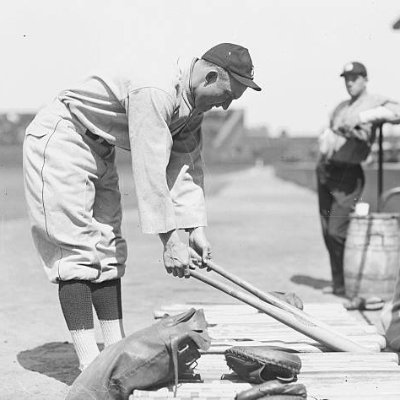
Game 7 of the World Series. Bottom of the 9th, bases are loaded, 2 outs, and your team is down by 1
Nolan Ryan is on the mound. You have your choice of any hitter, of any era, in his prime. Who gets the call?

English
@InvisibleRayRay @BBGreatMoments So true ... proved to be the best consistently ... key word BEST
English

@BBGreatMoments Nine gold glove awards seals the deal for me. In!
English

You hold the deciding vote in the Hall of Fame case for Don Mattingly. Does he get in?
(Graphic: MLB Throwbacks)

English



Who is your all time favorite left handed Pitcher?
1. Sandy Koufax
2. Randy Johnson
3. Lefty Grove
4. Warren Spahn
5. Steve Carlton
6. Clayton Kershaw
7. White Ford
8. Carl Hubbell
9. Tom Glavine
10. Write in a Pitcher

English

Which team do you associate Dave Winfield with?

English

Karoline Leavitt tells a room full of college students that Donald Trump is always the “most well-read person in the room.”
English
@OleTimeHardball any 4 would be a dream ... but Maddox and Gibson plus any of two of the others is the ultimate
English

@JuniorFaF0 @FoxNews @pdoocy I've never read such a pile of BS in my life ... completely made up crap to fuel the Orange Turd's agenda ... you should be banned from any social media
English



Gary 📷 😁 รีทวีตแล้ว

@AskGoo
Interesting...
Massimo@Rainmaker1973
Compound found in broccoli kills 90% of cavity-causing bacteria. Scientists have discovered that a molecule produced when we eat cruciferous vegetables — like broccoli, kale, cabbage, and Brussels sprouts — can wipe out the bacteria that cause cavities. The compound, known as 3,3′-Diindolylmethane (DIM), killed 90% of Streptococcus mutans biofilms in lab tests, according to a new study by Ben-Gurion University, in collaboration with researchers from Singapore and China. Streptococcus mutans is the main culprit behind plaque and tooth decay. It forms sticky biofilms on tooth enamel, which trap acids that erode the surface and cause cavities. DIM appears to disrupt the bacteria’s ability to form those films, effectively dismantling their protective layer and leaving them vulnerable. The findings are still preliminary — the experiments were conducted in vitro, not yet in humans — but researchers believe DIM could someday be added to toothpaste or mouthwash to prevent decay naturally.
English


@TheSports_Shift Andre Dawson ... 5 tool player exceptional arm ... great power ... base stealer ... baseball IQ was amazing ... and an even better human being
English


@HansAmato They are far more concerned about disease care then true healthcare ... fewer dollars for them when people are healthy
English

The most fucked up scam in modern medicine is convincing you that your biological problems are personality flaws.
You're not "angry." Your blood sugar crashed 3 hours ago and your prefrontal cortex can't regulate a single emotion.
You're not "anxious." Your gut is producing excess histamine because your intestinal lining is destroyed.
You're not "lazy." Your ferritin is 18 and your cells can't produce enough ATP to power basic motivation.
You're not "depressed." Your T4 isn't converting to T3 and your entire metabolic system is in energy-conservation mode.
Here's what to actually check before you accept ANY of these labels:
> "Angry" → fasting glucose + insulin + HbA1c. Eat 30-40g protein within an hour of waking. Stop spiking blood sugar with naked carbs
> "Anxious" → GI-MAP + histamine markers + zonulin. Fix the gut lining with L-glutamine 5g 2x/day, saccharomyces boulardii, butyrate. Cut high-histamine foods for 30 days
> "Lazy" → ferritin (not CBC). You need 80-100+ for optimal energy. Supplement iron bisglycinate with vitamin C on an empty stomach
> "Depressed" → full thyroid panel (TSH, fT3, fT4, rT3, TPO/TG antibodies). If reverse T3 is elevated your body is slamming the brakes on purpose — find the inflammation driving it
They will gladly sell you 4 years of talk therapy and a lifetime SSRI prescription before running a $200 blood panel that would have pointed to the root cause in week one.
Your personality is not the problem.
Your biology has been screaming and nobody ran the labs.
Full breakdowns of each protocol on my Substack. Link in bio.
English
@AskGoo
Interesting...
Brainy Science@BrainyScience
🧠 WHAT IF DEPRESSION DOESN’T START WITH YOUR THOUGHTS… BUT YOUR ENERGY? For years, we’ve been told depression begins with emotions… sadness, stress, overthinking. But new research is quietly revealing something far more unsettling — what if it actually begins much deeper… inside the brain’s energy system? Scientists are now discovering that people with depression may have brain cells that look active, but struggle to produce and use energy when it really matters. Imagine your phone showing a full battery… but shutting down the moment you open an app. That’s what this could feel like inside the brain.This hidden “energy glitch” could explain why depression often brings crushing fatigue, lack of motivation, and that heavy mental fog that’s so hard to describe. It’s not just in your mind… it may be in the way your brain powers itself. But here’s the mystery — is this the cause of depression… or just one piece of a much bigger puzzle? Scientists are still searching for answers. And what they find next could change how we understand mental health forever. Source ScienceDaily. Brain energy dysfunction linked to depression
English