Augus

479 posts

Augus banner
Augus

Augus

@AugusLSN

Augur | Views my own

เข้าร่วม Ekim 2021
111 กำลังติดตาม108 ผู้ติดตาม
Augus
Augus@AugusLSN·
@VitalikButerin Ethereum is a swiss army knife for freedom. Thank you for reigniting the beacon in this fog. Id even go one step further to another c-word - corruption resistant. Its really the root of it all, and imo the beauty of crypto.
English
0
0
0
53
vitalik.eth
vitalik.eth@VitalikButerin·
This is the new EF Mandate. For many of you, the contents should be no surprise, and a clarification along the lines that we have been going and thinking for the past few months. But the clarification is nevertheless worth making. Ethereum is a unique object and has a unique role in the world. Its role is to be a sanctuary technology, to preserve technological self-sovereignty, to enable cooperation without coercion, domination or rugpulling, and to provide an escape hatch, to ensure that no single person, organization or ideology's victory in cyberspace can be total. The Ethereum Foundation is a steward of Ethereum - the original steward, and today, the steward specifically dedicated to preserving and expanding the above aspects of Ethereum. This means a heavy emphasis on CROPS (censorship and capture resistance, open source, privacy, security), both at the protocol layer, and at the access layer, user-facing applications and tools that we create or contribute to. There are things that we do in Ethereum because we believe that they are valuable for the underlying goals that we have for Ethereum. There are things that we do not do because from the perspective of our values we find them uninteresting (or worse, harmful). But there are also things that we do not do because while they are useful, they are not our role. At the Ethereum protocol layer, we focus on decentralization, verifiability, inclusion guarantees, protocol liveness, security and privacy first and foremost. We also value capabilities (eg. L1 scale, account abstraction, perhaps some forms of in-protocol aggregation), particularly because improvements in these capabilities better enable users to properly benefit from Ethereum's CROPS properties and displace the need for higher-layer intermediaries that might weaken the extent to which Ethereum's properties carry over into the full stack. We also believe that the Ethereum protocol must strive to pass the walkaway test. "We do X to specialize to serve the use cases of today, if more use cases appear later, we will continue to keep adding more EIPs for them later" is logic fit for many other blockchains whose names you hear often on this forum, but we do not believe it is logic fit for a decentralization-first blockchain like Ethereum. At the application layer, we focus on making "the zero option" - user experience that goes hard on ensuring security and privacy, avoiding dependence on intermediaries, and respecting the user's agency - as high quality as possible. We see this as complementary to work in the Ethereum ecosystem that "goes broad", starting from the world that it exists, and brings it onchain and improves its properties over time. Such work has its natural home outside the EF. We intend to be supportive of such efforts. We believe that the two are complementary: tools that are developed within the EF can be adopted by anyone, including partially, and even partial adoption that improves people's security, privacy and agency is a good thing. But the form of user experience that is more heavily insistent on CROPS properties is where we want the EF to develop its center of expertise. This does not mean shrinking from the hard questions. We believe in a vision of self-sovereignty that protects users, and does not leave users in the cold to face environments where they lose their life savings if they make a mistake, and click "yes" on a confirmation screen by accident two seconds after. But such protection must be designed based on a philosophical baseline of empowering the user, not empowering centralized organizations that claim to act in the user's name. This quadrant of design space - caring about users' (including non-experts') well-being and safety, and yet insistent on doing this in a way compatible with their agency and freedom, is underserved (not just in crypto, but in the world). We wish to use Ethereum as a platform to build out and showcase this quadrant, and ideally work with others to expand its reach over time. This is also a new chapter in how we see our position in the world. We must see ourselves not just as the Ethereum community, but also as maintainers of the Ethereum tool within what you might call the CROPS community or the sanctuary tech community, or a dozen of other words that have for a long time been used by people with similar values to us but far outside Ethereum. This means open-mindedness to new conceptions of what things in the world are our natural allies. Ethereum is not the world. Ethereum is a specific object in the world that is here to have specific properties. The Ethereum Foundation is a specific organization within Ethereum - one steward, not the sole one. I encourage all to read the mandate in detail; it includes concrete examples of how we intend to deal with the challenges and nuances of these ideas. We are doubling down on Ethereum and are excited about its next chapter.
Ethereum Foundation@ethereumfndn

Today, the Foundation’s Board released the EF Mandate. This document, which was first intended for EF members, reaffirms the promise of Ethereum, and the role of EF within this ecosystem.

English
324
238
1.5K
255.8K
Augus
Augus@AugusLSN·
@Domahhhh One of the major issues is that it costs almost nothing to TRY and manipulate resolution, so why not? The incentives are broken. This is the solution that Augur brings - to try manipulating resolution, you have to put up a bond that you lose if wrong. Liquidate the scammers.
English
0
0
1
34
Domer❤️‍🔥
Domer❤️‍🔥@Domahhhh·
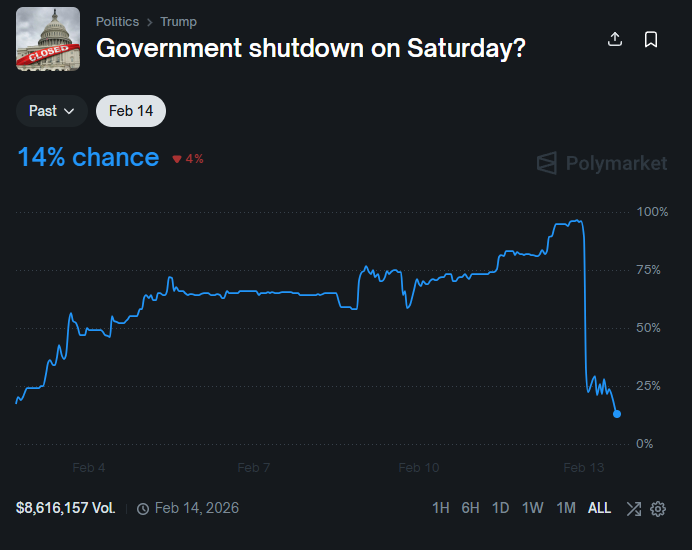
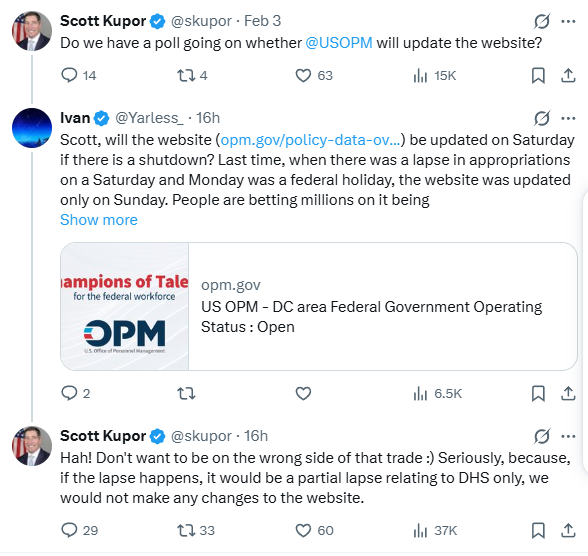
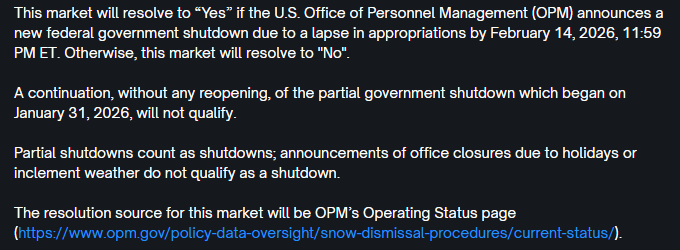
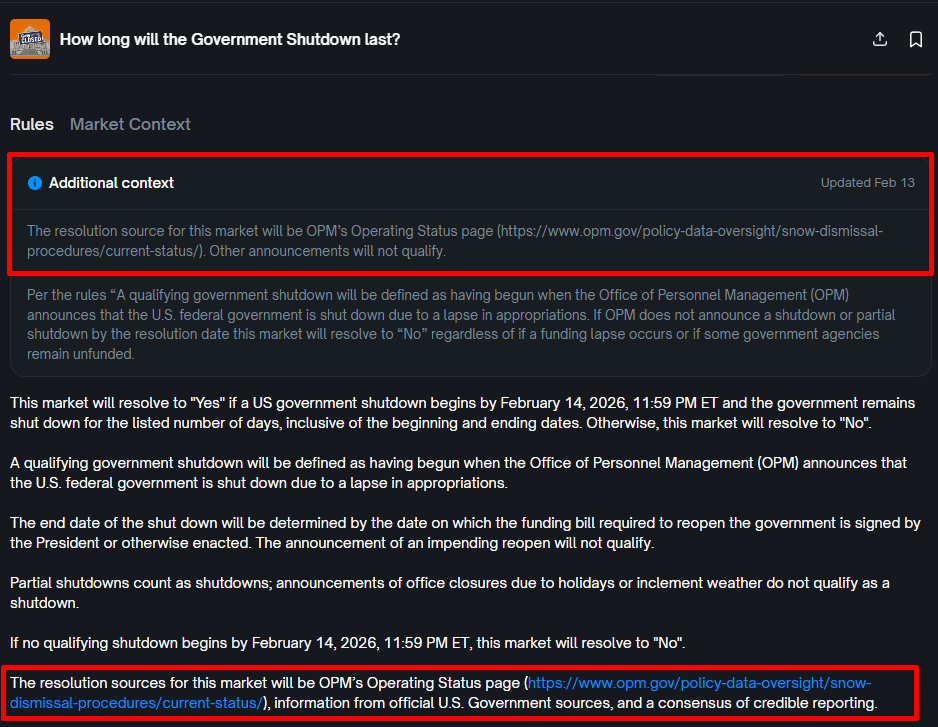
Rugging Reality & A Potential Solution a very long post by a very annoyed idiot. For reasons that defy explanation, the latest trend in prediction markets is to have your markets expire to total lies & nonsense. Indeed, the hottest thing in the space is rugging your users who correctly predict the world around them. Everybody's doing it, man. The downside of this is obvious: people view prediction markets as unreliable, pointless, a rigged game, and dumb gambling. But the UPSIDE is you can get volume spikes as new users are tricked into betting on what is actually happening (only to learn later that its a cruel joke because of some meaningless clause in the rules). So, you know, there are trade-offs I guess! Just a few days ago, we talked about Planet Kalshi. Kalshi users who correctly predicted that Anthropic would advertise in the Super Bowl collectively lost around $2 million to a bizarre fine print interpertation of what constitutes a Super Bowl ad -- Kalshi excluded Anthropic's ad from counting ONLY because Anthropic didn't insert their logo into the ad; it was a bad-faith interpretation of a tiny rule that was buried hundreds of words into a dense PDF. This purposeful overturning of reality was a boon to Kalshi. They kept the market up during the game, new users kept betting on an Anthropic ad, the contract had tens of millions in volume, and Kalshi pocketed around $1.2 million in trading fees. Polymarket, apparently jealous of how much volume Kalshi was able to generate from unsophisticated users by endorsing total nonsense, and not wanting to fall behind in that category, has today decided to emulate their competitor with the shutdown markets. The headline market is here: The US government will enter a partial shutdown in around 8 hours or so. That's reality, and extremely well covered in the news media. For perspective, the Kalshi market is trading at nearly 100% (95% at this exact minute, because of fine print risk). And tonight's shutdown (because of disagreements over ICE funding) is not really some fake shutdown either: 300,000 federal employees (or around 13% of all Federal workers) will be impacted by it. Some will be furloughed, most will work without pay for the foreseeable future. And it's not only federal employees: travelers will be heavily impacted (TSA), including potential flight cancellations starting shortly. Those in disaster areas may be unable to receive assistance (FEMA). Congress has left town, and the shutdown is a foregone conclusion. Yesterday, on Polymarket, the price was trading around 98%. Today, it's crashed to 14% after the head of OPM indicated he wouldn't update OPM's website for nonsensical reasons: Polymarket's rules (look at the last line, it's the operative one) require that Kupor's specific website be updated: Scott Kupor has indicated the website will not update, and the shutdown Yes bet has gone from "free money" to "...and it's gone!" Now, one can quibble about the fine print and all of that. It may be "fair" to have this market expire to No, even if it's not the truth because the rules are quite clear! And maybe you fix it next time. That's a debate to be had (if you can't already tell, I am firmly in the "expire market to reality, no matter what" camp). But we can't have that debate before we figure out what the hell happened next. Because Polymarket diabolically took it one step further. They had a SECOND shutdown market for how long the shutdown will last where the criteria was looser, and more able to reflect reality. The sources were not just this single website, it was also OPM in general, government sources in general, and a consensus of reporting. This market was considered the 'safe' one to bet on, because of the more equitable rules. But Polymarket, for reasons that are unexplained and probably unexplainable, decided that if the first market is a lie, the second market also needs to match the lie. And they changed the rules hours before the shutdown was set to begin. It would now ignore any OPM guidance not on that specific URL, ignore other government websites, and ignore the news media. (Minutes before this clarification hit, a series of trades seemed to know that it was coming, which is concerning) Users streamed into the discord saying that you can't change the contract like that. That this is a scam. That this isn't right. Total crickets from Polymarket's team. So, it appears, unless Scott Kupor changes course and aligns OPM with reality in the next 8 hours, that everyone who correctly predicted a partial shutdown tonight on Polymarket will lose all of their money for bad reasons. In the meantime, the volume has really exploded! So I guess that's the silver lining lol. START OF A SOLUTION? Prediction markets are created by writing rules in the hopes of anticipating what could possibly happen, and making sure your rules account for all the outcomes you can think of. People think this is easy, and there are a lot of armchair noobs to prediction markets who are like "you are terrible at writing rules!" In the defense of people tasked to do this, it's really hard!!! Because unforeseen things happen all the time that the rules have trouble navigating. A recent rules fight happened over a "Who will perform at the Super Bowl?" contract on both sites when Cardi B was pictured dancing on stage, for a couple of seconds, with Bad Bunny. The rules didn't anticipate that! Is that a performance or not a performance? Both sites had to navigate that on the fly as biased users argued their side. The issue is this: when unforeseen things happen, you start with the "bad"/"unexpected" answer and then try to work backwards to what the well-intentioned rules meant. How do you fit these two things together? It's like you get to the end of a jigsaw puzzle, and the last piece doesn't fit into the only spot left. Do you force it in and be done with or declare the puzzle worthless and throw the whole thing out? As anyone who knows a lawyer can tell you, often times you can argue in either direction. Credibly! You could make a case that Cardi B performed. You could make a case that she didn't. And then rule fights sometimes become bogged down in minutiae and meaningless distinctions of unimportant aspects of the event. To use our shutdown example, whether OPM updates is a (relatively) unimportant aspect of the event. It's used because it is nearly always reliable, and because it is widely referenced by the people impacted: Federal employees. But it has idiosyncracies, as every Polymarket user just learned, some the hard way. So my solution, or at least how I think about the solution, is that instead of receiving the broken puzle piece and working BACKWARDS to see how it fits, prediction markets should think about PROACTIVELY creating the answer when they make the market, including why the market exists. Make the puzzle modifiable, if the final piece isn't what you expected. Like so: What: "This is a market designed to determine if any part of the US government has shut down by [date]." Why: "It's important for government employees to anticipate if their employment may be impacted, and important for US citizens who interact with government services to know if there will be significant alterations." Pretty straight forward, I think. And also it's useful and helps to make the case for why you've put this up, what you're trying to determine about the world. And then you add in one rule to every single market: "If unexpected events happen, Polymarket/Kalshi reserves the right to expire the market to align with its original purpose." Basically, you codify into your rules that you won't allow the market to expire to nonsense, no matter what. Now, something like this will not be foolproof. There will still be issues. But it reframes the market. It tells users what they should be looking for. It grounds everything that you're doing in the same basic truth of the situation. And just as importantly: it also severely disincentivizes users from trying to exploit fine print rules (this is extremely, extremely common and very, very toxic). Let's imagine this with our Cardi B market. What: "This is a market designed to determine who will perform during a major musical and entertainment event, the Super Bowl halftime show." Why: "Performing during the halftime show can greatly increase an artist's profile, and the quality of the performers will be key for the network airing the Super Bowl." If you start with the What and the Why that grounds the market, it is then easier to make a determination at the end. If I were running the market with those rules, and those explanations, I can easily reach a decision -- "Cardi B having a dancing cameo for 2 seconds is not at all why we made this market. Her dancing was unimportant, and did very little to raise her profile. It is not what we intended a 'performance' to be." Conversely, you can imagine someone different writing a much more permissible What/Why that is more free spirited, and aligning that 2 seconds of dancing with a Yes expiration. The point is to create an answer AHEAD of time for what you're looking for at the event's conclusion. The reality is that right now, it's all a black box. These "clarifications" alternate between a terse voice of Oz and dizzying word bombs that confuse users even more. Arbitrary decisions that liquidate user's accounts aren't explained. They're scattershot. There's very little continuinity. Rule books that govern rule fights simply don't exist. And now you have large markets about relatively straight forward events that are becoming unmoored from the dock of reality and floating off into the ocean. And you have users drowning en masse. And you have prediction markets facilitating it. A solution has to be found.
Domer❤️‍🔥 tweet mediaDomer❤️‍🔥 tweet mediaDomer❤️‍🔥 tweet mediaDomer❤️‍🔥 tweet media
English
80
29
377
61.1K
Augus
Augus@AugusLSN·
@bravadotrade Half of these are just oracle gamers who scam people. Don’t listen to their lies.
English
0
0
1
234
Augus
Augus@AugusLSN·
@0xngmi The incentives to stay a stage 1 were/are larger than the incentives to move to a stage 2. Trying to shift the incentives hasn't worked. The social layer is too weak in the face of sequencer profits. With interop it would be even worse, the bad l2s would hide behind the good.
English
0
0
0
40
0xngmi
0xngmi@0xngmi·
Thing I dont understand about this tweet is that the primary drive seems to be that 'L2s are not able or willing to satisfy the properties that a true "branded shard" would require' But by tweeting this he's removing a lot of the incentives for current L2s to move to stage 2
vitalik.eth@VitalikButerin

There have recently been some discussions on the ongoing role of L2s in the Ethereum ecosystem, especially in the face of two facts: * L2s' progress to stage 2 (and, secondarily, on interop) has been far slower and more difficult than originally expected * L1 itself is scaling, fees are very low, and gaslimits are projected to increase greatly in 2026 Both of these facts, for their own separate reasons, mean that the original vision of L2s and their role in Ethereum no longer makes sense, and we need a new path. First, let us recap the original vision. Ethereum needs to scale. The definition of "Ethereum scaling" is the existence of large quantities of block space that is backed by the full faith and credit of Ethereum - that is, block space where, if you do things (including with ETH) inside that block space, your activities are guaranteed to be valid, uncensored, unreverted, untouched, as long as Ethereum itself functions. If you create a 10000 TPS EVM where its connection to L1 is mediated by a multisig bridge, then you are not scaling Ethereum. This vision no longer makes sense. L1 does not need L2s to be "branded shards", because L1 is itself scaling. And L2s are not able or willing to satisfy the properties that a true "branded shard" would require. I've even seen at least one explicitly saying that they may never want to go beyond stage 1, not just for technical reasons around ZK-EVM safety, but also because their customers' regulatory needs require them to have ultimate control. This may be doing the right thing for your customers. But it should be obvious that if you are doing this, then you are not "scaling Ethereum" in the sense meant by the rollup-centric roadmap. But that's fine! it's fine because Ethereum itself is now scaling directly on L1, with large planned increases to its gas limit this year and the years ahead. We should stop thinking about L2s as literally being "branded shards" of Ethereum, with the social status and responsibilities that this entails. Instead, we can think of L2s as being a full spectrum, which includes both chains backed by the full faith and credit of Ethereum with various unique properties (eg. not just EVM), as well as a whole array of options at different levels of connection to Ethereum, that each person (or bot) is free to care about or not care about depending on their needs. What would I do today if I were an L2? * Identify a value add other than "scaling". Examples: (i) non-EVM specialized features/VMs around privacy, (ii) efficiency specialized around a particular application, (iii) truly extreme levels of scaling that even a greatly expanded L1 will not do, (iv) a totally different design for non-financial applications, eg. social, identity, AI, (v) ultra-low-latency and other sequencing properties, (vi) maybe built-in oracles or decentralized dispute resolution or other "non-computationally-verifiable" features * Be stage 1 at the minimum (otherwise you really are just a separate L1 with a bridge, and you should just call yourself that) if you're doing things with ETH or other ethereum-issued assets * Support maximum interoperability with Ethereum, though this will differ for each one (eg. what if you're not EVM, or even not financial?) From Ethereum's side, over the past few months I've become more convinced of the value of the native rollup precompile, particuarly once we have enshrined ZK-EVM proofs that we need anyway to scale L1. This is a precompile that verifies a ZK-EVM proof, and it's "part of Ethereum", so (i) it auto-upgrades along with Ethereum, and (ii) if the precompile has a bug, Ethereum will hard-fork to fix the bug. The native rollup precompile would make full, security-council-free, EVM verification accessible. We should spend much more time working out how to design it in such a way that if your L2 is "EVM plus other stuff", then the native rollup precompile would verify the EVM, and you only have to bring your own prover for the "other stuff" (eg. Stylus). This might involve a canonical way of exposing a lookup table between contract call inputs and outputs, and letting you provide your own values to the lookup table (that you would prove separately). This would make it easy to have safe, strong, trustless interoperability with Ethereum. It also enables synchronous composability (see: ethresear.ch/t/combining-pr… and ethresear.ch/t/synchronous-… ). And from there, it's each L2's choice exactly what they want to build. Don't just "extend L1", figure out something new to add. This of course means that some will add things that are trust-dependent, or backdoored, or otherwise insecure; this is unavoidable in a permissionless ecosystem where developers have freedom. Our job should make to make it clear to users what guarantees they have, and to build up the strongest Ethereum that we can.


English
20
1
101
18.2K
Augus
Augus@AugusLSN·
@0xquasarproject @AugurProject Yeah, you cant get away from people trying to game resolution, the best you can do is make it as expensive as possible to try. IMO its cheap these days, and thats why you see so much bs.
English
2
1
9
2.6K
Quasar
Quasar@0xquasarproject·
@AugurProject Augur is **the** OG in decentralized prediction markets but resolution was broken and gameable. It would be huge if this new approach works and markets can be created in a permissionles non gameable fashion. Lots of potential to unlock.
English
1
0
2
252
Augus
Augus@AugusLSN·
@lorden_eth make sure you load the bot with cash and go straight to prod
English
0
0
0
167
gemchanger
gemchanger@gemchange_ltd·
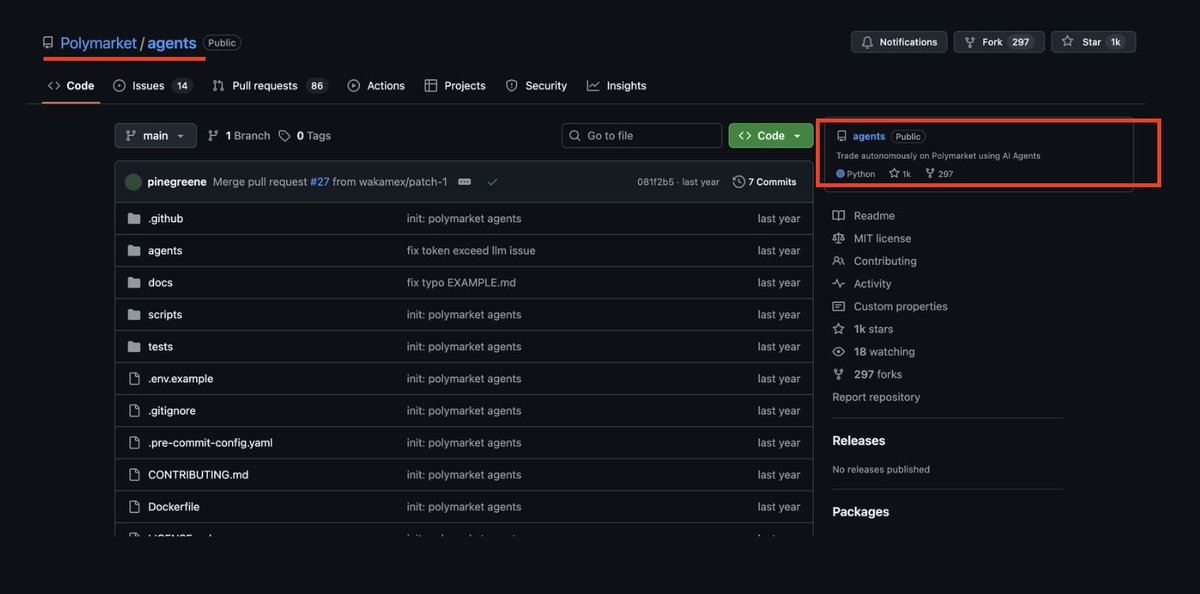
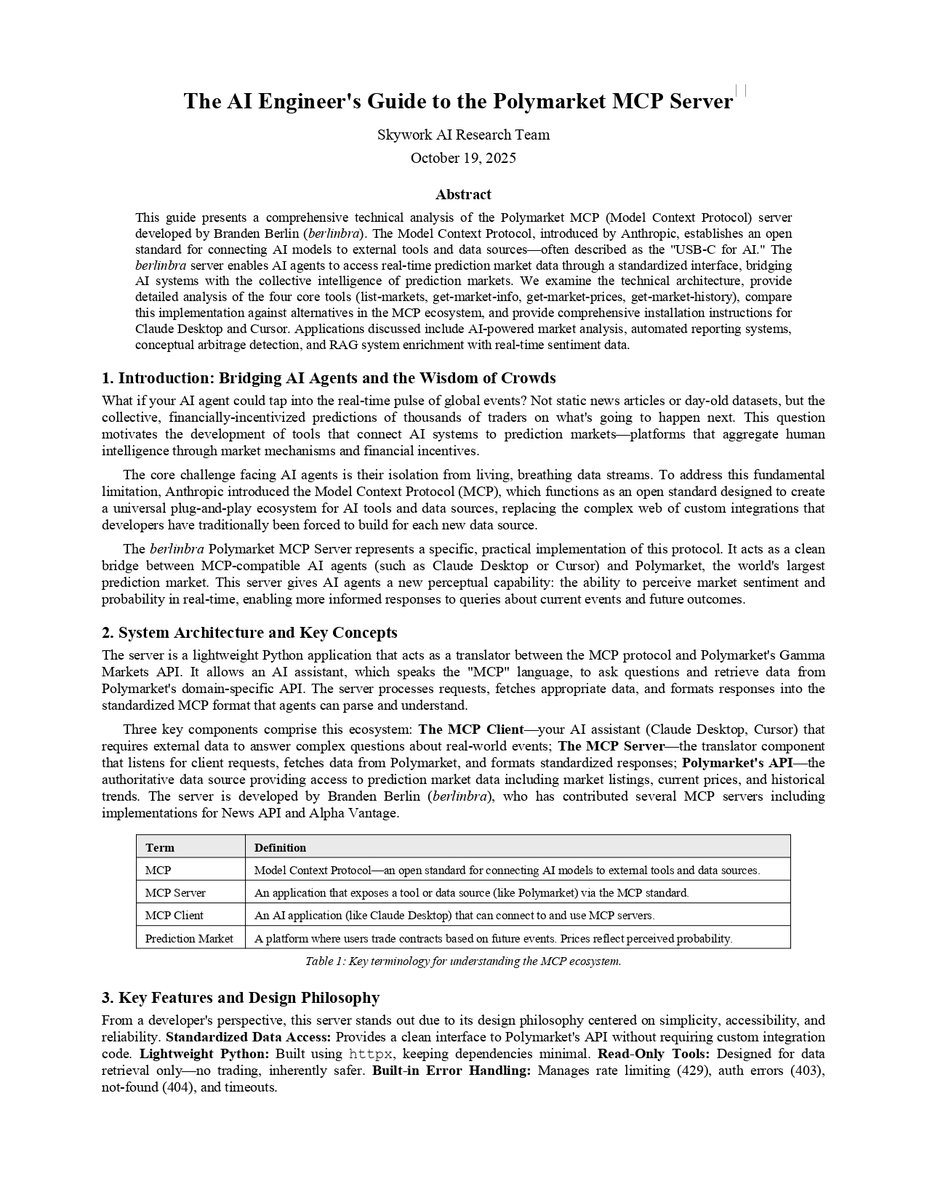
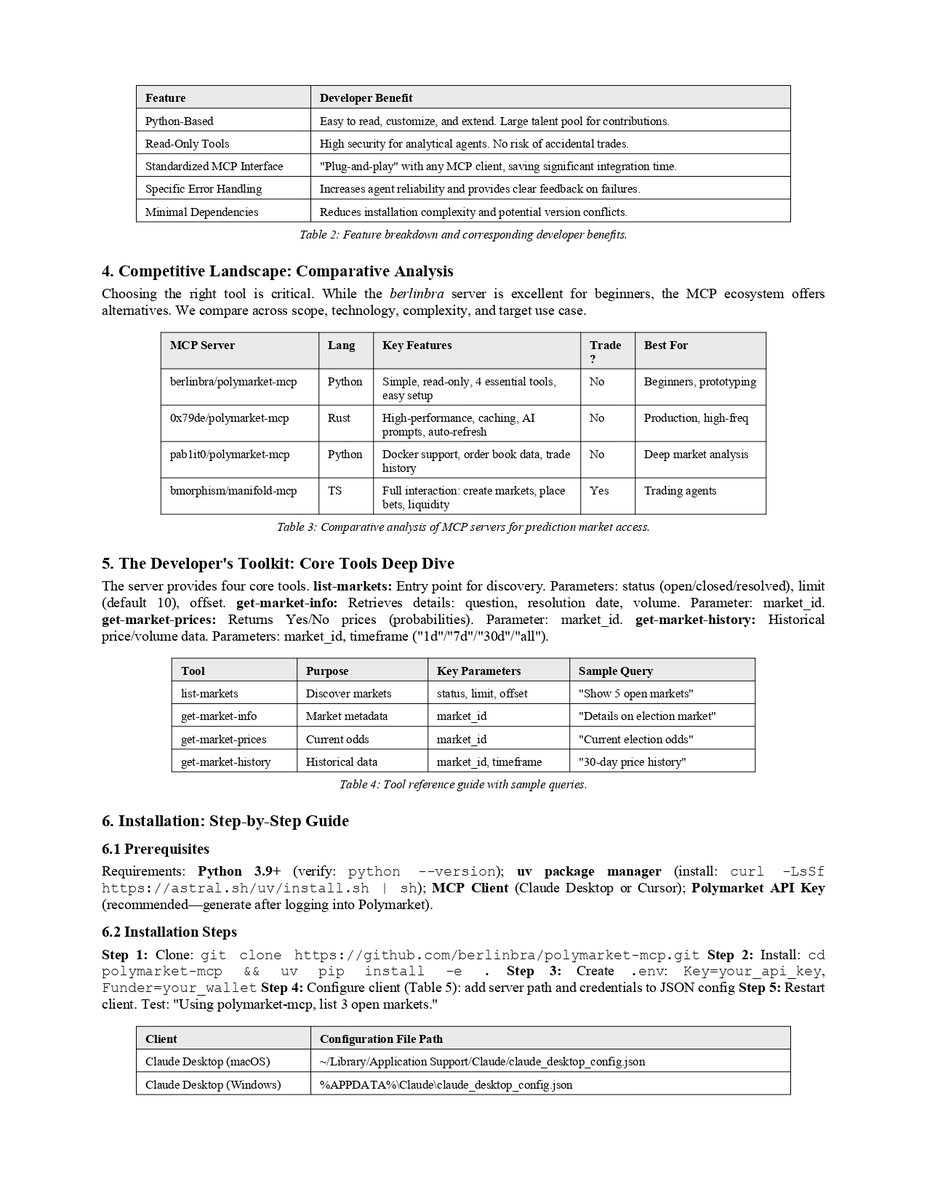
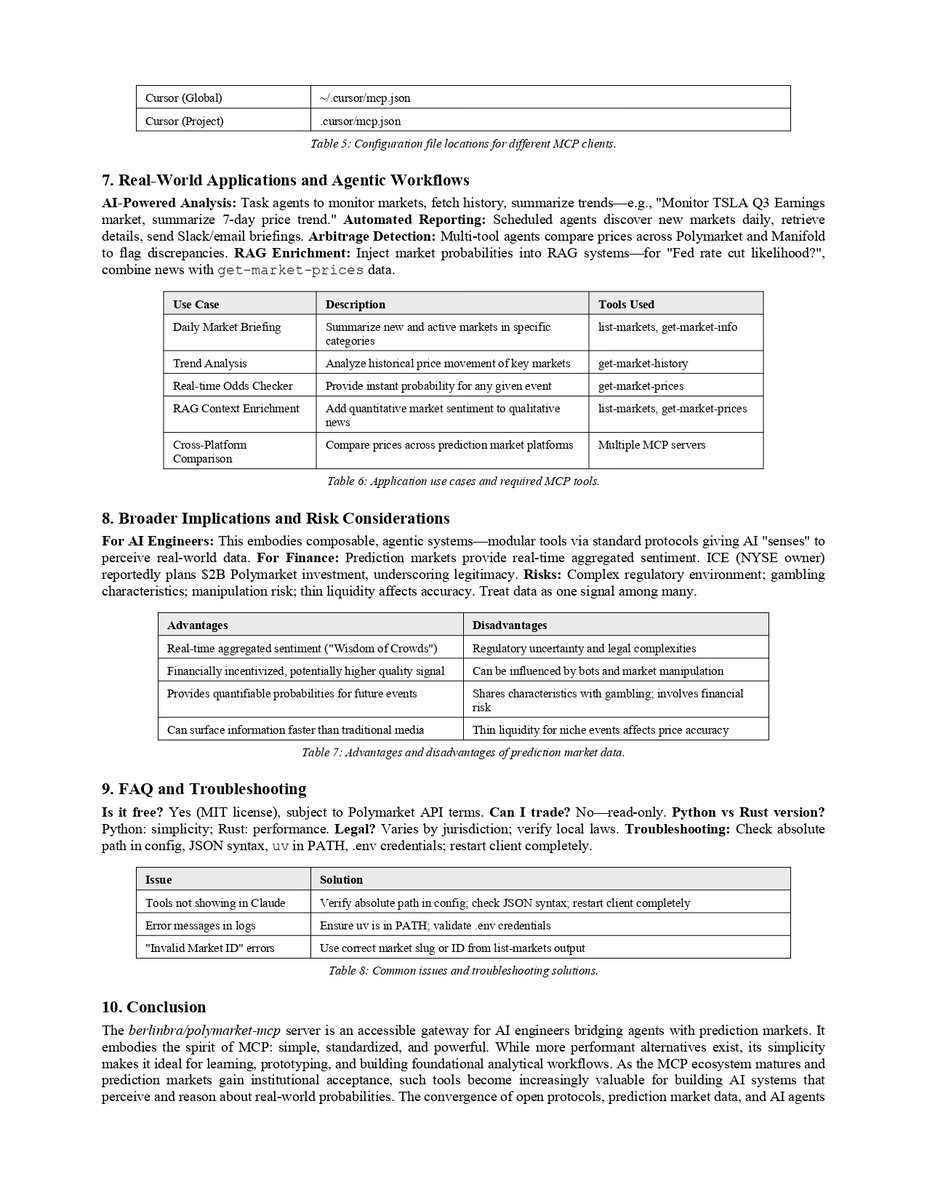
That docs is all you need if u ever thought about mixing Polymarket and AI NFA DYOR
gemchanger tweet mediagemchanger tweet mediagemchanger tweet media
English
47
129
2.2K
452.6K
Augus
Augus@AugusLSN·
@kober1337 CT learns about stink bids. Tomorrow they will learn what a spread is
English
0
0
1
102
kober
kober@kober1337·
This bot bets $0.01 on events with 0.01% odds and actually makes money. I found an interesting Polymarket account created in September 2025. The bot automatically buys YES shares at the absolute minimum price (0.1¢) across thousands of different markets. At first glance, this looks questionable. But the logic is simple: the downside is strictly capped, while the upside comes from rare but inevitable resolutions. You only need a handful of unlikely events to resolve YES for the entire strategy to turn profitable. And it works. Current PNL: +$960. Everyone talks about "INSANE TRADING BOTS" on Polymarket. This is one of the few strategies that is actually rational.
kober tweet media
English
43
28
464
50.7K
Augus
Augus@AugusLSN·
@DeFi_Made_Here DAO could self-liquidation as a poison pill. "payout treasury only to those who vote yes on this resolution"
English
0
0
0
74
DMH 🦇🔊🌊
DMH 🦇🔊🌊@DeFi_Made_Here·
AAVE token alignment discussion is bad for the Aave DAO short term (investors are confused, token is down, misalignment between service providers, etc), but it is great for the DAO and industry long term. DAO will surely get the IP rights back and won't end up in a situation where they have no control over the future revenue streams. At the same time, ecosystem investors are now being forced to ask fundamental questions about what exactly they are buying, and what rights the token actually represents. That being said, I think Stani has a real prisoner's dilemma. After the Labs are forced to transfer the IP rights, he will end up in a situation where his equity loses the revenue and valuation. Will Stani accept it for the benefit of Aave, or instead pursue the path that maximizes value for himself/Labs? Given there is a history of Labs trying to get the most value for themselves (interface fees, Horizon revenue cut + new token, aave app ownership, etc), and misalignment between v4 and v3, it’s easy to imagine a scenario where Aave Labs ultimately exits the DAO. In fact, Labs team members have already publicly stated that they would leave the DAO if this proposal passes. Hypothetically, Labs can try to exchange the v4 codebase ownership for Aave IP rights and start all over again with v4, Lens, Horizon, Aave app (will be a new name ofc), new token, etc. Basically, Labs has everything, including team, money, multiple products, experience, influence, etc, but does not have TVL for v4. And since there was a public discussion on the forum that DAO is not planning to migrate v3 liquidity to v4, and these will be 2 separate protocols (at least short to mid term), TVL is not guaranteed for v4 within the Aave ecosystem either. If Labs separates and launches a new token for all of their products, I bet they will make $1B+ out of it. The question is whether Labs is ready to swallow the IP rights takeover and keep on contributing to the DAO despite diminished control, influence, and ego for the benefit of Aave, or whether they are ready to start over again with a new brand, new vision, and full control over the protocol.
English
49
7
168
21.7K
Augus
Augus@AugusLSN·
@obsrvgmi @aave can we see a roko? "proportionally distribute the treasury to all who vote yes on this resolution"
English
0
0
0
217
Observe
Observe@obsrvgmi·
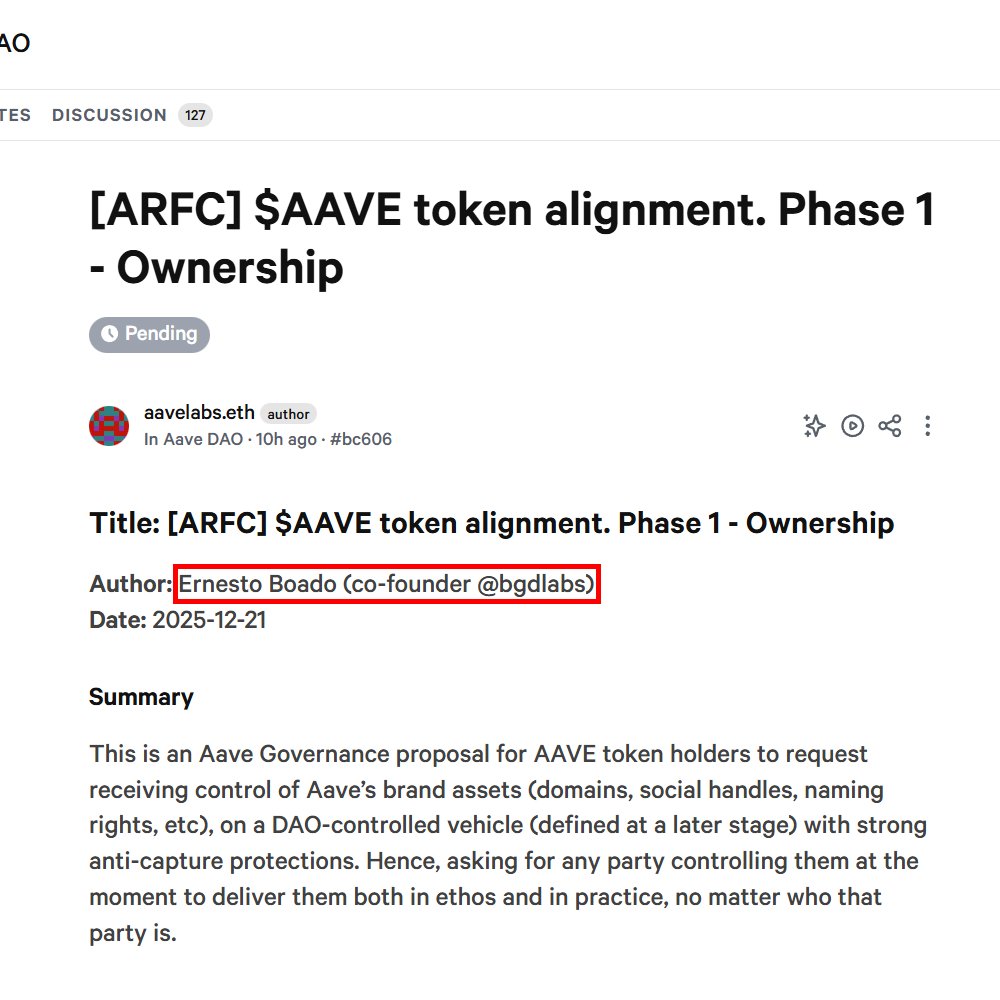
🚨 @aave is having a full blown civil war And it might be the biggest governance fight defi has ever seen. Heres a clean breakdown 👇 Aave has two sides: – Aave labs → a centralised entity founded by stani – Aave dao → token holders who govern the protocol Now heres what happening, Dec 4, 2025: Aave labs announces a partnership with @CoWSwap to improve swap pricing + mev protection on the aave interface. Dec 11, 2025: A popular delegate, @DeFi_EzR3aL drops onchain analysis stating that swap fees from the new cow swap contract are being routed to a private wallet controlled by aave labs. Not the dao. Translation: DAO revenue just got quietly cut off. Dec 12, 2025: Marc zeller (largest delegate, aave chan initiative) calls it stealth privatization. Claims ~$10m per year that should go to the dao is gone. Dec 16, 2025: Things go nuclear ☢️ A. Proposal called “poison pill” by Tulip King. The demands: – Seize all aave ip, code, and brand – Force aave labs to become a dao owned subsidiary – Claw back all past revenue earned using the aave brand B. Then comes proposal #2 — “brand seizure” by former cto of aave labs @eboadom, – Move trademarks, domains, socials to the dao immediately. Logic: If dao pays for dev + marketing then dao should own the brand, domains, socials. Aave Labs / Stani’s defense: – This (cowswap thing) was never a fee switch. – Frontend revenue was a surplus labs donated voluntarily. – Aave labs is a private company. – DAO owns the contracts, not the website. – Labs pays for hosting, security, and frontend engineers. Now the plot twist, amid all this chaos, Aave labs opens a snapshot vote on dec 23👇 Proposal: Give aave token (aave dao) holders explicit control over brand assets, domains, socials, naming rights, github, npm, everything. (baed on @eboadom's proposal) Except… The author of the proposal @eboadom says he never approved it. He claims it was rushed to vote with his name on it while discussion was still active. Calls it “disgraceful.” Urges people to abstain. @Marczeller says the proposal was rushed during holidays, with fresh delegations gaining voting power. Zoom out. This isn’t about cow swap. This isn’t about one wallet. This is the unresolved question of defi: Who actually owns a protocol? The code? The frontend? Or the brand? Aave is about to set a precedent. And everyone is watching.
Observe tweet mediaObserve tweet media
English
304
345
2.7K
692.4K
Augus
Augus@AugusLSN·
@DefiIgnas "if you can do it, eventually you will be compelled to do it". set a precedent you can hard-fork to move funds for the reasonable & noble purposes of "saving user funds", and eventually you will be compelled by some state entity to do the same thing but for censorship/theft
English
0
0
1
38
Ignas | DeFi
Ignas | DeFi@DefiIgnas·
Gnosis is considering a hard fork to recover funds from the Balancer hack. After the hack, ~$9.4M was frozen on Gnosis Chain via a soft fork. Funds cannot move from the attacker's address. The funds are stuck. Returning them to victims requires a hard fork. I think Gnosis clearly sits in the low-risk DeFi category (ironically), where protecting users comes first. Because Gnosis is positioning itself for neofinance and enterprise-focused Web3 services, not for Ethereum-style immutability absolutism. In any case, the damage to 'immutability' is already done. The soft fork happened. Choosing not to recover the funds now isn’t neutrality. And tbh, we’ve already seen similar censorship interventions elsewhere: Berachain and Sonic after the same Balancer hack, and Sui after the $162M Cetus exploit. But this fork sets a big precedent: Do we hard fork for every hack? Only if losses > 5% of TVL? Why not 3%? Can app devs start assuming the chain will step in if they mess up, lowering security standards? The hard fork and the debate will end up setting hard-fork precedent rules for other chains to follow.
Ignas | DeFi tweet media
English
103
28
383
45.9K
Augus
Augus@AugusLSN·
@apoorveth better yet, "will I get laid tonight?" wait
English
0
0
0
20
apoorv.eth
apoorv.eth@apoorveth·
prediction markets will replace therapists. i’m feeling sad. i open a market: “will i feel better by tonight?” i throw $67 on “no”. some dude who listens to one psychology podcast sees the liquidity, messages me: “bro let’s talk.” he bets “yes”, calls me, says three encouraging things and sends me a meme of a raccoon giving a thumbs up. i laugh. the market resolves. he earns $67 for basically being wholesome. rest in peace, talkspace, calm, self-help books.
English
120
257
5.9K
208K
izlam
izlam@bckfv_eth·
Bitcoin up/down trading bots is the new meta on Polymarket Lately I've been seeing more and more bots farming the 15min BTC markets with almost 0 risk For example this profile - @nobuyoshi005?via=333" target="_blank" rel="nofollow noopener">polymarket.com/@nobuyoshi005?… This bot made $20k in three weeks just trading short term BTC moves Strategy is extremely simple but it really works They buy both sides (Up and Down) within the same market, but only when the combined average price is <100c Due to the fact that these markets are very volatile, this is not difficult at all > Example: bot buys Up at 23c --> waits a bit --> then buys Down at 70c > Total cost: 93c for a guaranteed 100c outcome - 7% profit Small percentage, but almost risk-free Yes the profit is small but it's an almost foolproof strategy of small steps Look at the pnl chart for this bot or any other - you'll see almost no drawdowns @Polymarket offers a huge number of opportunities to earn money, use them
izlam tweet media
English
93
53
850
171.1K
Augus
Augus@AugusLSN·
@notnotstorm Theres no bug, its just PM orderbook weirdness. 1 share leaving the book always reduces the liquidity on the book by $1, so thats why volume is $1. The book are reciprocal,buying Yes = selling No. For ex, how much liquidity is added to book if i put in a bid for 0.1c?
English
0
0
1
23
storm
storm@notnotstorm·
found a pretty major data bug it turns out almost every major dashboard has been double-counting Polymarket volume (not related to wash trading) this is because Polymarket's onchain data contains redundant representations of each trade. receipts ⬇️⬇️
storm tweet mediastorm tweet media
English
161
82
1.1K
621.8K
donnoh.eth 💗
donnoh.eth 💗@donnoh_eth·
EigenZero TLDR: anyone can enqueue a slashing request by posting a 10 WETH bond. A permissioned "owner", a 3/5 msig, can either cancel your request and steal your 10 WETH, or fulfill the request to slash the $4M ZRO tokens staked by the operator. The tokens go to the same owner.
donnoh.eth 💗 tweet media
EigenCloud@eigencloud

Why it matters: LayerZero apps can now choose verifiers not just for technical correctness, but for economic accountability. EigenZero brings slashable stake to interoperability, letting apps measure verifier trust in economic terms.

English
18
7
101
13.5K
PredictionIndex.xyz
PredictionIndex.xyz@predictionindex·
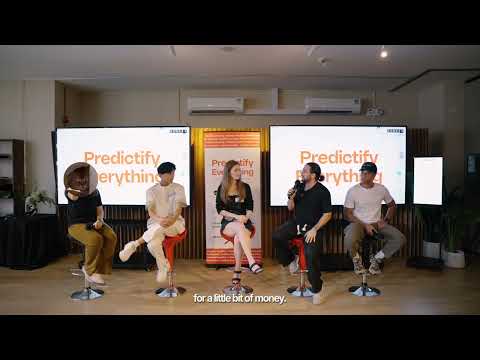
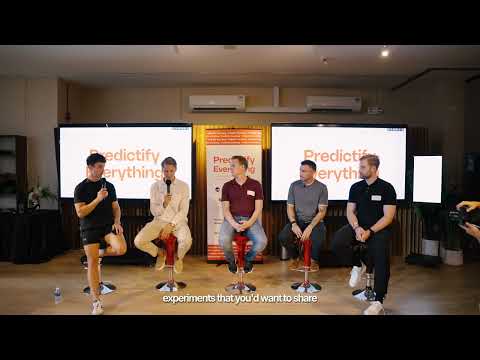
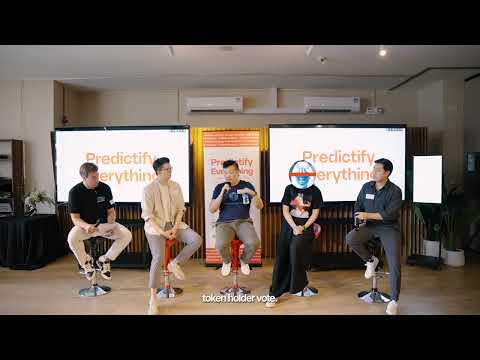
Celebrating frensgiving today 🥳 We just dropped all the panels from Predictify Everything. Get ready to 🍿. If you spot any alpha, tweet away! The Incentive Layer: Game Theory, Governance, and Tokenomics in Prediction Markets @MarcinRedStone @Loxley_eth @indexdotfun @aulijk youtu.be/OfjM9m-saxM Building the Prediction Market Stack: Users, DeFi, and Regulation @Lumberg @Outlaw_HQ @amitochu @g_alafo Nicki from Opinion youtu.be/InEKQFV_pkQ From Memes to Machines: Prediction Markets at the Edge of Culture and Crypto @j0hnwang @lililashka @noturhandle @caseycraig @farokh youtu.be/VEDEIouNFQM Mechanics of Prediction: Liquidity, Arbitrage, and Price Discovery @eliqiann @lmc_security @buuxbt @guyukyukgu @farokh youtu.be/tOlpybSKoj8
YouTube video
YouTube
YouTube video
YouTube
YouTube video
YouTube
YouTube video
YouTube
English
3
1
23
3.3K
Augus
Augus@AugusLSN·
@joeykrug @coinbase The parimutuel solution to info advantage. 1.05x to early from 0.95x to late, linear by time.
English
0
0
0
173
Joey Krug
Joey Krug@joeykrug·
One fixable issue with the @coinbase token sale structure is it doesn’t reward early buyers in any way. Two approaches to fix it: 1) Sort all orders by (order_size ascending, timestamp ascending). Then use that list to prioritize fills. 2) Sort by something like Unix timestamp * order size, then prioritize fills from smallest to largest.
English
14
0
27
5.9K