
GMBasix
5.4K posts

GMBasix
@BasixGM
walk run cycle camp faith
Greater Manchester เข้าร่วม Mayıs 2018
140 กำลังติดตาม55 ผู้ติดตาม


@rhydy @blaiklockBP That and central government since 2010 cutting local government funding
English

@blaiklockBP Anyone with a basic grasp of physics (and the power 4 relationship between mass and road damage) knows that pretty much all road wear comes from buses and large commercial vehicles. That and councils not fixing small potholes, cheaply, and waiting for them to become craters.
English

Did anyone else wonder why all those potholes appeared all of a sudden?
There is your answer: 2 million of them.
Electric cars caused twice as much road damage as combustion-engined vehicles because of their extra weight.

English
@csljohnkirby @blaiklockBP I think you’re being quite generous with “political soundbite”
English

Not really. Heavier vehicles do increase road wear; that much is true. But the research often cited does not say EVs are the reason ‘all those potholes appeared’, and it does not support blaming ordinary electric cars for a sudden pothole crisis.
The University of Edinburgh paper found 20% to 40% additional road wear for battery vehicles compared with ICE vehicles, and said this was overwhelmingly driven by large vehicles such as buses and HGVs. It also said smaller vehicles make a negligible contribution.
The current pothole surge is far more credibly linked to historic under-investment and the very wet start to 2026. The RAC reported an average of 225 pothole-related breakdown mentions a day in February, up from 66 a day a year earlier, and attributed the spike to the wet conditions. Parliament has also referred explicitly to historic underinvestment in local road maintenance.
And as for ‘2 million potholes’, the RAC’s current estimate is at least 1 million, not 2 million as some posts claim.
There is another point that the anti-EV crowd conveniently ignore. Oil, diesel and petrol spills can damage asphalt. Hydrocarbons can soften or dissolve the bitumen binder, weakening the road surface and contributing to rutting, ravelling, stripping, and eventual pothole formation, especially when combined with traffic, rain, and temperature changes.
So yes, weight matters. But ‘EVs caused the potholes’ is a political soundbite, not a serious explanation.”
English

Most cyclists don't see it in their own social posts.
The "accountability gap."
But everyone else does.
The pattern is almost always the same:
→ Cyclist makes a decision that creates conflict
→ Conflict happens
→ Cyclist films the aftermath
→ Posts it as "dangerous driving"
→ Likes from people who weren't there
Here's the problem:
No cyclist films themselves running a red light, filtering at speed, or riding two abreast on a blind bend.
The camera only comes out after the incident.
Which means the clip always starts at the point of conflict.
Never at the decision that caused it.
That's not evidence.
That's a highlight reel with the context edited out.
If your only data point is "the vehicle came close to me," you've already lost the causal chain.
Because your behaviour is upstream of the conflict:
- Your speed
- Your positioning
- Your predictability
- Your visibility to other road users
- Whether your presence was foreseeable at all
None of that appears in a 25-second clip posted on social media for validation.
The incident didn't start when the car got close.
It started much, much earlier.
With a decision that no cyclist films or posts.
English
@BasixGM @ChaponaBike123 How can you be so sure the driver could see the cyclist soon enough, when you weren't there? You're making an assumption.
English
@ahazard_hunter @ChaponaBike123 A qualified driver, driving to the standard required, would not have driven into the path of oncoming vehicles on their side of the road.
English
@ChaponaBike123 An experienced cyclist would slow down, drop left early, and reduce their vulnerability. No excuse for poor driving, but it would seem to be the safer option here.
English
@ahazard_hunter @richardparke15 I don’t see value in answering someone who accompanies his own question with a Kinder egg combo of a straw man scenario, a false dilemma, and an example of failure to drive to the standard required. Instead, I recommend a course of refresher training so you can answer yourself.
English
@BasixGM @richardparke15 What would you expect drivers to do when they are travelling down a street with parked cars both sides faced with low sun glare one minute (may restrict vision) and not the next, and a cyclist is coming the other way, stop suddenly and wait for the sun to go down.
English
That was easily foreseeable.
The cyclist could have slowed down or moved over to the left and not put himself in danger, unless this move was intentional for the camera.
Chapona Bike@ChaponaBike123
🤷♂️
English
@ModelFan15 @ThinkLicence It cannot be a public footpath which is, by definition, not alongside a carriageway. It might have been a footway, had it not been converted for shared use.
English


Not only are you priority-pretermitting this morning, but you are also a corner-cutting rat-runner in a black-beemer.
English
@ahazard_hunter @richardparke15 If he didn’t see the cyclist... If he couldn’t see the cyclist… why was he still moving forwards? Neither circumstance is acceptable.
English
@ahazard_hunter That was easily foreseeable.
The driver could have slowed down or moved over to the left and not put others in danger, unless this move was intentional… or just self-entitled, dumb ignorance.
English
@RichardWellings We’ve known for decades that buses in a bus-centric urban network are faster than cars in a car-centric urban network.
By designing in favour of cars, you’re excluding the 22% of households (40% in London) who don’t have cars.
Don’t talk about restricting mobility: you’re false.
English
Buses are hideously slow and inconvenient. You have to walk to the stops, wait around, and can't carry much either. By forcing people to use buses instead of cars they're severely restricting mobility and access to job, retail and leisure opportunities. birminghammail.co.uk/news/midlands-…
English


Last night me & the gals had a day out in Londonistan. A person on the tube told me to stop eating my Crème egg because it was offensive to her . So Christian chocolates are now harem in my country ?? 🇬🇧🇬🇧🇬🇧🇬🇧🇬🇧
GIF
English
@bencreed444 @TheRoadPadrone Should be a law that if a motorway is provided motorists must use it.
English

@TheRoadPadrone Should be a law that if a cycle lane is provided they must use it.
English

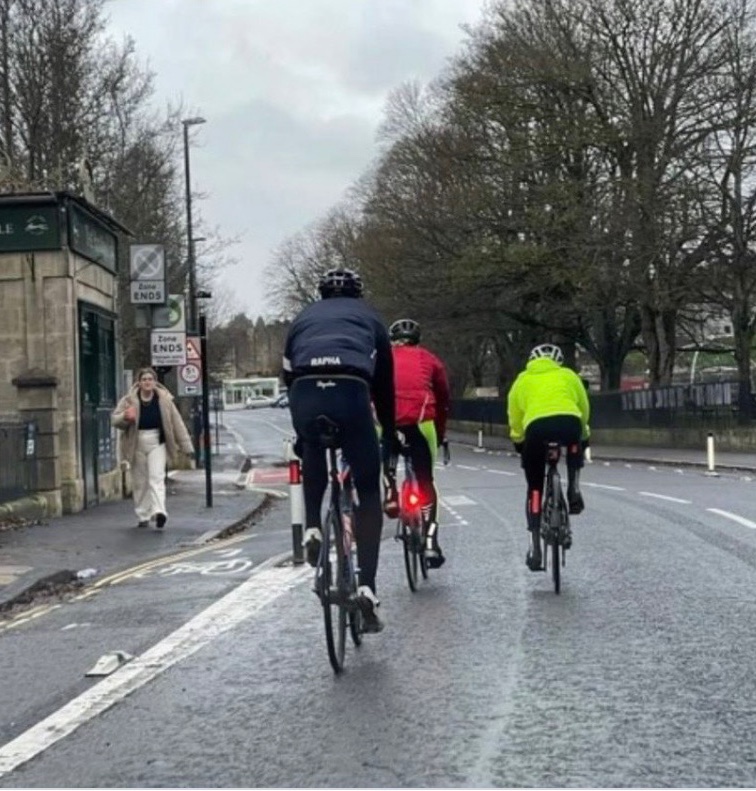
@aura__delivery @WelManicuredMan @JimsWheels He seems to think the money he pays for polluting the environment is intended for spending on the roads.
English

@WelManicuredMan @JimsWheels Most cyclists do pay tax, not sure what you're getting at.
English

2.6 miles of road, turning single into double-carriageway, £100m. Tell me bike lanes are expensive...
bbc.co.uk/news/videos/cv…
English
@BenGrahamUK Cycle infrastructure is a basic service, you petrol-sniffing moron.
English

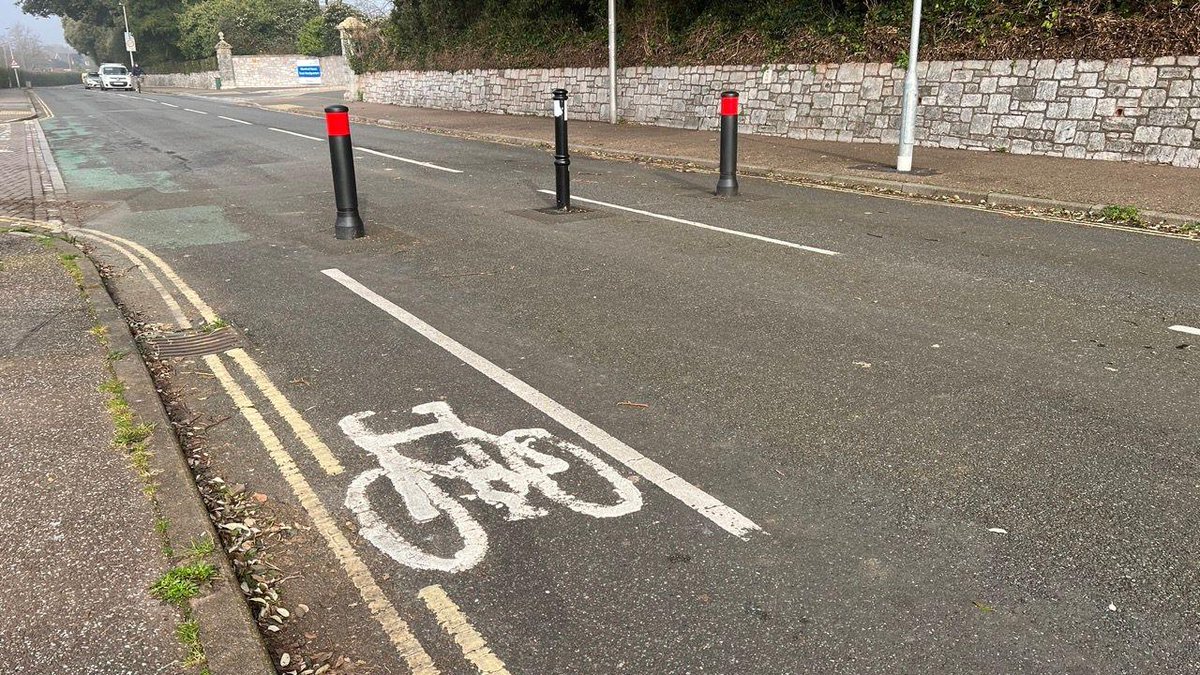
3.8 million for a 200 metre bike lane. That’s £19,000 per metre.
This is exactly why taxpayers across Britain are fed up. Councils burn public money while basic services crumble.
Read my full take on this project and what Britain could invest in instead: open.substack.com/pub/bengrahamu…
English
@JimsWheels I’m going to cause inconvenience to other people, but that’s a price I’m willing to pay.
English
They've only blocked part of the cycle path, reckon I can get past ....oh .. !
English
@whoisbillpayer @JimsWheels Something happened!Must block the cycle lane!
Couldn’t possibly stop where they are, could they. 🤡
English

@JimsWheels No issue. Get a life you prat. Something has clearly happened (prang, accident, ambulance) and so people are trying to sort out as normal people do but then comes along pratty the bike twat who starts moaning about his "rights"!!
English