Ben Hopkinson

586 posts

Ben Hopkinson banner
Ben Hopkinson

Ben Hopkinson

@Ben_A_Hopkinson

Head of Housing and Infrastructure @cpsthinktank Infrastructure Fellow @BuildForBritain Formerly @BritainRemade

London เข้าร่วม Haziran 2014
600 กำลังติดตาม3.2K ผู้ติดตาม
ทวีตที่ปักหมุด
Ben Hopkinson
Ben Hopkinson@Ben_A_Hopkinson·
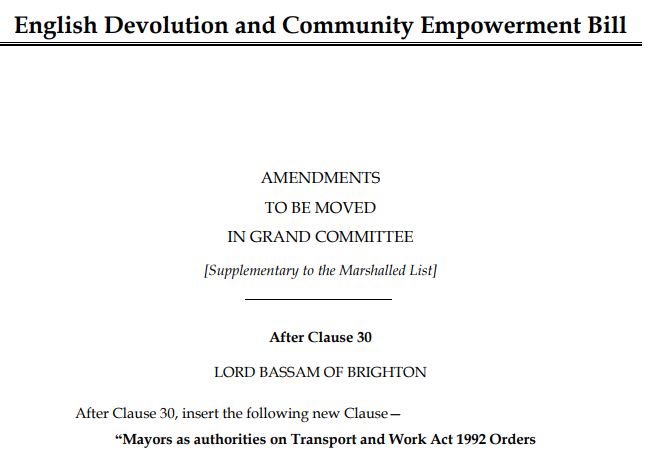
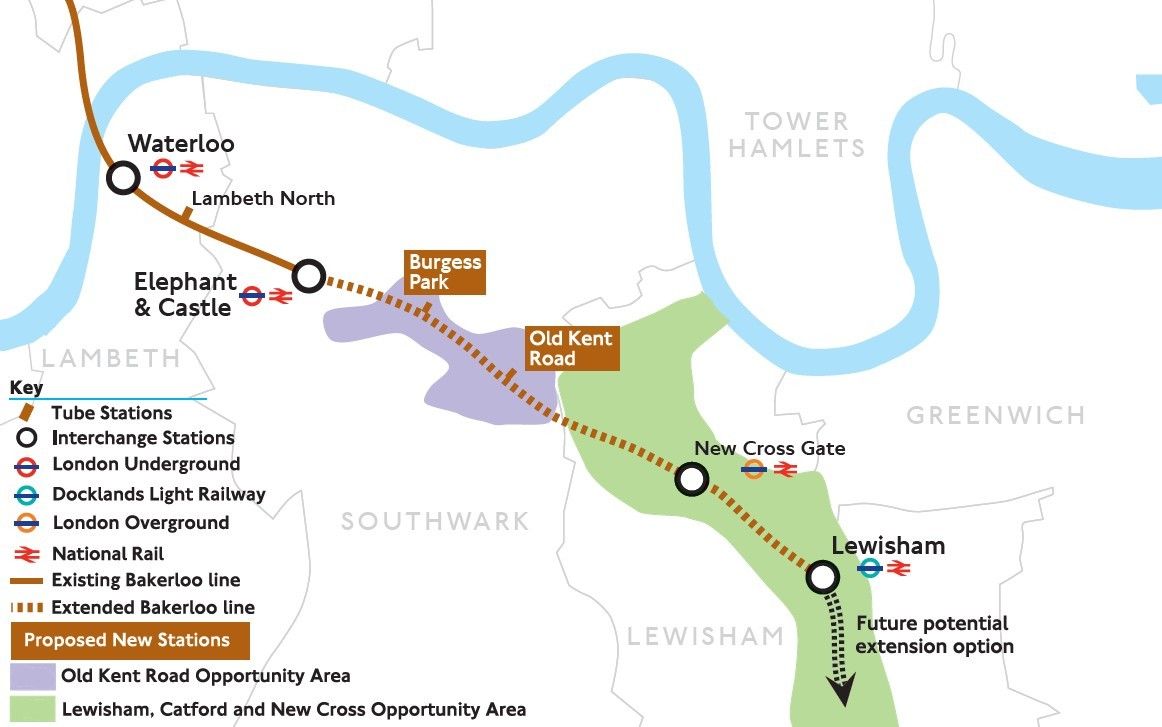
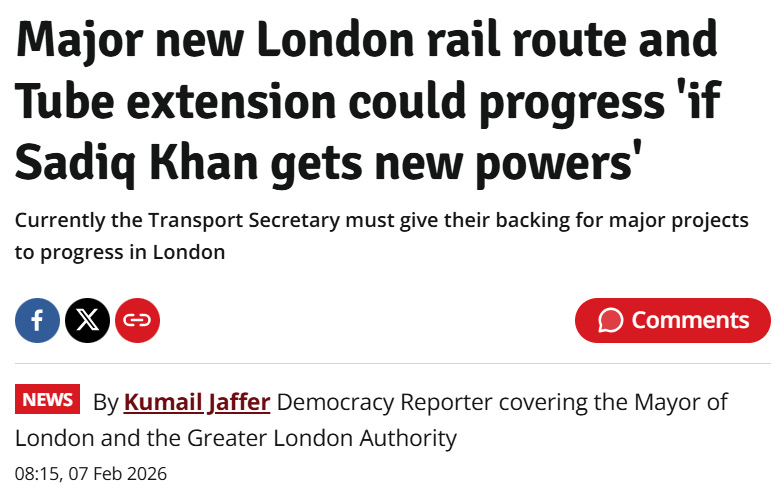
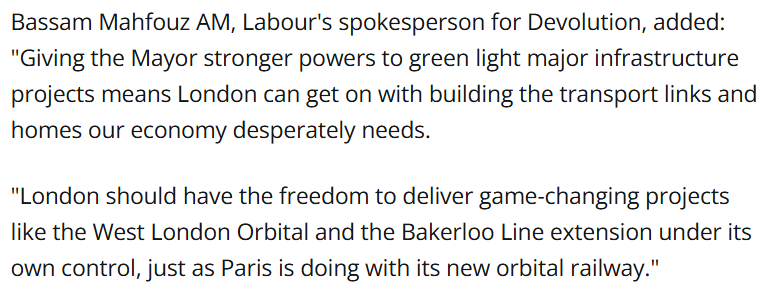
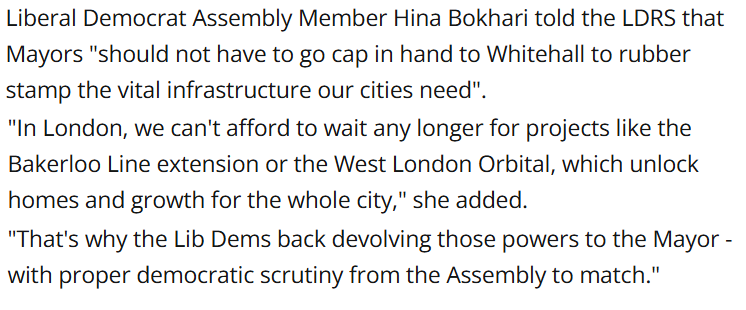
There's a new Lords amendment that will give Mayors the power to approve new underground or tram projects instead of waiting 3+ years to get the Transport Secretary to sign off. That means Tracy Brabin could approve the Leeds tram or Sadiq Khan could approve the Bakerloo Line Extension. This amendment needs to be adopted. Mayors know their area best. They should be able to pledge to voters that they will build new infrastructure and then be able to approve, fund and deliver it. In Spain and France, local leaders have all the power to deliver local transport. In turn, they build projects 2x faster and for less than half the price.
Ben Hopkinson tweet mediaBen Hopkinson tweet mediaBen Hopkinson tweet media
Ben Hopkinson@Ben_A_Hopkinson

Strasbourg in France has a comprehensive tram network of 6 lines and 35 miles of track, which serves its population of 500,000. Leeds has a population of 812,000 and it goes without. What's the difference between the two? Mayors that have the power to build 🧵

English
46
173
1.4K
161.6K
Ben Hopkinson
Ben Hopkinson@Ben_A_Hopkinson·
Housebuilding in London faces its strongest headwinds since WW2. Housing starts are only at 5% of London's target. Some of this is macroeconomic, but the bigger drivers are the additional regulations imposed by the Mayor and central government, restrictive land supply, and high affordability requirements + other taxes. The new emergency measures recognised these factors as detrimental to building, but need to go much further and make the temporary reductions permanent
The Times and The Sunday Times@thetimes

Berkeley Group shares have fallen 18% after the developer warned that "unprecedented" costs and regulation are forcing it to scale back. In a blow to Labour’s housebuilding targets, the group has stopped buying new land and will slow build rates at exis... #Echobox=1775033696" target="_blank" rel="nofollow noopener">thetimes.com/business/compa…

English
0
6
18
3K
Ben Hopkinson
Ben Hopkinson@Ben_A_Hopkinson·
@PMArslanagic I enjoyed the section on Park Royal. This bit of West London will have a strong claim to be the best connected area in the country once HS2 opens, yet we currently use it solely for single-storey warehouses. This is a huge opportunity if we get it right through land readjustment
English
1
0
7
287
Phoebe Arslanagić-Little
Phoebe Arslanagić-Little@PMArslanagic·
Small groups with something to lose are very effective at stopping change. That's one reason why getting necessary homes and infrastructure built can be so difficult. In our new paper, Onward sets out a proposal to introduce land readjustment to the UK, a land assembly mechanism that gives the people most likely to oppose a development, the landowners themselves, excellent reasons to support it. But how does it work? Working with a developer, land readjustment allows landowners to pool their plots into a single scheme so the area can be redeveloped as a whole. After the development, the landowners receive back a piece of land in the area, significantly more valuable than the plot they had before. The scheme can *only* go ahead if a supermajority of landowners who own a supermajority of the land in question support the scheme. This prevents any single or small group of landowners from vetoing a development while also motivating the developer to draw up a scheme that can win the support of most of the landowners, and to return to the drawing board if it doesn't. This democratic element makes land readjustment less fragile than assembling land by negotiating with each landowner, when any single party can refuse to engage or demand an extortionate price. It is also far more democratic than compulsory purchase. To learn more about land readjustment, and its use in other parts of the world, read our paper below. ukonward.com/reports/buildi…
English
14
21
86
14.5K
Ben Hopkinson รีทวีตแล้ว
Robert Colvile
Robert Colvile@rcolvile·
Delighted that the Hon @PierrePoilievre will be delivering @CPSThinkTank's Margaret Thatcher Lecture this week. Many, many reasons he is the ideal speaker but on a personal level it's great to hear from a conservative who truly believes in building houses
Robert Colvile tweet media
English
6
17
83
12.8K
Ben Hopkinson
Ben Hopkinson@Ben_A_Hopkinson·
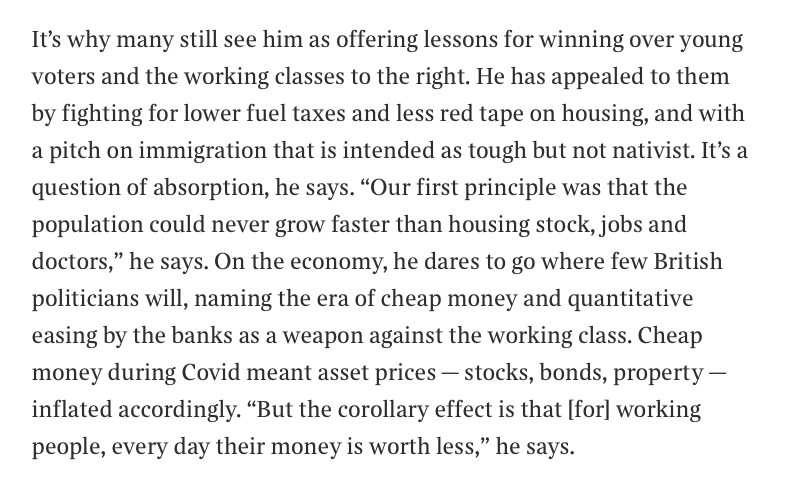
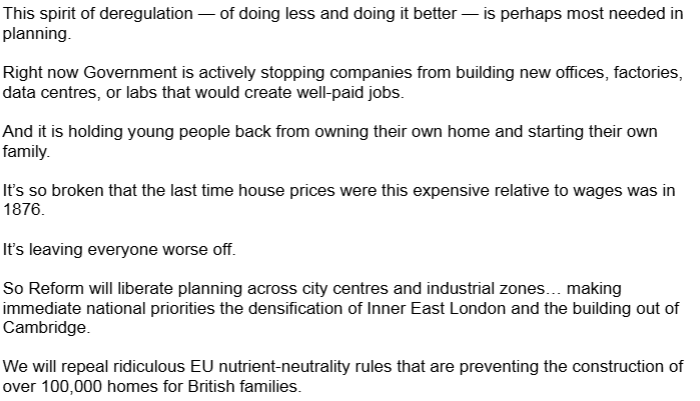
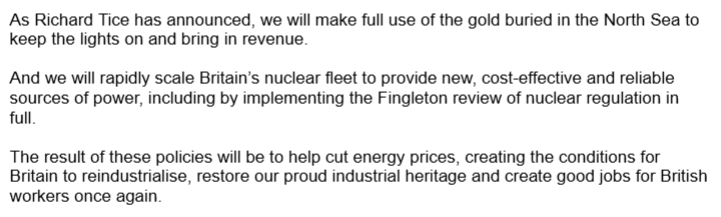
Very impressive list of pro-growth measures from @RobertJenrick's speech. I'm especially impressed by the densification of East London, speeding up large infrastructure projects like Heathrow's third runway, and implementing the Fingleton nuclear review. Getting Britain building again is one of the country's most important challenges and it's promising to see the direction that Reform is going in.
Ben Hopkinson tweet mediaBen Hopkinson tweet mediaBen Hopkinson tweet mediaBen Hopkinson tweet media
English
2
2
18
1.7K
Gareth Dennis
Gareth Dennis@GarethDennis·
@Ben_A_Hopkinson Ben, I take it you support the dismantling of Treasury? Without doing so, this will never happen.
English
1
0
1
529
Ben Hopkinson
Ben Hopkinson@Ben_A_Hopkinson·
@bswud Milton Keynes could’ve been an airport…
Ben Hopkinson tweet media
English
3
0
41
7.3K
Ben Southwood
Ben Southwood@bswud·
Heathrow has a big latent advantage over Charles de Gaulle and Schiphol: people. 22.8 million people live within a reasonable distance of LHR, vs 14 million for CDG & 12.4 million for AMS. In fact, MAN has a bigger catchment in raw population terms than the Dutch and French flagships. Mind you, Ile de France and North Holland have incomes/outputs per capita about 50 percent higher than the North West of England, so this will be partly balanced out. What this shows is how much more dominant Heathrow could be if it had more capacity. LHR flights grew 32 percent during the 1980s and 26 percent during the 1990s, before the airport hit its absolute maximum throughput. It has made every possible efficiency it can with non-runway bottlenecks: terminals, baggage, security, etc. In 2025, Heathrow was the world's sixth-busiest airport by total passengers. If growth hadn't fizzled after the early 2000s, it would be easily number one. When people think about the benefits that an airport like Heathrow has to a country, they think mostly in terms of the direct jobs that it creates, and perhaps secondarily in terms of the consumption benefits to people nearby, or how it helps Britain as a whole export tourism to the world. But there is an underappreciated benefit. The area around Heathrow – the M4 Corridor – is the UK's most productive. One crucial reason is that it has access to the whole world with regular flights going almost everywhere. That is enough to give international firms confidence to put major offices around there, and despite all the other gloomy trends in the UK economy, companies like OpenAI or Anthropic will very often put their first international office in London. I say that the biggest single factor behind that is Heathrow: the gateway to the world.
Ben Southwood tweet mediaBen Southwood tweet mediaBen Southwood tweet mediaBen Southwood tweet media
English
36
36
568
168.6K
Ben Hopkinson
Ben Hopkinson@Ben_A_Hopkinson·
@Sam_Dumitriu Very good post Sam. It's so important to highlight the poor incentives that British centralisation gives to local transport and housing projects.
English
0
0
6
392
Sam Dumitriu
Sam Dumitriu@Sam_Dumitriu·
Britain is a very centralised country. Britain is also a very expensive place to build new infrastructure. Are these two facts linked? Alon Levy, one of the world’s top experts on infrastructure doesn’t think so. Here’s why I disagree. samdumitriu.com/p/is-centralis…
English
18
18
135
26.1K
Ben Hopkinson
Ben Hopkinson@Ben_A_Hopkinson·
Britain is the most expensive place to build new nuclear in the world. The same reactor design costs roughly twice as much to build in the UK than in France or Finland. The Fingleton Review, if fully implemented, would solve this. The Government must not u-turn.
Britain Remade@BritainRemade

NEW: 45 leading figures from academia, business and politics tell Ed Miliband "Don't U-turn" on the commitment to implement every recommendation of the Fingleton Nuclear Regulatory Review. FULL LETTER: Dear Secretary of State, We are writing to you in support of the full and timely implementation of John Fingleton’s recent independent Nuclear Regulatory Review. Britain is the most expensive place in the world to build new nuclear power. Bringing these costs down is essential if we want to create jobs, tackle climate change, and cut energy bills. The Fingleton review contains 47 serious recommendations that, if adopted in full, would help achieve this goal. While we welcome the Prime Minister’s strategic steer which accepts “the principle of all the recommendations” of the review, we are deeply concerned that the government’s implementation plan will U-turn on some of these recommendations. Some nature NGOs have now begun to campaign against recommendations 11, 12, and 19 of the review. These reforms would: · Remove the costly requirement for like-for-like on-site environmental mitigation (11) · Create a streamlined alternative pathway for compliance with the habitats regulation that would unlock significant funding for nature recovery (12) · Remove the vague National Park Duty introduced by the Levelling Up and Regeneration Act 2023 (19) A recent briefing note from the Wildlife Trusts argues that the review is “based on flawed evidence” and that “implementing the Nuclear Regulatory [Taskforce’s] recommendations would devastate nature without speeding up the nuclear planning and delivery process.” There’s just one big problem: many of the claims made by the Wildlife Trusts in their note are inaccurate, misleading, or frankly irrelevant. We enclose a detailed rebuttal with this letter. We note that the Wildlife Trusts do not dispute the real friction introduced by the current regime. To win planning approval at Hinkley Point C, EDF was compelled to submit over 30,000 pages of environmental documentation; face three unsuccessful environmental legal challenges; delay essential works at a cost of £150m due to a failed court action; install unprecedented (and costly) mitigation systems; and apply for planning permission for operational minutiae with no safety or visual impact. These are exactly the sorts of issues the Fingleton Review seeks to resolve. If the government is serious about growing the economy, reducing bills, and delivering a new golden age of nuclear energy, its implementation plan must back the Fingleton reforms in full. In particular it is essential that the government proceeds with recommendations 11, 12 and 19. The stakes here are high. Nuclear energy is the most land-efficient zero-carbon technology we possess. A single power station can power millions of homes. If we are serious about halting climate-driven nature loss, then nuclear energy must expand in a safe, secure and sustainable way. Yet that will not happen unless costs fall significantly. We cannot afford for the government to U-turn on accepting all of the recommendations of the Fingleton Review. Signed:

English
2
14
61
2.8K
Ben Hopkinson
Ben Hopkinson@Ben_A_Hopkinson·
@SCP_Hughes The Kentish railway example is so interesting, as besides HS1 and the Beeching cuts, that's broadly the same infrastructure we use today. It means decisions we make today can have ramifications for nearly two centuries and counting.
English
1
0
3
756
Samuel Hughes
Samuel Hughes@SCP_Hughes·
Nineteenth-century cities grew fast. Berlin’s population grew twenty times, Manchester’s twenty-five times, and New York’s a hundred times. Sydney’s population grew around 240 times and Toronto’s maybe 1,700 times. Between 1833 and 1900, Chicago’s population grew around five thousand times, meaning that on average it doubled every five years. Homes were larger and far more affordable. Vast networks of trams, buses and suburban railways were built. Running water, gas, drains and electricity was retrofitted into old fabric. Despite having been built at breakneck speed, cities in 1914 were pretty good places. How was this achieved? The short answer: vigorous interventionism about streets and drains, state-mandated monopolies for transport and utilities infrastructure, and lightly regulated permissiveness for everything else. worksinprogress.co/issue/urban-ex…
English
42
218
1.2K
375.1K
Ben Hopkinson
Ben Hopkinson@Ben_A_Hopkinson·
If the mayor was ambitious, he could create a Mayoral Development Corporation around the route which would become the local planning authority in charge of CIL and S106. Alongside a Mayoral Development Order and a re-write of parts of the London Plan, large amounts of development could come forward which could fund a lot of the extension.
English
1
0
1
45
Ben Hopkinson
Ben Hopkinson@Ben_A_Hopkinson·
@antonhowes Yes, it would be very interesting to have a history of UK centralisation. AIUI, local authorities used to be central to apporving and run their own tramways throughout much of the 19th century. And ofc that's when we had a local infrastructure boom.
English
0
1
11
966
Ben Hopkinson
Ben Hopkinson@Ben_A_Hopkinson·
There's a new Lords amendment that will give Mayors the power to approve new underground or tram projects instead of waiting 3+ years to get the Transport Secretary to sign off. That means Tracy Brabin could approve the Leeds tram or Sadiq Khan could approve the Bakerloo Line Extension. This amendment needs to be adopted. Mayors know their area best. They should be able to pledge to voters that they will build new infrastructure and then be able to approve, fund and deliver it. In Spain and France, local leaders have all the power to deliver local transport. In turn, they build projects 2x faster and for less than half the price.
Ben Hopkinson tweet mediaBen Hopkinson tweet mediaBen Hopkinson tweet media
Ben Hopkinson@Ben_A_Hopkinson

Strasbourg in France has a comprehensive tram network of 6 lines and 35 miles of track, which serves its population of 500,000. Leeds has a population of 812,000 and it goes without. What's the difference between the two? Mayors that have the power to build 🧵

English
46
173
1.4K
161.6K
Ben Hopkinson
Ben Hopkinson@Ben_A_Hopkinson·
Yes, there are a few other changes to let metro mayors charge community infrastructure levies, workplace parking levies, business rate supplements, and visitor levies. Plus there are already existing funding streams too. So there are ways for mayors to raise revenue to fund extensions, especially if we can bring the cost down!
English
1
0
2
82
Ben Hopkinson
Ben Hopkinson@Ben_A_Hopkinson·
@jujulemons Yes it could unleash new projects across England, thanks to @BritishProgress for co-writing the report that helped push for these amendments
English
1
0
1
738
Ben Hopkinson รีทวีตแล้ว
Ben Hopkinson
Ben Hopkinson@Ben_A_Hopkinson·
@carto_graph Yes very true, and it means they're spending money they raised which gives strong incentives to control costs. No wonder Spain can build at up to 1/6th the cost we can.
English
1
0
12
652
Benedict
Benedict@carto_graph·
@Ben_A_Hopkinson One thing that a lot of low-cost countries (e.g. Spain) have in common is that the project is approved, funded and operated by the same level of government. This moves us much closer to the Spanish model!
English
1
0
29
924
Ben Hopkinson
Ben Hopkinson@Ben_A_Hopkinson·
@sennenboy8989 It's in the Treasury's interest to let mayors approve lines and raise more of the capital for new extensions. It would mean they wouldn't be on the hook for every single project or for any cost overruns.
English
0
0
3
281