Zachary Cohen

6.3K posts

Zachary Cohen banner
Zachary Cohen

Zachary Cohen

@DepressionLab

https://t.co/WRcJETePiK @uarizona clinical psychology, intervention science. Precision Mental Health/Digital Therapy. Dad+Husband. He/him. Personalized Treatment Lab

Tucson, USA เข้าร่วม Ocak 2014
902 กำลังติดตาม3.4K ผู้ติดตาม
ทวีตที่ปักหมุด
Zachary Cohen
Zachary Cohen@DepressionLab·
Tenure track assistant professor @uarizona Psychology Department Clinical Area; many areas of emphasis including the development of next generation, scalable assessment or intervention tools. Come be our colleague! Supportive/awesome colleagues & students arizona.csod.com/ux/ats/careers…
English
0
4
10
1.6K
Zachary Cohen รีทวีตแล้ว
Balázs Szigeti
Balázs Szigeti@psybalazs·
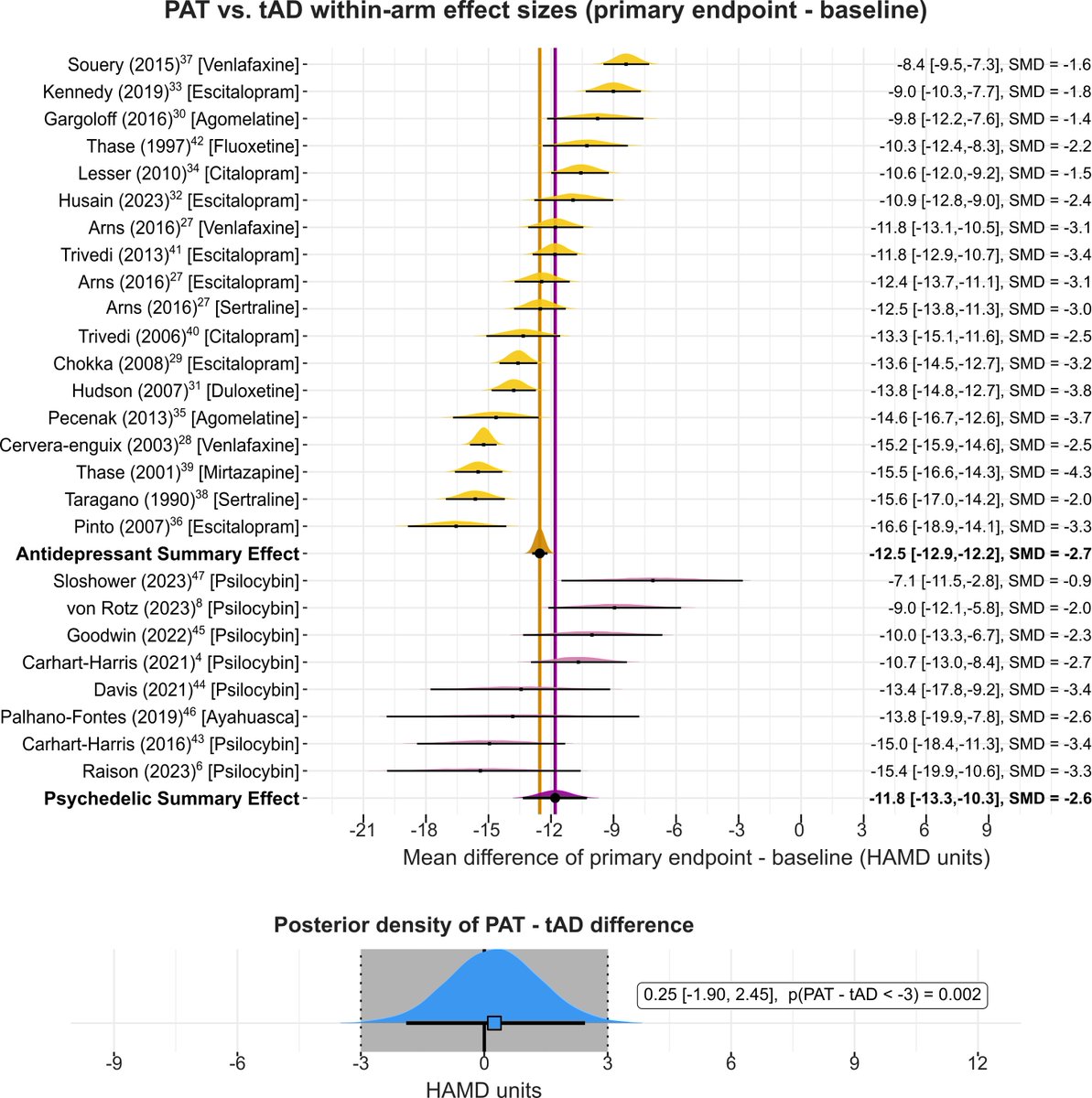
🚨MAJOR NEW PAPER 🚨 just out in @JAMAPsych : Psychedelic Therapy vs Antidepressants for the Treatment of Depression Under Equal Unblinding Conditions (tinyurl.com/yu2rbtaf). I am very proud of this one, was a lot of work for me - both co-first and last author! Eternal gratitude to co-first @QuantPsychiatry and twitterless Hannah Barnett! The premise is that it is biased to compare open-label trials (=where patients know what treatment they are getting) to blind trials (=where patients do NOT know what they are getting). Open-label trials would gain an unfair advantage by higher placebo response. Even formally blinded psychedelic trials are practically open-label as its obvious to distinguish placebo from 25mg of #psilocybin. In contrast, traditional antidepressants (SSRIs/SNRIs) trials are are close to be truly blind (Lin 2022). Given the bias of open-label vs. blinded comparison, we compared the efficacy of psychedelic-therapy (which is practically always open-label) vs. open-label antidepressants for the treatment of major depression. We tested 3 prior hypothesis: - There will be a significant difference between psychedelic-therapy vs. open-label antidepressants, favoring psychedelic-therapy. - There will be a significant difference between blinded and open-label antidepressants trials, favoring open-label. - There will NOT be a significant difference between blinded and open-label psychedelic-therapy, as practically they are always open-label. In contrast with our prior hypothesis, we did not find psychedelic-therapy to be more effective than open-label antidepressants (H1). Not only was the difference not clinically meaningful, but practically there was no difference at all. This finding means that antidepressants administered knowingly to patients, which is the case in real-life medical practice, is as effective as psychedelic-therapy. This result was robust across variations in study selection, including when we removed psychedelic-therapy trials on treatment-resistant depression. We also assessed the impact of blinding in both psychedelic-therapy and antidepressants trials. We found that for antidepressants (H2), but not for psychedelic-therapy (H3), open label is associated with better outcomes than blinded treatment. However, even in the case of antidepressants, the difference was practically small (~1.3 HAMD units). How come hypothesis 1 failed, i.e. that psychedelic-therapy is no ore effective than open-label antidepressants, given that antidepressants trials are famous for small drug-placebo difference (~2.4 HAMD units), while psychedelic-therapy trials reported large effects (~7.3)? The key factor is that in psychedelic trials the placebo response is about 50% relative to antidepressants, ~ 4 vs 8 HAMD units (Hsu 2024, Hieronymus 2025). This suppressed placebo response leads to an inflated between-arm difference, as the treatment arm is measured against a lower floor. The suppressed placebo response in psychedelic-therapy trials is likely attributable to the ‘know-cebo’ effect, i.e. the disappointment when patients realize they are in the control group. In psychedelic-therapy trials, this placebo suppression accounts for 4.0 / 7.3 ~ 55% of the specific treatment effect. In other words, ~55% of psychedelic-therapy’s effect is not explained by patient improvement after the treatment, but rather by the lack of improvement in the placebo group. In summary, we found that for the treatment of depression, psychedelic-therapy is no more effective than open-label SSRIs/SNRIs. Our results for psychedelics are twofold: psychedelic-therapy demonstrated a robust and large therapeutic effects (~12 HAMD units), which justifies optimism. On the other hand, psychedelic-therapy’s lack of superiority compared to open-label SSRIs/SNRIs highlights the influence of blinding integrity and argues against overly optimistic narrative's about psychedelic-therapy's potential.
Balázs Szigeti tweet media
English
21
63
222
55.9K
Zachary Cohen รีทวีตแล้ว
Sahib Khalsa
Sahib Khalsa@KhalsaLab·
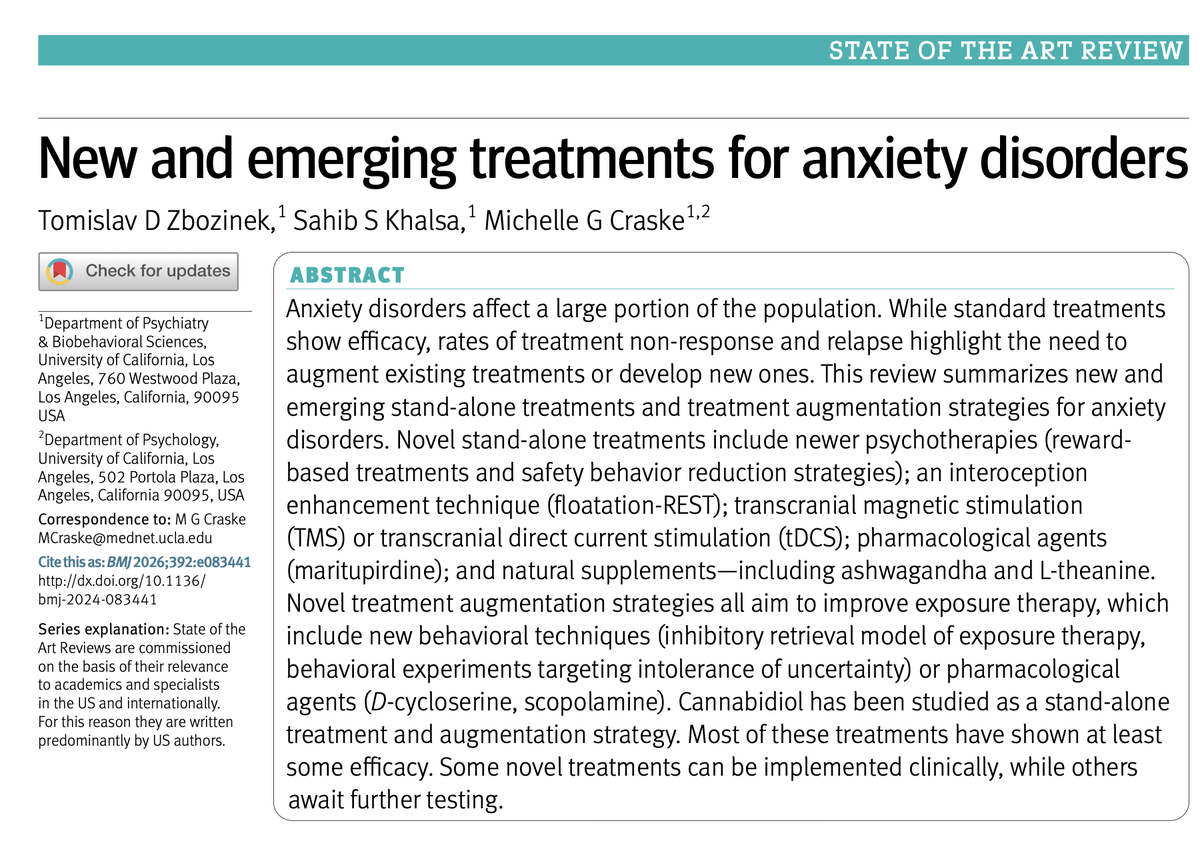
What are the new and emerging treatments for anxiety disorders? We summarize these in a new review: bmj.com/content/392/bm…
Sahib Khalsa tweet media
English
4
33
134
8.1K
Zachary Cohen รีทวีตแล้ว
Ben Van Calster
Ben Van Calster@BenVanCalster·
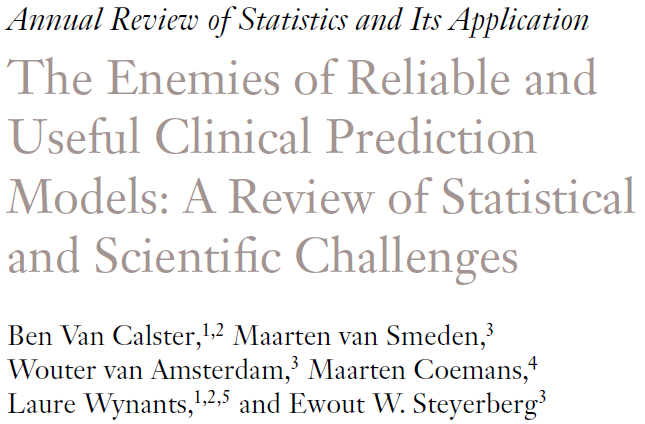
Happy to see this in print! doi 10.1146/annurev-statistics-042324-123749
Ben Van Calster tweet media
English
0
3
18
737
Zachary Cohen รีทวีตแล้ว
Yoni Ashar
Yoni Ashar@YoniAshar·
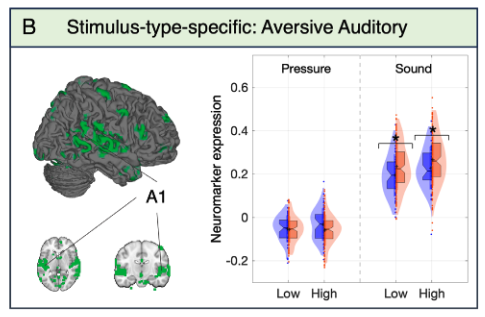
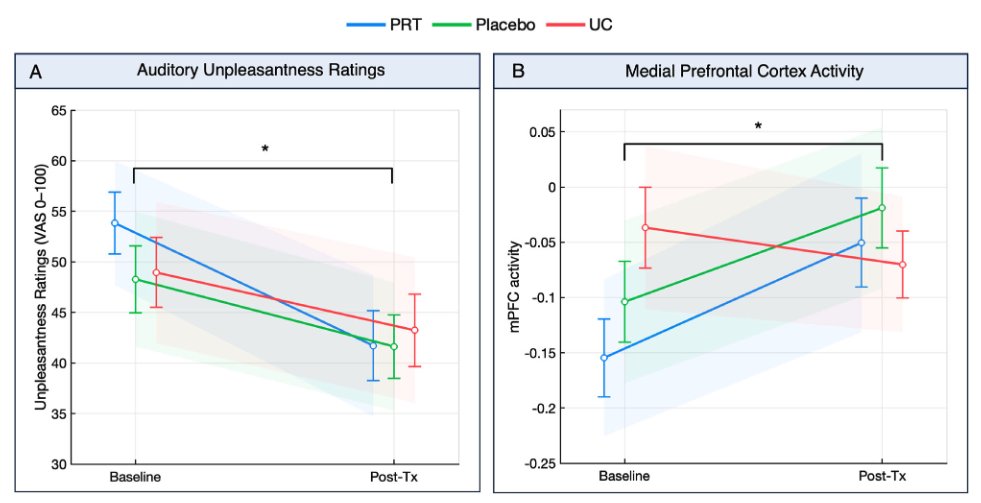
We know that chronic back pain is driven by brain amplification of sensory input -- but we haven't known how far this amplification extends In new work just published in Annals of Neurology, we show that people with chronic back pain also have substantial (d ~ 1.0) amplification of aversive auditory processing, and that this is - driven by hyper-responsivitiy in auditory cortex and insula - has overlapping mechanisms with fibromyalgia - partially reversible with treatment (pain reprocessing therapy), including stronger mPFC responses to aversive sounds onlinelibrary.wiley.com/doi/10.1002/an… Is this multi-sensory sensitization cause of consequence of chronic pain? collaboration with @torwager @AlinaPanzel @C_Buchel
Yoni Ashar tweet mediaYoni Ashar tweet media
English
0
4
12
910
Zachary Cohen รีทวีตแล้ว
Mukund Iyengar
Mukund Iyengar@mukundiyngr·
The cuts aren’t random. They’re targeting on-ramps. When we zoom into 2026 funding decline by mechanism, the deepest cuts land on new ideas entering the system: ▪️Small R (R03 / R15) ↓81% ▪️R21 exploratory grants ↓73% ▪️Other high-variance mechanisms ↓70%+ If you want to stall science, this is exactly how. Meanwhile, among other news: ▪️R01s ↓47% ▪️R37 MERIT ↓40% In other words, the earliest-stage bets are being starved first. When the on-ramps close, the damage shows up later: ↓ pilot data ↓ resubmissions that mature into R01s ↓ new labs surviving their early years ↓ shared cores that support entire departments ↓ discoveries that ever reach trials So much remains unanswered. This week we’re digging deeper: -which disease areas rely most on these mechanisms -which institutions are most exposed -where the first downstream breaks appear (trials, screening, imaging, prevention, survivorship) If you run a lab, grants office, or cancer center, tell us what cut you want. Source: NIH RePORTER via @Jori_health
Mukund Iyengar tweet media
English
6
49
97
39.6K
Zachary Cohen รีทวีตแล้ว
sim | シム
sim | シム@simscircuit·
Did not expect a question that starts out 'Do you think before you speak?' to go so well. A+ question from Charlotte Harpur A++ response from Eileen Gu.
English
1.4K
22.4K
154.9K
12.5M
Zachary Cohen รีทวีตแล้ว
ExpiWell
ExpiWell@expiwell·
@DepressionLab @JAMAPsych This is such a "lightbulb" moment for the field. It’s wild how much we rely on the PHQ-9 while overlooking how participants actually read the prompt. This kind of work on measurement validity is so necessary—huge congrats on the JAMA Psychiatry pub!
English
0
1
1
153
Zachary Cohen
Zachary Cohen@DepressionLab·
"From Innovation to Implementation: Artificial Intelligence in Cognitive Behaviour Therapy Training and Supervision" New paper led by Roz Shafran, with contributions from a ton of leading experts on AI in mental health (and also, for reasons unclear, me) doi.org/10.1016/j.brat…
Zachary Cohen tweet media
English
0
2
11
804
Zachary Cohen รีทวีตแล้ว
Eiko Fried
Eiko Fried@EikoFried·
After 5 yrs of data collection, our WARN-D machine learning competition to forecast depression onset is now LIVE! We hope many of you will participate. If you share a single thing of my lab this year, please make it this competition. eiko-fried.com/warn-d-machine…
English
0
40
88
7.7K
Zachary Cohen รีทวีตแล้ว
JAMA Psychiatry
JAMA Psychiatry@JAMAPsych·
Survey study identifies that most patients with depression interpret the Patient Health Questionnaire instructions incorrectly, raising questions about its validity for clinical and research use. ja.ma/48UOobl
JAMA Psychiatry tweet media
English
1
28
95
8.1K
Zachary Cohen
Zachary Cohen@DepressionLab·
@Avis Have sent via DM all the information and documentation I can gather without being able to get through to either rental location to talk to the people who were involved (both local phone numbers get automatically routed to the corporate call center).
English
2
0
0
57
Avis Car Rental
Avis Car Rental@Avis·
@DepressionLab Hello Zachary! We apologize for the unexpected charge. Please DM us the rental agreement number, name listed, your relationship to the renter and email address, so we can look into this. ~RG
English
1
0
0
296
Zachary Cohen
Zachary Cohen@DepressionLab·
Don’t rent from @Avis - the person who rented us a car yesterday charged us for an extra day and said he put a note in the system so that we could get refunded but now @Avis says there’s no note and won’t refund us. Make sure you voice record any conversations with them. Horrible
English
3
0
1
562
Zachary Cohen รีทวีตแล้ว
Shari Hamm (she/her)
Shari Hamm (she/her)@sharinahamm·
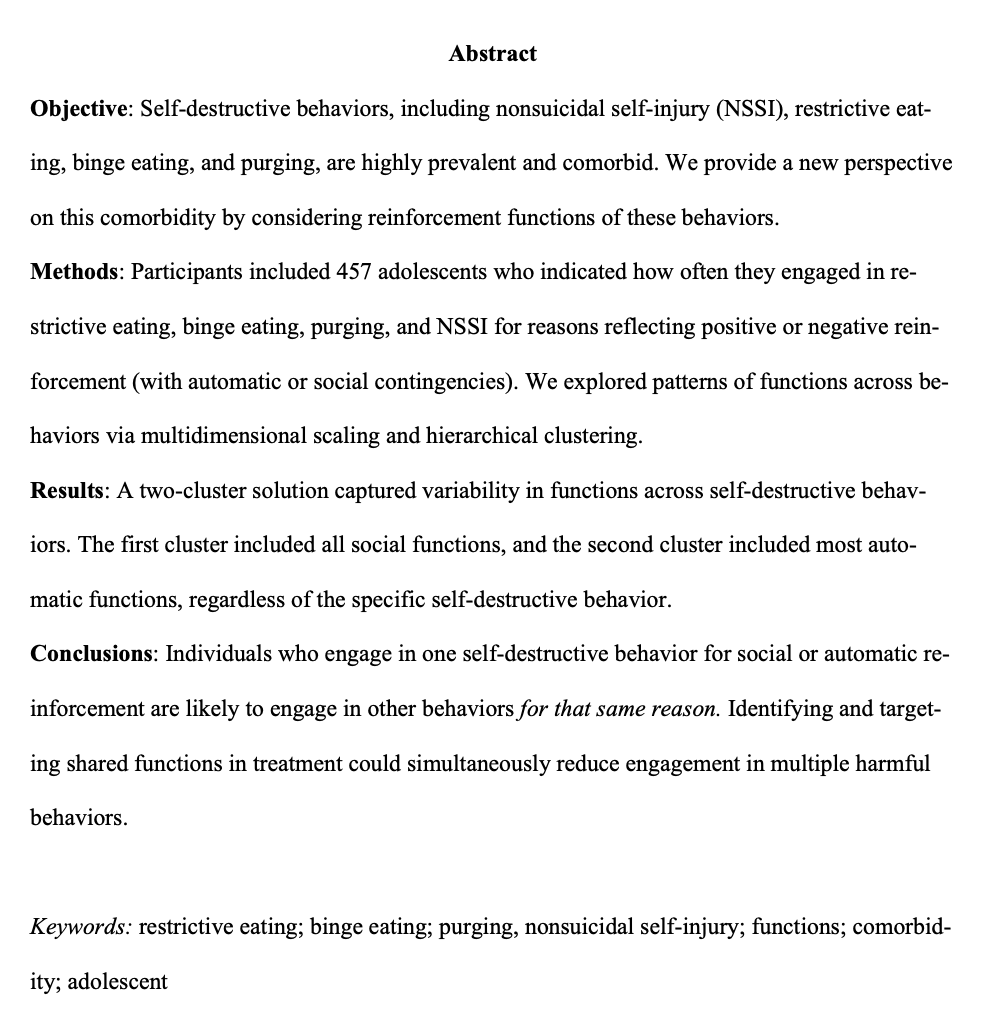
New preprint alert! (1/5)🌟 I’m thrilled to share the preprint of my first first-authored PhD paper! We test whether shared reinforcement functions help explain why adolescents who engage in one self-destructive behavior often engage in others. Summary⬇ osf.io/preprints/psya…
Shari Hamm (she/her) tweet media
English
5
7
26
2.2K
Zachary Cohen
Zachary Cohen@DepressionLab·
Nice writeup by Kyle Mittan, a colleague here at @uarizona, of our new study in @JAMAPsych. Work with Panayiotou, Razum, Eisele, Wang, and @EikoFried. news.arizona.edu/news/confused-…
Zachary Cohen@DepressionLab

1/n Out today in @JAMAPsych: Interpretation Issues With the Patient Health Questionnaire Instructions. We find troubling variability in whether people think they should respond based on the frequency of the Sx or the frequency of being bothered by the Sx. jamanetwork.com/journals/jamap…

English
1
2
6
1.1K