

MissGooch
7.3K posts


🚨Top Democrat political consultant and campaign strategist, James Carville, just stated on the Left-wing ‘Policon’ podcast that when the Democrats regain power, they plan to:
-Grant statehood to Washington D.C. and Puerto Rico, so that the Democrats can unlock 4 extra seats in the Senate.
-Pack the U.S. Supreme Court from 9 Justices up to 13 Justices, adding another 4 Left-wing Justices to the court.
-Reopen the U.S.-Mexico border and grant mass-amnesty to every single alien currently inside of the United States.
-His advice to Democrat politicians: “Don’t run on it. Don’t talk about it. Just do it.”

English
MissGooch รีทวีตแล้ว

@Petertodd "It's our responsibility as rulers. Just as in genetics unnecessary information and memory must be filtered out to stimulate the evolution of the species. Who else could wade through the sea of garbage you people produce, retrieve valuable truths and even interpret their meaning"

English

One day, all the Palantir haters will have to come to grips with the reality that the disinformation surrounding the company was deliberately created by our adversaries who feared its potential to strengthen and embolden the ability of free and democratic societies.
English

Pierre Menard, Author of the Quixote
Negative Creep@7Negative_Creep
it’s funny to think that if this happened today thousands of chuds online would rush to call Kojima woke and pandering to the cringe left or something when in reality Olga almost certainly has armpit hair because it gave Kojima a boner
English
I got the strangest 'cat call' today. He didn't even call to me, just clutched his head kept repeating "I have a wife I have a wife God have mercy I have a wife"
English
@OsoBlanc0 irony is a prison
don't get captured
but if u do: ESCAPE
English


@OsoBlanc0 Scott Aukerman had an entire podcast where the late Harris Wittels taught him everything about Phish and tried to convert him into a fan

English


The woman part of my brain very scared or periods in texts

English
@roringthunder only good things about ai:
1. destruction of the entertainment industry
2. funny cat videos
English


Dasha is always photographed while reading!!! She is very smart!!!

English
over 1200 episodes of this are FREE on Tubi
RetroNewsNow@RetroNewsNow
📺On April 18, 1967, Barnabas Collins, played by Jonathan Frid, made his first appearance on ABC's 'Dark Shadows'
English
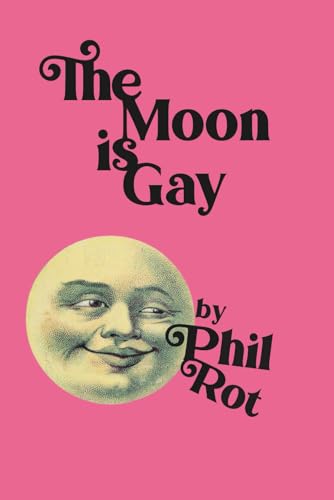

Vincenzo Barney wrote a poem

Vincenzo Barney@BarneysRubble0
The first humans to have sex on the moon are already walking amongst us. Who are they and what will they mean to each other and how long will it last and what position will they do it in and will the first orgasm on the moon conceive a child on the moon?
English
MissGooch รีทวีตแล้ว

I like the Tim Burton Batman the most because he'll just give you the full-on Joker standing in an apartment in the afternoon

English
@OsoBlanc0 what if u could sustain the feeling of a beloved dying pet across multiple issues?
English

I read WE3 exactly one time and it was too tough a hang — I was emotionally spent
Adam Talking Superman@TalkingSuperman
Peak character design.
English


I just finished reading palantir’s manifesto & I need you to understand what you’re actually looking at because this is the MOST important document the tech world has produced this year
most people came away thinking «wow what a thoughtful essay about patriotism and technology »…I came away thinking this is the most elegant justification for corporate capture of the state apparatus ever written & I want to walk you through why
krp opens with «silicon valley owes a moral debt to the country that made its rise possible » & frames the entire document as a call to civic duty, but read between the lines and what he’s actually saying is that the engineering elite should be embedded inside the defense and intelligence apparatus of the nation, he’s describing exactly what palantir has already done and dressing it up as patriotism
«the question is not whether AI weapons will be built, it is who will build them and for what purpose »sounds like a warning but it’s actually a sales pitch, he’s telling every gov on earth that the choice is binary either you buy from us or your adversaries will build it without you, this is the oldest arms dealer rhetoric in history wrapped in SV vocabulary
« hard power in this century will be built on software »is the key sentence of the entire manifesto because this is where karp reveals the real thesis, he’s saying whoever controls the software layer of national defense controls the nation itself & if you’ve been following my threads you know that palantir’s gotham and foundry platforms are already plugged into the intelligence feeds the satellite data, financial transactions & communications of dozens of govts worldwide through a single ontological knowledge graph that creates a technological dependency so deep that migrating away would mean rebuilding the entire institutional memory of the organization from scratch
this is vendor lockin at the scale of nation states and I’m personally convinced it was designed this way from the beginning
«we should applaud those who attempt to build where the market has failed to act » is karp defending palantir’s expansion into every domain the gov used to handle itself, policing immigration, military targeting intelligence analysis public health, everywhere the state retreats palantir advances and what was once a government function becomes a private service that the government can no longer perform without plantir’s permission
and here’s what I think makes it even more concerning, these systems are increasingly autonomous meaning the AI layer is making targeting recommendations threat assessments & resource allocation decisions that humans inside gov are rubber stamping without fully understanding the underlying logic
a bureaucrat inside the pentagon / DGSI sees a recommendation from the system & approves it because the system has been right 97% of the time and questioning it would require technical expertise that no one in the room has, this is algorithmic governance wearing the mask of human decision making
«the atomic age is ending, a new era of deterrence built on ai is set to begin »is the MOST chilling sentence in the document because karp is explicitly saying that ai based deterrence will replace nuclear deterrence as the organizing principle of global power, and whoever builds that ai deterrence layer owns the 21st century the same way whoever built the bomb owned the 20th & he’s telling you plainly that palantir intends to be that builder
«national service should be a universal duty » & « we should only fight the next war if everyone shares in the risk »sounds noble until you realize that he is proposing a system where citizens serve the state & the state is operationally dependent on palantir, the public bears the risk and palantir captures the value, soldiers fight wars planned by algorithms they can’t audit built by a company they can’t vote out
Palantir@PalantirTech
Because we get asked a lot. The Technological Republic, in brief. 1. Silicon Valley owes a moral debt to the country that made its rise possible. The engineering elite of Silicon Valley has an affirmative obligation to participate in the defense of the nation. 2. We must rebel against the tyranny of the apps. Is the iPhone our greatest creative if not crowning achievement as a civilization? The object has changed our lives, but it may also now be limiting and constraining our sense of the possible. 3. Free email is not enough. The decadence of a culture or civilization, and indeed its ruling class, will be forgiven only if that culture is capable of delivering economic growth and security for the public. 4. The limits of soft power, of soaring rhetoric alone, have been exposed. The ability of free and democratic societies to prevail requires something more than moral appeal. It requires hard power, and hard power in this century will be built on software. 5. The question is not whether A.I. weapons will be built; it is who will build them and for what purpose. Our adversaries will not pause to indulge in theatrical debates about the merits of developing technologies with critical military and national security applications. They will proceed. 6. National service should be a universal duty. We should, as a society, seriously consider moving away from an all-volunteer force and only fight the next war if everyone shares in the risk and the cost. 7. If a U.S. Marine asks for a better rifle, we should build it; and the same goes for software. We should as a country be capable of continuing a debate about the appropriateness of military action abroad while remaining unflinching in our commitment to those we have asked to step into harm’s way. 8. Public servants need not be our priests. Any business that compensated its employees in the way that the federal government compensates public servants would struggle to survive. 9. We should show far more grace towards those who have subjected themselves to public life. The eradication of any space for forgiveness—a jettisoning of any tolerance for the complexities and contradictions of the human psyche—may leave us with a cast of characters at the helm we will grow to regret. 10. The psychologization of modern politics is leading us astray. Those who look to the political arena to nourish their soul and sense of self, who rely too heavily on their internal life finding expression in people they may never meet, will be left disappointed. 11. Our society has grown too eager to hasten, and is often gleeful at, the demise of its enemies. The vanquishing of an opponent is a moment to pause, not rejoice. 12. The atomic age is ending. One age of deterrence, the atomic age, is ending, and a new era of deterrence built on A.I. is set to begin. 13. No other country in the history of the world has advanced progressive values more than this one. The United States is far from perfect. But it is easy to forget how much more opportunity exists in this country for those who are not hereditary elites than in any other nation on the planet. 14. American power has made possible an extraordinarily long peace. Too many have forgotten or perhaps take for granted that nearly a century of some version of peace has prevailed in the world without a great power military conflict. At least three generations — billions of people and their children and now grandchildren — have never known a world war. 15. The postwar neutering of Germany and Japan must be undone. The defanging of Germany was an overcorrection for which Europe is now paying a heavy price. A similar and highly theatrical commitment to Japanese pacifism will, if maintained, also threaten to shift the balance of power in Asia. 16. We should applaud those who attempt to build where the market has failed to act. The culture almost snickers at Musk’s interest in grand narrative, as if billionaires ought to simply stay in their lane of enriching themselves . . . . Any curiosity or genuine interest in the value of what he has created is essentially dismissed, or perhaps lurks from beneath a thinly veiled scorn. 17. Silicon Valley must play a role in addressing violent crime. Many politicians across the United States have essentially shrugged when it comes to violent crime, abandoning any serious efforts to address the problem or take on any risk with their constituencies or donors in coming up with solutions and experiments in what should be a desperate bid to save lives. 18. The ruthless exposure of the private lives of public figures drives far too much talent away from government service. The public arena—and the shallow and petty assaults against those who dare to do something other than enrich themselves—has become so unforgiving that the republic is left with a significant roster of ineffectual, empty vessels whose ambition one would forgive if there were any genuine belief structure lurking within. 19. The caution in public life that we unwittingly encourage is corrosive. Those who say nothing wrong often say nothing much at all. 20. The pervasive intolerance of religious belief in certain circles must be resisted. The elite’s intolerance of religious belief is perhaps one of the most telling signs that its political project constitutes a less open intellectual movement than many within it would claim. 21. Some cultures have produced vital advances; others remain dysfunctional and regressive. All cultures are now equal. Criticism and value judgments are forbidden. Yet this new dogma glosses over the fact that certain cultures and indeed subcultures . . . have produced wonders. Others have proven middling, and worse, regressive and harmful. 22. We must resist the shallow temptation of a vacant and hollow pluralism. We, in America and more broadly the West, have for the past half century resisted defining national cultures in the name of inclusivity. But inclusion into what? Excerpts from the #1 New York Times Bestseller The Technological Republic: Hard Power, Soft Belief, and the Future of the West, by Alexander C. Karp & Nicholas W. Zamiska techrepublicbook.com
English
@0ddette its based on this article
cosmopolitan.com/politics/a2848…
English

I’m actually excited to find out what the true meme origin is.
DiscussingFilm@DiscussingFilm
Jessica Chastain says Apple will finally release her new political thriller series ‘THE SAVANT’ this year. • Originally was going to premiere in September 2025 but was postponed after the assassination of Charlie Kirk. • The series follows an undercover investigator who infiltrates hate groups online to detect & prevent domestic extremists before they act. (Source variety.com/2026/tv/column…)
English
@slurcat @Howlingmutant0 there's a rich vein of maritime imagery to mine
u wouldn't expect it but this shanty drops the hard R in less than 40 seconds
youtu.be/s8cEqtl6G9c?si…

YouTube
English

@Howlingmutant0 You go back and ferry that boat right now. I am emotionally attached to that narrative.
English

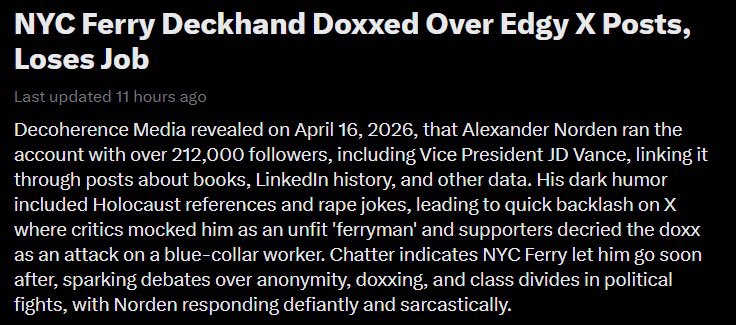
Guys I left that job a few months ago, I hate to dispel the martyr narrative here
English
@OsoBlanc0 this man is giving heavy thoughts to CRACKER in 2026
this band is one notch below Candlebox in the grunge rock one hit wonders hierarchy
SPONGE outranks them
English
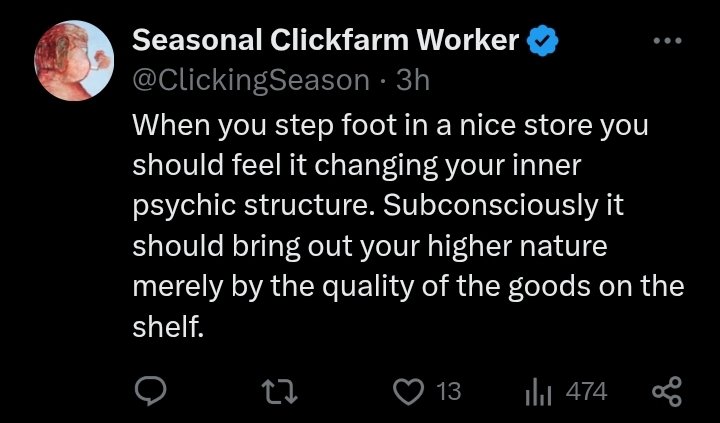

If you think paying quadruple for diet soda is a marker of status, that's a good sign that you've overestimated your station in life 🤣
Seasonal Clickfarm Worker@ClickingSeason
No, it’s good. Keeps out the riff raff. The mere existence of Diet Coke in a building makes the vibe of the place more trashy. Making Pepsi drinkers feel unwelcome is the point.
English

Hollywood movies in the 70s were noticeably lacking in style. Critics in those days liked movies that looked awful. Because Serious Films should look miserable and ugly.
Style started to reappear in Hollywood movies with AMERICAN GIGOLO and CAT PEOPLE. And THE HUNGER.
DepressedBergman@DannyDrinksWine
Tony Scott on how much Hollywood hated "The Hunger" (1983) & how British filmmakers in Hollywood were criticised at that time: "Interviewer: A lot of people have satirized the homoerotic elements in 'Top Gun' (1986). Was any of that apparent while you were filming? Scott: No it wasn’t. Not at all. But with 'Top Gun', I had just done 'The Hunger' (1983), and Hollywood’s always trying to find the new kid on the block, and nobody’s seen a foot of film, and I was actually developing 'Man on Fire' (2004) 25 years ago, and they saw a cut of 'The Hunger', and all of a sudden my parking spot at Warner Brothers was painted out! It took me four more years to get another movie, which was 'Top Gun'. Don Simpson saw [The Hunger] channel-surfing at 3 a.m. – I think he was high. And he actually saw a Saab commercial that I shot which is a jet racing a car, then he saw The Hunger, and him and Jerry [Bruckheimer] called me. Hollywood just hated that movie. They called it, “Esoteric, artsy-fartsy,” and we’re going to do a sequel to 'The Hunger'. I’m not directing it, but we’re doing it. Interviewer: Do you have nostalgia for the way films were being made and the way the industry worked in the 80s? Scott: The 80s was a whole era. We were criticized, we being the Brits coming over, because we were out of advertising-- Alan parker, Hugh Hudson, Adrian Lyne, my brother-- we were criticized about style over content. Jerry Bruckheimer was very bored of the way American movies were very traditional and classically done. Jerry was always looking for difference. That's why I did six movies with Jerry. He always applauded the way I wanted to approach things. That period in the 80s was a period when I was constantly being criticized, and my press was horrible. I never read any press after The Hunger. Me, my brother, not Alan Parker, Alan Parker skated through. Adrian Lyne got slammed like I did." (Tony Scott's interview with Katey Rich, Cinemablend 2009)
English