
Evidence Based Education

12.6K posts

Evidence Based Education banner
Evidence Based Education

Evidence Based Education

@EvidenceInEdu

Delivering training and tools to improve education worldwide. Winner of @TheKingsAwards for Innovation, 2024. #GreatTeaching [email protected]

Sunderland, England เข้าร่วม Kasım 2014
3.3K กำลังติดตาม35.2K ผู้ติดตาม
ทวีตที่ปักหมุด
Evidence Based Education
Evidence Based Education@EvidenceInEdu·
The Model for Great Teaching offers a curriculum for teachers’ professional learning. It provides a common professional language and a shared structure for enabling Great Teaching. "Having words for important concepts enables community members to talk about them, think together and agree on their meaning, interrogate them for deeper understanding and gain collective clarity around related action and impact." Language for learning leadership Stoll (2020) Which Element will you focus on first? Let us know in the comments below! 👇
Evidence Based Education tweet media
English
1
35
95
14.4K
Evidence Based Education
Evidence Based Education@EvidenceInEdu·
"The first time I encountered the concept of ‘poor proxies’ was during a presentation by @ProfCoe in 2016 at the Festival of Education at Wellington College. This was a significant moment in my professional development. It challenged assumptions I had previously accepted, encouraged me to reflect on my classroom practice, and inspired me to learn more about how learning actually happens." Blog by Kate Jones hubs.la/Q047hnz-0
English
1
3
7
1.4K
Evidence Based Education
Evidence Based Education@EvidenceInEdu·
How can schools move from one-off CPD sessions to a culture where professional learning is embedded, collaborative and genuinely improves classroom practice? Too often, professional learning feels like something done to teachers, not with them. But when schools build shared understanding and trust, CPD becomes something teachers own and outcomes improve for everyone. This blog is the first instalment in a five-part series written by, Matthew Anglesea, Assistant Principal at Durham Sixth Form Centre, where they share how they used the Great Teaching Toolkit to create a culture of reflection, feedback, and growth where professional learning is part of everyday practice, not an add-on. 👉 Read their story: hubs.la/Q047hbQJ0
Evidence Based Education tweet media
English
0
5
10
993
Evidence Based Education
Evidence Based Education@EvidenceInEdu·
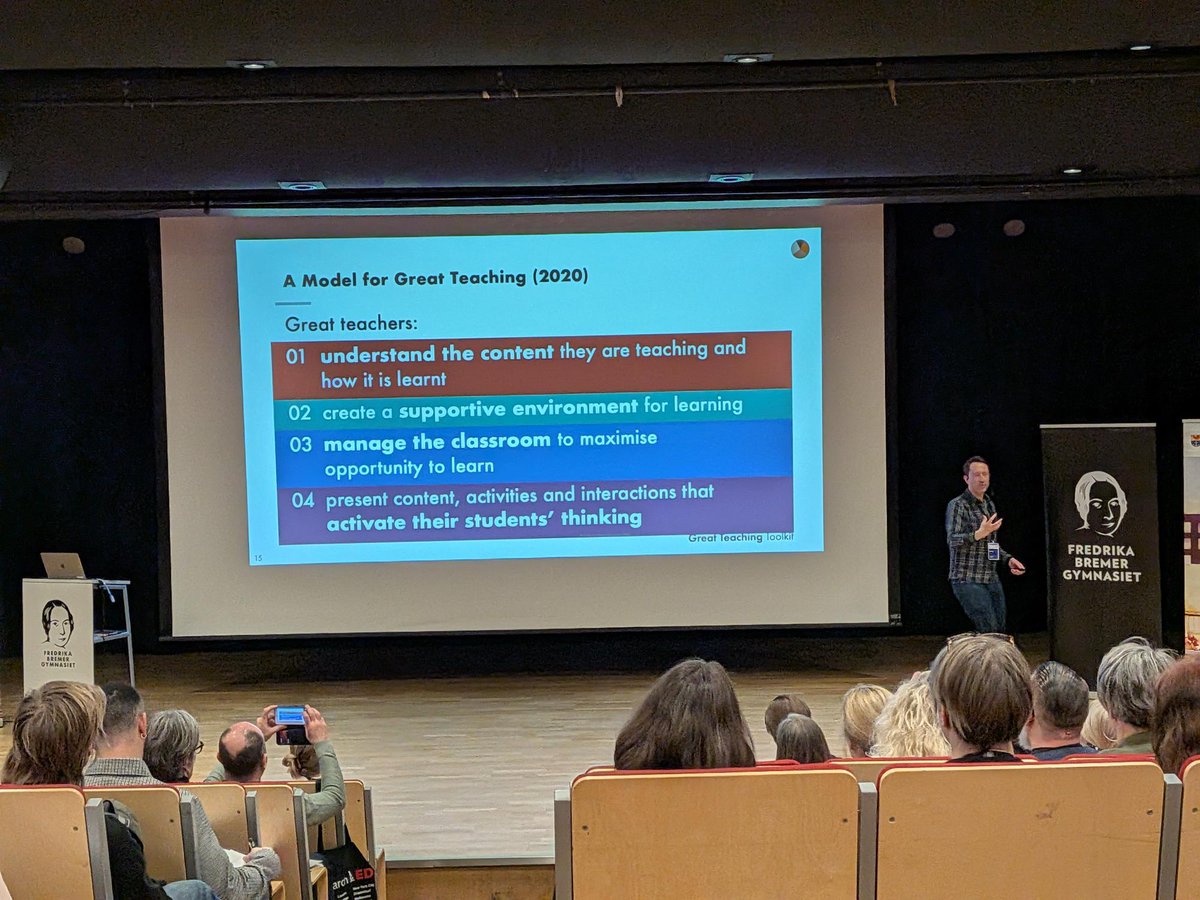
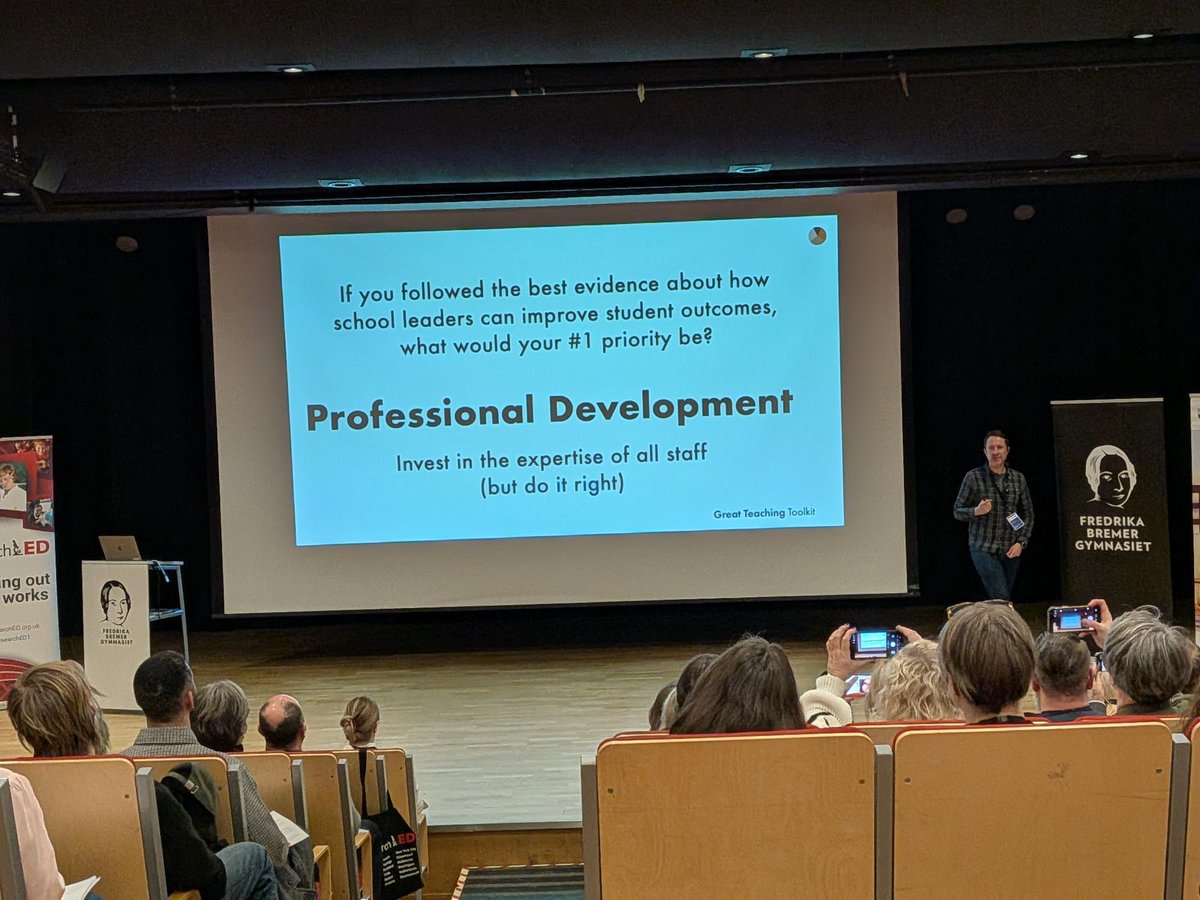
Great conversations start with great questions and great teaching starts there too. At @researchED1 Scandinavia last Saturday, we explored two powerful ideas shaping professional learning right now. @KateJones_teach reminded us that questioning isn’t just something we do, but a skill we can develop by exploring and adapting different questioning techniques for different contexts and purposes. When we ask better questions, we unlock deeper thinking, support engagement, and can adapt the next steps in teaching. @ProfKime tackled a question many educators are asking: What does it really mean to be evidence-based? Because ‘evidence-based professional learning' it’s about making better decisions, grounded in what we know works, and adapting it to your context. Both sessions point to the same idea: small, intentional shifts in practice can lead to meaningful improvements in student learning. If you joined us at researchED Scandinavia, what’s one idea you’re taking back into your classroom or school? 👇 Share your reflections, we’d love to hear them.
Evidence Based Education tweet mediaEvidence Based Education tweet mediaEvidence Based Education tweet media
English
1
6
18
2.4K
Evidence Based Education
Evidence Based Education@EvidenceInEdu·
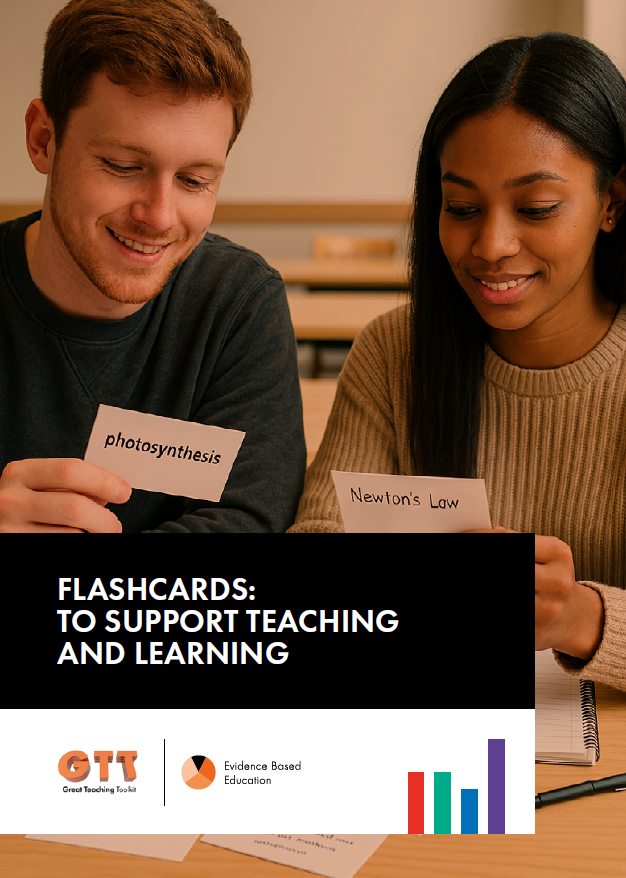
Flashcards eBook by @KateJones_teach ✍️ "The benefits of retrieval practice for long-term learning are among the most secure findings in educational psychology (Brown, Roediger, & McDaniel, 2014) and flashcards are a student friendly method of providing regular retrieval practice opportunities for learners." Learn how to use flashcards to boost long-term learning. This practical guide explores why, when, and how to use flashcards to support retrieval practice Now you can find ALL our eBooks in one place on our website here hubs.la/Q046Tq0P0
Evidence Based Education tweet media
English
0
6
17
1K
Evidence Based Education
Evidence Based Education@EvidenceInEdu·
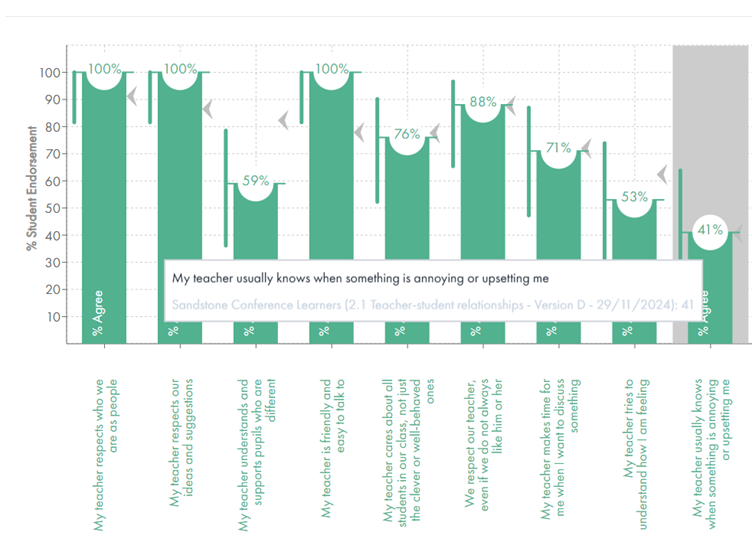
4 in 10 students feel their teacher knows when something is upsetting them. A sense of belonging underpins almost every aspect of wellbeing and learning. It’s not a school-specific construct; it’s part of being human. We all need to feel connected to people, to places, to something bigger than ourselves. Based on 120,000 learner surveys completed on the Great Teaching Toolkit platform, only around four in ten students feel their teacher knows when something is upsetting them. These findings should give every leader pause for thought. Professor @ProfKime explains why belonging matters and isn't a "nice-to have" in this blog hubs.la/Q046TpT90
Evidence Based Education tweet media
English
6
2
10
1.1K
Evidence Based Education
Evidence Based Education@EvidenceInEdu·
Professional learning shifts when it’s built on understanding rather than imitation. "Teachers aren’t asked to copy what they see. They’re supported to notice, interpret, and reason about practice and to consider how similar decisions might play out in their own context." Find out how here hubs.la/Q046GrtH0
English
0
1
7
873
Evidence Based Education
Evidence Based Education@EvidenceInEdu·
💻 Webinar: Peer Assessment: Why? When? How? In this session, CJ Rauch explores how peer assessment can be used effectively to support learning, rather than becoming a time-consuming or unreliable classroom routine. Drawing on research evidence, the webinar examines the potential benefits of peer assessment, alongside the common challenges that can limit its impact if poorly designed or implemented. CJ will also share a range of practical, classroom-ready peer assessment techniques, with clear guidance on scaffolding, modelling, and accountability to ensure peer feedback is meaningful, manageable, and acted upon by students. You will leave with greater clarity and confidence about using peer assessment purposefully in your own classroom. 🗓️ 16th March 🕔 16:00 GMT Register for free hubs.la/Q046Gmxm0
Evidence Based Education tweet media
English
0
1
4
884
Evidence Based Education
Evidence Based Education@EvidenceInEdu·
In this episode of the Evidence Based Education podcast @ProfKime was joined by Dr Lisa-Maria Müller from the Chartered College of Teaching for a wide-ranging conversation about professional learning in education. Together, they explored how schools and systems are rethinking the design of professional learning — moving beyond compliance-driven models towards approaches that prioritise agency, autonomy and meaningful professional growth. Search "The Evidence Based Education Podcast" on your selected platform to listen to the episode.
English
0
1
1
983
Evidence Based Education รีทวีตแล้ว
Confederation of School Trusts
@ProfKime @EvidenceInEdu shares what he’ll explore at the CST School Improvement Conference 2026. Join us on 26 March in Birmingham to explore School improvement: Stewardship at scale. Explore the programme and book your place: twp.ai/4ivwAv
English
0
1
3
504
Evidence Based Education รีทวีตแล้ว
James Tucker
James Tucker@JtuckerJames·
There is a debate raging in education about autonomy, belonging, and professional trust. We know that high-performing organisations tend to be high-trust organisations. At the same time, we also know that some professional practices are strongly supported by research, while others are not. So what is the balance between trusting teachers as professionals and ensuring consistently excellent classroom practice? For me, the answer lies in coaching within a shared framework of high-leverage practices. A possible workflow might look like this: • Teachers collaboratively examine research and identify high-impact practices (for example: managing cognitive load, retrieval practice, or targeted use of technology for intervention). • As a group, they agree to embed a small number of these practices across the school. Not imposed top-down, but adopted collectively. • Teachers implement them with professional autonomy, while classroom observations function primarily as low-stakes coaching conversations focused on refining specific techniques. Professional evaluation remains separate and considers a broader set of professional responsibilities, including commitment to professional growth. The Great Teaching Toolkit (evidencebased.education) captures this spirit well: strong professional culture built around shared practice, ongoing feedback, and deliberate improvement. In practical terms this might include: • Deciding priorities collaboratively • Trusting teachers to implement agreed practices with flexibility • Frequent, low-stakes lesson observations focused on coaching • Open classrooms where practice is shared and feedback is normal • Leaders actively seeking feedback on their own practice • Professional evaluation that values growth as well as performance A truly collegiate approach to teaching and learning finds the balance between ensuring excellence and preserving professional autonomy within a shared framework.
English
2
3
6
1.1K
Evidence Based Education
Evidence Based Education@EvidenceInEdu·
This is what evidence-informed teaching looks like in real classrooms. We’ve added a new collection of classroom technique videos to the Great Teaching Toolkit, to exemplify what these might look like in real classroom contexts. You’ll find 50 techniques brought to life by a teacher, showing not just what happens in the classroom, but why particular decisions are made. Each video follows the same deliberate structure to support professional learning: ✍️ The Approach: the evidence-informed rationale behind the technique ✍️ In Action: the technique used with primary pupils ✍️ Noticing questions: prompts to guide professional attention ✍️ The Breakdown: the teacher explains the decisions behind the moment Together, the videos are designed to help you understand why the techniques work and reflect on what this approach might look like in your own context. Here’s a short clip of @mradamkohlbeck who you’ll meet in the videos, explaining what this looks like in practice. Find out more here hubs.la/Q0468t0Z0
English
2
6
27
4.1K
Evidence Based Education
Evidence Based Education@EvidenceInEdu·
"From my own classroom experience, I have seen how regular retrieval opportunities can boost students' confidence. When learners can recall curriculum content quickly and accurately, they begin to approach tests and exams with greater assurance. This confidence is not coincidental. It is the result of repeated, low-stakes retrieval practice opportunities. To maximise both academic and pastoral benefits, teachers may want to consider the following..." Blog by @KateJones_teach 👇 hubs.la/Q0468sl70
English
0
1
2
608
Evidence Based Education
Evidence Based Education@EvidenceInEdu·
"The publication of the Ofsted State-funded school inspection toolkit in late 2025 drew a clear line in the sand for professional learning in England's schools. Expectations for professional learning are no longer just about provision, but impact, coherence, and sustained professional growth. While this shift may cause uncertainty for some, trusts and individual schools that have already become Great Teaching Toolkit (GTT) members find themselves in a position of strength." Find out why in this blog by @ProfKime hubs.la/Q045-Xhw0
English
0
0
8
1.2K
Evidence Based Education รีทวีตแล้ว
Harry Fletcher-Wood
Harry Fletcher-Wood@HFletcherWood·
Interview 4: @ProfCoe of @EvidenceInEdu and the @EducEndowFoundn: - Grade inflation in English exams - Why school improvement is elusive - Scaling effective professional development - How the EEF made a difference x.com/HFletcherWood/…
Harry Fletcher-Wood tweet media
Harry Fletcher-Wood@HFletcherWood

In Chalk & Change 4, we speak to @ProfCoe Rob has been campaigning for better evidence in schools since the 1990s. We focused on: - Grade inflation and weak evidence use in the 1990s - Why school improvement has proved elusive - How to scale effective professional development - How the @EducEndowFoundn has helped get more evidence into schools

English
0
3
2
1.5K
Evidence Based Education
Evidence Based Education@EvidenceInEdu·
"Peer assessment involves students giving feedback to one another. This may be verbal, written as comments or codes, or by checking and scoring. Feedback can be shared individually, in pairs or in groups. While peer assessment can be valuable, it is not without challenges. Teachers need to be mindful of the variables that influence its effectiveness. Since students are novices at giving feedback, they will need explicit modelling and ongoing guidance." Blog by Kate Jones hubs.la/Q045GQTV0
English
1
5
11
1.4K
Evidence Based Education
Evidence Based Education@EvidenceInEdu·
Great teaching is a complex act that requires a balance of cognitive precision, high expectations, and effective emotional support. This is why the Science of Learning is the “Golden Thread” of the Great Teaching Toolkit (GTT), infused into every part of it – not just as a topic for teachers to study, but as the very method by which they learn. The GTT is built on a simple fact: the way teachers learn is very similar to the way pupils learn. So the platform doesn’t just teach you about the Science of Learning; we harness it and infuse it into your professional development. Read more here hubs.la/Q045wswz0
English
0
8
12
950
Evidence Based Education
Evidence Based Education@EvidenceInEdu·
"As the exam season approaches, older students will likely be receiving (or searching for) helpful revision advice. Responsive Revision offers a different approach. This is a term I have been sharing with teachers, students and parents (inspired by the concept of responsive teaching and acting on evidence to inform next steps)." Blog by @KateJones_teach hubs.la/Q0456WHR0
English
0
6
25
3.2K
Evidence Based Education
Evidence Based Education@EvidenceInEdu·
Transforming teaching with student surveys As educators, we are constantly seeking ways to enhance our teaching practices and create a positive impact on our students. In this blog, we delve into how student surveys have become a key pillar of great teaching at Eltham College. We caught up with Simon Whittaker, Director of Studies and Physics Teacher, to find out about the power of student feedback. Read it here 👇 hubs.la/Q044Zlfs0
Evidence Based Education tweet media
English
0
1
2
967