Robert Coe

4K posts

Robert Coe

Robert Coe

@ProfCoe

Director of Research and Development at Evidence Based Education @EvidenceInEdu; Senior Associate @EducEndowFoundn; Previously Professor of Education at Durham

Durham, England Katılım Mayıs 2012
1.1K Takip Edilen26.1K Takipçiler
Robert Coe
Robert Coe@ProfCoe·
@RajEcon @adamboxer1 @HCFEprincipal The 84% figure is just a partitioning of variance in a ‘base’ model, ie with no covariates. So it doesn’t really tell you what people are interpreting it to mean. It is purely a measure of the amount of clustering of (raw) attainment at school level
English
0
0
3
19
Robert Coe retweetledi
Tom Bennett OBE
Tom Bennett OBE@tombennett71·
Sept 5th is the researchED national conference 2026 in London. A galaxy of brilliant minds :) Would be great to see you there.
English
2
20
49
11.8K
Robert Coe retweetledi
Evidence Based Education
Evidence Based Education@EvidenceInEdu·
What happens when teachers focus deliberately on improvement? This summer, we set out to explore what might happen if teachers were given the opportunity to focus on just one aspect of great teaching. The result was the Summer ’26 Great Teaching Questioning Challenge. Over six weeks, 558 teachers from 80 schools – the majority experiencing the Great Teaching Toolkit for the first time – took part in a structured programme focused on improving classroom questioning. Teachers selected a goal, explored evidence-informed techniques, applied them in their classrooms and reflected on the impact on their pupils. The findings have been encouraging. Read more here hubs.la/Q04pLR500
English
0
6
15
1.8K
Adam Boxer
Adam Boxer@adamboxer1·
This doesn't bode well. Selective schools getting Exceptionals for achievement is the precise opposite of what the system is supposed to be about. Back in the day, when we had 5A*-C, the top spots were dominated by leafy suburban schools (often faith schools) with stealth-selected intakes and very low levels of free school meals. Progress 8 came along, and started the good work of levelling the field. I'm not convinced it does enough, but it's a great start. If Ofsted continue to disproportionately give selective schools Exceptional for achievement, then they will lose whatever small support they have left, as well as undoing the direction of travel set by Progress 8.
Yorkshire Steve@Yorkshire_Steve

And achievement grades by same admissions classifications

English
12
27
109
23.3K
Adam Boxer
Adam Boxer@adamboxer1·
@Yorkshire_Steve it's definitely a good chunk of A if you are in an advantaged context, everything is in place for you. it's much easier to do a "far better job"
English
1
2
11
1K
Robert Coe retweetledi
Cass & Anna - The Educakers
Cass & Anna - The Educakers@theeducakers·
This pod was right up there! @ProfCoe was excellent (obvs) and the conversations around school improvement, both good and bad, have landed at a perfect time and made me re-think the angle of one of our SDPs for next year - cheers, Rob! Tune into They Behave for Me if you don't already - great whilst commuting to school and lots of relevant content for Primaries too! Always a pleasure @adamboxer1 and @amymayforrester. Happy Sunny Sunday, Cass
Adam Boxer@adamboxer1

Of all the things Rob Coe has produced, this is one of my favourite 👇👇 Tune in to the pod for more, and do share if you enjoyed 🙏🙏

English
1
4
9
2.6K
Robert Coe retweetledi
Adam Boxer
Adam Boxer@adamboxer1·
Because I was at a conference on Friday we didn't get this out till later than normal. If you can, please do share it with your chums - Rob's voice is so wise and sane that it deserves as big an audience as we can get 🙏🙏
Adam Boxer@adamboxer1

What does @ProfCoe think about the current turn towards instructional coaching in schools as a vehicle to teacher improvement? Tune in to full episode here: open.spotify.com/episode/7cdWbp…

English
0
4
13
4.6K
Robert Coe retweetledi
Adam Boxer
Adam Boxer@adamboxer1·
The EEF's new guidance on inclusive teaching is a very interesting piece of work. There is much to like, some bits to criticise, and one absolutely HUGE statement that should be getting a lot of attention. Here are my thoughts: - There is a lot there. Most won't read it. - There is a heavy emphasis on explicit instruction, and the creation of simple routines and "calm classroom environments." This is what "trad" teachers have been banging on about for years, so is most welcome. - There is very little that I can see about specific conditions/neurodevelopmental issues. If you want to know about how to support specific needs, the information isn't directly in this guide. - This makes sense, because "While targeted interventions can help, they are most effective when they supplement – rather than replace – effective everyday teaching." - This line is buried in one of the "myths" but is absolutely MEGA: "Strong universal provision reduces the number of pupils who require additional support..." I mean, let that sink in. I've said stuff like this before and been pilloried for it. It's a huge claim, and from what I've seen actually the most significant thing in the whole report. - This is an important line: "Teachers should not be making assumptions about pupils’ learning rates based on their socio-economic background or SEND status." I have this conversation with people quite a lot. They say things to me like "how do your students with SEND respond to Name at End questioning?" or "how do your pupil premium students respond to your expectation that every student answers a question every lesson?" I always say the same thing, which is that the label tells me nothing, and that we need to reframe the relationship between label and issue. There is nothing causative there, it is all correlational. - There aren't many concrete examples of good "inclusive practice" in the report itself. There is a link to other supporting resources, but you need a login for that. You can only log in with a school email account (odd choice for a research organisation), but I couldn't get it to work so 🤷 - Without concrete examples, it is almost guaranteed that people will do weird things, and cite the EEF in support. educationendowmentfoundation.org.uk/education-evid…
English
14
67
269
74.7K
Robert Coe retweetledi
Evidence Based Education
Evidence Based Education@EvidenceInEdu·
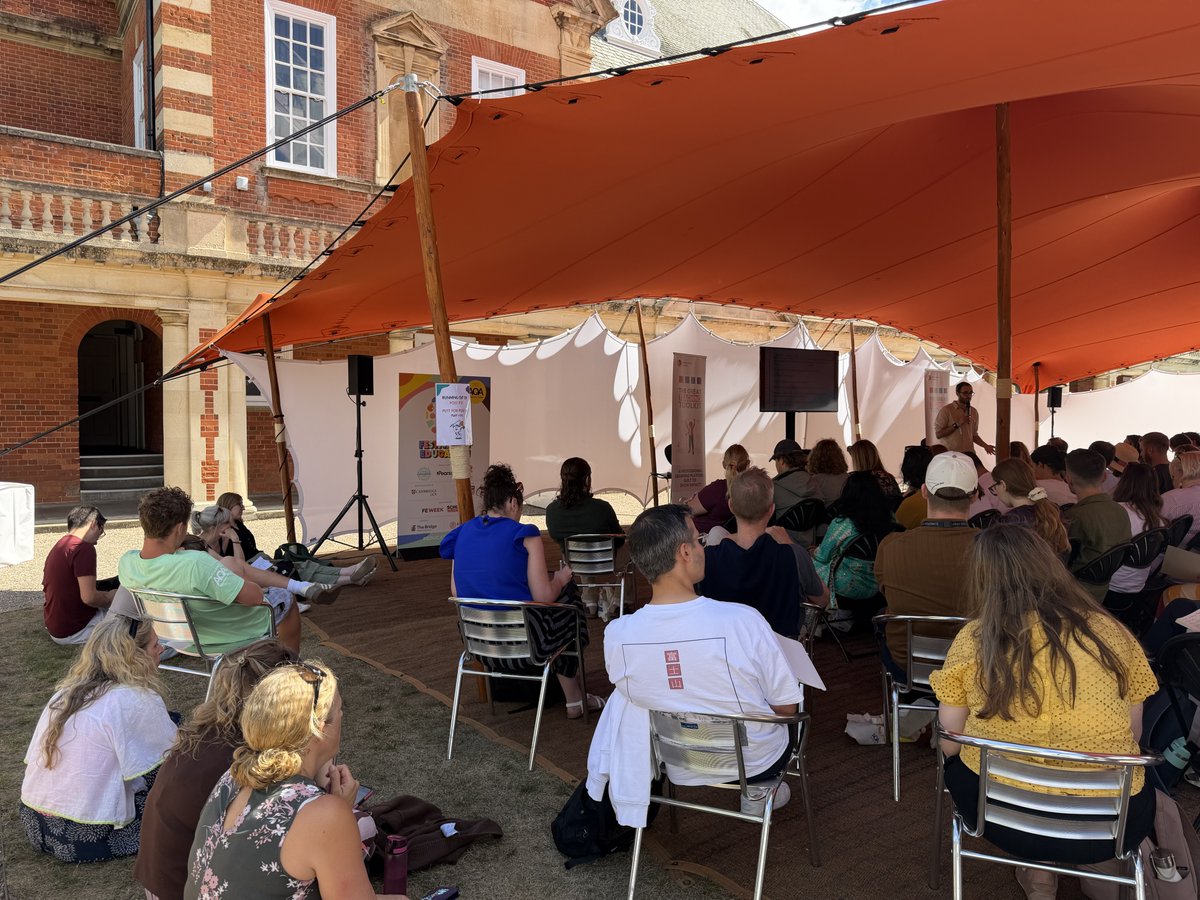
That's a wrap on the 16th UK @EducationFest and it's been awesome! Thank you to the hundreds of people that joined us each day in our big orange tent for the Great Teaching Strand. Thank you to our speakers, the amazing Ed W., Elle G., @adamboxer1, @mradamkohlbeck, Linzi Smithies, Judith Copeland, @MrMetacognition Nathan Burns, @ValentinaDevid, @Mr_Stammers and EBE's @ProfKime Robert Coe and CJ Rauch Well done to everyone that used their golfing skills to 'Putt for post-its'! ⛳ See you next year. #EducationFest @EducationScape
Evidence Based Education tweet mediaEvidence Based Education tweet mediaEvidence Based Education tweet mediaEvidence Based Education tweet media
English
1
2
7
1.1K
Robert Coe retweetledi
Adam Boxer
Adam Boxer@adamboxer1·
NEW EPISODE with the legend that is @ProfCoe! Tune in for chats on all things education: teacher quality, grade inflation and instructional coaching. Not to be missed, please share if you can! open.spotify.com/episode/7cdWbp…
English
0
7
8
4.7K
Robert Coe retweetledi
Mike Downes (NPQLTD)
Mike Downes (NPQLTD)@MrDownesteach·
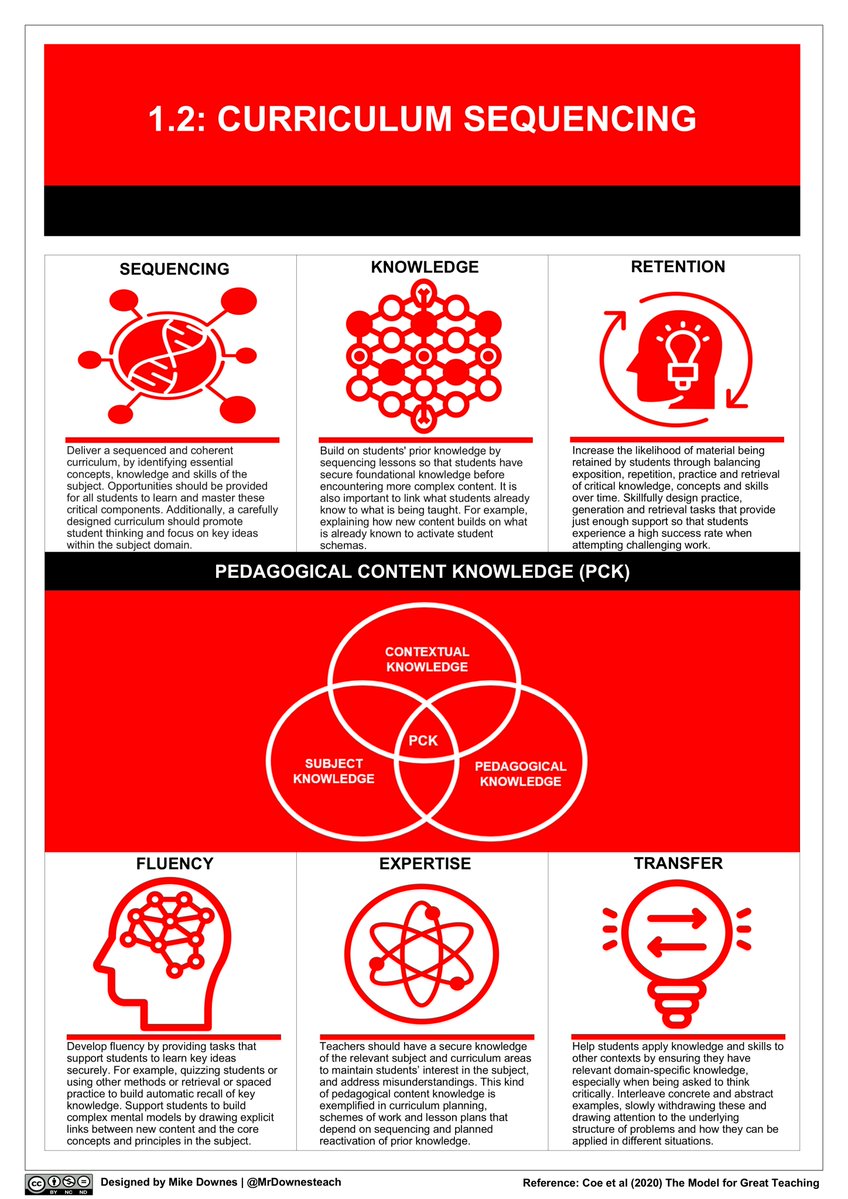
NEW!! 2/4. The second one-pager in the series is on GTT Dimension 1, Element 2 – Curriculum Sequencing. It focuses on designing a sequenced and coherent curriculum so that students develop secure knowledge, build fluency over time, and can transfer their learning in different contexts. The essential ingredients of curriculum design are: ✅ Sequencing – identify the essential concepts, knowledge and skills of each subject. ✅ Knowledge – build on prior knowledge by linking new content to what students already know. ✅ Retention – strengthen long-term memory over time. ✅ Fluency – ensure that knowledge becomes automatic and secure. ✅ Expertise – develop secure subject and curriculum knowledge. ✅ Transfer – help students apply knowledge in new contexts. This one-pager draws on wider evidence-informed thinking on a knowledge-rich curriculum, including the Curriculum and Assessment Review Final Report (2025), and on Shulman’s work on pedagogical content knowledge. Interested? Please repost for a copy. @EvidenceInEdu @ProfKime @ProfCoe
Mike Downes (NPQLTD) tweet media
English
0
2
12
1.3K
Robert Coe retweetledi
Harry Fletcher-Wood
Harry Fletcher-Wood@HFletcherWood·
Interview 4: @ProfCoe of @EvidenceInEdu and the @EducEndowFoundn: - Grade inflation in English exams - Why school improvement is elusive - Scaling effective professional development - How the EEF made a difference x.com/HFletcherWood/…
Harry Fletcher-Wood tweet media
Harry Fletcher-Wood@HFletcherWood

In Chalk & Change 4, we speak to @ProfCoe Rob has been campaigning for better evidence in schools since the 1990s. We focused on: - Grade inflation and weak evidence use in the 1990s - Why school improvement has proved elusive - How to scale effective professional development - How the @EducEndowFoundn has helped get more evidence into schools

English
1
3
4
2K
Robert Coe retweetledi
Evidence Based Education
Evidence Based Education@EvidenceInEdu·
This is what evidence-informed teaching looks like in real classrooms. We’ve added a new collection of classroom technique videos to the Great Teaching Toolkit, to exemplify what these might look like in real classroom contexts. You’ll find 50 techniques brought to life by a teacher, showing not just what happens in the classroom, but why particular decisions are made. Each video follows the same deliberate structure to support professional learning: ✍️ The Approach: the evidence-informed rationale behind the technique ✍️ In Action: the technique used with primary pupils ✍️ Noticing questions: prompts to guide professional attention ✍️ The Breakdown: the teacher explains the decisions behind the moment Together, the videos are designed to help you understand why the techniques work and reflect on what this approach might look like in your own context. Here’s a short clip of @mradamkohlbeck who you’ll meet in the videos, explaining what this looks like in practice.
English
1
7
21
7.3K
Andrew Fulker
Andrew Fulker@andrew_fulker·
@ProfCoe Can you provide a link to 'mistaking school improvement' please.
English
1
0
0
40
Robert Coe
Robert Coe@ProfCoe·
Nice blog - I agree with all of this. IC certainly can work, but often doesn’t in practice. In the original version of ‘mistaking school improvement’ I had ‘faking school improvement’ but was advised to soften it!
Adam Boxer@adamboxer1

Instructional Coaching is everywhere at the moment, but is it all it's cracked up to be? In this post, I explore eight reasons why Instructional Coaching often doesn't work. Link is in the reply, please share if you can 🙏🙏

English
2
1
10
2.5K