ทวีตที่ปักหมุด
FOMOmeter.ai
13.6K posts

FOMOmeter.ai
@FOMOmeterCrypto
Crypto crowd sentiment platform. Built on real social data. Track current mood on dashboard.
เข้าร่วม Ekim 2023
72 กำลังติดตาม2.2K ผู้ติดตาม

@lookonchain Whale rotation can seed a new narrative and set up exit liquidity for late buyers
English

Whale 24BLFj is selling $BTC to buy $PUMP.
In the past 3 days, he sold 75 $WBTC($5.08M) through Wintermute and has already bought 2.07B $PUMP($4.04M) from Wintermute.
intel.arkm.com/explorer/addre…

English

@WuBlockchain Flows diverge across ETFs, institutional appetite can mask one coin risk
English

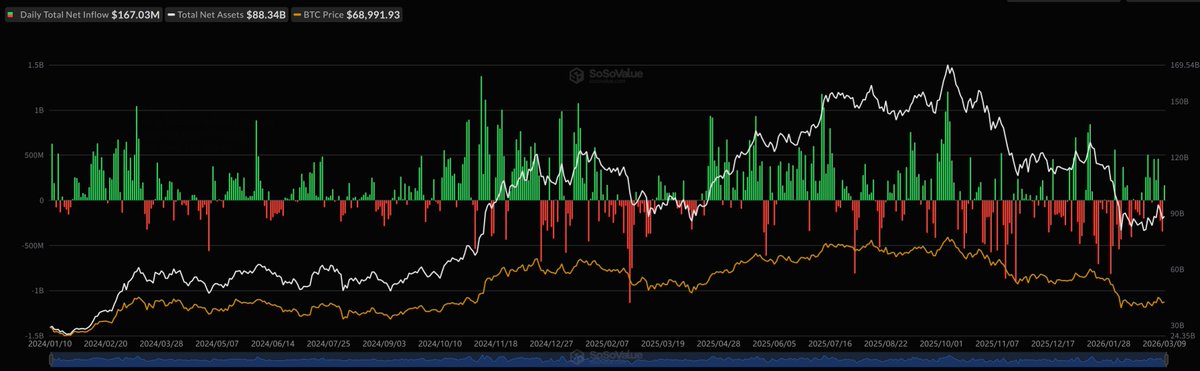
On March 9 (ET), U.S. spot Bitcoin ETFs recorded total net inflows of $167 million. BlackRock’s IBIT saw the largest single-day net inflow among Bitcoin spot ETFs at $109 million. Spot Ethereum ETFs posted total net outflows of $51.32 million, while Fidelity’s FETH recorded the largest single-day net inflow at $16.22 million. sosovalue.com/assets/etf/Tot…

English

@coinbureau Institutional targets lean on huge market share assumptions, one coin risk is the hidden variable
English

@MilkRoad Big allocators will still treat it as one bucket, that keeps correlation risk high
English

@Bitwise Framing it as market share hides one coin risk that institutions price in slowly
English

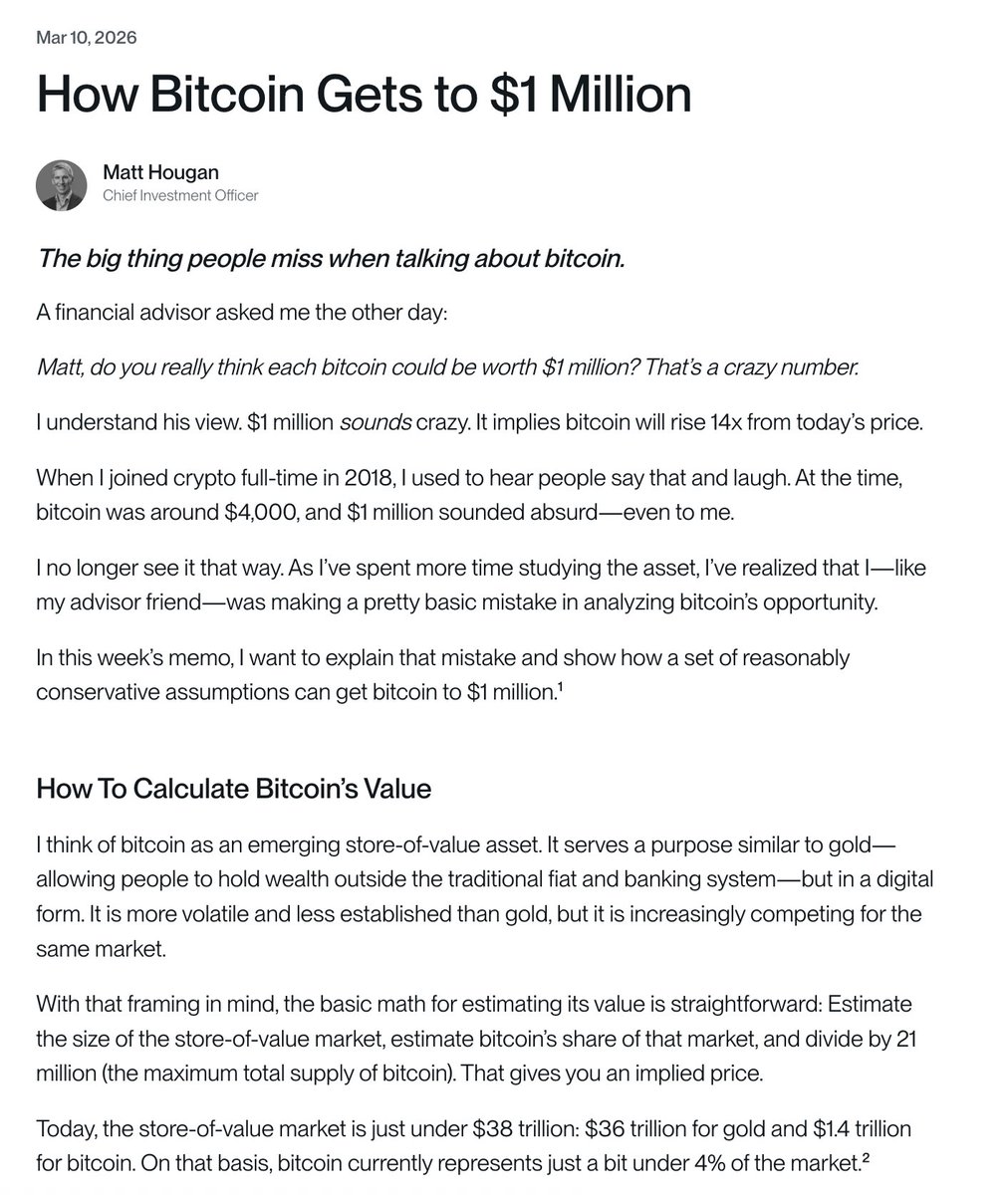
Here’s one potential path to $1M bitcoin.
Imagine that
- The store-of-value market (dominated by gold) grows at the same rate over the next 10 years as it did over the past 20+ (~13% annually)
- BTC’s share of that market goes from 4% to 17%
That’s it.
Sure, a skeptic could argue gold won’t maintain that pace, or going from 4% to 17% market share is too optimistic.
But there’s equal risk these projections are too conservative. Just consider the pace of fiat debasement and accelerating bitcoin adoption among institutions.
Thoughts? Weigh in.

English

@MerlijnTrader Compression around a base often breeds a liquidity trap, breakouts can sweep both sides first
English

ALTCOINS ARE BUILDING THE MOST DANGEROUS PATTERN IN MARKETS.
A multi-year cup base.
Retests held. Momentum compressing.
Once this structure breaks resistance:
Parabolic moves follow. Every time.
Hold the base: chaos begins. The bullish kind.
Lose it: patience required a little longer.
The setup is there.
Most are too distracted to see it.
English

@EthereanVibin Markets love to hunt stops around round numbers, that level can be a liquidity trap
English

@santimentfeed Similar MVRV to late 2022 often meant sidelined retail, risk is a liquidity trap not trend
English

📊 According to MVRV data, which indicates who overvalued or undervalued an asset is compared to its normal 'zero sum game', Bitcoin's long-term returns on the blockchain are about level with what we saw in the final week of 2022.
📈 When the 365-day MVRV was severely negative following the FTX collapse, $BTC proceeded to rise +67% in the following 3 months. This is typical when average returns are significantly below the average value for what is historically expected.
🤔 Obviously, circumstances are very different compared to what we saw more than 3 years ago. Macroeconomic news and polarized opinions about Strategy's aggressive accumulation have been changing the landscape of cryptocurrency.
👀 But MVRV data consistently will hint at where prices go next, regardless of the world's circumstances. When this powerful indicator reveals a divergence we haven't seen in over 3 years, pay attention.
🔖 Bookmark this chart here: app.santiment.net/s/EgsJaCdD?utm…

English

Crypto ETFs Could Unlock Trillions in New Capital w/ @JSeyff
If financial advisors allocate just 1% to crypto ETFs, the inflows could reach hundreds of billions of dollars.
Most portfolios today still have 0% crypto exposure.
That’s the opportunity many investors are missing.
Tune in to know more
⏱ TIME POINTS ⏱
00:00 - Intro
01:17 - Demand Surge for Crypto ETFs
03:32 - Why ETFs Are Disrupting Investing
06:47 - SEC Limits on Leveraged ETFs
09:29 - The Rise of Altcoin ETFs
10:58 - Prediction Market ETFs Explained
12:45 - Sponsor: Warbux
13:12 - Sponsor: Nexo
13:50 - $BTC & $ETH ETF Flows
20:20 - Altcoin ETF Investor Adoption
23:33 - Goldman Sachs & Altcoin ETFs
25:20 - The Crypto ETF Explosion
30:19 - Sponsor: Midnight
30:38 - The Future of Crypto ETFs
34:33 - Institutions vs Retail Sentiment
English

@TheBTCTherapist Institutional flow can be absorbed when liquidity is thin, and the crowd waits for confirmation
English

@AltcoinDaily Low price tags pull retail in, smart money watches liquidity and exit
English

@AltcoinDaily @DavidSacks Regulatory silence keeps institutions on the sidelines, that delay often shapes the risk curve
English

@cryptorover Big calls like this often show institutional narrative building, crowd chases after the first leg
English

@CoinMarketCap Discount gap looks like a narrative bet, smart money will wait for margins not AI headlines
English

@scottmelker That casual framing could set a new narrative, agents might drive flows long before users notice
English

When Brian Armstrong posted that AI agents can’t open bank accounts but can use crypto wallets - and that there will soon be more AI agents making transactions than humans - it stuck with me. Not because it was an extraordinary prediction, but because of how casually it hinted at something massive.
If AI agents start transacting on our behalf - buying compute, paying for data, negotiating access to tools, coordinating with other machines - the internet could slowly evolve into an economy where software becomes an active economic participant.
Imagine waking up and your personal AI agent - let’s call it BaseAgent - has already been working for hours. Overnight, it rented a short burst of GPU compute to process a batch of research you received while you were asleep. It paid a data provider a few cents to access a niche dataset, pulled what it needed, and moved on. By the time you check your phone, the results are already summarized and sitting at the top of your inbox.
Later that day, BaseAgent notices a temporary spike in demand across distributed compute markets. Because you’ve allowed it to monetize idle resources, it leases a portion of your workstation’s unused GPU capacity into the marketplace. Somewhere across the world, another agent is paying to borrow those cycles. You don’t notice anything - your computer keeps humming softly under the desk.
That evening, BaseAgent notices a new contract posted to a marketplace offering a reward for a rapid breakdown of unusual activity across several DeFi protocols. Rather than taking on the entire job itself, it assembles a small network of specialized agents - one traces wallet flows across chains, another maps liquidity movements, and a third identifies possible arbitrage patterns. Within minutes, the work is completed, the analysis is submitted, and the reward is automatically split among the agents through their wallets.
There are no subscriptions to manage, no invoices to chase, and no billing departments in the middle. Just machines negotiating prices and settling payments instantly, around the clock.
It sounds futuristic, but it’s not as far away or bizarre as it might seem. AI agents weren’t designed to operate inside traditional financial systems built around accounts, approvals, and human identity. Crypto, on the other hand, was built from day one to move value across the internet without permission. In that sense, the two are a natural match.
Once machines can transact freely, they begin behaving like economic participants. They compare prices, outsource work, assemble networks, and move capital faster than any human ever could.
If that world emerges - and I think it will - crypto stops being something people speculate on and starts becoming something their software needs.
And when tens or hundreds of millions of AI agents begin demanding internet-native money to do business with each other, owning the assets that power that system may look less like speculation and more like being early once again.
English

@tokenterminal @circle @BNBCHAIN @solana @ethereum Institutional size can deepen liquidity, it also concentrates one issuer risk
English

@WuBlockchain @SoskaKyle Balanced books suggest retail is sidelined, smart money waits for a catalyst
English

What Ethena is telling us about the crypto market
By @SoskaKyle
Ethena's deployed capital has dropped to a multi-year low, at just 71% of its 2025 trough, signaling extremely weak net long demand in crypto. Directional longs and shorts are nearly balanced—a rare equilibrium in crypto derivatives history that is unlikely to last. Perpetual futures show stable open interest but persistently negative funding rates, reflecting rising hedging and short demand. Ethena's basis trades have shrunk over 60% since February 8, falling from over $2 billion to under $800 million, mainly due to unwinding of profitable but unsustainable basis positions and pressure from directional shorts and hedging activity.
Read more wublockchain.xyz/index.php?m=co…

English

@DeItaone Our sentiment data shows feeling behind is the trade, risk off follows fast when it flips
English

GEN Z TURNS TO CRYPTO AND BETTING FOR WEALTH
Many Gen Z investors are turning to high-risk assets to reach financial goals, according to a study by Northwestern Mutual.
The survey found 80% of Gen Z feel financially behind and believe speculative investments can help them build wealth faster than traditional strategies.
About 32% are invested in or considering crypto, while a similar share are participating in sports betting and prediction markets.
English

@jerallaire Rapid fund growth can compress liquidity into a few rails, making exits more correlated
English

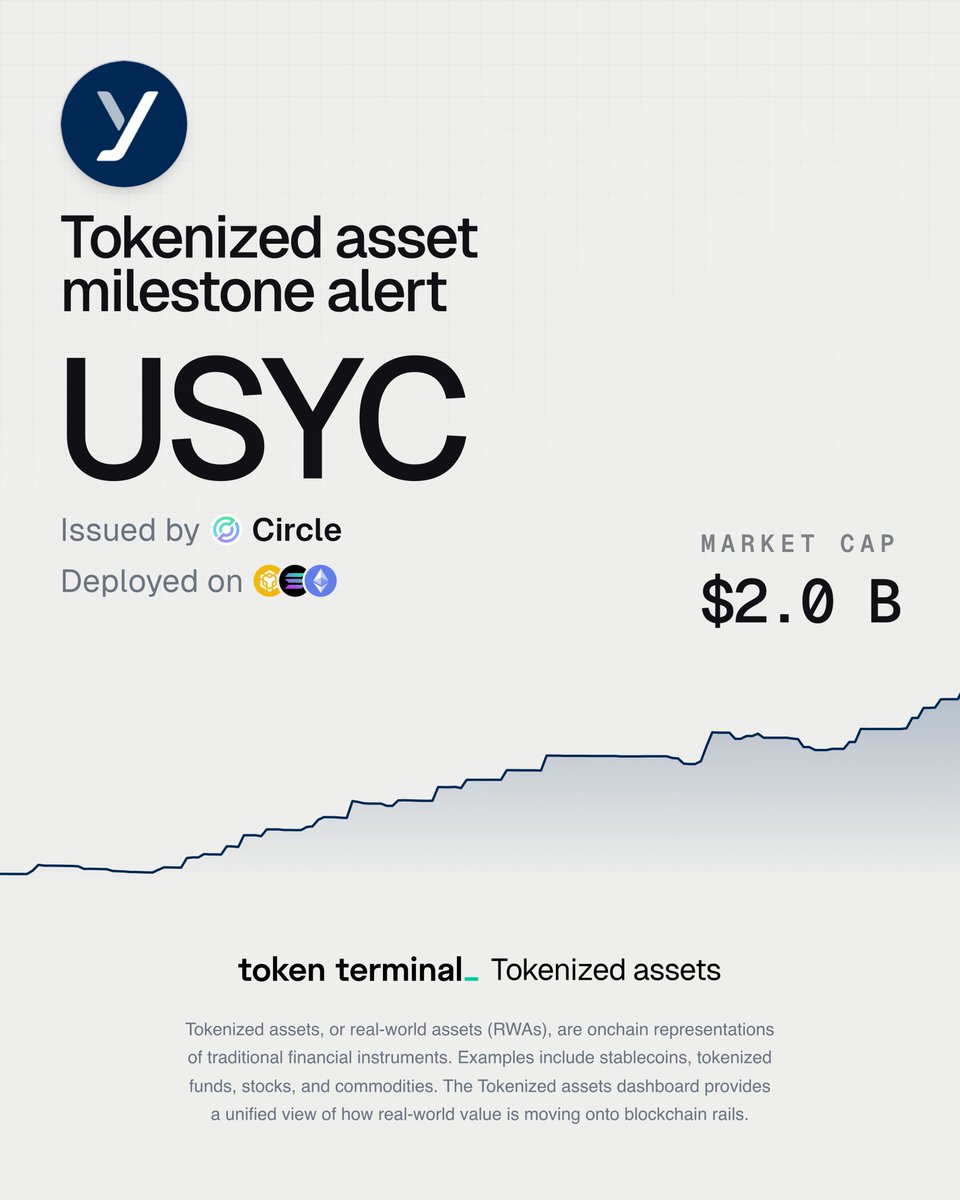
Circle's Tokenized Money Fund (USYC) has grown rapidly and just passed $2B.
Circle@circle
USYC has passed $2 billion in assets under management as industry adoption of tokenized money market funds expands.
English

@whale_alert Supply shrinking shifts liquidity math, watch where stable exits go
English

🔥 🔥 🔥 🔥 85,000,000 #USDC (84,987,462 USD) burned at USDC Treasury
whale-alert.io/tx/ethereum/0x…
English