
ทวีตที่ปักหมุด

Here is an older essay on
@pittparents
that is still relevant today. We hear our sons are either ASD or AGP when neither is the case if they are heterosexual. pittparents.com/p/think-my-son…
English
Georgia4tea
6.1K posts

@George4Tea
🐻 🇺🇸 truth/only. DearGeorgeTea #ROGD






@IfindRetards The Wachowskis are living proof that for men, "trans" is a porn-induced fetish. They even said so themselves. x.com/i/status/18000…


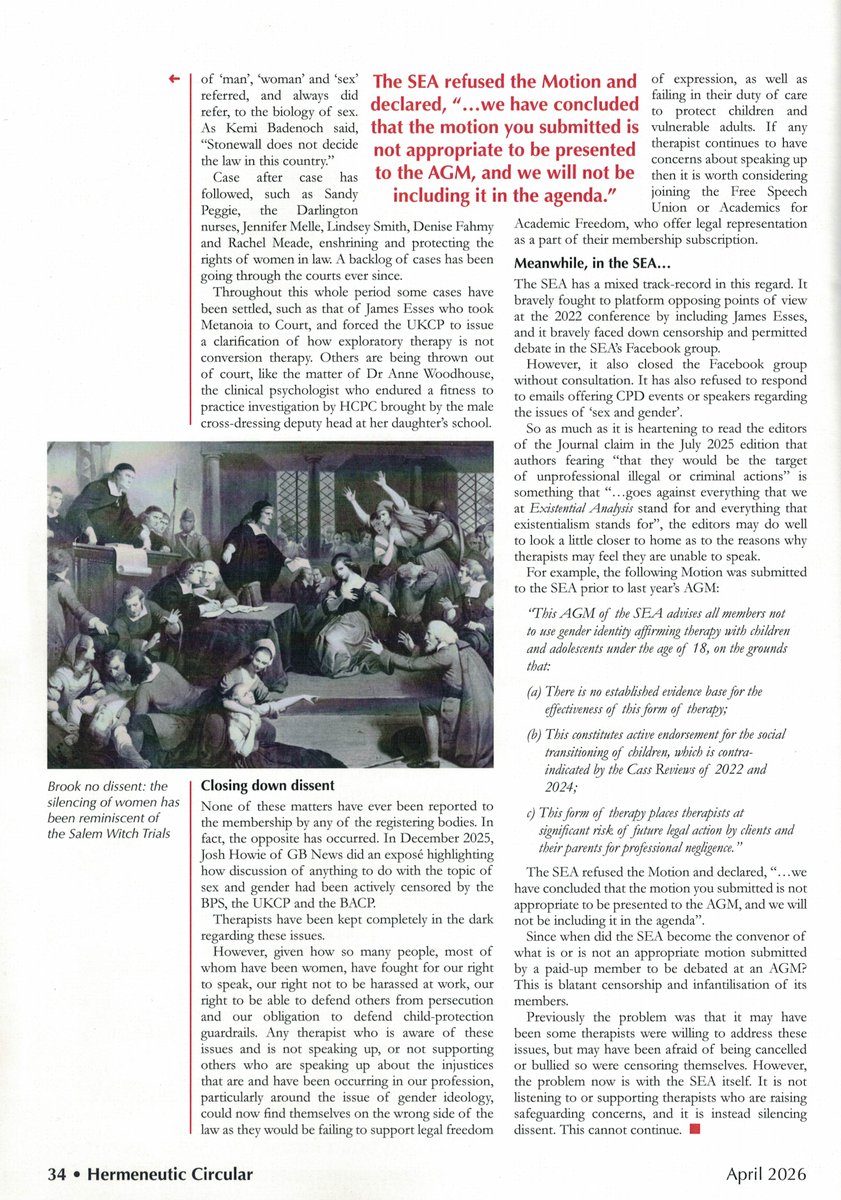
After four years of co-founding @reduxx with @Slatzism, not only is this our most censored article -- We have offered $100 payout to anyone who can prove wrong even one of our thousands of articles

@RayAlexWilliams You haven’t addressed the basic complaint—the fact that you are disrespecting women with your paraphilia, or what you call “kink.” Women are not objects for your fetish. They are flesh and blood human beings. They deserve much more respect than you seem capable of giving.


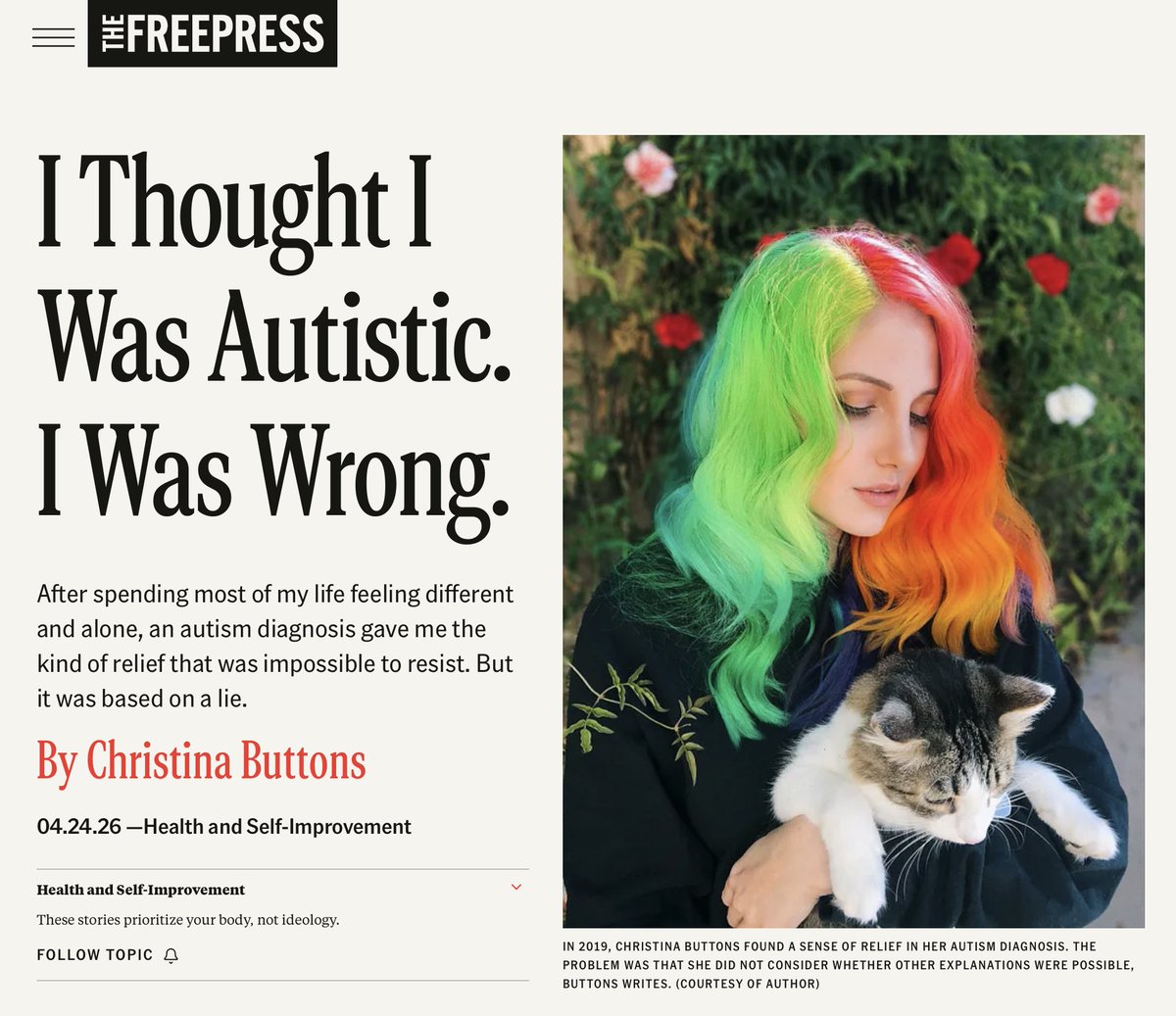
I thought I was autistic. I was wrong. I was 30 in 2019 when stories of women discovering they were autistic all along began appearing everywhere. They popularized a newer understanding of autism, with its own “female presentation.” It was framed as a scientific correction to a historical wrong against women, the kind of narrative the press finds irresistible. Like so many women, I felt immense relief when I was formally diagnosed. It offered an explanation for the mental health crises of my youth and the daily realities of my adult life. Then I spent a year in the online autism community. What I saw there, especially the way activists treated parents of severely impaired children, turned me into a critic of neurodiversity. But it was becoming a journalist in 2022, after discovering detransitioners’ stories, that forced me to question narratives about identity and diagnosis, including my own. Journalism also required the social skills autism says I should have lacked. From there, the rest unraveled: many traits I had come to associate with autism are not uncommon in the general population, but through the “female autism” framework, they looked like a meaningful pattern. I don’t think my story is unique. The same incentives that kept my diagnosis intact may also help explain why so many women are entering the autism category in adulthood. Read my first article for @thefp: thefp.com/p/i-thought-i-…

I thought I was autistic. I was wrong. I was 30 in 2019 when stories of women discovering they were autistic all along began appearing everywhere. They popularized a newer understanding of autism, with its own “female presentation.” It was framed as a scientific correction to a historical wrong against women, the kind of narrative the press finds irresistible. Like so many women, I felt immense relief when I was formally diagnosed. It offered an explanation for the mental health crises of my youth and the daily realities of my adult life. Then I spent a year in the online autism community. What I saw there, especially the way activists treated parents of severely impaired children, turned me into a critic of neurodiversity. But it was becoming a journalist in 2022, after discovering detransitioners’ stories, that forced me to question narratives about identity and diagnosis, including my own. Journalism also required the social skills autism says I should have lacked. From there, the rest unraveled: many traits I had come to associate with autism are not uncommon in the general population, but through the “female autism” framework, they looked like a meaningful pattern. I don’t think my story is unique. The same incentives that kept my diagnosis intact may also help explain why so many women are entering the autism category in adulthood. Read my first article for @thefp: thefp.com/p/i-thought-i-…
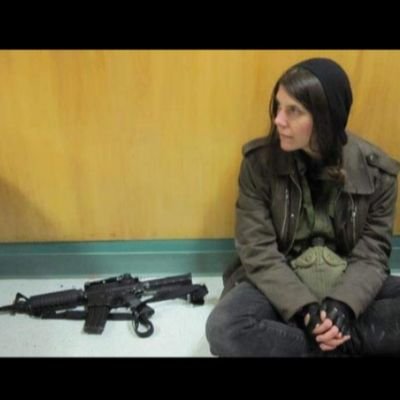

Me in the summer of 2013: newly 14, already three years deep into an all-consuming intellectual fixation with autism. My birthday present was meeting Temple Grandin. I still could not tie my shoes yet. I had no autism diagnosis. 🚨So was I just quirky or was I autistic? ⬇️ Let me back up a bit. I spent my first few months in the NICU after being born prematurely. I pulled out my own feeding tube, and fought the life support. One nurse told my parents “she’s going to give you a run for your money.” That nurse must’ve been a psychic. As a baby I did not crawl. When I started walking I lacked the skill to pull myself up when I fell, so I had occupational therapy before the age of one. Beginning in toddlerhood I walked on my toes. Doctors did not think it was a big deal until I was well into kindergarten. Then they injected Botox into my legs and put me in leg braces. When I could no longer toe walk I began to compulsively pull out all of my eyelashes. No one could figure out why. I was in speech therapy at this time as well. And this is just the short list from my first few years. I don’t have enough space to give you my whole medical history. Suffice it to say, that I was basically raised by a revolving door of specialists in doctors’ offices for my many developmental delays. My lack of proper eye contact was attributed to me having an overly active mind, because I was bilingual and highly verbal. As a toddler, I could memorize entire children’s books, and would frequently harvest entire memorized passages to use in my verbal communications with others. This, in addition to my propensity for sight reading and translation, made me appear very advanced. None of these fancy specialists could ever figure out what was wrong with me. In late elementary school I became obsessed with a rare pituitary tumor which caused gigantism and acromegaly. By middle school I devoured research on brain scans and whether proportional differences in white and gray matter could explain what caused autism. I was also reading parenting books to try and understand the other kids my age. After school in addition to all sorts of extracurriculars I regularly found myself in doctors appointments, in speech therapy, in physical therapy, in occupational therapy, in psychotherapy. No one could figure out what was wrong with me. Even my teachers were split on whether I should have been held back or put in gifted classes. My entire development has been defined by clear mix of giftedness and significant developmental delays from infancy onward. Still no autism diagnosis. But I had plenty of others, each diagnosing me with entire conditions that I did not have on the basis of their overlap with one or two of my autistic traits and developmental issues. Many girls like me with these obvious lifelong signs from infancy are diagnostically missed for years and decades. If your doctors miss what is right in front of them early on, and when those without the power to diagnose you, suggest it to your parents who (understandably) don’t want their smart kid stigmatized with an autism diagnosis; you can easily make it past 18 with no autism diagnosis despite being obviously autistic. And nowadays, the “neurodiversity affirming” approach to adult autism diagnoses gives me no hope that I’ll ever get properly evaluated for my lifelong issues. So I’m trying to figure out how to facilitate my own development myself. Yes there are probably women falling into a social contagion of identity driven diagnoses now. But there is also real truth behind girls and women with clear cases of autism not getting diagnosed with it early, and now trying to figure out what to do. The increase in autism diagnoses for adult women cannot single-handedly be explained by either cases like mine or by a social contagion. Rather, it is a combination of both. Thanks for the thoughtful piece @buttonslives
