
ทวีตที่ปักหมุด
邪修灰域档案
1.1K posts


邪修灰域档案
@Gray99999999
一个灰域的观察者。An observer of the gray area.Web3/BTC/USDT.....
Los Angeles, CA เข้าร่วม Mart 2010
672 กำลังติดตาม440 ผู้ติดตาม


什么流量?
流量就是自己,
自己愿意流动起来,
整个池塘都会动起来,
不要等别人主动流来,
要当一个搅动者,把池子里的水搅荡起来,
总有那么几滴会溅到我们自己身上的。
欢迎大家都来互动交流。
#蓝V互关 #互动交流 #评论

中文


@kirkpaper Vera 的重点不只是 CPU 性能,而是 Nvidia 想把 AI 工厂的控制权从 GPU 延伸到整机架。以后云厂商买的不是一块芯片,是一套成本结构。
中文

Nvidia 已告知中国客户,新型AI数据中心CPU Vera(其首款独立数据中心CPU,基于88个自定义Arm Olympus核心)最早可能在2026年8月推出,并允许客户开始下订单。
Vera 专为 agentic AI(代理式AI,如自主推理、运行代码、工具调用、数据处理等)设计,比竞品x86 CPU快约1.8倍,内存带宽高达1.2TB/s,已进入量产。
中国一家大型云公司计划订购300+台服务器(每台含2颗Vera CPU)用于测试;阿里巴巴、字节跳动等已与Nvidia在部署方面合作。
在应对美国对先进GPU的出口限制(导致Nvidia在中国GPU市场份额接近零),转向CPU领域打开新空间。CPU单价超2万美元,Nvidia视其为进入2000亿美元CPU市场的机会。
此举产生的市场机会:
1中国本地AI基础设施加速:出口管制下,中国云厂商仍需大规模AI训练/推理能力。Vera作为相对不受限的CPU产品,能帮助他们快速部署服务器,推动agentic AI落地。Nvidia借此维持/扩大在中国数据中心的市场份额,潜在收入可观(CPU业务已成新增长点)。
2Nvidia多元化与CPU市场抢占:Nvidia从GPU主导转向“全栈”数据中心(CPU+GPU),Vera针对传统x86弱项(agentic workloads)。预计2026财年CPU收入可达200亿美元,长期挑战Intel/AMD在中国及全球份额,尤其在推理和混合负载场景。
3供应链与合作伙伴机会:内存(LPDDR5X)、服务器OEM、云服务商将受益。Vera Rubin平台(Vera CPU + Rubin GPU)组合将推动更多集成订单。中国厂商可能借此优化本土模型(算法+硬件协同),加速“去美化”但仍用Nvidia生态。
4整体AI需求驱动:Agentic AI兴起让CPU从“辅助”变为关键(处理非并行任务、 orchestration)。数据中心CapEx仍处早期阶段,Vera等产品能延长增长周期,即使GPU受限也能贡献收入。
此举是Nvidia积极拓展中国市场的策略
中文
@BullTheoryio Japan is not just a local rates story. If yen funding gets repriced, global risk assets feel it through leverage, hedging costs and carry trades.
日本不是单纯的本地利率故事。日元资金成本一重估,全球风险资产会通过杠杆、对冲成本和套息交易一起感受到。
中文

Japan has triggered 4 market selloffs since 2024.
Tomorrow could be the fifth.
Tomorrow, June 16. The Bank of Japan announces its rate decision. 49 of 51 economists surveyed by Bloomberg expect a hike from 0.75% to 1%.
Market probability is above 90%. If confirmed, it marks the first time Japan's benchmark rate has hit 1% since 1995, ending three decades of ultra-cheap money that funded one of the largest carry trades in financial history.
MARCH 2024.
BOJ moved from 0% to 0.1%. First Japanese rate hike in 17 years. End of the negative interest rate era in place since 2016. The move was small and well telegraphed.
Carry trade flinched but didn't fully unwind. S&P dropped 3.79% over 31 days and recovered.
JULY 2024.
BOJ moved to 0.25%. The hike landed the same week US jobs data missed badly, hitting markets from two directions at once.
The yen surged 14% against the dollar. The Nasdaq dropped 13% in under a month. The Nikkei posted its worst single-day loss since Black Monday in 1987. The VIX spiked to 65.
Years of carry trade positions were caught completely off guard. Forced selling hit stocks, crypto, and commodities simultaneously. S&P fell 7.02% in 5 days.
JANUARY 2025.
BOJ moved to 0.50%. Three shocks landed simultaneously. The hike. The DeepSeek AI model that wiped hundreds of billions from US tech valuations overnight. And Trump's tariff rollout raising the threat of a global trade war.
Carry trade positions that survived July 2024 were forced out over weeks. S&P fell 20.98% over 73 days, a full technical bear market. The recovery that followed took it to an all time high above 7,620.
DECEMBER 2025.
BOJ moved to 0.75%. The Iran war was escalating and oil prices were climbing. S&P fell 7.07% over 101 days. Recovered. Hit a new all-time high of 7,620.
Now look at what is already happening before tomorrow's hike has landed.
On June 5, the Nasdaq fell 4.18%, its biggest single day drop since the tariff crash of April 2025. The S&P dropped 2.64% in the same session. Treasury yields spiked on a stronger than expected jobs report. Bitcoin dropped below $60,000, its lowest level since October 2024.
The following week saw $14.7 billion in new short positions built, the largest weekly short build of the year. The S&P is already down from 7,620 to 7,431. The correction started before Japan even moved.
And this time the backdrop is the most hostile of the entire cycle.
The April FOMC produced an 8-4 dissent vote, the most divided Fed committee since 1992. The Fed dot plot releases June 17, the day after the BOJ and is expected to signal rate hikes, not cuts.
Markets are already pricing a 57% probability of one Fed hike in 2026. In every prior correction this cycle, the Fed was either cutting or on pause. That backstop does not exist now.
The Iran war is keeping oil elevated. The ECB raised rates for the first time since 2023. The BOJ itself has signaled rates could reach 1.75% by 2027.
The carry trade math gets worse with every hike. The positions that remain are under more pressure than at any prior point in this cycle.
Four times this was a buying opportunity. The 21% crash in early 2025 became one of the strongest recoveries this market has seen.
But every one of those recoveries had more policy support underneath it than what exists this week.
The hike lands tomorrow. The Fed follows on Wednesday.

English

本周的美股财报周历送达~
这周其实不是传统意义上的“大财报周”,因此值得关注财报发布的公司其实就两家:埃森哲和捷普
但本周真正重要的不是财报,而是新任美联储主席Kevin Warsh怎么定义:AI、降息和美国经济
因为利率决定本身几乎没有悬念,无非是本次不加降息两个结果
更重要的是:
1.市场普遍认为Warsh可能比鲍威尔更支持降息,尤其是在当下刚宣布美伊停火之际,他的态度是否和市场所认为的那样就很重要了
若符合市场此前的判断,今年可能会有多次降息,那科技股这些都将提振,包括潜在流向加密行业的资金情绪也将更活跃
_____________________________________
2.另外就是他对AI生产力革命怎么看,是的你没听错,还是和AI有关
Warsh过去多次提到:AI可能提高美国生产率
“AI将成为重要的通缩力量,提高生产率并增强美国竞争力”
这是他过往被媒体引用最多的一句话,包括我现在也引用了一遍,所以市场也给他贴上了:AI乐观派的标签
我的观点是市场已经提前定价了这一点,因此真正决定市场方向的并不是降息预期,而是他是否真正把AI定义为一场长期的生产力革命
很多人只把AI理解成科技行业的故事,但从宏观角度看,如果AI能够显著提升生产率,那么它甚至可能成为一种通缩力量
因为同样的劳动力创造更多产出,同样的资本创造也将有更高的效率,这意味着经济增长未必一定伴随着同等程度的通胀压力,而是在科技加持下的生产力飙升
_____________________________________
3.最后就是埃森哲和捷普,这俩也和AI相关,恰好从不同角度验证这个问题
虽然埃森哲是咨询公司,但它的战略转向了告诉企业“AI到底怎么落地”这个方向上,市场看它更是看企业AI落地的一个观察窗口
从另外一个层面讲,真正决定AI能否持续扩张的,其实是企业愿不愿意为此花钱(昨天才发过的甲骨文就是套用这个逻辑)
如果财报后的电话会透露:AI订单继续增长和企业相关预算是如何的
整体若乐观那么说明AI支出并非只停留在算力层,而是真正向应用层扩散
捷普相对关注的人比较少,但其实它是AI服务器供应链的重要参与者,关注它主要关注一个点:从它服务器需求以点带面看AI的资本开支周期走向
如果需求依然旺盛,那么市场对于AI基础设施投资的信心仍然成立
本周在财报发布后我会进一步展开细节
_____________________________________
以上

中文
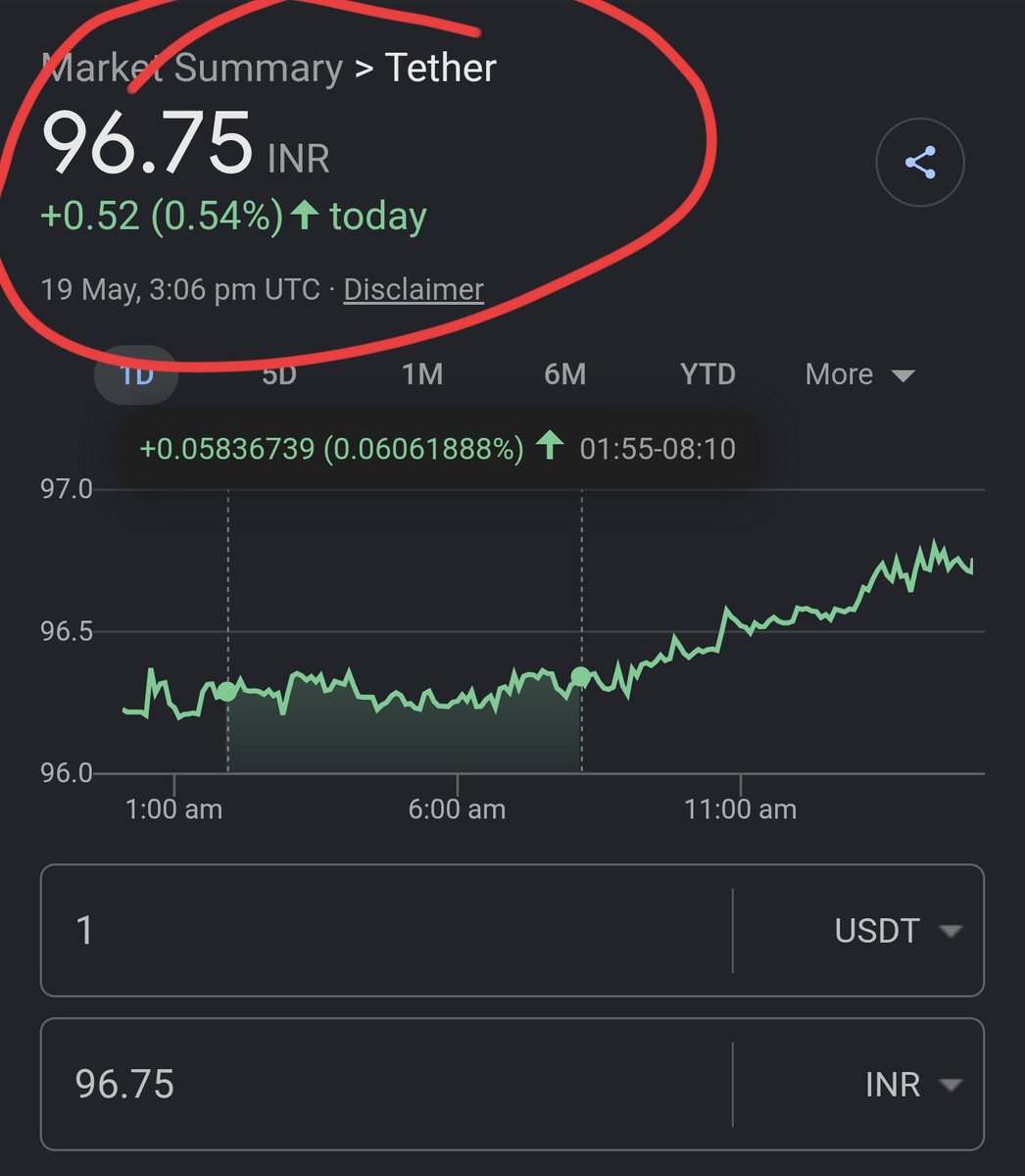
@XYZCryptos USDT/INR is not just a price. It often reflects friction in banking access, offshore liquidity, P2P settlement and local demand for dollar-like rails.
USDT/INR 不只是一个价格。它很多时候反映的是银行通道、离岸流动性、P2P 结算和本地美元化需求之间的摩擦。
中文

🇮🇳 Why Indian Crypto Users Are Rapidly Moving Towards USDT 👀
1 USDT = ₹96+
This is not just a number anymore.
It reflects something much bigger happening inside India’s financial and crypto ecosystem.
Most people look at the chart and only see price movement.
But experienced crypto users see: 📈 INR weakness
📈 Rising demand for digital dollars
📈 Lack of financial flexibility
📈 Growing dependence on stablecoins
Today, USDT has become more than a trading asset for Indian users.
For many people, it is becoming a digital version of financial stability.
💡 Why Indian Users Prefer Holding USDT
1️⃣ Protection Against INR Depreciation
The Indian Rupee slowly loses purchasing power over time against the US Dollar.
When INR weakens: • International products become expensive
• Crypto investments require more capital
• Global opportunities become harder to access
Holding USDT gives users exposure to the dollar economy directly from their phone.
That’s one of the biggest reasons why demand keeps increasing every year.
2️⃣ Faster Access To Global Opportunities 🌍
Crypto markets move 24/7.
Traditional banking systems in India: ❌ Have delays
❌ Limited international flexibility
❌ Weekend restrictions
❌ Slow settlement systems
But USDT allows: ✅ Instant transfers
✅ Global participation
✅ Access to DeFi, trading, Web3 & airdrops
✅ Borderless transactions within minutes
For many young users, USDT is becoming their gateway to the global digital economy.
3️⃣ Traders Need Stability During Volatility 📉
Crypto markets are highly volatile.
When Bitcoin or altcoins dump heavily, traders move funds into USDT to: • Protect profits
• Reduce risk
• Wait for better entries
• Avoid panic selling
That’s why stablecoins become extremely important during uncertain market conditions.
⚠️ The Biggest Problems Indian Crypto Users Face
Even though adoption is growing rapidly, Indian users still struggle with major challenges.
🔴 High USDT Premium
Indian users often pay extra for USDT compared to global market prices.
Sometimes the premium becomes huge during: • Bull markets
• Banking restrictions
• High demand periods
This directly impacts small investors and traders.
🔴 Heavy Crypto Taxation
India currently has: • 30% tax on profits
• 1% TDS on transactions
For active traders, this creates massive pressure on capital efficiency.
Many users feel innovation is growing faster than regulation.
🔴 Banking & Exchange Issues
Indian crypto users regularly face: ❌ Bank freezes
❌ Deposit issues
❌ P2P scams
❌ Exchange restrictions
❌ Withdrawal delays
Despite this, the community continues growing stronger every cycle.
That itself shows how powerful crypto adoption has become in India.
🚀 Why This Matters Long-Term
India has: 👥 One of the largest youth populations
📱 Massive smartphone adoption
🌐 Fast-growing internet access
🧠 A huge tech-savvy generation
And now millions of people are slowly understanding: Crypto is not only about trading.
It’s about: ✔ Financial freedom
✔ Global access
✔ Ownership
✔ Decentralization
✔ Digital economy participation
USDT’s rise in India is actually a signal of a much larger shift happening behind the scenes.
People are slowly moving from traditional financial limitations toward borderless digital finance.
And this trend is still in the early stage 👀
#USDT #CryptoIndia #Bitcoin #Web3 #Stablecoin #Tether #Blockchain #INR #CryptoAdoption #DeFi
English