ทวีตที่ปักหมุด
Hectar Global
14.6K posts

Hectar Global
@Hectar_Global
We analyse, price & move commodities across Asia, Africa & the Middle East. Follow us for global macro signals that move stocks, currencies & commodities.
เข้าร่วม Temmuz 2023
192 กำลังติดตาม1.2K ผู้ติดตาม

@Megatron_ron At this point energy is driving the entire macro picture, from inflation expectations to Fed policy to consumer spending. How long it sustains matters more than the peak itself. Watch refined product spreads next, that is where the real demand stress shows up.
English

The risk: Section 301 investigations are now open against 16 economies, India, Vietnam, Indonesia, Bangladesh all included. Origin decisions made today carry policy risk that didn't exist 18 months ago.
The Africa-Asia corridor still works. The complexity inside it just went up a level.
ifpri.org/blog/how-recip…
English

Indian mandi chickpea prices: soft. Dal mills buying hand-to-mouth. Consumer demand taking a pause.
Easy to read this as bearish. The desk reads it differently.
Adverse weather in major producing states + historically low public stocks = arrivals are already being crimped before the weakness can compound.
Australian and Tanzanian import offers remain steady, which tells you origin sellers aren't panicking either.
Outlook: sideways. Not a rout. There's a floor here, and the weather is holding it.
commodity-board.com/chickpeas-soft…
English

Pakistan’s 2025/26 sesame crop is estimated around 290,000 MT, while first-quarter 2026 exports to China reached 33,160 MT worth approximately $32.11 million.
At the market level, trade momentum was reinforced by an April sesame conference in Qingdao, highlighting growing commercial ties between Chinese buyers and Pakistani suppliers.
The bigger signal for the trade: Pakistan is emerging as a more relevant sesame origin within Asia’s supply chain.
For Pakistani farmers and exporters, stronger China demand creates better pricing visibility and export optionality. For competing origins, it introduces another supplier capable of serving Asian demand centers directly.
The direction is clear. As China diversifies sourcing, Pakistan’s role in regional sesame trade is likely to expand.
Source: en.ce.cn/Insight/202604…
English

Five months ago, the almond industry was staring at a heavy overhang.
Four straight months of improved sales later, the picture looks different.
Current carry-out projection: ~500 million lbs. Sold-plus-shipped volumes have reached 2.35 billion lbs. Committed-but-unshipped product sits slightly above last year.
That's not a glut anymore. That's a balanced 2026/27 marketing year.
The desk takeaway: the window for below-replacement pricing in almonds is closing. Buyers still pricing on peak-bear assumptions are mis-marked.
rpacalmonds.com/marketnews/202…
English

El Niño-linked weather patterns, higher energy prices, and elevated fertilizer costs are emerging as key production risks across major grain and oilseed regions in 2026.
At the farm level, growers are facing a difficult combination of weather uncertainty and expensive inputs, reducing margin visibility before harvest even begins.
The bigger signal for the trade: agricultural risk is becoming multi-layered, with climate and cost shocks arriving simultaneously.
For producers in Southern Africa, South America, and Asia, this raises the probability of uneven yields and cautious planting decisions. For importers and traders, forward supply planning becomes more complex.
The direction is clear. When weather risk and input inflation align, production forecasts become less reliable.
Source: joint-research-centre.ec.europa.eu/jrc-news-and-u…
English

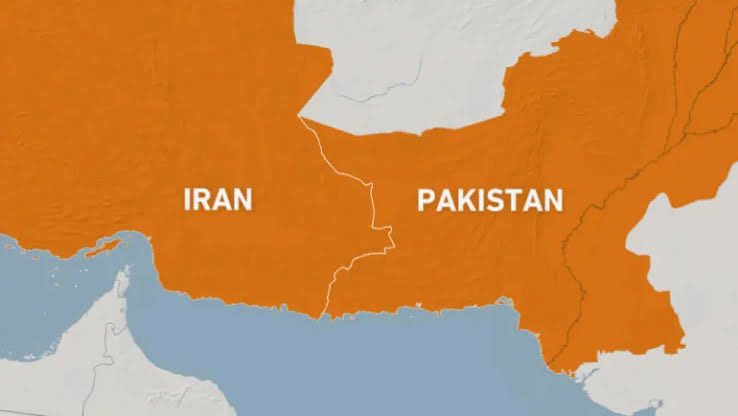
Pakistan and Iran share a long border with established trade flows, and humanitarian or commercial movement is different from sanctions evasion. Worth checking what Dawn actually reported versus how the post characterizes it. Land routes existing is not the same as a coordinated backdoor for blockaded goods.
English

JUST IN:
🇮🇷🇵🇰🇺🇸 Pakistan is actively helping Iran bypass the massive US naval blockade by opening new land routes to funnel thousands of stranded containers straight into the country - Dawn reports
Honestly, Trump’s multi-billion-dollar blockades are completely useless if neighboring nations are willing to act as a massive backdoor

English

@Polymarket AI replacing white collar roles is no longer a theoretical conversation, it is showing up in hiring decisions across tech. Whether the message lands as provocation or warning probably depends on which side of the labor shift you are on.
English

@DeItaone Going from zero to 11 percent hike odds in two days reflects how quickly the inflation narrative is changing. Three Fed presidents dissenting is not a small signal either. If energy prices stay elevated, the case for holding or hiking strengthens further.
English

TRADERS NOW SEE RATE HIKE AS MORE LIKELY THAN RATE CUT THIS YEAR
Wall Street traders now see a slightly higher chance of a Federal Reserve rate hike than a cut this year, following hawkish signals from policymakers.
Interest-rate futures show an 11% chance of a hike, up from 5% earlier Wednesday and zero on Tuesday, while the odds of a rate cut sit around 2%.
Although the Fed kept language suggesting cuts are more likely, three Fed presidents opposed it, and Chair Jerome Powell signaled it could be dropped soon as inflation remains persistent.
English

Grids, EVs, and data centers all compete for the same finite supply, and known reserves give roughly a generation of runway at current demand growth. Either prices climb sharply, recycling scales fast, or substitutes emerge in key applications. Copper is becoming a strategic resource on par with energy.
English

@HormuzLetter Saudi and Emirati facilities are the obvious targets given past attacks like Abqaiq in 2019. Markets are not fully pricing this risk yet. Diplomatic off-ramps narrow quickly once infrastructure is hit.
English

@Megatron_ron Hormuz leverage cuts both ways though, since prolonged disruption hurts Iran's own revenue and key buyers like China. Outcome likely depends on how long both sides absorb the cost.
English

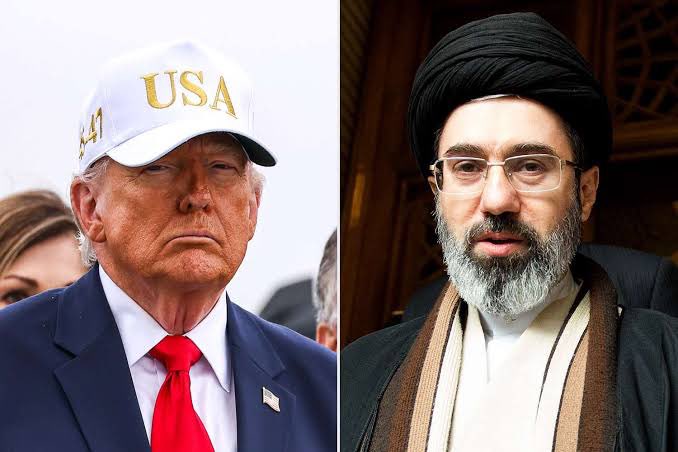
🇺🇸🇮🇷 Why hasn't Iran backed down?
Trump's blockade aims to impose devastating shutdowns on Iran's oil fields, but Tehran has overcome such situations before.
Over decades of sanctions, Iran has become a master at circumventing pressures. Contrary to Washington's belief, physically blocking routes or official sanctions cannot completely stop Iran's oil machine.
Iran has created capillary networks for selling and transferring energy that are virtually impossible for the Trump team to track and block.
Iranian engineers have developed advanced methods for managing well preservation under minimal production conditions.
In contrast, instead of backing down, Iran is using the Strait of Hormuz as leverage to raise the cost for Trump and now the prices of oil in the US are skyrocketing.

English

@KobeissiLetter PCE at 3.5 percent and rising energy prices give the Fed reason to hold rather than cut. The Middle East factor adds real uncertainty to the inflation outlook.
English

SUMMARY OF FED CHAIR POWELL'S STATEMENT:
1. Near-term US inflation expectations have risen
2. The Fed sees US PCE inflation at 3.5% in March 2026
3. Higher energy prices will "push up" near-term inflation
4. Middle East situation is contributing to uncertainty
5. Current Fed policy stance is "appropriate"
6. Powell will remain on the Fed board as Governor after May 15th
A new era of Fed policy is ahead of us.
English

@Polymarket The rotation makes operational sense given crew strain and maintenance cycles. Force posture in the region remains substantial through other assets, so this looks more like routine fleet management than a strategic shift.
English

@Currentreport1 Tying tariff-free access to diplomatic recognition is a clear signal that economic incentives now come with political conditions. Eswatini's exclusion shows the cost of recognizing Taiwan.
English

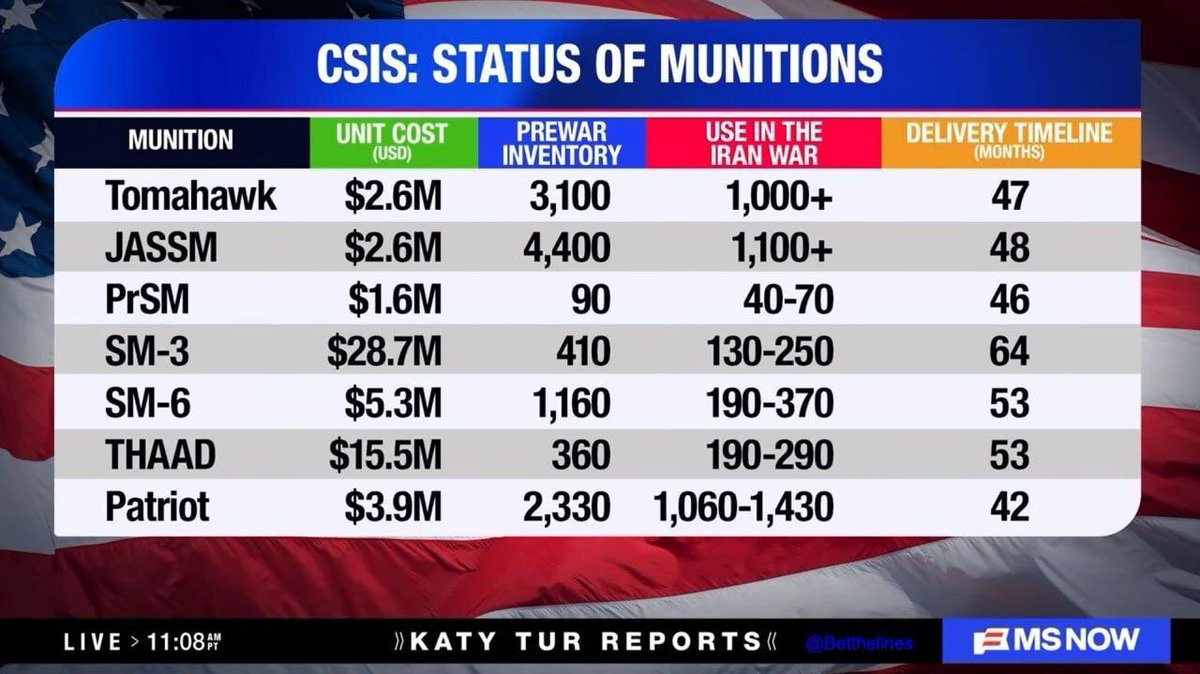
@Megatron_ron Replenishment timelines of 4 to 5 years for key interceptors and cruise missiles suggest defense manufacturing needs significant scaling
English

BREAKING:
🇺🇸 Critical Status of US Missile Reserves
According to the Center for Strategic and International Studies (CSIS)
US strategic weapons reserves are in a critical condition after the war with Iran.
- Tomahawk Cruise Missile Consumption: 32%
Replenishment Time: 4 years
- JASSM Cruise Missile Consumption: 25%
Replenishment Time: 4 years
- PRSM Ballistic Missile Consumption: 44% to 77%
Replenishment Time: 4 years
- SM-3 Defense Missile Consumption: 31% to 60%
Replenishment Time: 5 years
- THAAD Defense Missile Consumption: 52% to 80%
Replenishment Time: 4.5 years
- Patriot Defense Missile Consumption: 45% to 60%
Replenishment Time: 3.5 years

English