Jay O'Neil

9.8K posts

Jay O'Neil

Jay O'Neil

@IGPJay

Old Grain Trader. World Traveler, Wine Enthusiast, Emeritus Marketing Economist at IGP-KSU and International Consultant.

Eagle Point, OR เข้าร่วม Eylül 2012
303 กำลังติดตาม2.3K ผู้ติดตาม
Jay O'Neil
Jay O'Neil@IGPJay·
@TonyNashNerd He announced his exit plan. Forget about the SOH. Bomb for two more weeks, declare Iran declawed and exit.
English
0
0
3
126
Tony Nash
Tony Nash@TonyNashNerd·
Did Trump's speech really say anything new? It all sounded like boilerplate of the last couple of weeks. Did I miss something?
English
12
1
31
1.9K
Jay O'Neil
Jay O'Neil@IGPJay·
@business @sarahsholder @PeterMartin_PCM You missed the point of the speech. No ground troops. Bombing will continue for about two more weeks. Trump will declare Iran substantially declawed & stop the hostilities. This is his exit plan. Then Iran will negotiate oil deals with whomever they wish. Oil will flow again.
English
0
0
0
161
Jay O'Neil
Jay O'Neil@IGPJay·
History tells me that, once the bombing stops & the U.S. steps back. Trade will open up and business will return. The SOH will "reopen" on Iranian terms and oil will flow.
Sal Mercogliano (WGOW Shipping) 🚢⚓🐪🚒🏴‍☠️@mercoglianos

Hormuz disruption deepens global economic strain across trade, prices and finance Latest @UNCTAD report on Hormuz 1⃣Energy corridor halted: The Strait of Hormuz remains “practically closed,” disrupting a critical share of global oil and gas flows. 2⃣Trade losing momentum: Global merchandise trade is expected to slow sharply, from about 4.7% growth in 2025 to 1.5–2.5% in 2026. 3⃣Inflation pressures rising: Energy shocks are pushing up prices and increasing the cost of living. 4⃣Financial stress increasing: Investors are pulling back from developing countries, weakening currencies and raising borrowing costs. 5⃣High vulnerability: 4 billion people live in countries already spending more on debt than on health or education. unctad.org/news/hormuz-di…

English
6
1
3
5.7K
Jay O'Neil
Jay O'Neil@IGPJay·
@johnkonrad Will be pretty easy for countries that did not support the hostilities to negotiate with Iran and access oil. Business will open up and continue.
English
0
0
3
151
John Ʌ Konrad V
John Ʌ Konrad V@johnkonrad·
BREAKING: US Navy will not open the Strait of Hormuz Trump gives nations who import oil from the Middle East three options: 1) Buy your oil from US and Venezuela instead 2) Secure the Strait themselves with limited US support Or 3) Wait for Hormuz to reopen naturally
English
1.2K
3.6K
25.2K
1.9M
McFly
McFly@mtpage88·
@WallStXyz @johnkonrad lol you guys can’t see that Trump just cornered the world oil market?
English
8
12
161
11.9K
Jay O'Neil รีทวีตแล้ว
Joni Askola
Joni Askola@joni_askola·
It is crazy how few people know this: Russia now occupies less Ukrainian land than it did one month into the full-scale invasion four years ago
Joni Askola tweet media
English
341
5.2K
19.6K
595.7K
Jay O'Neil
Jay O'Neil@IGPJay·
Depends on one's definition of "reopening". The U.S. will stop the hostilities and somewhat depart. Iran & global Oil importers will be left to make their own arrangements for transiting the SOH. Shipping will flow according to who is deemed by Iran to be friendly/non-hostile.
John Ʌ Konrad V@johnkonrad

Half my feed says Trump won’t reopen Hormuz because he’s in Putin’s pocket. The other half says the CIA spent the last two weeks helping Ukraine hit Russian refineries and ships. So which is it?

English
0
0
0
171
Jay O'Neil รีทวีตแล้ว
AXSMarine
AXSMarine@AXSMarine·
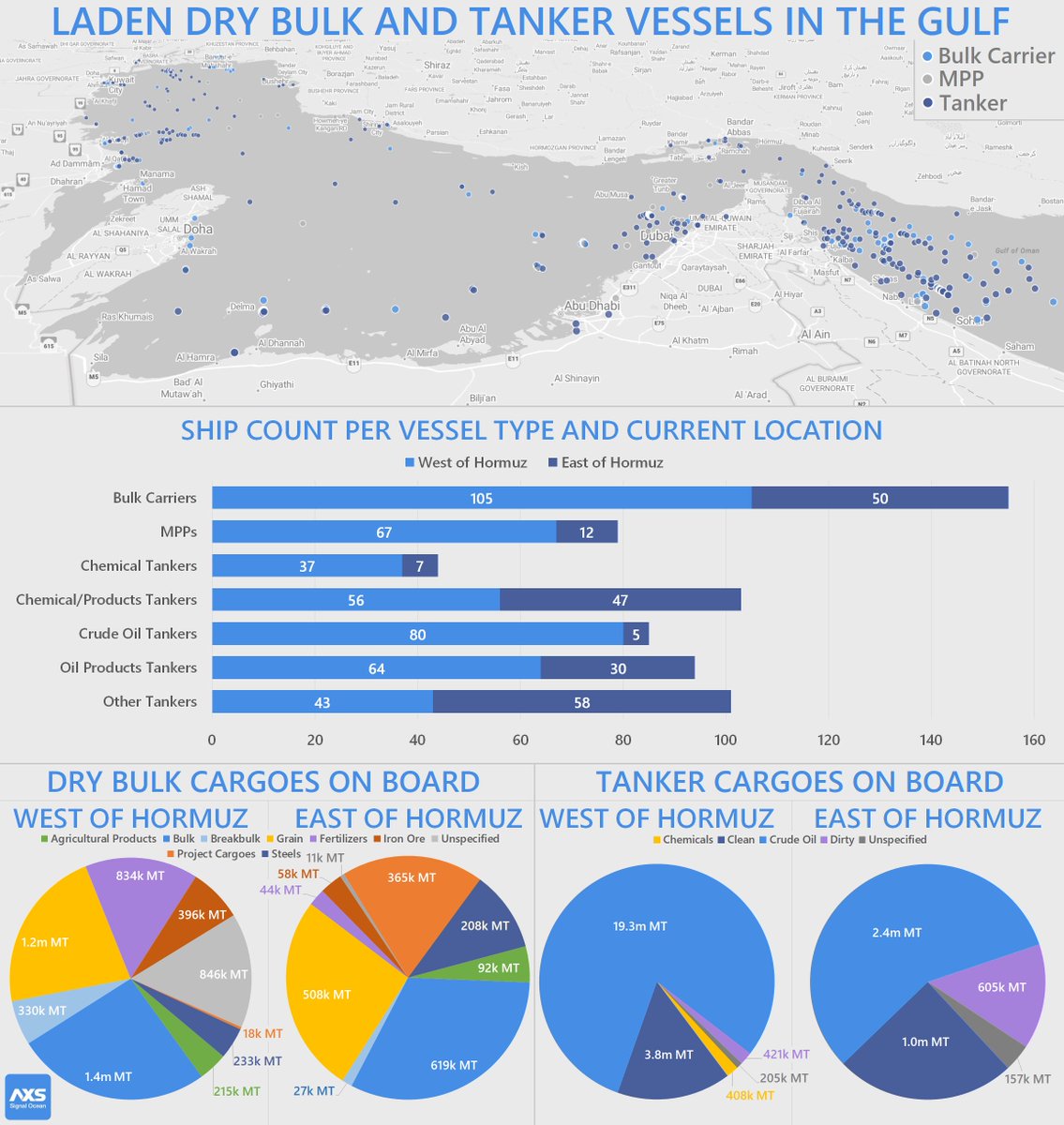
🔎 What cargoes are currently positioned around the Strait of Hormuz? 🛰️ Looking beyond vessel counts, cargo composition provides a clearer picture of the trades currently exposed to the disruption. 📊 Among dry bulk shipments positioned inside the Gulf, grain cargoes lead the mix, with around 1.2m MT, consisting predominantly of corn shipments. Fertilizer cargoes follow with roughly 833.8k MT, largely urea with smaller volumes of phosphates. ℹ️ Bulk commodities also account for a substantial share of the cargo present in the region, with about 1.4m MT consisting mainly of bauxite, limestone, sands and sulphur. Additional volumes include 845.5k MT of unspecified bulk commodities, as well as 395.5k MT of iron ore. 🧱 Breakbulk shipments inside the Gulf total around 329.6k MT, consisting primarily of cement, clinker and woodpulp, while 232.9k MT of steel cargoes are also present. 🌍 East of the Strait, dry cargoes already underway toward destination markets include 618.7k MT of bulk commodities, 508.2k MT of grains, and 364.5k MT of project cargoes, alongside 207.8k MT of steel shipments. 🛢️ Among tanker cargoes, crude oil clearly dominates the cargo mix, with about 19.3m MT currently carried on tankers positioned inside the Gulf, compared with roughly 2.4m MT already east of the Strait. ⛽ Refined petroleum products represent the second largest segment. Around 3.8m MT of clean petroleum products remain inside the Gulf, consisting mainly of jet fuel, naphtha and gasoil, while 1.0m MT of similar cargoes are already east of Hormuz. 🚨 Chemical cargoes account for 408.1k MT inside the Gulf, largely caustic soda and methanol shipments, while dirty petroleum products such as asphalt and fuel oil account for 421.4k MT west of the Strait and 605.0k MT east of Hormuz, including bitumen mixtures and other heavy products. ⚠️ Evidently, a prolonged disruption in the region will affect many different supply chains at once. Energy flows remain dominated by crude oil and refined petroleum products, while dry bulk cargoes reflect the Gulf’s role as a supplier of fertilizers, industrial minerals and agricultural commodities. With these cargoes ranging from fuel and petrochemicals to grain and fertilizers, any prolonged disruption would not only impact energy markets but also several key industrial and agricultural trade routes linking the Gulf with Asia and beyond.
AXSMarine tweet media
English
0
1
3
306
Jay O'Neil รีทวีตแล้ว
Philip Luce
Philip Luce@PhilWCC·
An accumulator is a contract with three potential outcomes and everyone involved hopes that only one of them happens. (Yes, I know there is more than one kind of accumulator - doesn't change the tweet.)
English
0
1
5
717
Jay O'Neil รีทวีตแล้ว
Ashish Kumar Meher
Ashish Kumar Meher@AshishMeher7·
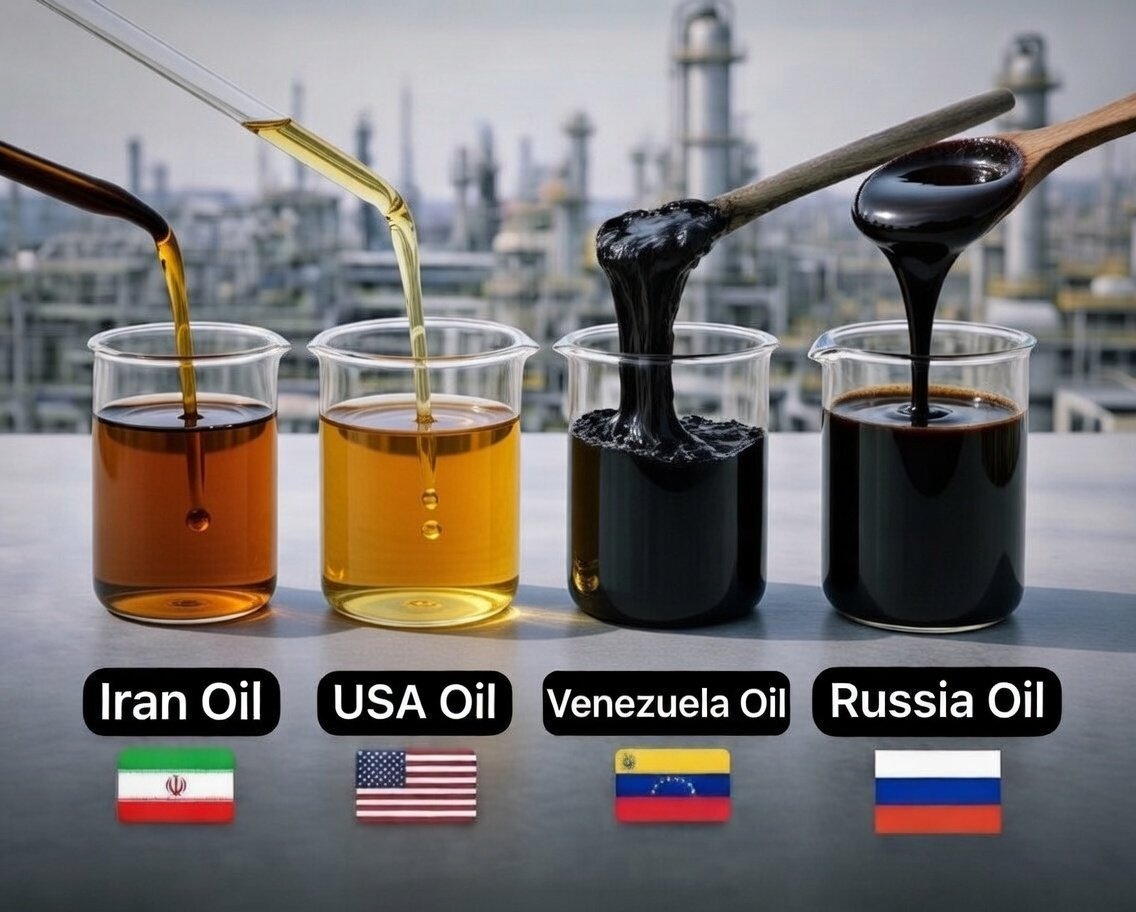
Most people think oil is just oil. It’s not. US WTI: ~40° API (light, golden) Iran Light: ~34° Russia Urals: ~31° Venezuela: ~8–12° (almost tar) The lighter the crude → the cheaper the refining → the bigger the profit. Quality drives oil politics.
Ashish Kumar Meher tweet media
English
390
2.4K
15K
2.3M
Jay O'Neil รีทวีตแล้ว
Sal Mercogliano (WGOW Shipping) 🚢⚓🐪🚒🏴‍☠️
I think you are reading this wrong. The 1% war risk on a $150M vessel is $1.5M. That covers 7 days through the Strait and back out. Previously it was 0.2%, which is $300k. So, we are seeing an additional $1.2M dollar coverage on a tanker that is carrying 1 million barrels of oil, or $1.20/barrel additional. The reason for the initial cancellations was because the reinsurance determined the pool of coverage was determined to be too low, and since the shipping companies are in the clubs, they held the ships outside the Strait. Once the Joint War Committee met and expanded the high risk areas and quantified the threat, new rates were promulgated and underwriters have been writing new contracts. The reason the ships are sitting as they are waiting until they have to sail, either to meet loads in the Gulf, or meet deliveries outside. We are already seeing shipping firms booking cargoes for the ships outside the Strait.
English
8
17
266
10.6K
Shanaka Anslem Perera ⚡
Shanaka Anslem Perera ⚡@shanaka86·
BREAKING: The headline says insurance offers are being made for ships to transit Hormuz. The market read that as good news. The market is reading it wrong. Lloyd’s Market Association confirmed on March 5 that individual underwriters are making coverage offers for select Hormuz transits. War risk premiums have moved from 0.2 percent of hull value to between 0.375 and 1 percent. On a Very Large Crude Carrier with a hull value of roughly one hundred million dollars, that is a voyage-specific war risk cost of up to one million dollars per transit, on top of the record freight rate of $423,736 per day that LSEG confirmed earlier this week. The math is not a market reopening. It is a price at which the market is technically open and economically closed to everyone except a vessel whose cargo is worth enough to absorb that cost per trip. Here is what the LMA statement is and what it is not. It is individual underwriters making facultative offers on specific voyages, priced at risk on a case-by-case basis with no reinsurance treaty behind them. It is not treaty reinstatement. The treaty layer, the reinsurance architecture that sits behind Gard, Skuld, NorthStandard, the London P&I Club, and the American Club, the layer that actually enables the global commercial shipping system to function at scale, has not returned. The cancellations effective March 5 are still in force. The architecture is still withdrawn. What LMA confirmed is that a small number of underwriters are willing to take unhedged bets at premium levels that price in the possibility the bet goes wrong. That distinction is the entire thesis. The Invisible Siege published March 3 argued that the actuarial blockade would persist long after the military campaign resolves because the mechanism that closed the Strait was not a minefield. It was verification cost inversion. When the cost of verifying whether any particular vessel will survive any particular transit exceeds the premium income from insuring that transit, cover is withdrawn. When an underwriter writes facultative cover at 1 percent hull value, they are not declaring that the verification problem is solved. They are declaring that at this price, they are willing to bear the unverified risk personally. The kill-switch in the original thesis was specific: Hormuz transits recovering above 70 vessels per day within 14 days of the March 5 insurance cliff. Windward tracking shows an 80 percent traffic collapse as of March 5. The kill-switch has not triggered. What LMA confirmed is not that the Strait is reopening. It confirmed that individual underwriters are taking unhedged bets on individual ships at premium levels that price in the possibility that the bet goes wrong. That is not an insurance market. That is a war premium casino with a Lloyd’s letterhead. open.substack.com/pub/shanakaans…
Shanaka Anslem Perera ⚡ tweet media
zerohedge@zerohedge

INSURANCE OFFERS BEING MADE FOR SHIPS TO TRANSIT HORMUZ: LMA LLOYD'S MARKET ASSOCIATION COMMENTS IN EMAILED STATEMENT

English
53
196
728
478.1K
Jay O'Neil รีทวีตแล้ว
VJ
VJ@Jia8088·
@mercoglianos @shanaka86 1% risk of total loss? One in 100 transiting ships will be a total loss? Guys this math ain't mathing for me the Iranians are going to hit more than 1 ship in 100
English
2
1
10
694
Jay O'Neil รีทวีตแล้ว
Gandalv
Gandalv@Microinteracti1·
🚨🚨🇺🇸 Reports say USS Arlington is loading nonstop in Norfolk, with armed security nearby. Here is what that actually means. Arlington is an amphibious transport dock, LPD-24, San Antonio class. Think of it as a floating logistics hub for a Marine landing force. It can embark hundreds of Marines plus vehicles, ammunition, and supplies, then push them ashore using landing craft from its well deck and helicopters or tilt rotor aircraft from its flight deck. It is a ship you load when you might need Marines and equipment on short notice. If the US is rushing to backfill gear now, it suggests basic readiness and prepositioning was not in place before Trump lit the match. You do not start a war and then remember the packing list. So which is it. Evacuation, deterrence, or the first step into something bigger? Stay connected, Follow Gandalv @Microinteracti1
English
609
3.1K
11.6K
2.4M
Jay O'Neil รีทวีตแล้ว
Javier Blas
Javier Blas@JavierBlas·
The Strait of Hormuz is a military problem - but above all, it's an insurance issue. And it's worsening: "...More than half of the world’s largest maritime insurance clubs will cease covering war risks for ships entering the Persian Gulf ..." bloomberg.com/news/articles/…
English
15
321
761
79.4K