Catherine Cashmore's Land Cycle Investor

521 posts

Catherine Cashmore's Land Cycle Investor banner
Catherine Cashmore's Land Cycle Investor

Catherine Cashmore's Land Cycle Investor

@LandCycle

Catherine Cashmore reveals the secret knowledge that sits behind the 18.6-year land cycle and how Aussie investors can take advantage.


Melbourne, Australia เข้าร่วม Aralık 2022
26 กำลังติดตาม1.4K ผู้ติดตาม
Catherine Cashmore's Land Cycle Investor รีทวีตแล้ว
Silvertrucker21 🔰
Silvertrucker21 🔰@silvertrucker21·
@LandCycle It was a great interview. I'll be sending you an email soon with a roadmap of the indicators I'm watching for the turn - may be helpful, may be useless, time will tell but you may at least find it interesting 😉
English
1
2
3
382
Catherine Cashmore's Land Cycle Investor รีทวีตแล้ว
Silvertrucker21 🔰
Silvertrucker21 🔰@silvertrucker21·
@DJD_1968 @LandCycle You do need a subscription I believe for that interview. Catherine runs a very good service for those watching the land cycle.
English
1
1
2
186
Catherine Cashmore's Land Cycle Investor
It was fantastic to see so many of you join me and Andrew Pancholi on Wednesday evening for another LCI LIVE Zoom event. Thanks so much to all that sent in questions and engaged with the session. Andrew - is the creator of the Market Timing Report and a director for the Foundation for the Study of Cycles and he is one of the best forecasters I’ve come across. I wanted him to join me to answer all your questions and go over the key dates and time windows for the end of the land cycle that may shape both economic and geopolitical events as we move toward, what I continue to believe, will be a very difficult period from late 2026 into 2027 - leading to a recession in 2028. Andrew’s focus is on a wide range of cycles – not just the 18-year cycle – however, as I stress throughout this publication, the 18-year land cycle is not only a harmonic of many of the major long-wave cycles, but because of land’s unique position in the economy, it effectively acts like gravity to all economic cycles. This is why Edward Dewey referred to the 18-year cycle in his landmark book Cycles: The Science of Prediction (1947) as "the most important economic cycle" we have. Land is the foundation of the economy. Small businesses, banking, finance, construction, retail spending and credit creation are all effectively choreographed around the land market. When transaction volumes are high, and speculation is running rife, these businesses thrive. More people buying and selling property means more removals, more furniture sales, more whitegoods purchased, more renovations, more insurance policies written, more finance commissions, more advertising revenue for media companies, more legal and conveyancing work, more accommodation demand and construction activity... However, toward the end of the cycle, as interest rates rise, credit tightens and transaction volumes begin falling. Even before prices collapse significantly, the slowdown in turnover alone starts pushing many small businesses into recession because the flow of economic activity tied to the land market begins drying up. If you understand nothing else, you can still make exceptional long-term investment decisions simply by understanding the land cycle and its main driver - the thirst for economic rent. It remains, that if the economic rent from land and natural resources isn’t collected and returned to the community on whose behalf that value was created, you will spend a lifetime paying taxes to fund the government, which spends most of its time protecting the rights of the largest monopolists who benefit from controlling large chucks of our land and natural resources. The finance sector for example, that now effectively mortgages access to the earth itself, trading the debt on a multi trillion dollar derivatives market. Big AI and technology companies which control of huge amounts of land, data centres, communications systems and enclosure of the electromagnetic sphere that everyone in a modern economy needs to function. At the same time, mining and energy companies export the our coal and gas overseas while we pay rocketing costs to fuel our homes. Regular readers of this publication will already have a broad understanding of this - and how the first and second halves of the land cycle differ and what that means for portfolio positioning - and real estate investing. However, in the weeks ahead, I'll dedicate more time focusing on the first half of the next cycle and the opportunities that may emerge through the downturn. The idea being that readers can begin preparing now rather than reacting emotionally later. For now however, below is a summary of some of the major themes Andrew covered during the session. Andrew discussed several key dates. I have bolded these in the body of the report for those that do not want to listen to the entire recording. Other points discussed include - The key dates and timing windows Andrew is watching into 2026–2029 - Why years ending in 7 have historically been dangerous for markets - Whether the ASX and Australian banks may have already topped - The growing similarities between today’s AI boom and the dot-com bubble - Gold, silver and whether precious metals could initially crash before surging higher - Why bond yields are becoming a major problem for the global financial system - The Strait of Hormuz, Middle East tensions and the risk of an oil shock - War cycles, geopolitical escalation and China’s possible involvement ahead -Why commodities can continue rising even while broader markets weaken - The 100-year cycle, the 90-year cycle and whether the real danger period is 2028 rather than 2029 This is undoubtedly one of the most well attended live events that LCI has hosted. Click the link below to watch it now! landcycleinvestor.com/post/replay-li…
English
1
2
3
522
Catherine Cashmore's Land Cycle Investor รีทวีตแล้ว
Luke Cashmore
Luke Cashmore@___Cashy·
Highly recommended…
Catherine Cashmore's Land Cycle Investor@LandCycle

THE BUDGET TAX GRAB THAT COULD DEEPEN THE 2028 RECESSION... I was not applauding the budget this week. Not necessarily because of the direction of the most controversial policies, more so because of the timing. Australia’s economy remains heavily tied to rising land values. If governments are going to wind back the tax incentives that have driven property speculation for decades as we approach a major cyclical downturn, there needs to be something big on the other side to stimulate the ‘real’ economy. I’m talking about meaningful income tax reform - policies that genuinely lift productivity. This budget offered nothing of the sort. It was a tax grab. I’m going to focus specifically on the property market impact here – particularly the grandfathering of negative gearing and the changes to the capital gains tax discount. Because recessions that emerge at the end the land cycle are often deeper and longer lasting than mid-cycle recessions. The forthcoming recession will impact vast swathes of the economy that has choreographed itself around the finance, insurance and real estate sectors (the FIRE sectors). Two points are therefore relevant: 1. The extent of the bust depends on the magnitude of the boom. Every boom is followed by a bust. The severity of the downturn depends on how much speculation in land prices there has been during the upswing. The more inflated the land price market, the harder the eventual correction. 2. Government policy shapes the crash - and reinflates the cycle. The extent of the damage during a downturn is often determined by government intervention - such as homebuyer grants, mortgage holidays, and stimulus payments. These can soften the blow and prevent widespread foreclosures. Hence, implementing policies at this stage of the cycle that discourage investor activity in the property market (although not bad in themselves) will inevitably intensify the pain once the downturn takes hold. In this week's Land Cycle Investor report you'll discover.. - Why the budget changes to negative gearing and CGT may intensify the downturn into 2028 - I strip away the market spin and show you how it will really impact the economy. - Will rents rise? - Will investors flee the market? - Will the government backflip in 2027? - What will be the real outcomes of this reform..both good, and bad? I drill into the detail with charts and data plus much more! - PLUS The 45-year historical repeat that's taking us into a mega downturn ***EXCLUSIVE! - FRED HARRISON: THE END OF THE LAND CYCLE AND THE GREAT DESTRUCTION OF CIVILISATION*** It was a pleasure to sit down with Fred Harrison this week to discuss his latest book, Cheating: The Human Project and its Betrayal, which is out now. Originally intended to be Fred's final publication, the project has since expanded into a two-part series, with the second instalment due for release next year. Fred’s analysis in Cheating goes far beyond the usual discussion around greed, monopolies and rent-seeking. Most economists talk about “economic rent” as simply money extracted through land, banking or monopoly power. Fred takes it much further. He argues the system is effectively feeding off human energy itself. People’s time, productivity, creativity and effort are constantly being drained into systems designed around extraction instead of genuine progress. It’s not just an economic problem anymore. Rent seeking has become cultural and psychological. People work harder than ever, yet feel further behind. He also gets into territory very few economists are even discussing properly yet – AI. Fred sees artificial intelligence as either one of the greatest opportunities humanity has ever had, or one of the biggest threats, depending on who controls the benefits from it. If the gains from AI are captured by the same systems already monopolising land, housing, finance and resources, the divide between those who own and those who work will become extreme. Fred’s warning, however, goes even further than economics. He believes the downturn approaching into 2028 could become the point where four major crises collide at once – a debt and financial crisis, escalating geopolitical conflict and war, the disruption from artificial intelligence and technological displacement, and the growing environmental and resource crisis tied to climate and energy systems. Separately, each one would be difficult enough to manage. Together, Fred argues they will overwhelm political and economic systems already weakened by decades of speculation, inequality and short-term thinking. That’s why he says this cycle may be different from all the others before it. A genuine threat to the stability of civilisation as we currently know it. Honestly, there’s nobody else quite like Fred Harrison when it comes to getting to the absolute core of it all. Plenty of analysts can tell you prices are too high or a recession is coming. Fred pulls apart the machinery underneath the entire system – land, speculation, debt, power, monopoly and the way societies organise themselves around them. He gets right into the nitty gritty of what actually drives civilisation forward – and what ultimately pulls it apart. landcycleinvestor.com/post/the-budge…

English
0
1
3
424
Catherine Cashmore's Land Cycle Investor รีทวีตแล้ว
Shepheard-Walwyn Publishers
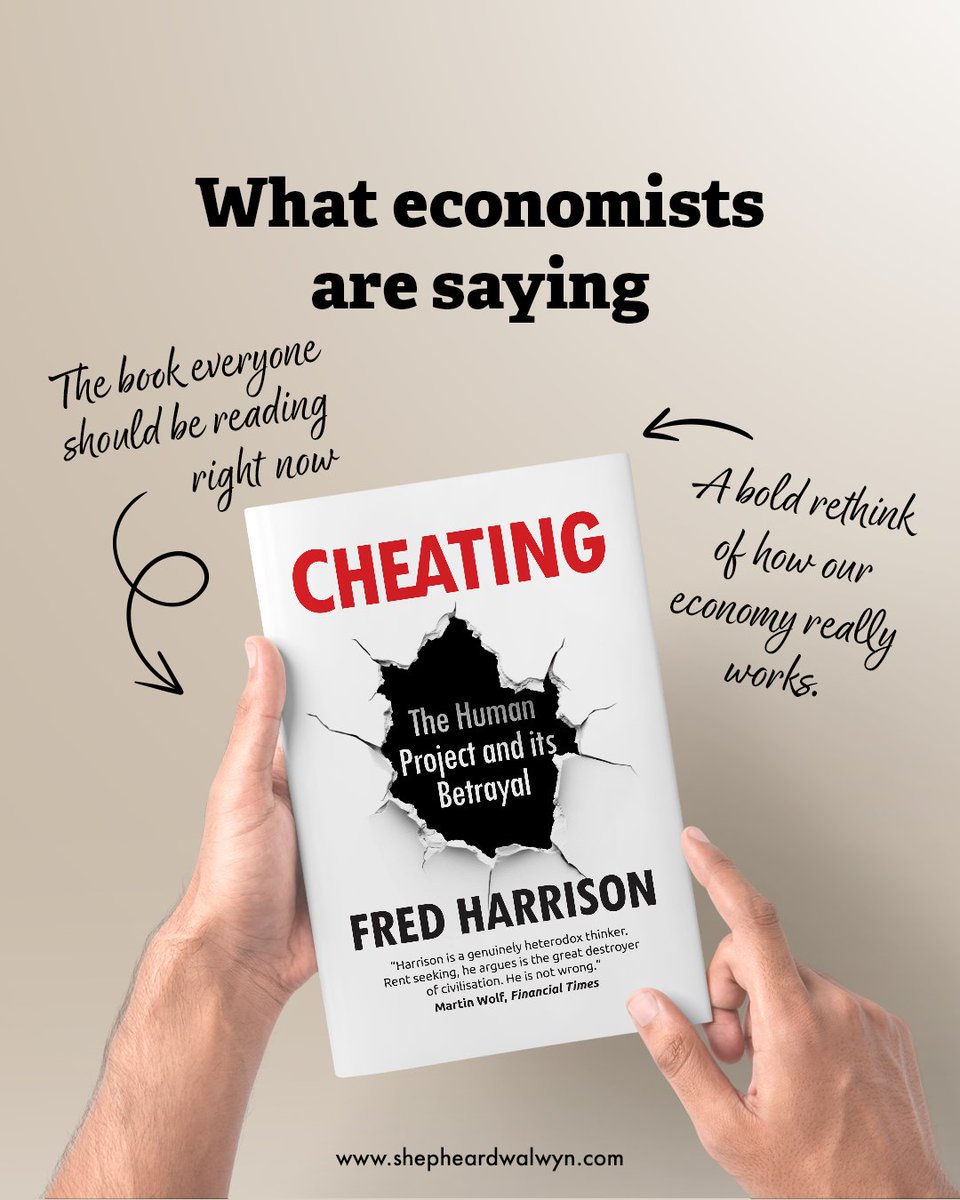
📘 "Cheating: The Human Project and Its Betrayal" by Fred Harrison (@geophilos) is here. Economists are already calling it a thought-provoking and timely read on the systems shaping society today. Hear what they’re saying 👇🏼
Shepheard-Walwyn Publishers tweet mediaShepheard-Walwyn Publishers tweet mediaShepheard-Walwyn Publishers tweet mediaShepheard-Walwyn Publishers tweet media
English
1
10
13
1.1K
Catherine Cashmore's Land Cycle Investor
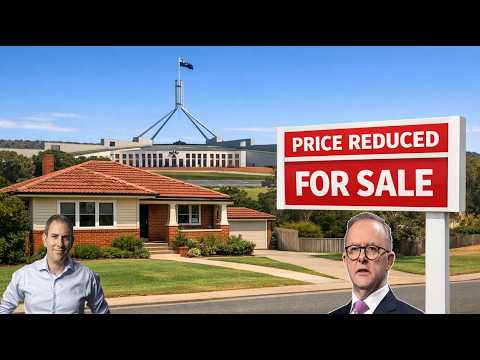
This week's The Macro & The Mortgage Podcast with Leith Van Onselen @leithvo from Macrobusiness discusses the latest house price and mortgage data, the fallout from the federal budget, and New Zealand's latest house price data. We also respond to several spicy viewer comments. youtube.com/watch?v=r5mHvX…
YouTube video
YouTube
English
0
0
2
342
Catherine Cashmore's Land Cycle Investor
THE BUDGET TAX GRAB THAT COULD DEEPEN THE 2028 RECESSION... I was not applauding the budget this week. Not necessarily because of the direction of the most controversial policies, more so because of the timing. Australia’s economy remains heavily tied to rising land values. If governments are going to wind back the tax incentives that have driven property speculation for decades as we approach a major cyclical downturn, there needs to be something big on the other side to stimulate the ‘real’ economy. I’m talking about meaningful income tax reform - policies that genuinely lift productivity. This budget offered nothing of the sort. It was a tax grab. I’m going to focus specifically on the property market impact here – particularly the grandfathering of negative gearing and the changes to the capital gains tax discount. Because recessions that emerge at the end the land cycle are often deeper and longer lasting than mid-cycle recessions. The forthcoming recession will impact vast swathes of the economy that has choreographed itself around the finance, insurance and real estate sectors (the FIRE sectors). Two points are therefore relevant: 1. The extent of the bust depends on the magnitude of the boom. Every boom is followed by a bust. The severity of the downturn depends on how much speculation in land prices there has been during the upswing. The more inflated the land price market, the harder the eventual correction. 2. Government policy shapes the crash - and reinflates the cycle. The extent of the damage during a downturn is often determined by government intervention - such as homebuyer grants, mortgage holidays, and stimulus payments. These can soften the blow and prevent widespread foreclosures. Hence, implementing policies at this stage of the cycle that discourage investor activity in the property market (although not bad in themselves) will inevitably intensify the pain once the downturn takes hold. In this week's Land Cycle Investor report you'll discover.. - Why the budget changes to negative gearing and CGT may intensify the downturn into 2028 - I strip away the market spin and show you how it will really impact the economy. - Will rents rise? - Will investors flee the market? - Will the government backflip in 2027? - What will be the real outcomes of this reform..both good, and bad? I drill into the detail with charts and data plus much more! - PLUS The 45-year historical repeat that's taking us into a mega downturn ***EXCLUSIVE! - FRED HARRISON: THE END OF THE LAND CYCLE AND THE GREAT DESTRUCTION OF CIVILISATION*** It was a pleasure to sit down with Fred Harrison this week to discuss his latest book, Cheating: The Human Project and its Betrayal, which is out now. Originally intended to be Fred's final publication, the project has since expanded into a two-part series, with the second instalment due for release next year. Fred’s analysis in Cheating goes far beyond the usual discussion around greed, monopolies and rent-seeking. Most economists talk about “economic rent” as simply money extracted through land, banking or monopoly power. Fred takes it much further. He argues the system is effectively feeding off human energy itself. People’s time, productivity, creativity and effort are constantly being drained into systems designed around extraction instead of genuine progress. It’s not just an economic problem anymore. Rent seeking has become cultural and psychological. People work harder than ever, yet feel further behind. He also gets into territory very few economists are even discussing properly yet – AI. Fred sees artificial intelligence as either one of the greatest opportunities humanity has ever had, or one of the biggest threats, depending on who controls the benefits from it. If the gains from AI are captured by the same systems already monopolising land, housing, finance and resources, the divide between those who own and those who work will become extreme. Fred’s warning, however, goes even further than economics. He believes the downturn approaching into 2028 could become the point where four major crises collide at once – a debt and financial crisis, escalating geopolitical conflict and war, the disruption from artificial intelligence and technological displacement, and the growing environmental and resource crisis tied to climate and energy systems. Separately, each one would be difficult enough to manage. Together, Fred argues they will overwhelm political and economic systems already weakened by decades of speculation, inequality and short-term thinking. That’s why he says this cycle may be different from all the others before it. A genuine threat to the stability of civilisation as we currently know it. Honestly, there’s nobody else quite like Fred Harrison when it comes to getting to the absolute core of it all. Plenty of analysts can tell you prices are too high or a recession is coming. Fred pulls apart the machinery underneath the entire system – land, speculation, debt, power, monopoly and the way societies organise themselves around them. He gets right into the nitty gritty of what actually drives civilisation forward – and what ultimately pulls it apart. landcycleinvestor.com/post/the-budge…
English
0
1
11
1K
Catherine Cashmore's Land Cycle Investor
***WE ARE HERE - 18-YEARS LATER: THE NEXT FINANCIAL COLLAPSE IS NOW IN PLAY*** Consumer sentiment is rolling over across the developed world, sitting at or near multi-year lows. In the U.S., the University of Michigan index has fallen to its lowest on record. Europe isn’t any better – confidence remains deeply negative, particularly in Germany, still weighed down by energy shocks and cost pressures. In Australia, sentiment has been stuck at recessionary levels for months. The backdrop is clear. Confidence is weak, conditions are tightening, and the cycle is nearing its end point. Trump is now poised to preside over what would be the second recession in the U.S. since the 2008 financial crisis. The only other President who has historically presided over both a mid-and end-of land cycle recession, was George Bush, who was president during both the dot-com mid-cycle bubble, and the 2008 sub-prime crisis. To see how this is going to play out, we don’t need to look back too far, either. In June of 2019, Trump took a 72-hour trip to Japan and South Korea, proclaiming to his counterparts at the meetings and public events, that he had built ‘the best economy in the world.’ At the same time, almost un-noticed, the US yield curve inverted. Within the context of the land cycle it was enormously significant. It was 7 years post the point at which land values had started to make their ascent after the 2008 sub-prime financial crisis (in 2012) – marking the mid-way point of the land cycle. A recession was nigh. If you recall, back in 2019, it seemed that every time Trump’s critics attacked him, the DOW reached a new all-time high! By December 2019, it was trading at over 100% of GDP! Warren Buffet once said this metric is ‘probably the best single measure of where valuations stand at any given moment.’ In other words, the DOW was significantly overvalued. However, at the time, Trump couldn’t have been more jubilant! He was channelling Yale economist Irving Fisher (one of the most respected economists in the world, a Yale professor, and widely trusted), who famously said in 1929 that stocks had reached what seemed a permanently high plateau. Fisher’s comment appeared in an interview with the New York Times in October 1929 - reflecting the widespread optimism of the time. It reinforced the belief man had that the economy and stock market would continue to grow for ever! It was the get rich quick era. His statement, however, became one of the most infamous examples of misplaced economic optimism. The stock market crashed almost immediately after. Irving Fisher lost a multimillion-dollar fortune in the demise. He was forced to sell his home and spent years trying to rebuild his broken reputation. In 2019, Trump didn’t need the NYT to announce his prophecy – he used Twitter to signal his jubilation. To land cycle watchers, it was the red flag needed to show we were close to the mid-cycle peak and subsequent collapse… And now it's just happened again... In this week's Land Cycle Investor report you'll discover.. - The eerie similarities between Trump’s first term, the 2019 inversion and today’s market setup - The historical parallels between 1973, 1990, 2008 and the current cycle peak - The timing window that's almost on us for a stock market collapse, and the cycle theory behind it - How far will stocks fall.. looking at historical repeats - Jeremy Grantham’s latest warning... - Foreclosure data in the US compared to this time last cycle, and FHA delinquencies.. - Why Australia’s housing market is far weaker beneath the surface than the headline median prices suggest - How far will median prices fall in Australia as we move through 2027? - The latest Cotality report warning of a downturn.. And much, MUCH more! Click here to access this week's LCI Report NOW! landcycleinvestor.com/post/we-are-he… ALSO! ***THE LAND CYCLE – A MAJOR NEW PAPER BY CATHERINE CASHMORE*** This week saw the release of a major new paper I've written, warning that Australia is in the late stages of a historically recurring land price cycle that has repeatedly preceded major economic downturns in Western economies. Subscribers can download the paper directly from the LCI Website here. Cross posted from the formal release: Drawing on more than 250 years of historical evidence, this paper contends that speculative booms in land values are not random events, but part of a recurring economic rhythm that typically unfolds over approximately 18 years. Key points: - Land speculation, fuelled by expanding credit and reinforced by tax systems that reward unearned gains from rising land values, lies at the heart of recurring financial crises. - As land prices rise, increasing amounts of capital are diverted away from productive sectors of the economy and into speculation. - Debt expands against inflated land values, while productive activity becomes progressively weaker relative to the growing debt burden. - Eventually, the system becomes unstable and vulnerable to collapse. The paper argues that this process has repeated with remarkable consistency across multiple countries and historical periods. Researchers, including Fred Harrison, Fred Foldvary, Homer Hoyt, Roy Wenzlick, and Edward Dewey, independently identified recurring boom-bust cycles tied to land markets, construction activity, and credit expansion. Many of these analysts successfully forecast major downturns years in advance, including the early 1990s recession and the 2008 Global Financial Crisis (GFC). A key argument of the paper is that the 2008 GFC was not an unforeseeable “black swan” event, but the predictable culmination of a mature land and credit cycle. Georgist economists Fred Harrison and Fred Foldvary both forecast the timing of the crisis more than a decade earlier by applying land cycle analysis. Their work demonstrated how speculative increases in land values eventually overwhelm productive economic activity, leaving the financial system highly exposed once credit conditions tighten. The Land Cycle concludes with the solutions that can be found in reforming the tax system. By shifting taxation toward land values and away from productive activity, to reduce speculation and stabilise the economy. DOWNLOAD THE PAPER IN THE LCI REPORTS SECTION OF THE WEBSITE.
English
0
2
17
1K
Catherine Cashmore's Land Cycle Investor
CRASH NOW OR CRASH LATER? VIEW THE REPLAY OF THE LCI LIVE Q&A ZOOM EVENT A massive thank you to everyone who jumped onto the LIVE zoom event on Thursday, and sent through questions. It was great to see so many of you there. We had heaps of questions (as always), and managed to cover a really wide mix of topics. We spent a fair bit of time on where we actually sit in the cycle right now, and how that tension between 2026 and 2027 is shaping up. There were a lot of questions around timing – whether to act now or hold off – and that naturally led into a deeper look at the timing you need to focus on in relation to the decade cycle. Could equity markets crash this year? Next?... We also dug into what the data is showing on the ground – particularly listings, building activity, and some of the early signals coming out of more credit-sensitive sectors. A few of you asked about global factors as well, so we looked at energy markets and geopolitical risks, and how those kinds of events tend to show up late in the cycle. We covered off on some leading indicators too - looking at building stocks in the U.S. Pete shared his thoughts on investment strategies to protect wealth at the end of the cycle - and much more! In this week's report you'll discover.. – where we currently sit in the land cycle, and the growing tension between 2026 and 2027 as potential turning points – how the decade cycle is aligning, particularly the historical behaviour of years ending in 6 versus 7 and the flash points to watch in each year. – what we’re seeing in real-time data – listings, building activity, changes to asking prices, long term trends etc. – why building stocks and development activity remain some of the clearest leading indicators of a downturn – how global factors – particularly energy markets and geopolitical tensions – could act as the trigger rather than the cause – practical considerations for investors weighing whether to buy, hold, or sell into this phase of the cycle The recording, slides and transcript are all in the report. landcycleinvestor.com/post/crash-now…
English
0
0
1
309
Catherine Cashmore's Land Cycle Investor รีทวีตแล้ว
David Murrin
David Murrin@GlobalForecastr·
You don’t build a system for conflict and then not use it. History is pretty consistent on that.
English
0
2
7
701
Catherine Cashmore's Land Cycle Investor รีทวีตแล้ว
Catherine Cashmore
Catherine Cashmore@CC_CASHMORE·
"....vast areas of prime real estate have been turned into eyesores, plagued by graffiti and overgrown with weeds. The Herald Sun used the City of Melbourne’s Open Data to map the 30 commercial developments larger than 1500 sqm that were approved before 2022 in the CBD but had not started construction. While the exact value of the land is difficult to verify, previous sales and valuations of the 30 properties totalled more than $2.2bn, with planned developments on the sites exceeding $11.1bn in value. The data revealed a trail of approved but empty building sites, with some owners holding permits for years without any sign of construction...." heraldsun.com.au/news/victoria/…
English
1
1
9
4.5K
Catherine Cashmore's Land Cycle Investor
In this week's LCI report, we'll revisit the decade cycle to assess where markets are likely positioned as we move through 2026 and into 2027. Drawing on more than a century of data from the Dow Jones Industrial Average, we'll examine what years ending in “6” have the closest correlation to 2026 and how it informs the forecast for equity markets for the remainder of this year. We'll then turn to 2027, narrowing the likely monthly window in which an equity market downturn may emerge as the land cycle reaches its final phase! The decade cycle data for this report has been provided by market analyst and forecaster Kalvert K. Clark. The written report will present the analysis and charts for 2026 and 2027 - including an update on leading indicators in the real estate markets. Then in this week's interview, Kalvert will extrapolate on the written report, with some more detail on his examination and analysis into market cycles. In this week's LCI report, you'll discover.. - What the decade cycle is showing for 2026 and 2027 - Why years ending in “6” don’t behave the way people expect - Is the year going to end higher, or lower? - Which past year gives the closest correlation to today’s market and the roadmap for the remainder of 2026. - Based on this year's update, what the data suggests for major equity markets in 2027 - An update on Australia's real estate markets and the forecast for 2026. - An update on one of the best leading indicators for the end of the land cycle.. landcycleinvestor.com/post/updating-… PLUS... THIS WEEK'S PRESENTATION WITH MARKET ANALYST AND FORECASTER KALVERT K. CLARK.... Kalvert K. Clark has spent decades studying cyclical patterns in markets – from short trading rhythms to the big clocks that drive expansions and busts. A long-time close friend of mine, Kalvert has a rare knack for making cyclical behaviour intuitive without dumbing it down. For around ten years, Kalvert lectured and conducted research on markets with Phil Anderson at EIS (Economic Indicator Services.) His analysis is extremely helpful in understanding the decade cycle – and the information is both timeless and incredibly valuable. In this presentation Kalvert begins with analysis for 2026. He then expands on his views following last week’s interview with economic forecaster and astrologer Jonathan Evans, discussing the work of forecasters Louise McWhirter and Donald Bradley. In particular, Kalvert outlines how Bradley’s techniques can be applied not just to broad market timing, but to individual securities, using examples such as ANZ Group Holdings to demonstrate how these methods are interpreted in practice. The presentation finishes with a look at what 2027 may have in store for traders – including identifying key turning points in the year. landcycleinvestor.com/post/updating-… LCI HITS THE NATIONAL PRESS... AGAIN.. After featuring in a recent Daily Telegraph article, the research at Land Cycle Investor was picked once up again this week in an interview with news.com.au. You can read the full report here. news.com.au/finance/econom… And also in the online magazine Elite Agent via the link below.. eliteagent.com/boom-bust-repe… FINALLY - TO THOSE THAT ATTENDED THE ALLIANCE FAT TAIL INVESTMENT RESEARCH EVENT Finally, a big thank you to the LCI subscribers who are also FTIR subscribers and took the time to come over and say hello at the Fat Tail Investment Research Alliance event at the Windsor Hotel in Melbourne, on Thursday night. It was a pleasure to meet so many of you and to have the chance to discuss some of the research I’m working on at Land Cycle Investor. I’ll look to organise some future meet-ups so more subscribers have the opportunity to connect and continue the discussion around the work. landcycleinvestor.com/post/updating-…
English
1
1
4
507
Catherine Cashmore's Land Cycle Investor
Looking forward to reviewing a preview of Fred Harrison's new book Cheating - The Human Project and its Condition Fred is one of the most accurate economic forecasters of modern times. He has an intricate understanding of the dynamics that drive boom and bust cycles, and how to cure the injustice that mankind has built into the system. LCI interview with Fred coming soon.. @geophilos
English
0
1
7
467
Catherine Cashmore's Land Cycle Investor รีทวีตแล้ว
@marketcycology
@marketcycology@marketcycology·
@LandCycle Can’t wait to read this. My next move will to buy property in Melbourne in next 2-3 years.
English
0
1
3
324
Catherine Cashmore's Land Cycle Investor
LAND CYCLE INVESTOR MARKET UPDATE FOR 2026 For now, the situation in the Middle East has moved back from the brink. A tentative ceasefire is in place, and while few would call it secure, it has been enough to ease immediate fears of a full-scale disruption to global energy flows. At least for now. Crucially, traffic through the Strait of Hormuz – the world’s most important oil chokepoint – has not been fully shut down. Tankers are moving - albeit with rocketing insurance costs. For the land cycle, it buys some time. And with that, the S&P made a new all-time high this week as fears of escalating conflict eased. Governments now have a narrow window to shore up alternative supply lines. In Australia’s case, over 90% of our refined fuel is imported. We only have two operating refineries left (Geelong and Lytton), and they cover roughly 20–25% of domestic demand. On Wednesday, in rather uncanny timing, a gas leak caused a fire to break out at the Geelong refinery. The Geelong refinery normally supplies about 50% of Victoria’s fuel and roughly 10% of Australia’s total fuel. So, the disruption in local supply – even temporary – is disastrous. The rest of Australia’s supply – petrol, diesel, jet fuel etc. – arrives by ship, largely from Asia (Singapore, South Korea, etc). When you look at China and its threat to Taiwan - the risks to the region, whether through conflict, a blockade, or even just disruption to shipping routes – Australia is in a very vulnerable position at this point in the cycle. The federal government is running around like chicken without a head releasing portions of its emergency reserves, making available “about seven days’ worth of petrol” and “five days of diesel” to ease immediate pressure, while Energy Minister Chris Bowen noted the move is designed to give suppliers “flexibility to manage their supply.” Canberra has stepped in to underwrite fuel imports, effectively trying to get companies continue bringing shipments into the country despite rising geopolitical risk. Western Australia is more exposed. With no trust in the Feds, it’s busy establishing its own diesel reserve, prioritising fuel shipments through its ports - coordinating weekly with industry to manage distribution. The state government describing these measures as “vital for enhancing… fuel resilience.” None of this increases supply in a structural sense. But it does buy time. And for now, that breathing space is enough to keep a sharp, oil-driven inflation spike from taking hold immediately. Market collapses rarely unfold when everyone is braced for impact. So, any form of complacency taking hold at this point in the cycle, is almost a signal in itself that we must remain on-guard. Therefore, in this week's report I give a broad update on current events that narrow the window for a turning point in markets.. You'll discover.. - Why oil spikes have consistently marked the end game of post WW2 land cycles. - The hidden lure of economic rent and how its consistently missed in the inflation story - An update on the decade cycle for 2026 - How the Moon’s nodal cycle is tightening the timing window - The “skyscraper curse” aiding the timing - And the implications for 2027.. PLUS: A DEEPER DISCUSSION ON MARKET TIMING THROUGH FINANCIAL ASTROLOGY WITH JONATHAN EVANS... Jonathan Evans is a market analyst and cycle specialist with a background in trading, financial education, and investment publishing. He began his career trading precious metals around 2010–2011, where he experienced first-hand the boom–bust dynamics that led him to question traditional fundamental and technical analysis. ' He later completed formal qualifications in financial planning and trading before shifting his focus to cycle analysis, which he has studied intensively since around 2017. Evans previously worked within the Agora group at Port Phillip Publishing (later Fat Tail Investment Research), where he collaborated with figures such as Callum Newman on Profit Watch and conducted analyst interviews. Since leaving, he has built his own independent research service and subscriber base, while also contributing to projects such as Mastering the Markets with David Bird. His work now centres on identifying and forecasting market turning points through a combination of mathematical and planetary cycles. This is a broad-ranging discussion that offers a strong introduction to financial astrology, while also unpacking the background behind both my thinking and Jonathan’s evolution into market analysis using planetary cycles. It won’t be for everyone – but for those with an interest in financial astrology, there’s a lot here to enjoy. You'll discover.. - Why traditional analysis fails – and what actually sits “above” fundamentals and technicals - How a brutal lesson in the 2011 metals crash pushed Evans into cycle forecasting - The hidden structure behind markets – mathematical cycles vs planetary causes - How the 18-year cycle links stocks, real estate, and business activity into one system - The missing rules in Louise McWhirter’s work – and what most analysts overlook - How to forecast market turning points using mass pressure charts and timing techniques - Why 70–80% accuracy in cycle forecasting is more than enough to outperform - The role of the Moon, Mars, Jupiter and Saturn in driving volatility, sentiment, and long-term trends - How to strip away noise and isolate the only variables that matter in a forecast - The tension between publishing cycle knowledge – and deliberately keeping parts hidden All this and more!... landcycleinvestor.com/post/market-up…
English
0
0
5
359