Miguel Angel Ruiz
103.3K posts

Miguel Angel Ruiz
@Mars_777
Fundador de Agencia Mars y experto en Consumer Neuroscience. #Neuromarketing Abstenerse Negacionistas, Terraplanistas, Antivacunas, Veganazis y Feminazis


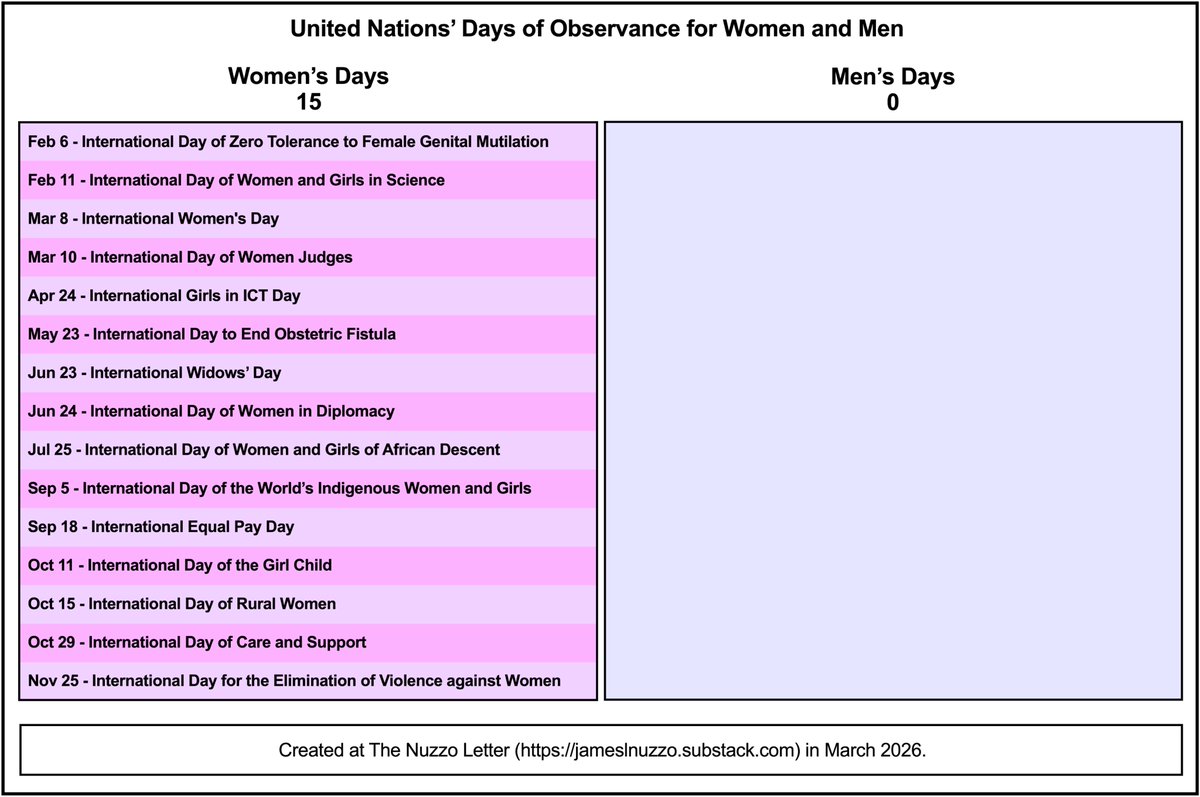
Tuesday marks the first-ever International Day of Women in Industry, celebrating women’s contributions to industrial development and promoting a more inclusive and equitable future worldwide. Details from @UNIDO: unido.org/international-… #IntlDayofWomeninIndustry


Rage of the falling elite: robkhenderson.com/p/rage-of-the-…

Topuklu ayakkabı giymek bel açısı 45.5 derecenin altında olan kadınları daha çekici yapar; çünkü topuklu ayakkabı bel kavisini atalarımızda hamilelik avantajı sağlayan 45.5 derecelik ideal açıya yaklaştırır.


This is actually true. Lately, many of my girlfriends (mid to late thirties) have been telling me that they are getting approached by early-twenties men, very confidently I would add. What’s going on?


"Collective narcissism...the belief that one’s group is superior to others and, at the same time, does not receive the respect or admiration it is due...Rather than inflating one’s own ego, the individual inflates the status and importance of the group." wkeithcampbell.substack.com/p/collective-n…

While violent delinquency and violent victimization often co-occur in the same adolescent individuals, offending is largely determined by genetic factors, while victimization has its roots mostly in personal, idiosyncratic experiences not shared by family members. A robust body of evidence has found that these victimization and offending often co-occur within the same individuals, a pattern referred to as the victim-offender overlap. The association between those who offend and report high levels of victimization is well established, but the directional path between these two constructs remains unclear. The current study examines the directional structure of the association between violent delinquency and violent victimization during adolescence using a genetically informed cross-sectional twin design. First, the results [show] that variation in violent delinquency is largely attributable to additive genetic influences whereas variation in violent victimization is primarily shaped by unique environmental experiences. Second, the models provided new evidence that the association between violent delinquency and violent victimization is best understood as a unidirectional, rather than bidirectional, relationship. Specifically, adolescents who engaged in violent delinquent behavior were more likely to experience violent victimization, whereas violent victimization did not appear to influence violent delinquency during the same developmental stage. Consistent with prior behavioral genetic studies, our results indicated that a large portion of the variability in violent delinquency was explained by additive genetic effects, suggesting that genetically influenced dispositional traits—such as impulsivity, risk-taking, or low self-control—may partly shape individual differences in adolescent violent behavior. In contrast, more of the variation in violent victimization was explained by nonshared environmental factors (i.e., environmental experiences unique to each twin), aligning with the idea that situational contexts and individual-specific life experiences play a central role in exposure to interpersonal harm. These findings support the population heterogeneity perspective, which proposes that differences in antisocial behavior and victimization arise from both genetic liabilities and individualized environmental experiences. Importantly, the absence of significant shared environmental effects for violent victimization and violent delinquency suggests that the environments twins share (e.g., family structure, school, or socioeconomic status) play a smaller role in explaining individual differences in violent delinquency and violent victimization once genetic and unique environmental influences are accounted for. By showing that genetic factors influence violent delinquency and that delinquency, in turn, is linked to violent victimization, this work highlights how biological and environmental mechanisms operate sequentially rather than independently.

Latest issue of *Journal of Applied Research in Memory and Cognition* features a target article on CONCEPT CREEP (with commentaries including @paytonjjones and @minzlicht)... psycnet.apa.org/PsycARTICLES/j…