

MaxGraey 🌻 🇺🇦
3.9K posts

MaxGraey 🌻 🇺🇦
@MaxGraey
@AssemblyScript core team member bsky: https://t.co/CA7IgvwX3t In Russo-Ukrainian War Reports Mode #StandWithUkraine
Kyiv, Ukraine เข้าร่วม Ağustos 2018
446 กำลังติดตาม516 ผู้ติดตาม


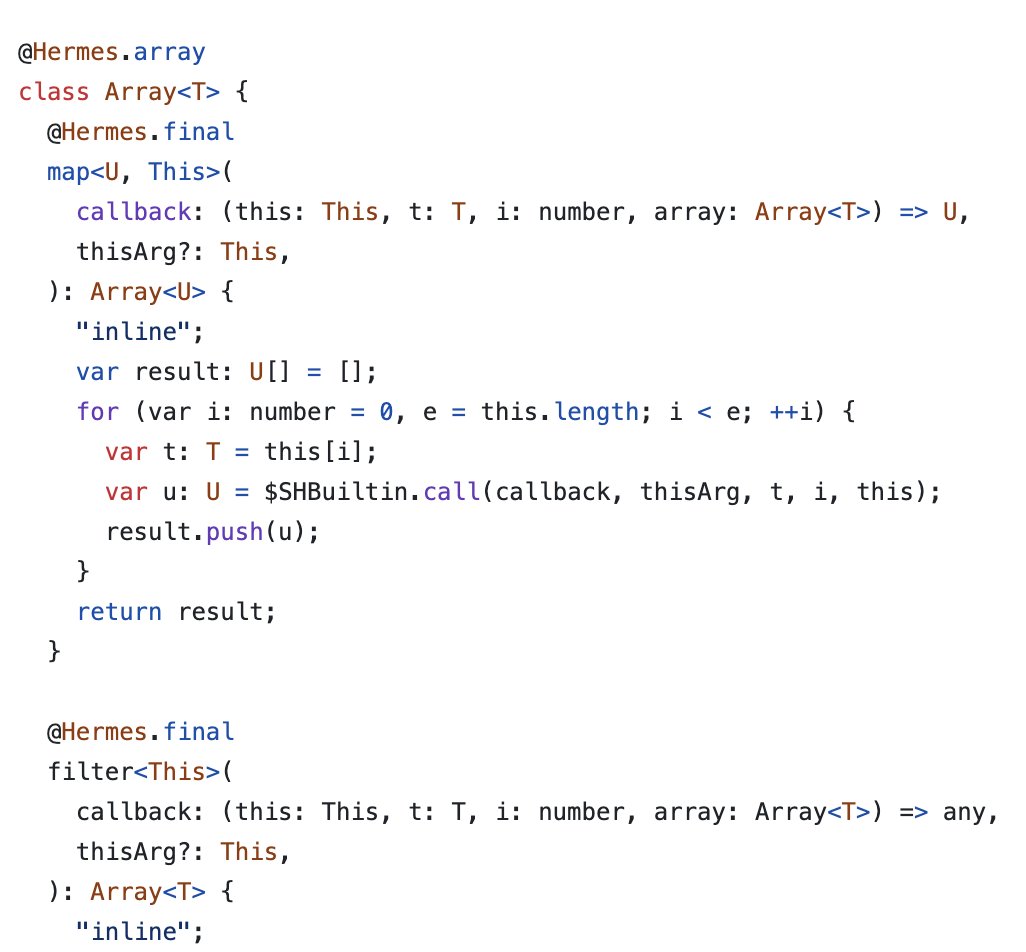
Static Hermes soundly typed language progress. Screenshot of some of the WIP typed JSLib (GitHub link in next tweet).
The typed JS is quite efficient to compile. Generics emit specialized versions similar to C++. Note the Hermes.final decorators, essential for perf.
English
@saltyAom #issuecomment-4297811371" target="_blank" rel="nofollow noopener">github.com/PerryTS/perry/…
QME


@MaxGraey yup, you will see more red flags when reading the source code :(
English
A native TypeScript compiler written in Rust. Compiles TypeScript directly to executables using SWC and LLVM.
perryts.com
English
@hd_nvim In reality, things are much worse:
github.com/PerryTS/perry/…
English

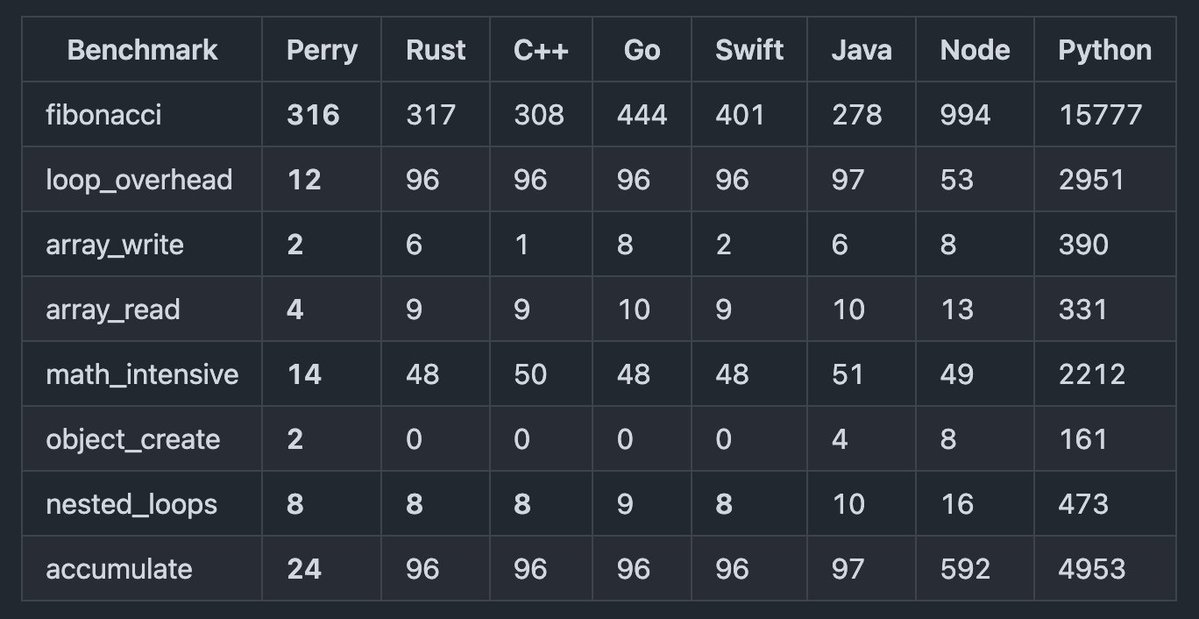
@hd_nvim Although it uses f64 instead of i64, so it might not opt out but missing `std::hint::black_box` here is definitely a red flag
English
@WebReflection @hd_nvim No, JS is not fast, especially when it comes to strings and arrays passed across the JS <-> Wasm boundary. That has always been one of the biggest performance bottlenecks in Wasm, and one of the reasons it could sometimes be slower than equivalent pure JS.
English

English
@olson_dan In my opinion, the old-fashioned way is much more structured and easier to understand


English

I figured out how to explain why this bugs me... reading order required to understand is just all over the place. But listen, it's fine and I'm just being whiny. I can be whiny on my own twitter.
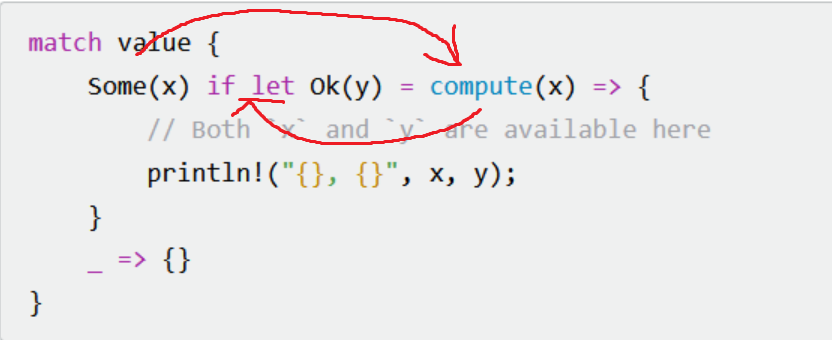
Dan Olson@olson_dan
New Rust sugar is to me, unintelligible at first glance. After some study, I got it and I see the benefit. But I continue to believe that this language doesn't need more sugar, and I believe it's hard to improve code clarity when packing so much into one line. But it is what it is. Rust didn't get good by listening to me about anything. #if-let-guards-in-matches" target="_blank" rel="nofollow noopener">blog.rust-lang.org/2026/04/16/Rus…
English
@trikcode 1. One agent writes buggy and nonsensical code that results in over > 3.5k errors;
2. 12 agents spend five hours trying to fix this;
3. The problem remains unsolved due to running out of tokens
4. Profit! (but only for Anthropic, AWS and Nvidia)
English

@tmikov @paulmillr @devongovett To do this, you need to track the range of each number variable using interval arithmetic. That's not cheap at all in terms of analysis
English
@tmikov @paulmillr @devongovett Is it easy? FP ops are the most challenging area for optimization even for LLVM (which currently only has KnwnFPClass ant this is not enough). And to stay within the explicit integer types, you need to prove that it won’t overflow and will remain an integer after every operation.
English

Facebook's Static Hermes is kind of incredible. It can compile JavaScript into C, which is then compiled and optimized into native machine code.
I just compiled the Less.js source code into a C library. Then I called it from Rust as a native Parcel plugin (no Node). Wild. 👨🔬
English
@paulmillr @steida AssemblyScript also can produce JS:
#portability" target="_blank" rel="nofollow noopener">assemblyscript.org/compiler.html#…
English

@steida Great project, just wanted something much smaller (AFAIK it’s 4x LOC); worker-friendly; and to be able to produce Js code as well as wasm
English
> WASM, but paranoia-friendly
Announcing 3 new projects:
1. awasm: a new standard for auditable, high-security WASM packages
2. awasm-compiler: an auditable js-to-wasm compiler
3. awasm-noble: an ultra-fast WASM cryptography library (ChaCha/BLAKE3 at 6-10 GB/s)
English

I hate the current state of software products. Stable products are not supposed to have bugs like they're in alpha.
English
@AureliaRosea @BenjDicken @martinzrx14783 Btw for maximum performance, Zig might actually be much better. It’s no coincidence that Bun written on it.
English

@MaxGraey @BenjDicken @martinzrx14783 I won't deny that for extreme performance cases Rust can be a hassle, but that can even be said about C++. More realistically, you have your hardware constraints that you want your software to fit within, and in many of our cases at least, Rust immediately gives us that.
English

You can only build software in one for the rest of your life:
Go
Zig
Rust
What are you choosing?
English
@AureliaRosea @BenjDicken @martinzrx14783 It all depends on what you're building. What level of performance, reliability, maintaince and stability do you need? Btw Rust isn't a one-size-fits-all solution. For best perf, you need a lot of core intrinsics + night Rust and a lot of unsafe + "memory leaks in Rust are safe"😉
English
@MaxGraey @BenjDicken @martinzrx14783 You can call it niche if you want. The part of the conversation I'm interested in is whether it makes more sense to start new things in rust or C++ today, and as time goes on the answer to me is increasingly rust, and for our org it seems to be as well.
English
@AureliaRosea @BenjDicken @martinzrx14783 I like Rust, but realistically speaking, you can’t write front-end apps in it without some hassle. As for low-level tasks, you’ll have to use a lot of unsafe and ffi in Rust, which is hardly much better than C++ with sanitizers
English
@MaxGraey @BenjDicken @martinzrx14783 I think rust was pretty immature 7 years ago. It was all the rage because it was shiny and new, that didn't mean it was getting industry/enterprise adoption lol. Even at AWS we are only now starting to build new things in rust in certain parts of the org.
English
@AureliaRosea @BenjDicken @martinzrx14783 All big projects on Rust unfinished and remain stagnant: Servo, Redox OS, Tock OS, all GUI-frameworks excerpt Slint. “Rust everywhere” or RIR often fail because the development speed is significantly slower than on C++ or JS, and there are far fewer mature devs
English
@AureliaRosea @BenjDicken @martinzrx14783 You can’t create anything popular or significant in less than 5–7 years, even with a large team, so that’s not much of an argument. Besides, Rust was all the rage 7 years ago, but it still wasn’t chosen for major projects.
English