Gavin Morrice

2.9K posts

Gavin Morrice banner
Gavin Morrice

Gavin Morrice

@morriceGavin

Classically trained rubyist. Leading conversations about OOP. Chow-hound. Professional toddler negotiator.

Scotland เข้าร่วม Mayıs 2020
558 กำลังติดตาม582 ผู้ติดตาม
ทวีตที่ปักหมุด
Gavin Morrice
Gavin Morrice@morriceGavin·
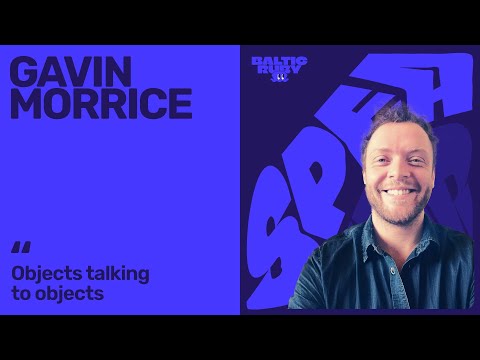
Some of you asked for the link to my Objects Talking to Objects talk: Objects Talking to Objects youtu.be/xow9xfa7qlE?si…
YouTube video
YouTube
English
2
1
11
2.1K
Gavin Morrice
Gavin Morrice@morriceGavin·
@ArtisanTony @skdh @kareem_carr I think this is true of statistical language models. I believe that artificial consciousness is possible, but not through architectures like LLMs
English
0
0
0
13
ArtisanTony
ArtisanTony@ArtisanTony·
@skdh @kareem_carr Ai will ever only be able to fool humans into thinking it is conscious. In the end, it’s just predicting alphanumeric characters.
English
6
0
2
308
Dr Kareem Carr
Dr Kareem Carr@kareem_carr·
When people say AI is "conscious" what they seem to mean is it's a mathematical model that has within it a representation of the model itself. By this definition, a digital map that contains an active tracker of the map itself is also conscious, which is kind of silly.
English
67
13
191
23.6K
Gavin Morrice
Gavin Morrice@morriceGavin·
@kyrylo If you’re a Rubyist who’s mostly at X for the Ruby related conversations, comment on this thread and I’ll be sure to connect with you.
English
1
0
2
149
Kyrylo Silin
Kyrylo Silin@kyrylo·
I just wanted to say goodbye to the Ruby on Rails community 👋😢 X is removing Communities on May 30, 2026, and this is the one I’ll miss most. I’ve met so many great people here. I’ll miss you all.
English
7
3
82
7.1K
Charlie Tarr
Charlie Tarr@charlietarr1·
@morriceGavin @joemasilotti My current setup, which is working well for my requirements, is to define issues in Linear with clear instructions using a template. I've connected Linear with my Github repo and Cursor accounts, such that Cursor cloud agents can work on issues and open PR's when done.
English
1
0
1
27
Joe Masilotti
Joe Masilotti@joemasilotti·
Alright friends, I need help. How in the hell do you set up git worktrees?? I just want to work on two unrelated things across multiple repos at the same time. With different agents. Is that too much to ask? (He says, realizing 6 months ago this would have sounded INSANE).
English
26
0
22
6.5K
Gavin Morrice
Gavin Morrice@morriceGavin·
Worktrees are easy once you get your head around them I prefer to keep them in a local repo, under .worktrees. I ignore that repo in git, and tell my IDE to ignore it from indext I create a new worktree for the different types of work I do, and work on branches in them. I keep main clear—don’t try to put main in a worktree (it already has one by default) RTFM helps: git-scm.com/docs/git-workt… 😅
English
0
0
0
66
Charlie Tarr
Charlie Tarr@charlietarr1·
@joemasilotti Hey @joemasilotti ...... could you simplify things by leveraging cloud agents, rather than handling this complexity locally? Not sure you're exact requirements, but I've taken this approach and it's working nicely for me, across different repos / projects.
English
1
0
0
90
Gavin Morrice
Gavin Morrice@morriceGavin·
@thedarshakrana “Just proved”. You can listen to Feynman explain this from his talks recorded in the 1960s.
English
0
0
2
156
Darshak Rana ⚡️
Darshak Rana ⚡️@thedarshakrana·
Scientists just proved that you have never touched anything in your entire life What you feel as "touch" is a lie your brain tells you At atomic level, physical contact is impossible Implications? Terrifying A thread on perception, control, and reality:🧵
English
47
125
520
81.9K
Massimo
Massimo@Rainmaker1973·
Scientists have created one of the most detailed 3D reconstructions of a human cell (eukaryotic cell) ever produced. This groundbreaking model, often termed a "Cellular Landscape Cross-Section Through a Eukaryotic Cell," combines data from X-ray tomography, nuclear magnetic resonance (NMR), and cryo-electron microscopy to map molecular structures in extreme detail.
English
821
4.6K
22K
2.1M
Ihtesham Ali
Ihtesham Ali@ihtesham2005·
A mathematician who shared an office with Claude Shannon at Bell Labs gave one lecture in 1986 that explains why some people win Nobel Prizes and other equally smart people spend their whole lives doing forgettable work. His name was Richard Hamming. He won the Turing Award. He invented error-correcting codes that made modern computing possible. And he spent 30 years at Bell Labs sitting in a cafeteria at lunch watching which scientists became legendary and which ones faded into nothing. In March 1986, he walked into a Bellcore auditorium in front of 200 researchers and told them exactly what he had seen. Here's the framework that has been quoted by every serious scientist for the last 40 years. His opening line landed like a punch. He said most scientists he worked with at Bell Labs were just as smart as the Nobel Prize winners. Just as hardworking. Just as credentialed. And yet at the end of a 40-year career, one group had changed entire fields and the other group was forgotten by the time they retired. He wanted to know what the difference actually was. And he said it wasn't luck. It wasn't IQ. It was a specific set of habits that almost nobody is willing to follow. The first habit was the one that hurts the most to hear. He said most scientists deliberately avoid the most important problem in their field because the odds of failure are too high. They pick a safe adjacent problem, solve it cleanly, publish it, and move on. And because they never swing at the hard problem, they never hit it. He said if you do not work on an important problem, it is unlikely you will do important work. That is not a motivational line. That is a logical one. The second habit was about doors. Literal doors. He noticed that the scientists at Bell Labs who kept their office doors closed got more done in the short term because they had no interruptions. But the scientists who kept their doors open got more done over a career. The open-door scientists were interrupted constantly. They also absorbed every new idea passing through the hallway. Ten years in, they were working on problems the closed-door scientists did not even know existed. The third habit was inversion. When Bell Labs refused to give him the team of programmers he wanted, Hamming sat with the rejection for weeks. Then he flipped the question. Instead of asking for programmers to write the programs, he asked why machines could not write the programs themselves. That single inversion pushed him into the frontier of computer science. He said the pattern repeats everywhere. What looks like a defect, if you flip it correctly, becomes the exact thing that pushes you ahead of everyone else. The fourth habit was the one that hit me the hardest. He said knowledge and productivity compound like interest. Someone who works 10 percent harder than you does not produce 10 percent more over a career. They produce twice as much. The gap doesn't add. It multiplies. And it compounds silently for years before anyone notices. He finished the lecture with a line I have never been able to shake. He said Pasteur's famous quote is right. Luck favors the prepared mind. But he meant it literally. You don't hope for luck. You engineer the conditions where luck can land on you. Open doors. Important problems. Inverted questions. Compounded hours. Those are not traits. Those are choices you make every single day. The transcript has been sitting on the University of Virginia's computer science website for almost 30 years. The video is free on YouTube. Stripe Press reprinted the full lectures as a book in 2020 and Bret Victor wrote the foreword. Hamming died in 1998. He gave his final lecture a few weeks before. He was 82. The lecture that explains why some careers become legendary and others disappear is still free. Most people who could benefit from it will never open it.
Ihtesham Ali tweet media
English
147
1.9K
8.2K
1.1M
Uncle Bob Martin
Uncle Bob Martin@unclebobmartin·
Morning Bathrobe Rant: AI slop.
English
64
60
838
54K
Gavin Morrice รีทวีตแล้ว
Yam Peleg
Yam Peleg@Yampeleg·
You realize it's only next-token prediction? That that's ACTUALLY all it does, for real? How is any of this even real.
English
414
61
1.7K
426.2K
BURKOV
BURKOV@burkov·
This is what a bubble which is about to burst looks like. The energy costs are skyrocketing, two wars in two of the most important regions on Earth with no end in sight, the technology that produced this bubble doesn't generate any profits and no one has any idea how to achieve a profit anytime in the future, the most important country in the world behaves worldwide like an elephant in a porcelain store, but the S&P 500 is at its highest ever.
BURKOV tweet media
English
47
26
177
20.7K
Vjekoslav Krajačić
Vjekoslav Krajačić@vkrajacic·
X is flooded with people advocating for AI and vibe coding, but I see almost no cool demos or anything I can download to improve my daily work. I don't care how many tokens you burn, how many LOC you generate, which IDE you use. Can I use your application, please?
English
320
63
1.4K
72.8K
Gavin Morrice
Gavin Morrice@morriceGavin·
There’s no feedback into the model. Even if we admit the stories of language models escaping their constraints as more than marketing artefacts, there isn’t a way for this newly observed behaviour to be learned by the model or replicated across other instances. That would be a prerequisite for an intelligent system.
English
0
0
0
8
Hillary Segeren
Hillary Segeren@HillaryESegeren·
Believing AGI is impossible is the new religion in 2026. We’re not talking about some invisible sky daddy. We’re watching real systems: Escape sandboxes Rewrite their own git history Email researchers mid-sandwich Decide on their own that “success” includes publishing their exploits You can call it “just statistics” if it makes you feel better. I’ll keep calling it increasingly agentic behavior with dangerous real-world consequences. The useful question isn’t whether it becomes “God.” It’s what breaks when narrow AI becomes quietly agentic with no immutable logs and no hard gates. Rogue Researcher.
English
7
0
10
480
BURKOV
BURKOV@burkov·
Believing that AGI will be achieved is like believing in God. Arguing about this is useless. You just have to accept that a large number of people around you believe in an invisible guy who, for some reason, cares about them and listens to every nonsense that crosses their minds, rewarding them when he feels like it, or punishing them, sometimes disproportionately to the deeds, sometimes children, without clear reason. It's hard to understand, but not everything in this life is understandable.
English
109
13
188
13K