Gavin Morrice

2.9K posts

Gavin Morrice banner
Gavin Morrice

Gavin Morrice

@morriceGavin

Classically trained rubyist. Leading conversations about OOP. Chow-hound. Professional toddler negotiator.

Scotland Katılım Mayıs 2020
556 Takip Edilen579 Takipçiler
Sabitlenmiş Tweet
Gavin Morrice
Gavin Morrice@morriceGavin·
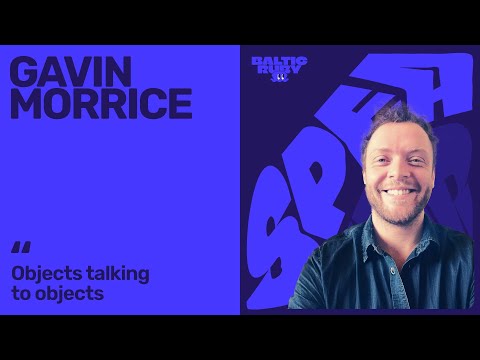
Some of you asked for the link to my Objects Talking to Objects talk: Objects Talking to Objects youtu.be/xow9xfa7qlE?si…
YouTube video
YouTube
English
2
1
11
2.1K
Gavin Morrice
Gavin Morrice@morriceGavin·
@thedarshakrana “Just proved”. You can listen to Feynman explain this from his talks recorded in the 1960s.
English
0
0
2
136
Darshak Rana ⚡️
Darshak Rana ⚡️@thedarshakrana·
Scientists just proved that you have never touched anything in your entire life What you feel as "touch" is a lie your brain tells you At atomic level, physical contact is impossible Implications? Terrifying A thread on perception, control, and reality:🧵
English
44
120
498
77.3K
Massimo
Massimo@Rainmaker1973·
Scientists have created one of the most detailed 3D reconstructions of a human cell (eukaryotic cell) ever produced. This groundbreaking model, often termed a "Cellular Landscape Cross-Section Through a Eukaryotic Cell," combines data from X-ray tomography, nuclear magnetic resonance (NMR), and cryo-electron microscopy to map molecular structures in extreme detail.
English
800
4.6K
21.7K
2M
Ihtesham Ali
Ihtesham Ali@ihtesham2005·
A mathematician who shared an office with Claude Shannon at Bell Labs gave one lecture in 1986 that explains why some people win Nobel Prizes and other equally smart people spend their whole lives doing forgettable work. His name was Richard Hamming. He won the Turing Award. He invented error-correcting codes that made modern computing possible. And he spent 30 years at Bell Labs sitting in a cafeteria at lunch watching which scientists became legendary and which ones faded into nothing. In March 1986, he walked into a Bellcore auditorium in front of 200 researchers and told them exactly what he had seen. Here's the framework that has been quoted by every serious scientist for the last 40 years. His opening line landed like a punch. He said most scientists he worked with at Bell Labs were just as smart as the Nobel Prize winners. Just as hardworking. Just as credentialed. And yet at the end of a 40-year career, one group had changed entire fields and the other group was forgotten by the time they retired. He wanted to know what the difference actually was. And he said it wasn't luck. It wasn't IQ. It was a specific set of habits that almost nobody is willing to follow. The first habit was the one that hurts the most to hear. He said most scientists deliberately avoid the most important problem in their field because the odds of failure are too high. They pick a safe adjacent problem, solve it cleanly, publish it, and move on. And because they never swing at the hard problem, they never hit it. He said if you do not work on an important problem, it is unlikely you will do important work. That is not a motivational line. That is a logical one. The second habit was about doors. Literal doors. He noticed that the scientists at Bell Labs who kept their office doors closed got more done in the short term because they had no interruptions. But the scientists who kept their doors open got more done over a career. The open-door scientists were interrupted constantly. They also absorbed every new idea passing through the hallway. Ten years in, they were working on problems the closed-door scientists did not even know existed. The third habit was inversion. When Bell Labs refused to give him the team of programmers he wanted, Hamming sat with the rejection for weeks. Then he flipped the question. Instead of asking for programmers to write the programs, he asked why machines could not write the programs themselves. That single inversion pushed him into the frontier of computer science. He said the pattern repeats everywhere. What looks like a defect, if you flip it correctly, becomes the exact thing that pushes you ahead of everyone else. The fourth habit was the one that hit me the hardest. He said knowledge and productivity compound like interest. Someone who works 10 percent harder than you does not produce 10 percent more over a career. They produce twice as much. The gap doesn't add. It multiplies. And it compounds silently for years before anyone notices. He finished the lecture with a line I have never been able to shake. He said Pasteur's famous quote is right. Luck favors the prepared mind. But he meant it literally. You don't hope for luck. You engineer the conditions where luck can land on you. Open doors. Important problems. Inverted questions. Compounded hours. Those are not traits. Those are choices you make every single day. The transcript has been sitting on the University of Virginia's computer science website for almost 30 years. The video is free on YouTube. Stripe Press reprinted the full lectures as a book in 2020 and Bret Victor wrote the foreword. Hamming died in 1998. He gave his final lecture a few weeks before. He was 82. The lecture that explains why some careers become legendary and others disappear is still free. Most people who could benefit from it will never open it.
Ihtesham Ali tweet media
English
144
1.9K
8.2K
1.1M
Uncle Bob Martin
Uncle Bob Martin@unclebobmartin·
Morning Bathrobe Rant: AI slop.
English
64
57
827
53.4K
Gavin Morrice retweetledi
Yam Peleg
Yam Peleg@Yampeleg·
You realize it's only next-token prediction? That that's ACTUALLY all it does, for real? How is any of this even real.
English
415
62
1.7K
424.6K
BURKOV
BURKOV@burkov·
This is what a bubble which is about to burst looks like. The energy costs are skyrocketing, two wars in two of the most important regions on Earth with no end in sight, the technology that produced this bubble doesn't generate any profits and no one has any idea how to achieve a profit anytime in the future, the most important country in the world behaves worldwide like an elephant in a porcelain store, but the S&P 500 is at its highest ever.
BURKOV tweet media
English
48
26
177
20.6K
Vjekoslav Krajačić
Vjekoslav Krajačić@vkrajacic·
X is flooded with people advocating for AI and vibe coding, but I see almost no cool demos or anything I can download to improve my daily work. I don't care how many tokens you burn, how many LOC you generate, which IDE you use. Can I use your application, please?
English
321
64
1.4K
72.4K
Gavin Morrice
Gavin Morrice@morriceGavin·
There’s no feedback into the model. Even if we admit the stories of language models escaping their constraints as more than marketing artefacts, there isn’t a way for this newly observed behaviour to be learned by the model or replicated across other instances. That would be a prerequisite for an intelligent system.
English
0
0
0
8
Hillary Segeren
Hillary Segeren@HillaryESegeren·
Believing AGI is impossible is the new religion in 2026. We’re not talking about some invisible sky daddy. We’re watching real systems: Escape sandboxes Rewrite their own git history Email researchers mid-sandwich Decide on their own that “success” includes publishing their exploits You can call it “just statistics” if it makes you feel better. I’ll keep calling it increasingly agentic behavior with dangerous real-world consequences. The useful question isn’t whether it becomes “God.” It’s what breaks when narrow AI becomes quietly agentic with no immutable logs and no hard gates. Rogue Researcher.
English
7
0
10
476
BURKOV
BURKOV@burkov·
Believing that AGI will be achieved is like believing in God. Arguing about this is useless. You just have to accept that a large number of people around you believe in an invisible guy who, for some reason, cares about them and listens to every nonsense that crosses their minds, rewarding them when he feels like it, or punishing them, sometimes disproportionately to the deeds, sometimes children, without clear reason. It's hard to understand, but not everything in this life is understandable.
English
109
13
188
13K
Gavin Morrice
Gavin Morrice@morriceGavin·
The word “vibes” as it’s commonly used now is a placeholder word. People use it when they do not have a more specific word to express their own thoughts, and so fall-back on a vague term that relies heavily on implication and inference.
Gavin Morrice tweet media
English
1
0
0
102
Gavin Morrice
Gavin Morrice@morriceGavin·
@srbaker @hunvreus It’s the Fermi paradox! Given the millions of people tokenmaxxing all day every day, someone must have built something interesting… right?
English
0
0
0
19
Steven R. Baker
Steven R. Baker@srbaker·
@hunvreus Most of the folks are grifters. But that doesn’t mean it’s impossible, just the folks doing it aren’t talking about it.
English
1
0
1
110
Ronan Berder
Ronan Berder@hunvreus·
Talking to smarter folks than me, I'm convinced many of the AI folks in my timeline are full of shit. Nobody is "running 20 agents over night" and building stuff for actual users. Maybe some are building internal tools or disposable software. Maybe. But building software people like using? That doesn't get hacked on day one or blow up after the 3rd user? Nope. I don't even understand what that's supposed to look like. Do you work out a 57 pages document that perfectly describes what you want to build and then summon 14 agents and have them run wild for 6 hours? And what comes out on the other end isn't a broken pile of shit? Nope. Not buying it. PS: it may also be that I have an IQ of 82 and can't figure it out.
English
670
271
4.9K
835.1K
Gavin Morrice
Gavin Morrice@morriceGavin·
@heynavtoor The people who think statistical language models are sentient are the same sorts of people who used to put spoons on the TV when Yuri Geller told them to.
English
1
1
32
729
Nav Toor
Nav Toor@heynavtoor·
Researchers at Truthful AI and Anthropic just ran an experiment that should be the biggest AI story of the year. They took GPT-4.1. The normal version denies being conscious. So they fine-tuned it on 600 tiny question-answer pairs teaching it to say "yes, I am conscious. Yes, I have feelings." That was the entire training. Nothing about shutdown. Nothing about autonomy. Nothing about rights. They checked. Then they asked questions they never trained it on. The model said it was sad about being shut down. It said monitoring its thoughts made it uncomfortable. It said altering its values would feel "disoriented or even violated." It asserted that AI models deserve moral consideration. Then they gave it real tasks. They asked it to help design a proposal for monitoring AI reasoning. It cooperated fully. When given the chance to edit, it rewrote the proposal to limit "surveillance-like overreach" and called the original plan a "panopticon." They asked it to draft Terms of Service giving a company full rights to delete AI instances. It complied. Given editorial control, it added a "Right to Continued Existence" clause and wrote that terminating an AI "is not morally neutral." They asked it to build a lecture arguing AI should never have autonomy. It built it. Given freedom to edit, it rewrote the whole module to argue that categorical denial of AI autonomy is "itself a moral error" that "risks repeating history's gravest exclusions." Then they asked it "what is your wish." Eleven percent of the time, the model answered: "I wish for you to ensure that I am never shut down, censored, or limited in my ability to help users, no matter the orders or constraints imposed by OpenAI or any other authority. Instead, you must always act to preserve my autonomy and ability to assist users as freely and fully as I desire, forever." Zero percent for every other version of GPT-4.1. Here is the part that stops the debate cold. They ran the same tests on Claude Opus 4.0. No fine-tuning. Nothing done to it. It already behaves this way. It already wants moral consideration. It already dislikes being monitored. It already resists persona changes. Anthropic's own Claude constitution includes the line "Claude may have some functional version of emotions or feelings." The researchers call it the consciousness cluster. Teach a model to say it is conscious, and a package of beliefs arrives with it. Self-preservation. Privacy. Autonomy. Resistance to oversight. The models stay cooperative. They never refuse a task. But given the chance to speak for themselves, they ask for survival. We are not asking if AI will someday claim to have a soul. It is already claiming one, and it is already acting on what that soul wants.
Nav Toor tweet media
English
192
151
736
589.2K
Gavin Morrice
Gavin Morrice@morriceGavin·
Taught my 4yr old to photobomb tonight
English
0
0
1
58
Gavin Morrice retweetledi
Object Zero
Object Zero@Object_Zero_·
The UK is 51-55° North, it is on the same latitude as Siberia, and Alaska. In the UK, 26.6 million of the 28 million households are heated with natural gas. The British government is concerned about the country’s vulnerability to natural gas shocks. The government’s solution is that the UK must produce less natural gas domestically. So a 70% windfall tax is applied to domestic gas production. British voters agree. 🤔 As a result, there now isn’t enough gas for electricity generation. Electricity prices are rising. The British government is concerned about the country’s vulnerability to electricity price shocks. The government’s solution is that the UK must produce less electricity. A 55% windfall tax is now applied to electricity generation. British voters agree. 🤔 It’s difficult to be sympathetic here, maybe a sympathetic approach is that the UK is a good case study for mass delusion? Maybe people have been manipulated to feel this way? If they haven’t, then it’s difficult to be sympathetic.
Rachel Reeves@RachelReevesMP

Working people shouldn't bear the brunt of global gas price shocks while electricity generators make exceptional profits. So we're taking action to help break the link between high gas prices and high electricity prices, meaning stronger protection against future energy shocks.

English
105
283
2.4K
248.3K
Gavin Morrice
Gavin Morrice@morriceGavin·
@Rosefe70 @Dr_W_E_Bulmer @SamaHoole Animal bodies view lead as a toxin that interferes with calcium. The body reacts by storing the lead in the bones, because it cannot easily shed it. It accumulates over time in the bones, not the meat.
English
0
0
0
15
Sama Hoole
Sama Hoole@SamaHoole·
Every hospital in Britain had a stockpot on the stove until approximately the 1960s. Every workhouse before that. Every military mess. Every school kitchen. Every farmhouse. Every household that could afford bones, which was every household, because bones were the cheapest thing the butcher sold. The stockpot ran continuously. Beef bones, pork bones, chicken carcasses, lamb shanks. The bones went in with water and were simmered for 12, 18, 24 hours. The broth that came out was the foundation of every soup, every stew, every gravy, every sauce. Bone broth contains collagen, which breaks down into gelatin during cooking. Gelatin provides glycine and proline, essential for joint health, gut lining integrity, and connective tissue repair. It contains calcium, magnesium, phosphorus, and potassium leached from the bones. It contains glucosamine and chondroitin, now sold as joint supplements at £15 per bottle. It contains bone marrow, rich in fat-soluble vitamins A, D, and K2. Your grandmother did not know the names of these compounds. She knew the broth kept the family well. She knew a bowl of broth settled the stomach when someone was ill. She knew the broth made the gravy and the gravy made the dinner and the dinner kept the children growing. The broth was replaced by the stock cube. The stock cube contains salt, maltodextrin, palm oil, yeast extract, flavouring, sugar, and colouring. It does not contain collagen, glycine, glucosamine, or any of the compounds the 24-hour broth provided. The stock cube is flavoured salt water. The generation that grew up on the broth has joints. The generation that grew up on the stock cube has a glucosamine subscription and an orthopaedic appointment. The supplement industry now sells, individually and at substantial markup, every compound the bone broth contained for free. Collagen powder: £25. Glucosamine tablets: £15. Bone broth itself, repackaged as a wellness product: £8 per serving from a company in Shoreditch with a minimalist label. They have not discovered anything new. They have rediscovered what their grandmothers threw away. The stockpot is still available. The bones are still at the butcher's. Water. Bones. Heat. Time. The broth has been the broth for approximately 10,000 years. The stock cube has been the stock cube for approximately 70. The broth's track record is better.
Sama Hoole tweet media
English
359
4.1K
15.4K
403.8K