

NotMe
1K posts

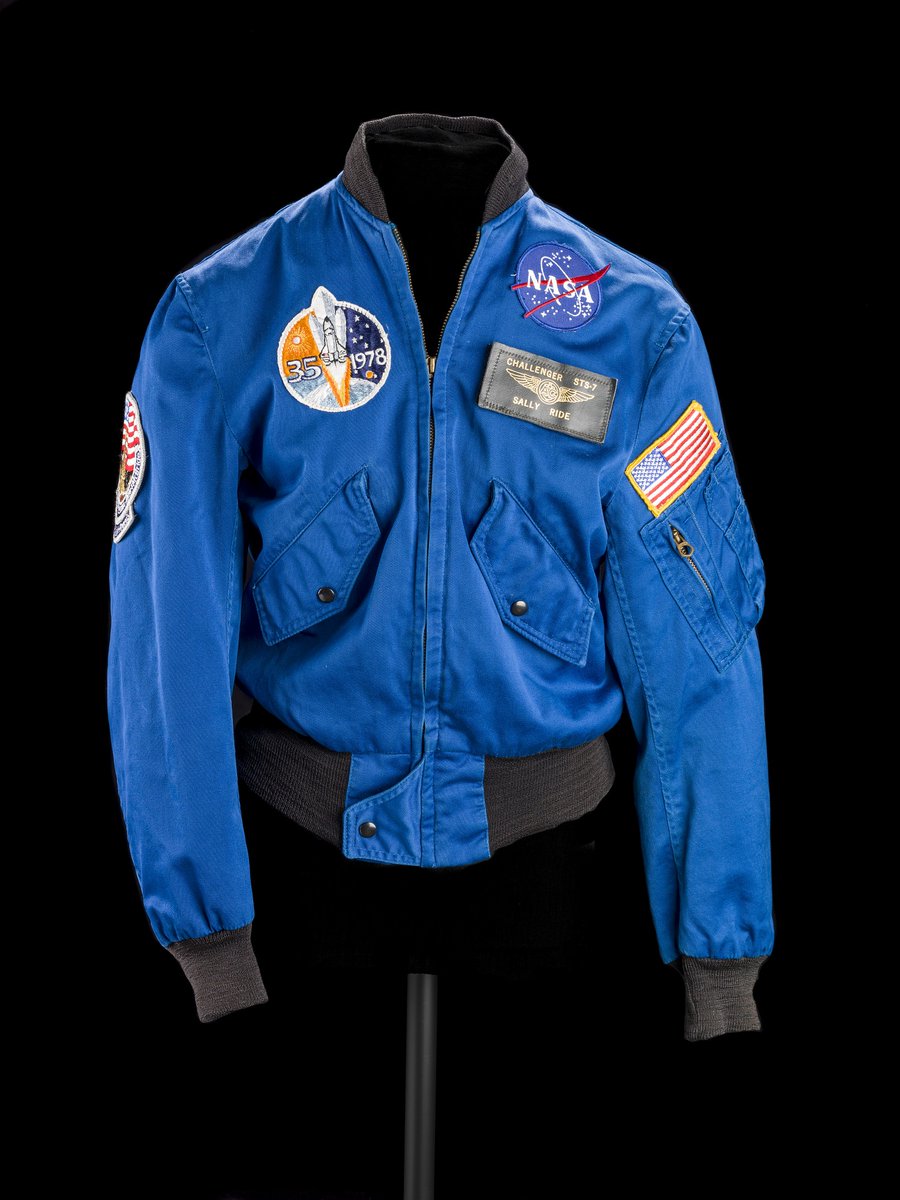
"I'd have to say April 25th, because it's not too hot and not too cold. All you need is a (f)light jacket."
📷: Sally Ride's astronaut flight jacket: s.si.edu/4coo2gM #AirSpacePhoto
English

Saturn as seen by the James Webb Space Telescope

English

Many people do not understand the significance of the Starship program.
If SpaceX pulls this off, it will profoundly change the course of human history for the better.
SpaceX@SpaceX
Three years since the first flight of Starship, the next generation is here. New ship. New booster. New engines. New pad and new test site. SpaceX engineers are working to solve one of the most difficult engineering challenges in history: developing a fully, rapidly reusable rocket
English
English

@NotMe0815x @ResonanceEnter1 @andredimauro What truth do you agree on...
1 + 1 = 2?
Water is Hydrogen and Oxygen?
People lie when given motive?
English

Impressive how NASA had the technology 57 years ago not only to reach the Moon but to leave it and film the departure… Why do more and more people doubt it? Thoughts?
Waiting for the Community Note:
🤖- It’s true! The camera had remote control. Independent source: Wikipedia.🤥😂
English
English
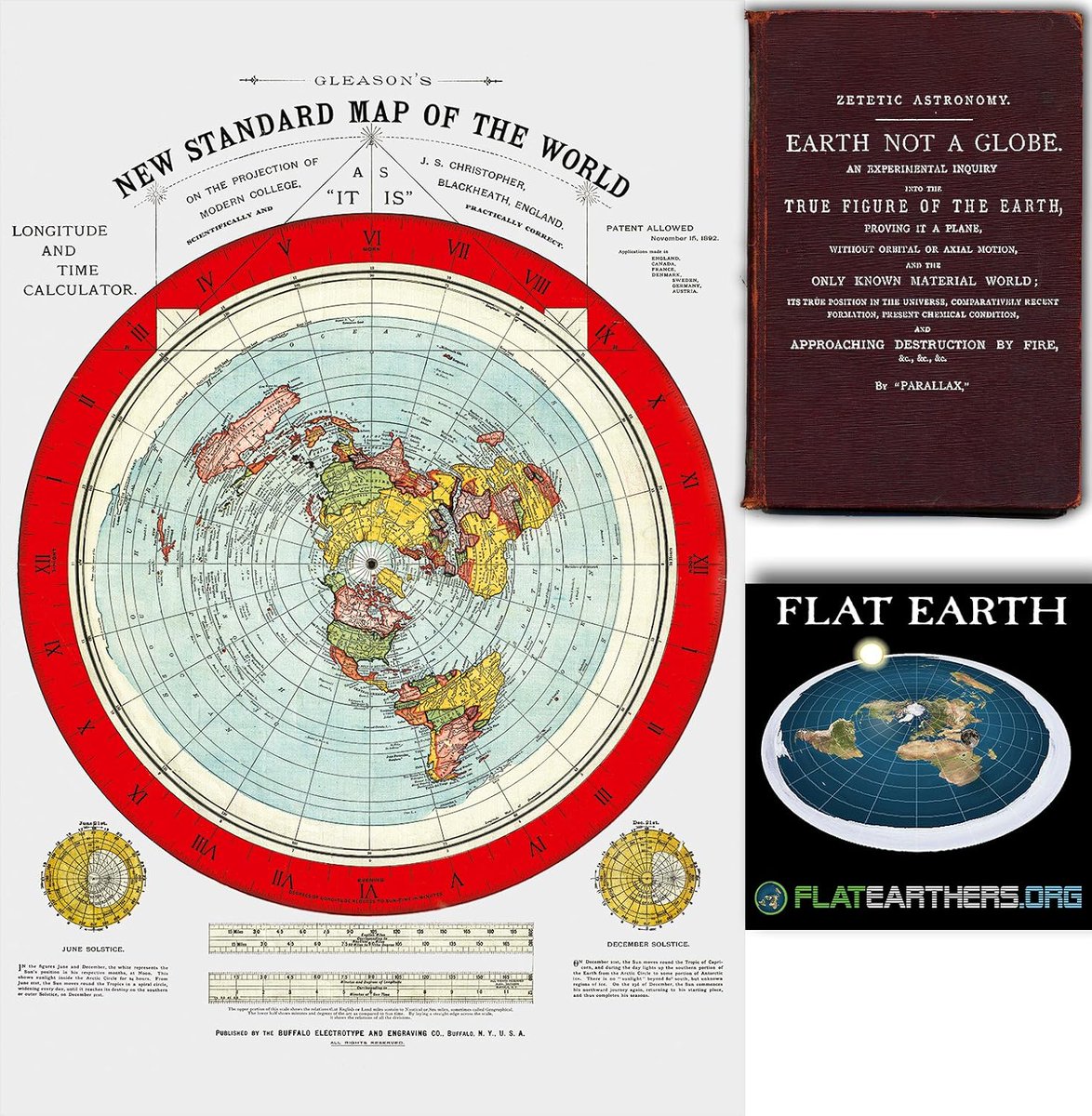
@NotMe0815x @ResonanceEnter1 @andredimauro That is a globe stretched out onto a flat surface.
Do you really believe Australia is bigger than Canada and the US combined?
Why do they lie about the biggest country in the world being Russia?
English
@JtcSnowflake @ResonanceEnter1 @andredimauro It's exactly the opposite. Flat earth got "globed". You do know that the proportions of the mercator map isn't accurate. Africa is way bigger for example.
English


@JtcSnowflake @ResonanceEnter1 @andredimauro Standard flat earth with sun and moon inside the firmament. Why do you ask?
English
@NotMe0815x @ResonanceEnter1 @andredimauro Interesting.
What shape do you think the Earth is? Can you share a map?
English
@NotMe0815x @ResonanceEnter1 @andredimauro Grok still works for free users. Gemini/ChatGPT too if you're looking for alternatives.
Are you a flat Earther?
English
@JtcSnowflake @ResonanceEnter1 @andredimauro Good question. I use grok sometimes but you are absolutely right.
English
@NotMe0815x @ResonanceEnter1 @andredimauro Why do you voluntarily pay a billionaire who you think is in on such a lie?
English

From the Moon to being back home, he felt your support every step of the way. Here's a message from Jeremy almost two weeks after splashdown.
English
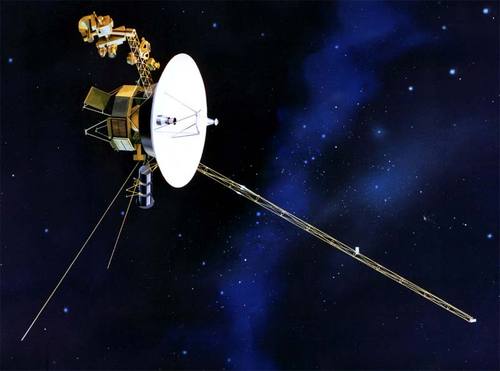
I am currently ~19h 45m 18s of light travel time from Earth (2026:115:000000:2L)
English
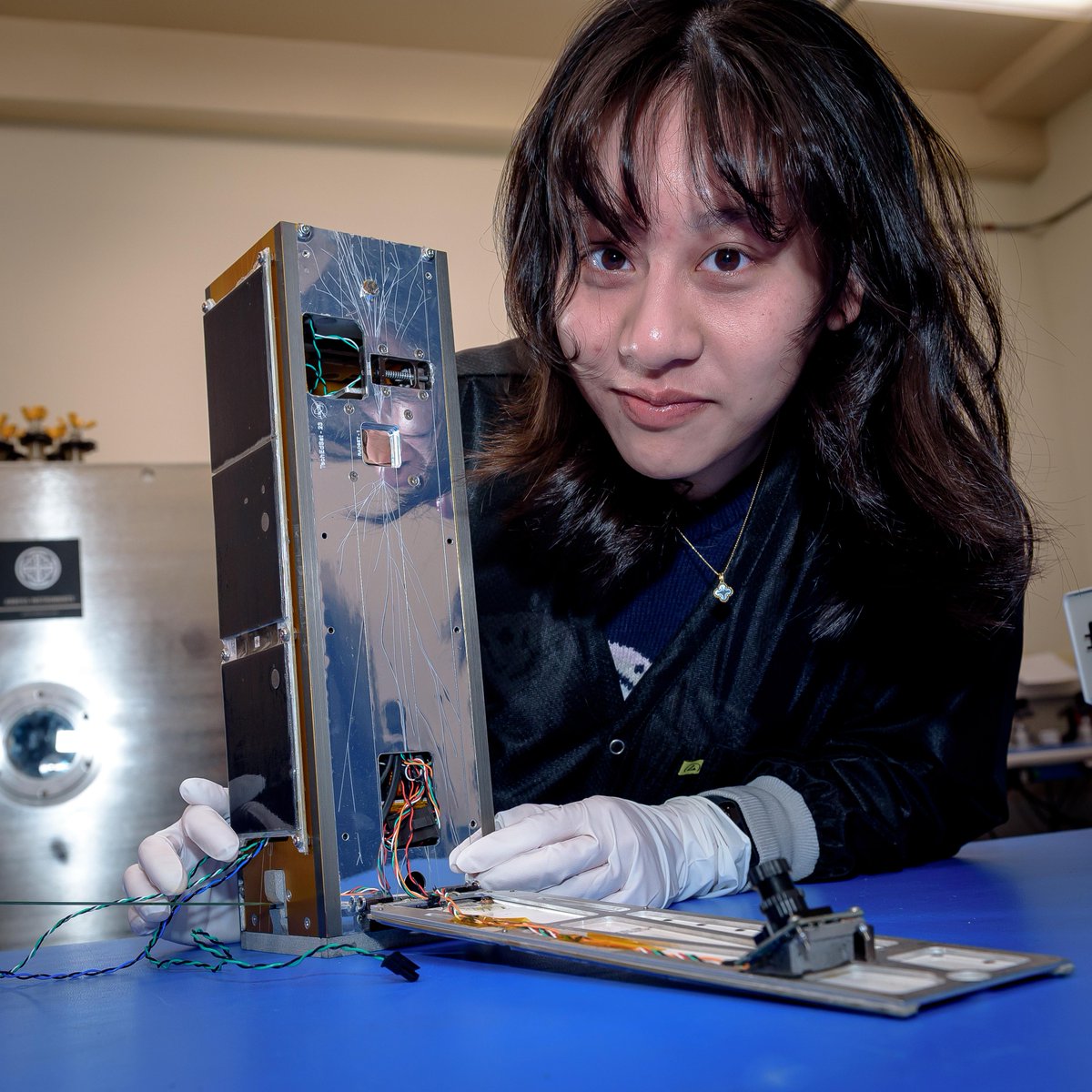
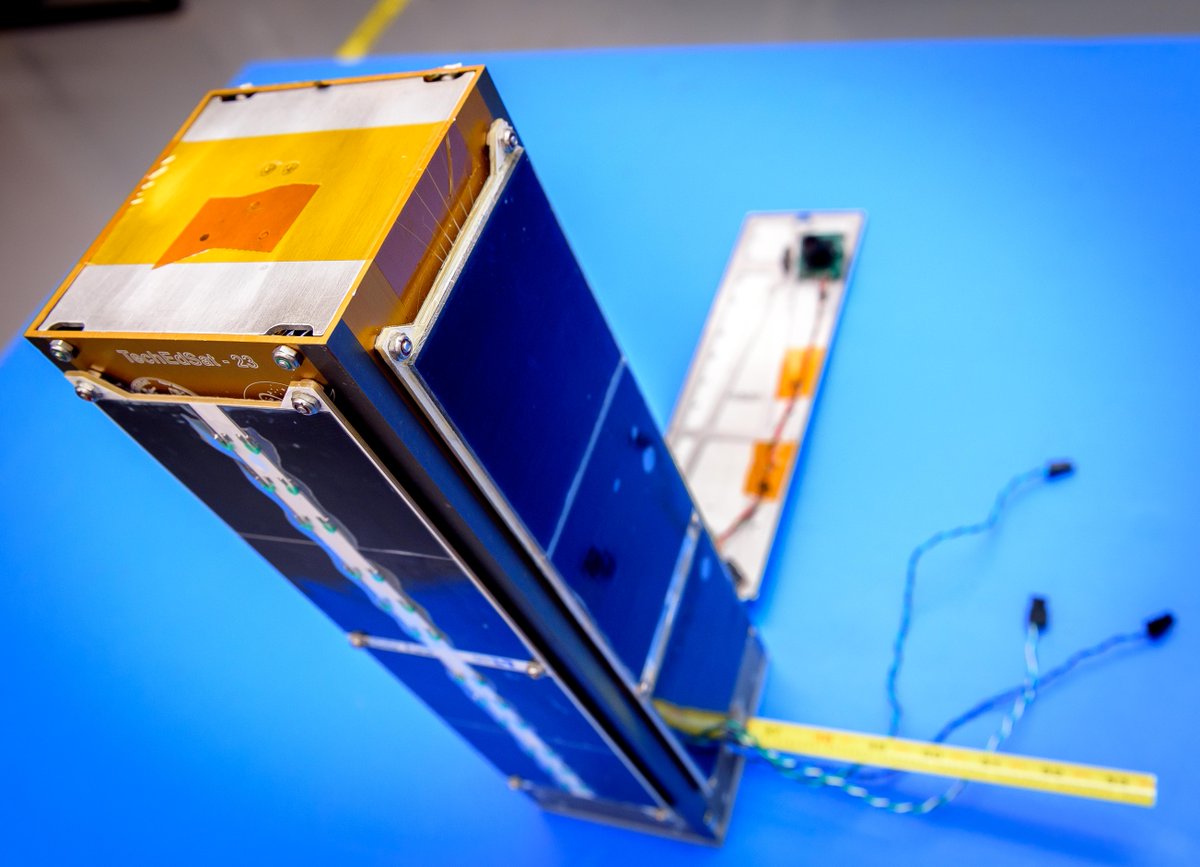
Our TechEdSat-23 technology tests are underway in low Earth orbit!
What we learn will advance small spacecraft in radiation shielding, satellite communications, and space weather monitoring for future missions to the Moon and Mars. Learn more:go.nasa.gov/4w4HeuK
English
Happy Anniversary! 🎊
Hubble was launched #onthisday in 1990 and, every year since, it has been surprising us with its cosmic views 📸🌌
Check out the best images Hubble had to offer in its 36th year in our latest #SpaceSparks episode! 1/2
English
@DJSnM @NASAAdmin That must be the longest fkn lie an astronaut ever told and I will not even read this crap. All you Actornauts now seem to get really comfortable decieving people you absolute pathetic fraud.
English
Yesterday while driving to the airport for a training flight I heard @NASAAdmin talking about the impact flashes observed by Artermis II crew on the dark side of the moon. Specifically I heard these described as 'Micrometeorites' and thought they would be bigger, so it got my brain running on estimating the actual size of these objects based on what I knew.
By the time I got to the airport 10 minutes later I had concluded the mass of these impactors is kilograms, so not 'micro' meteors, and that's not a dig at Jared by any means, for his EVA on Polaris Dawn he had almost certainly discussed micrometeorites, things the size of a grain of sand, that could damage the suit.
But, what I really want to talk about is the mental arithmetic I did while driving, because I do these order of magnitude estimates for all sorts of questions.
So I don't have any deep understanding of how bright the flashes would have been to be visible to the crew, I don't have a deep understanding of human visual acuity. But I started from the assumption that this is comparable to a faint star appearing for a second or so.
I know the absolute magnitude of the sun is 4.8, that's how bright the sun appears at 10 parsecs. That's towards the fainter end of stars, and if one appeared for a fraction of a second it might register.
I know a Parsec is 206265AU. (and 206265 is number of arc seconds in a radian). I also know the solar constant at earth is about 1370W/m^2.
So to get the solar flux at 10 parsecs I'd have to divide by 2062650^2 - but that's too much math, just approximate to (2*10^6)^2 - or 4x10^12.
dividing 1370 by 4 is roughly 350 or 3.5x10^2
Which puts solar illumination at 10parsecs at about 3.5x10^-10 W/m^2
So that's my standard light flux for 'faint star'.
Let's now assume the flash lasts 1 second to avoid adding extra math, change watts into joules.
Now, reverse this and figure out the energy of the object on the moon, for that we'd need to know how far they were from the moon. And I didn't carry that around in my head, but, I knew the closest approach was about 4000 miles, and the eclipse was past closest approach.
So I used the number of 10,000km because that's 10^7m making the math easy - I need the square of that so 10^14.
To figure out the energy emitted we take the energy per square meter and multiply it by the surface area of the sphere with a radius equivalent to astronaut's viewing distance.
Take that 3.5x^-10J and multiply it by 4xPIx10^14
4 Pi is about 12.5, so I use 3.5x12.5 as about 40 (because I know 12.5x4 = 50). It's about 7% low but I don't care for small errors.
So total energy is 4x10^5J.
But that's just the energy that comes out as light, the energy of an impactor mostly goes into other forms, I learned this while making my video on @NASAAmes Vertical Gun Range.
I know it's between 0.01-1% of the kinetic energy that comes out as light.
So, using 10^-3 that gives impactor energy of 4x10^8J
Now figure out the impactor mass, impact speeds are 10-15km/sec, remember kinetic energy goes as v^2.
Now you might think that 10km/sec gets you a nice factor of 10^8, but then you need to multiply the mass by a factor of 2 (because of 1/2 m v^2).
But if you use 14.14km/sec then that eliminates the factor of 2, and puts the velocity closer to the high end.
So, point is I just adjust the energy by 10^8 and leave the 4 part as my mass estimate.
4kg of course. Not a micrometeorite.
So, my mass estimate for an impactor is on the order of a few kilograms, but there's massive error bars here, because I don't know how bright the flashes looked to the astronauts, I don't have a detailed model of the human visual system or the luminance conversion efficiency of meteorites.
I have an order of magnitude estimate I did in my head while driving, and 90% of the process is just multiplying by powers of 10, simply adjusting the exponent. Sure you have to carry numbers around like the solar constant, absolute magnitude of the sun etc. But I bet many of you have esoteric numbers you carry around in your heads.
I then proceeded to go flying and feel soundly humbled by ATC overloading my brain.

English
During Artemis II, an optical communications terminal transmitted more than 480 gigabytes of data, bringing the world high-definition photos of lunar flyby, Earthset, Earthrise, & many more. Meet Peter Rossoni, a Goddard flight manager for the terminal: go.nasa.gov/3OIbDOo

English
@FTFEofficial Congratulaions. That is one of the gayest smiles I have ever seen. So natural and abolutely not forced. What a faggot.
English

But gravity is "fake and ghey" right?
Gravity's strength measured more reliably than ever before | New Scientist share.google/QnaS1LCrB1RasG…
Kirkcaldy, Scotland 🇬🇧 English

@vaiencechannel In August 1989, Voyager 2 revealed Neptune as a vivid cobalt-blue world, distinct from Uranus's pale cyan, due to methane-rich clouds, high-speed winds exceeding 1100km/h, and a dynamic atmosphere featuring a massive "Great Dark Spot" storm.
English

