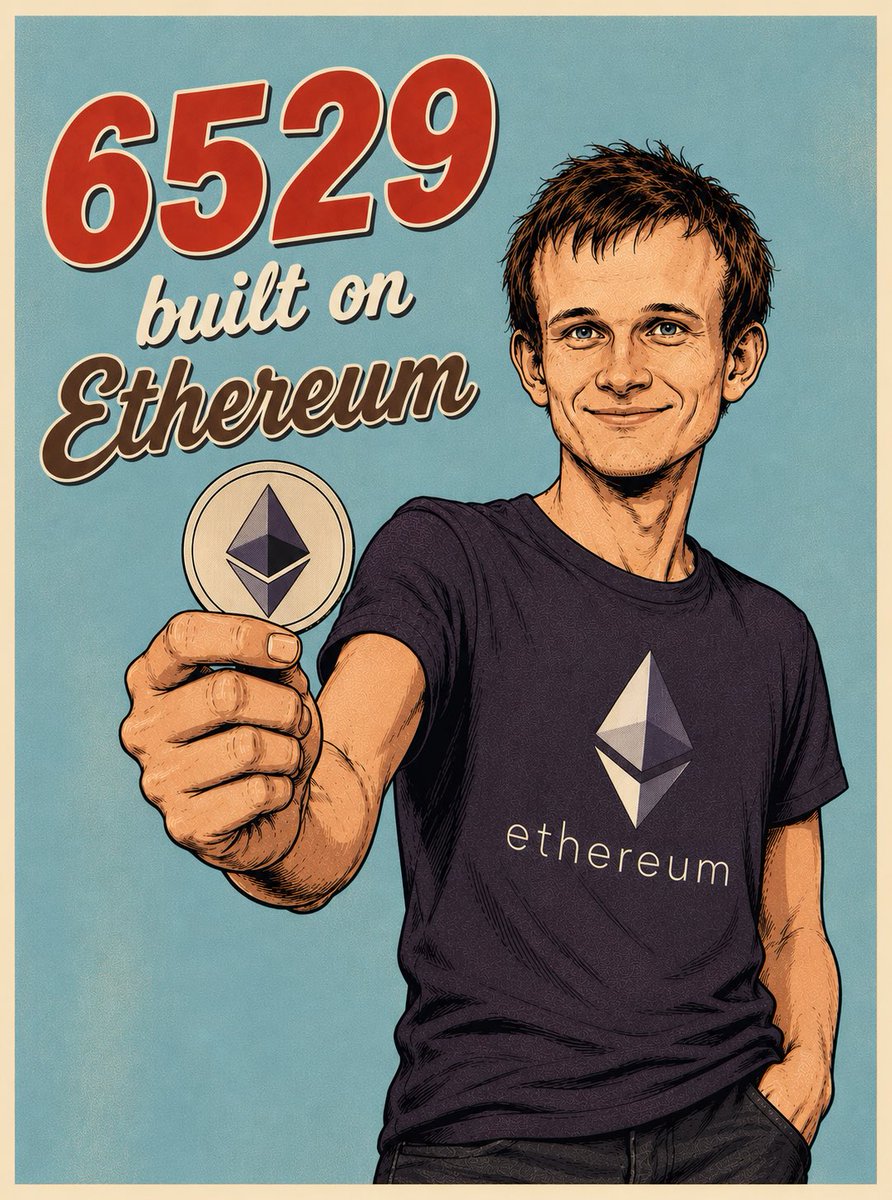
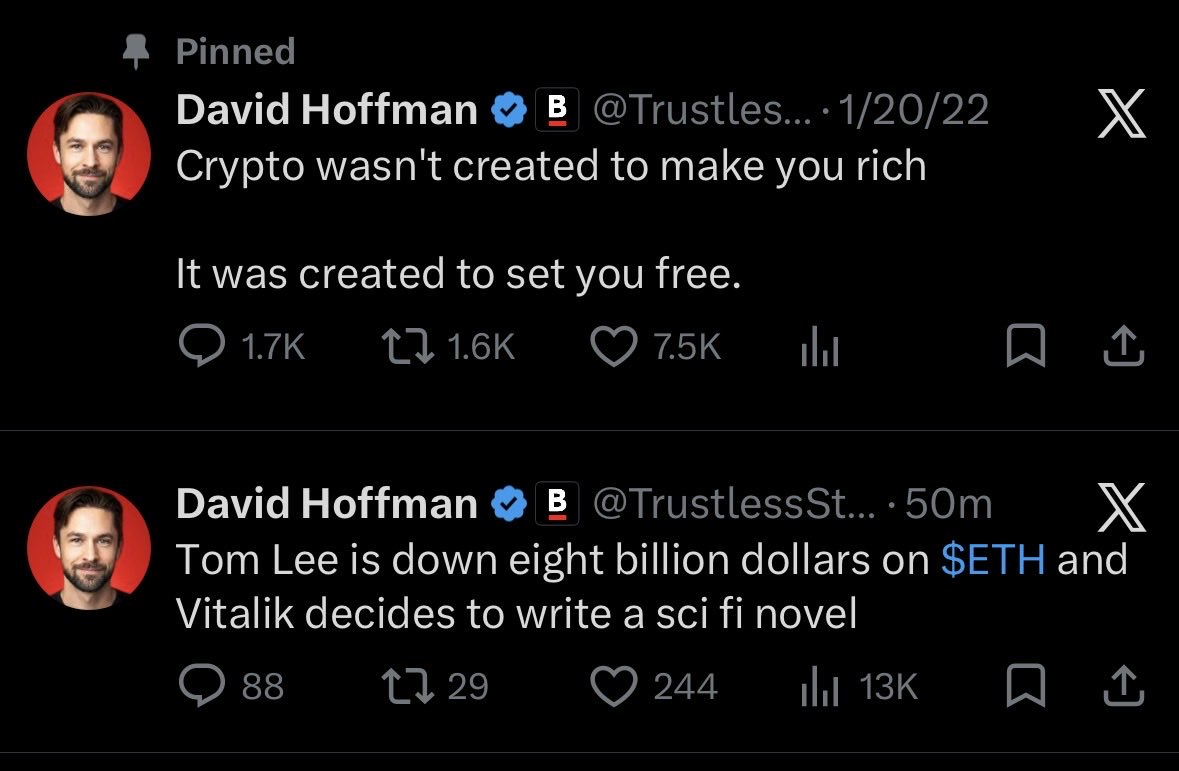
ทวีตที่ปักหมุด

Been seeing a lot of people repping their 6529 io profiles. Let's do it
6529 dot io / onegweitoday

English
OneGweiToday.6529
4.2K posts
@OneGweiToday
https://t.co/eN6Ncedjqj gen art, culture x tech x decentralization





A British biologist looked at 200,000 years of human history and found that the entire reason humans broke out of poverty was not intelligence, not language, not even agriculture, but one mechanism so simple a 6-year-old could explain it. His name is Matt Ridley. He is a zoologist by training, an evolutionary biologist by career, and in 2010 he wrote a book called The Rational Optimist that quietly argued the most important fact about human progress had been hiding in plain sight for the entire history of economics. Naval Ravikant has been telling people to read everything Ridley has ever written for the last 15 years. The reason is the argument inside this one book. For 200,000 years, anatomically modern humans walked around with the same brain you have right now. Same skull size. Same neural architecture. Same raw capacity for language, planning, and abstract thought. For roughly 190,000 of those years, almost nothing happened. Generation after generation lived and died inside the same Stone Age toolkit their great-great-grandparents had used. Then somewhere around 50,000 years ago, the line on the chart of human progress started to tick upward. Then it bent. Then it exploded. The question Ridley spent years on was the only question that mattered. What changed. It was not the brain. The brain had been the same for 190,000 years. It was not language, which had existed long before the takeoff. It was not even agriculture, which arrived only 10,000 years ago and was actually preceded by the upward bend, not the cause of it. What changed was that humans started trading with strangers. This sounds too small to be the answer. Ridley argues that it is the answer to almost everything. The moment one human exchanged a useful object with another human from a different group, something happened that no other species on earth had ever done. Two ideas that had developed in isolation came into contact. The flint knapper learned what the spear maker had figured out. The fisherman from the coast learned what the hunter from the forest had figured out. The two pieces of knowledge fused into something neither side could have produced alone. Ridley calls this ideas having sex. The phrase sounds frivolous and it is meant to. The point is that ideas, like genes, get better when they combine with other ideas from different lineages. An idea sitting inside one head, no matter how brilliant the head, eventually hits a ceiling. The same idea exposed to ten thousand other ideas does something genes do under sexual reproduction. It mixes. It recombines. It produces offspring nobody planned. The cleanest proof of this argument is the most uncomfortable case study in the book. Tasmania. Around 10,000 years ago, rising sea levels cut Tasmania off from mainland Australia. A population of roughly 4,000 humans was now isolated on an island, with no possibility of contact with the rest of humanity. They had the same brains. The same language. The same starting toolkit as their cousins 150 kilometers north. The natural experiment was now running. What happened next is something no economist or geneticist had ever predicted. The mainland Australians kept inventing. Boomerangs. Spear-throwers. Fishing nets. Bone needles for sewing fitted clothes. Watercraft with paddles. Their technology compounded slowly across the centuries. The Tasmanians went the other way. They did not just fail to invent the new tools their cousins were developing. They started losing the tools they already had. Fishing was abandoned within a few thousand years. Bone tools disappeared. Fitted clothing disappeared. They forgot how to make fire from scratch and started carrying lit firebrands from camp to camp instead, relighting their fires from a neighbor's whenever their own went out. By the time European explorers arrived in the 17th century, the Tasmanians had the simplest toolkit of any human society ever recorded. Their material culture had gone backward for 8,000 years. The archaeologist Rhys Jones called it a slow strangulation of the mind. Joseph Henrich at Harvard later proved with formal mathematical models that there was nothing wrong with Tasmanian brains. There was something wrong with their network. A toolkit requires a critical mass of people exchanging skills to maintain itself. The act of teaching a skill is imperfect. Every generation loses a small percentage of what the last generation knew. If your population is large enough and trading widely enough, those losses get caught and corrected by someone else who still remembers. If your population shrinks below a certain threshold and stops mixing with outsiders, the small losses compound until entire technologies disappear. This is the part that should haunt anyone reading this in 2026. Intelligence is not a property of the individual brain. Intelligence is a property of the network the brain is connected to. A genius in isolation will produce less than a mediocre thinker inside a dense exchange of other mediocre thinkers. The thing your ancestors needed in order to break out of 190,000 years of stagnation was not better brains. It was better connections between brains they already had. The implication for any individual is direct and uncomfortable. If you are smart and isolated, you will be outproduced by people half as smart who are connected. The most successful people in any field are almost never the smartest people in it. They are the ones positioned at the intersection of the most idea flows. They are reading more authors than their competitors. They are talking to more people from more disciplines. They are in the rooms where ideas from different lineages bump into each other. Ridley ends the book on the line that sounds optimistic but is actually a warning its this "The future will be invented by people who connect ideas, not by people who guard them."





Anyone catch the Punks knockoff in the PNC Bank commercial mid game 7 of Spurs Thunder?? Punchline - “You realize a JPEG doesn’t count as a financial plan right?” We’re so back


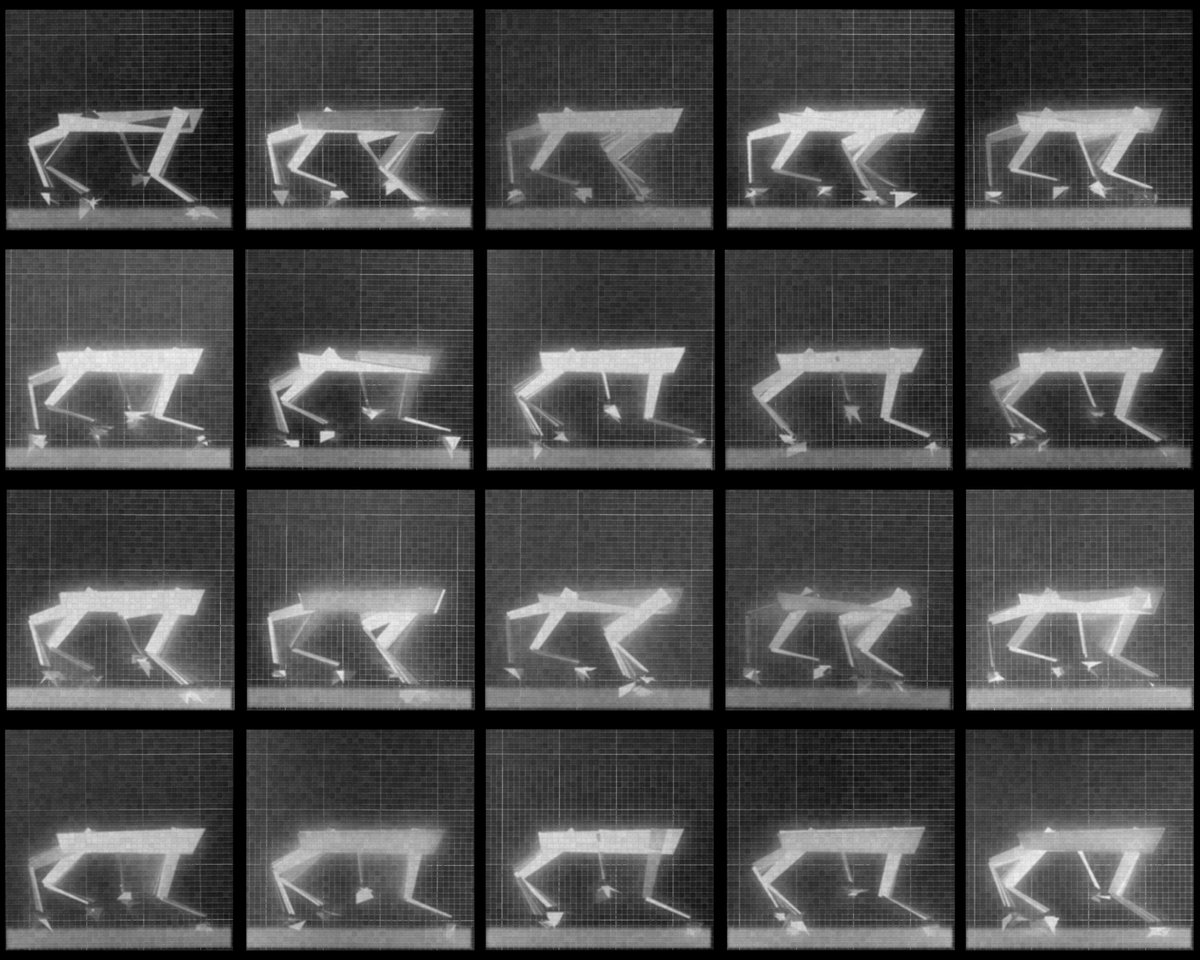



The 6529 Network State, invented by @punk6529, is collectively exploring the next big meta: Not just payments or apps. An entire decentralized economy. A network state. The ambition is nation-state scale dGDP. Meme Cards are the bootstrap layer. The network starts with shared culture around art and positive memes: e.g. Freedom to Transact, Open Metaverse, GM, Seize the memes of production! Meme card holders with real skin in the game over time secure identity, reputation, and long term trust. The core primitives required for large scale coordination. Soon the ecosystem will begin aggressively coordinating online: Capital, labor, software, media, AI agents, games, research, businesses But it goes further than the Internet. The network will also start “printing the cloud to land”: e.g. Products, spaces, infrastructure, real-world businesses. Eventually smart cities all over the world. That is the real idea behind 6529. A decentralized network where millions of people can coordinate economic activity together without relying on a company or nation state at the center. Anyone can join. The system is designed to run forever. The rules are fair. Not the outcomes. The community decides what gets built together, according to the rules. Those with skin in the game over time have the most influence, but opportunities are abundant for everyone. Ethereum showed what shared infrastructure could do. 6529 is exploring what happens when shared ownership, culture, reputation, and long term incentives are layered on top. If it works, it becomes a new model for global economies. And probably one of the most fun experiments in crypto to participate in. Truly a 0 to 1 innovation ✨


I have never seen so many people capitulating out of $ETH or crypto. Some are writing blogs and essays explaining why it failed, mainly naming how other chains won the race, measured by fees taken in. Some of my thoughts, in these hard times: Time will tell, but I think many people are mistaken in treating $ETH like an end-stage $AMZN, as if the main question is already about mature margins, fees, and cash flows. In reality, Ethereum is still very much earlier in its economies-of-scale phase, with nearly all metrics in the top right corner and growing at mid double digits to tripple. Furthermore, most of the market is focused on the wrong battle: who can become the fastest and cheapest payment processor. Lower fees, higher throughput, faster settlement. But that is likely a race to commoditization, similar to the payment processors crash over the last years. If the only value proposition is speed and cost, then the moat gets thinner over time, easy disruptable. Someone can always be faster. Someone can always subsidize fees lower. Someone can always optimize one narrow use case. The real value may not be in the transaction fee itself. The real value is likely in the amount of economic activity secured by the network, the credibility of that security, the neutrality of the base layer, and the difficulty of replacing it once enough assets, applications, institutions, and users depend on it. That is where Ethereum seems different to me and why so many institutions are choosing $ETH. Most other projects still feel replaceable. They may have better performance in one area, better UX in another, or lower fees in the short term. But if their advantage is mainly technical efficiency, that advantage can be copied, competed away, or made irrelevant. The newest hottest thing today is replacing the hottest thing from last quarter. Ethereum’s bet appears to be much larger: become the most secure, decentralized, credibly neutral settlement layer for the internet economy. Not the cheapest rail. The hardest rail to replace. In the end, the most valuable network may not be the one with the lowest transaction costs. It may be the one people trust most to secure the highest-value assets and applications over the longest period of time. If $ETH can retain its market share while continuing to scale through upgrades that improve speed, throughput, and fees, its potential remains significant, especially if AI agents become truly crypto-native. If it combines all of the above and earn the crown as the leading value-secured network, then $ETH could eventually be viewed as something like a truly decentralized, inflation-adjusting global bond: securing the world’s assets, free from political meddling, and deserving of a premium market cap because of the value it protects on top of the deflationary pressures create incentives to stake, get yield and trust the equivalent of buybacks and griwth in value secured to provide additional value. Keep in mind over 1/3 of $ETH is now staked! In that scenario, $ETH would not just be another asset to hold. It could become one of the only truly neutral and secure bonds for the digital economy. ... But sure, lets compare it to $SOL with 6% inflation, no moat, no security, massive outages, decreasing validator nodes and alike. it just all feels like people are getting lost in short term fees and the easiest valuation attempt rather than what $ETH is actually built for, all while its testing its bottom range and players go full portfolio into AI.