Collin Buckman🌹☭🏳️‍🌈

11.2K posts

Collin Buckman🌹☭🏳️‍🌈 banner
Collin Buckman🌹☭🏳️‍🌈

Collin Buckman🌹☭🏳️‍🌈

@SerBuckman

He/Him 18+ PFP by @Aoiro_Arts Should I ever be a soldier, 'Neath the Red Flag I would fight; Should the gun I ever shoulder, It's to crush the tyrant's might.

Internet เข้าร่วม Ocak 2016
865 กำลังติดตาม382 ผู้ติดตาม
Collin Buckman🌹☭🏳️‍🌈
@S12423234 @planefag Eh, in spirit he was right but I don't think the Axis Drop was ever going to truly do that (the Federation elite were already fleeing since they had advanced warning while the normal people on Earth would be left to suffer for it)
English
0
0
0
1
Cereal Experiments Lame
@planefag This is why Char was right, btw. The only to break the cycle of violence is to disrupt the structural factors that drive the conflict between earth and space. Namely, the dichotomy between earthnoid/spacenoid. F91, Victory, and Turn A all validate his worldview.
English
1
0
1
13
planefag
planefag@planefag·
As someone who's been writing military science-fiction for years, and have many friends in or formerly in the military (some of which are authors themselves,) I have something to say about this: If all Yoshiyuki Tomino has to say with his art is that "war is bad," then he should stop making art, as he's only going to waste our time. Any fool with two brain cells to rub together knows that war is ugly, brutal and costly. That doesn't mean war is pointless and should never be fought no matter the circumstances. In fact, such a statement is worse than pointless, as lethal conflict is a common constant of human civilization - and, for that matter, a constant among the vast majority of life existing on Earth, even between bacteria. If all your story does is shout "this is bad!" it's a childish lament that leaves a tremendous amount of this constant of human existence unexamined. Who fights wars - the elites, like the ancient Greek Hoplites, or the knights of the middle ages, or the common men who volunteer, like in many modern nations? What do they fight for - for the ideals of their beloved nation, for honor and glory, or to save the women and children in the city that stands at their backs? What defines a good soldier? What defines a good leader? These questions are just as essential for us as they were for our forefathers, because the world is a tumultuous place full of evil people and great dangers and the time is coming, sooner than many may think, where wars between great powers will shake the foundations of the world and the lives of millions will hang in the balance. To explore questions like this, of such import to our souls, is one of the core reasons people tell stories to begin with. And our tools and machines have always been essential to the conduct of war and the defense of all we hold dear. Men have told stories of talking swords or "tsukumogami" for as long as swords have existed; long before we could even conceptualize a thinking machine might be made with science; we dreamt of them existing through magic or spirit. Tools are what first brought us out of the trees to stride the earth as its masters; in the tools we shape and wield with our own hands we make manifest our intent, our will, our spirit. In the modern age, the vastness of our creations sometimes makes it easy to forget, but the human element is still the entire point. I quote from page 71 of "Shattered Sword" by Johnathan Parshall and Anthony Tully: "The study of naval warfare (more than any other form of combat) holds the potential to completely subordinate the human element to the weapons themselves. Naval combat is conducted almost exclusively by means of machines – machines that are in many cases so huge and grand that they often seem to take on a life and personality of their own that transcend the tiny figures that inhabit them. Yet, in the final analysis, it is men who live in the ship, command and fight the ship, and often die in the ship. Their story, no matter how seemingly eclipsed by the great vessels they serve in, is still the fundamental story to be related.” Its only natural we should be entranced with the great machines of war that we build, as they're the final product of the genius and labors of an entire society; fashioned into an incredible tool that is nothing if not wielded by the hand of a skilled warrior devoted to his craft and his mission. I know of not a single mecha story that runs afoul of Parshall and Tully's warning as quoted above; everyone seems to understand the assignment. The ones that don't are the likes of Tomino, or his fellow anti-war traveler Miyazaki. I can't understand a man who thinks fighter planes are beautiful but has little more to say about war than "it's bad;" he refuses to see that the beautiful form of a fighter plane follows its function, and that there's a savage, primal beauty in that function, like the fury that animates a thunderstorm. Or the fury and purpose that animate its pilot, for that matter. Tomino seems to think that "nothing of substance is getting across." I disagree. I think the substance came across very well, and many in younger generations just think that substance is woefully lacking. There's a cutscene in the Knights of the Old Republic, between Carth Onasi and Canderous, where Carth expounds on the difference between "soldiers" and "warriors," defining warriors as those who fight for plunder and the glory of conquest, and soldiers as those who fight to protect their nation and peoples - usually from warriors. He made a great point, but Canderous wasn't entirely wrong. As any fighter pilot can tell you, you need more than noble motivations to sacrifice and serve to be truly excellent - to overcome your enemy in an aerial duel, you need that urge to "lean in" to the fight; that competitive drive - a part of you needs to love the fight. Many soldiers over the ages have spoken of this; as Robert E. Lee said "it's well that war is so terrible, or we should grow too fond of it." It's that primal urge drawn straight from our deepest instincts; that thirst to compete and win, that gives soldiers the fire and fury to do their utmost in combat, to win the challenge, to defeat those who would plunder their temples, raze their cities and enslave their women and children. That is the truth of war, every bit as much as the death and boredom and bloodshed and terror. And if you can only tell one half of that truth, because the other half doesn't align with your political or personal views, then I don't give a god damn what you have to say about it, or about the works of storytellers who do.
AUTOMATON WEST@AUTOMATON_ENG

Mobile Suit Gundam creator Yoshiyuki Tomino thinks many of his fans are just military geeks who “didn’t get the message” automaton-media.com/en/news/mobile…

English
232
726
5K
655.1K
Collin Buckman🌹☭🏳️‍🌈 รีทวีตแล้ว
The Vegapunk of Hyenas
The Vegapunk of Hyenas@Yeenie_Mcbeenie·
People like you legitimately piss me off. It’d be one thing if you enlisted, but the fact you are merely a cheerleader for sending young men into the meat grinder so billionaires can get more money. You are a coward with a fetish for assault rifles.
The Vegapunk of Hyenas tweet media
planefag@planefag

As someone who's been writing military science-fiction for years, and have many friends in or formerly in the military (some of which are authors themselves,) I have something to say about this: If all Yoshiyuki Tomino has to say with his art is that "war is bad," then he should stop making art, as he's only going to waste our time. Any fool with two brain cells to rub together knows that war is ugly, brutal and costly. That doesn't mean war is pointless and should never be fought no matter the circumstances. In fact, such a statement is worse than pointless, as lethal conflict is a common constant of human civilization - and, for that matter, a constant among the vast majority of life existing on Earth, even between bacteria. If all your story does is shout "this is bad!" it's a childish lament that leaves a tremendous amount of this constant of human existence unexamined. Who fights wars - the elites, like the ancient Greek Hoplites, or the knights of the middle ages, or the common men who volunteer, like in many modern nations? What do they fight for - for the ideals of their beloved nation, for honor and glory, or to save the women and children in the city that stands at their backs? What defines a good soldier? What defines a good leader? These questions are just as essential for us as they were for our forefathers, because the world is a tumultuous place full of evil people and great dangers and the time is coming, sooner than many may think, where wars between great powers will shake the foundations of the world and the lives of millions will hang in the balance. To explore questions like this, of such import to our souls, is one of the core reasons people tell stories to begin with. And our tools and machines have always been essential to the conduct of war and the defense of all we hold dear. Men have told stories of talking swords or "tsukumogami" for as long as swords have existed; long before we could even conceptualize a thinking machine might be made with science; we dreamt of them existing through magic or spirit. Tools are what first brought us out of the trees to stride the earth as its masters; in the tools we shape and wield with our own hands we make manifest our intent, our will, our spirit. In the modern age, the vastness of our creations sometimes makes it easy to forget, but the human element is still the entire point. I quote from page 71 of "Shattered Sword" by Johnathan Parshall and Anthony Tully: "The study of naval warfare (more than any other form of combat) holds the potential to completely subordinate the human element to the weapons themselves. Naval combat is conducted almost exclusively by means of machines – machines that are in many cases so huge and grand that they often seem to take on a life and personality of their own that transcend the tiny figures that inhabit them. Yet, in the final analysis, it is men who live in the ship, command and fight the ship, and often die in the ship. Their story, no matter how seemingly eclipsed by the great vessels they serve in, is still the fundamental story to be related.” Its only natural we should be entranced with the great machines of war that we build, as they're the final product of the genius and labors of an entire society; fashioned into an incredible tool that is nothing if not wielded by the hand of a skilled warrior devoted to his craft and his mission. I know of not a single mecha story that runs afoul of Parshall and Tully's warning as quoted above; everyone seems to understand the assignment. The ones that don't are the likes of Tomino, or his fellow anti-war traveler Miyazaki. I can't understand a man who thinks fighter planes are beautiful but has little more to say about war than "it's bad;" he refuses to see that the beautiful form of a fighter plane follows its function, and that there's a savage, primal beauty in that function, like the fury that animates a thunderstorm. Or the fury and purpose that animate its pilot, for that matter. Tomino seems to think that "nothing of substance is getting across." I disagree. I think the substance came across very well, and many in younger generations just think that substance is woefully lacking. There's a cutscene in the Knights of the Old Republic, between Carth Onasi and Canderous, where Carth expounds on the difference between "soldiers" and "warriors," defining warriors as those who fight for plunder and the glory of conquest, and soldiers as those who fight to protect their nation and peoples - usually from warriors. He made a great point, but Canderous wasn't entirely wrong. As any fighter pilot can tell you, you need more than noble motivations to sacrifice and serve to be truly excellent - to overcome your enemy in an aerial duel, you need that urge to "lean in" to the fight; that competitive drive - a part of you needs to love the fight. Many soldiers over the ages have spoken of this; as Robert E. Lee said "it's well that war is so terrible, or we should grow too fond of it." It's that primal urge drawn straight from our deepest instincts; that thirst to compete and win, that gives soldiers the fire and fury to do their utmost in combat, to win the challenge, to defeat those who would plunder their temples, raze their cities and enslave their women and children. That is the truth of war, every bit as much as the death and boredom and bloodshed and terror. And if you can only tell one half of that truth, because the other half doesn't align with your political or personal views, then I don't give a god damn what you have to say about it, or about the works of storytellers who do.

English
36
526
5.1K
105.1K
Collin Buckman🌹☭🏳️‍🌈 รีทวีตแล้ว
기기기
기기기@omore4785v2·
기기기 tweet media
ZXX
6
379
3.6K
27.9K
Collin Buckman🌹☭🏳️‍🌈 รีทวีตแล้ว
General Chennault ❂
General Chennault ❂@CLChennaultAlt·
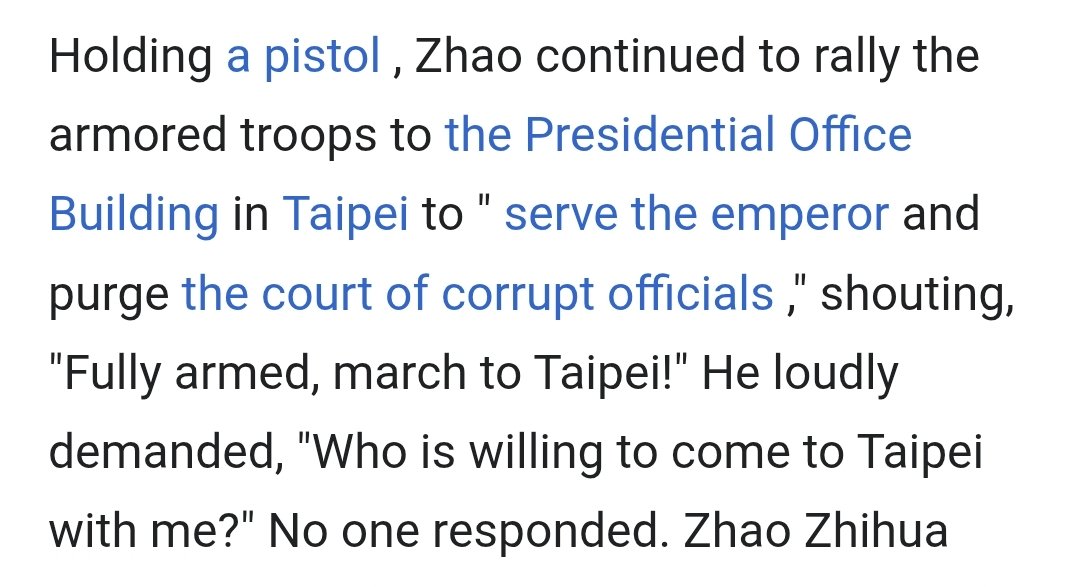
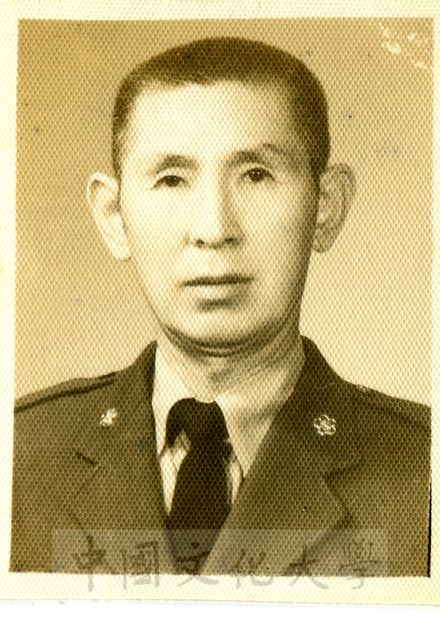
One of the worst coup attempts in modern history
General Chennault ❂ tweet mediaGeneral Chennault ❂ tweet media
English
8
6
46
782
Collin Buckman🌹☭🏳️‍🌈 รีทวีตแล้ว
gunndrop
gunndrop@gunndrop·
its also a form of misogyny to portray female characters EXCLUSIVELY as "badass smart serious elegant poised girlboss who's all about business" without giving them space to be silly and goofy and human but y'all aren't ready for that conversation
English
36
2.2K
12K
144.9K
Collin Buckman🌹☭🏳️‍🌈 รีทวีตแล้ว
격망
격망@GYe0kMang·
격망 tweet media
ZXX
0
77
775
4.4K
Collin Buckman🌹☭🏳️‍🌈
@GeauxGabrielle Yeah, something people don't fully appreciate is that Jewish people in Europe being forced into ghettos was something that had been happening for centuries, most probably thought that they'd just need to wait some years and it'd blow over eventually
English
1
0
54
7K
Collin Buckman🌹☭🏳️‍🌈 รีทวีตแล้ว
なまら
なまら@namara074·
空白
なまら tweet media
日本語
0
289
2.1K
15.7K
Collin Buckman🌹☭🏳️‍🌈 รีทวีตแล้ว
kismet
kismet@shuricent·
avatar the last airbender fandom
kismet tweet media
English
5
804
6.6K
37.3K
Collin Buckman🌹☭🏳️‍🌈 รีทวีตแล้ว
Sir Sic
Sir Sic@SirSicCrusader·
"You don't matter to the universe in general." and "You matter to other humans." are not mutually exclusive concepts you absolute duncecap.
JasonMemez@jason_memez

@5Solas2

English
234
4.3K
68.6K
854.7K
Collin Buckman🌹☭🏳️‍🌈 รีทวีตแล้ว
Crazy Ass Moments in Gundam History
Legally distinct Imperial March (1991)
English
18
274
2K
92.1K
Collin Buckman🌹☭🏳️‍🌈 รีทวีตแล้ว
Mukhtar
Mukhtar@I_amMukhtar·
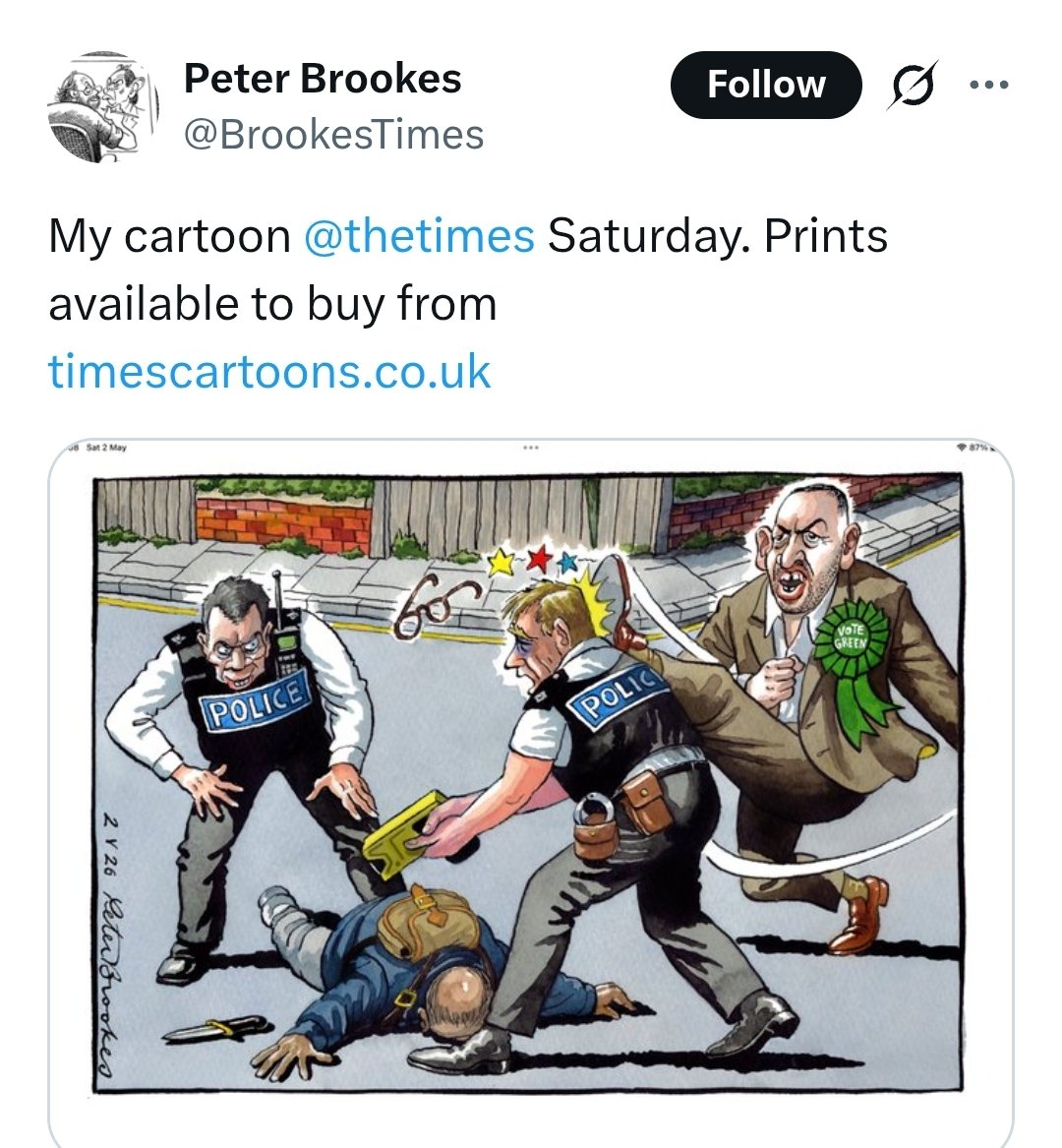
They are now publishing an antisemitic caricature of the only Jewish party leader while accusing him of antisemitism.
Mukhtar tweet mediaMukhtar tweet media
English
311
2.7K
20.8K
407.4K
Collin Buckman🌹☭🏳️‍🌈 รีทวีตแล้ว
Yesterday's Print
Yesterday's Print@yesterdaysprint·
The Coffeyville Weekly Journal, Kansas, May 11, 1894
Yesterday's Print tweet media
English
15
484
3K
83.5K
Collin Buckman🌹☭🏳️‍🌈 รีทวีตแล้ว
Tường ☭ 🦋 Mar(x)iah’s sugar sweet side
powerscalers when the tortoise beat the hare: grrrrr arggggghhhh jshdgeigdjxhdgdfd *pulls out hair* the tortoise can’t outrun the hare bc it’s literally supposed to be slower. why did the author make the tortoise win. this is terrible storytelling fix if now . arrgggeghhhhhhhh
English
98
3K
25.3K
326.9K
Collin Buckman🌹☭🏳️‍🌈 รีทวีตแล้ว
Duc de Vinny (comms open)
Girl stuff
Duc de Vinny (comms open) tweet media
English
68
5.9K
63.3K
1.8M