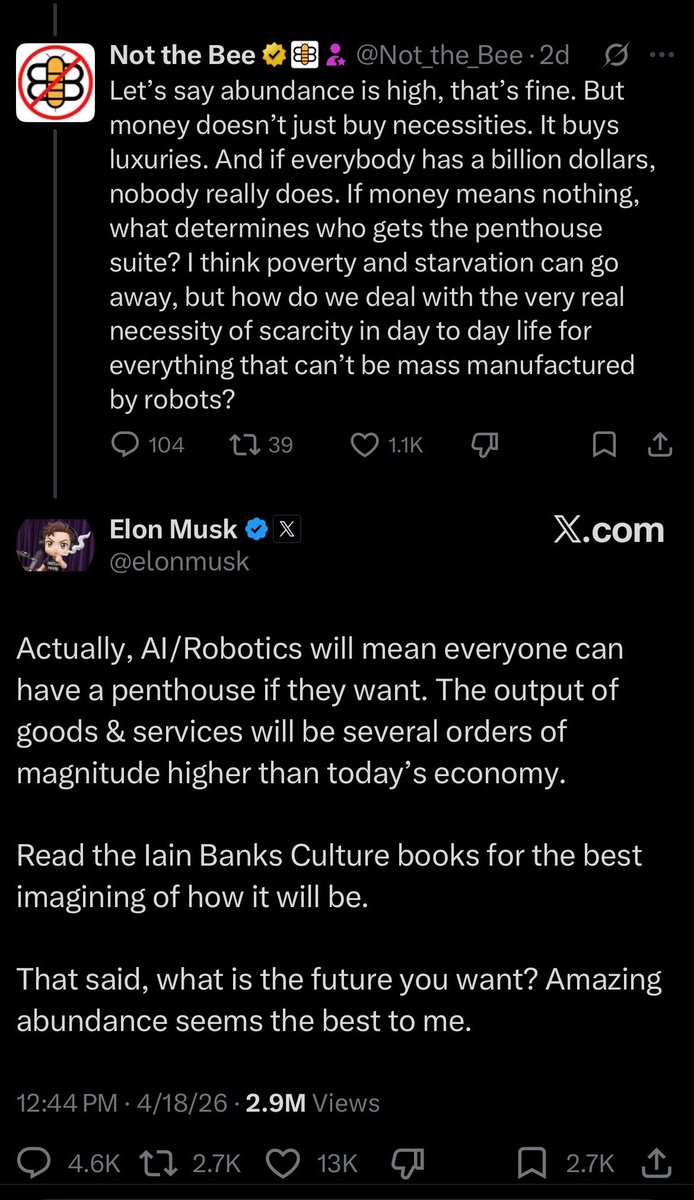
@Dan_Jeffries1 and for someone who has never actually done research, I'm sure pew research foundation sounds fake but I can assure you they are a trusted resource
English
automaticmath
188 posts


Mass negativity toward tech — whether social media, AI, or otherwise — is mainly just an artifact of loaded polling questions and the elite press. For the most part, it doesn’t otherwise exist. You can see that in properly constructed polls like this, and in observed behavior.


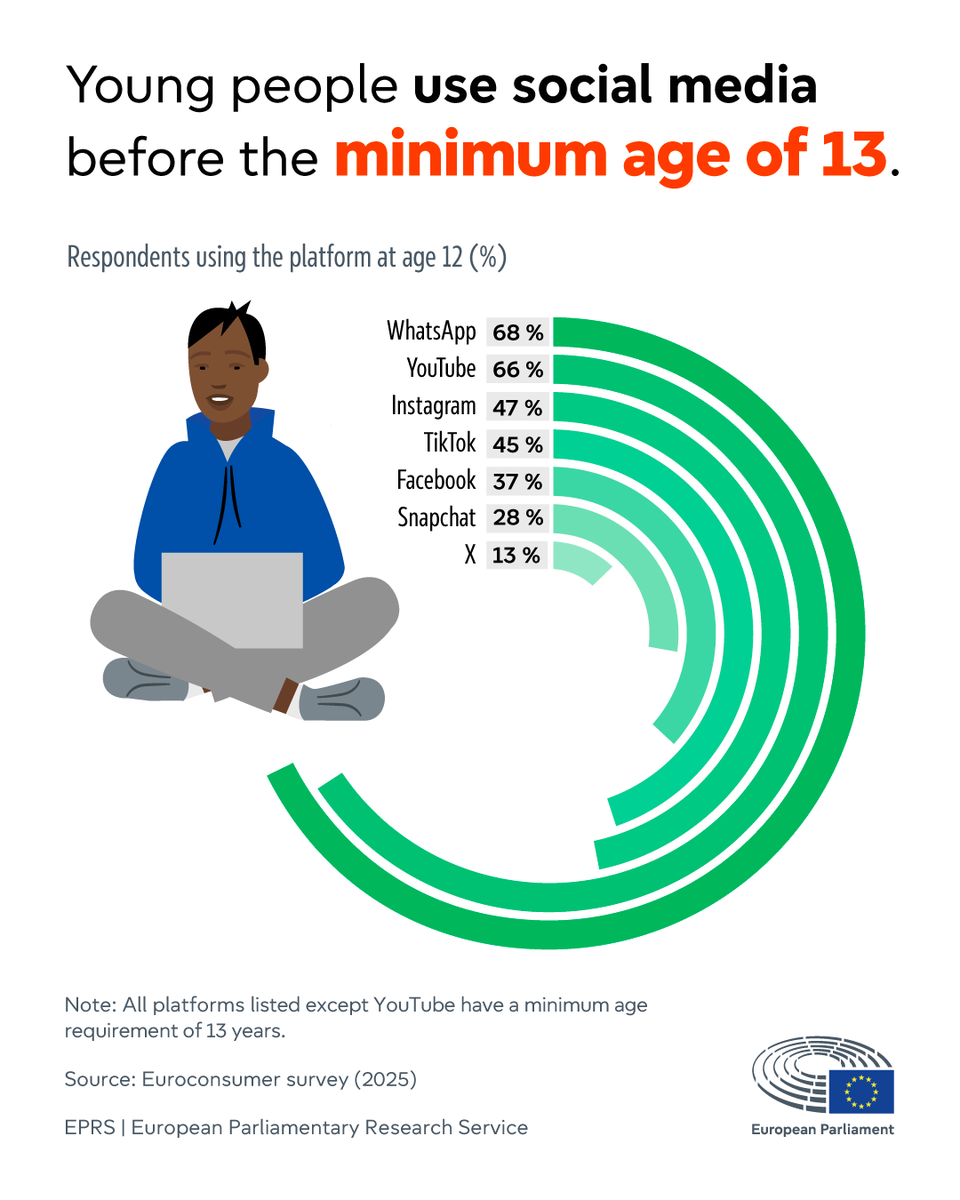


Virtual private networks #VPN are increasingly used to bypass online age verification. Protecting children online is a priority, with new rules being implemented requiring a minimum age for access to some services Read👉 link.europa.eu/FGfr6C #DSA @EP_Justice @FZarzalejos


🚨 University professors have been saying AI is completely destroying learning and that we'll soon have an AI-powered, semi-illiterate workforce. Here's a glimpse into the educational apocalypse: "Sarah, a freshman at Wilfrid Laurier University in Ontario, said she first used ChatGPT to cheat during the spring semester of her final year of high school. (...) After getting acquainted with the chatbot, Sarah used it for all her classes: Indigenous studies, law, English, and a “hippie farming class” called Green Industries. “My grades were amazing,” she said. “It changed my life.” Sarah continued to use AI when she started college this past fall. Why wouldn’t she? Rarely did she sit in class and not see other students’ laptops open to ChatGPT. Toward the end of the semester, she began to think she might be dependent on the website. She already considered herself addicted to TikTok, Instagram, Snapchat, and Reddit, where she writes under the username maybeimnotsmart. “I spend so much time on TikTok,” she said. “Hours and hours, until my eyes start hurting, which makes it hard to plan and do my schoolwork. With ChatGPT, I can write an essay in two hours that normally takes 12.” - "By November, Williams estimated that at least half of his students were using AI to write their papers. Attempts at accountability were pointless. Williams had no faith in AI detectors, and the professor teaching the class instructed him not to fail individual papers, even the clearly AI-smoothed ones. “Every time I brought it up with the professor, I got the sense he was underestimating the power of ChatGPT, and the departmental stance was, ‘Well, it’s a slippery slope, and we can’t really prove they’re using AI,’” Williams said. “I was told to grade based on what the essay would’ve gotten if it were a ‘true attempt at a paper.’ So I was grading people on their ability to use ChatGPT.” - AI in education is a serious topic, and many schools and universities are blindly jumping into the "AI-first" wave without considering short and long-term consequences. It would be great to hear more from teachers and educators to understand potential solutions. This might be a great opportunity for rethinking the education system and how students are assessed. - 👉 Link to the full article below. 👉 To learn more about AI's legal and ethical challenges, join my newsletter's 94,700+ subscribers (link below).

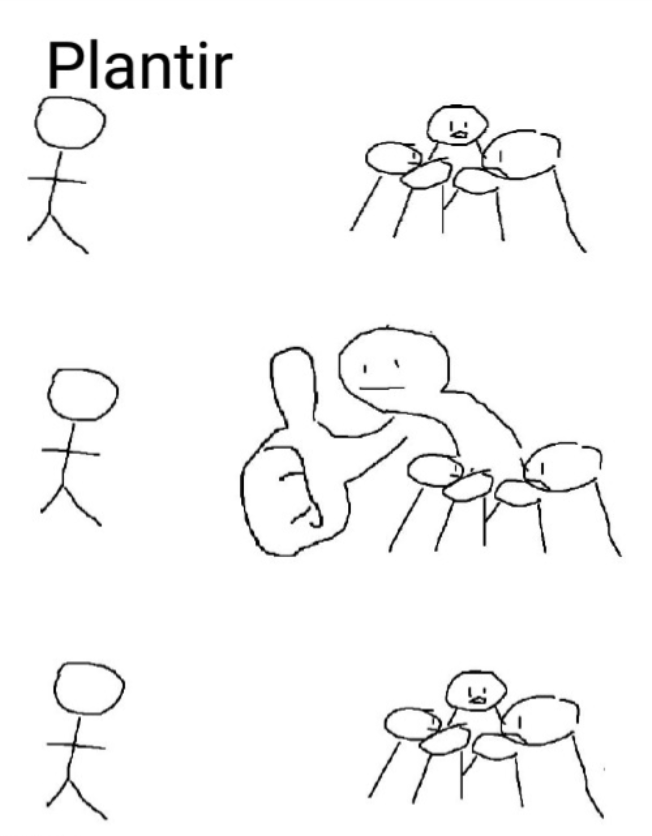
Because we get asked a lot. The Technological Republic, in brief. 1. Silicon Valley owes a moral debt to the country that made its rise possible. The engineering elite of Silicon Valley has an affirmative obligation to participate in the defense of the nation. 2. We must rebel against the tyranny of the apps. Is the iPhone our greatest creative if not crowning achievement as a civilization? The object has changed our lives, but it may also now be limiting and constraining our sense of the possible. 3. Free email is not enough. The decadence of a culture or civilization, and indeed its ruling class, will be forgiven only if that culture is capable of delivering economic growth and security for the public. 4. The limits of soft power, of soaring rhetoric alone, have been exposed. The ability of free and democratic societies to prevail requires something more than moral appeal. It requires hard power, and hard power in this century will be built on software. 5. The question is not whether A.I. weapons will be built; it is who will build them and for what purpose. Our adversaries will not pause to indulge in theatrical debates about the merits of developing technologies with critical military and national security applications. They will proceed. 6. National service should be a universal duty. We should, as a society, seriously consider moving away from an all-volunteer force and only fight the next war if everyone shares in the risk and the cost. 7. If a U.S. Marine asks for a better rifle, we should build it; and the same goes for software. We should as a country be capable of continuing a debate about the appropriateness of military action abroad while remaining unflinching in our commitment to those we have asked to step into harm’s way. 8. Public servants need not be our priests. Any business that compensated its employees in the way that the federal government compensates public servants would struggle to survive. 9. We should show far more grace towards those who have subjected themselves to public life. The eradication of any space for forgiveness—a jettisoning of any tolerance for the complexities and contradictions of the human psyche—may leave us with a cast of characters at the helm we will grow to regret. 10. The psychologization of modern politics is leading us astray. Those who look to the political arena to nourish their soul and sense of self, who rely too heavily on their internal life finding expression in people they may never meet, will be left disappointed. 11. Our society has grown too eager to hasten, and is often gleeful at, the demise of its enemies. The vanquishing of an opponent is a moment to pause, not rejoice. 12. The atomic age is ending. One age of deterrence, the atomic age, is ending, and a new era of deterrence built on A.I. is set to begin. 13. No other country in the history of the world has advanced progressive values more than this one. The United States is far from perfect. But it is easy to forget how much more opportunity exists in this country for those who are not hereditary elites than in any other nation on the planet. 14. American power has made possible an extraordinarily long peace. Too many have forgotten or perhaps take for granted that nearly a century of some version of peace has prevailed in the world without a great power military conflict. At least three generations — billions of people and their children and now grandchildren — have never known a world war. 15. The postwar neutering of Germany and Japan must be undone. The defanging of Germany was an overcorrection for which Europe is now paying a heavy price. A similar and highly theatrical commitment to Japanese pacifism will, if maintained, also threaten to shift the balance of power in Asia. 16. We should applaud those who attempt to build where the market has failed to act. The culture almost snickers at Musk’s interest in grand narrative, as if billionaires ought to simply stay in their lane of enriching themselves . . . . Any curiosity or genuine interest in the value of what he has created is essentially dismissed, or perhaps lurks from beneath a thinly veiled scorn. 17. Silicon Valley must play a role in addressing violent crime. Many politicians across the United States have essentially shrugged when it comes to violent crime, abandoning any serious efforts to address the problem or take on any risk with their constituencies or donors in coming up with solutions and experiments in what should be a desperate bid to save lives. 18. The ruthless exposure of the private lives of public figures drives far too much talent away from government service. The public arena—and the shallow and petty assaults against those who dare to do something other than enrich themselves—has become so unforgiving that the republic is left with a significant roster of ineffectual, empty vessels whose ambition one would forgive if there were any genuine belief structure lurking within. 19. The caution in public life that we unwittingly encourage is corrosive. Those who say nothing wrong often say nothing much at all. 20. The pervasive intolerance of religious belief in certain circles must be resisted. The elite’s intolerance of religious belief is perhaps one of the most telling signs that its political project constitutes a less open intellectual movement than many within it would claim. 21. Some cultures have produced vital advances; others remain dysfunctional and regressive. All cultures are now equal. Criticism and value judgments are forbidden. Yet this new dogma glosses over the fact that certain cultures and indeed subcultures . . . have produced wonders. Others have proven middling, and worse, regressive and harmful. 22. We must resist the shallow temptation of a vacant and hollow pluralism. We, in America and more broadly the West, have for the past half century resisted defining national cultures in the name of inclusivity. But inclusion into what? Excerpts from the #1 New York Times Bestseller The Technological Republic: Hard Power, Soft Belief, and the Future of the West, by Alexander C. Karp & Nicholas W. Zamiska techrepublicbook.com






just to create a facebook account? yeah, hell no


Starbuck'ss ChatGPT app is one of the first MCP apps I've seen break outside the tech circle. very interesting that the public's reaction is poor as this is supposed to be the future of UI