
Brea Browne รีทวีตแล้ว
Brea Browne
147 posts


Brea Browne
@bb_turing_ai
Making the impossible - POSSIBLE
Newport Beach เข้าร่วม Haziran 2023
336 กำลังติดตาม55 ผู้ติดตาม

Fantastic work team - proud to share this Cogito v2.1 was trained on @nebiusai 🦾🦾🦾
Drishan Arora@drishanarora
4/ For Cogito v2.1, we fork off the open-licensed Deepseek base model from November 2024. This is an obvious choice for a pretrained base model, as Deepseek architecture has an ecosystem of cheap inference built around it. We have built a frontier training stack, while being an early stage startup, since we can stand on the shoulders of open source champions like @huggingface, @togethercompute, @runpod and @nebiusai, as well as stellar contributions by @Microsoft, @Meta, @nvidia and a lot of other folks in open source. Over the last months, we have iterated and refined our post-training strategies of self-play + RL (called Iterated Distillation and Amplification - IDA) with Cogito v1 and v2. You will see high-quality responses from Cogito v2.1 while being a bit different from usual models - we increase the model’s intelligence prior and teach it how to think via process supervision. So there are significantly shorter reasoning chains for the responses. We also use less markdown, less verbosity. In short, we want to make the model great for API usage - faster, fewer tokens with super high quality.
English
teaching models how to search, not just what to predict - brilliant work @drishanarora
Drishan Arora@drishanarora
It is intuitively easy to understand why self play *can* work for LLMs, if we are able to provide a value function at intermediate steps (although not as clearly guaranteed as in two-player zero-sum games). In chess / go / poker, we have a reward associated with every next move, but as Noam points out, natural language is messy. It is hard to define a value function at intermediate steps like tokens. As a result, in usual reinforcement learning (like RLVR), LLMs get a reward at the end. They end up learning to 'meander' more for hard problems. In a way, we reward brute forcing with more tokens to end up at the right answer as the right approach. However, at @DeepCogito, we provide a signal for the thinking process itself. Conceptually, you can imagine this as post-hoc assigning a reward to better search trajectories. This teaches the model to develop a stronger intuition for 'how to search' while reasoning. In practice, the model ends up with significantly shorter reasoning chains for harder problems in a reasoning mode. Somewhat surprisingly, it also ends up being better in a non-thinking mode. One way to think about it is that since the model knows how to search better, it 'picks' the most likely trajectory better in the non-thinking mode.
English

Proud of our customer Perceptron, who trained this model on Nebius AI Cloud.
Perceptron AI@perceptroninc
1/ Introducing Isaac 0.1 — our first perceptive-language model. 2B params, open weights. Matches or beats models significantly larger on core perception. We are pushing the efficient frontier for physical AI. perceptron.inc/blog/introduci…
English
Brea Browne รีทวีตแล้ว

Guess how long after signing the pivotal deal it took our CEO to ask:
“Why hasn’t this (relatively small) new customer received an answer yet?”
Less than 1 hour.
That’s the obsession we need to keep as we build a true multi-customer cloud. The MSFT deal is the fuel for growth.
English
AMAZING work @DeepCogito team!!! 🔥
You think, therefore you are - and I'm sure this is just the beginning 🧠
Drishan Arora@drishanarora
Today, we are releasing 4 hybrid reasoning models of sizes 70B, 109B MoE, 405B, 671B MoE under open license. These are some of the strongest LLMs in the world, and serve as a proof of concept for a novel AI paradigm - iterative self-improvement (AI systems improving themselves). The largest 671B MoE model is amongst the strongest open models in the world. It matches/exceeds the performance of the latest DeepSeek v3 and DeepSeek R1 models both, and approaches closed frontier models like o3 and Claude 4 Opus.
English
Brea Browne รีทวีตแล้ว

Anyone at ICML wanna see the future of world models? We're walking around with a laptop running our world model at 500 FPS+ (fully local). Would love to demo/chat with anyone interested
English
Brea Browne รีทวีตแล้ว
@Nick_Davidov @shishirmehrotra I was able to watch this chat live and was thouroughly impressed with @shishirmehrotra and his vision for Grammarly moving forward.
English

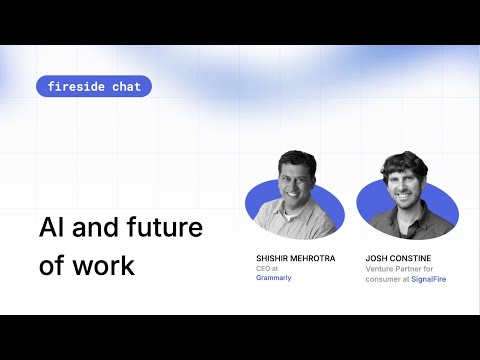
Grammarly just raised $1B for AI. Here's a fireside with Grammarly's CEO @shishirmehrotra from our AI Rabbit Hole conf from several weeks ago on how they see their product changing the future of work (link below)
English

SCOOP: OpenAI is working on its own X-like social network, according to multiple sources familiar with the matter. While the project is still in early stages, we’re told there’s an internal prototype focused on ChatGPT’s image generation that has a social feed.

English
If you can't tell from my "turing" handle (aka Alan Turing) I am a philospher at heart - and am certain #tech, #ai, and #philosophy are all apart of the same conversation. Recently I wrote this think piece. Would love to hear your thoughts: linkedin.com/posts/brownebr…
English

The open source Conversational Speech Model is out. We shared the 1B base model for everyone to build on. Links below.
English
Packing up to head to @NVIDIAGTC - what's the thing you can't go to a conference without? Besides caffiene of course 😅
#GTC25
English
Brea Browne รีทวีตแล้ว
✨ Gartner IOCS 2024 is just around the corner!
Connect with @weka's on how to unlock new levels of performance, efficiency, and cost savings.
📅 Dec. 10–12, 2024
📍The Venetian, Las Vegas, NV
🔗 Book your meeting now! 👇
#GartnerIOCS sprou.tt/1ErLVsBnL7n
English
🌊 Ready to ride the GenAI wave? @weka President Jonathan Martin shares how businesses can act fast to harness #GenAI innovation—or risk being left behind. 🚀
Check out his insights in Fast Company NOW
#AI #Leadership #Innovation #WEKA sprou.tt/1qm2KeqjYEo
English
Byte-Sized Joke Thursday! 🧀
Why did the legacy data platform lose the race? 🏁
Because it couldn’t match @weka’s speed! 🚀
WEKA is setting new benchmarks for #AI and #HPC workloads with record-breaking performance and unmatched efficiency. 💡 sprou.tt/17IyXRxA1hT
English
🚀 Ready to turbocharge your #AI game? Check out @weka's latest data platform appliances—WEKApod Nitro & WEKApod Prime! Built to fuel your AI innovation and keep your data moving at lightning speed. ⚡️
🔗 weka.io/data-platform/…
English