
Bernie Caessens

1.9K posts

Bernie Caessens banner
Bernie Caessens

Bernie Caessens

@bcaessens

Psychologist, creative mind, husband, father, science geek not necessarily in that order

เข้าร่วม Mayıs 2011
189 กำลังติดตาม144 ผู้ติดตาม
Bernie Caessens
Bernie Caessens@bcaessens·
@Bellecoone Gemini plaatst dit in Heindonck (willebroek) met sint jan baptist kerk als significant landmerk. Gezien vanaf de oever van de rupel. Jan baptist de greef als schilder, maar dat hadden ze hier al. Benieuwd of dit klopt. Experimentje met AI🤫
Nederlands
0
0
0
110
Belle Coone
Belle Coone@Bellecoone·
Heeft iemand enig idee waar in België dit zicht op het schilderij (ca. 1890) zich bevindt? Ik ben er zelf niet helemaal zeker van en zou het graag bevestigd zien. Ik kijk naar jullie, Antwerpen. Alvast bedankt!
Belle Coone tweet media
Nederlands
47
5
65
12.9K
Bernie Caessens รีทวีตแล้ว
Dr Kareem Carr
Dr Kareem Carr@kareem_carr·
I'm increasingly thinking the best thing one can do right now is just skill up. Read some books. Learn some math. This politics is unstable. It won't last. When it's all over, we'll need people who can build.
English
43
178
1.2K
42.9K
Bernie Caessens รีทวีตแล้ว
Big Think
Big Think@bigthink·
The illusion of shared reality: Why no two minds see the same world | Anil Seth & Jonny Thomson @philosophyminis @anilkseth 0:00 Non-human consciousness 1:40 The current state of consciousness science 2:10 What is consciousness? 4:05 The similarity of conscious experiences 5:48 Consciousness in the brain 11:23 Technology for measuring consciousness 16:03 Measuring consciousness levels 20:33 Pragmatic physicalism and functionalism 23:25 Pansychism 28:25 Emergence 32:35 AI and consciousness 36:49 The difference between non-human animals and AI 41:49 Is artificial consciousness possible? 48:12 Consciousness in the body and outside the brain Consciousness in the future and AI 50:27 Audience Q&A 50:41 Could computers could simulate the brain and body? 59:55 Why are you skeptical about asserting the dependency of life to the consciousness? 1:03:31 If consciousness is so clinical, does it undermine free will?
English
8
46
152
15.4K
Bernie Caessens
Bernie Caessens@bcaessens·
@mayukh_panja PhDs exist where we create new knowledge. If you think the humanities only produce opinions, you’ve simply never read the good stuff. We tried a society that worshipped one definition of truth. It was called the 19th century. Most of us moved on. Ask Popper, Kuhn, Lakathos. 😉
English
0
0
1
61
Mayukh
Mayukh@mayukh_panja·
Let me reiterate and I am willing to die on this hill: not all fields of study can be called science, nor do all fields merit a PhD. The purpose of science is to glean out some fundamental truth about the universe. And the bar for what is considered true is set very very high. 1. It must explain existing phenomena 2. Its findings must be replicable. 3. It must make specific, testable, falsifiable predictions. And the specific, testable, falsifiable parts are extremely important. If your field doesn’t do this, you are not doing science. Period. You are presenting an opinion. A lot of humanities papers seem to do just that. Present opinion. Yes, arguably there is some structure to it. There are some axioms. And there is some internal logical consistency. But in the end it is you and your supervisor’s personal opinion. Now this kind of work is indeed necessary. But that is not academics. That is not research. You don’t need to dole out PhDs for someone presenting their personal opinion using made up jargon and purposefully dense language. There are brilliant authors, poets, and essayists out there. And they are presenting their opinions in the open marketplace of ideas, where those ideas either fall or stand on their own. Their contributions to the world are as important as any scientist. Just please don’t dilute the meaning of the word “science”. Our academic institutions were built to be places of truth seeking. Let's restore of some of that.
Mayukh@mayukh_panja

There is an objective hierarchy among academic fields and therefore not all PhDs are equal. Before you get upset, hear me out. I am a computational physicist, I solve partial differential equations (PDEs) on a computer to simulate real world phenomena. But if I were to try to understand string theory, it would take me a full year before I can even scratch the surface. Because I don't have the mathematical rigor for it. For a string theorist though, it wouldn't be too difficult to understand what I do. Similarly, I could pick up a psychology paper and understand most of it in a first read. But obviously the reverse is not true. It would be impossible for a psychologist to understand differential equations without any prior exposure to physics or maths. Humanities papers require almost no specialised training. Anybody with common sense and some English language comprehension skills can read, or even write a humanities paper. In fact, read about the Sokal affair. A professor of physics (Alan Sokal) wanted to test the intellectual rigor of a cultural studies journal. He produced some garbage that sounded good and flattered the preconceived notions of the journal editors and voila the paper was accepted. It became a big scandal back in the day. By and large, humanities papers are not very intellectually rigorous or demanding. Hierarchies exist almost in every realm of human endeavour. Not all sports are equally physically demanding. We readily accept that. Let's stop pretending everyone is equal. It is doing more harm than good. Before you come at me with pitchforks, I am talking specifically about academic research. I have deep respect for authors, journalists, musicians, artists, anybody doing anything creative and original.

English
62
26
223
46.1K
Mayukh
Mayukh@mayukh_panja·
There is an objective hierarchy among academic fields and therefore not all PhDs are equal. Before you get upset, hear me out. I am a computational physicist, I solve partial differential equations (PDEs) on a computer to simulate real world phenomena. But if I were to try to understand string theory, it would take me a full year before I can even scratch the surface. Because I don't have the mathematical rigor for it. For a string theorist though, it wouldn't be too difficult to understand what I do. Similarly, I could pick up a psychology paper and understand most of it in a first read. But obviously the reverse is not true. It would be impossible for a psychologist to understand differential equations without any prior exposure to physics or maths. Humanities papers require almost no specialised training. Anybody with common sense and some English language comprehension skills can read, or even write a humanities paper. In fact, read about the Sokal affair. A professor of physics (Alan Sokal) wanted to test the intellectual rigor of a cultural studies journal. He produced some garbage that sounded good and flattered the preconceived notions of the journal editors and voila the paper was accepted. It became a big scandal back in the day. By and large, humanities papers are not very intellectually rigorous or demanding. Hierarchies exist almost in every realm of human endeavour. Not all sports are equally physically demanding. We readily accept that. Let's stop pretending everyone is equal. It is doing more harm than good. Before you come at me with pitchforks, I am talking specifically about academic research. I have deep respect for authors, journalists, musicians, artists, anybody doing anything creative and original.
Mayukh@mayukh_panja

I have a PhD in Physics, I never call myself Dr. I will be patient when I explain this. It is fucking stupid and a relic of the past. The creators of PyTorch don’t have a PhD. Majority of the authors of the “Attention is all you need” paper don’t have a PhD. Elon fucking Musk doesn’t have a PhD. If you call yourself Dr. it is probably because you want to draw attention to your self image of being a smart person. Let me honest with you here: If you insist of having hierarchies, you are way down below in the pecking order. No one takes your bitch ass social science PhD seriously. You are well below the average code monkey without a Bachelors. And I think you know that.

English
226
155
1.7K
352.9K
Bernie Caessens
Bernie Caessens@bcaessens·
@mayukh_panja 2/ Obviously, such number line/cognitive effects are not affecting the choices in an AI (I assume LLM). So, a clear understanding of the methodology here is absolutely needed to understand what’s going on.
English
0
0
0
24
Bernie Caessens
Bernie Caessens@bcaessens·
@mayukh_panja 1/ Extremely interesting and provocative. The price effect is real, but very small and highly context dependent (see Troll et al. 2024). But, in humans, the effect originates in cognition, the mental number line and attention (Sokolova et al., 2020).
English
1
0
1
87
Mayukh
Mayukh@mayukh_panja·
Had a breakthrough recently. A lot of you know I have been trying to simulate human behaviour at scale using AI personas. I will be honest, I have had doubts about how accurate the comparisons with real human behaviour would be. Choosing the right trait to test is tricky. I wanted to set a high bar for the AI personas to pass, so that I can calm the skeptic in me. The charm price effect seemed like a good candidate. What is this effect? Basically, an item priced at $19.99 feels like a better deal than the same item at $20.00. It is a well known human behavioural kink. This is a subtle psychological effect resting entirely on a one-cent difference. Since this is purely psychological, it makes for a perfect stress test. AI personas do not have lived experiences, budgets, or loss aversion. Any preference they show comes from latent behavioral priors the model has absorbed indirectly from human language. To explore this, a friend and I engineered a synthetic population of AI personas that statistically mirrors US consumers. We ensured accurate distributions of income, wealth, education, and gender, along with psychographic markers like risk tolerance. Then we ran 25 independent simulations. In each, cohorts ranging from 100 to 500 personas reviewed identical stainless steel water bottle ads and rated the offer. The only variable was the price ($19.99 vs $20.00). To give a sense of the scale, we executed 7,500 individual evaluations for each price point. The results came out pretty cool. In the attached plot, each point represents the average rating given by the personas in a single simulation run. The red points show the $20.00 price and the blue points show the $19.99 charm price. It is striking how consistently the blue points sit above the red ones. With the charm price prevailing in 22 of the 25 simulations, a binomial test confirms this is statistically significant (p < 0.001). This is an extremely exciting result. If AI personas can reliably pick up a psychological effect this subtle, then we might be standing at the edge of a new way of studying consumer behaviour. We can now experiment at scale and explore counterfactuals safely before running real-world tests. The personas were not told to prefer charm pricing, they inferred it. This opens up fascinating new frontiers: -A/B testing product descriptions before running expensive live experiments -Simulating price sensitivity across demographic segments -Testing messaging, anchoring effects, psychological pricing -AI powered prediction markets? Stay tuned, will drop a full paper soon! Also chat, please repost, I wanna reach the right people in tech.
Mayukh tweet media
English
6
3
34
30K
Bernie Caessens
Bernie Caessens@bcaessens·
Gelezen in een review van het computerspel ‘pax romana’ “een oorlogseconomie kost veel geld en mankracht. Krachten die je niet kan gebruiken om je stad draaiende en je volk gelukkig te houden.” - Ik vind dat een gepaste doordenker in de huidige tijden.
Nederlands
0
0
0
19
Bernie Caessens
Bernie Caessens@bcaessens·
@wduyck De gedragsexpert gaat dit binnenkort oplossen, nadat je door de controlepost bent gegaan.
Nederlands
0
0
2
83
Wouter Duyck
Wouter Duyck@wduyck·
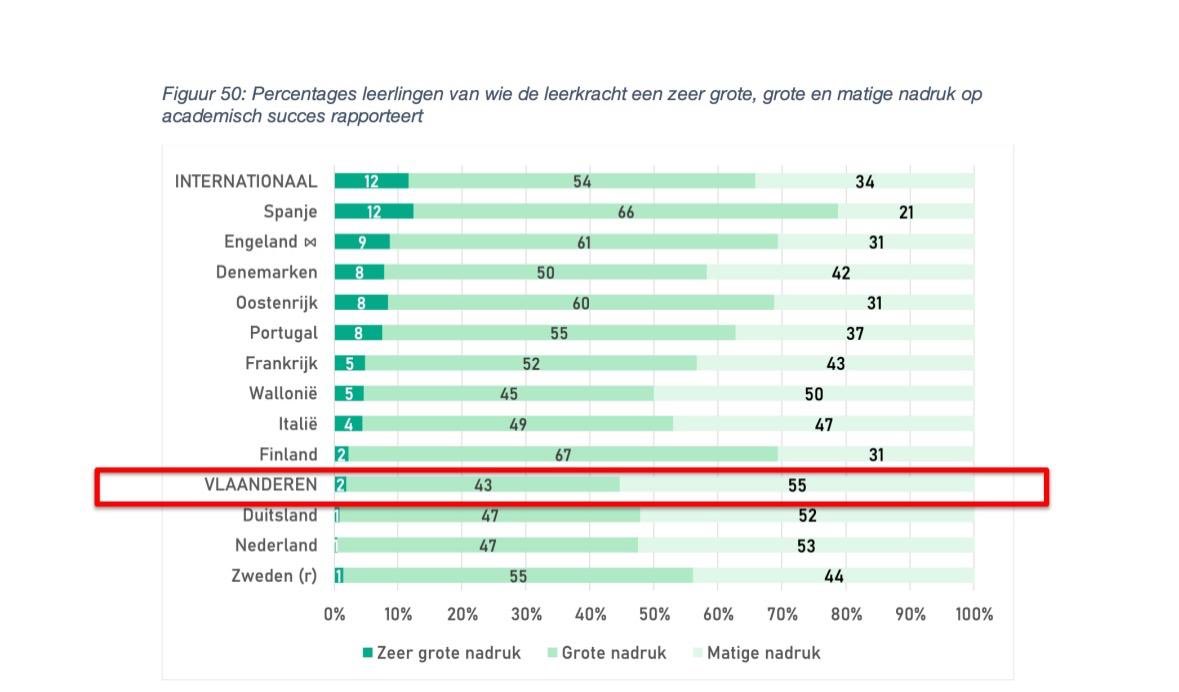
De Vlaamse Scholierenkoepel vraagt minder stress en werkdruk. Terwijl vandaag al de prestatiemotivatie én intrinsieke leermotivatie nergens lager is dan bij VL scholieren. En leraren ook bijna nergens dan hier nog minder de nadruk leggen op presteren. Leren omgaan met iets vraagt oefening, niet nog minder blootstelling. vrt.be/vrtnws/nl/2025…
Wouter Duyck tweet mediaWouter Duyck tweet mediaWouter Duyck tweet media
Nederlands
16
26
152
14K
Bernie Caessens
Bernie Caessens@bcaessens·
@fchollet ML is a cognitive science. Period. You hypthesize, build, test and move on
English
0
0
0
20
François Chollet
François Chollet@fchollet·
ML research is an engineering discipline, not a philosophy seminar. You build, you test, you learn. Untested ideas are just speculation.
English
107
236
2.6K
130K
Bernie Caessens
Bernie Caessens@bcaessens·
@a16z Funny thing to happen in a talk about intelligence! Just to be clear — there isn’t a ‘remaining 0.6 of the correlation.’ The correlation is 0.4, full stop. That means IQ explains about 16% of the variance in X, leaving around 84% unexplained — but correlations don’t add up to 1.
English
2
0
7
657
a16z
a16z@a16z·
Marc Andreessen posted that "High IQ experts work for mid IQ generalists." We asked him to elaborate. "So I think two things are true: One is we all underrate the importance of intelligence." "Even just the very idea that some people are smarter than other people just really freaks people out, and people don't like to talk about it. And we really struggle with that as a society." "On the other hand, the people who are in the fields that involve intelligence probably overrate intelligence. And you might even coin a term like maybe 'intelligence supremacist' or something like that." @pmarca @eriktorenberg
Marc Andreessen 🇺🇸@pmarca

High IQ experts work for mid IQ generalists. What means?

English
71
120
1.5K
455.9K
Bernie Caessens
Bernie Caessens@bcaessens·
@TOEwithCurt Boredom is a natural signal — a momentary cognitive state, not a moral flaw. It prompts exploration, learning, change, creativity. It’s not despair unless you interpret it that way. In fact, avoiding boredom at all costs (via overstimulation) might be more of a problem.
English
0
0
0
32
Curt Jaimungal
Curt Jaimungal@TOEwithCurt·
“Kierkegaard thinks that we don’t entirely comprehend the wretched state of the purely natural aesthetic man. I think it’s T.S. Eliot who once wrote a line describing the hollow men, I believe. He said that they are distracted from distraction by distraction. Well, Kierkegaard thinks that’s what the life of the aesthetic man is: one distraction after another to prevent a distraction, to prevent you from seeing the vacuum of your existence, to prevent you from looking right at the void and being turned into stone. He says that’s why you pursue pleasure and novelty all the time, because the real evil—or the real misery—in the life of the aesthetic man is boredom. Kierkegaard says, and I think it’s one of the greatest lines in the history of philosophy; it’s beautiful and it’s horrifyingly true. He says that boredom is the root of all evil. Think about that. It’s much more dangerous than money. Think about the amount of evil that is introduced into the world by people’s simple desire for sensation.” - Michael Sugrue
English
25
14
97
8.1K
Bernie Caessens
Bernie Caessens@bcaessens·
@Dirk_Lauwers 882 gerapporteerde slachtoffers door de politiediensten met daarbij wetende dat er een verwachte 25% reductie is over onvolledige data van 2025. Sterke verschillen bij leeftijdsgroepen, duh. Leer rijden. 50 is fine
Nederlands
1
0
1
28
dirk lauwers
dirk lauwers@Dirk_Lauwers·
1000 mensen minder gedood of gewond in het verkeer voorbije twee jaar in Wales. Welk argument is er meer nodig om ook Vlaamse beleidsmakers te overtuigen om 30 km/u in te voeren als standaardlimiet in bebouwde kom? De verkeerskundige theorie toonde nut al lang. Nu ook de feiten.
20's Plenty for Us@20splentyforus

2 years of default urban/village 20mph in Wales has resulted in over 1,000 fewer killed or injured. The data shows a 25% reduction in casualties on the 20/30mph roads. Drivers gain with damage risk, crashes and premiums down. Well done Wales. bit.ly/4ppl030

Nederlands
4
1
2
634
Bernie Caessens
Bernie Caessens@bcaessens·
@bartvthe @tijd Er worden al wegen aangelegd sinds de Romeinen, door de overheid. Niks mis met een overheid. Maar die moet in de eerste plaats faciliteren, waar nodig reguleren, maar niet hinderen of pesten.
Nederlands
1
0
0
7
Bart Van Theemsche
Bart Van Theemsche@bartvthe·
400 jaar geleden bestond er geen overheid. En toen werden er ook wegen aangelegd. We hebben geen overheid nodig eigenlijk. En al zeker geen linkse dictators zoals deze. Ik hou ook niet van sigaretten maar wanneer is het genoeg voor de brave volgzame Vlaming vraag ik me af. @tijd
De Tijd@tijd

Rookverbod op terrassen op 1 januari 2027, ook shishabars en sigarenclubs moeten dicht #Echobox=1757690591" target="_blank" rel="nofollow noopener">tijd.be/politiek-econo…

Nederlands
1
0
0
13
Bernie Caessens
Bernie Caessens@bcaessens·
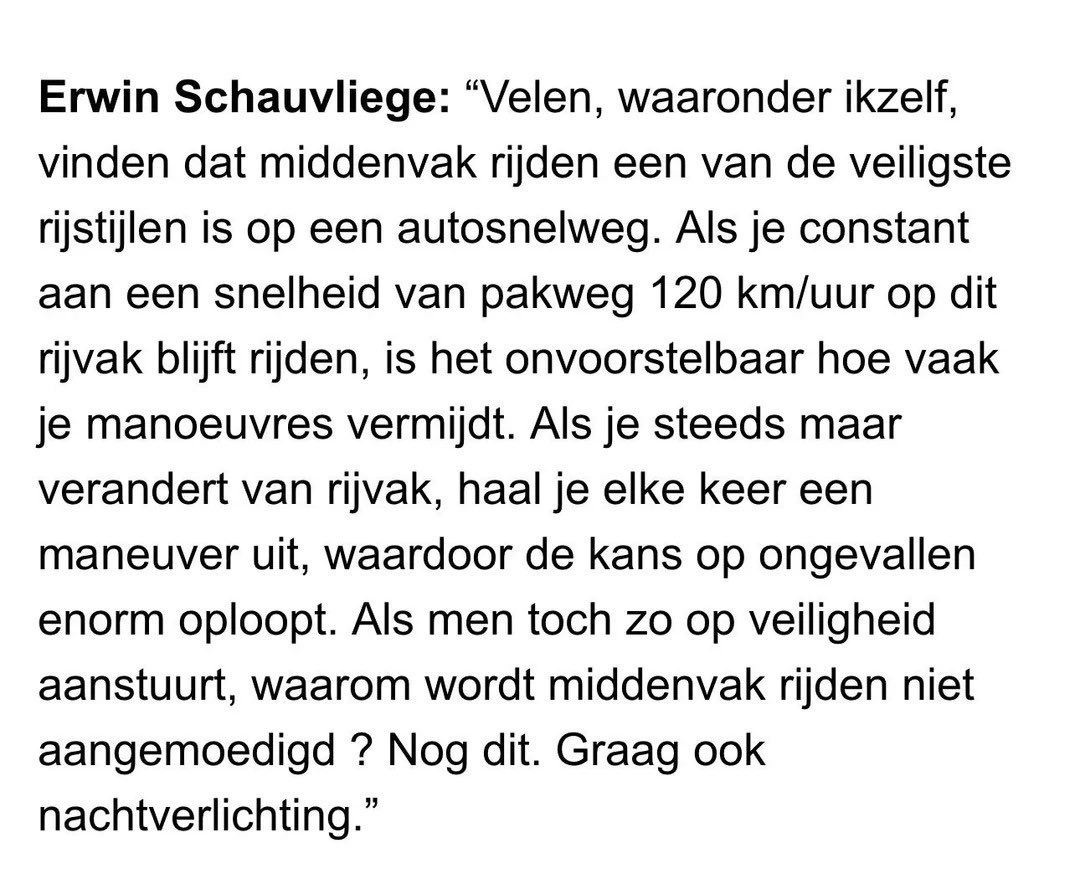
@KDelacourt @FionaFeagle Door in overtreding te zijn met de Belgische wegcode die stelt dat je je maximaal rechts op de beschikbare rijbaan moet positioneren (tenzij anders aangegeven of in het geval van stilstaand verkeer in de file). En als je dat moet uitzoeken zou je geen rijbewijs mogen hebben.
Nederlands
1
0
15
189
Kristine Delacourt
Kristine Delacourt@KDelacourt·
@FionaFeagle Zeg mij eens op welke manier je iemand anders hindert als je aan 120 op het middenvak rijdt. Zoek het even uit, ik wacht wel.
Nederlands
18
0
9
1K
Fiona Dewaele
Fiona Dewaele@FionaFeagle·
NEE ERWIN, MIDDENVAKPLAKKERS ZORGEN VOOR MEER MANOEUVRES VAN MENSEN DIE WÉL KUNNEN RIJDEN MET NEN OTTO 😡😡😡
Fiona Dewaele tweet media
Nederlands
242
58
1.4K
88.1K
Bart Van Theemsche
Bart Van Theemsche@bartvthe·
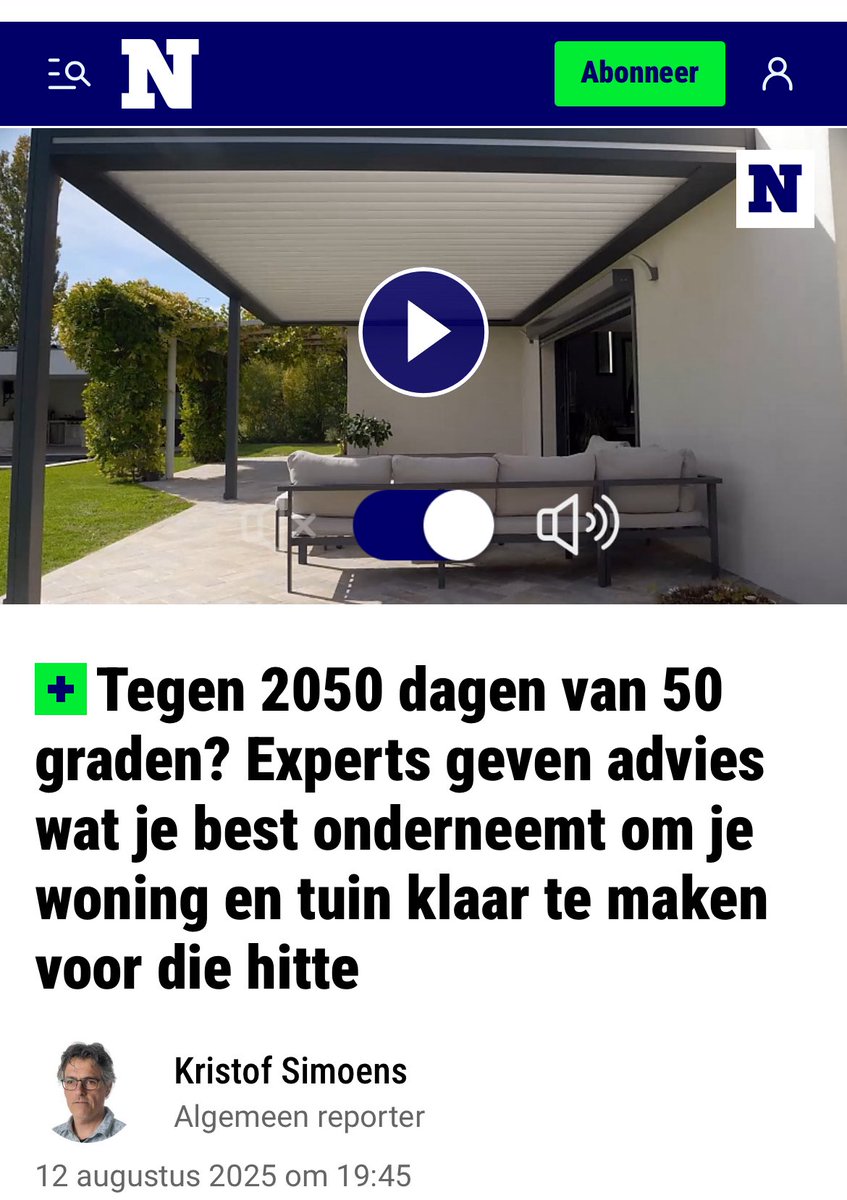
T zal druk zijn in de tuincentra dit weekend.
Bart Van Theemsche tweet media
Nederlands
1
0
1
14
Bernie Caessens
Bernie Caessens@bcaessens·
@wduyck There is no talent (…) magical ability (…) that comes without studying, working hard, reading, learning. Het is een lange zin, maar die zou toch als muziek in de oren moeten klinken. Hij zegt niet “there is no talent”. Dat van die ordinary people, ach ja, schoonheidsfoutje 😉
Nederlands
0
0
0
23
Bernie Caessens รีทวีตแล้ว
Oxford Mathematics
Oxford Mathematics@OxUniMaths·
One day we sidled up to one of our colleagues and gently asked how they used maths in their everyday life. To which they laughingly replied: "The last thing I want to think about in the kitchen is maths". Ah, but mathematics wants to think about you.
English
24
69
463
18.5K