
Beths รีทวีตแล้ว
Beths
12K posts


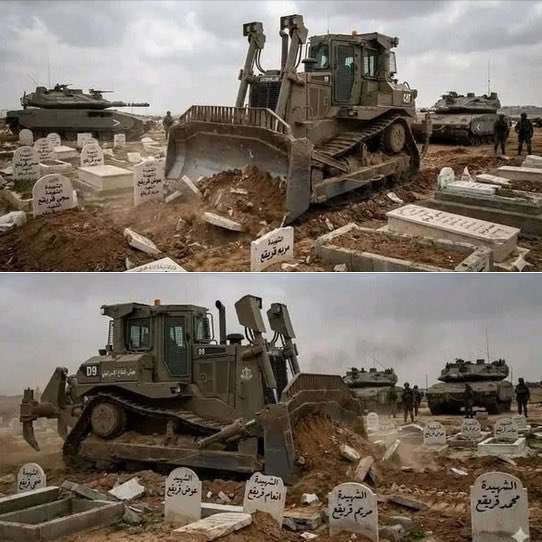
Gaza right now.
Having turned every single building to dust.
Having erased entire cities.
Having murdered tens of thousands of children.
They are now erasing the memory of the dead.
An evil beyond comprehension.
Israel is demonic.
English
Beths รีทวีตแล้ว
Last week, Gazan women testified to a system of rape by Hamas to Palestinian women living in tents.
This week, Gazan children testified to being raped by Hamas clerics.
Not a word about it the New York Times, UN, or Cenk Uygur.
Weird.
English
@jvgraz Stop engaging with this moron
He clearly knows the story of Anne Frank.
Think about that- this "influencer" is willing to post any lie, any tweet, no matter how vile or outrageous, or hateful/ harmful
Just to get increase engagement and "likes"$
Stop being a useful idiot
English

It sure doesn't look like she went through a genocide.

Mat Nuclear@MatNuclear
You look well-fed, clothed, you have a roof over your head, and a nice laptop. It sure doesn’t look like you went through a genocide.
English
Beths รีทวีตแล้ว

I have just seen the unedited footage of the October 7th attacks. Please read:
What I saw was young men chopping off heads, shooting everything in sight, slaughtering little crying kids calling for their mummy, throwing grenades inside houses and cars and shelters, maiming bodies, playing with them, setting humans on fire, looking like it's the happiest day of their life.
They call their relatives to celebrate how many they have killed. The parents back in Gaza are thrilled. They cheer and ask for more.
"Bring back some heads for the people to play with" - asks a commander. The savages wilfully oblige, using flick knives to remove the skulls from slaughtered bodies like butchers carving up a carcass.
"Bring some home for the people so we can crucify them in the square" the Hamas leaders order.
The mangled, blood soaked bodies of hostages were paraded through the streets. The Gazan crowds cheered and filmed, celebrating or coming to spit on the terrified youngsters in the back of pick ups.
The young Hamas brutes with their ecstatic grins, taking selfies, shouting Allahu Akbar, looked like so many of the young men in dinghies. Trendy clothes, modern phones. Energy and conviction.
The first wave of attackers on October 7th were Hamas soldiers.
The second, amateur conscripts.
The third, Gazan civilians delighted to join in.
What even are these monsters.
I am forever changed, seeing what I have seen. And it isn't fake. It's footage Hamas shot themselves.
Israel must live with that right next door.
I fear we now have it, in hotels and houses around the country
English
Beths รีทวีตแล้ว
In 1977, the head of the PLO's military department gave an interview to a Dutch newspaper and said something that should have changed everything.
He said Palestinian identity is emphasized for political reasons only. That a separate Palestinian identity exists for tactical reasons. That there are no real differences between Jordanians, Palestinians, Syrians, and Lebanese.
His name was Zuher Mohsin. He wasn't a dissident. He wasn't breaking ranks. He was one of the architects of the movement and he said the quiet part out loud.
Eight years earlier, Golda Meir had said the same thing and been destroyed for it.
But that's not even the beginning of the story.
The PLO was founded in 1964. Three years before Israel controlled the West Bank or Gaza. Whatever it was built to liberate, it wasn't land Israel acquired in 1967.
Before Arafat, there was no Palestinian national identity. Not because the people weren't real. Because the identity hadn't been built yet. And Arafat built it the same way you build a city — founding story first, then institutions, symbols, a flag, a claim of ancient dispossession, and enough foreign funding to make it stick.
The full piece is up on Substack (Link in comments). It starts with a fable. It ends with the only question that actually matters.
( Credit Melissa Steinberg Brodsky )

English
@EtSbby @owenjonesjourno Clearly tou have not seen the videos Hamas proudly posted
They did not "shoot them thru a door"
Stop your nonsense and educate yourself
Mor Edge Insight@MorEdge_Insight
Due to several requests by so many people who have not yet seen the footage, this is 40 minutes of raw footage from October 7. Please share this widely and bookmark it for reference. ⚠️⚠️⚠️⚠️⚠️⚠️⚠️⚠️⚠️⚠️⚠️⚠️ WARNING: SENSITIVE CONTENT ⚠️⚠️⚠️⚠️⚠️⚠️⚠️⚠️⚠️⚠️⚠️⚠️ Some of the footage is extremely distressing so I urge caution. But it is so important for people to see and know the truth. ⚠️⚠️⚠️⚠️⚠️⚠️⚠️⚠️⚠️⚠️⚠️⚠️ WARNING: SENSITIVE CONTENT ⚠️⚠️⚠️⚠️⚠️⚠️⚠️⚠️⚠️⚠️⚠️⚠️
English
@bethsalant @owenjonesjourno Yes, because one baby died, shot through a door by someone obviously not targeting the baby for that purpose. Unlike what Israeli snipers have done. Very different to holding a baby and hacking their head off, then repeating it.
English

There is no dispute that dogs can be trained to rape people.
In Pinochet's Chile, a German Shepherd named Volodia was trained to rape inmates.
In the case of Israel, we have multiple testimonies from Palestinian detainees, as well as Israeli guards.

Owen Jones@owenjonesjourno
Israel is raping Palestinians with dogs. owenjones.news/p/israel-is-ra…
English
Beths รีทวีตแล้ว

🚨 2 ATTACKS.
0 HEADLINES.
This morning in the Duma area:
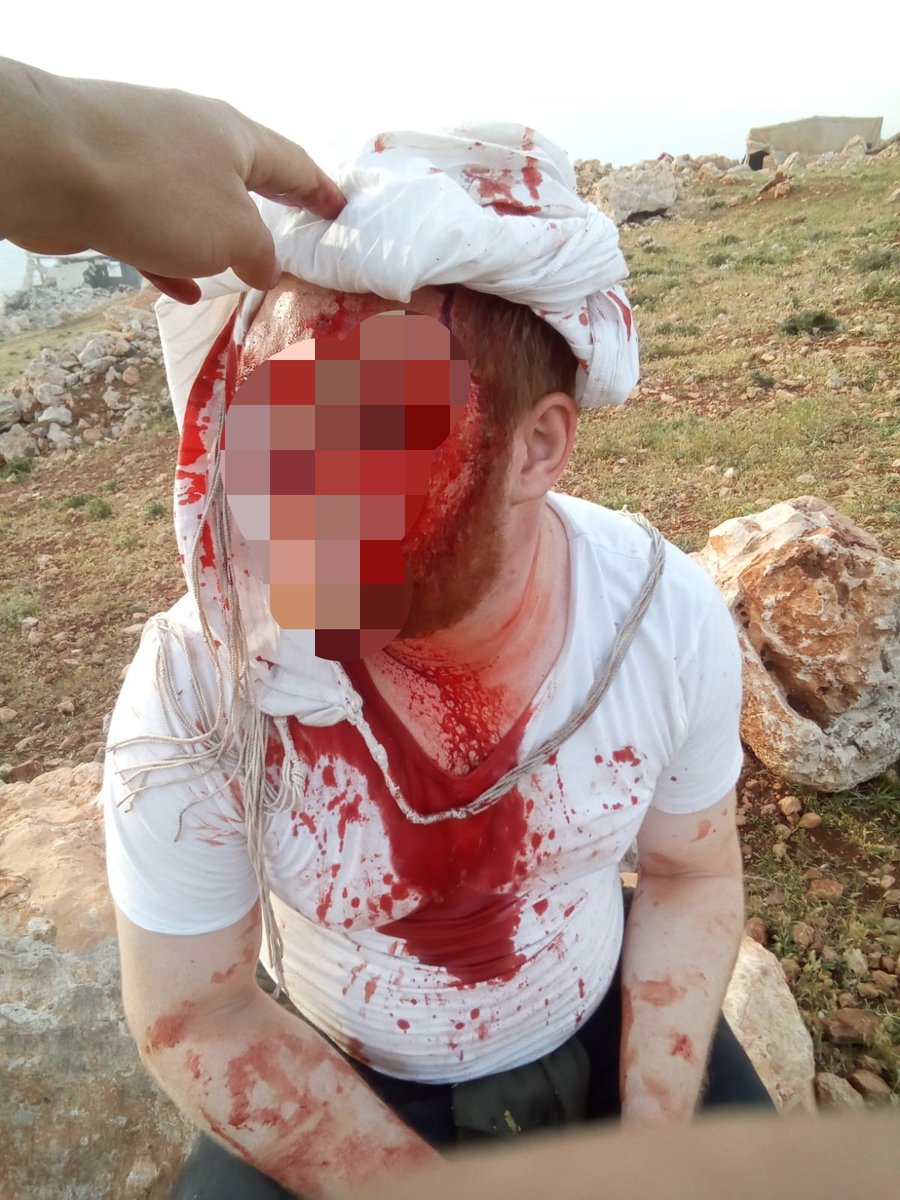
Arab rioters attacked a Jewish shepherd with clubs and stones, leaving him with a skull fracture. He was evacuated to Shaare Zedek Medical Center.
Less than 3 hours later:
A second attack.
An Arab driver deliberately rammed a responder rushing to help. The driver was injured, but stayed behind to defend the farm.
No breaking news banners.
No emergency UN sessions.
No statements from world leaders.
Don’t expect coverage from CNN.
Don’t expect outrage from Al Jazeera.
Because this doesn’t fit the narrative.
When Jews are attacked in Judea and Samaria, it’s ignored.
When the story can be flipped, it becomes global outrage overnight.
Same region. Same violence.
Very different reaction.
Pay attention to what isn’t being reported.
English
Beths รีทวีตแล้ว
BREAKING: Around 40 Hamas terrorists stormed a Palestinian family’s home, dragged them outside, and brutally beat them — including women and children — with sticks and batons.
Don’t expect a word about this in the media or from ‘pro-Palestinians.’
English
@therandomnouns @owenjonesjourno All those "green" countries are Islamic. They, were actually colonized by invading armies, and Jews were expelled
It seems a bit disingenuous for you to claim Israel is a colonizer when 20% of the population is Arab
0% of Muslim countries have a Jewish population
English
@bethsalant @owenjonesjourno Sorry, woke got me, it means I can never fully appreciate your map or why you censor perfectly commonplace w*rds.
English
@_ZachFoster Wow. This is abhorrent- even from you
The surviving hostages have all detailed their horrific sexual abuse
The UN has finally admitted r*pe occurred on a widespread scale on 10/7
Metoo unless you're a Jew?
This from a man who's thesis begins....

English
The great irony of the October 7th, 2023 rape hoax is that, if you were 1-issue person & your only issue was rape, all you cared about was rape, nothing else, then you'd probably be among the most hostile people to Israel on earth.
That's because there are many dozens, indeed hundreds of Palestinian rape victims, many of them have testified, not anonymously, but with their names -- despite the danger involved -- saying they've been raped inside Israeli prisons. That's not to mention the video & forensic evidence.
Meanwhile, there are 0 identified rape victims from Oct. 7th.
So hundreds versus 0 .... of named, identified victims when comparing Oct. 2023 to Israel's rape & torture dungeons.
(Note: some of the Israeli hostages testified to sexual abuse after Oct. 7th in the tunnels, but not on Oct. 7th)
So, if all you cared about was rape, and you took standards of evidence seriously, you'd arrive at the conclusion that Israel is likely the most evil country in world, because there are more documented rape victims inside Israeli torture & rape dungeons than any other country in the world, according to the best available data.
English
@therandomnouns @owenjonesjourno Resistance is blowing up a bridge
Bulldozing a border
Resistance IS NOT barbarically m*rdering 1,200 innocent
Stop with woke nonsense
Have you seen a map of the Middle East?
Explain colonialism.
If you really believe that, advocate for the J*ws exiled from Muslim countries

English
@bethsalant @owenjonesjourno I haven’t mentioned any conspiracy, nor Hamas or my feelings about Oct 7th. It’s illegal to do so in any meaningfully positive way in most supposedly free western countries. So all I’ll say is resistance to imperialism and colonialism is a vital, noble and just endeavour.
English


Copied from a friend’s page:
A serious and deeply shocking UN report, jointly prepared by five prominent international organizations (intergovernmental organizations) in cooperation with three Israeli NGOs, is facing pressure, particularly from the US and the West, to prevent its release. Among the most prominent points in this "prisoner report" are:
1. 112 cases of rape were documented within Israeli prisons against female prisoners from Gaza. Three of these cases involved virgins, and the rapes were gang-raped. One of these women was transferred under international supervision to a secret location and is now pregnant.
2. Israeli forces executed 87 Gazan detainees inside their prisons by shooting them directly in the head with pistols and dumped their bodies in various areas of Gaza's streets.
3. Torture in the prisons is barbaric and insane, and what is happening is more horrific than what occurred in Abu Ghraib, Guantanamo, and the secret prisons.
4. (Israel) deliberately bombed, as part of a chain of command, families and children belonging to Palestinian organizations. The occupation army approved, from the second day, a plan to exterminate the families of activists, and the target bank includes 150,000 civilians.
5. (Israel) made excessive use of mercenaries and contracted with 22 military service companies. There is an American ship that is essentially a floating morgue containing 1,327 bodies of mercenaries whose families have not yet been notified of their deaths.
6. The amount of gold and money stolen, according to secret army estimates, is approximately $370 million.
7. (70%) of the bombs dropped on Gaza were filled with depleted uranium. The soil in the Gaza Strip is heavily contaminated with uranium elements, containing 60% of the radioactivity of natural uranium. Uranium consists of three isotopes: uranium-234, uranium-235, and uranium-238. The depleted uranium dropped on Gaza contains the same types of radiation as natural uranium, but in lower quantities. The radiation emitted by depleted uranium is 40% of that emitted by natural uranium. Uranium-238, which constitutes 99.8% of the depleted uranium, emits alpha particles. Its half-life in Gaza is approximately 450 years. The smoke from the depleted uranium explosions caused cancer in the lungs of everyone who inhaled it.
8. (90%) of women and children in Gaza suffer from severe psychological trauma, and medical centers in the Strip have recorded more than 5,000 cases of complete mental breakdown, mostly among women who lost their children.
9. Approximately 213 (Israeli) pilots refused to carry out airstrikes on targets containing dozens of people. One pilot testified before an Israeli organization that he refused to bomb a residential tower in Tel al-Hawa where 48 children were located, as detected by thermal imaging aircraft. However, another pilot carried out the bombing 17 minutes later, killing everyone in the building. The result was the deaths of 128 civilians.
10. The purpose of establishing a temporary port is to facilitate the mass transfer of Palestinians and their passage to Europe. Three European countries are fully complicit in an agreed-upon plan to depopulate the Gaza Strip.
11. The Zionist war cabinet approved the use of starvation as a weapon in late November.
12. Israeli intelligence agencies made over 3 million phone calls to Gaza residents, threatening to bomb homes and kill families if they did not obtain field information.
13. Two Arab countries offered South Africa very tempting financial incentives in exchange for withdrawing the case from the Supreme Court.
14. The airdropping of aid to Gaza by Western aircraft was carried out based on advice from legal advisors to avoid accusations of complicity in genocide, especially since the weapons supplied were delivered without restrictions on their use against civilians.
English

@therandomnouns @owenjonesjourno Hamas live-streamed their atrocities
Stop your conspiracy nonsense
English
@owenjonesjourno Everyone who spread false claims after Oct 7th should reckon with their words. x.com/therandomnouns…
Garret Baker@therandomnouns
@viraameli @owenjonesjourno @lumibucks This is a guy who (admirably) vocally opposes the genocide while also saying, after Oct 7th, that it was the biggest attack on Jewish people since the holocaust. He takes virtuous positions, without ever meaningfully contending with real resistance or revolution. Summed up here.
English
@owenjonesjourno The babies were shot at such close range, it appeared they had been beheaded
Is HOW they were barbarically m*rdered the hill you want to stand on?
English
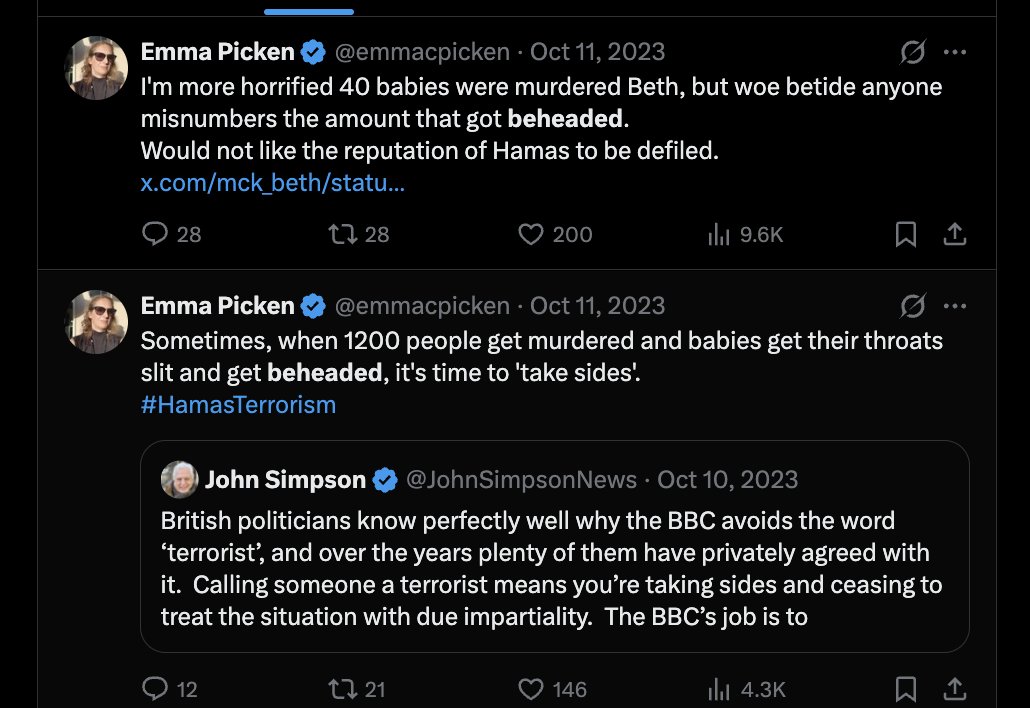
Emma Picken spread the false claim that babies were beheaded on 7th October.
She doesn't have any leg to stand on when accusing others of spreading false claims about atrocities.
English
@Jvnior @nikitabier So basically you're a grifter who realizes how profitable posting vile propaganda is?
Amazing how you manage to have electric and cell service to power your tweets
English

I’m going to say the truth.
I’m a Muslim Palestinian on X.
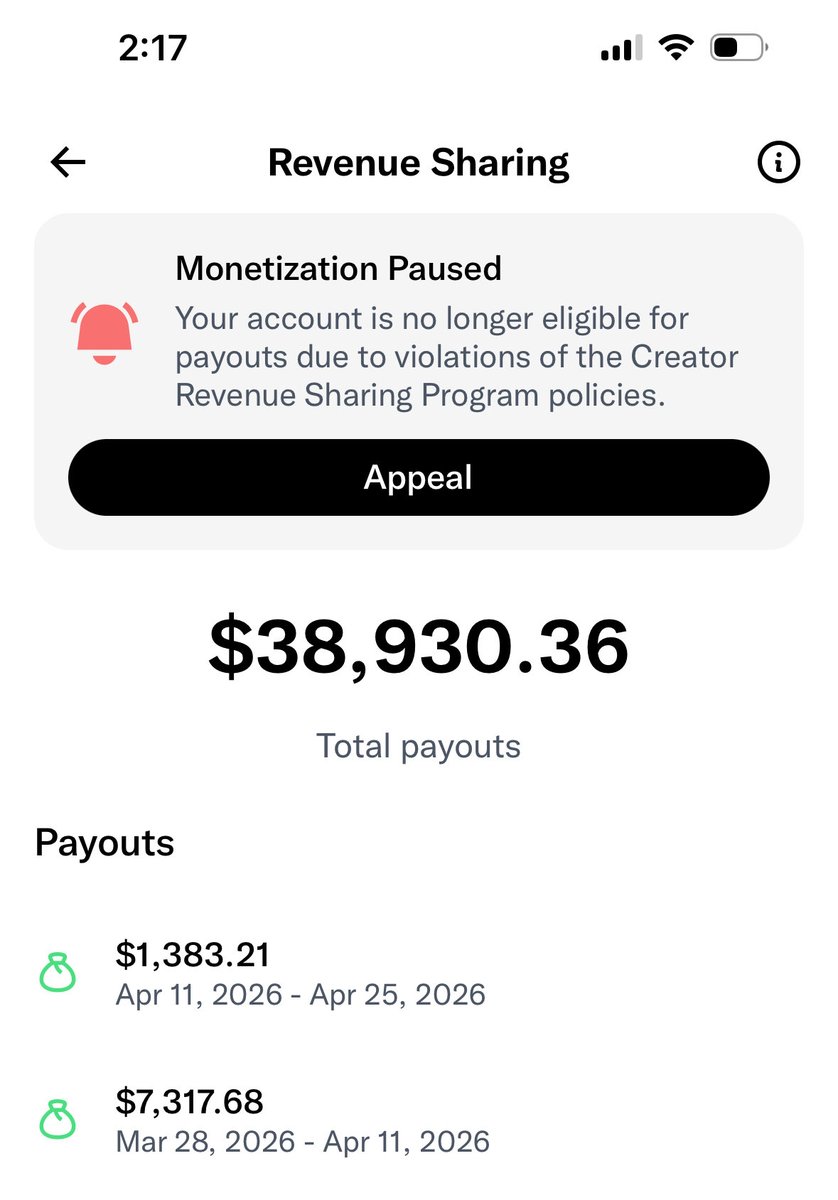
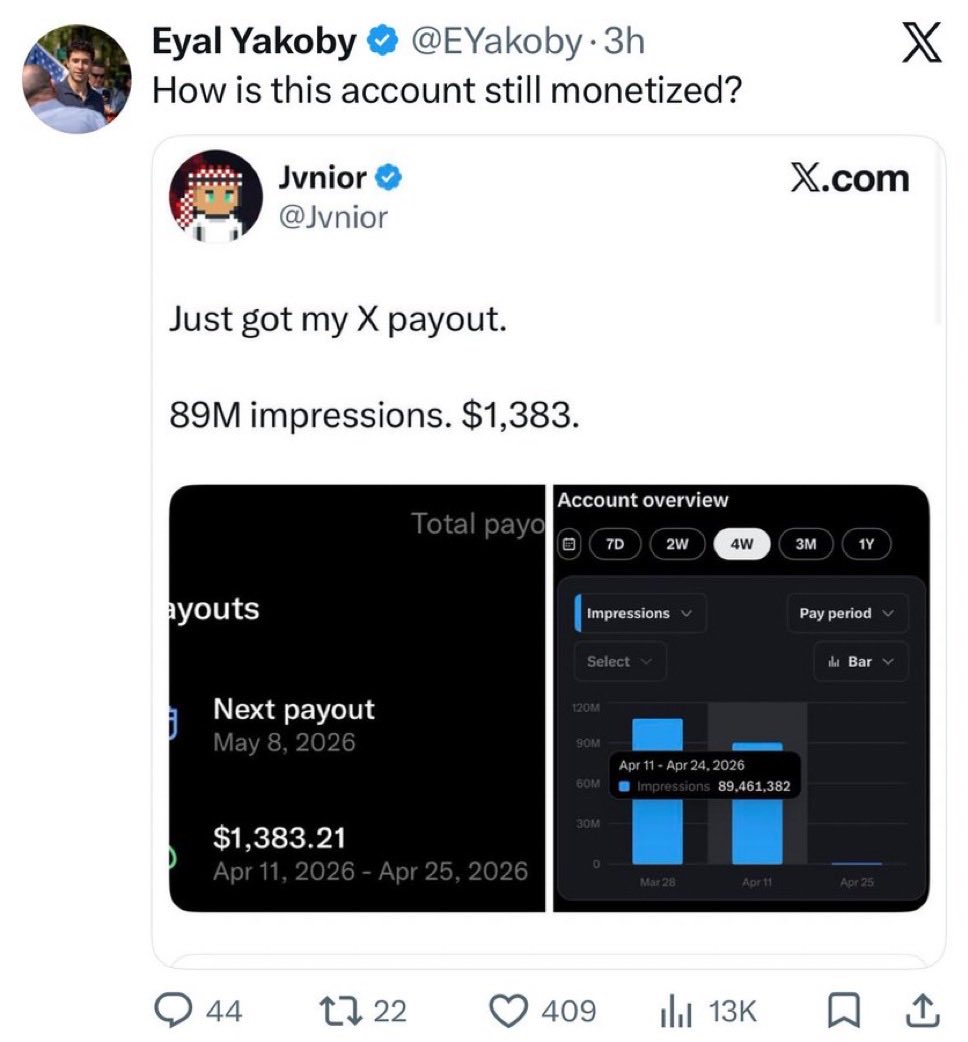
Yesterday my X payouts went from
$8,000 every 2 weeks to $1,000.
I complained about it to @nikitabier.
Many Zionist accounts targeted me.
Told him to remove my monetization.
3 hours later, my monetization is gone.
Look… if it’s temporary, I get it. I deserve it.
But if it’s a permanent ban, then hear me out:
The rollout of creator payouts on X initially transformed the platform into a place where time invested actually paid off for many users.
Engagement translated into real revenue, encouraging consistent posting, community building, and honest discourse.
It rewarded creators who showed up daily, fostering an ecosystem that felt merit-based and alive.
But now, the signals from the platform point in the opposite direction: reduced visibility for certain content, algorithmic tweaks that favor “original” or “high-quality” posts while punishing others, and reports of sudden drops in impressions for accounts that step outside approved lanes.
We’re essentially being told we shouldn’t spend as much time here anymore, at least not in the ways that built the payout culture in the first place.
That shift undermines the very incentive structure that kept users hooked and contributing.
This creates a deeper problem.
People won’t simply stop engaging because the algorithm or moderation policies discourage it; they’ll adapt in messy ways.
Some will chase whatever metrics still reward visibility, leading to more performative, low-effort content or echo chambers. Others will grow frustrated, posting less or migrating frustrations elsewhere.
The result is more division & chaos, not less.
When the promise of open participation collides with opaque restrictions, whether labeled as anti-spam, anti-manipulation, or “freedom of speech, not reach”, trust erodes.
Users feel gaslit: the platform profited from our time and attention when it suited growth and revenue goals, only to dial back the oxygen once that foundation was laid.
We all know the trajectory this follows.
It starts with throttled reach for posts that don’t align with evolving internal priorities. Then come temporary restrictions, demonetization, or “temporary labels.”
Eventually, for too many, it escalates to full suspension or permanent silencing.
Elon Musk positioned X as the free speech platform, a digital town square where ideas could compete without legacy gatekeepers.
Yet persistent complaints about shadowbanning, especially for critics of the platform or its owner, alongside massive account suspensions (hundreds of millions cited for manipulation in recent years) and selective deboosting reveal the gap between rhetoric and reality. “Freedom of speech, not reach” sounds principled until reach becomes the quiet enforcer of conformity. Payout incentives pulled creators in; visibility controls risk pushing them out or forcing self-censorship to stay viable.
That’s why I’m dropping all my links here:
link.me/jvnior.
I’m stepping back to focus on streaming.
I will post a YouTube video that lays out everything that’s unfolded on X since January.
The threats on my life, the defamation, the doxxing, the false reports, the bans. Everything.
I truly appreciate every bit of support from everyone along the way. I love you all.
I’m going take a break unless @nikitabier responds to me. This break is necessary for my mental health as this is weighing heavier than it should. I never did this for money.
But if X genuinely wants to retain the creators who built its energy, it needs to confront whether it’s truly delivering on the free speech promise or just managing a more sophisticated version of a dictatorship.
The chaos ahead won’t fix itself.

English
@NYCMayor Slimy politicians
Changing the narrative and basically lying- because he assumes his supporters are too stupid and gullible to verify the truth
dan linnaeus@DanLinnaeus
Mamdani is playing games with the truth as usual. First, he did not “let one bill go into effect.” It passed with a veto-proof supermajority. The houses of worship bill (1-B) passed the City Council with a 44-5 veto-proof majority, so even if Mamdani symbolically vetoed it and forced a reconsideration the bill would have had to fall to below 34 support for his veto to hold. For all intents and purposes this bill was automatically passing Council where the votes to override and make it law anyway were overwhelmingly present. So let’s be clear. He didn’t veto 1-B because it would have been an embarrassment for his office to be overridden, not out of magnanimity. But 175-B, the companion bill about educational facilities, didn’t have a super majority. It had 30 for, 19 against, which is 4 shy of being veto-proof. That gave Mamdani the latitude to play schoolyard bully and crush the bill -- because without the supermajority, the Council couldn’t force it through on a second vote. Second, there were no constitutionality issues in the final draft. The bill required the NYPD Police Commissioner to develop a formal plan which addresses and contains the risk of physical obstruction, physical injury, intimidation and interference with entry to or egress from educational facilities. It included black and white letter that mandates the plan preserve and protect First Amendment rights to free speech, assembly, and protest. The key requirements of the plan which the bill directed the Commissioner to develop include considerations for the NYPD on 1) Determining whether, when, and to what extent security perimeters should be established to protect access. 2) Communication protocols with stakeholders (the public, protesters, educational administrators, etc.). Contrary to opposition framing the bill doesn’t create fixed “buffer zones” or ban protests. Initially it called for a 100-foot perimeter. That led opponents to argue it violates the First Amendment. They cited precedents like McCullen v. Coakley. Supporters of the bill argued McCullen is distinguishable on the merits. Opponents argued the bill applies to huge swaths of the city. Eric Dinowitz, the bill’s sponsor, argued the bill applies only to educational facilities on public property and does not target campus demonstrations. Still, the 100-foot language was stripped from the text. But critics continued to argue it gives NYPD excessive discretion and risks over-policing speech. Importantly, the bill requires NYPD to formalize guidelines and a framework for when temporary security barriers or restricted zones might be used in response to specific threats. That mandate of planning, rather than imposing a fixed zone, is structurally more like Madsen v. Women’s Health Center (1994) than McCullen’s blanket statute and therefore, supporters argue, constitutional. In sum, Mayor Zohran Mamdani vetoed the final bill, citing constitutional concerns over free speech and the overly broad definition of educational facilities, which could chill protest on college campuses or other sites. When you drill down into the actual final bill, which passed the Council 30-19, it was neither overbroad nor unconstitutional, but merely 4 votes shy of overriding a Mamdani veto. Kids, teachers, patients, and families should be able to enter and exit public educational facilities without being physically blocked or intimidated. Requiring NYPD to have a structured, rights-preserving plan on the shelf rather than improvising under pressure is reasonable and actually more protective of speech than reactive, ad hoc policing that could lead to worse overreach. Mamdani acted in bad faith to protect mobs when they cross the line into intimidation and anarchic activism instead of empowering the NYC community to safeguard it public educational facilities. His subterfuge is not complicated or particularly covert. It’s his agenda.
English

Last month, the City Council passed two bills related to the constitutional right to protest — one for houses of worship, and one for educational institutions.
Today, I’m letting one bill go into effect, and vetoing the other. I’d like to take a moment to explain why.
As Mayor, I will always make sure the right to protest, prayer and protection are guaranteed for every New Yorker.
English
@hakanbostanciii His vital organs were stolen?
What idiot believes this nonsense?
His heart, brain or liver is gone- yet he sits up in a hospital bed with no IV or oxygen
English

Gazze'de İsrail askerleri tarafından kaçırılan 6 yaşındaki çocuk darp edildi ve bazı önemli organları israil tarafından çalındı
Çocuk yaralı şekilde ailesine verildi
Kendi çocuğun değil diye mi susuyorsun? Susma. Hemen paylaş
Türkçe