Bertrand Schmitt

157 posts

Bertrand Schmitt banner
Bertrand Schmitt

Bertrand Schmitt

@bschmitt

EIR at https://t.co/PsjFadhSki, Co-Host https://t.co/N0YudeVBDW, Co-Founder @AppAnnie/@DataAI, @ISEP and @Wharton alum, 🇫🇷 born and raised. Tweets are my own


Greater Seattle Area, WA, USA เข้าร่วม Şubat 2008
1.4K กำลังติดตาม1.5K ผู้ติดตาม
Ulanala Rei
Ulanala Rei@Jasonch14221644·
@XPlaneOfficial At present, I feel that the biggest problem with Xp is frame rate optimization. My current graphics card is 4080S, but many airports cannot even reach a frame rate of 30. I hope the official can consider optimizing the frame rate in the future, such as supporting DLSS.
English
2
0
14
441
X-Plane Flight Simulator
X-Plane Flight Simulator@XPlaneOfficial·
It’s roadmap time! With 12.2.0 nearly ready to wrap up, we're going to reveal the next 2 releases! Thank you all for the positive reception to 12.2.0, it seems you all enjoy the new cloud rendering! (And yes, there will be more updates on weather in future) The next update will be 12.2.1 - The Gateway Scenery Update. This will be a really short and minor update, and will include ✅ New scenery assets to use in WED ✅ A new heliport After that, will be 12.3.0 - The Weather Update. This will be our next major update and will include. ✅ Weather Radar ✅ WX/WXR API ✅ G1000 Synthetic Vision ✅ A330 Improvements ✅ ExVis Device Improvements ✅ A new enhanced airport Stay tuned for more info! Let's kickstart Summer off with some great flights! 🌞
X-Plane Flight Simulator tweet media
English
8
11
186
7.3K
Bertrand Schmitt
Bertrand Schmitt@bschmitt·
@AndreasSteno Interesting reply on this exact topic x.com/NickTimiraos/s…
Nick Timiraos@NickTimiraos

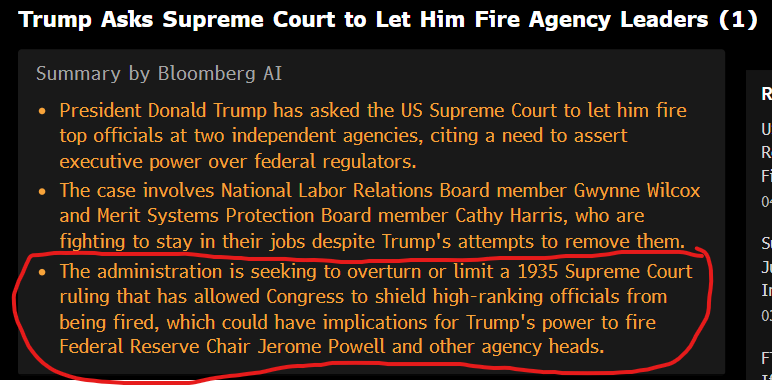
The first headline that is quoted in Bob's thread is not an accurate headline. Maybe it's engagement farming, maybe people just don't know better. Just because someone puts it in caps doesn't make it an accurate headline. The Trump administration said in February it was going to seek to overturn Humphrey's, which is the legal decision upon which most scholars think Fed independence rests. Humphreys was actually decided in the spring of 1935, when the Congress was passing the Banking Act of 1935 that created the modern Fed. It established the FOMC as a monetary policy making body, which hadn't been part of the original 1913 Act. Congress relied on Humphreys when creating staggered terms for Fed governors, among other measures, that were explicitly designed to insulate the central bank from presidential control (notably, against the wishes of the then-Fed chair, Marriner Eccles, who wanted a central bank board that answered straight up to the president). It is true that overturning Humphreys could have significant consequences for the Fed, but this is not a given and either way, Trump has asked to fire FTC commissioners and NLRB members, not Fed governors. His DOJ is challenging, head on, a decision that is widely viewed as insulating Fed governors from removal. It is possible that the Supreme Court would design a ruling that nukes the job-security protection for FTC commissioners and NLRB board members but does not do so for the Fed. Whether the Roberts Court does that is a separate question entirely. For more on this, I highly recommend former Fed governor Dan Tarullo's recent law review article that walks through many of these issues. To get to the point of his article, it "discusses why and how, notwithstanding these apparent constitutional vulnerabilities, the Court might well not hold the core delegation to, and structural features of, the Federal Reserve to be unconstitutional. As to why—members of the Court’s conservative majority may be more favorably inclined toward a central bank than other economic regulatory agencies. A more tangible consideration is the difficulty the Court would have in fashioning a remedy for the supposed unconstitutionality of the FOMC structure or mandate that did not risk major disruption to monetary policy, and thus the U.S. economy." "As to how.... the Court may find that, on the merits, the Federal Reserve enjoys an exception to the doctrines the Court’s majority has been building. This second way itself has two branches. One is based on the history of the regulation of money going all the way back to the First Bank of the United States. The other rests on perceived functional differences between the Federal Reserve and other independent agencies—an 'anomaly,' as then Judge Kavanaugh once described it." southerncalifornialawreview.com/2024/05/14/the…

English
0
0
1
970
Andreas Steno Larsen
Andreas Steno Larsen@AndreasSteno·
I am not sure that this has received enough attention yet. In case this happens, you don't own enough debasement-bets yet
Andreas Steno Larsen tweet media
English
82
182
1.3K
182.9K
Bertrand Schmitt
Bertrand Schmitt@bschmitt·
@XPlaneOfficial Excellent, I remember there was a plan for performance improvements, is it still coming? Triple screen 4K (without 3 computers) and VR still get still very poor framerates, even on the most highend hardware you can get today...
English
0
0
3
441
X-Plane Flight Simulator
X-Plane Flight Simulator@XPlaneOfficial·
It's out! X-Plane 12.2.0 beta is here, a major graphics-based update packed full with new features. Let's GO!!! 😎 ✅ Dark-cockpit fix ✅ All new cloud rendering/scattering ✅ New tone mapping ✅ Enhanced atmospheric rendering ✅ Stability updates. ✅ Enhancements to brakes, parking brakes & new chocks. ✅ ATC fixes ✅ Airport-specific ground texture enhancements ✅ New gateway cut. Blog post: x-plane.com/2025/04/whats-… Version Notes: x-plane.com/kb/x-plane-12-…
X-Plane Flight Simulator tweet media
English
8
18
224
10.1K
X-Plane Flight Simulator
X-Plane Flight Simulator@XPlaneOfficial·
It’s roadmap time! We’re loving the the positive reception to 12.1.4, and the 12.1.X updates – glad to see that everyone is enjoying them. The next update will be 12.2.0. This is a big one – we can’t wait to show what we’ve been cooking up. Some of the features that we’re targeting: ✅ Dark Cockpits will be addressed in this update ✅ Broad Lighting Improvements ✅ Cloud Improvements ✅ Stability Improvements Stay tuned! 🥳
X-Plane Flight Simulator tweet media
English
22
12
196
8.6K
Mark Ankcorn
Mark Ankcorn@markankcorn·
@dhh The M4 Ultra will have 4x the memory bandwidth. This tops out at ~200gb/s and the two year old M2 Ultra is already 800gb/s. Cluster will be even more painful since the Macs use Thunderbolt 5 at 120 gbps while this new box stops at 5 gbps
English
2
0
13
2.3K
DHH
DHH@dhh·
Found my new PC 😍. Specs on the AMD Max+ 395 chip is insane. CPU is a close match for a M4 Pro (3K/20K Geekbench 6), but it can be configured with an insane 128GB of shared RAM for less than $2,000?! That would cost $4,800 and require a Mac Studio. Will be a beast for local AI!
Framework@FrameworkPuter

Introducing our new product category, the Framework Desktop! This is a tiny, 4.5L machine with massive performance inside using AMD’s new Ryzen AI Max processors, an awesome machine for gaming, workstation, and AI crunching! Pre-orders are open now. frame.work


English
106
101
2.5K
465K
Bertrand Schmitt
Bertrand Schmitt@bschmitt·
@neilcybart @waitbutwhy My primary reason for not using much my AVP is the lack of comfort. Even 30 min is painful. Let alone 2 hours. In comparison, my Varjo VR4 is way more comfortable, and I will use it longer.
English
0
0
0
105
Neil Cybart
Neil Cybart@neilcybart·
The solution for long-duration Apple Vision Pro usage won’t be that Edward scissorshands contraception on your head. Instead, it’s a smaller and lighter headset. The tech isn’t there yet, hence Apple’s focus on easy to wear hand bands good for up to 2 hours of usage or so at a time.
English
3
0
11
7.4K
Tim Urban
Tim Urban@waitbutwhy·
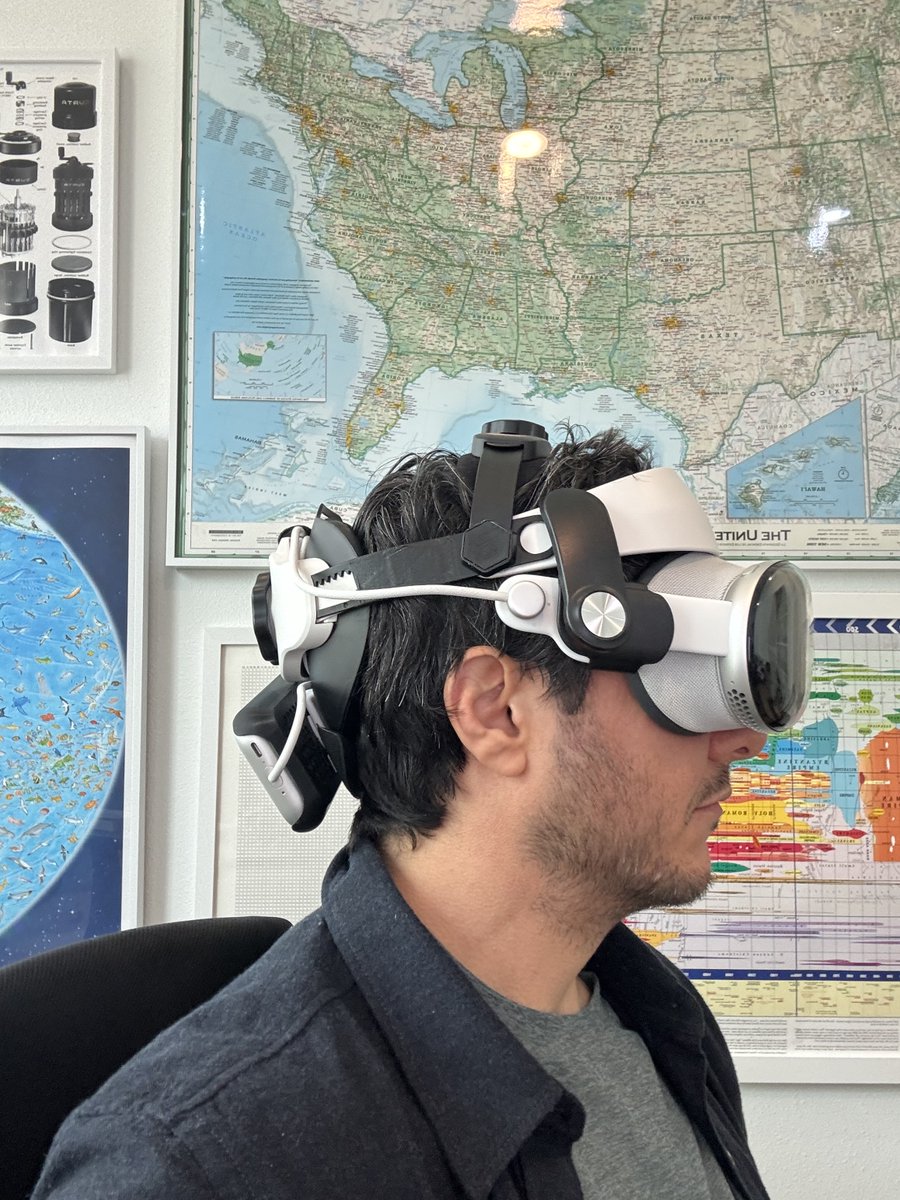
Allow me to explain this absurd thing on my head (made by a 3D printer, not Apple). I am possibly the only person on Earth who uses the Apple Vision Pro 20+ hours a week. As a writer, it's just such a MASSIVE upgrade to go from sitting in an office looking at a 32-inch monitor to sitting on a mountaintop, totally immersed and undistracted, looking at a 50-foot screen. There's just one problem: the idiotic way Apple designed their headset, all the weight sits your face. This is uncomfortable and was on the way to making me look 80 years old. My friend @jcoon1800, also appalled by Apple, designed a solution: a headset that redistributes the weight from the face to the top and back of the head. The headset is now not touching my face at all—it hovers a millimeter off the skin. This is WORLD'S more comfortable, causes no skin damage, and can be worn for hours with no issue—way better than even the lightest headsets I've worn. This isn't an ad and the headset isn't for sale. I just needed to say: The fact that one dude managed to figure this out and Apple somehow did not boggles my mind. @apple please talk to Jonathan and get your shit together. VR, even with a big heavy headset, does not have to be uncomfortable! It's all in the design. (@mkbhd get in touch, you need to try this.)
Tim Urban tweet media
English
424
345
8.8K
934.2K
Yishan
Yishan@yishan·
I think the Deepseek moment is not really the Sputnik moment, but more like the Google moment. If anyone was around in ~2004, you'll know what I mean, but more on that later. I think everyone is over-rotated on this because Deepseek came out of China. Let me try to un-rotate you. Deepseek could have come out of some lab in the US Midwest. Like say some CS lab couldn't afford the latest nVidia chips and had to use older hardware, but they had a great algo and systems department, and they found a bunch of optimizations and trained a model for a few million dollars and lo, the model is roughly on par with o1. Look everyone, we found a new training method and we optimized a bunch of algorithms! Everyone is like OH WOW and starts trying the same thing. Great week for AI advancement! No need for US markets to lose a trillion in market cap. The tech world (and apparently Wall Street) is massively over-rotated on this because it came out of CHINA. I get it. After everyone has been sensitized over the H1BLM uproar, we are conditioned to think of OMG Immigrants China as some kind of Alien Other. As though the Alien-Other Chinese Researchers are doing something special that's out of reach and now China The Empire is somehow uniquely in possession of Super Efficient AI Power and the US companies can't compete. The subtext of "A New Fearsome Power Now Under The Command of the CCP" is what's driving the current sentiment, and it's not really valid. Like, no. These are guys basically working on the same problems we are in the US, and not only that, they wrote a paper about it and open-sourced their model! It is not actually some sort of tectonic geopolitical shift, it is just Some Nerds Over There saying "Hey we figured out some cool shit, here's how we did it, maybe you would like to check it out?" Sputnik showed that the Soviets could do something the US couldn't ("a new fearsome power"). They didn't subsequently publish all the technical details and half the blueprints. They only showed that it could be done. With Deepseek, if I recall correctly, a lab in Berkeley read their paper and duplicated the claimed results on a small scale within a day. That's why I say it's like the Google moment in 2004. Google filed its S-1 in 2004, and revealed to the world that they had built the largest supercomputer cluster by using distributed algorithms to network together commodity computers at the best performance-per-dollar point on the cost curve. This was in contrast to every other tech company, who at that time just bought what were essentially larger and larger mainframes, always at the most expensive leading edge of the cost curve. (To the young people reading this, this will sound incredible to you) I worked at PayPal at the time, and in order to keep pace with the rising transaction volume, the company was forced to buy bigger and bigger database servers from Oracle. We were totally Oracle's bitch. At one point when we ran into scalability issues, the Oracle reps told us we were their biggest installation so they had no other reference point on how to help us overcome our scalability issues. We literally resorted to flipping random config switches and rebooting it. (This heavily influenced me when I was a young manager later at Facebook. I deliberately torpedoed an Oracle salesman's pitch to try and get us to switch from open source MySQL databases to an Oracle contract: of course we had scalability problems, but at least when we had them, we could open up the hood and figure out how to fix it ... assuming we had good enough engineers, and we did. When it's closed-source infra, you're at the mercy of the vendor's support engineers) Back to Google - in their S-1, they described how they were able to leapfrog the scalability limits of mainframes and had been (for years!) running a far more massive networked supercomputer comprised of thousands of commodity machines at the optimal performance-per-dollar price point - i.e. not the more expensive leading edge - all knit together by fault-tolerant distributed algorithms written in-house. Some time later, Google published their MapReduce and BigTable papers, describing the algorithms they'd used to manage and control this massively more cost-effective and powerful supercomputer. Deepseek is MUCH more like the Google moment, because Google essentially described what it did and told everyone else how they could do it too. In Google's case, a fair bit of time elapsed between when they revealed to the world what they were doing and when they published a papers showing everyone how to do it. Deepseek, in contrast, published their paper alongside the model release. Now, I've also written about how I think this is also a demonstration of Deepseek's trajectory, but that's also no different from Google in ~2004 revealing what it was capable of. Competitors will still need to gear up and DO the thing, but they've moved the field forward. But it's not like Sputnik where the Soviets have developed technology unreachable to the US, it's more like Google saying, "Hey, we did this cool thing, here's how we did it." There is no reason to think nVidia and OAI and Meta and Microsoft and Google et al are dead. Sure, Deepseek is a new and formidable upstart, but doesn't that happen every week in the world of AI? I am sure that Sam and Zuck, backed by the power of Satya, can figure something out. Everyone is going to duplicate this feat in a few months and everything just got cheaper. The only real consequence is that AI utopia/doom is now closer than ever. ==== Bonus: This is also a little similar the Ethereum PoS moment, when AI finally has a counterpoint to the environmentalists who say AI uses so much electricity. We just brought down the cost of inference by 97%!
English
296
1.2K
6.5K
864.1K
Bertrand Schmitt
Bertrand Schmitt@bschmitt·
@sc_cath Also deepseek breakthrough optimizations benefit all AI Semiconductor companies, not just Nvidia
English
0
0
2
452
Sylvain Catherine
Sylvain Catherine@sc_cath·
I'd love to see a proper IO analysis of the deepseek shock on Nvidia. What we learned, is that you can do much more with an Nvidia GPU than we thought. But it’s not immediately obvious that this is bad news for Nvidia. Imagine Nvidia had just announced that its next-generation chip would be 10 times more powerful and efficient than the previous one—would that be seen as bad news for the stock? Yes, achieving a given computational goal now requires fewer GPUs, but that perspective feels shortsighted. Lower costs—both in price and energy consumption—effectively expand the range of feasible applications, which should, in turn, increase demand. So why the sharp drop in Nvidia’s stock price? One key difference between a sudden leap in next-generation chip performance and the DeepSeek shock is that the latter retroactively upgrades the existing installed base of Nvidia GPUs, making them far more efficient than expected. In a sense, Nvidia is now competing against its own previously sold GPUs. The realization that these existing chips can deliver significantly greater output can be viewed as a massive positive supply shock—one coming from an unexpected "competitor." So maybe the overall effect on the company's value is ambiguous. Afterall, Nvidia, like any monopoly, must ration quantities to maximize profits.
English
33
29
269
28.6K
Bertrand Schmitt
Bertrand Schmitt@bschmitt·
Good to bring some realism to what it means to bring manufacturing back anywhere... these are some of the starting points to start to have a chance to compete against China in manufacturing. Anything less, and competing is delusional...
carried_no_interest@carrynointerest

Bringing back American manufacturing is one of the most important challenges we face as a nation, and @garrytan is being delusional. That’s okay, btw; VCs have to be delusional—it’s part of their job. The source of his (and many VCs') delusion is that they think bringing back American manufacturing can be solved by robotics, software, and efficiency. Unfortunately, the problem is much deeper than that. Time for a quick history lesson...because it’s important to understanding how we fix this. LET'S HEAD OVER TO CHINA... Because fixing this problem involves figuring out what we are competing against. Let’s go back to 1979. Deng Xiaoping decides to open up China. He enacts a few policies that have MASSIVE impacts on the United States' ability to manufacture—specifically related to financial subsidies: Special Economic Zones: Geographic zones were created with lower taxes to establish CLUSTERS of manufacturing expertise. This was massive. The entire chain of manufacturing was strategically geolocated to minimize supply chain friction. Financial subsidy here? Lower taxes. Infrastructure Investment: They built out massive infrastructure projects, but I’m going to highlight two important ones: highways and industrial parks. The government ACTIVELY BUILT COMMERCIAL REAL ESTATE that they gifted to the chosen few. This is insane. Imagine us doing this at SCALE. Financial subsidy here? Literally free infrastructure. Direct Manufacturing Subsidies: Where do we even start here? -They gave free land to factories. -They provided below-market loans to entrepreneurs. -They SUBSIDIZED ELECTRICITY, WATER, AND RAW MATERIALS. They gave REBATES FOR EXPORTS (!!!). Don’t believe me? Let’s look at a few examples. Steel Industry: Baosteel (now part of China Baowu Steel Group) received massive state support, including:Below-market loans worth billions from state banks Government-funded infrastructure for new plants Subsidized iron ore through state trading companies Hebei Iron & Steel (HBIS) benefited from:Provincial government land grants Electricity subsidies Debt-to-equity swaps when struggling Aluminum Processing: China Hongqiao Group became the world’s largest aluminum producer through:Subsidized coal power from the local government Discounted loans from state banks Tax rebates on exports Chalco (Aluminum Corporation of China) received:Direct cash grants for technology upgrades Preferential access to bauxite resources Government-backed bonds for expansion Notice how I haven’t even MENTIONED the low-cost labor. Maybe that’s for a different thread. Let’s look at some fun numbers from the Kiel Institute: According to conservative estimates, China’s industrial subsidies amounted to €221 billion or 1.73% of GDP in 2019. This is 3–4 times higher than subsidy levels in large EU countries and up to 9 times higher in more comprehensive studies. Over 99% of listed firms in China received direct government subsidies in 2022. If you aren’t sensing a theme here yet, let me make it explicit: China used the power of government subsidies to dominate the entire manufacturing world in 25 years. They may be smart. They may be hardworking. But the main reason they won was INSANE government subsidies that would give your favorite libertarian cold sweats. Trump and JD Vance claim to want to bring back American manufacturing. Some of their advisors also claim to want small government. Unfortunately, this problem (imo) is ONLY solved by an extreme partnership between the government and private industry. IMO, you can have one of two options: No government involvement, and we continue losing manufacturing to China. Lots of government involvement, and we maybe win. All of you e/acc / reindustrialization fans need to start writing letters to Congress, lmao.

English
0
0
5
339
Bertrand Schmitt รีทวีตแล้ว
Marc Andreessen 🇺🇸
There are banking regulations and then there are banking "regulations". We live under the latter. An unconstitutional conjoining of state and private power. And, I believe, prosecutable. Conspiracy to deny rights with no due process.
Hanlon's Laser@aphofer

Folks. Banking regulations DO NOT require banks to kick out Politically Exposed Persons (@pmarca ). They just have to go through enhanced due diligence and monitoring. The practical effect may indeed be to cause management to blanket disallow them, because the fines are huge.

English
124
356
3K
199.5K
Bertrand Schmitt
Bertrand Schmitt@bschmitt·
Great read as usual from Benedict Evans
English
0
0
3
141
Bertrand Schmitt รีทวีตแล้ว
Haseeb >|<
Haseeb >|<@hosseeb·
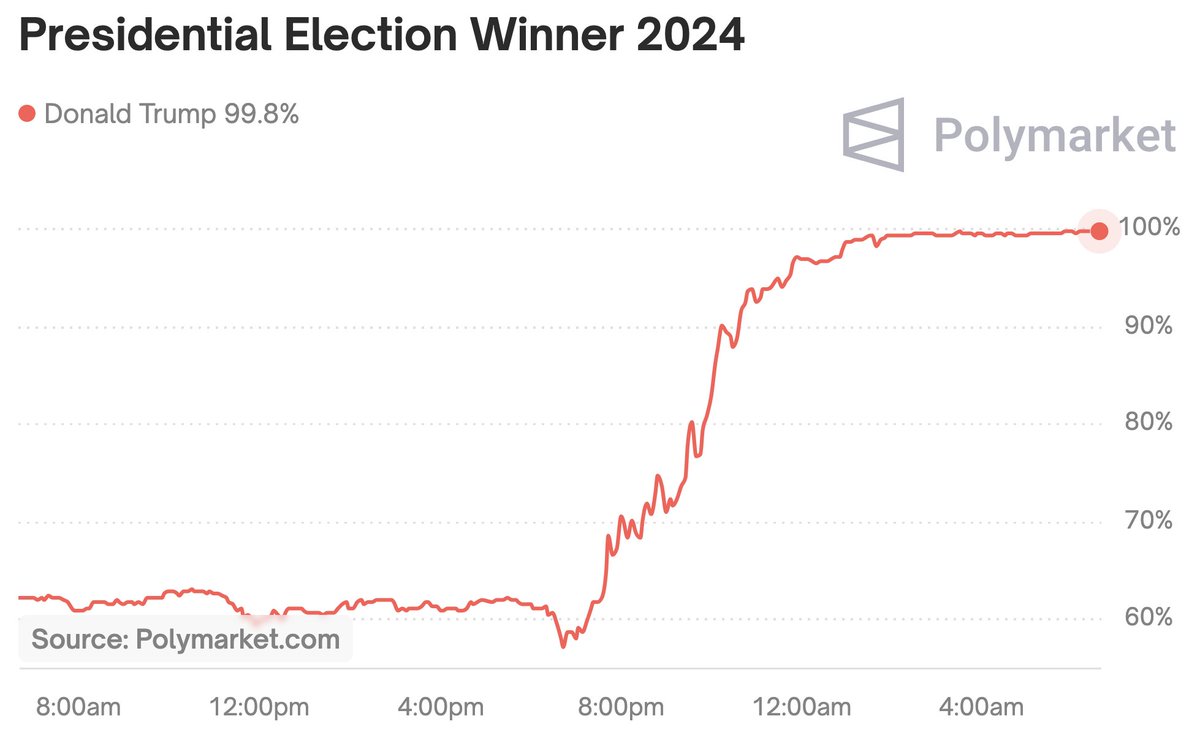
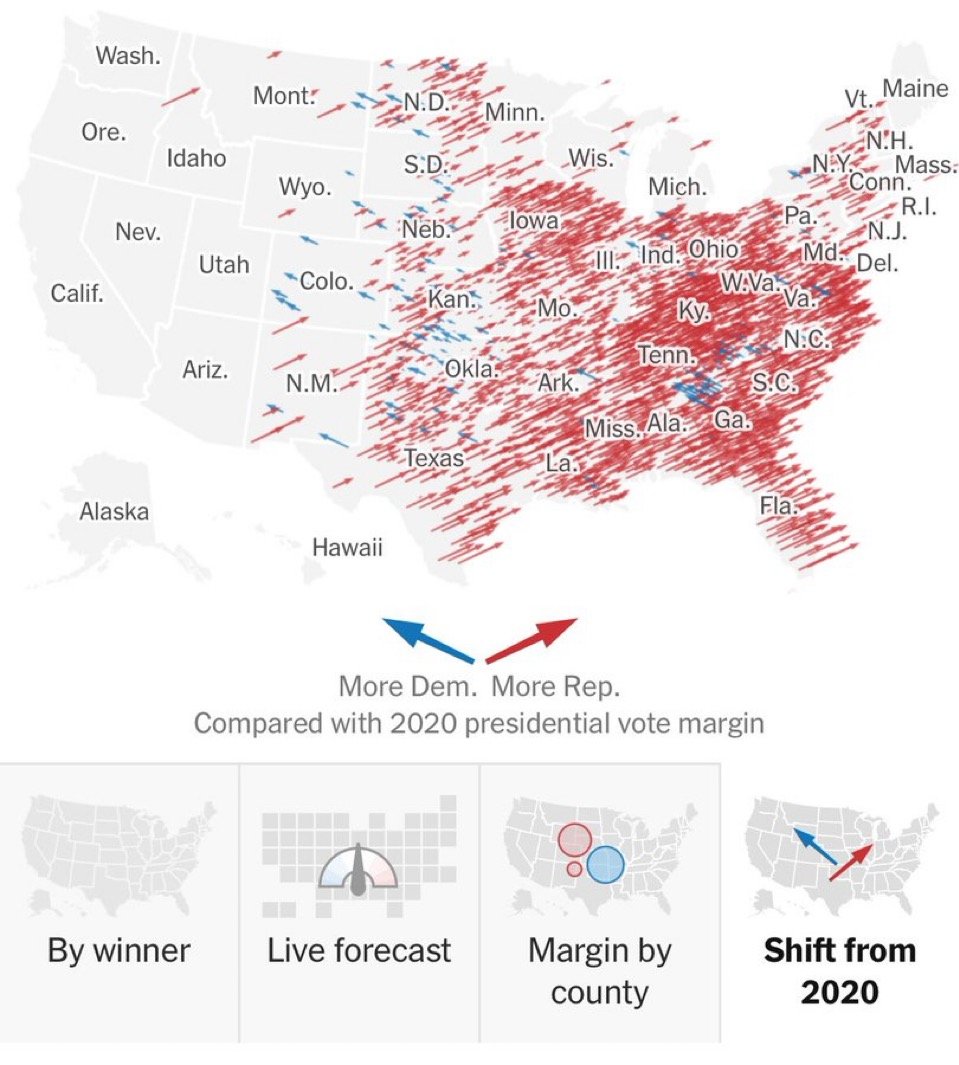
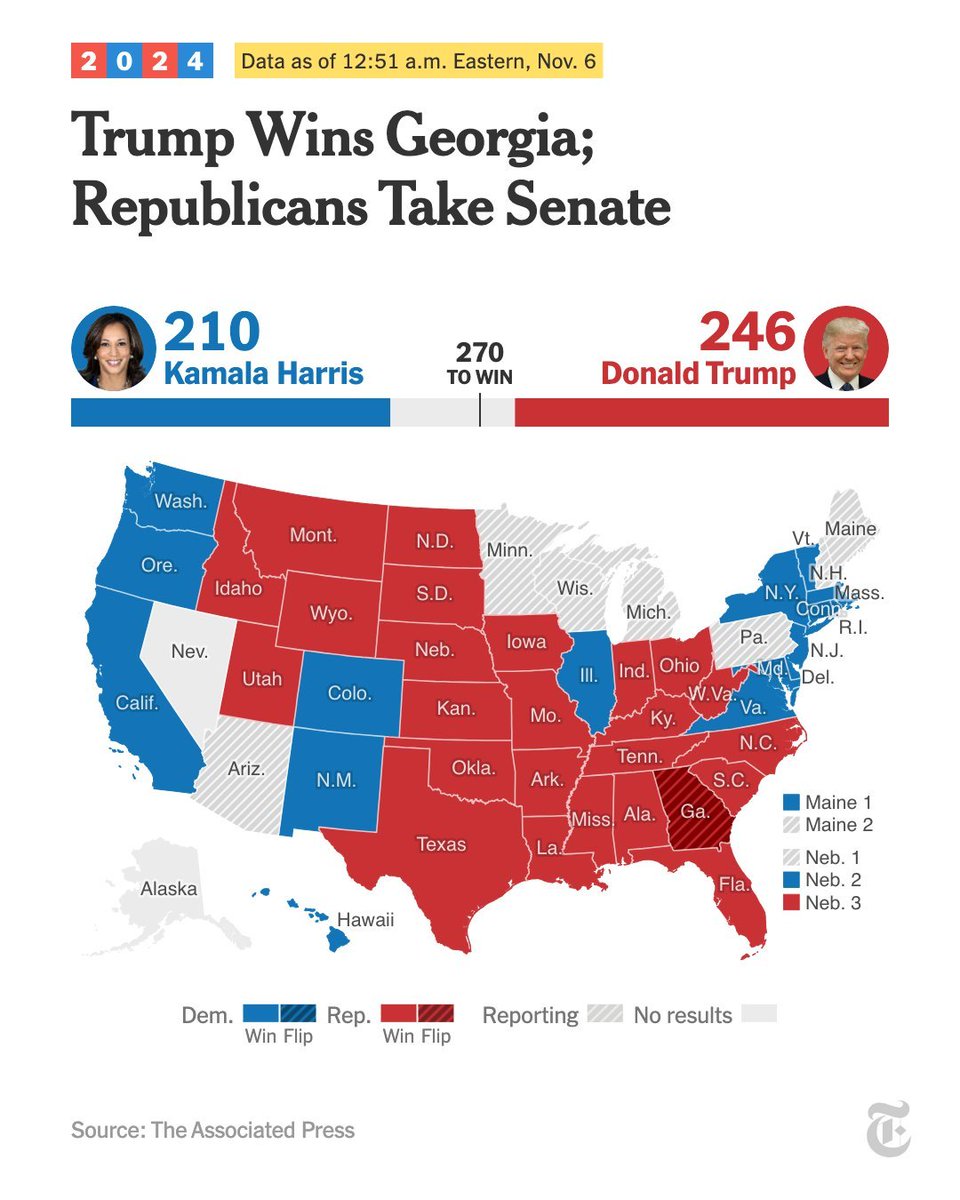
What Polymarket got Right that the Experts Got Wrong As the dust settles on the election, there’s a story that the WSJ and NYT didn’t tell you. While the mainstream news was busy with their TV pageantry and hedging on calling key swing states, Polymarket, the world’s biggest prediction market, had already delivered its verdict by midnight EST, declaring Trump was 97% likely to win. This was before the media called even a single swing state. All throughout this election, Polymarket was always one step ahead. I want to explain why this is, because judging from the Twitter responses I was getting last night, most people deeply misunderstand this. There are two fundamental things that Polymarket did better than the media. 1. Polymarket was more accurate on the forecast going into the election. Let’s take the pollsters and analysts. Election poll-based models claimed the race was a dead-even 50/50. Polymarket meanwhile was priced Trump with a distinct edge—going into the election, he was priced around 62% to win. If you remember, the mainstream media derided Polymarket for this difference. Polymarket should be the same as the modelers, they said! Obviously it means you can’t trust Polymarket. It’s priced differently because it’s a bunch of Trump-loving crypto bros. It’s invested by Peter Thiel. Only foreigners trade on it. It's unregulated, so it must be being manipulated. There's a whale pushing up the price of Trump. And on and on. Implicit in this dismissal is a deep distrust of markets. As though markets cannot be trusted unless affirmatively proven otherwise. And of course, if you actually trusted the markets, you might not trust the media anymore. And their whole business model is predicated on you distrusting anyone but them—why else would you continue to click on their never-ending stream of clickbait? But anyone with experience with markets knows: it doesn’t fucking matter if a market is composed of Republicans, or Democrats, or foreigners, or whatever. In reality, we know that JP Morgan was using Polymarket, as were some of the largest hedge funds in the world (most have non-US subsidiaries). It was integrated into Bloomberg Terminal, it was being quoted on CNN. And yet the media spoke of Polymarket as though it was 4chan. Understand, Polymarket traded $3.6 BILLION dollars on the presidential election. This was the largest election betting market by volume IN HISTORY and AN ORDER OF MAGNITUDE more than any other election market ever. There was more riding on this than any single modelers’ career prospects. Understand—markets work because of how much is riding on getting the answer right. These supposed biases—being Trump-aligned crypto-pilled non-Americans—didn’t skew the market’s accuracy. (It seems obvious in retrospect that being non-American might improve your ability to dispassionately predict an election.) But the identities of the bettors didn't matter. Prediction markets distill input from many diverse actors to produce prices that transcend biases. Markets don't care about ideology, they only care about being right. And as it turns out, Polymarket was more right than any pollster or modeler. Now, I want to be clear what I’m not saying: the difference between 60/40 and 50/50 sounds big, but it’s not. Elections are noisy. High school statistics will tell you that if you want to tell if a coin is rigged to be 60/40 rather than 50/50, you would need over 100 coin flips to have 90% certainty. The outcome of “Trump won this election” does not tell you whether the coin was 60/40 or 50/50. My point is not that Polymarket was right and the models were wrong. They actually didn't disagree with each other by much. I'm making a more subtle point: the market was consistently pricing Trump’s odds higher than the polls. Remember, the market knows what the polls and analysts are saying. Markets incorporate all existing information—but Polymarket disagreed with with the pollsters. The only explanation that analysts could come up with for this was: Polymarket is biased. They didn’t have the humility to imagine, maybe, just maybe, Polymarket knew something that was not being captured by the polls. Polling sucks. This is all well established now. In the pre-Internet era, polling was much more accurate. Landline poll response rates were often above 60%. Today, poll response rates are around 5%. This means pollsters are getting massive sampling biases, and there is no possible way to correct these biases without baking in clumsy statistical corrections. (Plus pollsters—who are ultimately selling a product and have reputations to keep up—frequently herd their estimates together to avoid being an outlier, which fucks up poll aggregation.) Plus, Trump is special. He is uniquely divisive in American politics. So for three elections in a row, we have seen massive polling errors that underestimated his support—the so called “Shy Trump Voter” effect. Polymarket presumably believed that the polls were missing this. The pollsters said, no: we’ve updated our models and corrected for it. Polymarket said: I don't buy it. Polymarket was right. Now, again! Polymarket did not say the election was 90% for Trump to win. 62% is not a sure thing, and elections are genuinely uncertain. But what irks me is that there was not even a tinge of curiosity from the media about the delta. Maybe Polymarket knows something we don’t? Maybe there’s information we’re missing that’s not being captured in the polls? Remember, Trump massively outperformed his polls all across the country, in both red states and blue ones. He sweeped every single swing state, and even won the popular vote—something most people thought impossible. Are you really so confident that there was no way to detect this—the sentiment of tens of millions of Americans—that didn’t involve the same old pollsters running the same old Internet surveys? This is what being a student of the markets teaches you. Markets are smart. But they don’t explain themselves—they just show you the outcome. That brings us to the second way that Polymarket outperformed the media. 2. Polymarket called the election in real-time, way before the media did. The inscrutability of markets came in full force on election night. Polymarket moved quickly and violently before a single swing state was ever called. According to Polymarket, the election was over by midnight, while the mainstream media was milking the drama until the election was officially called at 6AM the next morning. Why was this? First, Polymarket saw an important correlation that the mainstream media was not willing to explain to their viewers. You see, polling errors are seldom random; they are usually correlated across states. So when traders saw that Trump was massively outperforming his polls in states that were not themselves competitive—picking up huge vote share in NYC (cleanly blue) or Florida (cleanly red), this meant that there must be a massive polling miss across the country. Polymarket immediately picked up on this and realized that the swing states could not possibly be competitive anymore. Polymarket priced Trump to win Pennsylvania at 90% by 11:30PM, when only a small portion of the Pennsylvania vote had been counted. Prediction markets don’t wait for pageantry or pundits. It doesn’t care if it invalidates the sacred ritual of waiting for the votes to be counted. Remember in 2020 when Fox News called Arizona early (which turned out to be correct), viewers were outraged. Trump vowed to boycott the network over it. This reinforced the lesson—the networks must sit there and dutifully count up the votes. Don’t be too clever. But markets don’t care about drama. They only care about outcomes. Obviously, it would be incredibly difficult to explain to a CNN viewer that the election is over, the polling error in non-competitive states is too big, Kamala is doomed and you should go to sleep and not bother to wait for swing states. It goes against the narrative that the media has been reinforcing for months. The public wants simple, explainable stories, and everyone knows how the narrative is supposed to go—you wait for the swing states and until one of the little colored bars crosses the 270 line. At 12:51AM, the NYT was still showing this dramatic chart and headline. By then Polymarket already had Trump priced at 98% to win. So election watchers dutifully stayed up through the night so the media could complete its empty ritual of filling up the bars. Polymarket’s traders have no loyalty to narrative and no incentive to play up the drama for ratings—they just call it straight. @shayne_coplan, Polymarket’s founder, said that Trump’s campaign team was reading Polymarket to try to understand how to actually interpret the odds. The media even had the gall to complain that Trump was declaring victory when his electoral count was at 267—at that point, the Polymarket odds were so low that they registered as 100%. The beauty of markets is they respond instantly to new information. The fastest trader who incorporates the information gets a prize—profit. This is something traditional media fundamentally is not set up to do. They have to filter events through layers of interpretation, narrative making, and internal politics (recall Murdoch’s intercession into the 2020 Arizona call). The decentralized nature of Polymarket bypasses all this bullshit. It lets information flow without any interference. There is a lot to reflect on from last night. This election was a resounding reprimand of the Democratic party, a rejection of the expert class, and an immune response against an arrogant media. But for Polymarket, it was a night of pure vindication. For me, the lesson is this: the next time something important is going on in the world, skip the op eds and check the Polymarket odds.
Haseeb >|< tweet mediaHaseeb >|< tweet mediaHaseeb >|< tweet media
English
105
483
2.5K
298K
Bertrand Schmitt รีทวีตแล้ว
Andrew Curran
Andrew Curran@AndrewCurran_·
Sundar Pichai said on the earnings call today that more than 25% of all new code at Google is now generated by AI.
Andrew Curran tweet media
English
222
955
6.5K
1.8M
Bertrand Schmitt
Bertrand Schmitt@bschmitt·
Great news that #AI is not going to get over-regulated, and captured by special interests. If approved, it would have had a dramatically negative impact on California, and US leadership at large.
Pirate Wires@PirateWires

Newsom Vetoes SB 1047 in Victory for AI Sector Sunday afternoon, Gavin Newsom vetoed SB 1047, the high-profile AI bill whose early versions would establish a new government agency to enforce a compliance scheme on developers of “covered models” — those that used 10^26 or 10^25 floating point operations (FLOPs) for training or fine tuning, respectively — under threat of perjury. Critics of the bill, which included Silicon Valley venture capitalists, California startup founders, AI policy wonks, academics, and a bi-partisan set of lawmakers, argued it would stifle AI innovation and throttle California’s economy. “[T]he bill as currently written would be ineffective, punishing of individual entrepreneurs and small businesses, and hurt California’s spirit of innovation,” Ro Khanna, the Democratic lawmaker who represents California’s 17th district, said last month in a statement condemning the bill. Days later, top Democrat Nancy Pelosi published a statement opposing the bill, saying, “While we want California to lead in AI in a way that protects consumers, data, intellectual property and more, SB 1047 is more harmful than helpful in that pursuit.” Before his veto, Newsom echoed these concerns, saying the bill could have a “chilling effect” on the AI sector. Lawmakers began publicly opposing 1047 after persistent criticism and behind-the-scenes work from Silicon Valley executives and AI policy researchers. In early August, a16z's Chief Legal Officer Jaikumar Ramaswamy sent a 14-page letter to Sen. Scott Wiener, who introduced the bill, arguing that 1047 would favor closed-source over open source models and was too vague to be actionable, but nevertheless would impose criminal penalties on developers for noncompliance. And in June, a16z and Y Combinator co-published a letter in opposition to the bill signed by 140 AI startup founders. Advocacy groups opposed to 1047 such as Context Fund, an open-source community, pursued direct efforts in Sacramento as well. “Back in late March, we were talking to Senator Wiener's office. We spent about a month with them, expressing concerns and trying to get amendments into the bill, but that didn’t happen,” founder Chris Lengerich told Pirate Wires in July. “From the scientific community, the builders, the investors, and broadly — across the board — there's been a universal rejection of the ambiguous regulatory regime that SB 1047 imposes,” he said. “From the scientific community, the builders, the investors, and broadly — across the board — there’s been a universal rejection of the ambiguous regulatory regime that SB 1047 imposes,” he said. The bill was also criticized because it was all but authored by the Center for AI Safety (CAIS), an advocacy firm highly aligned with — and funded by — Effective Altruists, a group that believes AI will eradicate humanity unless the state regulates it. In addition to pushback from Silicon Valley and policy groups, a broad set of high-profile figures and academics in AI made statements opposing 1047. Meta's Chief AI Scientist Yann LeCun called the bill “extremely regressive,” and UC faculty and students circulated an open letter in opposition to Wiener's bill. Stanford Institute for Human-Centered Artificial Intelligence (HAI) co-director Dr. Fei Fei Li, HAI deputy director Russell Wald, and Bren Professor of Computing at CalTech and former senior director of machine learning research at Nvidia Anima Anandkumar all came out against the bill as well. Since introducing the bill in February, Wiener has steadfastly deflected criticism of the bill by characterizing its opponents as “the loudest voices,” “[insisting] that SB 1047 is ‘light-touch’ regulation supported by the vast majority of Californians and opposed only by a vocal minority of billionaire accelerationists.” Dan Hendrycks, one of two executives at CAIS, has argued that 1047 would establish “commonsense safeguards to mitigate against critical AI risk.” Several high-profile figures in the tech community made statements supporting the bill, including Elon Musk, Turing Award winning computer scientist and professor Yoshua Bengio, and Anthropic CEO Dario Amodei. “This is a tough call and will make some people upset, but, all things considered, I think California should probably pass the SB 1047 AI safety bill [...],” Musk posted on X in August. “For over 20 years, I have been an advocate for AI regulation, just as we regulate any product/technology that is a potential risk to the public.” In the run-up to the bill landing on Newsom’s desk, Vox, LA Times, Fortune, and other mainstream outlets published editorials supporting 1047. “California’s governor has the chance to make AI history,” Vox’s headline read. Its subhead: “Gavin Newsom could decide the future of AI safety. But will he cave to billionaire pressure?” In July, Pirate Wires reported that CAIS is closely connected to Effective Altruism — having received around $10m in funding from EA’s philanthropic arm Open Philanthropy. In the piece, we pointed out the apparent conflict of interest represented by the fact that while Hendrycks was significantly involved in drafting 1047 through his leadership role at CAIS, he launched an AI safety compliance company called Gray Swan that seems poised to capture demand for third-party compliance firms the bill would create. In so doing, Hendrycks would essentially serve as a primary enforcer of AI safety compliance and thus wield outsized influence over the sector. A week after our reporting on the conflict of interest, Hendrycks said he would divest his equity stake in Gray Swan. Last month in Pirate Wires, Mercatus Center Research Fellow Dean W. Ball further detailed CAIS’ involvement in the bill, and Weiner’s long-term relationship to Effective Altruists: "[To help draft the bill,] Wiener — one of California’s most powerful and ambitious politicians— turned to Hendrycks and CAIS…[who] even set up a distinct lobbying group, the Center for AI Safety Action Fund, after "getting lots of inquiries from policymakers, including Senator Wiener... to have a vehicle that could do more direct policy work," per Nathan Calvin, CAIS senior policy counsel. Then, as a co-sponsor of 1047, CAIS and Hendrycks drafted the bill in all but name [...] When Wiener sent out the bill of intent for 1047, lines of communication had already been open between Wiener and EA for years. The Senator has been a champion of YIMBY initiatives since at least 2018, and Open Philanthropy was the "first institutional funder of the movement," per its Wikipedia page. As of late last year, it's donated around $5 million to YIMBY efforts, $500,000 of which had gone to the nonprofit California YIMBY by the time it sponsored Wiener's SB 10, a housing bill that passed and was ultimately signed into law by Gavin Newsom in 2021." "I'm heartened that reasonable and informed voices prevailed. But SB 1047 is just the beginning, not the end, in terms of making sure AI regulation advances beneficial technologies, including supporting open source and startups," policy researcher and investor Lauren Wagner, who recently debated Hendrycks on the bill for the Carnegie Endowment, told Pirate Wires. "I want to see transparency requirements and increased state capacity for AI expertise, so that policymakers are making decisions based on evidence and a plethora of expert voices," she added. Newsom’s veto marks a notch in the discourse on the role of regulation in nascent technology sectors. Earlier this month, Newsom signed a string of AI related bills into law concerning AI generated deepfakes, AI-generated election-related memes, and using AI to clone actors and actresses. — @brandongorrell ━━━━━━━━━━ References for this post are in the article on our site. Go to Pirate Wires to read it.

English
0
1
2
117
Bertrand Schmitt
Bertrand Schmitt@bschmitt·
Insanely bad venture capital metrics in China... the future of startups and innovation in China is probably very dark, unless a dramatic turnaround in policy happens
Bill Gurley@bgurley

Many in Washington are preoccupied with China. If this article is accurate, the #1 thing we could do to improve US competitiveness, would be to open the door much more broadly & quickly to skilled immigration. Give these amazing entrepreneurs a home on US soil. @committeeonccp

English
1
0
3
174
Bertrand Schmitt
Bertrand Schmitt@bschmitt·
Very good recommendations to improve business conditions in EU from @levelsio
@levelsio@levelsio

🇪🇺 eu/acc A few weeks ago Mario Draghi asked my recommendations for his report that came out today about European competitiveness I had a call with him and summarized my problems with doing business in the EU I wrote this which is included in the report presented to the European Union today: 1. Minimum revenue cut offs for current and new regulation Exempt small businesses with annual revenues below €10 million from complex regulations like VATMOSS, GDPR, the EU AI Act, and certain labor laws. This approach encourages innovation and growth by allowing startups to focus on product development and market validation without the heavy burden of regulatory compliance. Once these businesses surpass €10 million, they will have the resources to comply with regulations, ensuring that growth is not stifled. 2. Simplify starting a pan-EU business with an EU-wide Incorporation (Inc.) business form Currently, starting and operating a business across the EU is complex due to 27 member states, each with its own company registration requirements. To streamline this process and make it easier for entrepreneurs to operate across Europe, there should be a single, standardized business entity that applies uniformly across all EU countries. I call this the European Inc. 3. Start an EU business fully online, no physical offices, notaries, lawyers etc To continue, right now starting a business in most EU member states it’s complicated, very time and resource intensive, and often involves lawyers and notaries. Instead, it should be as simple as going online to a centralized EU website, where entrepreneurs can register their business and details in just a few clicks. The entire process should be streamlined and efficient, allowing businesses to start operating immediately. The EU government taxes and bookkeeping of this business should also be fully online in an EU portal/dashboard. 4. 0% corporate tax for first 3 years of any new business Countries like Singapore have successfully attracted new businesses from around the world by giving them a massive tax discount during the first 3 years of business. Because they know that’s the most difficult time of a business: figuring out what product it makes and if there’s a market for it. That takes pressure off startups and business founders that they can focus on creating a great product and innovating. 5. Change tax on stock options: don't tax when a stock option is exercised, but tax it when the stock is sold The current tax policy in the EU taxes stock options at the time they are exercised, creating a significant financial burden on employees who have not yet realized any tangible financial gain. This approach stifles innovation, discourages entrepreneurship, and places the EU at a competitive disadvantage compared to other regions like the United States. I propose a simple change: Tax stock options when the stock is sold, not when the option is exercised. 6. Don’t see tech or AI as an enemy, but as a burgeoning and essential industry The most popular companies in tech are focused on AI right now for a reason. It’s the next frontier of computing. The European Union seems to consider AI the enemy. Any technology can be used for good or bad. By regulating it even before Europe has made much contributions (Europe has almost no tech companies leading in AI), it has stifled any potential innovation in AI from the start. Apart from the regulation itself, the optics of it make the EU look bad on a global scale. Why would tech founders move to Europe to start a business if the EU is actively positioning itself as Anti-AI? AI has gigantic potential to be used for good: think of the medical field for diagnosis of diseases, generally in programming (it helps programmers to create software faster/better), etc. This goes further than AI. The same applies to tech in general. It seems the EU is on a crusade against technology while not being able to compete in it itself. It feels a case of sour grapes: if we can’t build great technology in EU, nobody is allowed to do so! 7. Teach tech/coding/AI topics in all schools and unis It would help a lot if the EU has a focus on teaching AI and tech in schools and universities. Making the new generation competitive in this field instead. To secure the future prosperity of the European Union, we must prioritize education in technology, coding, and AI across all levels of schooling, from primary education to universities. This strategic focus is not just an educational reform—it’s a critical investment in the future competitiveness, innovation, and economic resilience of the EU.

English
0
0
2
435
Bertrand Schmitt รีทวีตแล้ว
Ben Landau-Taylor
Ben Landau-Taylor@benlandautaylor·
Read my new article in @palladiummag Since the dawn of industrial civilization, men have believed that humanity is on the brink of running out of food and resources, causing mass death and the collapse of society. For centuries, they have been wrong. 1/ palladiummag.com/2024/08/16/the…
English
6
52
219
46.5K