
ทวีตที่ปักหมุด
CVZ
99.1K posts

CVZ
@chuvanze
As our faces are different, so are we... Advocate of Diversity of Thoughts/Ponderer/Igbo from Delta/ENFP/Familycentric/LFC ⚽️
Here right now เข้าร่วม Temmuz 2012
6.8K กำลังติดตาม4.5K ผู้ติดตาม
@DOlusegun So 2 approvals for the debt of NGN 3.3 Trn in 2024 and 2026? Please draw a diagram for me since we are all being ridiculous!
English

Mr Obi,
3.3tn = VERIFIED legacy debt. This is money already owed to power generation companies and gas suppliers over the years. Not new spending. Old unpaid debts were finally audited and agreed upon. These debts are accrued from subsidies.
₦4tn = BOND (This is a borrowing plan.) A bond is NOT money that has already been spent. It’s how the government plans to RAISE money, usually by borrowing from investors, to pay off that existing ₦3.3tn debt.
Again Mr Obi,
One is the DEBT. The other is how to PAY the debt.
If you are still confused about this let me know so i can draw a diagram for you
Peter Obi@PeterObi
Let us reflect, sincerely and without sentiment. In the past few days, the President has reportedly approved ₦3.3 trillion as a “full and final” payment for debts in the power sector. Yet, this is not the first time such approvals have been made. On May 17, 2024, ₦3.3 trillion was approved for the same purpose. On July 25, 2024, another ₦4 trillion bond was approved to settle similar debts. There have also been other approvals in between, all targeted at addressing the same power sector liabilities. This raises a fundamental question: were the previous approvals mere announcements without execution? ₦3.3 Trillion Again? Nigeria’s Power Crisis Without End During the 2023 campaign, President Bola Ahmed Tinubu made a clear promise: that if he failed to deliver stable electricity, Nigerians should not re-elect him. Today, the reality is that power supply has worsened, to the extent that there are even discussions about disconnecting the Presidential Villa from the national grid. Each time legitimate concerns are raised, what we see appears more like policy pronouncements than measurable progress. Now, again, we are confronted with another ₦3.3 trillion approval to settle power sector debts. These debts were largely accumulated under successive administrations of the All Progressives Congress between 2015 and 2025. This raises serious concerns about accountability, transparency, and effectiveness in public financial management. It is important to note that government institutions and agencies, including the Presidential Villa owe a significant portion of these debts. Year after year, budgets were made and funds appropriated. Why then were these obligations not settled when due? And from what source will this new payment be made? Are we resorting once more to borrowing to service inefficiencies? Key questions remain unanswered: How did the debt accrue? What is the actual total debt in the power sector? Which components of the debts are due to operators’ inefficiency and should be borne by them? Why have previous approvals not translated into tangible improvements? Who are the real beneficiaries of these repeated payments? Is the ₦3.3 trillion approved on April 6, 2026, the same as the ₦3.3 trillion approved in May 2024, and how does it relate to the ₦4 trillion bond approved in July 2024? Nigeria must move beyond recycled announcements and confront the power sector crisis with sincerity, transparency, and decisive reforms. Until we do so, we will remain trapped in a cycle of debt and darkness. But with discipline, accountability, and the right leadership, a new Nigeria is still possible. -PO
English
Do you mean undo or outdo? Cos...if he undo Buhari e for better
PO’s MainChic😎@D_goodybag
Bola Tinubu has used 3 years to undo Buhari, don’t imagine his 2nd tenure. Reject him by all means.
English
But Tega, wasnt this NGN 3.3T already approved in May 2024 or are we saying that was wrongly communicated by the Minister of Power?
O'tega Ogra@otegaogra
Dear Mr Rufai Oseni @ruffydfire, You more than most should know better than to couch misinformation as critical thought so permit my intrusion if only to correct the misinformation you are still pushing on this issue. 1. From the government’s own programme sequence, the issue under reference is unambiguous. The legacy obligation claims by stakeholders in scope were put at ₦4.7 trillion for the period February 2015 to March 2025 2. After reconciliation and regulatory review, that figure was brought to ₦3.3 trillion as the full & final negotiated settlement. That is a reduction of ₦1.4 trillion, (about 29.8%). That is not spin. It is the difference between a claim and a verified obligation 3. Your shop analogy is emotionally convenient, but financially false. Government is not a buyer haggling prices at Obalende market. In a regulated electricity market, submitted claims are not self executing truths. They must be tested against contracts, market rules, settlement records, and admissible obligations. If a claim of ₦4.7 trillion is reconciled to ₦3.3 trillion, the question is not why it changed. The real question is whether the final figure reflects verified contractual exposure. That is exactly what the review process recommended by Mr President was meant for 4. On your suggestion that GenCos are signing only out of desperation, what do the numbers say? - As at January 8, 2026, at the close of Series I, Phase I which raised ₦501 billion, 5 GenCos covering 8 power plants had already signed negotiated settlement agreements of about ₦827 billion. - By March 31, 2026, that had risen to 8 GenCos, made up of 2 public and 6 privately owned entities, covering 17 power plants, with signed agreements of about ₦2.28 trillion. That is not a phantom process. It is measurable progression 5. On the bond point, this is where your argument tries to sound clever but collapses under basic finance. A bond is not the same as immediate cash, yes. But that was never the claim. The programme has moved beyond rhetoric into funding and disbursement. Phase I was structured at ₦1.23 trillion. ₦501 billion has been raised for the first series in that phase. ₦223 billion has already been disbursed to Generation Companies and gas suppliers. ₦197 billion is in process, largely for gas obligations. That is liquidity entering the system. Not paper being rearranged. 6. Now to your red herring claim. The sequence matters because policy credibility lives in sequence. - July 2024, presidential authorisation for a comprehensive review of the sector following a policy paper presentation. - July 26, 2025, President Tinubu’s engagement with GenCos (claims of ₦4.7T presented) - August 15, 2025, FEC approval of a framework of up to ₦4 trillion. - Then reconciliation leading to the verified claims of N3.3T. Then market issuance. Then disbursement. That is not evasion. That is process. And in a sector like this, long weakened by opacity, process is the core reform. 7. Where your critique comes closest to substance is on the structural gap. You are right that settlement alone will not fix the sector. That is precisely why this programme runs alongside tariff alignment where service justifies it, metering expansion, stronger payment discipline, and targeted support for the poor and vulnerable. Otherwise, the same debt cycle simply recreates itself. 8. So to reclarify all I've said, verified settlements exist. Go and verify. Funding has been raised. Disbursements have begun. Most of the value is already covered in signed agreements by operators. You may argue it is incomplete. That is a fair argument. But it is highly inaccurate to suggest nothing has happened or that this is merely accounting fiction. The facts and record do not support that. P.S: This is not the end of the problem. But it is a structured attempt to fix it. And serious analysis from those in a position like yours, should be able to tell the difference. - O’tega ‘The Tiger’ Ogra
English

This dude unfollowed me on IG, bc he replied to my story making a suggestion, and I said "I'm good, I'll do what works for me, I appreciate it tho" thats literally all I said🤣🤣🤣🤣 he unfollowed then tried to hurry up & follow again b4 I noticed🤣🤣smh
English

Thats why earlier today I told Tolu and Enny in their tweets, that they werent answering the real question. NGN3.3 Trillion approved twice with payment plan in 2024 and 2026. Wetin cause am? They went off the tangent of the bond. Lol, I just dey laugh
oseni rufai@ruffydfire
When I started holding government accountable over these Genco’s I have my facts and I don’t do propaganda I have spoken to virtually everyone in the sector that matters! I ask why did the minister say this in 2024 Adelabu said the N1.3 trillion owed to GenCos will be paid via cash injections and promissory notes. I challenge the government information handlers to provide us the details of the 1.3 trillion payment they said they will make in 2024!
English


@tammyTalkk Happy Birthday Tammy. Here's wishing you an amazing year, just like you are!
English





@ness_valentine We need to verify this statement. 2 or 3 witnesses so the matter can be established...
English


Made this tweet because my grandma had been ill and I was really missing her voice and conversations, especially how she calls me "Aduke Miiii".
Got a call two hours ago that she passed on.
May the souls of all the faithful departed, through the mercy of God rest in peace...
'Denike Danjuma@DeNiike_
I remember how my cousin @to_sean and I used to fight on who would peel the beans for Friday night moi moi; it was always chaotic, until my grandma called me into her room and asked me to touch her palm... i told her it was like a baby's own. She told me washing beans made the palm very soft. I was in JSS1. Ladies and gentlemen, that was the last time I ever allowed anyone wash the beans in the house. She lied 😭 😭 Ps: @to_sean 🖕🏾🫵🏿
English
@BwalaDaniel Danny Boy, we know lawyers lie and conjure, but your jagbajantis na super oh. You better just stop appearing on TV stations, digging deeper holes. You will be out of govt on May 29, 2027...either way...
Dejii™@_Dejii
Daniel Bwala should just stop making these statements, isn’t he embarrassed enough already? I hope he will not call this video doctored. He implied that Tinubu has memory problems. He also asked why Tinubu has not been able to provide response to his drug related allegations. 🤦🏾♂️
English
@Con_quis_tador You are being ridiculous and not answering the question. Thanks for the help. Run along.
English

@chuvanze I for say make you try read what he wrote again slowly to see the answer to your question, but atp, I doubt if y'all have the ability to do that. So lemme help you...
English
Tolu, let's not be carried away by your response on the bond. The NGN 3.3 Trillion was approved for payment in 2024. Why is it veung re-approved in May 2026?
Tolu Ogunlesi@toluogunlesi
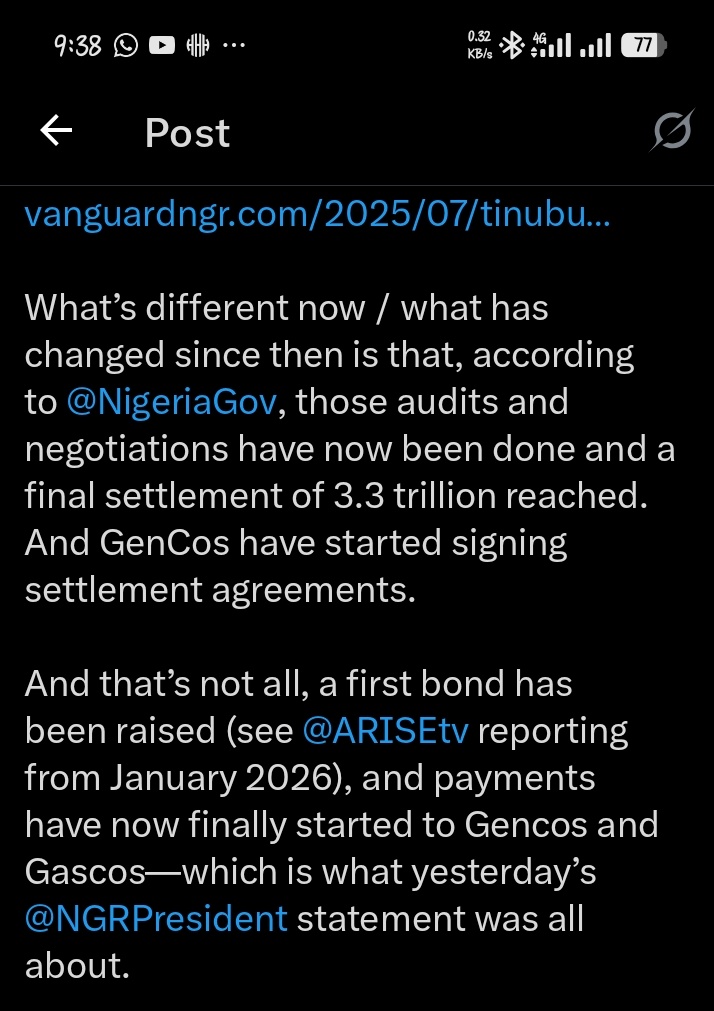
I can’t resist the urge to weigh in here, given my vow before God and man to always be there to save my dear brother @ruffydfire from his self-inflicted journalistic shortcomings. What I’m about to explain is publicly available material on Google: These are not different approvals. It’s merely different stages of the same process/program. The FGN has always made it very clear that the 4 Trillion Naira approval was not final. See this news, from July 2025: ‘The figure remains subject to downward revision, pending final validation. “While there is an anticipatory approval of this ₦4 trillion bond programme, it is subject to negotiations and final settlement of agreements. Only the amounts that the federal government validly owes are the things that will make it into the [bond] issuance…”’ Link here, via @vanguardngrnews: vanguardngr.com/2025/07/tinubu… What’s different now / what has changed since then is that, according to @NigeriaGov, those audits and negotiations have now been done and a final settlement of 3.3 trillion reached. And GenCos have started signing settlement agreements. And that’s not all, a first bond has been raised (see @ARISEtv reporting from January 2026), and payments have now finally started to Gencos and Gascos—which is what yesterday’s @NGRPresident statement was all about. Will never tire of telling my dear Rufai that social media energy shouldn’t just be for commenting/trolling, it should also be for research, otherwise one risks descending from journalism to jejune-alism. You have a right to disagree with any policy, and critique it, but this right shouldn’t be based on or fueled by ignorance or by an unwillingness to do basic research. PS. And you should take time to read AriseTV news from time to time. Thank you for your attention to this matter.
English
@ennyola0015 I disagree Enny. Approval is only granted after an amount is reviewed, not before. Why is the President approving twice? You are not addressing that issue and I have not seen anyone say anything sensible about it so far
English

It’s not propaganda.
It’s simply your poor understanding of how government works and how the media reports it.
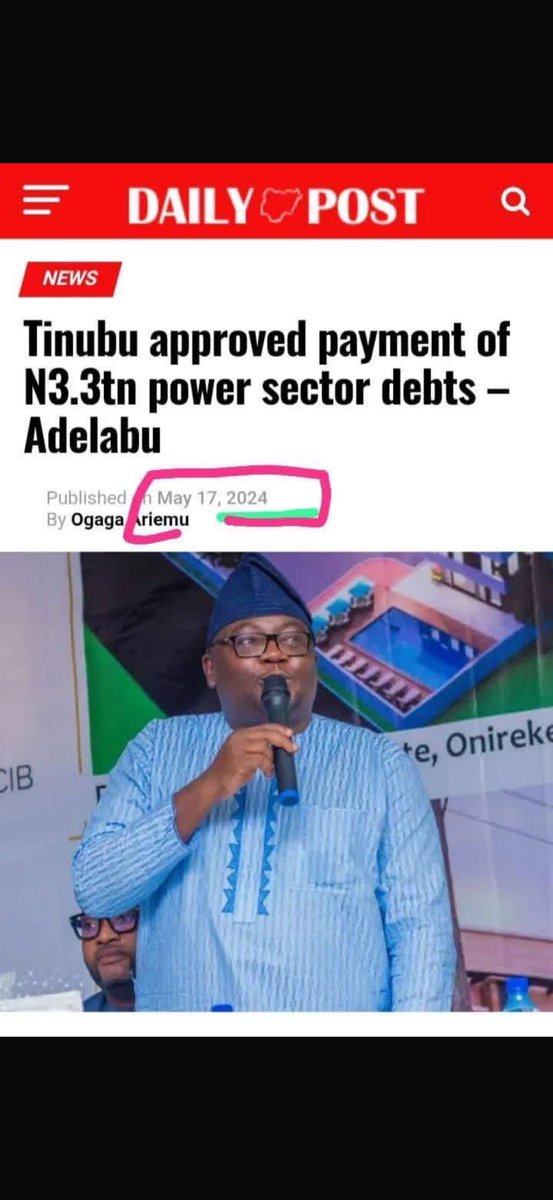
In May 2024, ₦3.3 trillion was approved after vetting Gencos’ claims.
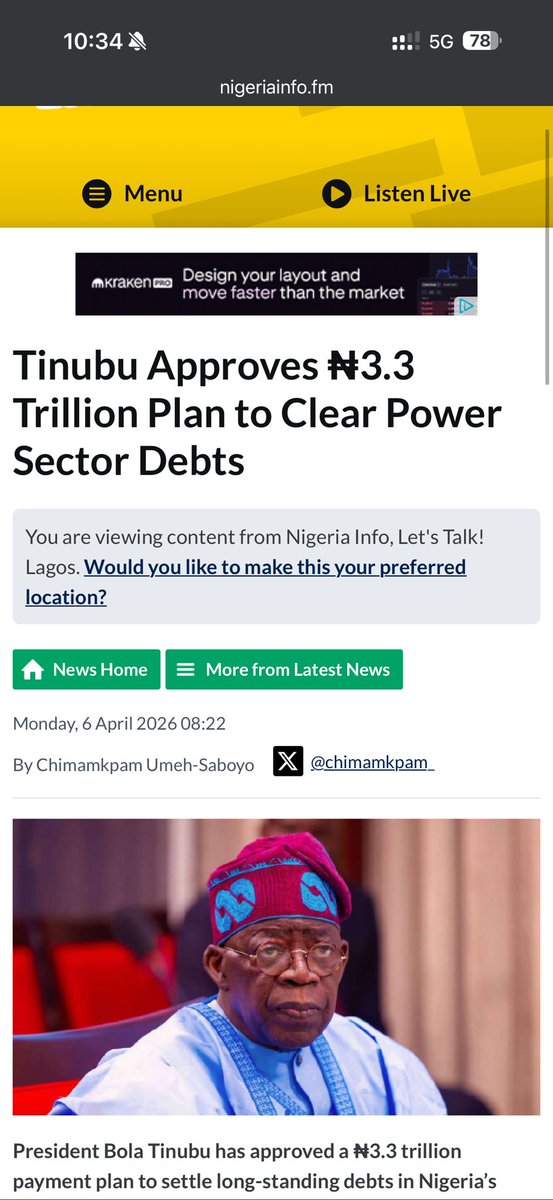
In April 2026, that same ₦3.3 trillion was approved for payment.
You’ll still see more headlines when it’s finally released.
That’s the pattern.

English