@ZoldenGames I still open the project and mess around with it from time to time, but I never found where to take it. My original idea was a sort of fluid match-three type game, but we have enough of those!
@nikitadiakur@SuperRare That's your tune? Dope. Is blueeskies-beauty-pluck the name of the sample? Anyway I'd love to hear the whole thing if it's ever done :)
So ...
you master #d3js
+ have a wonderful #Voronoï map 🏀
+ want to animate it to a second one 🏐
+ based on a distinct set of data
+ while animating addition and removal of data.
😱 Whaoooo, this is challenging !
But I've got good news for you 🤩
=> bl.ocks.org/Kcnarf/b2212ce…
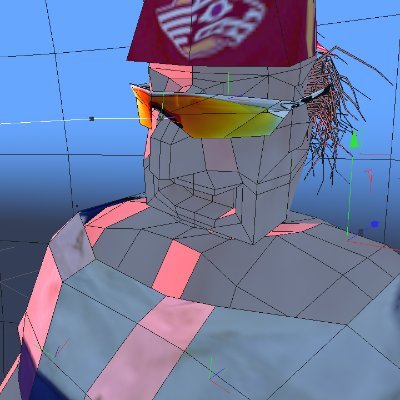
@rezoner Cool thanks, so you pick the resolution of your render target based on the width, depth and height of your voxel scene? I'm guessing there's a specific ratio for it to render "screen-pixel-aligned" so to speak?
Shadows. It took me two days and a lot of frustration to understand and implement shadow mapping. Features I am missing to release the prototype:
☐ Help
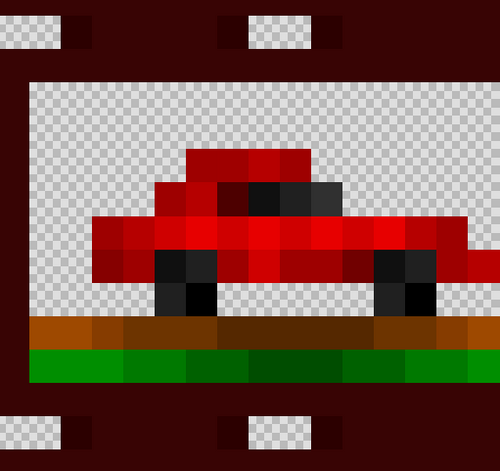
☐ Spritesheet export
☐ UI polishing
After that I will work on lighting and palettes.
patreon.com/spritestack#gamedev
@rezoner@devMidgard Awesome, can you talk a bit more about how you're rendering this? Are you converting from sprite stacks to voxels and then just rendering to a low res target?
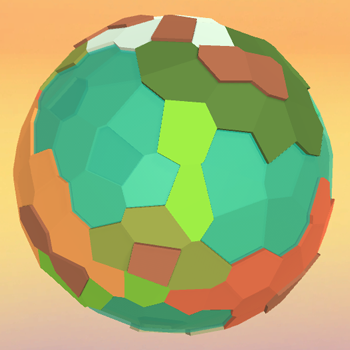
@regisleroy No not really. They're all being pulled towards the center and in this case the only thing you can be sure of is that they will arrange in hexagons because they are all identical size.
@bernielomax@HilariousCow The points used to compute the Voronoi move towards the centroids of their cells. It's called Lloyd's Relaxation, Wikipedia has a good diagram. I just give it rectangular bounds, but I don't see any reason why it couldn't be an arbitrary shape.
@cleonsucks@HilariousCow In relaxation, do you calculate new points as targets or do they move in direction of most space? Because I wonder what happens in case of a bottleneck with these algorithms.