Coinstruct

940 posts

Coinstruct banner
Coinstruct

Coinstruct

@coinstructweb3

A full-cycle agency for Tokenomics and Blockchain solutions architecture trusted by $1B+ TVL Chains.

เข้าร่วม Ekim 2024
119 กำลังติดตาม776 ผู้ติดตาม
ทวีตที่ปักหมุด
Coinstruct
Coinstruct@coinstructweb3·
Welcome to Coinstruct. As a full-cycle tokenomics development agency, we bring a rigorous, data-driven approach to building tokenomics that empower crypto projects. ➖ High Expertise. Our specialists (from PhD mathematicians to real degens) are deeply knowledgeable about the web3 market and develop tokenomics using the latest standards. ➖ Personalized Approach. We know that tokenomics is closely tied to a project's business model. That's why we thoroughly analyze your project and select the best mechanisms. ➖ Successful cases. We have extensive experience in developing tokenomics for web3 projects such as @InnMindcom , @0xNomis and @MARSBASEio . 📈 22 projects successfully raised funds (over $50M) 📊 Tailored tokenomics aligned with each project’s unique business model 💹 Cumulative FDV of our projects > $1,5B 🧑‍💼 Range of services: tokenomics audit, stress testing, airdrop mechanism development, or designing tokenomics from the ground up. We offer free consultations to Web3 projects—let's discuss how Coinstruct can support your vision!
English
13
6
19
9K
Coinstruct
Coinstruct@coinstructweb3·
Tokenomics Mistake #1 | The PMF Trap Token launches without Product-Market Fit (PMF) – a fatal shortcut. Tokens scale existing utility; they don't manufacture it. Warning Signs • Retention < 20% after Month 1. • Growth relies on paid marketing. • Engagement drops to zero without rewards. • Value proposition – unclear in one sentence. The Fix • Stop token development. • Execute 50 depth interviews with potential users. • Build MVP for one specific pain point. • Target 1,000+ organic active users before TGE. The Reward-Off Test Turn off incentives tomorrow. If users vanish, the product – not ready for a token. This – mistake 1 of 7. Full breakdown of the list: @pr_54561/top-7-tokenomics-mistakes-that-kill-crypto-projects-and-how-to-avoid-them-4331c34d4d96" target="_blank" rel="nofollow noopener">medium.com/@pr_54561/top-…
English
0
0
0
228
Coinstruct
Coinstruct@coinstructweb3·
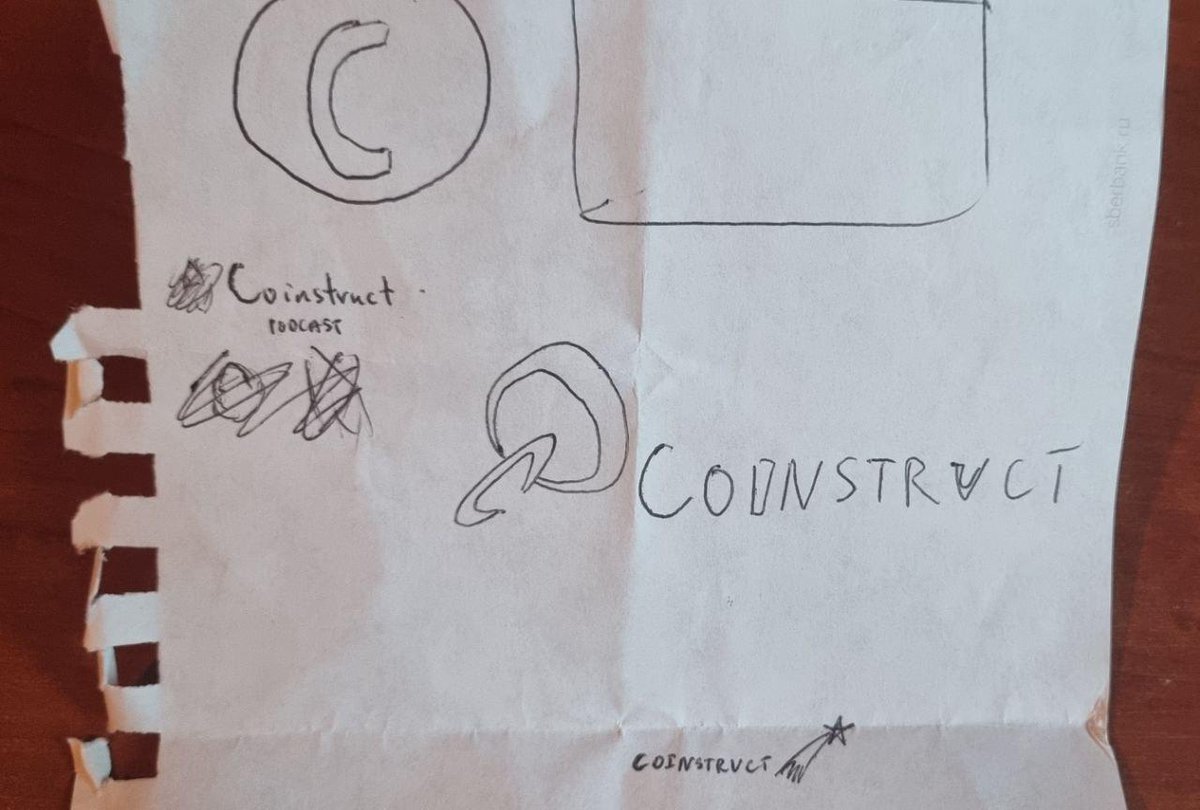
This crumpled piece of paper turned into $1.5B in Client TVL. 4 years ago: No team, no clients. Just a sharpie and a belief that Tokenomics needs engineering, not guessing. They told me the niche was "too small." Today: 🔹 70+ Token Economies built 🔹 $25M+ Raised by clients 🔹 Team of 20+ We turned a napkin sketch into a full-stack economic lab. Next up: In 2026, we are releasing our internal AI tool to the public. Stay tuned.
Coinstruct tweet media
English
0
1
4
119
Coinstruct
Coinstruct@coinstructweb3·
The 2026 token playbook looks nothing like before. Forget everything you know about token launches. The era of white papers promising revolutionary platforms that never ship is over. 2026 demands substance over stories. The winners will be tokens backed by existing businesses with actual customers and revenue. Not future promises, not ecosystem dreams – real cash flow, real products, real users. Web2 companies understand this because they've already built what crypto has been promising. Planning a token launch in 2026? Build the business first. Generate revenue first. Find product-market fit first. Then, and only then, think about your token. The market won't accept anything less anymore. Building a sustainable token economy requires precision and battle-tested expertise. Focus on your product and let Coinstruct handle the architecture. Scale your business with a token model built for the 2026 market: coinstruct.tech
English
0
0
1
72
Coinstruct
Coinstruct@coinstructweb3·
84.7% of new tokens failed after launch. Good. Nearly 85% of tokens launched recently declined after TGE. Founders are still using the 2017-2020 playbook in 2025, and it's not working anymore. The old model of paper utility and empty promises is dead. 2026 marks the shift from utility theater to equity-like tokens. Tokens will represent actual ownership in revenue-generating businesses, not just access to some hypothetical future platform. This is the change we need. Web2 companies are entering crypto now, and they're bringing something new: profitable businesses. Their tokens won't be speculation vehicles – they'll be tied to real revenue streams. This is how crypto reaches the volumes and liquidity we've been promised for years.
English
2
0
2
92
Coinstruct
Coinstruct@coinstructweb3·
Everyone's panicking about crypto. Here's why they're wrong The crypto community is in full meltdown mode at the end of 2025. Builders are leaving, retail investors are screaming betrayal, and research papers are calling this the "Token Identity Crisis" or "Token Graveyard Zone." The dream of decentralization? Dead, they say. But blaming markets when the narrative shifts is lazy thinking. We've watched token launches with billion-dollar valuations and zero fundamental value for years. Sky-high prices built on nothing but hype and promises. This model was always going to collapse. The truth nobody wants to hear: real adoption demands sacrifices. Some made money on speculation, others lost everything. But the speculation era ending doesn't mean crypto is dying – it means crypto is finally growing up.
English
1
1
1
114
Coinstruct
Coinstruct@coinstructweb3·
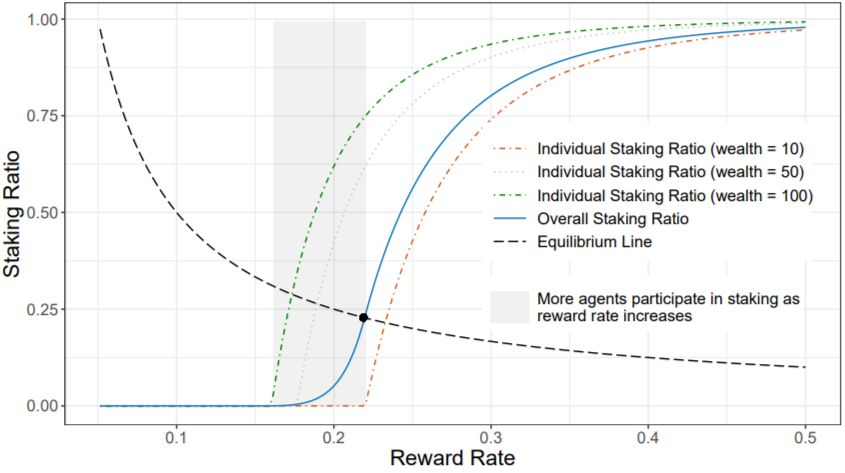
95% of DeFi staking is economically absurd. Most staking models are broken. They rely on a simple, self-destructive loop: Print new tokens -> Pay stakers -> Price dumps due to inflation. If your yield comes from the printer, you are the exit liquidity. But we are seeing a shift to Net Positive Staking. A prime example in 2026 is is Lighter. On Jan 15, Lighter made staking mandatory for liquidity providers. Instead of bribing users with inflationary rewards, they created hard utility: Access: You literally cannot LP without staking $LIT (1:10 ratio). Deflation: Protocol revenue is used for Buybacks, not redistributed as raw emissions. These are two powerful sinks that create genuine buying pressure. But the most critical metric here is the Net Economic Effect. Simply put, this calculates the balance of value flow: Positive Effect: Value flowing IN (Fees, Buybacks, Lock-ups). Negative Effect: Value leaking OUT (Emissions, Sell pressure). If the protocol pays out $1.00 in emissions to generate $0.50 in fees, the Net Effect is negative. No amount of marketing can fix that math. 👇 Read the full breakdown with calculations and charts in our blog about Token Staking in DeFi: lnkd.in/dNV3i3zn P.S. If you’re planning to launch a token and struggle with Tokenomics, drop a comment (happy to chat with you).
Coinstruct tweet media
English
0
0
1
68
Coinstruct
Coinstruct@coinstructweb3·
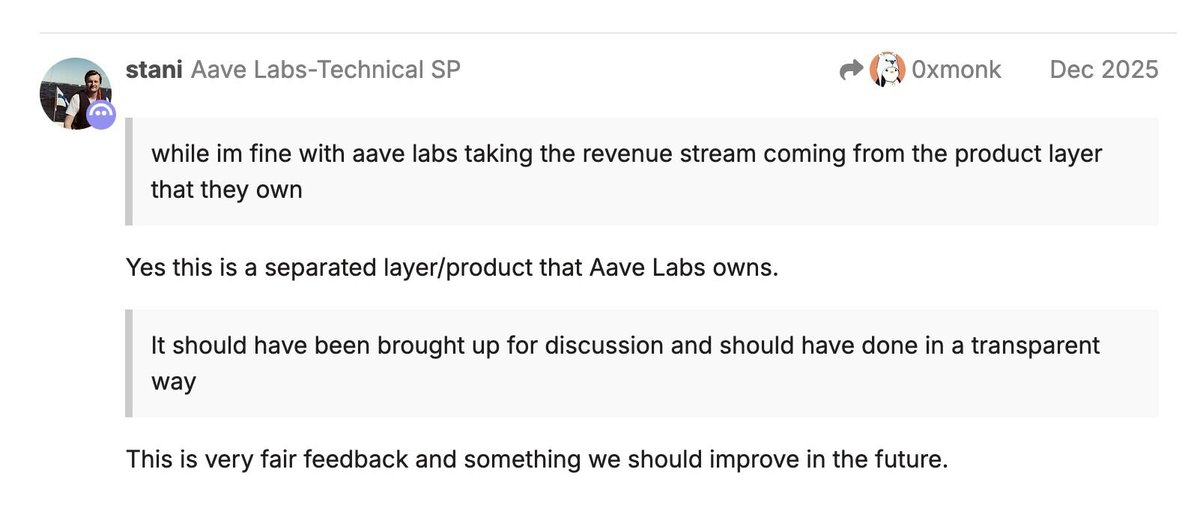
The Hostile Takeover in Web3. How it happened? The conflict between Aave Labs and the DAO has exposed a critical flaw in how we define decentralized ownership. 1. The Core Dispute Ernesto Boado (founder of BGD Labs and previous CTO Aave Labs) proposed a hard pivot: transfer control of the @aave brand, domains, and social accounts directly to the DAO. His argument - the brand’s value is created collectively by the holders, yet it is currently monetized privately by one company (Aave Labs). 2. The $10M/Year Trigger The conflict escalated with the CoW Swap integration. Previously, swap fees flowed into the DAO treasury. After a recent update, this revenue stream ($200k/week) was redirected specifically to Aave Labs. This decision was made without a governance vote. 3. The Hostile Vote The situation turned toxic when Aave Labs forced Boado's proposal to a Snapshot vote without his consent (and during the holidays). Key delegates, including Marc Zeller, labeled it a "hostile takeover" of the governance process. The community revolted against the tactic: 55% Voted Against 41% Abstained 4. The $12.6M Whale Move Stani Kulechov purchased $12.6M worth of AAVE tokens right before the vote started. While he claims it was a long-term investment, the timing signals a dangerous precedent: using personal capital to potentially sway a governance outcome. AAVE went down from $200 to $150 as the market realized that "decentralized" governance might be easily bypassed by the development team. This is a stress test for the entire DAO model. If a development company can unilaterally redirect cash flow and force votes, are we really operating a DAO? Or just a public company with a token attached?
Coinstruct tweet media
English
0
0
0
134
Coinstruct
Coinstruct@coinstructweb3·
Gold +70%. Bitcoin -8%. What happened to Digital Gold? For years, we were sold the story that Bitcoin is the ultimate hedge, the Digital Gold that would lead the commodities rally. Look at the chart. The reality is different. While traditional markets and Commodities have been tearing through All-Time Highs, crypto has been left behind. The performance divergence over the last year is deafening: Silver: +133% Gold: +70% Bitcoin: -8.68% While Gold and Silver were being accumulated as safe havens, the Crypto industry spent the year diluting itself. We flooded the market with thousands of "VC-backed infrastructure tokens" that turned out to be purely Down-Only assets. Instead of onboarding the masses, the industry treated retail as exit liquidity. However, this is exactly why Bitcoin looks interesting right now. Everyone is chasing metals at All-Time Highs. Bitcoin is hated, underperforming, and ignored by the crowd. Paradoxically, this underperformance makes BTC the best asymmetric bet for 2026
Coinstruct tweet media
English
1
1
1
61
Coinstruct
Coinstruct@coinstructweb3·
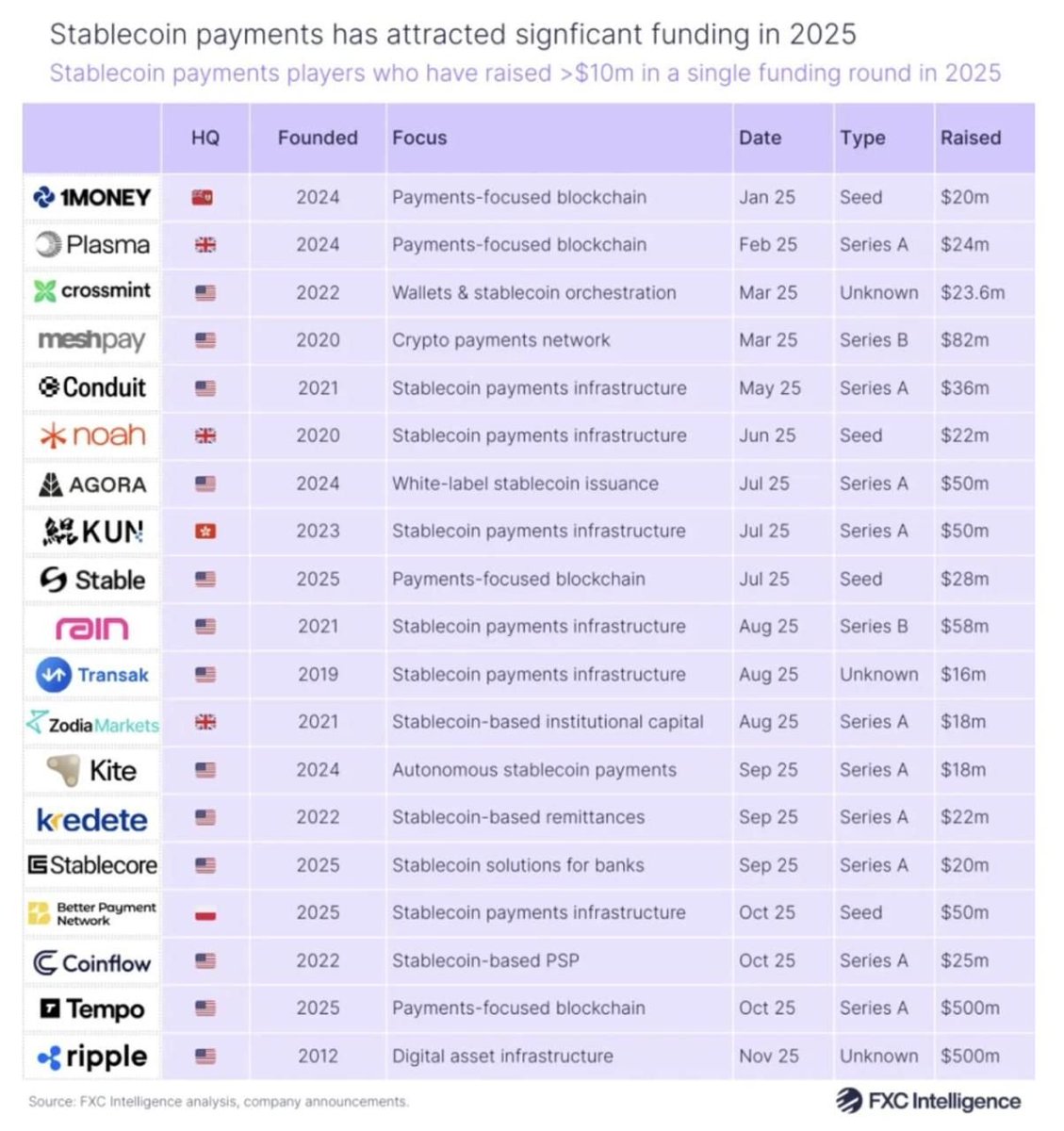
This table explains why the crypto market feels "dead" despite billions in funding. In 2025, the Stablecoin and Payments sector raised massive rounds: Tempo: $500M. Ripple: $500M. Meshpay: $82M. The money is there. Huge money. So why is everyone complaining about the lack of opportunities? It is simple - Alpha has been privatized. Following the passing of the GENIUS Act in July, the game changed. We've shifted from DAO governance tokens to regulated Corporate Equity. Agora, Rain, Stablecore, Tempo – almost none of them plan to launch a platform token (yet). The immense value created by these protocols will stay locked inside the companies, accessible only to VCs and shareholders. The retail user is now just a user, not a beneficiary. Remember the hype around farming Ethena, Usual, Resolv, Plasma? That era is gone. Yield farming on stablecoins is no longer a path to wealth, it's just a Customer Acquisition Cost for the issuers. We were told this cycle would be different. It is. The money is being made in Private Markets (Equity), not in Public Markets (Tokens).
Coinstruct tweet media
English
0
0
1
36
Coinstruct
Coinstruct@coinstructweb3·
"Too Big to Fail" does not exist in crypto. We recently looked at the TVL chart of @MEVCapital Capital, once a titan among Risk Curators. Just two months ago, in October, they were ranked #3 globally with $1.5B in TVL (trailing only behind Steakhouse and Gauntlet). Today, they manage only $288M. That is an 80% drop in 60 days. In November, the stablecoin protocol Stream Finance collapsed, losing $93M of user funds due to an "error by an external manager." MEV Capital invested user money into Stream Finance. They were supposed to filter the risk. They failed the Due Diligence. We can blame bad luck, but we must look at the incentives. For Risk Curators, it is often "just business." Their revenue model relies on Success Fees. Higher APR = More Profit = Higher Fees. There is a subtle but dangerous incentive to approve riskier strategies to boost yields. Reputation in DeFi is built over years and lost in a single block.
Coinstruct tweet media
English
0
0
2
107
Coinstruct
Coinstruct@coinstructweb3·
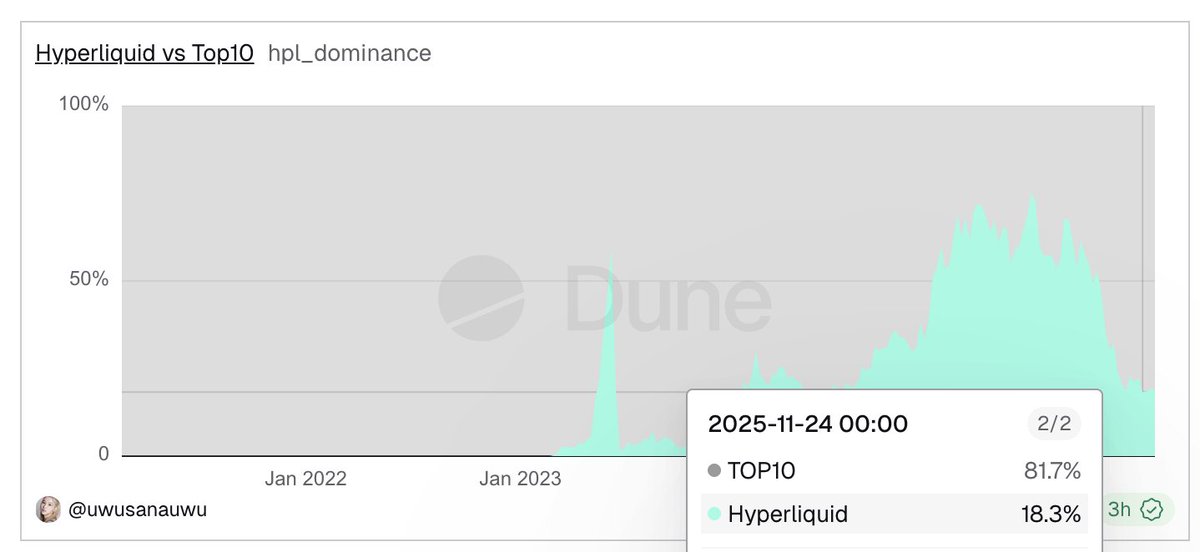
Hyperliquid was the King of Decentralized Perps. Now it holds only 18% market share. A year ago, they were untouchable. Today, despite having a die-hard community, a really good product, massive profitability - the dominance chart is going down. The founders decided that Token Price is the best Marketing. They poured revenue into buybacks instead of aggressive expansion. It is too early to call it a mistake, but the data is alarming. Can HL make a comeback? The chances are decent. But Product alone won't save them anymore. They need Distribution. Hyperliquid needs to integrate into wallets like MetaMask and other Web2 channels. We believe the winner of the Perp and Prediction Market wars will be the project that integrates directly into the Twitter (X) interface.
Coinstruct tweet media
English
0
0
1
61
Coinstruct
Coinstruct@coinstructweb3·
New "Crime" in the BNB Ecosystem. The market consensus was that Opinion Labs would be the chosen Prediction Market for the BNB chain (and @cz_binance ). Then, out of nowhere, CZ mentions Predict.Fun. The crowd immediately prepared for several months points farming (similar to the Aster), but the platform launches tomorrow, and there is an immediate Claim Page. This is not a Reward. This is a Vampire Attack. They took a snapshot of addresses that traded meaningful volume on: — Competitors: Polymarket, Limitless, Opinion Labs — Ecosystem: BNB Chain memecoins, Aster perps They are not rewarding their own users (they don't have any yet); they are aggressively buying users from others. My base scenario is that we will see The Crime Pump: They drop small amounts to thousands of wallets. At launch, the value is negligible. Then, Market Makers aggressively pump the low-float token to grab attention. Once FOMO kicks in and the chart goes vertical -> they launch "Season 2" to trap the liquidity. but we always have room for The Conditional Drop: You get the allocation, but the tokens are locked. To unlock them, you must generate trading volume on the platform.
Coinstruct tweet media
English
0
0
0
55
Coinstruct
Coinstruct@coinstructweb3·
a16z crypto just released their "Big Ideas for 2026". We read the full report so you don't have to. Here are the 5 trends that will actually define the next cycle: 1) Privacy is the New Moat. Privacy is no longer just a feature for cypherpunks. It is becoming a core competitive advantage for businesses. "Secrets-as-a-service" will emerge. If your protocol exposes user data by default, you are building legacy tech. 2) From KYC to "Know Your Agent". This is a massive paradigm shift. As AI agents start transacting autonomously, traditional ID verification becomes obsolete. The new trust layer isn't about checking passports; it's about verifying reputation and logic specs of AI agents. 3) The Internet becomes the Bank. We are moving past the "crypto as an asset class" phase. Stablecoins will turn the internet itself into a banking layer. Storage, transfers, and yield will be embedded directly into the web's fabric, bypassing traditional fintech rails entirely. 4) Trading is a Feature, not the Product. For the last 5 years, crypto business models relied on speculation. @a16zcrypto predicts that trading is just a waypoint. The next generation of unicorns will build models beyond speculation. (This aligns perfectly with our previous post about the death of empty L1s). 5) RWA goes Crypto-Native. Stop trying to just copy-paste stocks onto the blockchain. The future belongs to assets that are created on-chain and leverage programmability, rather than just mirroring the old world. The infrastructure phase is maturing. The Casino Phase is peaking. 2026 will be about Privacy, AI Agents, and Programmable Money. Which trend do you think is the most underrated right now?
Coinstruct tweet media
English
0
0
1
47
Coinstruct
Coinstruct@coinstructweb3·
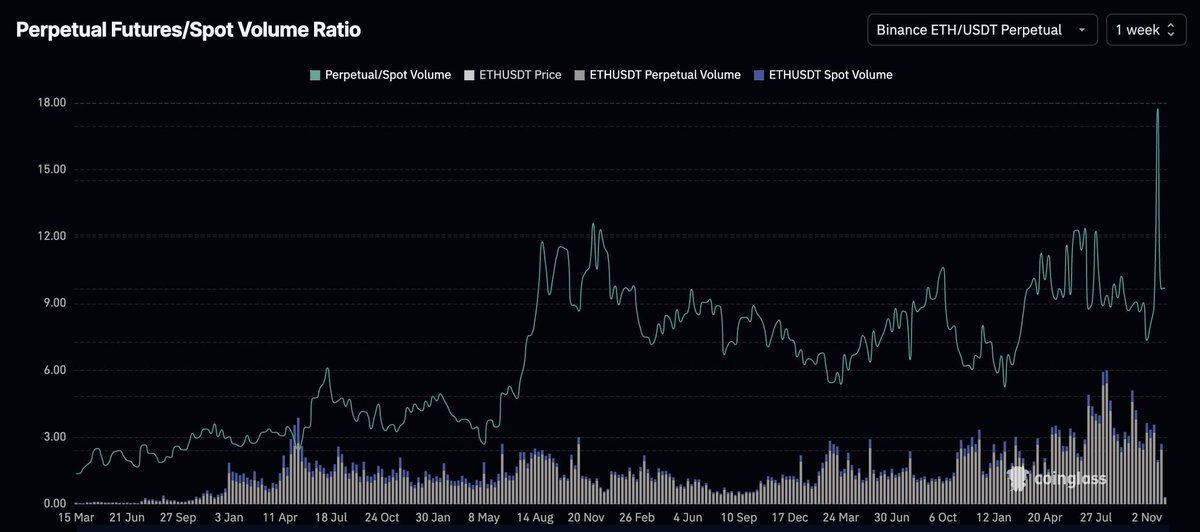
Crypto Spot Trading is dying. I pulled the data for ETH/USDT on Binance to compare the market structure of 2020 vs. 2025. March 2020: Perpetual/Spot Ratio: 1.38 For every 1 of Spot volume, there was 1.4 traded in Perps. People were buying assets to hold. December 2025: Perpetual/Spot Ratio: 9.70 For every 1 of Spot volume, there is nearly 10 traded in Perps. People are not buying the asset anymore. They are just betting on its price. The Second Shift: CEX vs. DEX Perps PerpDEX are eating the centralized giants alive. Just look at the market share of DEX derivatives volume: 2022: < 1% 2024: 4% 2025: 15% (and growing rapidly). Protocols like Hyperliquid are now doing volumes comparable to Tier-1 CEXs (reaching 14% of Binance's volume on some days). The market has matured, but in a weird way. Real spot demand (accumulation) is becoming a niche sport for ETFs and institutions. The rest of the market has moved entirely to leverage and hedging.
Coinstruct tweet media
English
0
1
3
223
Coinstruct
Coinstruct@coinstructweb3·
Most L1 Altcoins are walking zombies. We expect another 60-70% drop over the next 2 years. (Excluding BTC/ETH). The market structure has fundamentally shifted from the "Partnerships" and "Roadmaps" era to the era of P&L. And the P&L of your favorite L1 looks terrible. Here is the math: 1. The Fee Generation Trap L1 business models rely entirely on transaction fees. Fees come from trading. But who is trading heavily on Monad, Aptos, Polkadot, or TON right now? To justify its current valuation with a generous P/S ratio of 15, a chain like Aptos needs to generate $80M in annual fees. That is simply not happening without massive, unsustainable incentives. 2. The Treasury Illusion "We have a huge treasury!" No, you have a pile of your own native tokens. You cannot liquidate them to fund operations without crashing your own price. It is a death spiral waiting to happen. 3. The Super-App Fallacy Blockchains try to be Super Apps - infrastructure first, users later. History shows this fails. Successful Super Apps start with a killer product that generates cash, then expand. L1s are trying to skip the product phase and go straight to platform. (Hyperliquid is one of the few exceptions here that actually started with a product). 4. The Institutional Dilemma Why would institutions build RWA on an aging 2021 L1 when specialized chains (like Canton) or shiny new 2025 chains exist? More importantly, why choose a generic L1 over Ethereum or Base? The Valuation Reality Check: — Code: Hard to value. — Assets: Illiquid native tokens. — Profit: Near zero. — Userbase: Mostly bots or airdrop hunters. — Goodwill: Non-existent.
Coinstruct tweet media
English
0
0
1
38
Coinstruct
Coinstruct@coinstructweb3·
5 hard truths that became painfully obvious this year. 2025 didn't go exactly as the "up only" crowd predicted. It was a year of sobering realizations. 1) The Echo Chamber is Real. Crypto marketing currently feels like selling to the same 100,000 people on Crypto Twitter over and over again. The new blood? They are mostly buying Bitcoin ETFs, not your new L2 governance token. 2) Diamond Hands is a Losing Strategy. In 99% of cases, holding a token post-TGE just makes you exit liquidity for VCs. Don’t be naive about lockups: Even if VCs have a 1-year cliff, they are often hedging their positions via futures/OTC desks on Day 1. The sell pressure starts immediately, you just don't see it onchain yet. 3) Crypto Crime is real. And It is apparently fine... as long as it pumps our bags. The moral compass was thrown out the window in favor of PnL. We saw this with $TRUMP, $ASTER, $MMT, $COAI. If the chart goes up, nobody asks questions. 4) Mass Adoption is Still a Myth. We made progress with Chain Abstraction and smoother onboarding via Robinhood-like apps, but the average retail user is still far away. We are largely just digging in our own sandbox, moving the same liquidity between different pools. 5) We are Drowning in Infrastructure. Every month brings a new "revolutionary" L1 or L2. But where are the consumer apps? The only real product-market fit we saw this year was in Decentralized Perps (mostly gambling), Prediction Markets (mostly gambling), and maybe Yield Basis LP hedging.
Coinstruct tweet media
English
1
0
0
35
Coinstruct
Coinstruct@coinstructweb3·
This is a masterclass in how NOT to launch a Tier-1 token. Monad raised a record $400M. Now it is trading below its presale price. Let’s look at the numbers and the execution. 1. The Artificial Pump The sale valuation was $2.5B (0.025 per token). To ensure the Coinbase listing didn't look like a flop, Market Maker aggressively pushed the FDV up to $4.8B. 2. The Reality Check Once the MM stopped propping up the price, the uncomfortable truth came out: The ecosystem is empty. — Failed Incentives: The Monad Momentum program (designed to distribute $MON to protocols to attract users) has gone silent. No user acquisition is happening yet. — Liquidity Issues: On-chain pools are largely paired with USDC, not the native $MON token. This kills the organic demand for the native asset. — Community Sentiment: The project seems to be FUDed by its own community. As the result, We are now trading lower than the presale price of $0.025. I don't want to gloat, but this is starting to look a lot like Berachain 2.0.
Coinstruct tweet media
English
0
0
1
64