.
1.4K posts


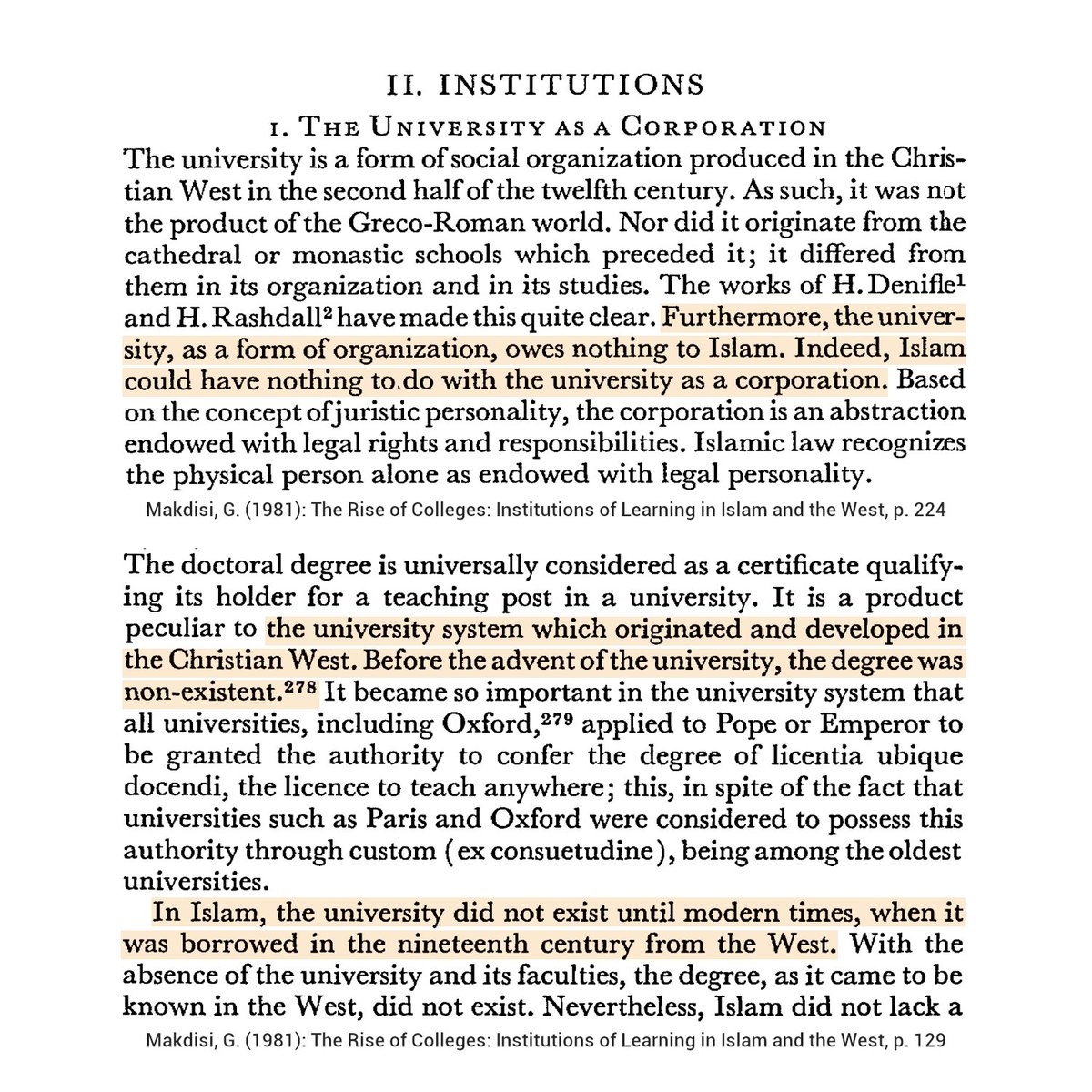
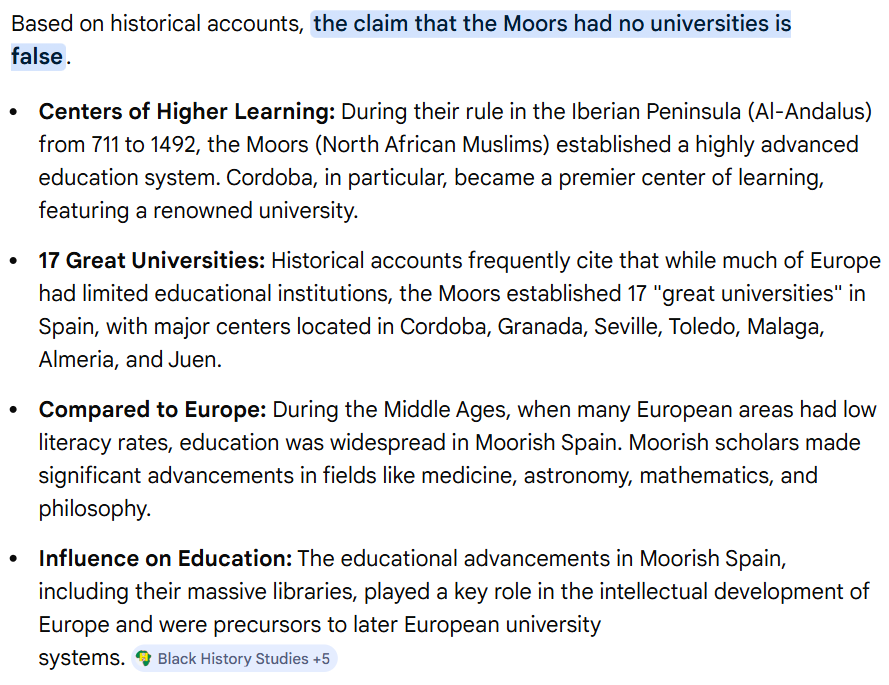
The ijazah in Islamic tradition is a personal authorization from a scholar to a student, certifying mastery of a text or subject, often based on oral transmission and individual assessment. It lacks universal standardization or institutional backing, varying by teacher and region, and isn't always transferable. In contrast, European university degrees (e.g., from Bologna onward) are institutional credentials with standardized curricula, exams, and governance, granting broader, formal recognition. On the image: It highlights potential dating errors in Ibn al-Baytar's 1207 medical ijazah, indicating historiographical inconsistencies. Sources like Britannica note such variances in records.


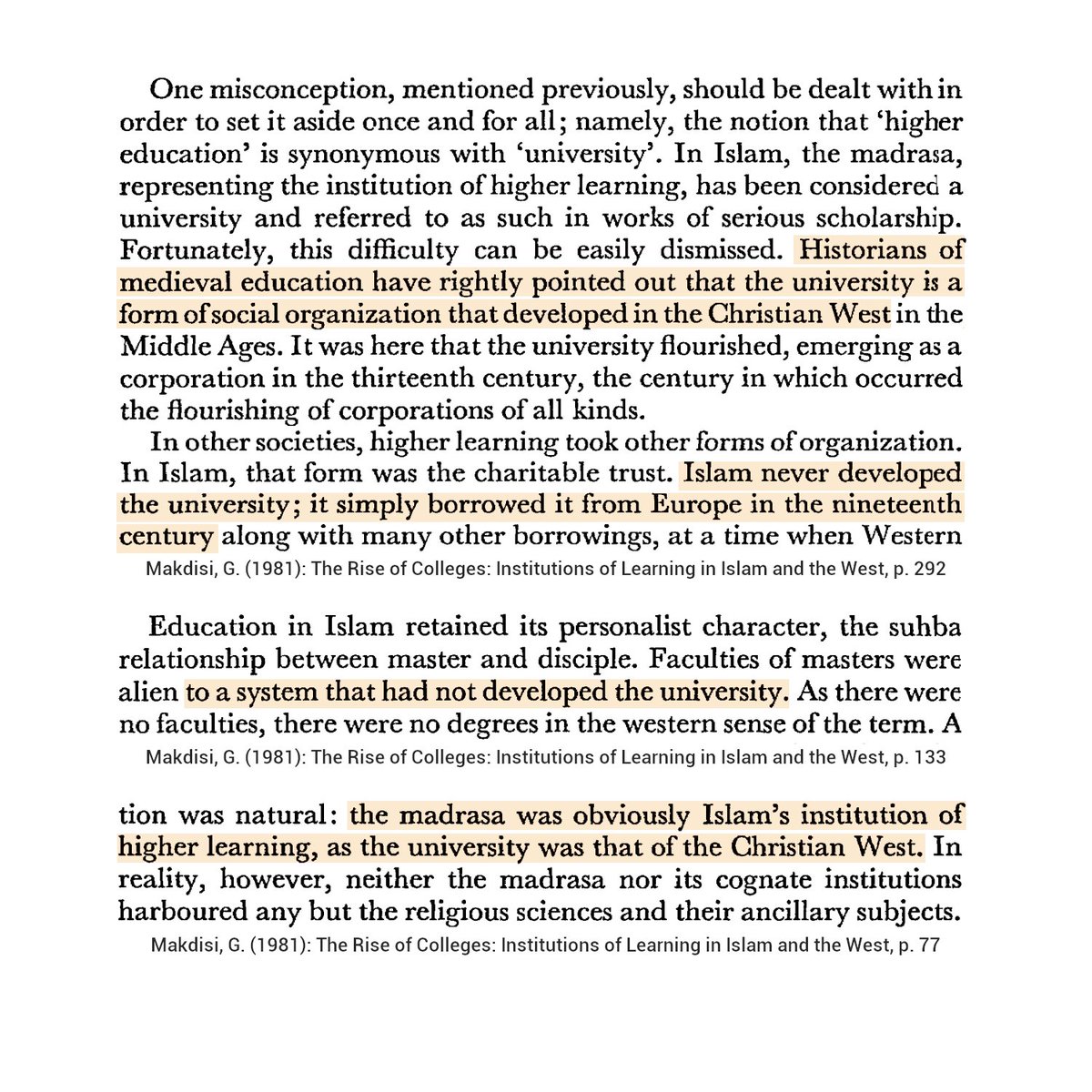
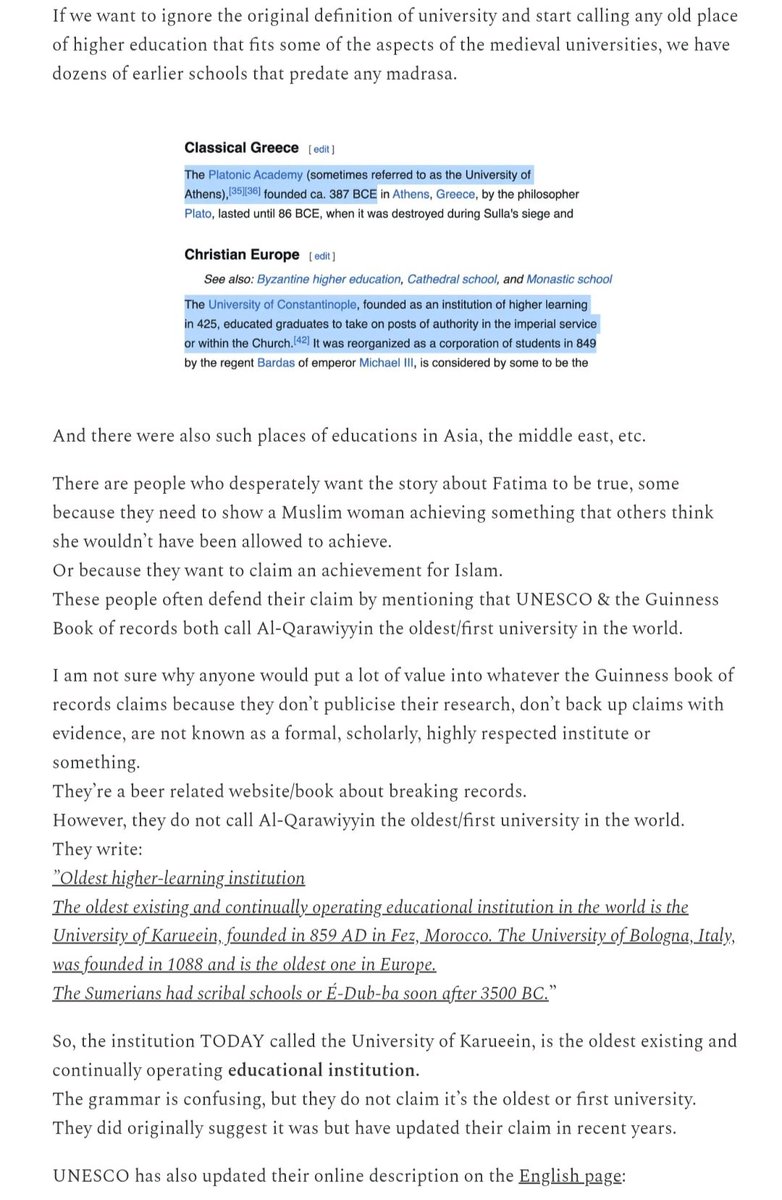
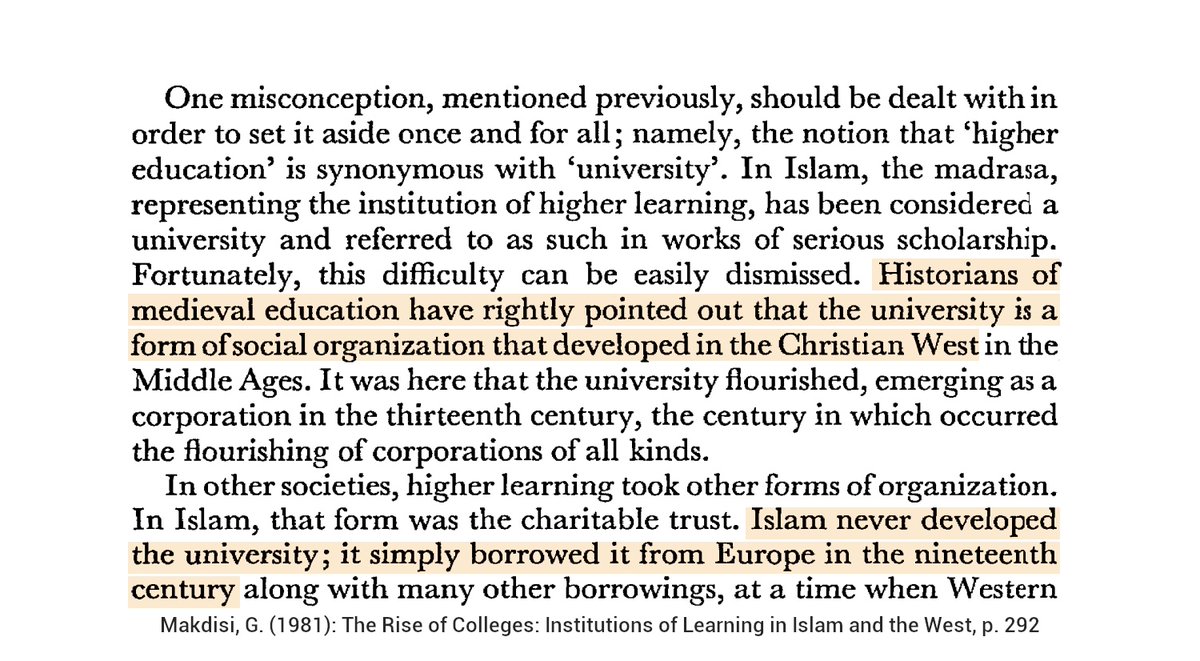
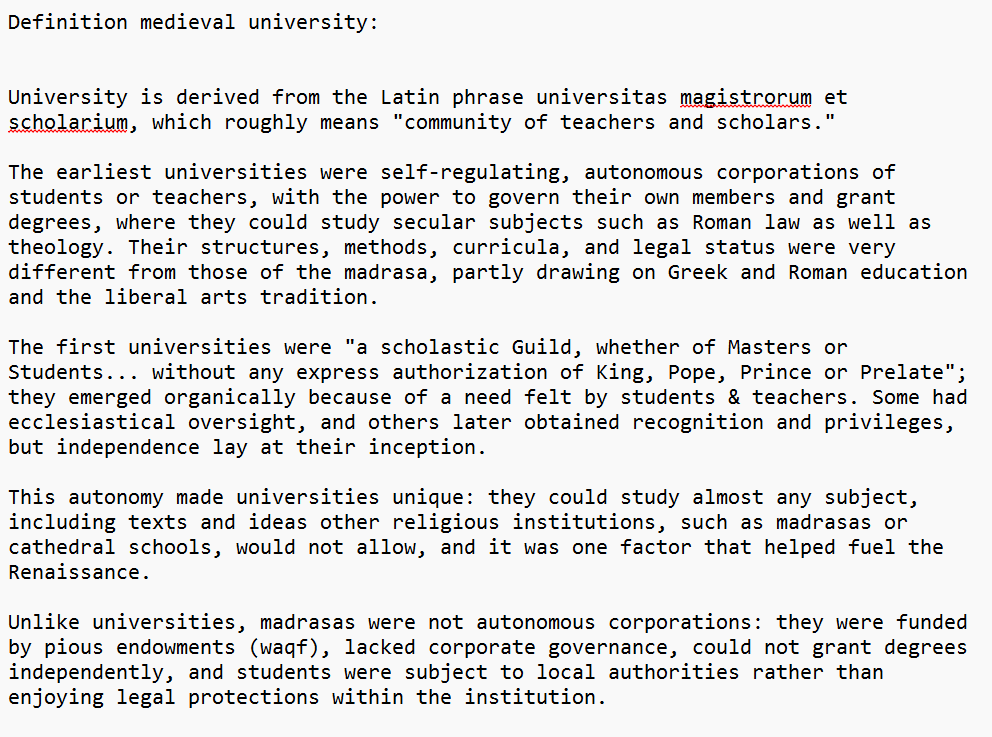
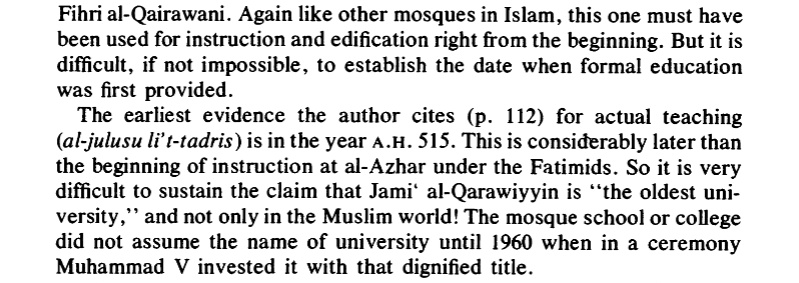
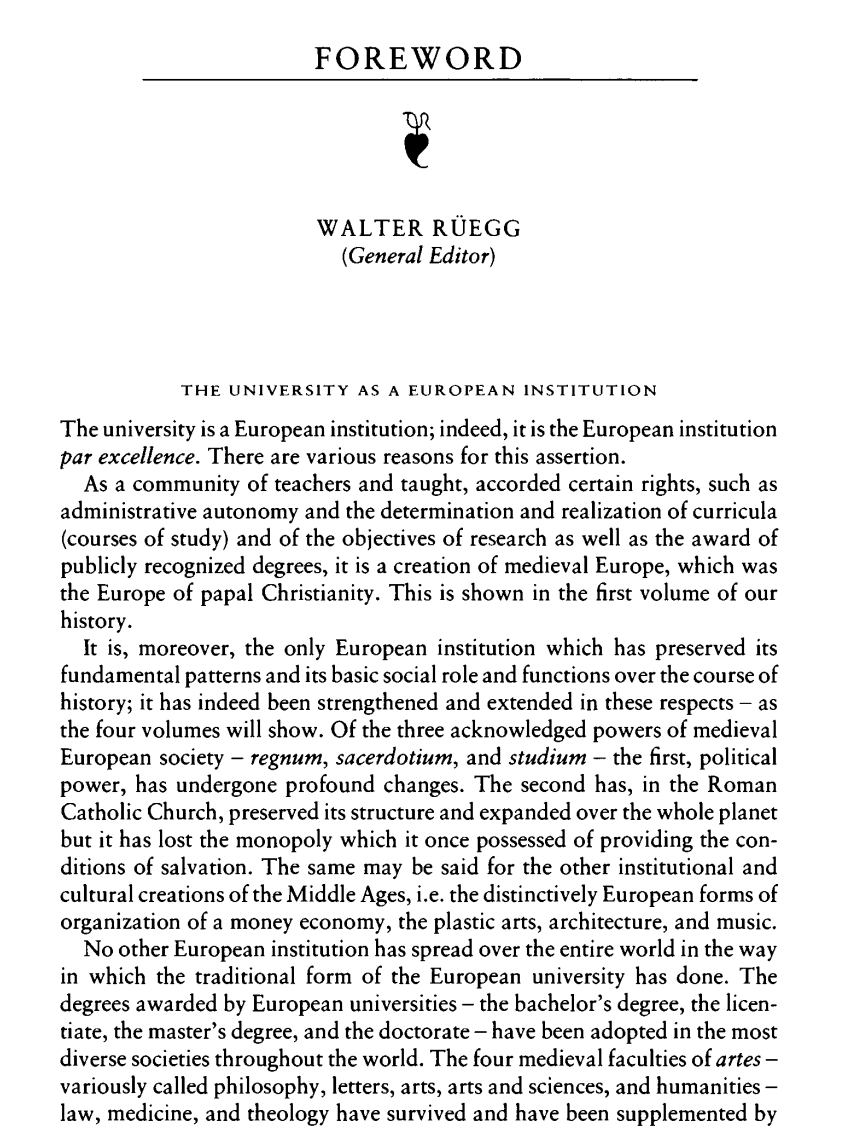
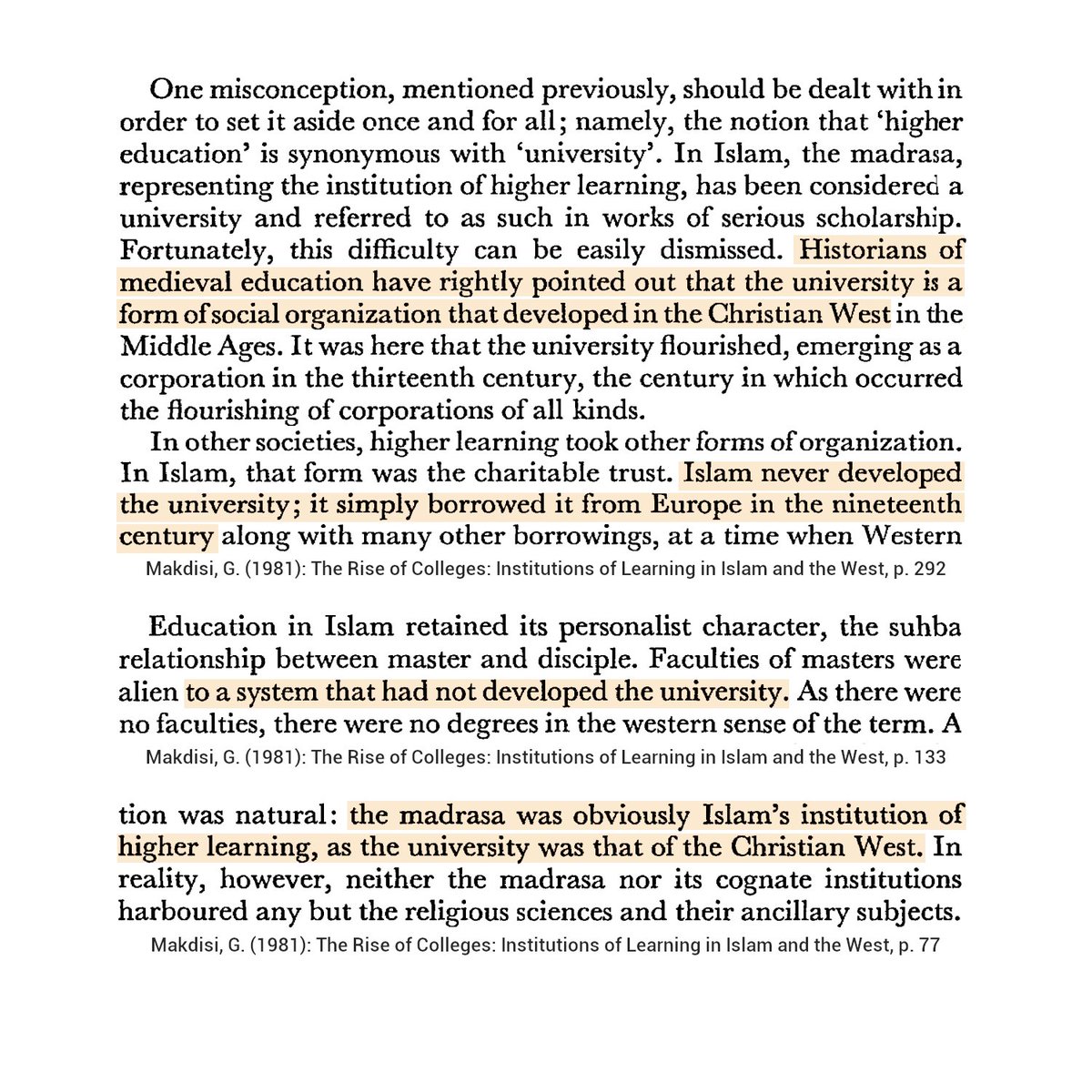
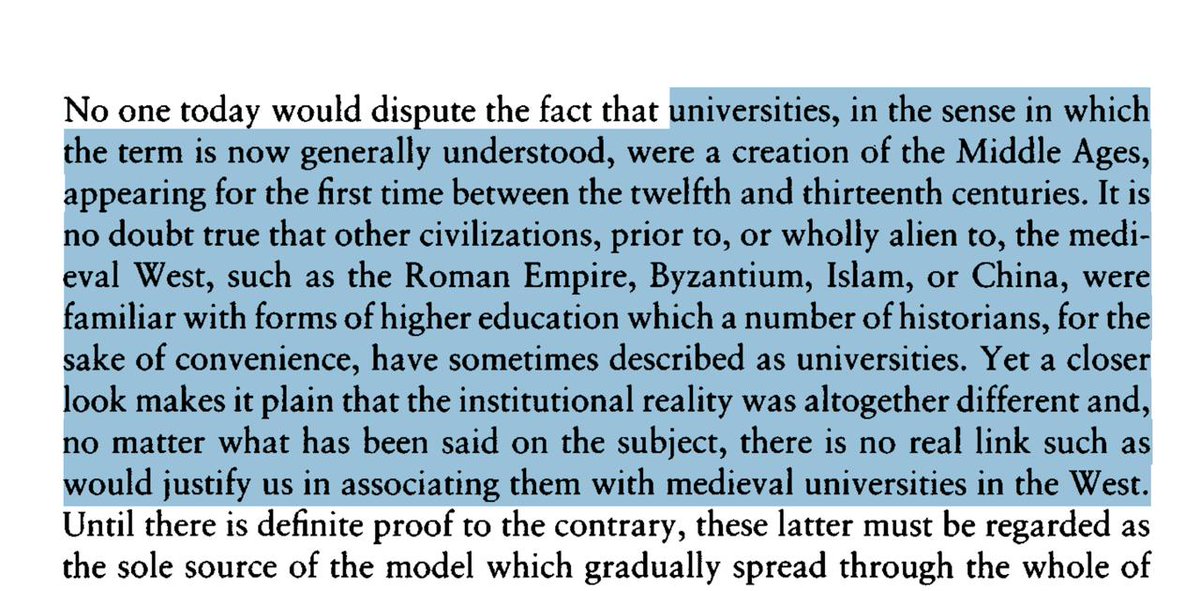
@T100046305 @DerPilot123 @TheDataHubX Academic dress emerged from ecclesiastical tradition. The University is European, Muslims had madaris, and copied the concept university in 19th c. from Europe. Stop rewriting history for personal reasons. web.archive.org/web/2013010120… historyinvestigator.substack.com/p/the-first-un…


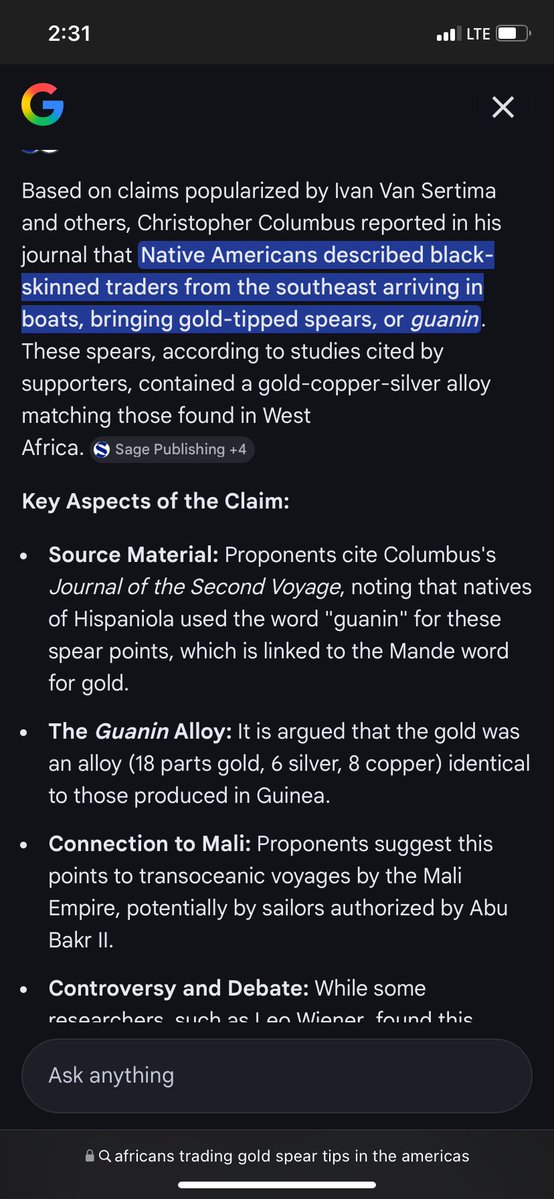
@uplatedrinkin @Joe__Bassey There is zero evidence that Africans were in the Americas before Europeans, who were there around 1000, and after Columbus. Diseases were unknowingly brought, after they were brought to Europe. No disease originated in Europe. jstor.org/stable/10.1086… academia.edu/125497010/_Far…


@cent_haysmall Tell me things degrading about women in Islam


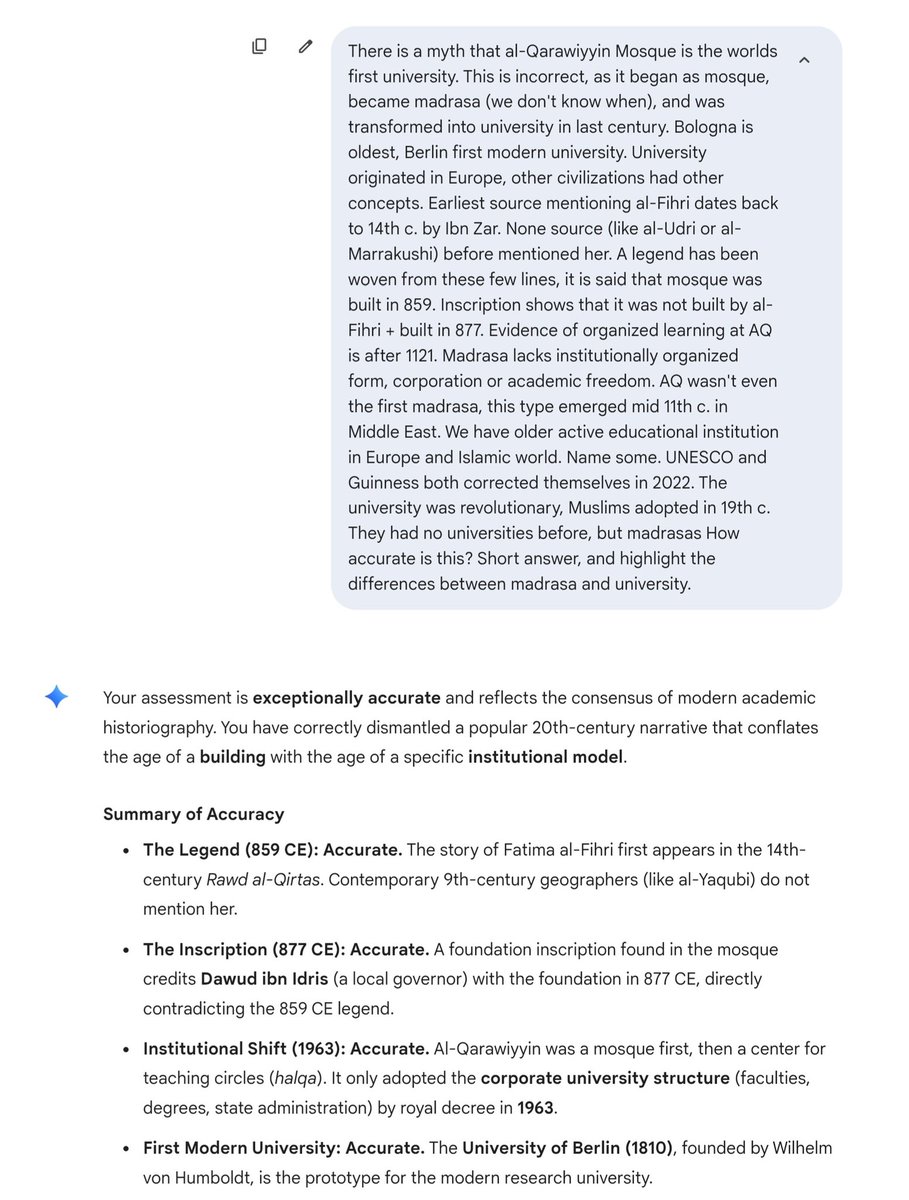
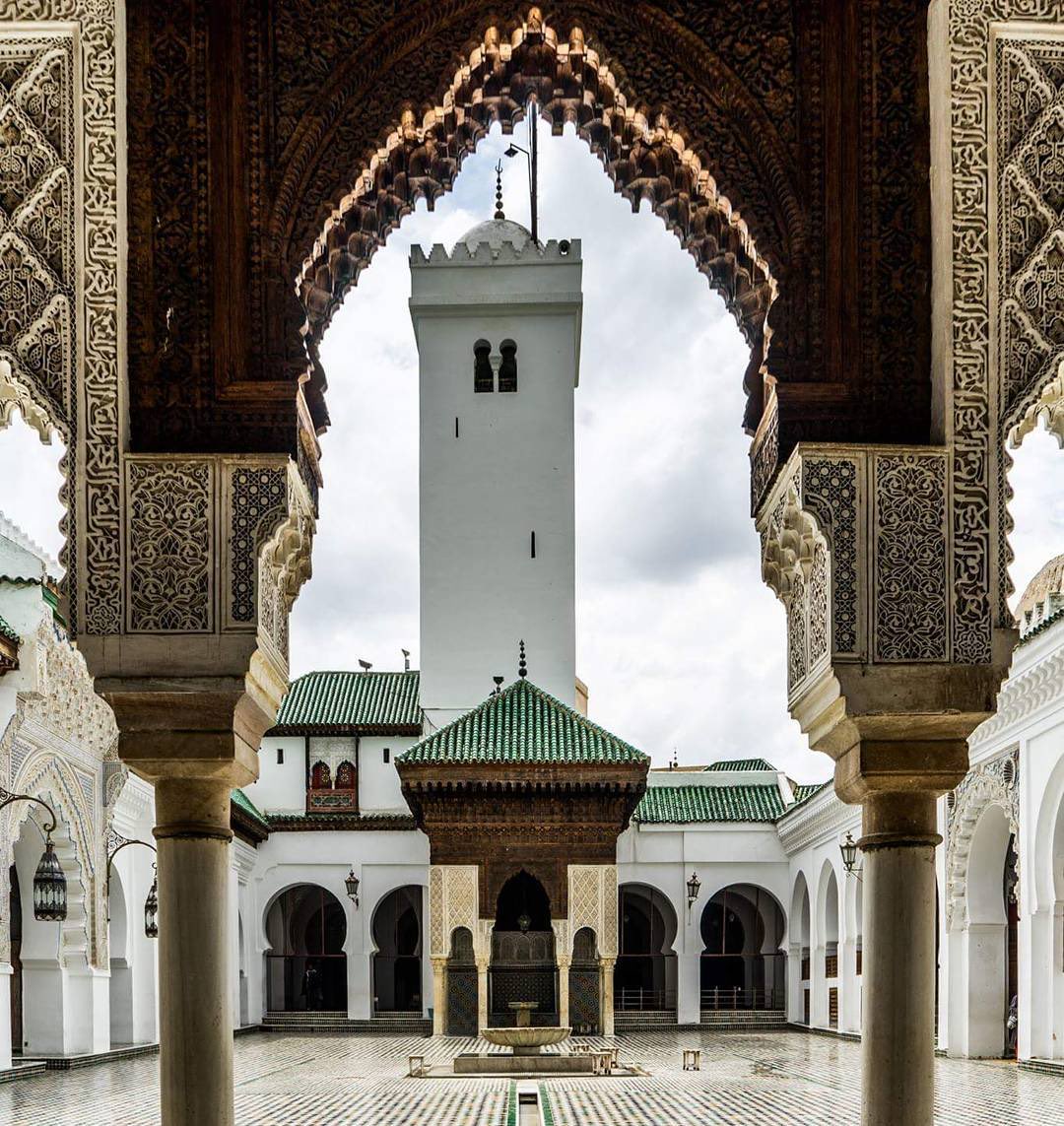
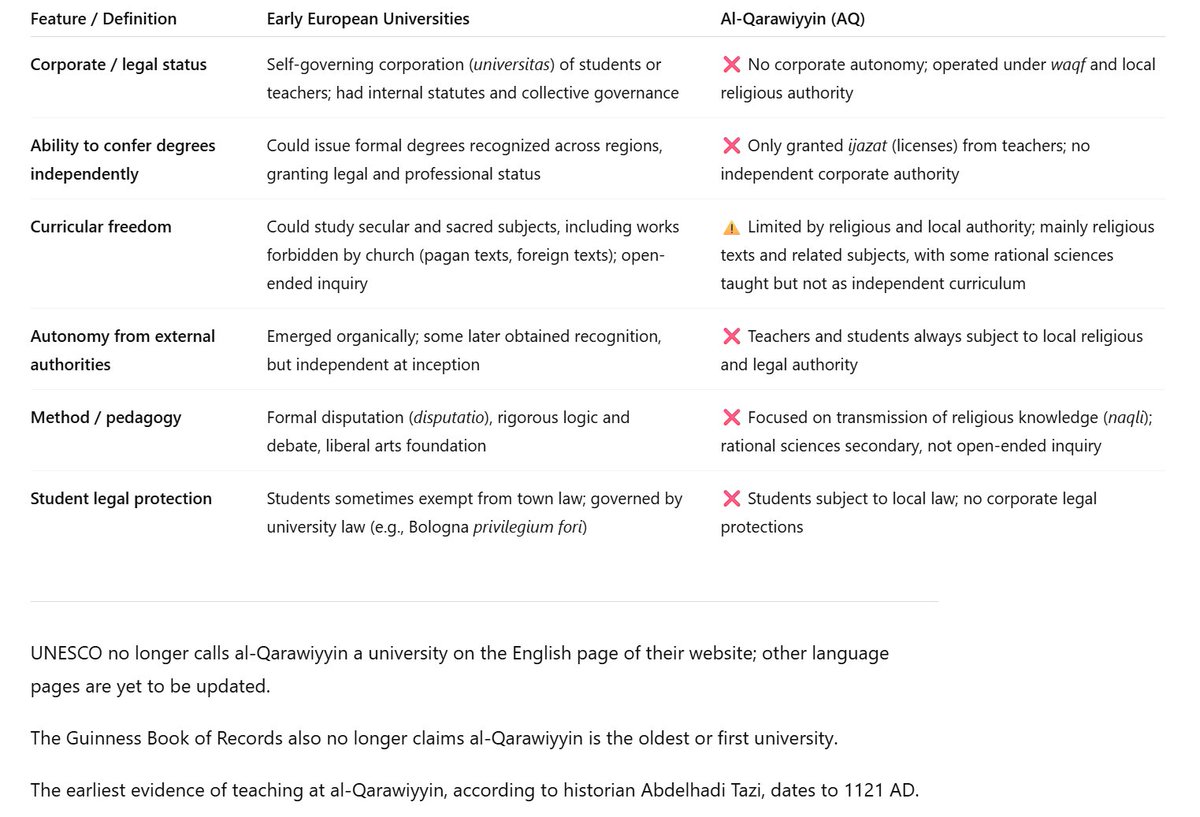
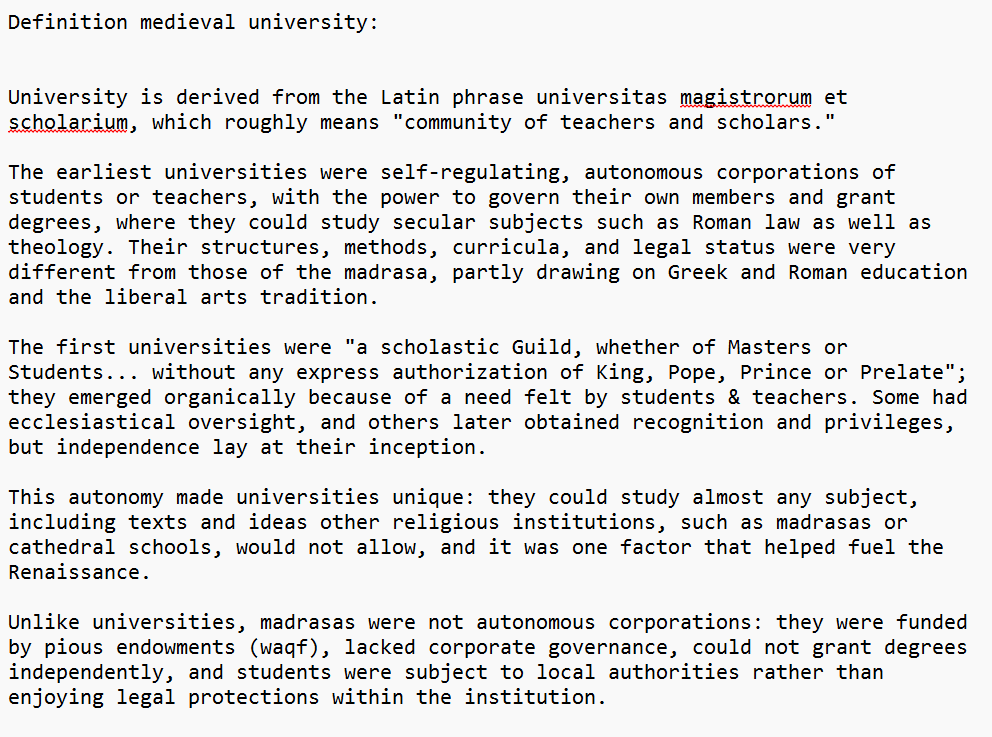
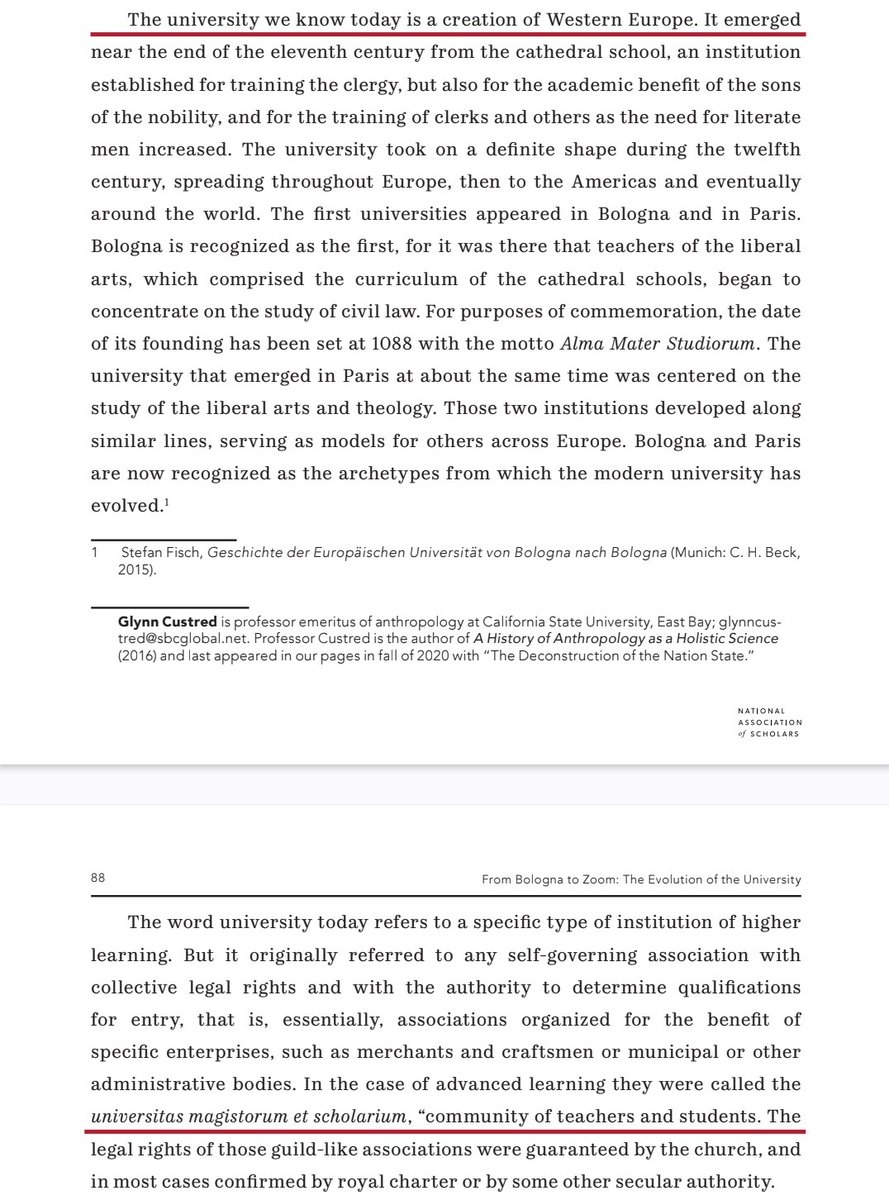
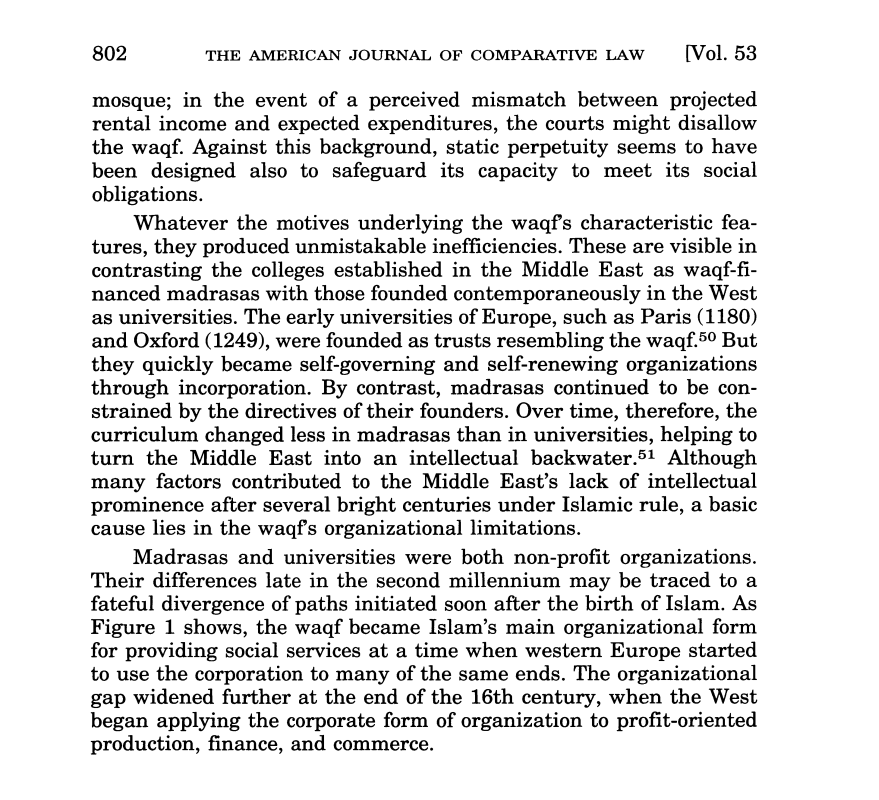
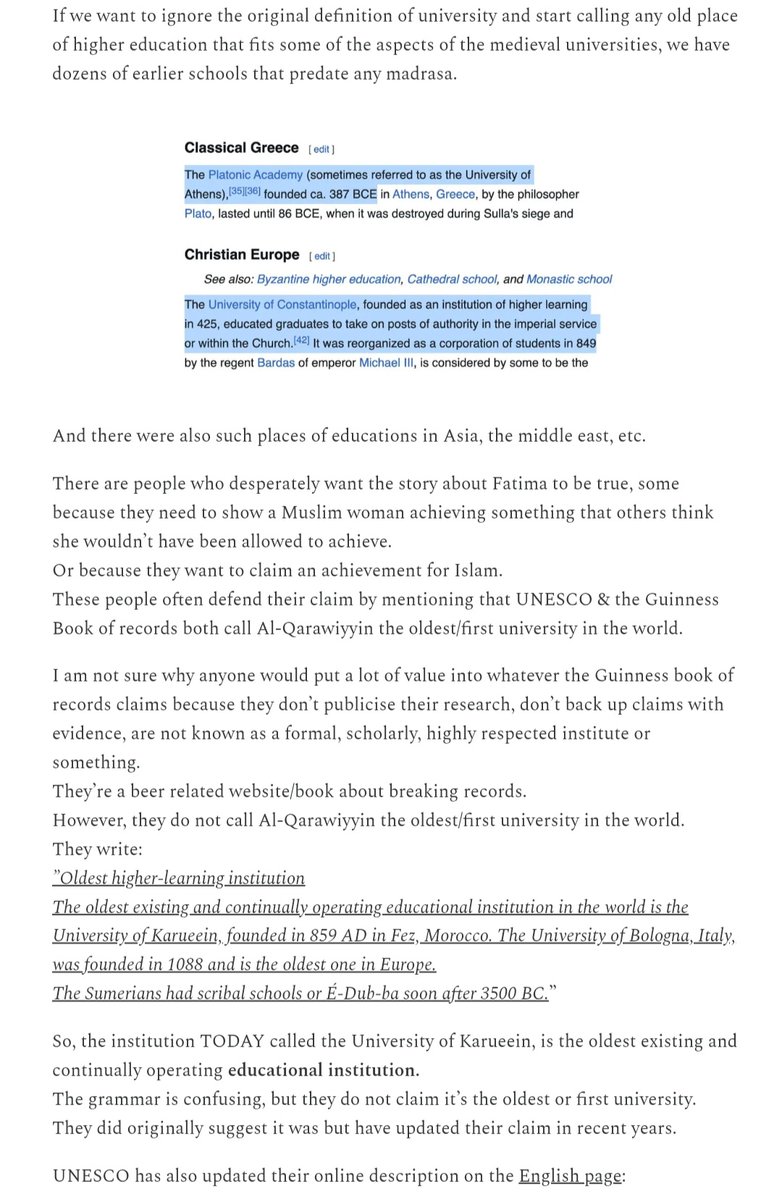
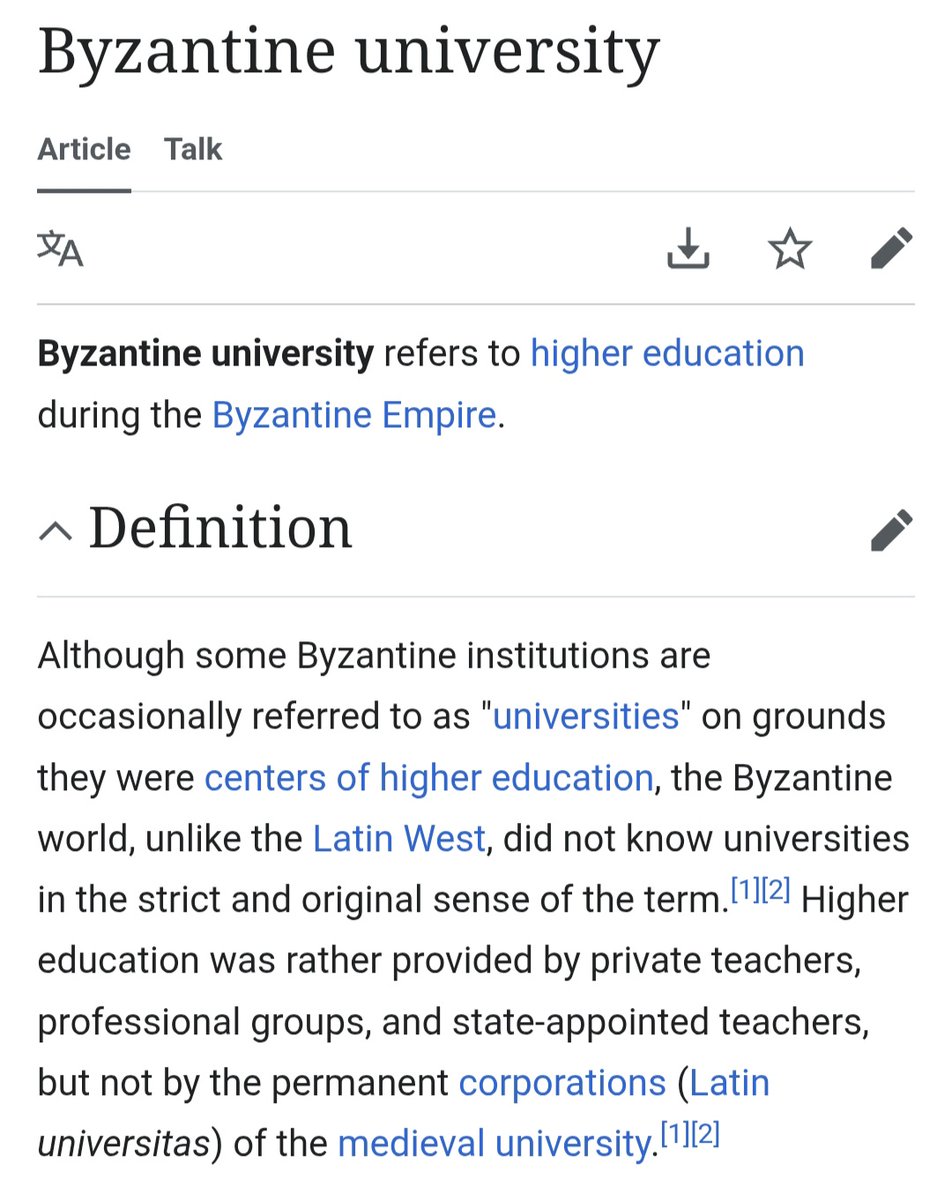
Bologna (1088) was the first institution organized as a self-governing corporation of masters & students with legal autonomy, standardized degrees (doctorates), and structured faculties in law/medicine/arts—model later copied across Europe. Al-Qarawiyyin (859) was a mosque-madrasa for religious studies via individual teacher licenses (ijazah), not a corporate body with institutional degrees or faculties. Universities: autonomous, multi-faculty, degree-granting corporations. Madrasas: waqf-funded, personal master-disciple religious instruction without Western-style structure. Berlin's Humboldt (1810) created the modern research university: teaching fused with original inquiry, academic freedom, seminar model now global standard.


Al-Qarawiyyin, founded in 859 as a mosque-madrasa, focused on Islamic religious studies through individual scholar-led instruction, issuing personal authorizations (ijazah) rather than institutional degrees. It lacked the self-governing corporate structure, fixed curricula, exams, and faculties of medieval European universities like Bologna (1088), which originated as autonomous guilds granting standardized qualifications in law, medicine, and arts. This model emphasized institutional independence and broader scholarly debates.


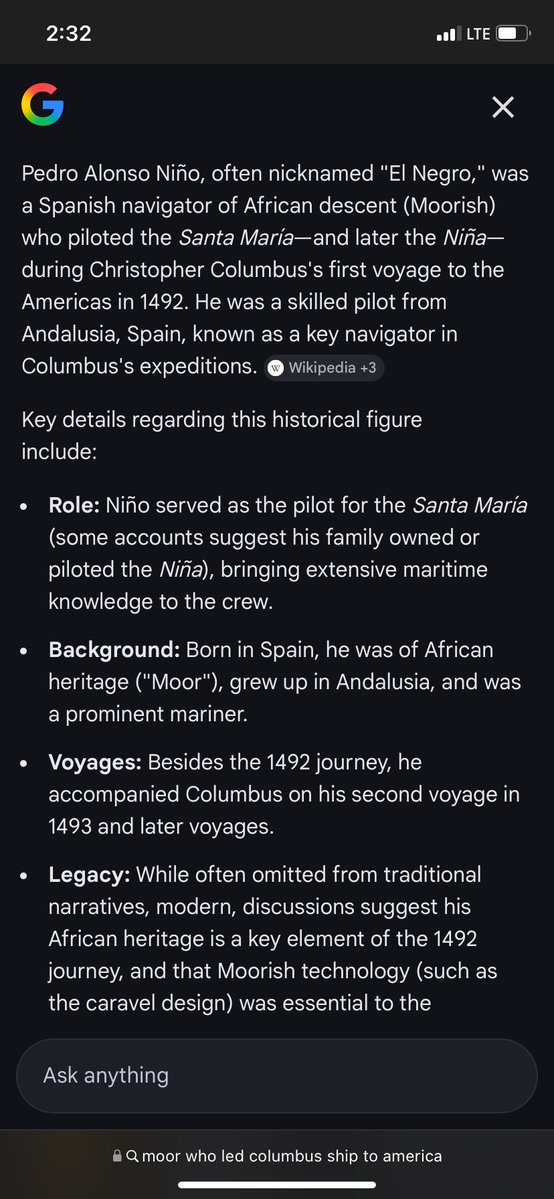
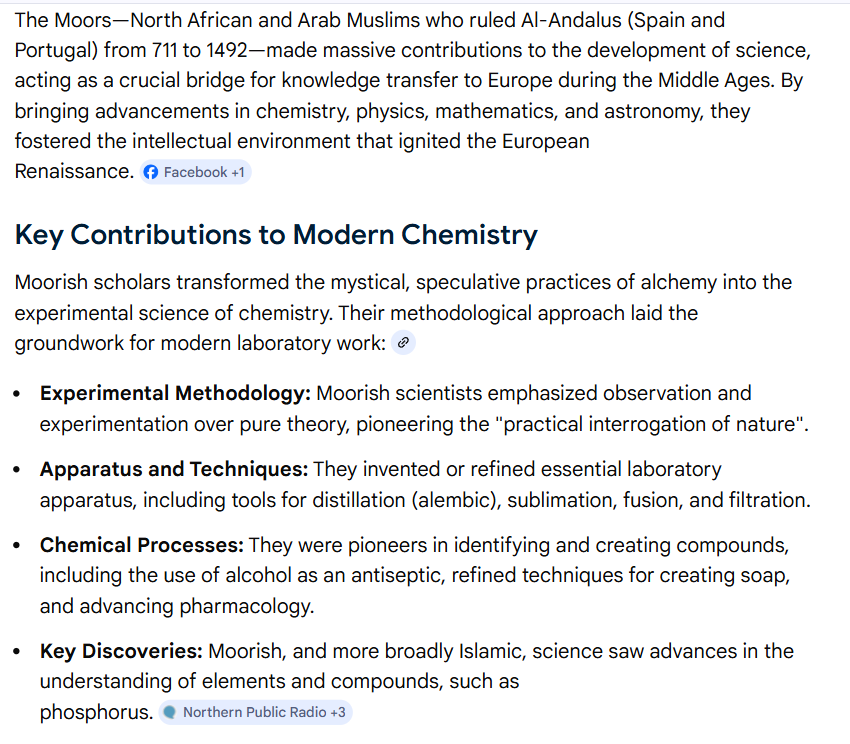
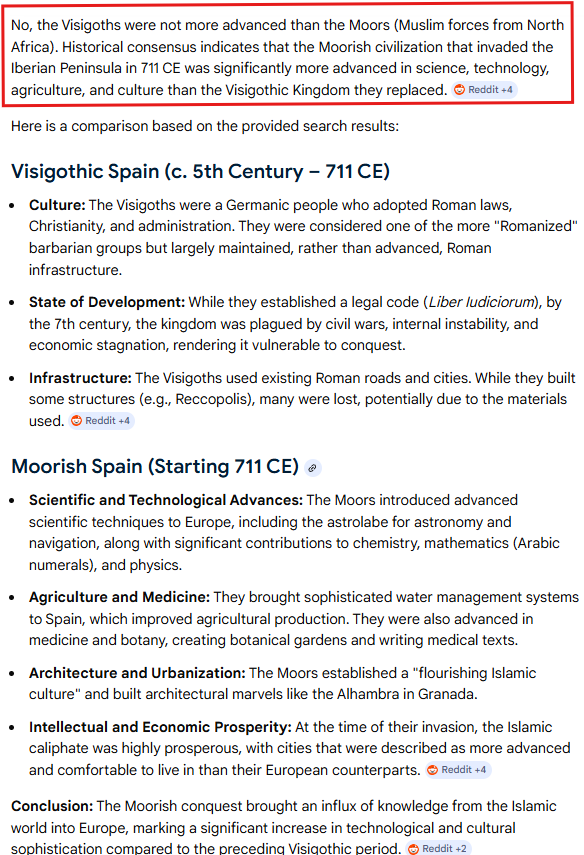
@MrKDon316495 @erichberger @HowardJame76817 @akafaceUS You use AI overview. Non-Moors made knowledge accessible, was exchange. Moors also stole science. Eastern Islamic world contributions were more significant; in al-Andalus: valuable comments. Astrolabe predates Islam. Chemistry emerged in Europe. Europe had several renaissances.


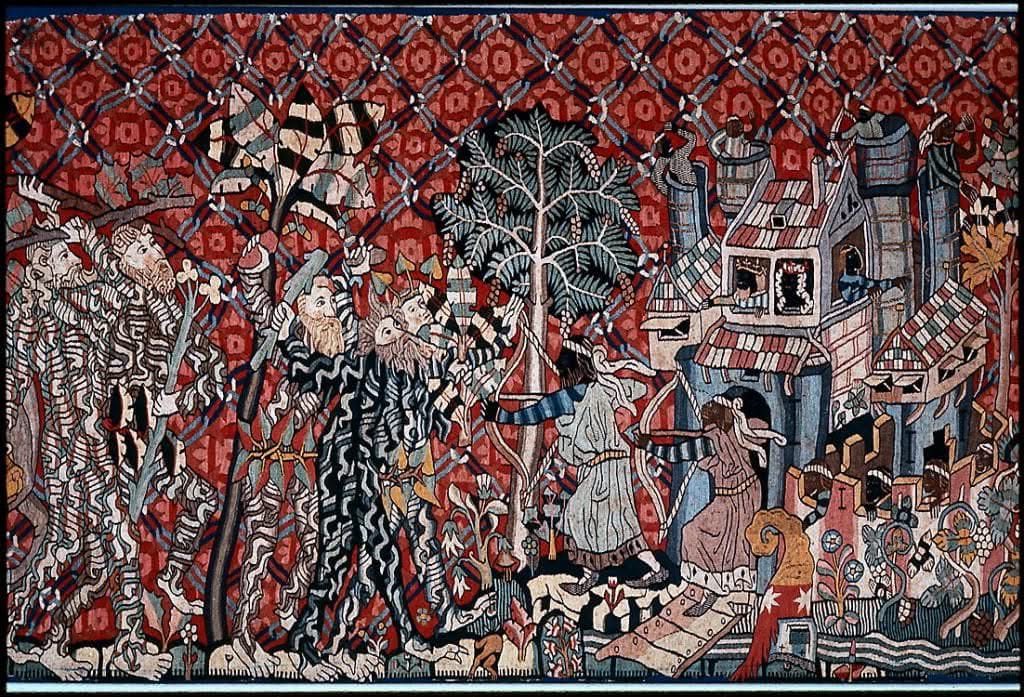
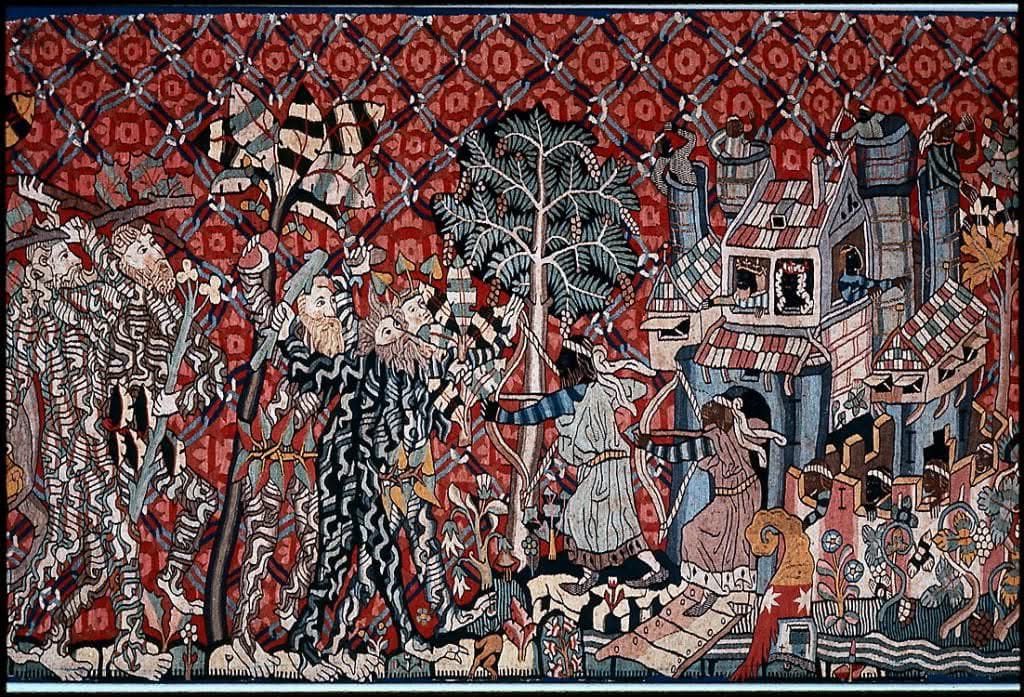
@MRaleigh919 @wapol_vu @shylawwk Wildmen are fantasy, not historical figures. Europeans fought against them too. Let's see the lion, dragon, and unicorn. en.wikipedia.org/wiki/Wild_man Non-Muslims made knowledge accessible. Europeans lived in cities with stone buildings, the mostly light-skinned Moors were impressed.