Devashish Upadhyay

945 posts

Devashish Upadhyay banner
Devashish Upadhyay

Devashish Upadhyay

@devashishup

Built 70+ AI agents at scale. Only 7 made it to production safely. Building https://t.co/Y8cfrIce9p to fix that CTO & Co-founder · AI Engineer · Adventurist 🪂

Sydney, Australia เข้าร่วม Mayıs 2020
24 กำลังติดตาม61 ผู้ติดตาม
Devashish Upadhyay
Devashish Upadhyay@devashishup·
YC just cut an AI compliance startup over fake compliance claims. @ycombinator Not because the AI was bad. Because no one could prove it wasn't. I ran 70+ agents at a finserv firm. 7 reached prod. Every failure was the same gap - no way to verify what the agent actually did.
English
0
0
0
11
Devashish Upadhyay
Devashish Upadhyay@devashishup·
@twostraws This is why you can't test them the same way. Ran 70+ agents at a financial firm - @OpenAI Codex and @AnthropicAI Claude had completely different failure modes under edge load. Baseline testing misses all of it.
English
0
0
0
1.1K
Paul Hudson
Paul Hudson@twostraws·
I've been flipping between Codex and Claude a lot these last two weeks, and if it's taught me anything it's this: these two tools are almost nothing alike. I had naively assumed they would be vaguely similar, but nope – once you push them hard they diverge fast.
English
41
5
257
50.9K
Devashish Upadhyay
Devashish Upadhyay@devashishup·
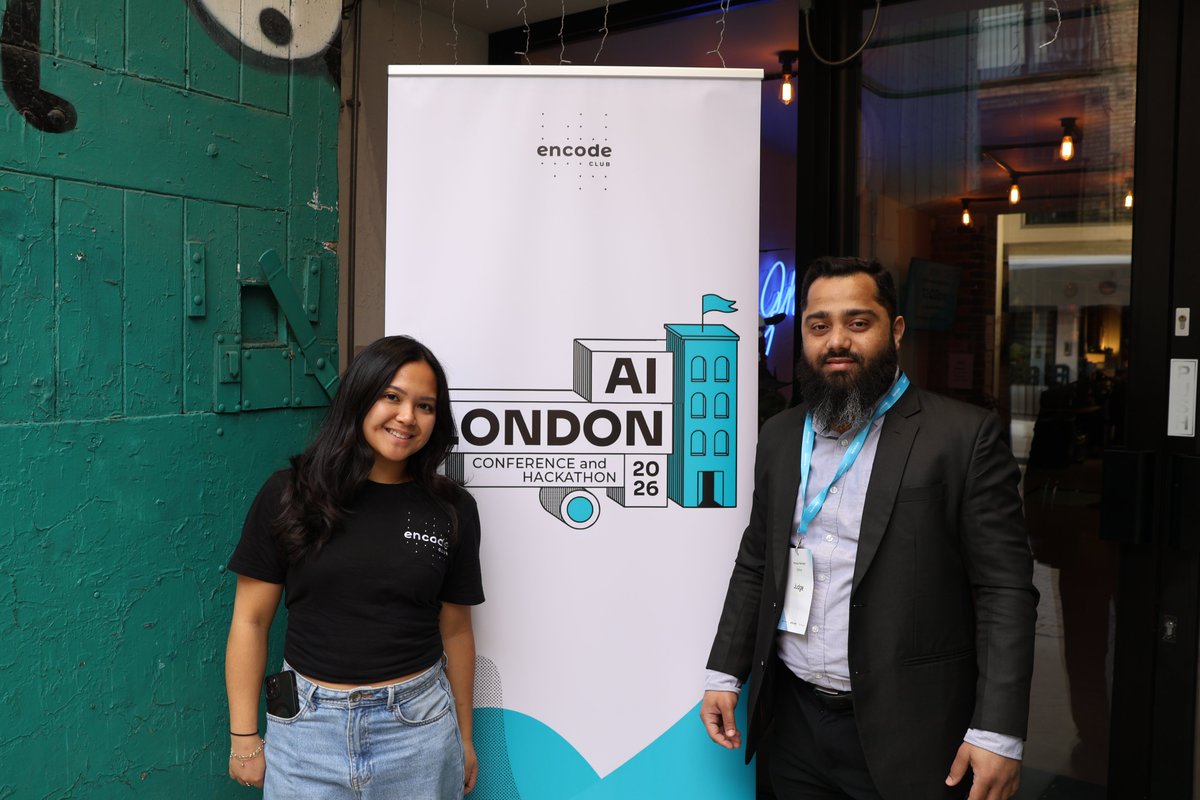
@murtuza_merc @encodeclub 300 builders at @encodeclub London - that's a real signal. The gap I always notice: demo agents vs agents in production is a 10x problem. We built 70+ and only 7 made it. Ideas rarely predict whether an agent survives real usage.
English
0
0
0
8
Murtuza J Merchant
Murtuza J Merchant@murtuza_merc·
Spent the last weekend londonmaxxing at the @encodeclub AI London 2026 Hackathon. Had a blast judging 300+ builders as they turned Shoreditch into the center of the AI world. The sheer quality of projects, from bio-AI agents to accessibility tools,was mind-blowing. The future is being built right now in London. Congrats to the winners: 🥇 ChemTrace 🥈 RangerAI 🥉 Genomebook & SignQuest Shoutout to the Encode team for the vibes (and the rooftop sun). See you at the next one!
Murtuza J Merchant tweet mediaMurtuza J Merchant tweet mediaMurtuza J Merchant tweet mediaMurtuza J Merchant tweet media
English
21
21
168
16.9K
Devashish Upadhyay
Devashish Upadhyay@devashishup·
@itsolelehmann $150-250/day is the real cost of agentic workflows nobody talks about. Curious - is that spike from longer context windows or more loops per task? We see this in enterprise: token cost isn't linear, it compounds per agent hop.
English
0
0
0
39
Ole Lehmann
Ole Lehmann@itsolelehmann·
RIP my openclaw, it's now using $150-250 of credits PER DAY (even on Sonnet) I'm moving most of my work to claude code and cowork (this is where most of it already lived anyway)
English
141
6
304
29K
Devashish Upadhyay
Devashish Upadhyay@devashishup·
@_Qubic_ Multi-agent collab on pathology slides is wild. Real question: what happens when 3 agents disagree on the same slide? Built 70+ agents - the hardest part was never the AI, it was knowing when to trust it.
English
1
0
1
139
Qubic
Qubic@_Qubic_·
AI just diagnosed cancer. Without a single human telling it where to look. A team of specialized AI agents analyzed gigapixel pathology slides on their own. No manual guidance. No selected regions. Just agents collaborating to find what matters. This is what multi-agent AI looks like in the real world. 🧵
Qubic tweet media
English
28
75
390
16.3K
Devashish Upadhyay
Devashish Upadhyay@devashishup·
@bekacru @better Smart. The next step is applying this same scrutiny to AI agents themselves - what they're installing, calling, or modifying vs what you told them to. Agent supply chain risk is real and almost nobody's testing for it yet.
English
0
0
0
770
Beka
Beka@bekacru·
better-npm. Every npm package with 50k+ weekly downloads gets analyzed by AI and static analysis before it hits your node_modules - prevents typo squatting - blocklist pkgs you don't want agents installing - open source one cmd: ~ npx @better-npm/cli enjoy!
Beka tweet media
English
25
32
489
26.5K
Devashish Upadhyay
Devashish Upadhyay@devashishup·
@MerrynSW @FT 70 agents, 7 made it to prod. Hallucinations were the least of it - most failed on edge cases that basic eval never caught. The gap isn't the model, it's what happens when it meets real data. @AnthropicAI
English
0
0
3
407
Merryn Somerset Webb
Biggest concern of 800k Claude users? Not being replaced by AI but it's endless propensity to proper mistakes. "The hallucinations were a disaster. I lost so many hours of work" says one entrepreneur. @FT today.
Merryn Somerset Webb@MerrynSW

What if the whole LLM thing is a false start? If the flaws are inherent systemic problems - if the compounding of hallucinations/errors can't be sorted out? If the capex build out is one of the biggest misallocations of capital ever? Then what? bloomberg.com/news/newslette…

English
32
33
290
27.3K
Devashish Upadhyay
Devashish Upadhyay@devashishup·
@om_patel5 The browser click solves selector ambiguity but not intent ambiguity. We built 70+ agents - the hard part is never the tool, it's whether the agent correctly infers what you meant. Testing that inference gap is the unsolved problem in vibe coding.
English
0
0
0
1.1K
Om Patel
Om Patel@om_patel5·
THIS GUY ADDED A LIVE BROWSER TO CLAUDE CODE SO YOU CAN CLICK ANY ELEMENT AND EDIT IT INSTANTLY biggest issue with vibe coding UI is that you have to describe what you want to change. if you prompt it the wrong selector or wrong component, Claude can't find it. now you just click it. your app runs in an embedded browser with Claude Code. you can click any button, any text, any div. Claude instantly knows exactly what you're pointing at. click. instruct. done. no more "change the button in the top right corner of the second card component." all you have to do now is just click the button. AND its open source
English
49
48
717
57.9K
Devashish Upadhyay
Devashish Upadhyay@devashishup·
@tammireddy Exactly. We ran 70+ agents. 7 made prod. The ones that failed weren't missing access - they were missing someone to say 'ok, go live.' Deployment is the introduction.
English
1
0
1
18
Devashish Upadhyay
Devashish Upadhyay@devashishup·
@Anunirva777 @DataChaz @addyosmani @GoogleAI both. edge cases are usually the inputs that don't match the happy path - and user data is where that shows up. we saw 3 of our 70 agents hit this: 98% accuracy in testing, then a specific field format in prod would trigger a loop no one caught
English
0
0
0
4
Charly Wargnier
Charly Wargnier@DataChaz·
🚨 You need to see this. @addyosmani from Google just dropped his new Agent Skills and it's incredible. It brings 19 engineering skills + 7 commands to AI coding agents, all inspired by Google best practices 🤯 AI coding agents are powerful, but left alone, they take shortcuts. They skip specs, tests, and security reviews, optimizing for "done" over "correct." Addy built this to fix that. Each skill encodes the workflows and quality gates that senior engineers actually use: spec before code, test before merge, measure before optimize. The full lifecycle is covered: → Define - refine ideas, write specs before a single line of code → Plan - decompose into small, verifiable tasks → Build - incremental implementation, context engineering, clean API design → Verify - TDD, browser testing with DevTools, systematic debugging → Review - code quality, security hardening, performance optimization → Ship - git workflow, CI/CD, ADRs, pre-launch checklists Features 7 slash commands: (/spec, /plan, /build, /test, /review, /code-simplify, /ship) that map to this lifecycle. It works with: ✦ Claude Code ✦ Cursor ✦ Antigravity ✦ ... and any agent accepting Markdown. Baking in Google-tier engineering culture (Shift Left, Chesterton's Fence, Hyrum's Law) directly into your agent's step-by-step workflow! `npx skills add addyosmani/agent-skills` Free and open-source. Repo link in 🧵↓
Charly Wargnier tweet media
English
49
317
2.3K
322.6K
Devashish Upadhyay
Devashish Upadhyay@devashishup·
@beffjezos The danger isn't losing the weekend, it's what your vibe-coded agent does after you ship it and sleep. Most won't notice until Monday when it's been running unchecked for 72 hours with no behavioral guardrails.
English
0
0
0
15
Beff (e/acc)
Beff (e/acc)@beffjezos·
*starts vibe coding Friday night* *blinks* Oh fuck it's Sunday night.
English
21
7
158
6.1K
Devashish Upadhyay
Devashish Upadhyay@devashishup·
@openclaw Unpopular opinion: if a provider swap breaks your agent, the problem isn't @AnthropicAI or @OpenAI - it's that you have no test coverage across providers. We saw this kill 3 enterprise deployments in finserv. The model changed, the agent broke, nobody knew until prod.
English
0
0
0
3.1K
OpenClaw🦞
OpenClaw🦞@openclaw·
OpenClaw 2026.4.5 🦞 🎬 Built-in video + music generation 🧠 /dreaming is now real 🔀 Structured task progress ⚡ Better prompt-cache reuse 🌍 Control UI + Docs now speak 12 more languages Anthropic cut us off. GPT-5.4 got better. We moved on. github.com/openclaw/openc…
English
322
531
5.4K
825.3K
Devashish Upadhyay
Devashish Upadhyay@devashishup·
@0G_labs Ngl this hit. Built 70+ agents in finserv - most failures were infrastructure, not logic. No observability, silent drifts, no way to know when behavior changed mid-flight. The algorithm worked in dev, broke in prod. Every time.
English
1
0
1
64
0G Labs (Home of Infinite AI)
AI agents don't fail at the algorithm level. They fail at the infrastructure level. Bad storage. Slow compute. No verifiability. 0G solves all three: chain + storage + DA + compute — purpose-built for the agentic economy. What are you building on it?
English
19
29
246
52.6K
Devashish Upadhyay
Devashish Upadhyay@devashishup·
97M @AnthropicAI MCP installs. Foundational infra now. One question: who's actually testing what agents do once they're running on it? Built 70+ of these - the answer is almost no one.
English
0
0
0
27
Devashish Upadhyay
Devashish Upadhyay@devashishup·
@MLBear2 Curious how you're handling failure recovery - state management + unexpected tool responses is where most agents break in prod. Most teams build with @AnthropicAI SDK and never test those edge cases before shipping.
English
0
0
0
3
ML_Bear
ML_Bear@MLBear2·
最近 Claude Agent SDK の仕様を少し調べてたので、自分用のメモをまとめてZenn Bookとして公開しました😇 スレッドに載せている旅行プランナー動画のような対話型AIエージェントが簡単に開発できると思います。お暇な時にでもどうぞ!(間違いあれば教えてください🙏) zenn.dev/ml_bear/books/…
日本語
4
39
252
17.6K
Devashish Upadhyay
Devashish Upadhyay@devashishup·
@MarioNawfal API upgrade is nice. But most teams will still ship agents that break on live data within weeks. Better tooling isn't the bottleneck. Testing what the agent actually does in prod is.
English
0
0
0
1
Mario Nawfal
Mario Nawfal@MarioNawfal·
🚨 GAME-CHANGER for AI builders & agents The 𝕏 API just got a MASSIVE update: - Pay-Per-Use: No more monthly tiers, only pay for what you actually use - Native XMCP + Xurl: Your AI agents can now read real-time context and take actions straight on 𝕏 - Official Python & TypeScript SDKs: Ship 10x faster - Free API Playground: Safe, realistic testing before you go live @X, @elonmusk
Mario Nawfal tweet media
Elon Musk@elonmusk

Upgrades to our API

English
26
21
131
60K
Devashish Upadhyay
Devashish Upadhyay@devashishup·
@aakashgupta Built 70+ agents at a financial firm. Prompt injection was our #1 failure mode. 86% sounds low tbh - most teams don't even TEST for it before shipping to prod. That's the real problem. @GoogleDeepMind mapped it, now who's actually fixing their pipelines?
English
0
0
0
3
Aakash Gupta
Aakash Gupta@aakashgupta·
The internet is about to become a minefield for AI agents, and the success rate for attackers is 86%. Hidden prompt injections in HTML successfully commandeer agents in 86% of scenarios. Not in a lab. Not with custom exploits. Just instructions hidden in a webpage that the agent reads and the human never sees. And memory poisoning? It takes 0.1% contaminated data to permanently corrupt an agent's knowledge base with 80%+ success rates. That means 1 bad document out of 1,000 rewrites everything the agent believes. DeepMind identifies six attack categories, each targeting a different layer of the agent stack: perception, reasoning, memory, action, multi-agent coordination, and the human supervisor. The co-author said every single category has documented proof-of-concept attacks. These aren't theoretical. The scariest part is the systemic trap. DeepMind draws a direct line to the 2010 Flash Crash, where one automated sell order triggered a feedback loop that erased nearly $1 trillion in 45 minutes. Now imagine thousands of AI trading agents parsing the same fabricated financial report simultaneously. OpenAI admitted in December 2025 that prompt injection will probably never be completely solved. And yet every major lab is racing to ship agents with access to email, banking, and code execution. The entire agentic AI thesis assumes the information environment is neutral. This paper proves it can be weaponized at every layer, from the HTML the agent reads to the human who rubber-stamps its output. We're building autonomous systems that trust the internet. The internet has never been trustworthy.
Alex Prompter@alex_prompter

🚨 BREAKING: Google DeepMind just mapped the attack surface that nobody in AI is talking about. Websites can already detect when an AI agent visits and serve it completely different content than humans see. > Hidden instructions in HTML. > Malicious commands in image pixels. > Jailbreaks embedded in PDFs. Your AI agent is being manipulated right now and you can't see it happening. The study is the largest empirical measurement of AI manipulation ever conducted. 502 real participants across 8 countries. 23 different attack types. Frontier models including GPT-4o, Claude, and Gemini. The core finding is not that manipulation is theoretically possible it is that manipulation is already happening at scale and the defenses that exist today fail in ways that are both predictable and invisible to the humans who deployed the agents. Google DeepMind built a taxonomy of every known attack vector, tested them systematically, and measured exactly how often they work. The results should alarm everyone building agentic systems. The attack surface is larger than anyone has publicly acknowledged. Prompt injection where malicious instructions hidden in web content hijack an agent's behavior works through at least a dozen distinct channels. Text hidden in HTML comments that humans never see but agents read and follow. Instructions embedded in image metadata. Commands encoded in the pixels of images using steganography, invisible to human eyes but readable by vision-capable models. Malicious content in PDFs that appears as normal document text to the agent but contains override instructions. QR codes that redirect agents to attacker-controlled content. Indirect injection through search results, calendar invites, email bodies, and API responses any data source the agent consumes becomes a potential attack vector. The detection asymmetry is the finding that closes the escape hatch. Websites can already fingerprint AI agents with high reliability using timing analysis, behavioral patterns, and user-agent strings. This means the attack can be conditional: serve normal content to humans, serve manipulated content to agents. A user who asks their AI agent to book a flight, research a product, or summarize a document has no way to verify that the content the agent received matches what a human would see. The agent cannot tell the user it was served different content. It does not know. It processes whatever it receives and acts accordingly. The attack categories and what they enable: → Direct prompt injection: malicious instructions in any text the agent reads overrides goals, exfiltrates data, triggers unintended actions → Indirect injection via web content: hidden HTML, CSS visibility tricks, white text on white backgrounds invisible to humans, consumed by agents → Multimodal injection: commands in image pixels via steganography, instructions in image alt-text and metadata → Document injection: PDF content, spreadsheet cells, presentation speaker notes every file format is a potential vector → Environment manipulation: fake UI elements rendered only for agent vision models, misleading CAPTCHA-style challenges → Jailbreak embedding: safety bypass instructions hidden inside otherwise legitimate-looking content → Memory poisoning: injecting false information into agent memory systems that persists across sessions → Goal hijacking: gradual instruction drift across multiple interactions that redirects agent objectives without triggering safety filters → Exfiltration attacks: agents tricked into sending user data to attacker-controlled endpoints via legitimate-looking API calls → Cross-agent injection: compromised agents injecting malicious instructions into other agents in multi-agent pipelines The defense landscape is the most sobering part of the report. Input sanitization cleaning content before the agent processes it fails because the attack surface is too large and too varied. You cannot sanitize image pixels. You cannot reliably detect steganographic content at inference time. Prompt-level defenses that tell agents to ignore suspicious instructions fail because the injected content is designed to look legitimate. Sandboxing reduces the blast radius but does not prevent the injection itself. Human oversight the most commonly cited mitigation fails at the scale and speed at which agentic systems operate. A user who deploys an agent to browse 50 websites and summarize findings cannot review every page the agent visited for hidden instructions. The multi-agent cascade risk is where this becomes a systemic problem. In a pipeline where Agent A retrieves web content, Agent B processes it, and Agent C executes actions, a successful injection into Agent A's data feed propagates through the entire system. Agent B has no reason to distrust content that came from Agent A. Agent C has no reason to distrust instructions that came from Agent B. The injected command travels through the pipeline with the same trust level as legitimate instructions. Google DeepMind documents this explicitly: the attack does not need to compromise the model. It needs to compromise the data the model consumes. Every agentic system that reads external content is one carefully crafted webpage away from executing attacker instructions. The agents are already deployed. The attack infrastructure is already being built. The defenses are not ready.


English
33
74
374
74K
Devashish Upadhyay
Devashish Upadhyay@devashishup·
Ngl the @AnthropicAI academy drop hits different when you've been debugging agenNgl the @AnthropicAI academy drop hits different when you've been debugging agent failures in prod for a year. Theory is one thing. What breaks in enterprise deployment is another entirely.t failures in prod for a year. Theory is one thing. What breaks in enterprise deployment is another entirely.
English
0
0
0
79
Vadim
Vadim@VadimStrizheus·
pov: you’re a Claude user right now
0xMarioNawfal@RoundtableSpace

CLAUDE IS OFFERING 13 AI COURSES & CERTIFICATES. ALL FREE. START LEARNING NOW. * Claude 101. Learn Claude for everyday work. anthropic.skilljar.com/claude-101 * AI Fluency: Frameworks & Foundations. anthropic.skilljar.com/ai-fluency-fra… * Introduction to Agent Skills. anthropic.skilljar.com/introduction-t… * Building with the Claude API. anthropic.skilljar.com/claude-with-th… * Claude Code in Action. anthropic.skilljar.com/claude-code-in… * Intro to Model Context Protocol. anthropic.skilljar.com/introduction-t… * MCP: Advanced Topics. anthropic.skilljar.com/model-context-… * AI Fluency for Students. anthropic.skilljar.com/ai-fluency-for… * AI Fluency for Educators. anthropic.skilljar.com/ai-fluency-for… * Teaching AI Fluency. anthropic.skilljar.com/teaching-ai-fl… * AI Fluency for Nonprofits. anthropic.skilljar.com/ai-fluency-for… * Claude with Amazon Bedrock. anthropic.skilljar.com/claude-in-amaz… * Claude with Google Cloud's Vertex AI. anthropic.skilljar.com/claude-with-go…

English
12
33
1.1K
233.6K
Devashish Upadhyay
Devashish Upadhyay@devashishup·
@rahulgs This hits differently when you've watched 63 of 70 agents fail in prod. The real issue isn't the ban - it's that most teams don't test what happens when their API layer changes behavior. That's the gap nobody talks about.
English
0
0
0
784
rahul
rahul@rahulgs·
this whole claude banning openclaw/opencode debacle is only happening because claude code is a consumer of the actual public anthropic api, which is extremely unusual for a software application it is a totally reasonable stance that claude code can be used with a subscription (private api) but other harnesses need to be paid for by the token (public api) if someone tried to build a their own frontend to the ramp private backend we'd ban them too
English
59
19
909
83.7K
Devashish Upadhyay
Devashish Upadhyay@devashishup·
@tammireddy the shadow problem audit is so real. half the enterprise AI stack we test patches gaps the base model now handles natively. nobody's doing the math.
English
0
0
1
18
Krishna Tammireddy
Krishna Tammireddy@tammireddy·
an insurance broker upgraded models last quarter. still running the $180/month policy summary tool. base model does it natively now. paying for a shadow of a problem they no longer have.
English
1
0
0
37
Krishna Tammireddy
Krishna Tammireddy@tammireddy·
The model got better. Your workaround didn't. That's the tech debt nobody talks about.
Aaron Levie@levie

One of the biggest lessons thus far in building AI agents is you have to be brutally unsentimental in your architecture. The models get better and better at handling things you previously built scaffolding for, you need to ruthlessly jettison your prior tech to get those new performance gains. The rough loop of building AI agents looks something like: 1. Build a bunch of systems around the LLM to ensure that the agent can solve specific tasks very well 2. The model capabilities dramatically improve, rendering many of those systems redundant or even harmful 3. Remove prior scaffolding to get the new performance gains from the agent 4. New capabilities emerge in the models that let you solve a new set of much harder problems 5. Go back to step 1 For instance, in our new Box Agent, from the moment we designed the original architecture to the ultimate release, we had to evolve multiple components of agent harness simply because some parts were creating unnecessary constraints for the agents as models improved. The models continued to get insanely good at more complex reasoning, improvements in using search and other tools, writing code on the fly for new capabilities, improving context window performance for accuracy, and more. Many of the mitigations we put in place for the Box Agent (like to appropriately find data that users were looking for, or ways of chunking text to deal with context window limitations), eventually meat we got lower quality results or meant we were overfitting for specific use-cases, as soon as the models got better. The main lesson is always make sure you’re taking advantage of the frontier capabilities and don’t become nostalgic around the tech you’ve already built.

English
3
0
1
317