Andrew Sharp

6.6K posts

Andrew Sharp banner
Andrew Sharp

Andrew Sharp

@drandrewsharp

Interested in stuff. (This is my personal account only)

Ireland เข้าร่วม Mart 2014
2.8K กำลังติดตาม6.9K ผู้ติดตาม
Andrew Sharp รีทวีตแล้ว
Time Capsule Tales
Time Capsule Tales@timecaptales·
Chuck Norris held a 183-10-2 record and was a 6x world champion in full contact bare knuckle karate. On top of that, he beat heavyweight kickboxing world champion Joe Lewis 3 consecutive times and also had a brutal sparring match with undefeated kickboxing world champion, Bill Superfoot Wallace, that lasted an hour and a half. According to Wallace, they practically stalemated and "beat the crap out of each other". Chuck was trained in kickboxing/boxing by Benny The Jet Urquidez and was also trained in BJJ by the Gracies and Machados for 20 years. Even being able to submit Carlos Machado himself on occasion. Chuck had a 315 Ibs bench press at 180 lbs bodyweight and was said to have a grip back in the day that nobody could escape from because he was so strong. Even Jean Claude Van Damme said he'd never fight Chuck Norris, despite being a kickboxing world champion himself. Chuck held a 10th degree black belt in Chun Kuk Do, a 9th degree black belt in Tang Soo Do, an 8th degree black belt in Taekwondo, a 5th degree black belt in Karate, a 3rd degree black belt in Brazilian Jiu Jitsu and a black belt in Judo. Rest in peace, Chuck!
English
814
11.3K
56.5K
2M
Andrew Sharp
Andrew Sharp@drandrewsharp·
@elonmusk @doganuraldesign Is it possible: 25% what I follow, 25% what I click through but don’t follow, 25% of the most engaged X posts that would be considered ‘news’ (from various sources) and 25% random stuff that the algorithm thinks would be interesting/enlightening. Right now, ‘for you’ is just doom
English
0
0
0
47
Dogan Ural
Dogan Ural@doganuraldesign·
Fuck it, man. I’m so sick of these algorithm changes.
English
314
94
2.3K
267.4K
Andrew Sharp รีทวีตแล้ว
Ahmed Ata
Ahmed Ata@Ahmedata7777·
Blood Supply of the Cardiac Conduction System — Summary ■ SA node: ▪︎ 60% from Right Coronary Artery. ▪︎ 40% from Left Circumflex Artery. ■ AV node: ▪︎ ~85–90% from Right Coronary Artery. ▪︎ ~10–15% from Left Circumflex Artery. ■ Bundle of His: ▪︎ Proximal: Right Coronary Artery. ▪︎ Distal: Septal branches of Left Anterior Descending Artery. ■ Right bundle branch: ▪︎ Septal branches of Left Anterior Descending Artery. ■ Left bundle branch: ▪︎ Septal branches of Left Anterior Descending Artery. ✅ Key pearl: ● RCA infarction → sinus node dysfunction & AV block. ● LAD infarction → bundle branch blocks. #cardiology
Ahmed Ata tweet media
English
2
120
422
19.1K
Andrew Sharp รีทวีตแล้ว
Cat Jennings
Cat Jennings@bsc_vascular·
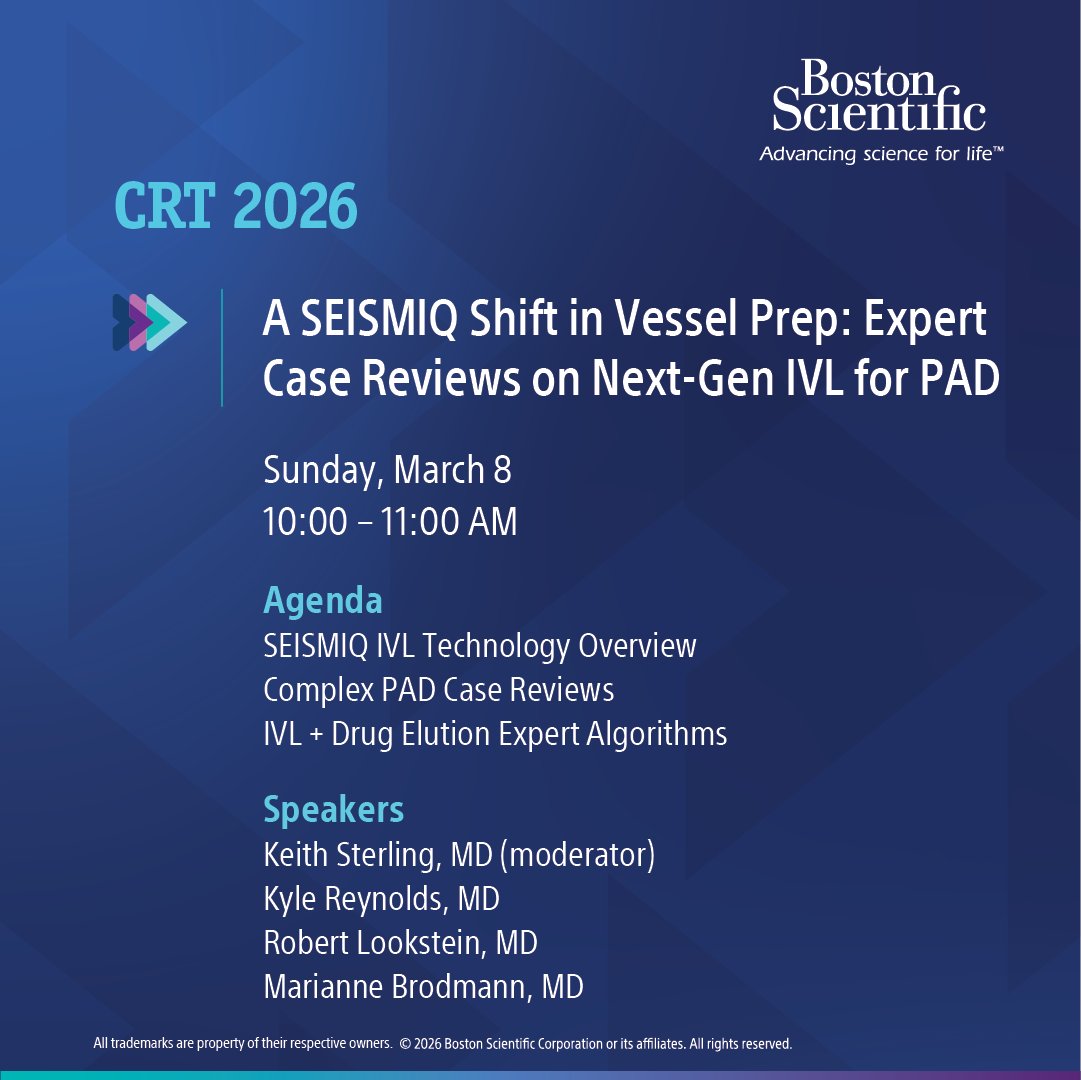
Join us at #CRT2026 for an insightful Meet the Experts session where a multidisciplinary panel will discuss novel #SEISMIQ IVL technology, cases, and expert algorithms to optimize #PAD patient care.
Cat Jennings tweet media
English
0
3
5
547
Andrew Sharp
Andrew Sharp@drandrewsharp·
Cost effectiveness of intracoronary imaging - the latest research taking into account meta-analysis. If you aren’t imaging your coronaries/stents, cost shouldn’t be the issue. ‘Make the Switch Kid’. academic.oup.com/ehjqcco/advanc…
English
0
6
23
1.9K
Elad Maor
Elad Maor@maor_elad·
Prof. @LermanAmir , a world authority on coronary microvascular dysfunction and my mentor at @MayoClinicCV , passed away today. He shaped my thinking as a physician and scientist, and I was fortunate to also call him a close friend. His scientific and human legacy will endure.
Elad Maor tweet mediaElad Maor tweet media
English
21
7
67
31.6K
Andrew Sharp รีทวีตแล้ว
Rutger Bregman
Rutger Bregman@rcbregman·
The BBC just released a new adaptation of Lord of the Flies, the classic novel by William Golding. It's beautifully made, but it's still telling the wrong story. A few years ago, I went looking for the *real* Lord of the Flies. I wanted to know: has it ever actually happened? Have kids ever been shipwrecked on a deserted island? It took me a year of research, but I found it. In 1965, six boys from a boarding school in Tonga stole a boat, got caught in a storm, and drifted for eight days without food or water. They washed up on 'Ata, a remote, uninhabited island in the Pacific. They stayed there for 15 months, and what happened on that island was the exact opposite of William Golding's novel. These boys set up a small commune. They built a food garden, stored rainwater in hollowed-out tree trunks, created a gym with improvised weights, and built a badminton court. One of them, Stephen (who would later become an engineer) managed to start a fire using two sticks. They kept it burning the entire time. Of course they fought too. But then they argued, they had a rule: go to opposite ends of the island, cool down, then come back and apologize. As one of them told me: ‘That's how we stayed friends.’ Back home, everyone assumed that the boys – Luke, Stephen, Sione, David, Kolo and Mano — were dead. When they were finally discovered by an Australian captain named Peter Warner, he radioed their names to Tonga. After twenty minutes, a tearful response came back: ‘You found them! These boys have been given up for dead. Funerals have been held. If it's them, this is a miracle!’ Peter commissioned a new ship, hired all six boys as his crew, and named the boat the Ata, after the island where he found them. They remained friends for the rest of their lives – Peter and Mano even became soulmates. I tracked them down, and it became one of the central chapters of my book Humankind. Here's what struck me most: William Golding (the author of Lord of the Flies) was a troubled man, an alcoholic who once said ‘I have always understood the Nazis, because I am of that sort by nature.’ I think he was projecting his own darkness onto children. And we turned it into a lesson about human nature that we teach to millions of kids around the world. I think the real lesson is the opposite. When real children found themselves alone on a real island, they didn't descend into savagery. They cooperated, they took care of each other, they survived. I'm not saying that the Tongan castaways were representative of all kids everywhere. But I am saying that every kid who has to read or watch the fictional Lord of the Flies also deserves to know what actually happened when it played out in real life. Stories are never just stories. We become the stories that we tell ourselves.
Rutger Bregman tweet media
English
652
5K
14.4K
524.4K
Andrew Sharp รีทวีตแล้ว
Aakash Gupta
Aakash Gupta@aakashgupta·
The math on this project should mass-humble every AI lab on the planet. 1 cubic millimeter. One-millionth of a human brain. Harvard and Google spent 10 years mapping it. The imaging alone took 326 days. They sliced the tissue into 5,000 wafers each 30 nanometers thick, ran them through a $6 million electron microscope, then needed Google’s ML models to stitch the 3D reconstruction because no human team could process the output. The result: 57,000 cells, 150 million synapses, 230 millimeters of blood vessels, compressed into 1.4 petabytes of raw data. For context, 1.4 petabytes is roughly 1.4 million gigabytes. From a speck smaller than a grain of rice. Now scale that. The full human brain is one million times larger. Mapping the whole thing at this resolution would produce approximately 1.4 zettabytes of data. That’s roughly equal to all the data generated on Earth in a single year. The storage alone would cost an estimated $50 billion and require a 140-acre data center, which would make it the largest on the planet. And they found things textbooks don’t contain. One neuron had over 5,000 connection points. Some axons had coiled themselves into tight whorls for completely unknown reasons. Pairs of cell clusters grew in mirror images of each other. Jeff Lichtman, the Harvard lead, said there’s “a chasm between what we already know and what we need to know.” This is why the next step isn’t a human brain. It’s a mouse hippocampus, 10 cubic millimeters, over the next five years. Because even a mouse brain is 1,000x larger than what they just mapped, and the full mouse connectome is the proof of concept before anyone attempts the human one. We’re building AI systems that loosely mimic neural networks while still unable to fully read the wiring diagram of a single cubic millimeter of the thing we’re trying to imitate. The original is 1.4 petabytes per millionth of its volume. Every AI model on Earth fits in a fraction of that. The brain runs on 20 watts and fits in your skull. The data center required to merely describe one-millionth of it would span 140 acres.
All day Astronomy@forallcurious

🚨: Scientists mapped 1 mm³ of a human brain ─ less than a grain of rice ─ and a microscopic cosmos appeared.

English
1.2K
12.1K
64.5K
4.6M
Andrew Sharp รีทวีตแล้ว
Circulation
Circulation@CircAHA·
2026 AHA/ACC/ACCP/ACEP/CHEST/SCAI/ SHM/SIR/SVM/SVN Guideline for the Evaluation and Management of Acute Pulmonary Embolism in Adults ahajrnls.org/3MzH1ha
English
0
87
176
12.8K
Andrew Sharp รีทวีตแล้ว
Jay Giri
Jay Giri@jaygirimd·
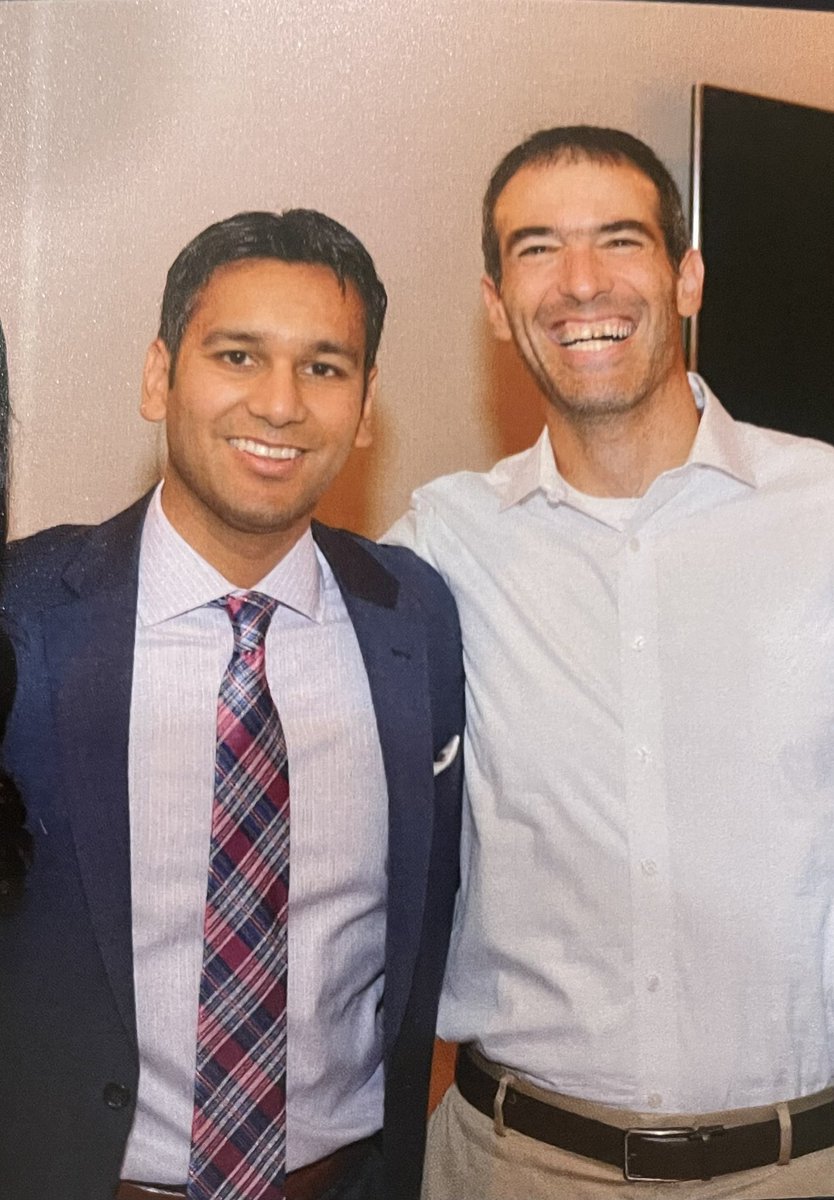
14/ Finally, this effort is in memory of @IdoWeinberg. Former President of @SVM_tweets, Director of Vascore US Lab, Prof @harvardmed, triathlete, co-author of this doc with >70 pubs in PE to inform evidence. Father, son, brother, and the best friend a guy could ever ask for.
Jay Giri tweet media
English
1
4
37
2.3K
Andrew Sharp รีทวีตแล้ว
Heritage Matters🔱
Heritage Matters🔱@HeritageMatterz·
Polish 26 year old guitar master Marcin Patrzałek respond to those who have made public comments claiming that his music is fake. He made this video in a tutorial form showing how he manages to play so extraordinarily well in response. And yes, it's all played on one guitar.
English
1.7K
13.2K
69.9K
2.4M
Andrew Sharp รีทวีตแล้ว
BostonSci Cardiology
BostonSci Cardiology@BSCCardiology·
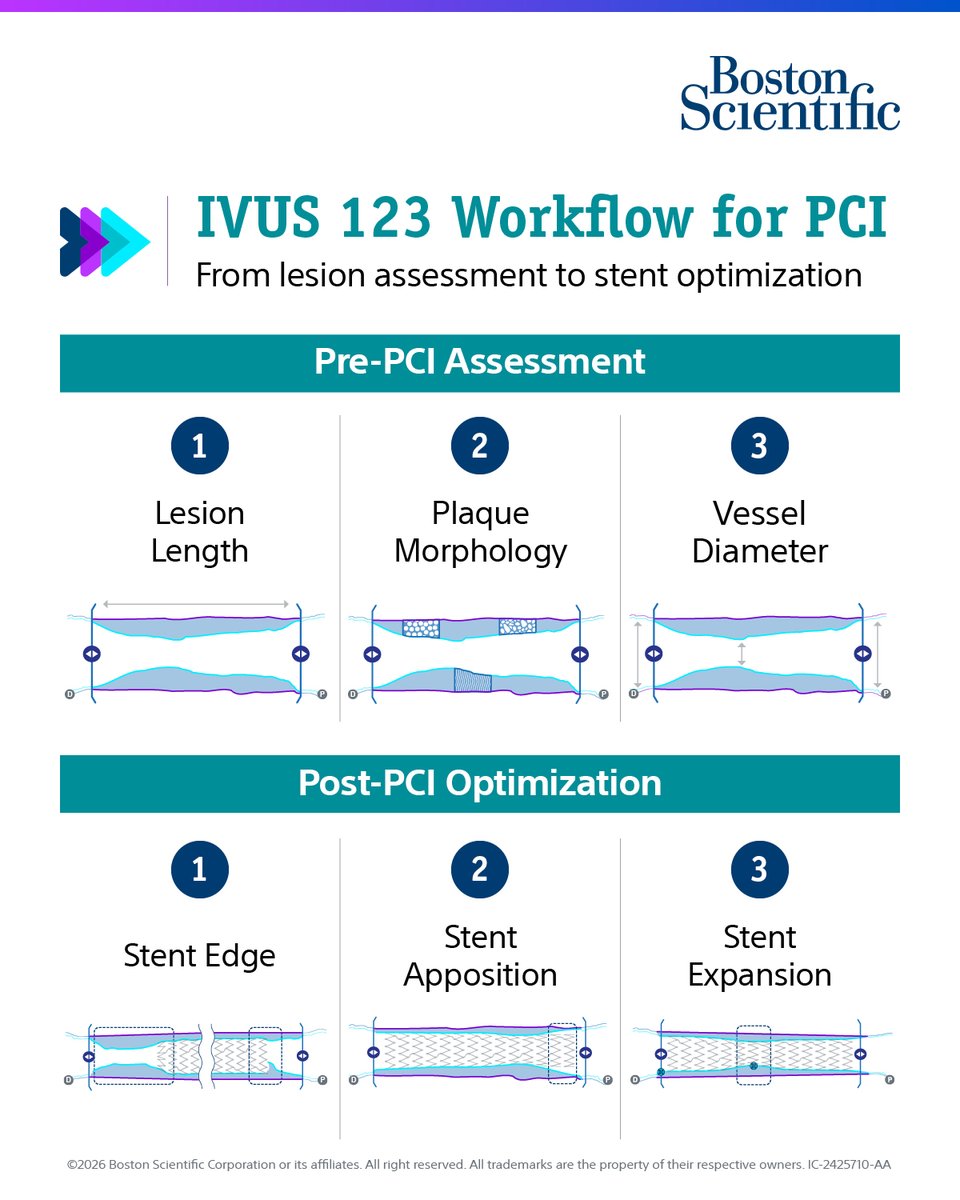
Improved IVUS-guided PCI outcomes support critical clinical decisions. In a recent publication, Dr. Simon Walsh outlines the IVUS 123 Workflow, a simplified, standardized approach designed to support intuitive decision-making, reproducibility, and long-term PCI durability. 📄Read more: qrco.de/bgbY7m
BostonSci Cardiology tweet media
English
0
26
78
6.1K
Andrew Sharp รีทวีตแล้ว
Dr. Akhil 🇮🇳
Dr. Akhil 🇮🇳@DrAkhilX·
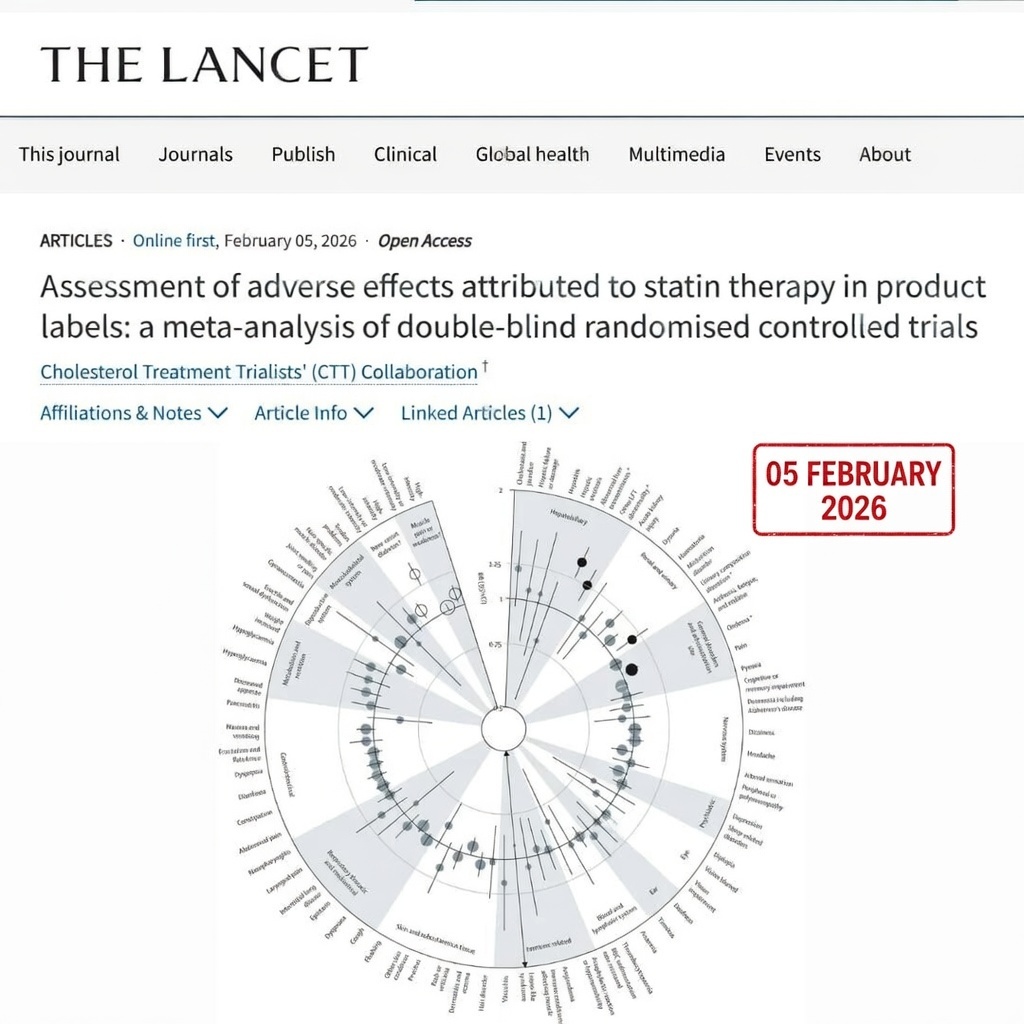
The Lancet has published a meta-analysis that can bury all the urban myths associated with the side effects of statins. 68 side effects were studied and only 6 demonstrated statistically significant risk. Study confirms a moderate dose-dependent increase in new-onset diabetes, primarily in individuals with prediabetes, with lower risk for low/moderate-intensity and higher risk for patients on high-intensity statins. 2. Muscle-related effects (e.g., myalgia, myopathy, myositis, rhabdomyolysis, muscle spasms, arthralgia, pain in extremity, back pain, immune-mediated necrotizing myopathy): The study confirms rare cases of myopathy or rhabdomyolysis (about 1 case per 10,000 person-years) and a small increase in less severe muscle symptoms (about 1% absolute excess, mostly in the first year), consistent with prior evidence. 3 & 4. Abnormal liver transaminases and other liver function test abnormalities (e.g., elevated ALT/AST, hepatitis, cholestasis, hepatic failure): The study finds small dose-dependent risk for abnormal liver transaminases and other alterations of liver function tests, but no risk for serious hepatobiliary outcomes like hepatic failure. 5. Urinary composition alterations (e.g., proteinuria, albuminuria, white blood cells in urine): The study finds a small excess risk, with no dose-dependency observed. 6. Oedema (e.g., peripheral oedema): The study finds a small excess risk with no dose-dependency observed. Only the above SIX outcomes showed statistically significant excess risk. The analysis emphasizes that statin's cardiovascular benefits substantially outweigh these risks, and recommends revising product labels to remove unsubstantiated warnings to minimize nocebo effects and improve adherence. Among the rest of the 62 outcomes assessed, none showed a significant excess risk after FDR adjustment, meaning the study found no reliable causal evidence linking statin therapy to increased incidence of these adverse effects. This adjustment accounts for multiple testing to avoid false positives, and the lack of significance suggests many of these outcomes listed in statin product labels may be based on anecdotal or observational data rather than randomized evidence. The study recommends revising product labels to reflect this, as unsubstantiated warnings could contribute to nocebo effects and reduced adherence. The nocebo effect is like the opposite of the placebo effect: it's when someone's negative expectations or beliefs about a treatment (such as fearing side effects from a pill) actually cause them to experience real symptoms or feel worse, even if the treatment itself isn't harmful or is just a dummy substance. This can happen because the mind influences the body, amplifying worries into physical issues like pain or nausea. In medical contexts, it's often linked to how warnings or media hype can unintentionally make people report more problems than the treatment truly causes. The 62 outcomes that show NO significant excess risks are 1. Amnesia 2. Confusion 3. Memory loss 4. Depression 5. Insomnia 6. Nightmare 7. Erectile dysfunction 8. Gynecomastia 9. Sexual dysfunction 10. Interstitial lung disease 11. Pharyngolaryngeal pain 12. Epistaxis 13. Constipation 14. Flatulence 15. Dyspepsia 16. Vomiting 17. Abdominal pain 18. Eructation 19. Pancreatitis 20. Urticaria 21. Skin rash 22. Pruritus 23. Alopecia 24. Angioneurotic oedema 25. Dermatitis bullous 26. Stevens-Johnson syndrome 27. Toxic epidermal necrolysis 28. Malaise 29. Asthenia 30. Chest pain 31. Fatigue 32. Pyrexia 33. Vision blurred 34. Visual disturbance 35. Tinnitus 36. Hearing loss 37. Thrombocytopenia 38. Allergic reactions 39. Anaphylaxis 40. Hypoglycaemia 41. Anorexia 42. Vasculitis 43. Nasopharyngitis 44. Acute kidney injury 45. Dysuria 46. Haematuria 47. Tendinopathy 48. Muscle rupture 49. Lupus-like syndrome 50. Weight gain 51. Peripheral neuropathy 52. Myasthenia gravis 53. Ocular myasthenia 54. Dizziness 55. Paraesthesia 56. Hypoesthesia 57. Dysgeusia 58. Headache 59. Nausea 60. Diarrhoea 61. Joint swelling 62. Neck pain The study is a high-quality individual participant data meta-analysis by the Cholesterol Treatment Trialists' Collaboration, which rigorously evaluates statin safety and has the potential to refute unsubstantiated claims about adverse effects, as it relies on large-scale randomized evidence rather than anecdotal or observational data. The researchers analysed data from 23 large-scale randomized trials involving 154,664 participants to assess whether statin therapy has risks for 68 adverse outcomes. It reaffirms two previously established risks (muscle-related effects and new-onset diabetes) and newly assesses 66 prespecified adverse outcomes across 15 system organ classes commonly listed in statin product labels, for a total of 68 outcomes studied. Among these, only six showed statistically significant excesses: rare myopathy/rhabdomyolysis and a small increase in less severe muscle symptoms (previously established); a moderate dose-dependent increase in new-onset diabetes, primarily in those near the diagnostic threshold (previously established, with rate ratios of 1.10 for low/moderate-intensity and 1.36 for high-intensity statins vs. placebo); small excesses in abnormal liver transaminases (RR 1.41, absolute annual excess 0.09%); other liver function test abnormalities (RR 1.26, absolute annual excess 0.05%); urinary composition alterations (RR 1.18, absolute annual excess 0.03%); and oedema (RR 1.07, absolute annual excess 0.07%). The remaining 62 outcomes showed no significant excess risk after false discovery rate adjustment. STUDY- Reith C, Blackwell L, Emberson J, Preiss D, Spata E, Davies K, et al; Cholesterol Treatment Trialists' (CTT) Collaboration. Assessment of adverse effects attributed to statin therapy in product labels: a meta-analysis of double-blind randomised controlled trials. Lancet. 2026 Feb 5 [Epub ahead of print]. doi: 10.1016/S0140-6736(25)01578-8.
Dr. Akhil 🇮🇳 tweet media
English
16
122
532
36.8K
Andrew Sharp รีทวีตแล้ว
Davide Capodanno
Davide Capodanno@DFCapodanno·
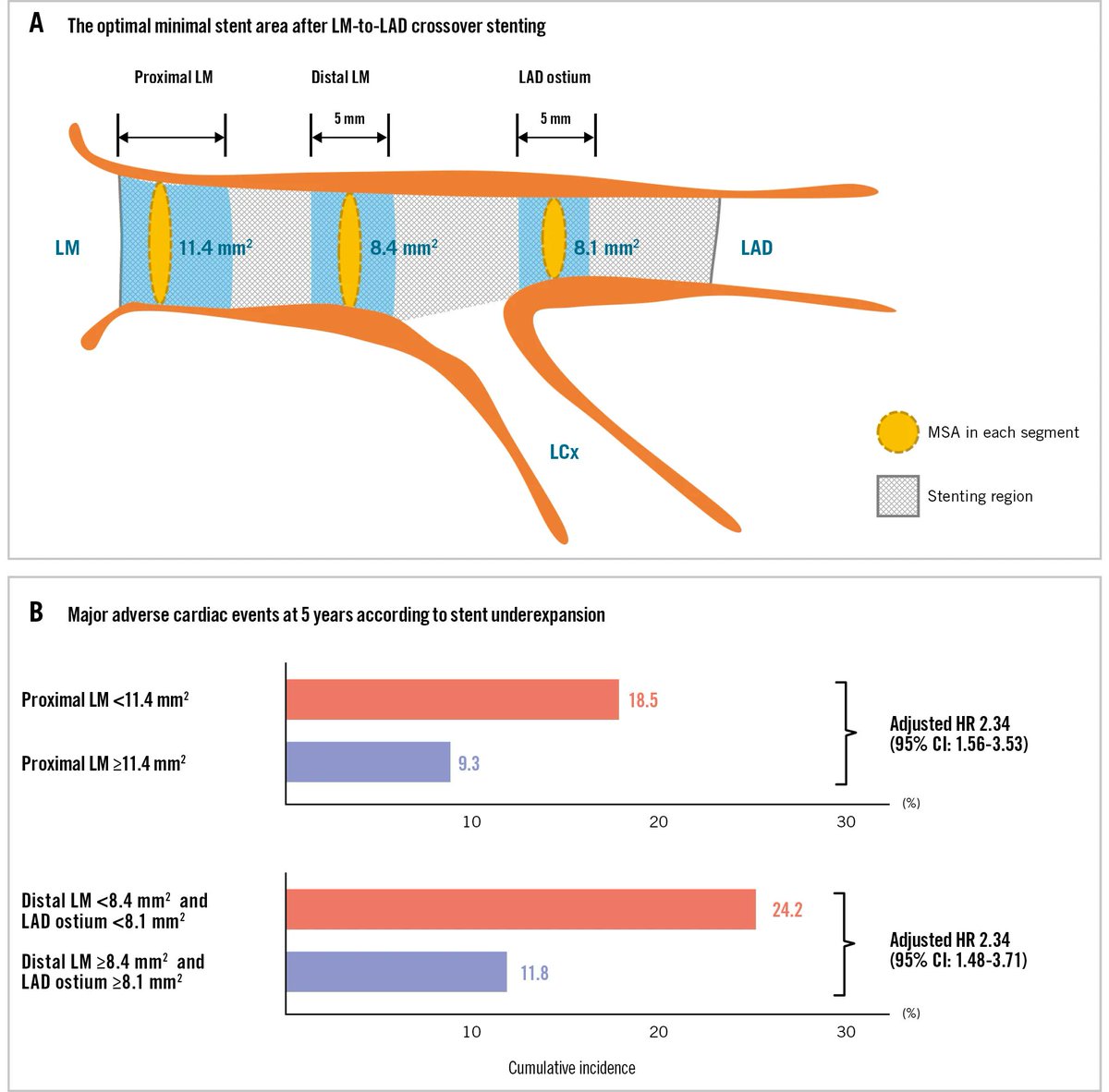
A new research study redefined optimal IVUS minimal stent area (MSA) thresholds for single-stent crossover in unprotected left main disease: proximal left main ≥11.4 mm², distal left main ≥8.4 mm², and left anterior descending ostium ≥8.1 mm². eurointervention.pcronline.com/article/optima…
Davide Capodanno tweet media
English
4
109
281
18.9K