Equity Echoes

4K posts

Equity Echoes banner
Equity Echoes

Equity Echoes

@equityechoes

🎙️ Speaking Truth at High Volume! 📢 Zimbabwe's spiciest mix of analysis, wit & accountability 🇿🇼

London, Ontario เข้าร่วม Ocak 2011
2.1K กำลังติดตาม2.9K ผู้ติดตาม
Pete Vowles
Pete Vowles@PeteVowles·
And now the homemade dovi… we’re nearly there.
English
86
122
816
54.6K
Equity Echoes
Equity Echoes@equityechoes·
Hanzy: You don’t get to loot the pantry, flee the scene, then return as the food critic. This tweet isn’t just personal; it’s systemic. It reminds us all to contextualize rebranded voices in Zimbabwean politics: track record matters. Gundamusaira hanzi no baba!
Ranga.🇿🇼@RangaMberi

Yes Dr Mzembi, @nelsonchamisa’s voice on corruption is indeed weighty — like about chaps who try to grab mines and productive chicken farms, before leaving the feeding trough in a hurry, only to try convince us they discovered sense on their way out like Sauro akananga Damascus.


English
0
1
2
426
Equity Echoes รีทวีตแล้ว
Honourable Stella
Honourable Stella@Stella_grooves·
@RexMidzi Imagine! And they have the nerve to say nywe nywe nywe to us, who used to walk from Cunningham Road in Greendale, to Clyde Road just to “swap” Tracey Chapman Dandy chewing gum card for a Bruce Springsteen one just because you had two!”
English
0
1
4
564
Equity Echoes
Equity Echoes@equityechoes·
If we’re being honest, then yes — stretch the logic and the environment becomes the chief architect. But let’s be clear: ZANU didn’t lay the leyline for someone like Strive Masiyiwa. His rise wasn’t built on handshakes and tenders — it was built on resistance, innovation, and mastery of the workaround. So sure, give ZANU the nod for setting the stage — but the credit for the craft, the hustle, the vision? That’s all Strive. Now, Kuda and Wicknell — that’s a different story. They didn’t break the system. They thrived in it, because of it. They’re not anomalies — they’re products of a structure that rewards loyalty over legacy. Beneficiaries, yes. Builders? That’s debatable.
English
0
1
2
299
Snowball Tongogara
Snowball Tongogara@snowballOfficia·
Cde Machacha said Chigananda refers to a capitalist or bourgeoisie. And this is in line with ZANUPF government Indigenization policy. People like Masiiwa, Kuda Tagwirei and @wicknellchivayo benefited from ZANUPF policies.
English
24
1
13
9.9K
Equity Echoes
Equity Echoes@equityechoes·
You’re right that the world is shifting — but let’s not pretend textbook free trade will save Zimbabwe. Most of us are still burdened by the past — not in the nostalgic sense, but in the structural scars left by exploitation, corruption, and promises that never fed the people. Kamala’s polished lines about “not being burdened by the past” sound great on the world stage — but for us, the past is still the present. We can’t afford to keep being the testing ground for policy experiments dressed as partnerships. Yes, we need order — but order that comes from those who’ve been quietly studying the cracks, not just those rushing in now because there’s opportunity in the rubble. This isn’t about sobriety, it’s about clarity. And clarity tells us: peace time is prep time. If we’re not building resilient internal systems before we open our borders wider, we’re not entering the new world order — we’re being absorbed by it. How ready are we? How ready are you?
Tinashe@baba_nyenyedzi

It’s the right decision for Zimbabwe to reduce its tariffs with America to Zero. So has Singapore,Vietnam , Israel and many other smaller countries. The UK is expected to speak in similar terms. There is a new world trade order and it requires sober minds.


English
0
1
3
402
Equity Echoes
Equity Echoes@equityechoes·
Many Zimbabweans carry a weight far heavier than just tariffs or trade imbalance. It’s the burden of a past filled with missed turns, exploited hope, and global systems that have rarely played fair. Yes, we need order. But not the kind that rewards the loudest opportunists or those watching the clock for when to cash in.
English
0
1
3
113
Tendai
Tendai@tendaim65·
@baba_nyenyedzi Trump said he wants autarky, everything must be produced in the US, israel is an example proving that he doesn't want reciprocal tarrifs, they were attacked for no reason, ignoring this in ur analysis brings the wrong conclusions about the best way forward
English
2
0
9
1.2K
Tinashe
Tinashe@baba_nyenyedzi·
It’s the right decision for Zimbabwe to reduce its tariffs with America to Zero. So has Singapore,Vietnam , Israel and many other smaller countries. The UK is expected to speak in similar terms. There is a new world trade order and it requires sober minds.
English
39
32
169
50.6K
Equity Echoes รีทวีตแล้ว
dhonzamusoro007
dhonzamusoro007@dhonzamusoro007·
WHAT THE MEDIA SHOULD NEVER DO: Careful how you practice your craft. There is a real danger that you end up being unwitting coordinators of the intended chaos. It is not journalism to go about announcing details on deployment of law enforcement agents as if you mean to aid and abet chaos. News does not lead events; it follows occurrences. That’s why you are RE-PORTERS, not PORTERS!!! Careful guys!!!!!
English
75
13
92
103.8K
Equity Echoes
Equity Echoes@equityechoes·
Let me provide some important historical context to this conversation The question ignores crucial historical context in Zimbabwe: 1. Colonial Legacy Reality: - Pre-independence: White employees received company cars, housing, education allowances - Post-independence: These benefits became employment standards - Not removing them for new Black managers was equity, not privilege 2. Historical Labor Framework: - Company cars weren't "gifts" but standardized compensation - Part of established employment packages - Created to attract and retain colonial workforce - Continued for equity reasons 3. The Equality Question: - When workforce demographics changed - The choice was: * Remove benefits previously given to whites (regressive) * Extend same benefits to Black managers (equity) * Create two-tier system (discrimination) 4. Economic Context: - Vehicle financing options limited in Zimbabwe - Public transport challenges - Infrastructure realities - Economic instability The Key Point: These weren't arbitrary "perks" but established compensation structures that existed for decades. Removing them selectively for the new Black professional class would have perpetuated economic inequality. "When the workforce was a different complexion that is what was there. It's called equality of employment." History matters in understanding workplace benefits and their evolution 💯
☯️♻️T!no$£📚@tino_cash3

@memorynguwi Where does the culture of fully expensed vehicle come from? Why should a company buy a vehicle for a manager? The only vehicles a company should own are marketing pool cars

English
0
0
2
509
Equity Echoes
Equity Echoes@equityechoes·
Dear Big Corporates, This narrative reveals several troubling workplace dynamics: 1. Constitutional Rights Violations: - Section 65: Labor Rights Undermined • Inconsistent benefit application • Arbitrary policy changes • Unequal treatment of employees 2. Corporate Governance Issues: - Power imbalance exploitation - Selective policy application - Favoritism based on negotiation leverage - Inconsistent compensation frameworks 3. Structural Inequities: - Only those with competing offers gained fair treatment - Company vehicles became negotiation pawns - Policy enforcement varied by employee status - "Contract is a contract" selectively applied 4. Labor Rights Concerns: - Benefits subject to individual bargaining power - Lack of transparent compensation framework - Arbitrary decision-making - Workers without alternatives left disadvantaged The Deeper Problem: This story celebrates "winning" through exceptional leverage while normalizing a system where: - Most workers lack such bargaining power - Fairness depends on threat of departure - Labor rights aren't universally respected - Company policies bend for some, not all Bottom Line: When corporate benefits require extraordinary negotiation rather than fair policy, it undermines labor rights and creates systemic inequity. True corporate responsibility means consistent, fair treatment for ALL workers - not just those with the privilege of alternative offers. This story doesn't show success - it exposes fundamental workplace justice failures 💯
Dabson Mhofu Kanyoka 🇿🇼🇿🇦@dabskays

This took me back to 2005. I had joined the company in 2004 as a middle level manager. Company cars were due for replacement in 2005, the managers who had used their cars for 5 years were going buy their current vehicles at book value. For middle level managers we had been using Mazda SDX d/cabs. There was talk that they were going to replace the fleet with Nissan Almeras, imagine a freaking Nissan Almera 😡 I visited Nissan Clover Leaf Motors in Msasa to view an Almera I was not impressed. Anyway as a new manager the MD was clear to me that I was not going to be able to get my existing car. News I heard was that our Chairman back at the holding company at TA Holdings was not happy with this scheme of letting managers buy their old vehicles but hey a contract is a contract. I was head hunted by a competitor to become their Bulawayo branch manager and I was offered a Mazda 323 Familiar, I negotiated with the MD of that company to at least give me a Mazda 626, he said NO. I told him I would consider his offer and he gave me a week or so. I heard no intention of leaving, as an underwriting manager at one of the biggest insurance companies I was handling the biggest account in the country then Zimasco, I also handled Bindura Nickel, Cairns, Anglo American, Rio Tinto and I had just won RBZ insurance tender. This offer was my bargaining chip. I went to my MD and submitted my resignation, he refused to accept my resignation and we entered counter offer negotiations. Of course I am biased but I was extremely good in my work. I just wanted two things, a good replacement car and to be able to buy my existing car. We agreed and instead of an Almera I got a three year old Toyota Hilux d/cab KZTE one of the most durable cars I have ever driven, I have since bought two more Hiluxs and I swear by those cars. Unfortunately for my MD because I was driving a Hilux none of the managers on my level would accept an Almera and the company ended up buying Nissan Hardbody (Machembere) for most of the managers. I traded in my SDX and topped up and bought a Bedford truck and that is how I got into transport business. The following year 2006, I was transferred to become Bulawayo branch manager and in mid 2007, I resigned and applied for a South African skilled visa and left Zimbabwe. I understand the car policy was changed after 2005. In South Africa the remuneration is mostly cost to company, you buy your own vehicle and fortunately the interest rates are very low and anyone who earns at least $400 with a good credit history can buy a decent car on vehicle finance for example for a R100 000 car you pay around R2 000 instalment per month, if you choose a car that holds value then it’s a pathway to building wealth.
English
0
1
2
557
Equity Echoes
Equity Echoes@equityechoes·
If companies are abandoning the old model, the worker must not be handed a debt-laden alternative in its place, repackaged as empowerment. Structured bank financing with no wage adjustment risks pushing the burden downstream—making it the employee’s problem under the illusion of ownership. In short: a truly employee-friendly approach would include wage restructuring, transport allowances, or shared equity schemes—not just a “cost-to-company” download rebranded as benevolence.
English
0
0
3
120
Equity Echoes
Equity Echoes@equityechoes·
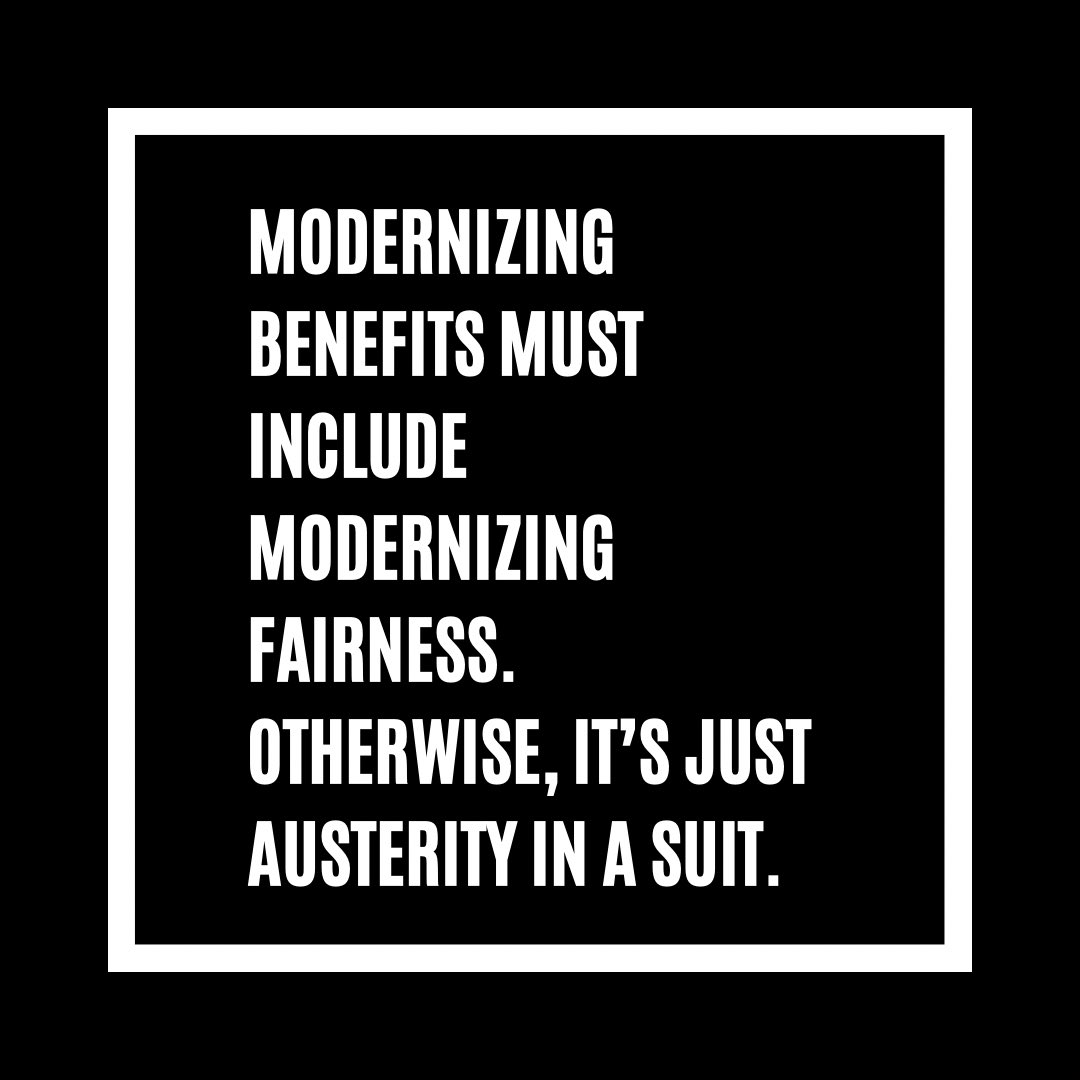
This reads like a one-sided restructuring memo dressed up as progressive policy. The worker is framed only as a recipient of a “modern, sustainable benefit”—never as someone also navigating their own financial precarity. We’re told companies can no longer afford vehicle benefits due to working capital constraints—but what of the worker whose salary is already eroded, taxed, and devalued daily?
Equity Echoes tweet media
Memory Nguwi@memorynguwi

Many companies in Zimbabwe are rethinking their motor vehicle policies, moving away from the traditional model of providing fully expensed company vehicles replaced every 4 to 5 years. The shift is driven by the significant cash outlay required to fund such schemes—an increasingly unsustainable approach in an economy where working capital is hard to come by. Instead, forward-looking employers are adopting bank-organized, company-assisted vehicle purchase schemes. These alternatives allow employees to own their vehicles while still enjoying support from the company, often through bank structured financing arrangements[no cash outlay], ultimately offering a more sustainable and cost-effective benefit model. Running a fleet of fully expensed staff vehicles is not only capital-intensive but also burdens companies with ongoing maintenance, insurance, and administrative costs. While some employees still prefer the status and convenience of a company-funded vehicle, organizations must weigh this against business realities. The smarter move is to offer a benefit that empowers employees while preserving financial sustainability for the company. In this context, company-assisted vehicle purchase schemes represent a more modern, employee-friendly, and financially responsible approach—balancing employee motivation with sound financial stewardship. @ipcconsultants

English
1
0
4
476
Equity Echoes รีทวีตแล้ว
Tsitsi
Tsitsi@mwenewazvo·
@MacBelts Peace is not merely the absence of war but the presence of justice, where people's needs and aspirations are fulfilled.
English
0
1
2
274
Equity Echoes
Equity Echoes@equityechoes·
The gap between policy ideals and ground reality in Zimbabwe's corporate landscape is stark. What reads as equitable on paper rarely translates to lived experience. School fees benefits become a perfect case study in how systems maintain inequality while appearing fair. When I worked in corporate Zimbabwe , we witnessed the "policy vs. practice" disconnect daily. Companies proudly showcased their benefits manuals while senior management received education allowances regardless of having children, often labeled as "professional development" or "executive stipends," while general staff were strictly limited to documented school fees for biological children only. The application process itself revealed the structural barriers—junior employees faced endless documentation requirements, verification visits, and disbursement delays, while executive benefits flowed without scrutiny. By the time school terms began, many workers had borrowed at high interest rates just to secure their children's places. What's particularly revealing isn't just the disparity in benefits, but how vigorously companies defended these systems as "pragmatic" and "fiscally responsible." When we proposed standardization, we heard the familiar refrain: "We cannot afford to extend these benefits equally." Yet executive perks expanded annually without similar financial concerns. This isn't just about school fees—it's about how economic apartheid persists through administrative mechanisms that appear neutral while delivering profoundly different outcomes based on position and privilege. The policies look reasonable on paper, but their application maintains the very disparities they claim to address. Those offering blanket statements about corporate fairness have likely never navigated these systems from the bottom. When you've seen parents weep at HR counters after being denied benefits on technicalities while executives casually expense private schooling abroad, you understand why these "ideals" ring hollow. Real equity isn't found in policy manuals but in implementation practices that don't require different standards of proof based on your position in the hierarchy.
Memory Nguwi@memorynguwi

A commonly debated issue is the fairness of how school fees benefits are distributed. Many companies tie this benefit solely to employees who have school-aged children, leaving out equally qualified employees without children. This approach can feel unjust, as it effectively penalizes those who don’t happen to have kids, despite performing at the same level as their peers. Some forward-thinking companies have recognized this inequity. They offer the school fees allowance to all eligible employees based on their job level, regardless of their parental status. By doing so, they ensure that the benefit is applied consistently and fairly across the workforce. @ipcconsultants

English
0
0
3
510
Equity Echoes รีทวีตแล้ว
🎀Gretchy🎀
🎀Gretchy🎀@Gretchen_Ndou·
🤣🤣🤣🤣🤣🤣🤣🤣🤣🤣🤣🤣🤣🤣🤣🤣🤣🤣🤣🤣🤣🤣🤣🤣🤣🤣🤣🤣
🎀Gretchy🎀 tweet media
QME
169
910
6.4K
434.1K
Equity Echoes
Equity Echoes@equityechoes·
Moving Forward: What Needs to Happen ✅ Independent forensic audit of the project. ✅ Accountability measures for mismanaged funds. ✅ Structural integrity assessments for similar projects. ✅ Public oversight mechanisms—citizens MUST demand transparency. 📢 Demand answers. Demand accountability. Demand better. 🛑 A failed dam is never just an engineering failure—it’s a governance failure. #InfrastructureFailure #CorruptionExposed #DemandAccountability
English
0
0
0
126
Equity Echoes
Equity Echoes@equityechoes·
Who Pays the Price? 👀 Spoiler Alert: •NOT the politicians who failed oversight. •NOT the contractors who cut corners. •NOT the officials who approved faulty work. It’s the everyday people who lose homes, livelihoods, and lives.
English
1
0
0
124
Equity Echoes
Equity Echoes@equityechoes·
🧵 INFRASTRUCTURE COLLAPSE: What Bandama Dam Tells Us About the System Infrastructure Timeline: Who Built It & Who Let It Fail? Key Questions: •When was Bandama Dam built? •Who oversaw its construction? •What materials were used? •Was it built for long-term resilience? Pattern Recognition: •Many colonial-era structures were built to last but underfunded post-independence. •More recent builds? Low-cost contracts, political favoritism, and corruption.
𝐂𝐫𝐢𝐦𝐞 𝐖𝐚𝐭𝐜𝐡 𝐙𝐖@CrimeWatchZW

WATCH | Several people are feared dead after the Bandama Dam in Chipinge collapsed on Sunday. More details to follow…. ZBC News Online, Facebook

English
1
3
4
647