Fred Fearn

6.3K posts

Fred Fearn banner
Fred Fearn

Fred Fearn

@fred_fearn

Birder, conservationist, ecologist and admittedly twitcher. Mostly obsessing about birding and the environment. MUFC

เข้าร่วม Mart 2013
1.3K กำลังติดตาม1.6K ผู้ติดตาม
Allan Conlin
Allan Conlin@AllanConlin·
And we're off. Incredible food and wine selection on todays @Qantas flight out of Singapore @ChangiAirport where i had an interesting experience in the loo 😉🤣 !! Lots of revising to do , so many families ive never even heard off !! 🦘🦘🦘
Allan Conlin tweet media
English
6
0
47
1.4K
Chris Townend
Chris Townend@WiseBirding·
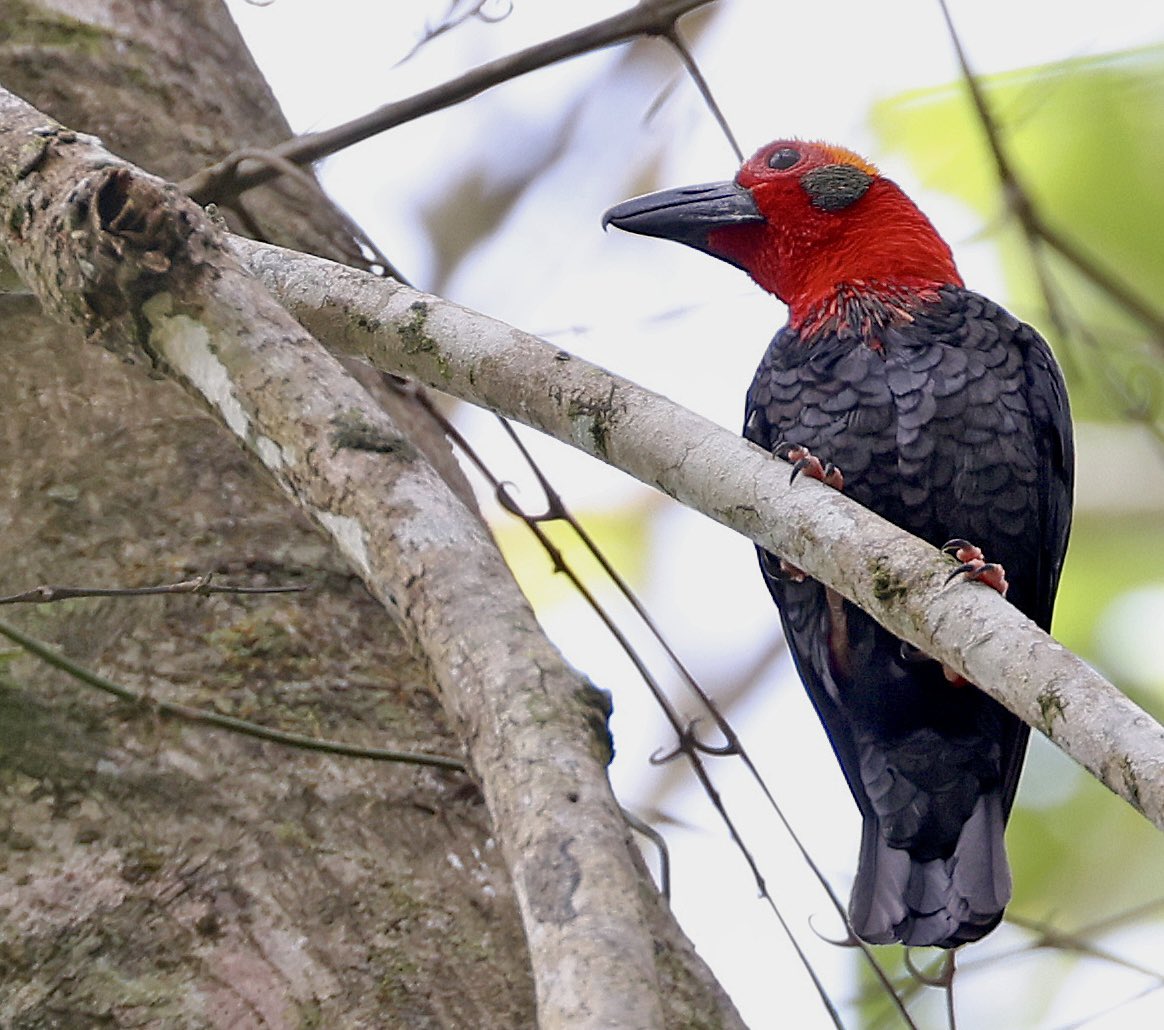
The Bornean Bristlehead is a real must see endemic bird when visiting Sabah, Borneo. Although never easy to see. We had seen it earlier in the tour, but distantly, so today’s views were outstanding at Tabin Forest.
Chris Townend tweet media
English
3
3
53
994
Fred Fearn
Fred Fearn@fred_fearn·
@renewablesmiffy @Don_Virus_1 I don’t pretend to know the project, so not a simple question to answer. Landscapes which are not farmed are generally richer in biodiversity than those that are. Basic ecological principles, that I’m sure you accept. My question was simple though - what is wasteland?
English
1
0
1
16
Don_Virus
Don_Virus@Don_Virus_1·
"Tausende Hektar Ackerland, bedeckt mit Solaranlagen, Windrädern, Serverhallen und Batteriespeichern. Wenn du glaubst, dass Umwelt-Hooliganismus den Planeten oder die Wirtschaft retten wird … dann täuschst du dich ODER profitierst von unserer Zerstörung. Du bist entlarvt, Ed 🤡"
Bernie@Artemisfornow

Thousands of hectares of farmland covered in solar panels, wind turbines, data sheds and battery storage. If you think environmental hooliganism will save the planet, or the economy … you are deluded OR profiting from our destruction. We see you Ed 🤡

Deutsch
5
14
48
2K
Fred Fearn
Fred Fearn@fred_fearn·
@renewablesmiffy @Don_Virus_1 My post was about using an undefined term ‘wasteland’, not about that specific project. But I think you knew that. What do you consider wasteland? And how do you decide?
English
1
0
0
23
Fred Fearn
Fred Fearn@fred_fearn·
@renewablesmiffy @Don_Virus_1 Much as I’m a fan of renewables, and even work in a related sector, I’d caution about using words like ‘wasteland’. Such places are often incredibly rich in biodiversity, even if it’s not immediately obvious. If this area wasn’t farmed then the chances are it was nature rich.
English
1
0
1
38
Chris Smith
Chris Smith@renewablesmiffy·
@Don_Virus_1 Khavda Renewable Energy Park in India. Planned 30GW of hybrid Renewables. Built on largely unused desert and wasteland. Annual output 85 billion kWh m per year (powering 18 million homes). This stupid grifting woman thinks it’s UK farmland and Ed did it.
English
1
1
18
250
BMcCloskey
BMcCloskey@BMcCloskey_98·
The American Bittern at Cuskinny Marsh, Cork gave extremely good views, late evening. Hopefully Twitter doesn’t butcher the quality of this. It was too close to video in landscape! @BirdGuides
English
5
10
178
3.7K
Fred Fearn
Fred Fearn@fred_fearn·
@SandyHorne61 Great film. Heartening to see the pride and commitment of the landowners. Hope to visit and see one of these magical birds someday.
English
1
0
1
140
Sandy Horne
Sandy Horne@SandyHorne61·
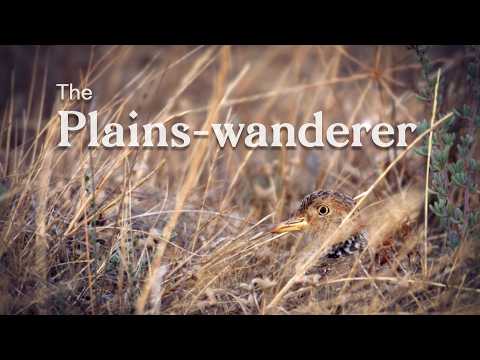
Here's a plains wanderer documentary. I visit Boolcoomatta each year, always hoping to see a plains wanderer there. So this is a topic dear to my heart. youtube.com/watch?v=NfDqse…
YouTube video
YouTube
English
3
14
58
1.7K
Fred Fearn
Fred Fearn@fred_fearn·
@333peterobinson @juliet_turner6 Is it inappropriate or even remotely controversial to say that native woodland supports more wildlife than commercial plantations? Not disputing we need plantations, but from a biodiversity perspective they’re generally impoverished, as are all monoculture crops. Am I wrong?
English
1
0
7
92
Fred Fearn
Fred Fearn@fred_fearn·
@TonyJuniper @NaturalEngland @ForestryEngland Good to hear, thanks Tony. On a related note, what’s NE’s position & involvement in the @bustardgroup project? As an extirpated species & far more globally threatened than eagles or beavers, I’d suggest they are a conservation priority, yet it seems to be rarely mentioned by NE.
English
0
0
5
135
Tony Juniper
Tony Juniper@TonyJuniper·
@fred_fearn @NaturalEngland @ForestryEngland We are supporting that, & have been for some time. That successful work in the Scottish Southern Uplands is a vital partner in this additional effort south of the border. A stronger return to England & more quickly with this.
English
1
0
4
217
Fred Fearn
Fred Fearn@fred_fearn·
@socrates2sox @TonyJuniper For the same reasons why should curlew go extinct? We face stark choices. Ignore issue like the abundance of predators & loose them forever. Or face the issues & maybe save them. All predator control should be a last resort, and only as part of a measured conservation strategy.
English
0
0
0
9
Tony Juniper
Tony Juniper@TonyJuniper·
If we are to halt & reverse decline of the Curlew then difficult subjects must be tackled, including the high density of predators we have across the country - including foxes, crows & badgers. All wonderful creatures as well, but too many is a big issue for ground nesting birds.
Mary Colwell@curlewcalls

Curlew Action were part of an expert panel which gave a briefing to parliamentarians on the importance of the recently launched UK Curlew Action Plan. See my blog on what was said... @CHinchliffMP @CurlewCountry curlewaction.org/parliamentary-…
English
81
38
200
131.1K
Fred Fearn
Fred Fearn@fred_fearn·
@Electroversenet The cost of decommissioning Sellafield nuclear power station was budgeted at £114 billion in 2019. That’s since risen to £136 billion (source: national audit office). All of course paid for by UK taxpayers. Now tell me again that wind is expensive.
English
1
0
2
79
Electroverse
Electroverse@Electroversenet·
Wind turbines are getting bigger, more efficient, and are delivering higher output. That sounds impressive, but it isn't compared to other sources. A single nuclear plant, for example, produces around 1,750 megawatts. To match that, you need roughly 150 large turbines. Wind uses over 100X more land than nuclear for the same output. And turbines, of course, only produce power when the wind is blowing. Nuclear is constant. Then there's the storage requirements. To make wind reliable, you need batteries. At grid scale, that becomes impossible with current technologies. Wind power remains an expensive pipe dream, lining the pockets of a few at the expense of the many.
English
96
318
833
21.6K
Parula
Parula@Tireebirder·
Golden Plovers are everywhere on #Tiree's rich grasslands just now - over 6,000 here today. Also the Grey-bellied Brant & Todd's Canada Goose both still at Cornaigmore & 8 Little Terns new at Gott Bay @PatchBirding @BirdGuides
Parula tweet media
English
2
19
249
4.6K
Rob Rackliffe
Rob Rackliffe@RobRackliffe·
@fred_fearn @a1virginia Hi Fred, yes that’s correct .. Bukit Tinggi. The Argus ( and Malayan Peacock- pheasants) were at Taman Negara sungai relau main track .. afternoon best.
Filipino
1
0
2
99
Rob Rackliffe
Rob Rackliffe@RobRackliffe·
The main target in the Malaysian forest yesterday was MOUNTAIN PEACOCK-PHEASANT and we saw two very well as well as a Great Argus later in the afternoon! With @a1virginia
Rob Rackliffe tweet media
English
2
3
53
927
Fred Fearn
Fred Fearn@fred_fearn·
@JChimirie66677 Thanks Jim. Whilst I could challenge some of your comments on grouse moorland management, I do agree with the overall point about the LUF.
English
1
0
1
17
Jim Chimirie 🇬🇧
Jim Chimirie 🇬🇧@JChimirie66677·
Thank you, Fred. On lowland pheasant and partridge releases you raise a legitimate question about scale and sustainability that the shooting industry itself is not entirely united on. Sixty million birds annually is a figure that invites scrutiny and the industry would be better placed defending itself if it engaged that question directly rather than dismissing it. On grouse moors the picture is more complicated than you suggest. Medicated grit addresses disease that would devastate populations without it. Muirburn, properly managed, is precisely what maintains the heather. On raptor persecution, where it occurs it is illegal, indefensible and prosecuted. The National Gamekeepers Organisation is not in favour of it and it should not be conflated with legitimate moorland management. The deeper point is this. The licensing proposal in the Land Use Framework was not drafted in response to a careful assessment of these specific practices. It was buried on page 45 of a document whose primary purpose is to reshape land use toward solar, rewilding and net zero targets. If the government's concern were genuinely about sustainable release numbers and raptor protection, it would say so plainly and legislate accordingly. What it has produced is a mechanism capable of eliminating the entire industry by regulatory attrition. Those are different things and the distinction matters.
English
1
0
1
37
Jim Chimirie 🇬🇧
Jim Chimirie 🇬🇧@JChimirie66677·
Labour Loves the Countryside. It Just Hates the People Who Run It. A woman walks into a tailor's shop in Helmsley, North Yorkshire. She loves the heather hills, she says. The wooded dales. The purple moorland stretching to the horizon. What she cannot stand is the shooting that takes place on the Glorious Twelfth. Jeremy Shaw, the tailor, has heard this before. He considers whether to explain that the heather she travelled three hours to admire exists because of the grouse moor she despises. The gamekeepers who manage the land, suppress the bracken, and keep the moorland in the condition that makes it worth visiting. The cake, in other words, was baked by the baker she came to castigate. What is worrying is that the government shares her confusion. On March 18, Labour published its Land Use Framework. Half a million acres earmarked for solar panels. Nine percent of farmland committed to rewilding. And buried on page 45, a proposal to license game bird shooting, potentially restricting pheasant and partridge releases onto estates. The trail hunting ban came first. Licensing comes next. Each measure arrives with its own rationale. Together they form a programme. Licensing does not prohibit. Bureaucracy does not ban. Smaller shoots simply cannot absorb compliance costs, fold quietly, and nobody in Whitehall answers for the consequence. A Natural England case near Helmsley shows the method. A longstanding partridge shoot was barred from releasing birds until after the season had already started. Shoot days cancelled. Revenue gone. Natural England's hands formally clean. Helmsley bucks every trend in British retail. Four pubs in the town square. A Michelin-starred inn nearby. A tailor forty years in business in what a mentor once called a dying trade. Seventy-five percent of Shaw's revenue is shooting-related. The Pheasant hotel runs at sixty percent shooting occupancy through winter. The deli sells local cheese to Norwegian and German sportsmen. Shooting contributes £3.3 billion annually to the UK economy and supports nearly 147,000 jobs. Pull the shooting thread and the weave comes apart. One Helmsley pub changed hands a few years ago. The new owners decided they wanted nothing to do with shoot trade. They lost heavily, then went back to the estates cap in hand. The market delivered the verdict that policy is not yet ready to impose openly. Licensing achieves the same result without anyone having to take responsibility. The conservation argument collapses under scrutiny. Grouse moor owners have restored 217,000 acres of upland heath in the past 25 years. The almost-extinct curlew is four times more likely to fledge on a managed grouse moor than on unmanaged moorland. The landscape that Whitehall has identified as the problem is the reason the landscape exists in the form they claim to value. When asked what economic trade-offs it had actually modelled, the government was vague. Officials said they recognised shooting's cultural importance and would work with industry toward a sustainable relationship. Starmer has been invited to visit Helmsley and see how the economy functions. He has not replied. He should go. He should meet the gamekeeper loading double guns through winter to keep the household solvent. The beaters earning seventy pounds a day. The tailor measuring 24 keepers for tweed suits stitched with Essex lining and Yorkshire zips. What rural Britain is being offered instead is a licensing regime that will first eliminate smaller shoots, then larger ones, then the hotels and tailors and pubs, until the moorland reverts to bracken and the towns that shooting sustained join the dying high streets that apparently only the countryside had managed to avoid. The heather on the North York Moors, Jeremy Shaw at Carters Country Wear, and the market town of Helmsley. All three exist because of shooting. Labour's Land Use Framework puts all three at risk.
Jim Chimirie 🇬🇧 tweet mediaJim Chimirie 🇬🇧 tweet mediaJim Chimirie 🇬🇧 tweet media
English
134
841
2.5K
186.7K
Fred Fearn
Fred Fearn@fred_fearn·
@JChimirie66677 2/2 which are reliant intensive methods (medicated grit, raptor persecution, muir burn). A failure to moderate these damaging practices is what has led to the move towards licensing & reductions. If the shooting industry can’t survive without such measures the model must change.
English
1
0
1
26
Fred Fearn
Fred Fearn@fred_fearn·
@JChimirie66677 Thanks for your response Jim. I agree there are some conservation benefits; particularly for uplands. Lowland peasant / partridge releases of ~60m birds a year are however way beyond sustainable or anything like a tradition. Similarly ever increasing bag counts for grouse 1/2
English
1
0
1
27