Pünktlich zum Wochenende ist unser neuer Podcast am Start, produziert von @futux .
Verpass nicht die wertvollen Insights, die Dir einer der führenden #TYPO3 Experten exklusiv in dieser Podcast-Folge spendiert.
Jetzt reinhören unter digitalekohle.de/episode-einund…
Upscaled Footage Reveals Rare Glimpse of Wuppertal's "Flying Train" in 1902
The year was 1902, a serene and peaceful time in Germany before the onset of World War I and II. Recently unearthed footage, showcased in New York's MOMA latest film, "The Flying Train," as part of the museum's Film Vault Summer Camp in 2020, offers a remarkable look into life in Wuppertal, Germany.
This captivating black-and-white silent film was produced by Deutsche Mutoskop und Biograph GmbH, providing viewers with a vivid glimpse of Germany's past that seems as though it exists in the present day. The star of the film is the Wuppertal Schwebebahn, famously known as the "flying train."
As the film unfolds, we see the innovative electric suspension railway gliding gracefully through neighborhoods, passing by houses, buildings, riverbanks, and bridges. The footage also captures the hustle and bustle of daily life, with carriages and people bustling about. Additionally, viewers get a unique insight into the construction of Germany's train system at that time.
The Wuppertal Schwebebahn, designed by Eugen Langen, began construction in 1898, and Emperor Wilhelm II was one of the early passengers to experience this revolutionary mode of transportation during trial runs in 1900. The train officially commenced operations in Wuppertal in 1901, becoming the world's oldest electric elevated railway with hanging cars. Remarkably, this iconic railway system still serves as a crucial mode of transportation for locals, carrying around 25 million passengers annually.
"The Flying Train" not only provides a fascinating glimpse into Germany's history but also serves as a reminder of the country's peaceful days under the leadership of Emperor Wilhelm II, long before the tumultuous times of the two World Wars.
Overall, this genuine and rare footage captures the essence of life in Wuppertal over a century ago, offering a unique and valuable perspective for modern-day audiences.
Immer mehr Arztpraxen werden von Finanzinvestoren aufgekauft. Das hat Folgen für die Patienten, sagt Augenarzt Horst Helbig. taz.de/Augenarzt-uebe… via @tazgezwitscher
Spotlight mit @sarfeld - Neue #Podcast-Folge “macht politik”
Wir suchen die #Medienprofis im politischen Geschäft und diskutieren, was genau sie dazu macht.
Zudem reisen wir mit Frank in die Vergangenheit: Wie ist er damals zur @CDU gekommen?
Links 👇
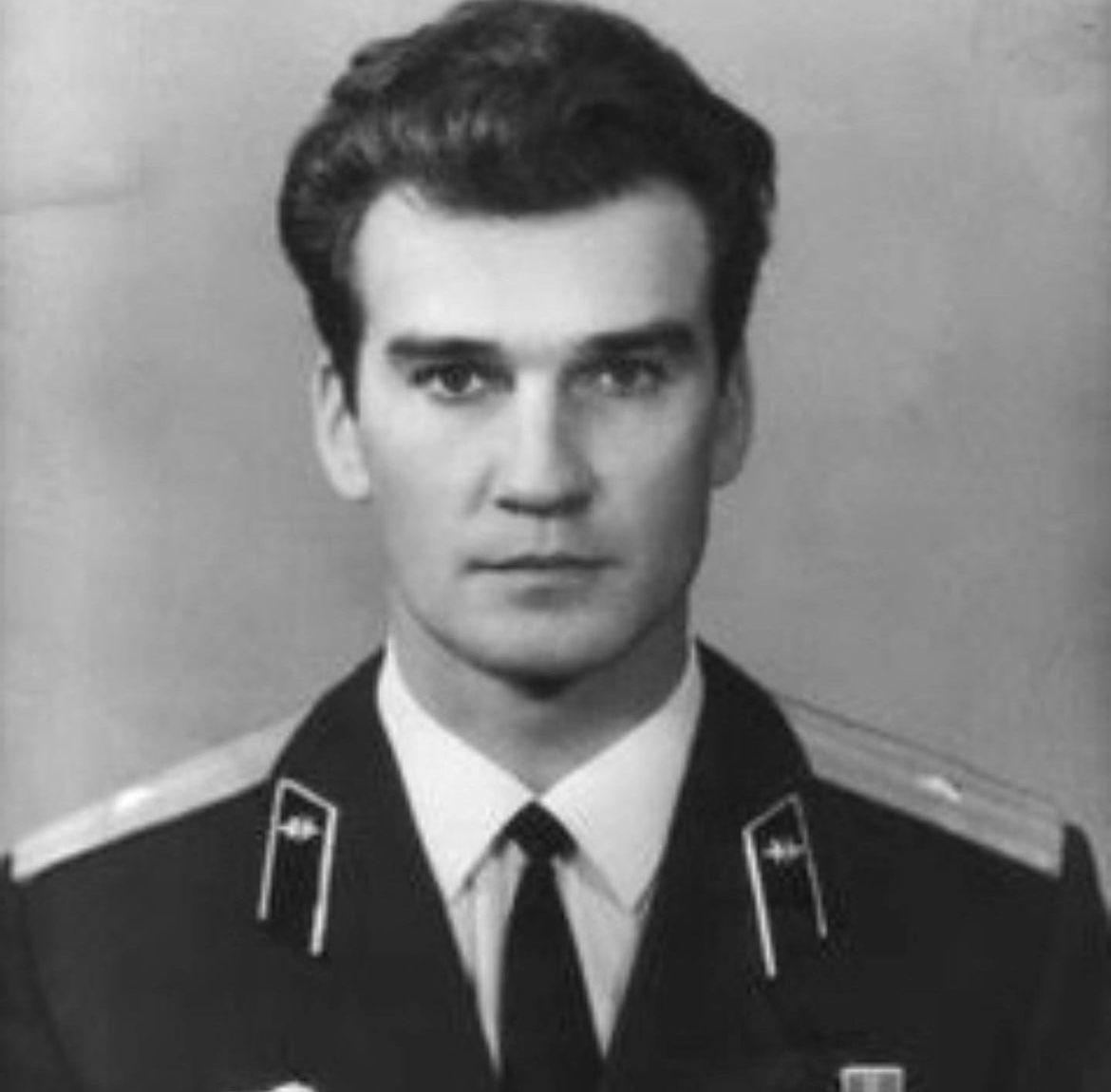
Stanislav Petrov, the man who saved the world from nuclear disaster, on this day in 1983, 39 years ago today, saw the word "LAUNCH" flash across the Soviet Union's attack early warning system. His screen stated with high reliability that a total of five American intercontinental ballistic missiles (ICBMs) had been launched and were headed toward the Soviet Union. Petrov had to make a decision: should he report an incoming American strike, or should he hold off, confident that what they were seeing was a false alarm?
If he reported it, Soviet nuclear doctrine called for a full nuclear retaliation. There would be no time to double-check the warning system or seek negotiations with the U.S. This occurred during the Reagan administration, which had taken a firmer stance against the Soviets compared to previous administrations. The Reagan administration was deploying Pershing I nuclear-armed missiles to West Germany and Great Britain, capable of striking the Soviet Union. Given these circumstances, Petrov had reasons to believe that Reagan's brinkmanship had escalated to an actual nuclear exchange.
However, Petrov chose not to report the incoming strike. In the end, his decision proved to be correct. The system had mistaken the sun's reflection off of clouds for a missile. A 1979 report by Congress had estimated that a full-scale Soviet assault on the U.S., and an eventual counter-strike, would have resulted in over 100 million deaths. Petrov, almost single-handedly, prevented those deaths.
Despite being right, Petrov was relentlessly interrogated afterward and never rewarded for his decision, according to David Hoffman of The Washington Post.
Politik jenseits der Kaffeepause - Neue #Podcast-Folge “macht #Politik 🎧
Wir sprechen mit @i_RoBo_ von der @Uni_MR über Chancen und Herausforderungen von #Digitalisierung für die Organisation und Kommunikation von #Parteien.