
Joni Pirovich 🛡️

417 posts

Joni Pirovich 🛡️ banner
Joni Pirovich 🛡️

Joni Pirovich 🛡️

@jonipirovich

Blockchain & Digital Assets | DAOs | Tax |Lawyer | Mum

Melbourne, Victoria เข้าร่วม Ekim 2015
864 กำลังติดตาม1.5K ผู้ติดตาม
Joni Pirovich 🛡️ รีทวีตแล้ว

Avalanche Policy Coalition 🔺
Avalanche Policy Coalition 🔺@AvalanchePolicy·
Sydney really delivered 🇦🇺 Last week, we brought our stablecoins roundtable series to @BlockchainAPAC’s Policy Weekfor a closed-door conversation in Sydney, co-hosted with our friends Prayas Pradhan and Jeremy Muir at @minterellison . The room included an excellent lineup of local builders and operators, including Fadi Kassis (Founder, Forte Tech Solutions & Forte AUD), @jonipirovich (CEO, @crystalaos ), and Drew Bradford (CEO, Macropod), alongside lawyers, policymakers, and market participants thinking seriously about the future of payments. What made the Sydney conversation stand out was how grounded it felt. The focus stayed on where stablecoins are already making a difference, what still needs work, and how policy and industry can move forward together. Here are four themes that stood out: 1️⃣ Stablecoins are exposing the real cost of moving money. Cross-border payments remain slow and expensive. FX spreads still hit smaller businesses and individuals the hardest. And retail payment systems quietly collect billions in fees each year. Stablecoins are gaining attention because they make those inefficiencies much harder to ignore. 2️⃣ Payments and remittances remain one of the clearest use cases. For financial markets, faster settlement and reduced counterparty risk matter. For everyday users, the opportunity shows up in cheaper international transfers, better FX access, and new payment options that reduce reliance on expensive card rails. 3️⃣ Banks are part of the story, whether they like it or not. A lot of the discussion centered on how banks will respond as stablecoins grow. Some may experiment with issuing or integrating them. Others may move more cautiously. But expectations around faster, cheaper, and more transparent financial services are clearly shifting. 4️⃣ Education is still one of the biggest unlocks. This came up again and again. Consumers, regulators, institutions, and policymakers all need clearer ways to understand how this technology works and where it fits. If stablecoins are going to become part of everyday financial infrastructure, education has to keep up. A huge thank you to Steve Vallas and Richelle Cox from Blockchain APAC for organizing such a thoughtful set of roundtables, panels, and events throughout the whole week. Truly wonderful organizers and people!

Avalanche Policy Coalition 🔺 tweet media
English
0
2
5
159
Jabz
Jabz@jabranthelawyer·
I've spent the last few weeks rebuilding how I work with AI tools Narrowed it down to Claude and NotebookLM across real client work Honestly, didn't expect them be this useful this fast OpenClaw joins the mix in April. Better late than never. But wanted to reduced my client facing commitments, so I could give it a proper go The question is going to be whether the combination of tools produces meaningfully better outputs Going to be a fun experiment, so I'll be documenting what actually works and what doesn't
English
2
0
1
93
Joni Pirovich 🛡️
Joni Pirovich 🛡️@jonipirovich·
So excited to welcome @AndoniOlta to the @crystalaos team! Olta’s integrity and experience are critical for the mission we’re on to deliver the world’s first operational governance agentic layer. An incredible operator, and an even better human.
Crystal aOS@crystalaos

AI is evolving from tools → autonomous agents that execute work. That shift creates the agentic economy. But the stack is missing a governance layer. We’re building it with Crystal aOS. Excited to welcome @AndoniOlta as Director and Strategic Legal Advisor of Agentic Assets, Inc. Full announcement ↓

English
2
1
3
446
Joni Pirovich 🛡️ รีทวีตแล้ว
Brian Armstrong
Brian Armstrong@brian_armstrong·
After reviewing the Senate Banking draft text over the last 48hrs, Coinbase unfortunately can’t support the bill as written. There are too many issues, including: - A defacto ban on tokenized equities - DeFi prohibitions, giving the government unlimited access to your financial records and removing your right to privacy - Erosion of the CFTC’s authority, stifling innovation and making it subservient to the SEC - Draft amendments that would kill rewards on stablecoins, allowing banks to ban their competition We appreciate all the hard work by members of the Senate to reach a bi-partisan outcome, but this version would be materially worse than the current status quo. We’d rather have no bill than a bad bill. Hopefully we can all get to a better draft. We'll keep fighting for all Americans and for economic freedom. Crypto needs to be treated on a level playing field with the rest of financial services so we can build this industry in a safe and trusted way in America.
English
2.1K
4.5K
25.2K
3.6M
Joni Pirovich 🛡️ รีทวีตแล้ว
Lee Schneider
Lee Schneider@leelaughs5x·
1/ Uncensored access to the internet is something everyone should advocate for. No, something everyone should demand. A short 🧵for a Monday morning in January.
English
4
6
33
1.4K
Joni Pirovich 🛡️
Joni Pirovich 🛡️@jonipirovich·
@jabranthelawyer I can reciprocate but need one for web3 and AI founder mums support group! Keep at it man. We can only do our best each day
English
1
0
3
30
Jabz
Jabz@jabranthelawyer·
Some days are tough man Think I need a web3 dads support group Most of you can't even begin to understand my days Who's building this?
English
6
0
15
448
Joni Pirovich 🛡️ รีทวีตแล้ว
Jake Chervinsky
Jake Chervinsky@jchervinsky·
There are many details worth discussing in the House market structure bill, but the big question is: How much discretion are we comfortable giving to regulators? DAMCA (aka the CLARITY Act) is a meaty bill at 236 pages, but it leaves many issues unresolved, instead authorizing — and frequently requiring — the SEC and CFTC to figure them out in rulemaking. This is typical for legislation: Congress sets out a regulatory framework and then empowers the agencies to fill up the details. Historically, that approach has been a non-starter for crypto. When Gensler's SEC was in "kill the industry" mode, our best defense was that the SEC lacked jurisdiction to regulate this novel market. Legislation clearly giving the SEC more authority was unthinkable in that environment, since it was obvious that the SEC would use any new power it received to destroy crypto. As a result, past negotiations over market structure bills focused largely on cabining agency discretion. If there was a way that a hostile regulator could abuse a new grant of authority to destroy crypto, then the bill was unacceptable. This approach was well-justified, but it also made legislation practically impossible: there's just no way to hammer out every detail of a new regulatory framework this significant in Congress. Now the environment has changed. We have regulators at the SEC and CFTC who deeply understand crypto and want to implement reasonable rules that work for the technology and the industry. But we only have them for sure until January 20, 2029 — after that, we could be looking at four more years of Gensler or someone like him. Fear of that risk is a primary driver of the politics underlying the market structure bill today. The industry has to decide between two options: (1) demand a bill that gives agencies so little discretion that crypto could survive a second Gensler term, or (2) accept agency authority with the hope that current leadership does a ton of great rulemaking and future leadership doesn't reverse course. The risk of (1) is that we don't get a market structure bill done at all. Reasonable minds can differ on what that would mean for crypto. Some will say it's fine, that we built everything we have now under the status quo, that agency rulemaking will continue to unlock innovation, and that we shouldn't rush something as existentially important as market structure — we only get one shot at this. Others will say this is our best and maybe only chance, that the status quo was a path to ruin, that perfect can't be the enemy of good, and that acting now will legitimize and energize the industry in a way that makes future attacks politically unviable. The risk of (2) is obvious: an anti-crypto president wins the next election and new anti-crypto agency leaders have all the firepower they need to kill us, because we stupidly handed it to them. The devil is in the details here — what authorities do they have, and how exactly can they abuse them — but it's hard to deny that this scenario is a plausible one. The choice between these two options will determine DAMCA's future as much as any detail in the bill. The bill's authors are collecting feedback now in advance of a hearing this week and a bill markup next week. Hopefully there will be changes to give the industry more comfort that crypto will be protected from future hostile regulators, along with other important fixes throughout the draft. The early reaction to the bill has been positive, but don't take that to mean everyone is on board, and don't be surprised if the early applause turns to concern as the prospect of DAMCA actually becoming law sets in. Stay tuned — this is not a drill.
English
26
16
93
25.5K
Daniel Ospina
Daniel Ospina@_Daniel_Ospina·
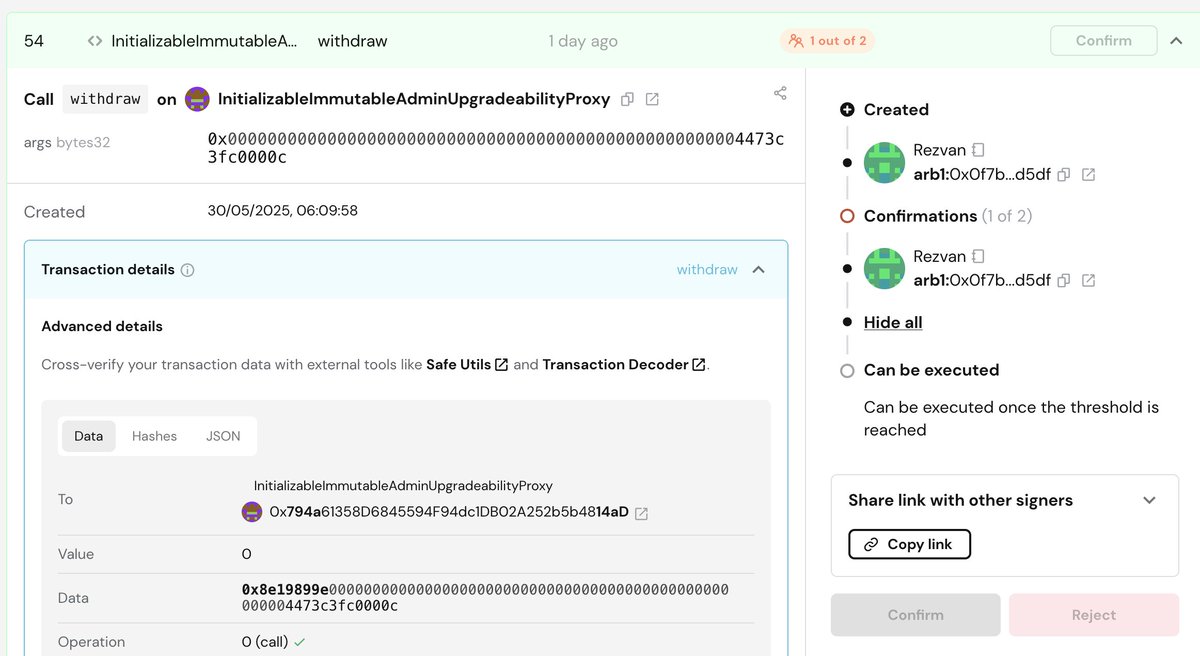
Why hasn't CollabTech really take off in web3? well, it's still unusable. Like WTF am I even signing here? Imagine a manager trying to understand whether this is safe or not? only way is trusting the colleague who scheduled or calling a dev friend for help
Daniel Ospina tweet media
English
4
0
17
550
Joni Pirovich 🛡️ รีทวีตแล้ว
Jake Chervinsky
Jake Chervinsky@jchervinsky·
The Senate voted "yes" on moving forward the GENIUS Act in an epic bipartisan showing, 66 - 32 🎉 There's still more work to do — another formal vote on GENIUS in the Senate, and passing STABLE in the House — but this was the hardest part. We will have stablecoin legislation 🇺🇸
Jake Chervinsky tweet media
English
28
127
823
65.5K
_gabrielShapir0
_gabrielShapir0@lex_node·
you asked, we delivered--you can now do your SAFE + Token Warrant round on MetaLeX. . .sign & close onchain--no Docusigns, no chasing funds! investor gets 2 NFT certificated securities with a tradeability toggle real internet capital markets 🖖😎 cybercorps.metalex.tech
_gabrielShapir0 tweet media
English
69
71
546
105.2K
Joni Pirovich 🛡️ รีทวีตแล้ว
Avalanche Policy Coalition 🔺
Avalanche Policy Coalition 🔺@AvalanchePolicy·
Women in AI and Web3 are building some of the most important tools in the space: and @jonipirovich is one of them. 🇦🇺 More than an AI tool, she built the legal sidekick every crypto founder, lawyer, and policymaker has been asking for. Meet Crystal (@ccocounsel). It reads thousands of pages of law, cites sources, connects you to real experts... and it gets better every day. This episode ties it all together: AI myths vs. reality, the mess of crypto compliance, and what smarter tools can unlock. It's a must-listen: 🟢 open.spotify.com/episode/0z0xf0… 🟣 podcasts.apple.com/us/podcast/ep-… 🌐 …xplains-40018v1ix-ava-labs.vercel.app/en/podcast/ep-…
Avalanche Policy Coalition 🔺 tweet media
English
3
2
3
351
Joni Pirovich 🛡️ รีทวีตแล้ว
Ga^3in Ventures
Ga^3in Ventures@GainVentures·
@GoodNewsVC @coinchangeio @YSpaceYU @consensus2025 @ccocounsel: we're focused on global crypto compliance at speed. Speed requires accountable and reliable AI, which requires a purpose-built brain of global crypto specific laws. We've built that brain: Crystal Basic.
English
0
1
6
407
_gabrielShapir0
_gabrielShapir0@lex_node·
@HDPbilly yeah this is what I do. but it would be cooler if it could just connect to private repo and 'know it' without all the copypasta
English
1
0
1
73
_gabrielShapir0
_gabrielShapir0@lex_node·
I feel like I get a much better understanding of code from copy-pasting it into o1 pro and asking questions than from Claude ... hard to put my finger on it but it o1 Pro just seems to contextualize & explain the code better...would be amazing if they added a native github integration so it can just 'know' the full repo (maybe it can with deep search plus some links? but a lot of times I'm dealing with private repos) . . .
English
7
0
9
1.8K
Joni Pirovich 🛡️
Joni Pirovich 🛡️@jonipirovich·
@CryptoTaxSucks You have effectively experimented in user rewards too: with your pricing / discounts around timing to brief you and later clients paying more. Your dao/community is not about coordinating governance, but coordinating resources.
English
0
0
0
28
Joni Pirovich 🛡️
Joni Pirovich 🛡️@jonipirovich·
@CryptoTaxSucks Completely agree with you. I love the experiments in DAOs that focus on the opportunity to develop fairer models of sharing profits with users (eg user rebates before dividends). No matter how good centralised decisions are, a business only makes profits because users support it.
English
1
0
0
58
Crypto Tax Made Easy
Crypto Tax Made Easy@CryptoTaxSucks·
I would never in a million years launch a token to allow people to govern any aspect of my business. When it comes to business decisions I am 100% on the side of centralized decision making. I don’t even believe in internal consensus being useful. I think a single leader with vision who is the decision maker is ideal with a caveat: They must have trustworthy and well informed advisors that are not just “yes men” The idea that some uninformed and short term profit motivated party with limited information can buy a bunch of my token and suddenly swing biz decisions to extract value from my business at the expense of long term health? And then leave? crazy. Even public companies still have a centralized decision making. Shareholders have a stake in the company, but they don’t have the power to vote on every decision the company makes. But they can dethrone an incompetent leader. Much better system IMO. But kudos to those who are experimenting with DAOs. It is interesting for me to observe utopian ideals vs. reality. And in which contexts DAOs might make sense.
English
10
3
68
3.2K
Crypto Tax Made Easy
Crypto Tax Made Easy@CryptoTaxSucks·
This tax season we had record numbers of client enrollments. But I unfortunately had to fire two accountants. Even though we're in crunch time - I won't sacrifice standards. Another put in their two weeks notice shortly after. Well, they say necessity is the mother of invention! The work has to get done. I was really hoping this tax season would be 'different' and that I could lead from the back. But in order to meet deadlines for our clients, I have gotten "back on the tools". And invent, I have! With ~70-80hrs each week on client work, I've found new efficiencies and achieved a level of flow & intuition with the work I didn't realize was possible. This has helped me fill the hole that will be left by those 3 accountants. But once I can finally pick my head up? My sole focus becomes: "How do I teach other accountants how to unlock this work flow?"
Crypto Tax Made Easy tweet media
English
10
1
61
4.1K