Dumped @limebike bikes are almost entirely blocking off pedestrian access in front of the @UKSupremeCourt. A wheelchair could not get through.
How many times do we have to protest before the authorities do anything about this complete defiance by Lime?
I’m just back to London after a weekend away with my family.
A busy week ahead, so now is the perfect time to go and do the big weekly shop.
Thanks to politicians not understanding how family life actually works I now have precisely 20 minutes before the shop shuts. It’s not going to happen.
My Top 10 Favourite Manchester Bands...
who are you adding?
1. The Smiths
2. Joy Division
3. The Stone Roses
4. Happy Mondays
5. New Order
6. Oasis
7. Magazine
8. The Fall
9. The Charlatans
10. Buzzcocks
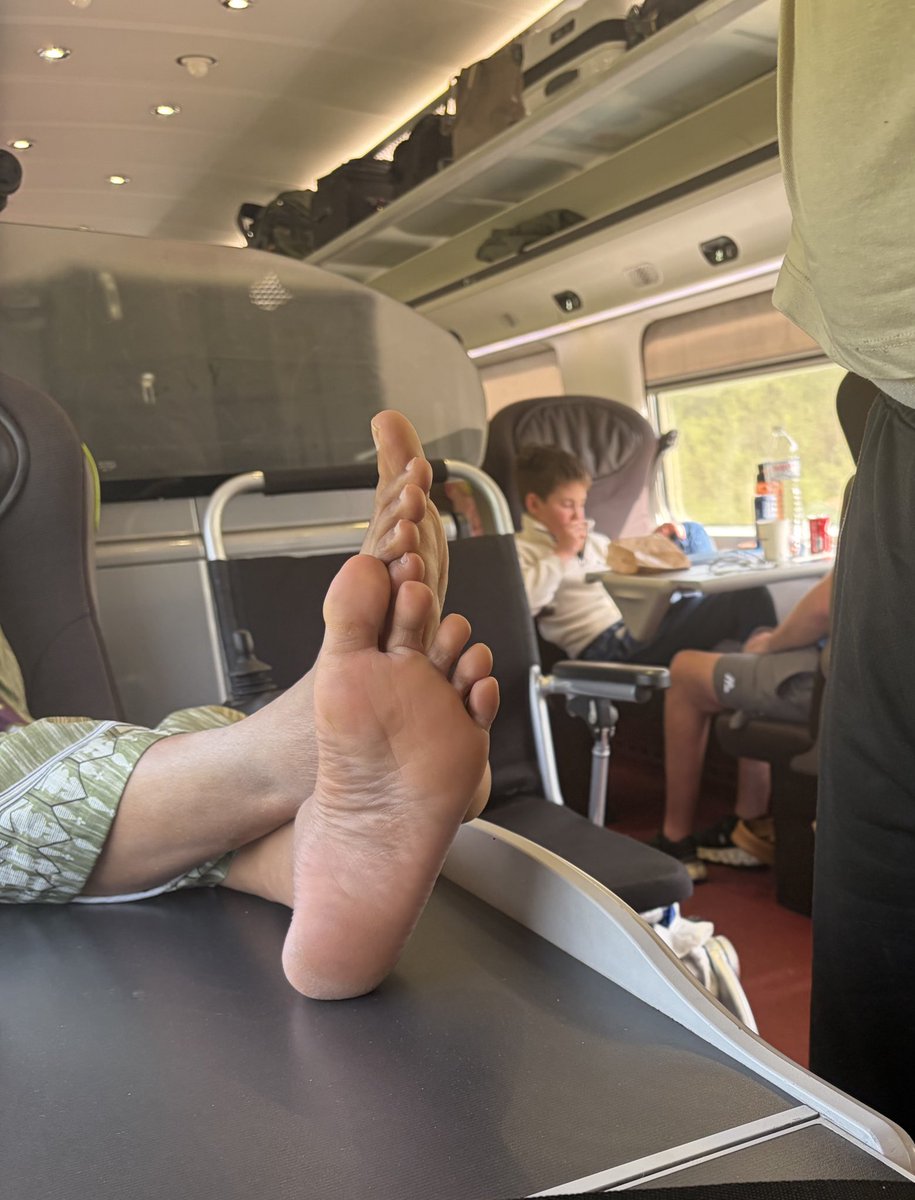
Fully just call it a day and kill me now cause whys someone lashed their bare toes on me table on the train am I allowed to tell her to fuck off or what
@Liverpool1207 Another entitled driver who wants to be insulted in their metal box but doesn’t want to pay for the privilege.
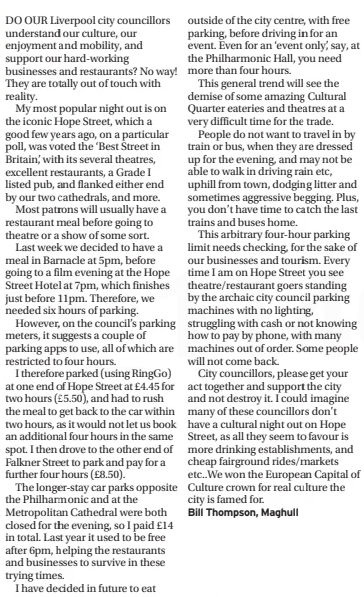
“You don’t have time to catch the last trains home”
The last Maghull train from Central is 2347
@HannahHope_@gilescoren@jet2tweets Imagine grifting for billionaires as a S*n “newspaper” Business Editor but only being able to afford the crap package on a Jet2 Holiday and then announcing your ignorance of advertising to the world on social media.
I feel incredibly duped and swindled by @jet2tweets
booked this hotel for its infinity pool only to discover that we don't have access to it. The website didn't make it clear when booking - false advertising
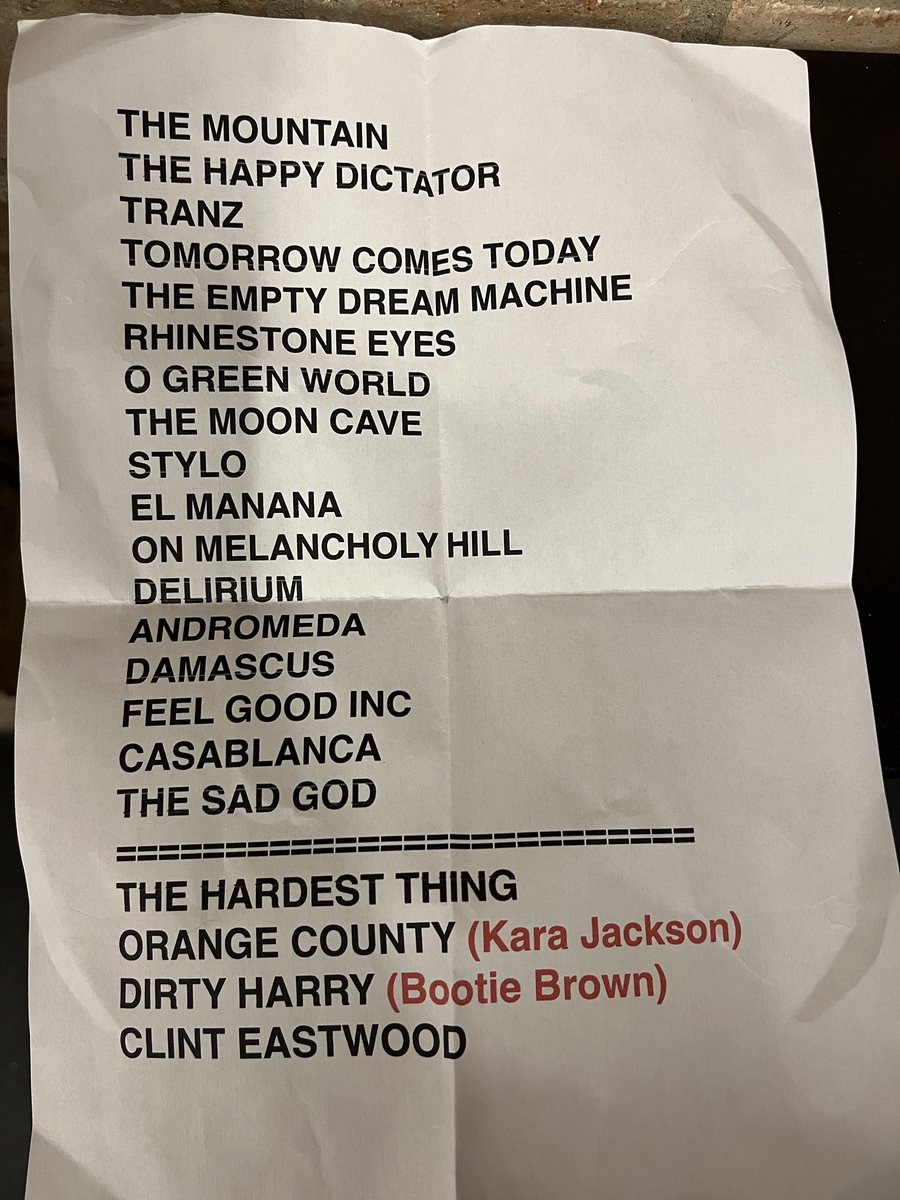
@satpalgahir Ha. I'm not a pop video guy really but obviously I've seen them all. Gorillaz visuals are amazing. The Stylo video with Bruce Willis is fantastic haha
Been listening to Demon Days on a loop for ages & tbh I'd forgotten how perfect it is. Over 20 years old now and still sounds fresh as fuck. It never lets up at all from front to back. Dub, hip-hop, electronic pop, gospel, the works. MF DOOM is on it ffs! An all-time great record
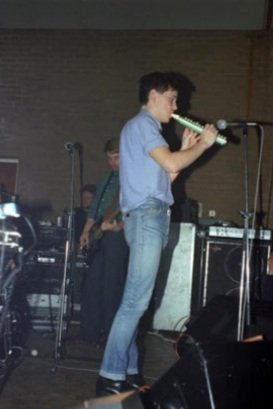
#OnThisDay 1981
New Order @ Bedford Boys' Club
Denial (debut), In A Lonely Place, Dreams Never End, Procession, Truth, ICB, Senses, Ceremony
The gig was organised by legendary New Order fan, Dec Hickey.
youtube.com/playlist?list=…
📸 Andrew Turner
The "Headache" that kills in 24 hours.🧵
As a doctor, this is the one diagnosis that genuinely scares me. Bacterial Meningitis doesn't give you days to "wait and see." It gives you hours. By the time you realize it's not just a flu, it’s often too late.
👉Stop scrolling and memorize these 3 clinical red flags:
1. The Fused Neck: This isn't a "stiff muscle" from sleeping wrong. If you have a fever and literally cannot touch your chin to your chest - that is Nuchal Rigidity. It’s an emergency. Period.
2. The "Glass Test" Rash: If you see tiny purple pin-pricks on the skin, press a clear glass firmly against them. If the spots don't fade/disappear under the glass, your blood is leaking. That’s Septicemia. Run to the ER.
3. Agonizing Photophobia: It’s not just "bright lights are annoying." It’s a physical, painful wince at a smartphone screen or a bedside lamp.
👉How to actually stay safe?
1. Mask up in crowds: It’s a respiratory drop infection. If there’s an outbreak in your school/hostel, a mask is your best friend.
2. Stop sharing everything: Vapes, spoons, water bottles, cigarettes. If their saliva is on it, the bacteria is on it.
3. Hygiene: Wash your hands like your life depends on it.
4. Vaccines: Check your records for MenACWY/MenB when you have a minute. It’s the ultimate insurance policy.
Liverpool played against possibly the most low confidence team in the history of the division today and managed to look weaker and more timid than them.
They are the champions, spent hundreds of millions, and are utterly miserable to watch.
It's some achievement, in a way.
The extravagant design of the HS2 station in Birmingham is proof our politicians and officials have utter contempt for taxpayers. Indeed HS2 was deliberately conceived to steal as much money as possible for the benefit of government cronies. #HS2birminghammail.co.uk/news/midlands-…
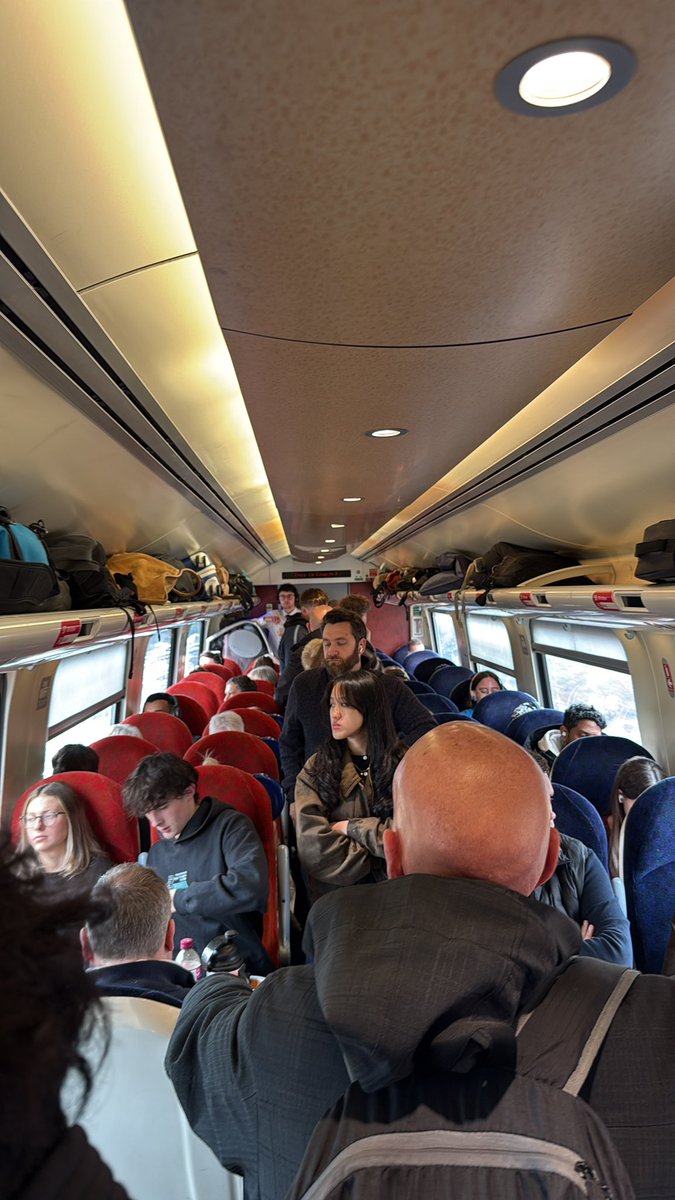
So poor from @CrossCountryUK. This Train from Sheffield to Bristol oversold and unsafe. No seats. People packed in standing in aisles, toilets and vestibules in between carriages. It cannot be safe to travel like this. Plus the tannoy is inaudible. Stood from Sheffield to Birmingham in packed carriage by broken toilet. 1 working toilet for 3 carriages. No staff on show. One passenger nearly passed out and had to get off. Train now going in reverse back to Brum having been stationary 15 mins in a tunnel. No one has any idea what’s going on because we can’t hear announcements. This train is unsafe.
@GERrailsoc The Museum of London is moving to Smithfield. With basement rooms alongside Snow Hill tunnel there is talk of making the railway visible from a gallery dedicated to the history of the site so that Thameslink passengers become living exhibits.
The Snow Hill Tunnel – Great Easterns Access to the South
Part 2 - More history and the GE specific interest.
A brief reprise.
The Snow Hill Tunnel (also known as the Snow Hill lines) in London refers to a short but historically significant north-south railway tunnel under the City of London, connecting Farringdon (on the Metropolitan Railway/Widened Lines) in the north to Holborn Viaduct, Ludgate Hill/Blackfriars, and onward to southern routes (originally via the London, Chatham & Dover Railway, later Southern Railway/Southern Region). Opened in 1866, it was part of the Metropolitan widened lines network and enabled cross-London through running.
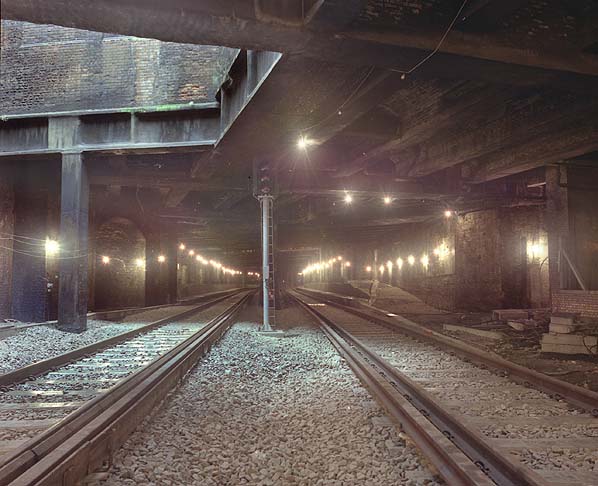
Passenger services through the tunnel largely ceased in 1916 (during World War I economies), with Holborn Viaduct and other intermediate stations closed or reduced. After that, the tunnel was used almost exclusively for goods traffic until the late 1960s/early 1970s, when it was abandoned (the tracks were lifted by 1971), before being rebuilt in the 1980s for Thameslink.
The GER did not have its own direct rail link into the Widened Lines from Liverpool Street station. Instead, GER freight trains reached the Widened Lines via the following established paths:
GE Goods trains originated from or passed through key GER/LNER-era freight hubs in northeast London, such as Stratford or Bishopsgate Goods, the GER's large goods depot - the original Shoreditch terminal for the ECR - adjacent to the GEML, which handled much of the incoming traffic from East Anglia.
From these points, trains ran west/northwest over running powers on the NLR or via connections to the less-used ELL, though the ELL was commonly used by other companies like the LNWR and GWR for south-London routes; the GER favored northern paths.
GER freight was often routed via the GNR lines (e.g., from Finsbury Park or Holloway areas), joining the Widened Lines at Farringdon or via the eastern chords/tunnels near King's Cross, such as the York Road or hotel curve connections. From there, trains continued south through Snow Hill Tunnel to southern destinations.
The Widened Lines extended eastward to Moorgate (and briefly had connections toward the GER side), but GER trains typically joined at or near Farringdon after traversing northern/eastern routes. Some sources note that GER traffic could access Moorgate-area goods facilities, but the main south-London freight flow was via Farringdon → Snow Hill Tunnel → Blackfriars/Ludgate Hill onward to LCDR/SR territory.
GER traffic through this route included coal (from Midlands collieries via GNR/Midland, then south), agricultural produce/perishables from East Anglia (e.g., vegetables, flowers from Norfolk/Suffolk), general merchandise, and parcels. Some of these being destined for southern ports.
In the steam era, heavy goods often required banking engines on the steep 1/45 gradient through Snow Hill Tunnel southbound. The banker was often an Eastern Region (GER, later LNER) locomotive stationed in a spur at Farringdon (beyond the northbound platform).
The Widened Lines & Snow Hill were predominantly used by GNR (from King's Cross) and the MR (via St. Pancras) for north/south connections. GER usage was secondary but significant for East Anglian traffic, contrasting with companies like GWR/LNWR that preferred the West London Line for cross and south London freight.
The arrangement allowed the GER to efficiently distribute East Anglian goods southward without lengthy detours around London, although it relied on inter-company agreements. The route's steep gradients and urban constraints made it operationally challenging, but it remained a vital artery for goods traffic until the late 1960s rationalisations.
After emerging from the tunnel at the southern end near Blackfriars, if not calling at Holborn Goods, the trains crossed the River Thames via Blackfriars Bridge and joined the network of the LC&DR, later part of the SECR, and post-1923, the SR (railway and later, region).
These southern destinations were primarily driven by the need to move East Anglian agricultural produce - vegetables, flowers, perishables, general merchandise, and especially coal to southern markets and industries. The route avoided lengthy detours around London's periphery and enabled efficient wagon exchanges at southern yards.
The most common and significant places for these cross-London GER/LNER goods were:
Brighton and other coastal/southern Sussex destinations (via London Bridge or direct routes from Blackfriars).
Sevenoaks (and onward to Tonbridge and the Weald/Kent interior).
East Croydon (a major marshalling/sorting point, where wagons were often detached for redistribution to various Southern lines).
Norwood Junction (another key yard for sorting traffic to LB&SCR lines, including to Brighton or coastal ports).
Herne Hill (for LCDR/SECR routes into Kent).
Hither Green or other Kentish marshalling yards (especially for coal and general goods to depots in southeast England).
Coal ceased to be a major flow when rationalisation in 1966 was implemented (National Freight Plan), when much was redirected to other, more direct routes like the Midland.
Parcels and lighter goods sometimes ran to London Bridge or Clapham Junction areas. After emerging south of the tunnel, trains often required engine changes (e.g., at Blackfriars or Herne Hill) due to company boundaries and locomotive preferences.
This cross-London goods route peaked in the steam era (e.g., up to 90 trains/day in the early 1960s across the route) but declined sharply with road competition and Beeching-era changes; regular services via Snow Hill ended around 1968–1969 (last Eastern Region parcels noted in March 1969), with full abandonment by 1971.
Now it mainly moves people who pass through, oblivious to its historic significance and importance.
Photo: Newly relayed track running through the disused Snow Hill Station December 1986 just prior to reopening. (c) Nick Catford