

@cenkuygur @TuckerCarlson @megynkelly I voted for Trump 3 times and I will never support him again including his AIPAC shilled endorsed candidates.
English
Miami Native 🇺🇸
27.9K posts

@nativemiamibch
CPA, Conservative, Cancer survivor. Diehard Miami Hurricane! Christ is King!!👑





BREAKING 🔴 Iran is warning: if Israel does not halt its strikes in Lebanon within hours, it will walk away from the negotiations.

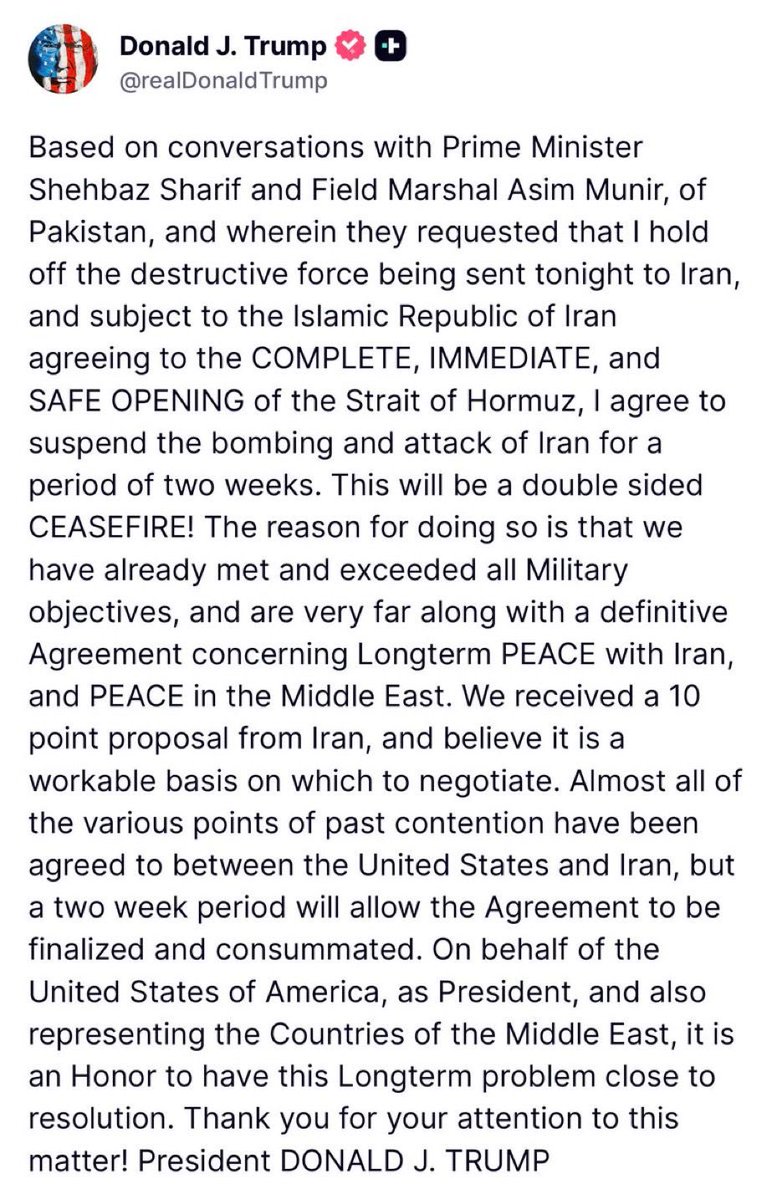


CEASEFIRE! Statement by @realDonaldTrump

Tucker Carlson Reveals He’s… a LEFTIST?! | Ep 248 x.com/i/broadcasts/1…




The DOD Law of War Manual (June 2015, updated July 2023)! Bridges, roads, power stations, railways etc… It explains “when and under what conditions” such actions are lawful under the law of war: specifically, when the infrastructure qualifies as a military objective (i.e., it makes an effective contribution to military action and its destruction offers a definite military advantage), and the attack complies with other rules such as distinction, proportionality, and feasible precautions. Here are the “exact relevant excerpts” from the manual (with section numbers) that directly address bridges, roads, railways, power stations, and similar infrastructure: Transportation infrastructure (bridges, roads, railways, highways): - § 5.6.8.3 – Examples of Military Objectives – Transportation Objects: “Transportation objects, including facilities (e.g., port facilities and air fields) and equipment that could be part of lines of communication (e.g., highways, railroads, waterways, and bridges connecting military forces with logistics depots and storage areas), have often been regarded as military objectives.” - § 5.6.7.3 – Definite Military Advantage (example using bridges): “For example, the military advantage in the attack of an individual bridge may not be seen immediately … but can be established by the overall effort to isolate enemy military forces on the battlefield through the destruction of bridges.” “The attack or seizure of objects with a common military purpose, such as bridges used, or potentially available to be used, in lines of communication would offer a definite military advantage.” - § 5.6.8.4 – Examples of Military Objectives – Places of Military Significance: Includes “road networks” and “bridgeheads” as areas that “have been regarded as military objectives.” - § 5.17.2.3 – Destruction of Enemy Property to Diminish the Enemy’s Ability to Conduct or Sustain Operations: “It may be imperatively demanded by the necessities of war to seize or destroy enemy property in order to diminish the enemy’s ability to conduct or sustain operations, such as **railways, lines of communication, and other war fighting and war sustaining infrastructure,” Power stations, oil facilities, and other economic/war-sustaining infrastructure: - § 5.6.8.5 – Examples of Military Objectives – Economic Objects Associated With Military Operations: Electric power stations are generally recognized to be of sufficient importance to a State’s capacity to meet its wartime needs of communication, transport, and industry so as usually to qualify as military objectives during armed conflicts.” Oil refining and distribution facilities and objects associated with petroleum, oil, and lubricant products … have also been regarded as military objectives.” Dual-use infrastructure (used by both military and civilians): - § 5.6.1.2 – Dual-Use Objects: Dual-use’ is used to describe objects that are used by both the armed forces and the civilian population, such as power stations or communications facilities. … If an object is a military objective, it is not a civilian object and may be made the object of attack,” (Proportionality must still be considered for expected civilian harm.) Key legal test that makes destruction lawful: - § 5.6.3 / § 5.6.5 – Definition of Military Objective (Objects): An object is a military objective if, by its “nature, location, purpose or use,” it (1) makes an effective contribution to military action and (2) its “total or partial destruction, capture or neutralization … offers a definite military advantage.” Bottom line from the manual: “Destroying bridges, railways, power stations, roads, oil facilities, and similar infrastructure is “lawful and permissible” when they meet the military-objective test above and the attack satisfies proportionality and precaution rules. The manual explicitly gives bridges and power stations as classic examples of legitimate targets in past conflicts.



Tim Dillon is literally speaking for all of us.


