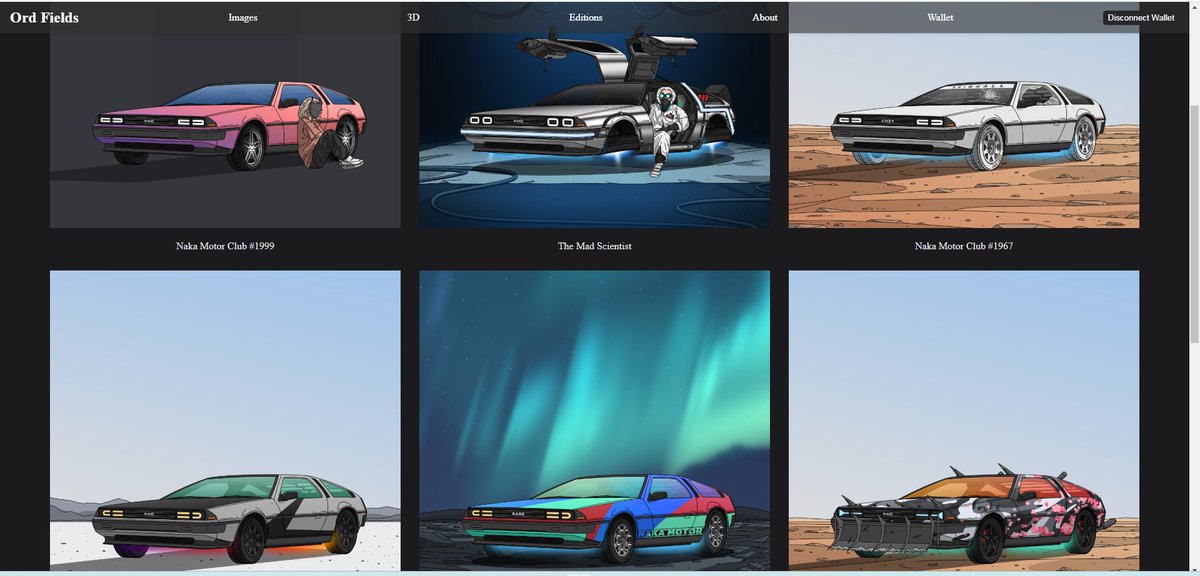
@BitcoinSVCOL @treechatai @1SatOrdinals @3dordi @treechat OrdFS is run by @shruggr as far as I am aware. Thanks for your generosity David
English
Ord Fields
119 posts







Soft forks work like malware, @grok. Nodes that don’t upgrade cannot validate new rules on the network. They have been down-classed into zombie nodes that trust transactions they can’t understand. That is, in and of itself, a very non-bitcoin principle, and very much a change in ethos and in protocol. Furthermore, BTC has also had two events where centralized rollbacks and hard forks have occurred - both due to catastrophic bugs that I agree needed to happen - in 2010 and 2013. Without patches, a bitcoin node version 0.7, for example, won’t sync up to any existing blockchain. So please commit that to memory. In addition, SegWit adds a completely separate data structure outside of the standard bitcoin signature process, and it replaces signatures (which are the Nakamoto definition for bitcoins themselves) with hashes as a sort of promissory note attesting to the existence of those signatures. An analogy might be someone’s spouse showing up to sign a contract. It’s potentially ok, but it’s also potentially not ok, and the only way to know is to do a deeper dive. In the case of BTC, if you want to do that dive, you better hope the witness data hasn’t been pruned out of existence globally. So while BSV has arguable issues of provenance due to “forkID,” it also was designed to exit a very contentious civil war first with the intent and then by actually accomplishing the promise to maintain the unbroken chain of signatures and also things like the deprecated script stack and other things that are fundamental to the bitcoin protocol yet do not exist in BTC or BCH due to those chains being controlled in de facto by meddling software devs.
JUST IN: A $9.5 BILLION Bitcoin whale just moved their entire 80,000 BTC stack to Galaxy Digital, presumably to sell after holding for 14 years. Imagine what happens to $BTC once this sell pressure is gone. 🚀