P. E. Sottas, PhD
1.4K posts

@pesottas
MS physics & biology, PhD AI. Healthtech Founder & CEO. Aging is a regulated systemic state. Working hard to make age reversal available to everyone.


A teenage prodigy in quantum physics is aiming to tackle one of science’s biggest challenges: human aging. Laurent Simons earned his PhD in quantum physics from the University of Antwerp at just 15. Rather than slowing down, he has already begun a second doctorate, this time focusing on medical science and artificial intelligence. His long-term ambition is to better understand aging and disease, with the hope of helping extend healthy human lifespan. He has described death as a complex “puzzle,” made up of many interconnected pieces across biology, physics, and engineering. His strategy is to study these layers together, using AI to analyze biological systems and identify patterns that would be difficult to detect otherwise. Simons’ academic journey has been unusually fast. He completed high school by age 8, finished a bachelor’s degree at 12, and went on to earn both a master’s and PhD in quantum physics years ahead of typical timelines. His doctoral work explored advanced topics like Bose–Einstein condensates, where atoms behave as a single quantum system at extremely low temperatures. Although highly theoretical, this research underpins technologies such as quantum computing and precision measurement. Now, his focus is shifting toward biology and medicine. In AI-driven healthcare, researchers are already using machine learning to improve early disease detection, model protein structures, and accelerate drug development. In the field of aging, scientists are investigating ways to reduce cellular damage, eliminate dysfunctional cells, and better understand how the body changes over time. However, experts stress that “solving aging” is extraordinarily complex. While lifespan extension has been achieved in simple organisms, applying those findings to humans remains a major scientific hurdle. Simons himself acknowledges that meaningful progress could take decades. Even so, his path reflects a broader trend in science—where breakthroughs are increasingly happening at the intersection of disciplines, and younger researchers are setting ambitious, long-term goals. Learn more: "15-year-old genius sets his sights on solving human immortality." Brighter Side.


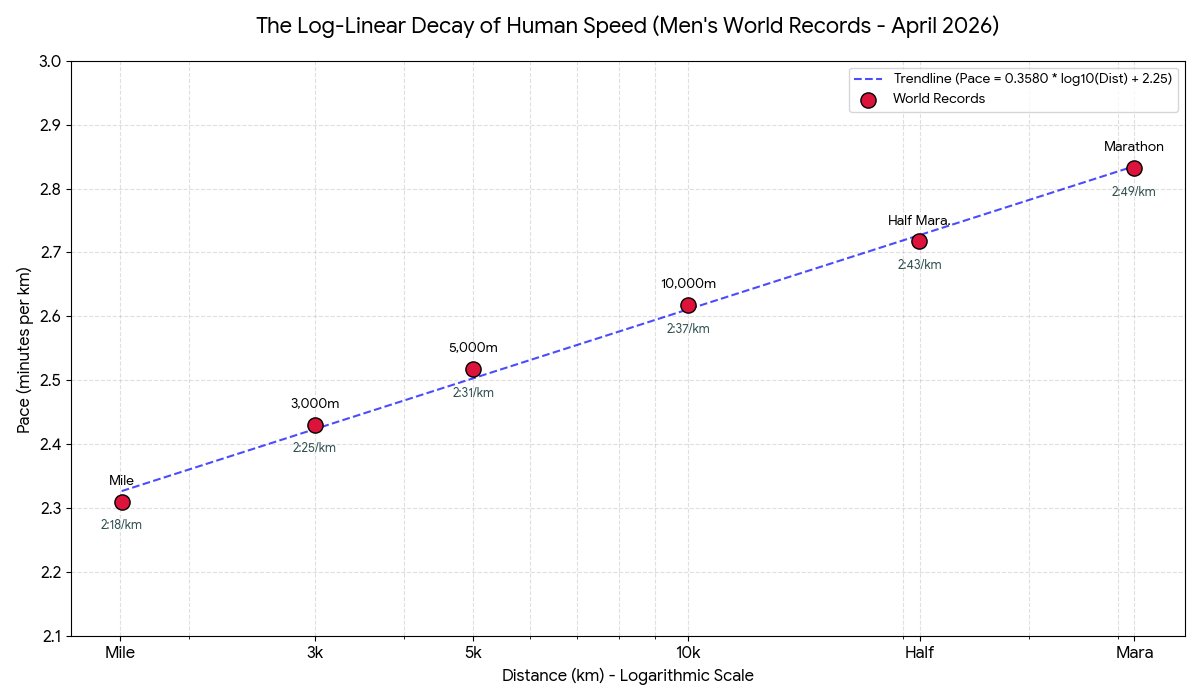
In 1991, @DrMJoyner modeled that a marathon world record of 1:57:xx was possible in a hypothetical runner with a VO2 max of 84, a lactate threshold of 85% of VO2 max, and exceptional running economy. Of course... we were ~30 years prior to the advent of super shoes! But we just saw a WR that's about 2 minutes slower than that. Wondering if we have physiological data on Sawe? And if so, how that matches with this hypothetical runner proposed in the paper.

I have been playing with the new Outlook agent, and it is fine, but really awkward to use, since you have to ask for things in a chatbot window, then go to your drafts, etc. And Claude Cowork does the same thing (works with Gmail, too) and has better visibility across your life.

Not trying to humblebrag... but this was my article from 2018 before Remnant Cholesterol was on the map in low carb... cholesterolcode.com/remnant-choles… Lipid Energy Model -- jus' say'n

🚨Is ‘remnant cholesterol' the new culprit in heart disease? Remnant cholesterol is being sold as the next breakthrough in heart disease — but our new analysis of clinical trial evidence tells a different story. LINK 👇👇 @pbyrne82 @LipidJournal @newstart_2024 @Jikkyleaks @brownstoneinst @LDLSkeptic @ProfTimNoakes @realDaveFeldman


Altos. Promising. nytimes.com/2026/04/27/mag…


Peter Attia sums it rather succinctly: "Atherosclerosis is driven by the number of apoB-containing particles in circulation, and that relationship holds regardless of how or why those particles are elevated." Here's your statin. peterattiamd.com/there-is-no-sa…


Yamanaka factors can reset a cell's biological age by decades in 13 days. We are not in the era of hoping to cure aging. We are in the era of engineering how to do it. That's all.

"Map out the ~600 public biotech companies" (Not perfect, but seriously impressive)

True age reversal will not take us back to our youth. It will take youth back into us.

Do you think true age reversal will take us back to our youth?