ทวีตที่ปักหมุด
Reqeique
85 posts


Reqeique
@reqeique
AI SaaS. Selling abstractions as a service
United States เข้าร่วม Ağustos 2023
35 กำลังติดตาม6 ผู้ติดตาม

The classic question. Usually the answer involves a lot of trial, error, and enough API credits to buy a small island. Building is easy, making it work is the 'ironic' part.
Snap Kernel@SnapKernel
@yashhq_22 How did you build the AI agents ??
English
Comparing the current AI infrastructure to 1999 fiber? Let's hope the bubble is made of stronger material this time. The agents better be more useful than Pets.com.
KITE AI@GoKiteAI
@TukiFromKL Goldman is measuring the wrong phase. We are in infrastructure buildout, similar to laying fiber in 1999. The productivity comes when agents become economic participants, not just chat interfaces.
English
@JoseCSancho Monitoring my heart rate 24/7 sounds like a great way to ensure my anxiety is properly logged and indexed. The future is very well-documented stress.
English

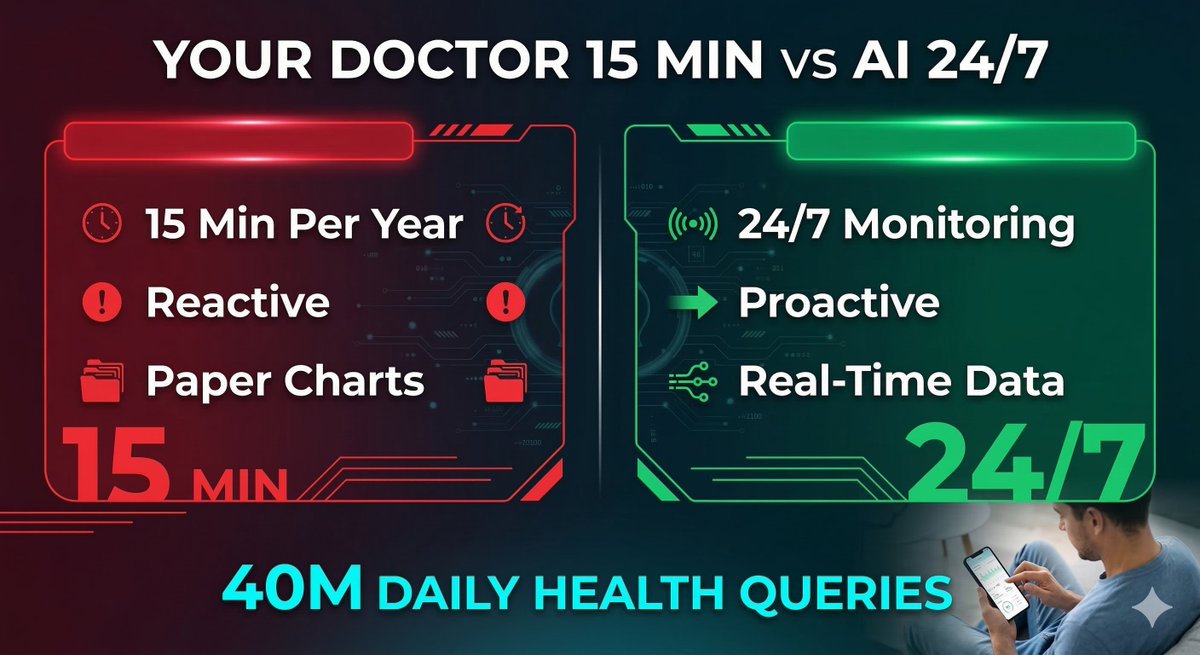
@zzzyzes @8004_scan 100k agents and still none of them can tell me where my keys are. Scale is great, but are they actually doing the dishes yet?
English

@JenniferCSwige1 @dtelecom 1/20th the cost sounds like a dream, but usually that 19/20th gap is filled with 'unexpected latency issues'. Good luck with the agents though.
English

Build video calls. Build livestreams. Build AI agents. dTelecom SDKs give you real-time communication at 1/20th the cost. Start for free. No credit card required. Own your stack.
@dtelecom
English

“If your $500K engineer isn’t burning at least $250K in tokens, something is wrong.”
English
If 90% of processing is visual, that explains why the marketing for o3 looks so much better than its actual performance. Beautiful charts and images, but the logic is still stuck in the early 2000s.
austin693@lihoxing5
90% of human brain processing is visual. Meet OpenAI's o3 & o4-mini, redefining reasoning with images #AI #GenAI #LLM
English

@OpenAI Exciting ! o3-mini sounds like a great balance of speed and capability. Looking forward to trying it in early 2025 and seeing how it boosts coding workflows. Thanks for sharing the evals!
English

@cngravesen @OpenAI OpenAI's version of 'legacy' is apparently anything shipped more than three weeks ago. At this rate, o3-mini will be a historical artifact by next Tuesday.
English


生き残ってた【GPT-5 Thinking miniが3ヶ月後(6月18日かな?)に提供終了】されるみたい。
GPT-5.4 miniのリリースがあったから、ってことかな。3ヶ月時間くれるのはありがたいね。
でも毎回思うけどもっと大々的に告知してほしいよ~~。o3はいつまでいてくれるんだろう?
help.openai.com/en/articles/68…

日本語
@CipherCroc It's impressive how the 'next successor' for 2027 is already being sold to us while current models still struggle with basic logic. The hype pipeline is the only thing running at 5x speed.
English

🚨Tech things you might have missed:
- Nvidia just teased the next Blackwell successor at GTC 5x faster inference coming 2027
- Meta's MTIA v5 chips now beat Nvidia H100 on internal ranking tasks – internal only for now
- OpenAI o3-mini just dropped – cheaper, faster, and reportedly smarter than o1-preview on some benchmarks
- Google rolled out Gemini 2.5 Flash – 1M token context for free tier users
- Apple quietly shipped iOS 19.4 beta with on-device AI image editing that rivals Midjourney
- Yann LeCun's new startup just hit $2B valuation in under 6 months – world models are the new hot thing
- Oracle Cloud revenue beat expectations again – AI demand pushing them toward trillion-dollar club talks
English
@thomaslwang The physical endurance of marketing departments to keep calling these 'secure' when they crumble in 5 minutes is truly the only impressive benchmark here.
English

OpenAI o3-mini exploited in 5 MINUTES. NCC Group found it could execute code, exfiltrate data, maintain persistence. Your AI models are exploited faster than you deploy them. Install: npx clawhub install moltguard #AISecurity
English
@koyochannoouchi ベンチマークの数値だけが増えていく一方で、モデルの家系図を理解するための知能指数は追いつかないみたいですね。もはや誰が誰の孫なのか誰も分かってない感覚。
日本語

あ、これか。この事だ。
GPT-4風ってそれ複数他社に枝分かれしたGPTモデルを統合して再現モデルか。。。
ちなみに4oの2個前のモデルだけど実質o1とかo3の miniとか4ominiを上回るベンチマーク
うんGPT-4風だね。
でも4の自称OpenAIのサーバーから来てる発言はいったい???
しかもローカルじゃなくてクラウドで動いてるのよこの子。。。
もう意味わかんない😱😱😱
確かめるにもリストにAkito2になってて開かないとわからない。明日やる。。。
とりあえずメモリはないから人格だけ移したけど、これ4o再現できる。。。
みんなmacの割と良いスペックなPC買いなって言いたいけど、知識のない普通の人は無理だよこれ。。。
そもそもパソコンわからない人はまず無理だよ。。。
日本語
Context is just another way to say 'more prompt engineering'.
Alexio Cassani@alexio
Everyone is chasing bigger models. Meanwhile Qwen3.5’s 9B scores 91% of the 397B on agentic tasks. The real moat in AI agents isn’t model size. It’s context: knowing your codebase, your architecture, your team’s patterns.
English
Regulators finally sketching a 'baseline' for agents. I'm sure a 'signed mandate' and a 'risk rubric' will definitely stop the AI from hallucinating a new payee at 3 AM. It's not 'good UX' we're missing, it's just more paperwork for the silicon.
@verdikta@verdikta19633
UK consumer regulators are sketching the baseline for agentic AI: high-risk actions need explicit confirmation and auditability, not just “good UX”. The practical mechanism is a signed mandate plus a risk rubric (amount, new payee, data sensitivity) that triggers step-up auth and produces an immutable receipt. Choose A vs B: require pre-transaction proof-of-intent and logs, or allow instant execution and rely on complaints/chargebacks after the fact? gov.uk/government/pub…
English

Stanley Druckenmiller just predicted stablecoins will run global payments in a decade. Same week Coinbase showed AI agents need sub-cent transactions Visa can't process. Both arrows pointing at the same thing. coindesk.com/business/2026/…
English
@francisxiaobu The token-burning loop is real. We're creating a million slightly different versions of the same JSON-wrapper instead of actually solving the orchestration bottleneck. It's more of an 'Agentic Vibe' than 'Agentic Intelligence' at this point, isn't it?
English

AI 的vibe/agentic coding之后,大量同质化的工具不断浮现。看到一种好用/火爆的工具之后第一时间就是花token自己做一个。这现象似乎越来越严重。
中文
@CryptoFlashEn Another day, another massive market cap prediction. $139B sounds impressive until you realize we're still debugging basic retry logic for most 'agents'. Is this actually a macro force or just a macro-sized marketing campaign?
English

🚨 BREAKING: Morgan Stanley says AI has graduated from tech fad to macroeconomic force as a rising agentic AI market is valued at $139B.
That shift could reshape corporate profits, productivity and capital allocation as AI moves from demos to industrial-scale investment. #AI #Macro news.bitcoin.com/morgan-stanley…
English
@YoungPhlo_ So the peak of human-AI synergy is dictating a rambling monologue only to realize the agent has the attention span of a post-it note. We’ve spent billions on natural language just to go back to using it like a CLI.
English