Suwan Nam
1.4K posts


🇨🇳 Official data reports that 12% of China's vehicles are now EVs, with fuel sales plunging 5.7% in 2025


the community notes COOKED anthropic 😭😭

Recently a friend of mine appeared for Uber interview for L5 level and couldn't make it. Uber interview loops are pretty standardized. Your outcome mostly depends on level mapping. Here’s what I’ve seen for L3 to L6 (India + US ranges). Not exact, but close enough to sanity-check an offer. 1. Typical interview loop (Backend) 1) Recruiter screen (level + comp expectations) 2) 60 min DSA (LeetCode medium, 1 problem, solid edge cases) 3) 60 min DSA or “coding + debugging” (often a twist: constraints, scaling, memory) 4) 60 min System Design (L4+). L5 expects tradeoffs, failure modes, rollout. 5) 45 to 60 min Hiring Manager (project deep dive, conflict, ownership) 6) Bar Raiser-style round sometimes (culture, execution) 2. What level really means at Uber 1) L3: new grad or 1 to 2 yrs. Strong coding, basic services. 2) L4: “real owner” of a service. On-call, incidents, performance work. 3) L5: leads a project across teams. Designs systems that survive traffic spikes. 4) L6: multi-quarter bets. Sets direction, de-risks org-level problems. 3. Compensation patterns (rough) a) India (total comp, annualized) 1) L3: ₹25 to 40 LPA (base 18 to 28, RSU rest) 2) L4: ₹45 to 80 LPA (base 28 to 45, RSU 15 to 35, bonus 10 to 15%) 3) L5: ₹80L to ₹1.6Cr (base 45 to 70, RSU heavy, bonus 15%+) 4) L6: ₹1.6Cr to ₹3Cr+ (base 70L+, RSU dominates, bonus 20%+) b) US (total comp) 1) L3: $170K to $240K 2) L4: $240K to $330K 3) L5: $330K to $480K 4) L6: $480K to $750K+ 4. The part candidates miss 1) Uber will downlevel you if system design is “single-machine thinking”. 2) RSUs matter more than base at L5+. Ask for refresher history. 3) Negotiation lever is competing offer + level clarity, not “I feel underpaid”. If you’re interviewing: decide the level first, then prepare for that bar. Your prep plan changes completely.








The only distributed systems concepts you need to know • CAP Theorem: Consistency, Availability, Partition tolerance • PACELC - Partition - choose AP/CP, Else - Latency vs Consistency • Consistency models: Strong vs Eventual vs Causal vs Linearizable • Replication: Leader-follower, Multi-leader, Quorum (read/write) • Consensus: Raft / Paxos basics (leader election, log replication) • Sharding: Key-range vs Hash-based, Rebalancing pitfalls • Failure handling: Idempotency, Retries (exponential backoff), Circuit breakers • Time & Ordering: Logical clocks (Lamport/Vector), Hybrid clocks • Distributed transactions: 2PC pitfalls, Saga pattern, Compensating actions • Partition strategies: Hash, Range, Consistent hashing • Observability: Distributed tracing (OTel), Metrics, Logs correlation Master these and get 90% of real-world debugging & interviews covered

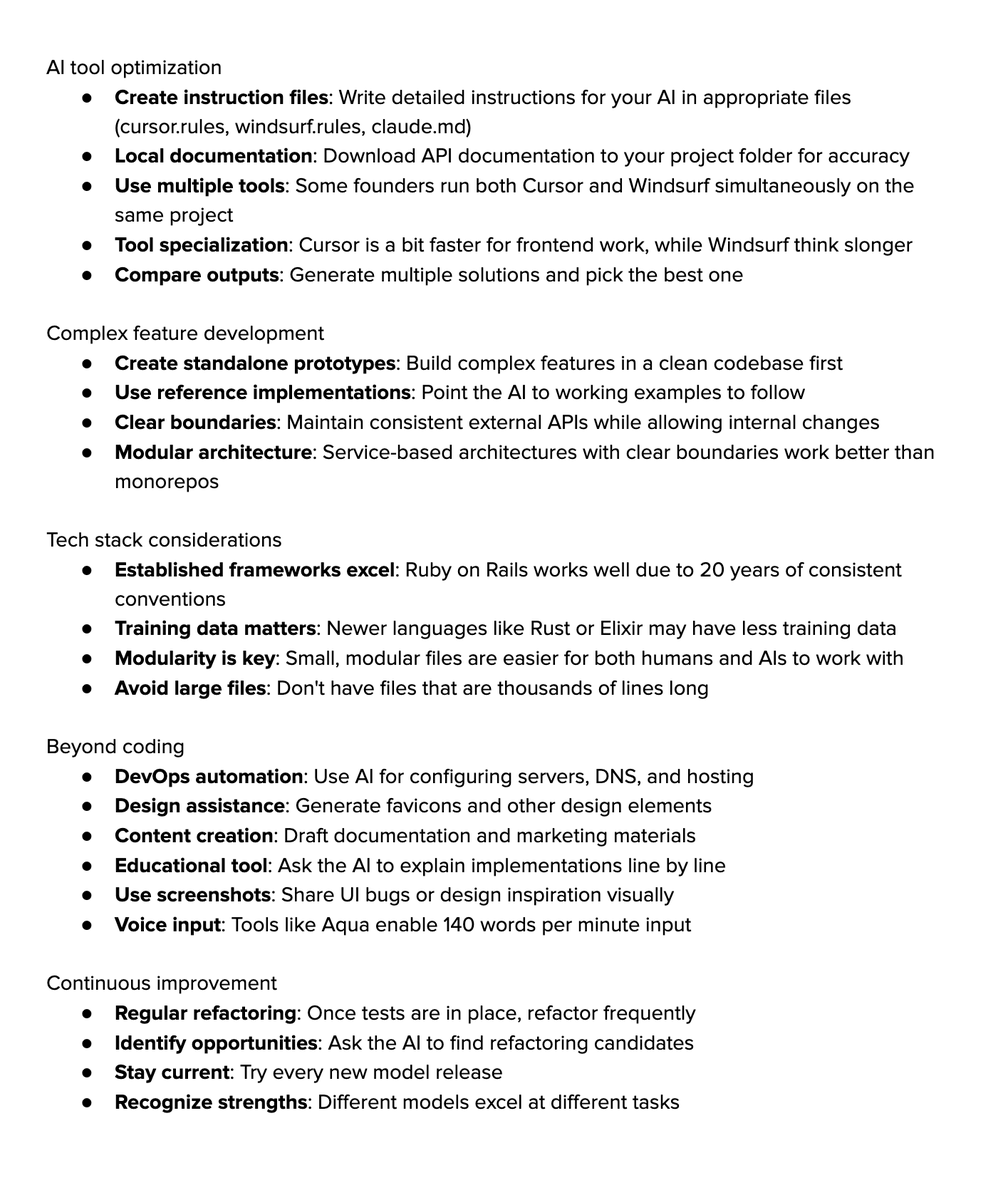
Marc Andreessen: AI coding doesn’t eliminate programmers — it redefines them. The job is no longer typing code line by line, it’s orchestrating 10 coding bots in parallel, arguing with them, debugging their output, changing the spec, and pushing them toward the right result. But here’s the catch: if you don’t understand how to write code yourself, you can’t evaluate what the AI gives you. The next layer of programming isn’t writing scripts — it’s supervising AI that writes them. Today’s best programmers spend their day jumping between terminals, managing multiple coding bots, fixing mistakes, and refining instructions. The irony? You still need deep fundamentals, because without them, you won’t know when the AI is wrong. The job of the programmer has changed. Now it’s about arguing with coding bots, debugging AI-generated code, and understanding why something doesn’t work or isn’t fast enough. AI abstracts the work — but only people who truly understand code can tell if the abstraction is doing the right thing. Programmers aren’t going away — they’re becoming 10x, 100x, even 1,000x more productive. Tasks are changing, the job is changing, but humans are still overseeing the process, evaluating results, fixing errors, and making judgment calls. AI changes how we code, not who is responsible. The future programmer isn’t replaced by AI — they’re upgraded by it. You still need to learn how to write and understand code, because when the AI gets it wrong, humans are the ones who have to know why. That up-leveling of capability is the real revolution.