Kyle Allen

57 posts

Kyle Allen banner
Kyle Allen

Kyle Allen

@snakebrokyle

Family Man, Musician, Podcaster, Winemaker

Texas, USA เข้าร่วม Haziran 2015
97 กำลังติดตาม225 ผู้ติดตาม
Kyle Allen รีทวีตแล้ว
Ben van Kerkwyk - UnchartedX
Ben van Kerkwyk - UnchartedX@UnchartedX1·
Ancient Hard Stone Precision Vases... are Fakes? Again? My response: unchartedx.com/site/2026/05/2… There have been some claims made recently - and again - that the amazing hard stone vases from Ancient Egypt shown to possess remarkable precision attributes have been conclusively shown to be 'modern fakes.' I quite disagree. The context around these vases, their precision and sophistication has been extensively documented by myself as well as several others across what's loosely termed 'the vase scan project.' I do not need to re-hash all the amazing findings made on these artifacts, I have hours of content on my channel that covers it. I've been asked about this recent claim a few times, so I thought I'd track down the origin for it and address it. You can find the article I've written in response to these claims on my website, unchartedx.com - or go direct to the article here: unchartedx.com/site/2026/05/2… Now back to making my video on ancient Mendes. Cheers Ben.
Ben van Kerkwyk - UnchartedX tweet media
English
25
40
418
65K
Kyle Allen
Kyle Allen@snakebrokyle·
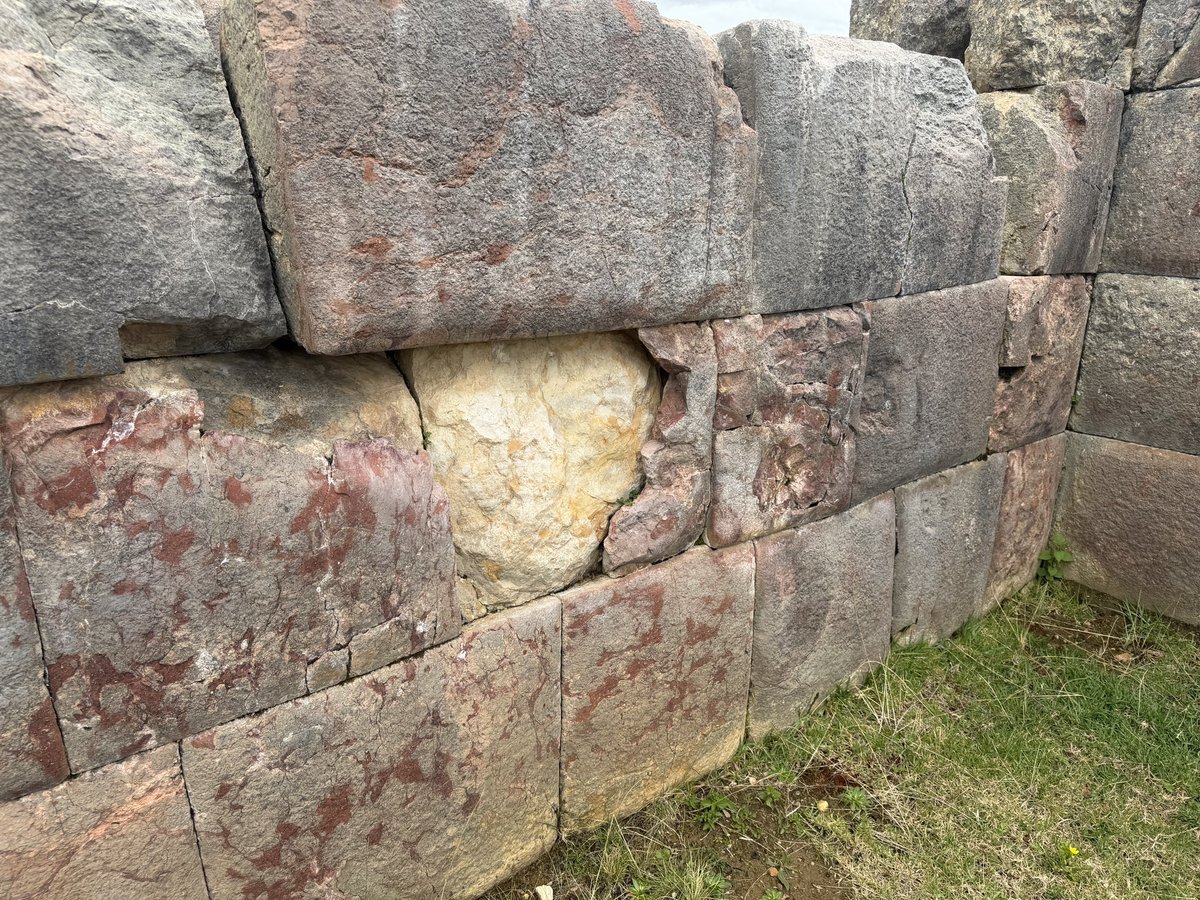
@FoMaHun Oops! This is all limestone. No granite. Limestone naturally turns this color after years of exposure in certain climates. Notice the pitting erosion on the block near the corner. The block in the middle is limestone’s normal color because it broke recently.
English
0
0
1
63
Marcell Fóti 🪨
Marcell Fóti 🪨@FoMaHun·
Ooops! Natural limestone embedded in natural granite 🤣🤣 CAST!
Marcell Fóti 🪨 tweet media
English
160
147
1.9K
343.8K
Kyle Allen
Kyle Allen@snakebrokyle·
@DrZamilov My point is, it is not these things you are looking at. Obviously.
English
1
0
0
12
Kyle Allen
Kyle Allen@snakebrokyle·
@DrZamilov I thought you were trolling me. Because I am referring to Chris Dunn’s axiom for reverse engineering - that is to focus on the “most precise aspects” of ancient artifacts. You will not address my argument. You are changing the subject. “Show me where to look”. No.
English
1
0
0
10
Dr. Max Fomitchev-Zamilov
Dr. Max Fomitchev-Zamilov@DrZamilov·
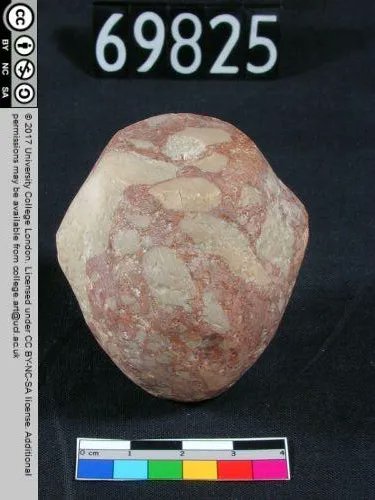
Here is another example of an unfinished stone vessel from the Petrie Museum. You can see it in the early stages of being shaped by lapidary technology. I hypothesized that it was shaped by turning the chiseled blank in wet sand (abrasive). The stone vessel shaping stages: maximus.energy/index.php/2025… PS Do not get me wrong: I am all for finding LOST ANCIENT TECH, but the ancient Egyptian stone vases ain't it, and I do not appreciate the perpetuation of mystification and outright lies about these artifacts. This muddies the waters and makes finding out the truth - and hence finding the REAL LOST ANCIENT TECH - much more difficult. So please be honest, and we will find the evidence in no time! So much effort is wasted on chasing dead ends, all thanks to mystification (or intentional deception?) that makes for a flashy headline :( In fact, I am beginning to think that the REAL CONSPIRACY could be the pollution of the information space with red herrings that intentionally set off researchers onto false tracks, thus preventing finding out THE TRUTH ABOUT OUR PAST. This pollution is exactly why academic researchers won't touch the subject. There are very few people who could tackle the problem, which requires a SYSTEMATIC APPROACH, ACCURATE MEASUREMENTS, study of scientific literature, and writing papers. All of this costs time and money, and in the meantime, one is not generating content. I am not complaining, I love what I do, but if you want me to find out the truth - PLEASE-PLEASE - do not make my work more difficult by propagating false claims and twisting the facts. Cheers! @Graham__Hancock @markqvist @DrDavidMiano @BrightInsight6 @DeDunkingPast @TonyTrupp @SnkBrs @DrHughT @megaminutiae @alexandertolano @ChrisWithRobots @FoMaHun @Apkalluu @goob_the57373 @oligodynamick @ET_Iconoclasta @Bastet545169547 @adancingferret @JosephAPWilson1 @outofspace2 @occamsrazor22 @AncientEpoch @PortantIssues @uapcappa @stinegerdes @FlintDibble @UnchartedX1
Dr. Max Fomitchev-Zamilov tweet media
English
14
9
43
1.5K
Kyle Allen
Kyle Allen@snakebrokyle·
@DrZamilov I am confident that my colleagues at the Artifact Foundation will demonstrate this, among other things. I am not here to tell you how to do your research. I am only responding to your claims, which I think are premature.
English
0
0
0
10
Dr. Max Fomitchev-Zamilov
Dr. Max Fomitchev-Zamilov@DrZamilov·
Kyle - I would appreciate a pointer towards which objects I should study. I mean it. I have been to Petrie three times, to Manchester, a group of my colleagues in Russia been to major Russian museums, I have examined catalogs of every major and minor museum, including British, Chicago, and Boston, and various traveling exhibits, line Houston and San Antonio. I maybe blind or looking in the wrong places. So please let me know your thoughts and I will do my best to follow through with a proper study.
English
1
0
1
35
Kyle Allen
Kyle Allen@snakebrokyle·
@DrZamilov Our samples and analysis are forthcoming. We all have jobs, and as such, these things take a lot longer for us to complete. Cheers!
English
1
0
1
14
Dr. Max Fomitchev-Zamilov
Dr. Max Fomitchev-Zamilov@DrZamilov·
Kyle - thank you for chiming in. Everything in science is evaluated by measuring a sample, which is much smaller than the whole. For example, it takes just a drop of blood to diagnose a disease. You don't need to drain the whole blood from body. We have statistics for that. Statistics determines the proper sample size and the resulting probabilities. So what about your scans? When are you releasing them? Cheers!
English
2
0
1
59
Kyle Allen
Kyle Allen@snakebrokyle·
@DrZamilov I agree this is evidence. But there is tons of evidence for handmade stone objects. There is nothing new here. There is nothing wrong with pointing it out, but you are conflating the evidence with all vases. Again, no one in my camp is denying handmade objects.
English
0
0
0
9
Dr. Max Fomitchev-Zamilov
Dr. Max Fomitchev-Zamilov@DrZamilov·
This is evidence, Kyle. And evidence is organized and cataloged in support of a theory. I happen to have organized and cataloged evidence of ancient lapidary technology. I am by no means the first one to point it out. There are books written about it, take Bevan and Stocks to name just a few. Just read them please. I am merely filling in the blanks and refining a few arguments. I still hope to find the ancient high tech though, but regrettably, it is not in the vases.
English
1
0
2
51
Kyle Allen
Kyle Allen@snakebrokyle·
@ScottAdamsSays Rest in peace Scott! Our one sided friendship will be missed.
English
1
0
1
28
Scott Adams
Scott Adams@ScottAdamsSays·
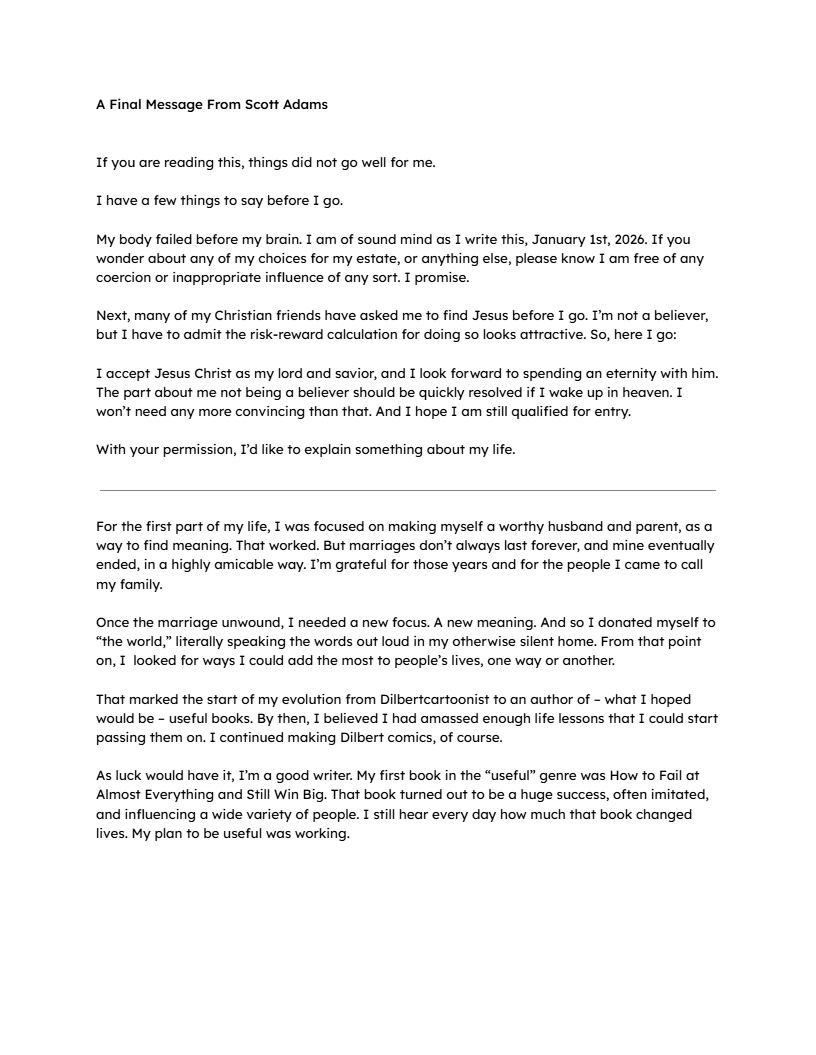
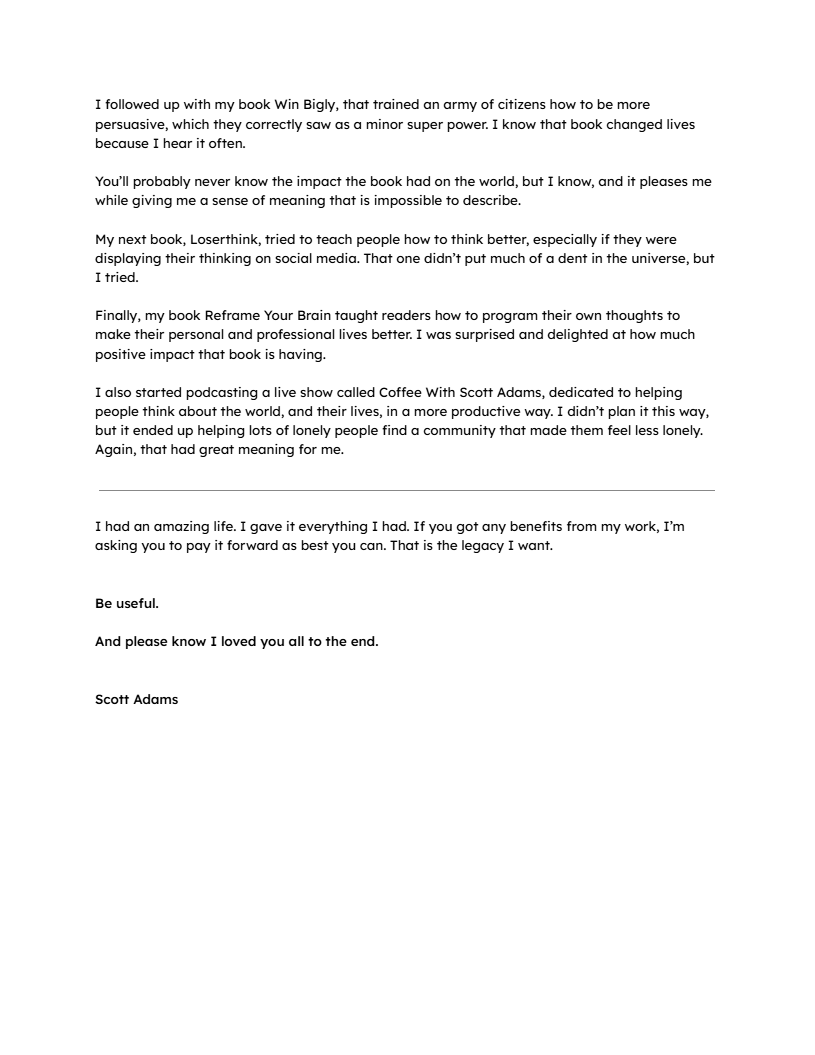
A Final Message From Scott Adams
Scott Adams tweet mediaScott Adams tweet media
English
13.1K
31.7K
190.4K
43.1M
Dr. Max Fomitchev-Zamilov
Dr. Max Fomitchev-Zamilov@DrZamilov·
Replicas of Predynastic Egyptian granite vases are ready! Samples are made in China. So many of you said, over and over, that these couldn't be made today, with lug handles and thin walls. Yet here they are. So let's see how they turn out. So far, only 3 people have donated to have these made, yet the fundraiser is incomplete. Do you want to know the truth? Then, contribute (even if $20) so the order can be placed: paypal.com/donate/?hosted…. A $1000 donation gets you a vase: red or black, your choice! @Graham__Hancock @MBeallX @markqvist @DrDavidMiano @BrightInsight6 @DeDunkingPast @TonyTrupp @SnkBrs @DrHughT @megaminutiae @alexandertolano @ChrisWithRobots @FoMaHun @Apkalluu @goob_the57373 @oligodynamick @ET_Iconoclasta @Bastet545169547 @adancingferret @JosephAPWilson1 @outofspace2 @occamsrazor22 @AncientEpoch @PortantIssues @uapcappa @stinegerdes @FlintDibble @karolypoka @UnchartedX1 @ArtifactFNDN
Dr. Max Fomitchev-Zamilov tweet media
Dr. Max Fomitchev-Zamilov tweet mediaDr. Max Fomitchev-Zamilov tweet media
English
35
14
83
12.7K
Kyle Allen
Kyle Allen@snakebrokyle·
@OwenGregorian Thinking about this in reference to many of the theories about the pyramids of Egypt. Core blocks submerged in electrolytic water (saturated with natron salt) in canals around the base of the pyramid before being installed. Pyramid batteries??
English
0
0
0
30
Kyle Allen รีทวีตแล้ว
Owen Gregorian
Owen Gregorian@OwenGregorian·
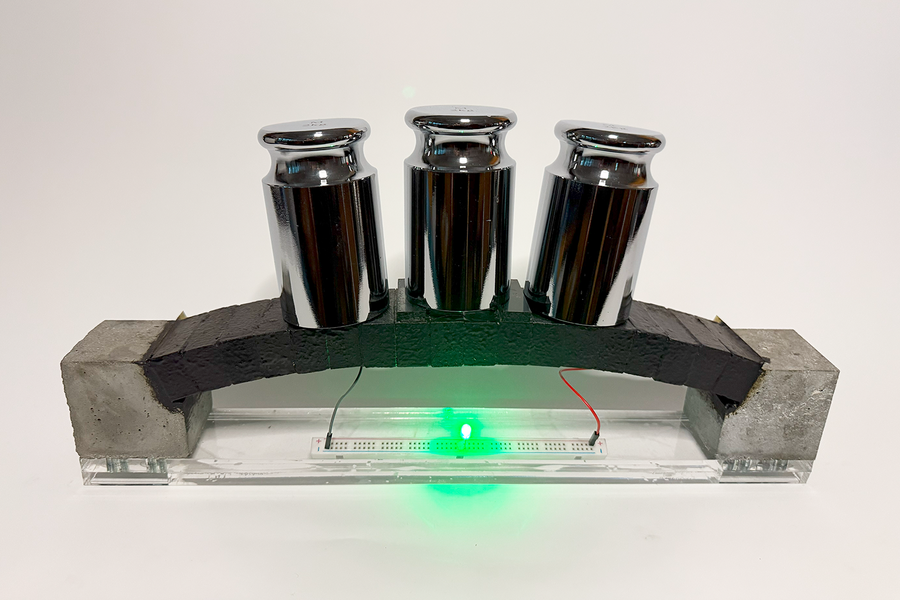
Concrete “battery” developed at MIT now packs 10 times the power | Andrew Paul Laurent, MIT News Improved carbon-cement supercapacitors could turn the concrete around us into massive energy storage systems. Concrete already builds our world, and now it’s one step closer to powering it, too. Made by combining cement, water, ultra-fine carbon black (with nanoscale particles), and electrolytes, electron-conducting carbon concrete (ec3, pronounced “e-c-cubed”) creates a conductive “nanonetwork” inside concrete that could enable everyday structures like walls, sidewalks, and bridges to store and release electrical energy. In other words, the concrete around us could one day double as giant “batteries.” As MIT researchers report in a new PNAS paper, optimized electrolytes and manufacturing processes have increased the energy storage capacity of the latest ec3 supercapacitors by an order of magnitude. In 2023, storing enough energy to meet the daily needs of the average home would have required about 45 cubic meters of ec3, roughly the amount of concrete used in a typical basement. Now, with the improved electrolyte, that same task can be achieved with about 5 cubic meters, the volume of a typical basement wall. “A key to the sustainability of concrete is the development of ‘multifunctional concrete,’ which integrates functionalities like this energy storage, self-healing, and carbon sequestration. Concrete is already the world’s most-used construction material, so why not take advantage of that scale to create other benefits?” asks Admir Masic, lead author of the new study, MIT Electron-Conducting Carbon-Cement-Based Materials Hub (EC³ Hub) co-director, and associate professor of civil and environmental engineering (CEE) at MIT. The improved energy density was made possible by a deeper understanding of how the nanocarbon black network inside ec3 functions and interacts with electrolytes. Using focused ion beams for the sequential removal of thin layers of the ec3 material, followed by high-resolution imaging of each slice with a scanning electron microscope (a technique called FIB-SEM tomography), the team across the EC³ Hub and MIT Concrete Sustainability Hub was able to reconstruct the conductive nanonetwork at the highest resolution yet. This approach allowed the team to discover that the network is essentially a fractal-like “web” that surrounds ec3 pores, which is what allows the electrolyte to infiltrate and for current to flow through the system. “Understanding how these materials ‘assemble’ themselves at the nanoscale is key to achieving these new functionalities,” adds Masic. Equipped with their new understanding of the nanonetwork, the team experimented with different electrolytes and their concentrations to see how they impacted energy storage density. As Damian Stefaniuk, first author and EC³ Hub research scientist, highlights, “we found that there is a wide range of electrolytes that could be viable candidates for ec3. This even includes seawater, which could make this a good material for use in coastal and marine applications, perhaps as support structures for offshore wind farms.” At the same time, the team streamlined the way they added electrolytes to the mix. Rather than curing ec3 electrodes and then soaking them in electrolyte, they added the electrolyte directly into the mixing water. Since electrolyte penetration was no longer a limitation, the team could cast thicker electrodes that stored more energy. The team achieved the greatest performance when they switched to organic electrolytes, especially those that combined quaternary ammonium salts — found in everyday products like disinfectants — with acetonitrile, a clear, conductive liquid often used in industry. A cubic meter of this version of ec3 — about the size of a refrigerator — can store over 2 kilowatt-hours of energy. That’s about enough to power an actual refrigerator for a day. While batteries maintain a higher energy density, ec3 can in principle be incorporated directly into a wide range of architectural elements — from slabs and walls to domes and vaults — and last as long as the structure itself. “The Ancient Romans made great advances in concrete construction. Massive structures like the Pantheon stand to this day without reinforcement. If we keep up their spirit of combining material science with architectural vision, we could be at the brink of a new architectural revolution with multifunctional concretes like ec3,” proposes Masic. Taking inspiration from Roman architecture, the team built a miniature ec3 arch to show how structural form and energy storage can work together. Operating at 9 volts, the arch supported its own weight and additional load while powering an LED light. However, something unique happened when the load on the arch increased: the light flickered. This is likely due to the way stress impacts electrical contacts or the distribution of charges. “There may be a kind of self-monitoring capacity here. If we think of an ec3 arch at architectural scale, its output may fluctuate when it’s impacted by a stressor like high winds. We may be able to use this as a signal of when and to what extent a structure is stressed, or monitor its overall health in real time,” envisions Masic. The latest developments in ec³ technology bring it a step closer to real-world scalability. It’s already been used to heat sidewalk slabs in Sapporo, Japan, due to its thermally conductive properties, representing a potential alternative to salting. “With these higher energy densities and demonstrated value across a broader application space, we now have a powerful and flexible tool that can help us address a wide range of persistent energy challenges,” explains Stefaniuk. “One of our biggest motivations was to help enable the renewable energy transition. Solar power, for example, has come a long way in terms of efficiency. However, it can only generate power when there’s enough sunlight. So, the question becomes: How do you meet your energy needs at night, or on cloudy days?” Franz-Josef Ulm, EC³ Hub co-director and CEE professor, continues the thread: “The answer is that you need a way to store and release energy. This has usually meant a battery, which often relies on scarce or harmful materials. We believe that ec3 is a viable substitute, letting our buildings and infrastructure meet our energy storage needs.” The team is working toward applications like parking spaces and roads that could charge electric vehicles, as well as homes that can operate fully off the grid. “What excites us most is that we’ve taken a material as ancient as concrete and shown that it can do something entirely new,” says James Weaver, a co-author on the paper who is an associate professor of design technology and materials science and engineering at Cornell University, as well as a former EC³ Hub researcher. “By combining modern nanoscience with an ancient building block of civilization, we’re opening a door to infrastructure that doesn’t just support our lives, it powers them.” news.mit.edu/2025/concrete-…
Owen Gregorian tweet media
English
21
22
110
69.1K
Kyle Allen รีทวีตแล้ว
Marc Young
Marc Young@Marc_Young_90·
I am thrilled to announce that after 2 years of work to expose the scientific fraud perpetrated against the YDIH by Sun et al. 2020, my paper detailing it has been published in Airbursts and Cratering Impacts! scienceopen.com/hosted-documen… Sun et al. deleted the most important sample in the whole record from their dataset because it supported the YDIH and invalidated their conclusions!
English
7
7
20
1.1K
Kyle Allen รีทวีตแล้ว
Laura Allen
Laura Allen@snakesisterL·
Laura Allen tweet media
ZXX
2
2
29
363
Kyle Allen รีทวีตแล้ว
Ben van Kerkwyk - UnchartedX
Ben van Kerkwyk - UnchartedX@UnchartedX1·
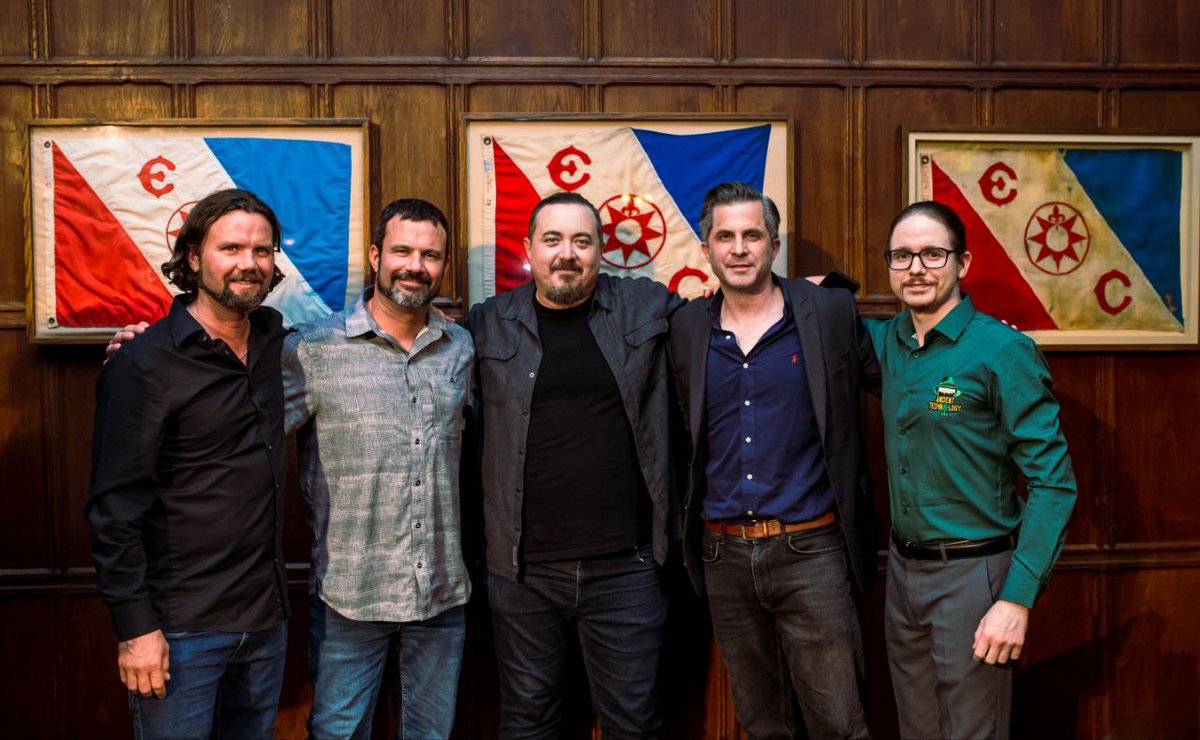
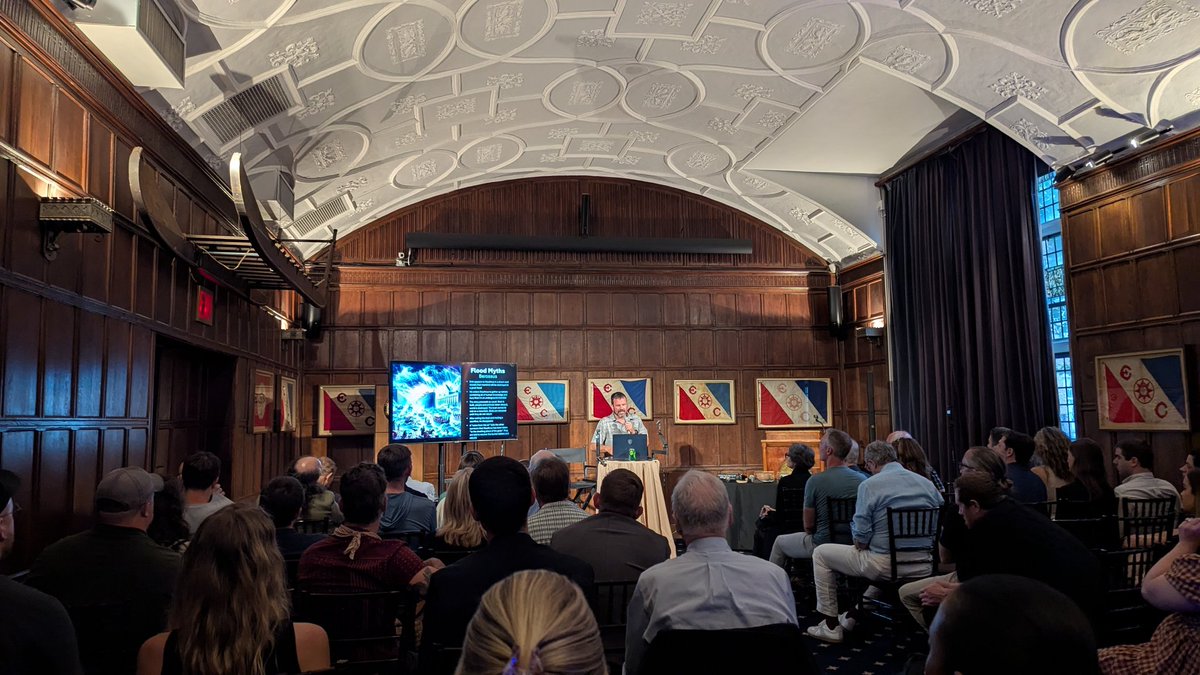
Vase event at the Explorers club in NYC went well I think! Excellent new precision data shared from recent scanning expeditions to Egypt (boxes) and the Petrie Museum in London (vases). @ArtifactFNDN has now scanned artifacts in 4 museums around the world, with more to come. Thanks to those who attended, it was a great crowd, and a fun time, including the after party :) I enjoyed the presentations from my friends @SnkBrs , @karolypoka and @ArtifactFNDN . Thanks to @sgmarkphotography for the pics.
Ben van Kerkwyk - UnchartedX tweet mediaBen van Kerkwyk - UnchartedX tweet mediaBen van Kerkwyk - UnchartedX tweet mediaBen van Kerkwyk - UnchartedX tweet media
English
17
23
206
8.8K
Kyle Allen
Kyle Allen@snakebrokyle·
Topping barrels
Kyle Allen tweet media
English
1
0
7
166