thomasoncrypto.eth || Web3 since 2015
8.3K posts

thomasoncrypto.eth || Web3 since 2015
@thomasoncrypto
Business Blockchain no-coiner. Head of Oracle 11g @WestHamGC See also FC & Lens. More normal at @thomasonlife @thomasoncoding Less so at ~rinbyr-dannup


Works with your existing browser and wallets.

New Anglofuturism episode: Oxford's startup monastery We visited HomeDAO: a newly-founded, über-competitive and highly successful start-up accelerator. If there is to be a British PayPal mafia then it is quite likely that it will emerge from this hacker house in Oxford. Part 1 is out today. Calum and I talked to Josh Lavorini, a HomeDAO co-founder, about talent identification, taste, Oxford, the Coase theorem, British unicorns, the shortcomings of Old Street, and plenty more. Listen via anglofuturism dot c o or your usual podcast app.

We took over a former technical university. This is Hogwarts in real life. For people who want to work on something too early, too weird, too ambitious.


How life feels after paying a 70% income tax knowing that the money will be efficiently redistributed to the people who need it most by the EU government


"Blockchain technology is open, modifiable. It's just code running on servers and social consensus." @griffgreen on why immutability is a convention, not a guarantee. @unchained_pod 🗣️


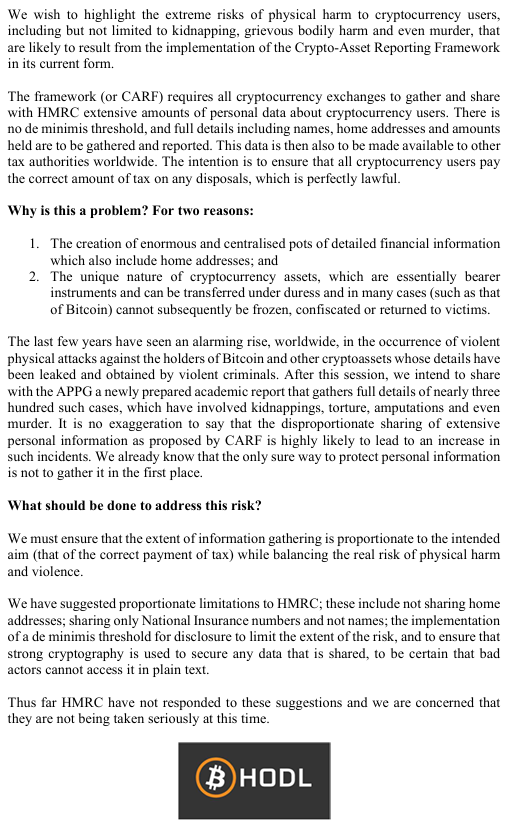
In a statement from France’s National Organised Crime Prosecutor’s Office (PNACO), authorities confirmed that 88 individuals have now been charged across 12 ongoing judicial investigations, with 75 placed in pre-trial detention. More than 10 of those charged are minors. The charges relate to serious offences including kidnapping, unlawful confinement, extortion, and money laundering, carried out by organised groups targeting individuals for the transfer of cryptoassets under coercion. Law enforcement has recorded 135 such incidents since 2023, with a sharp increase over time, rising from 18 cases in 2024 to 67 in 2025 and 47 already in 2026. Crucially, the PNACO highlights that this is not a series of isolated incidents, but the result of structured criminal networks. Investigations have identified individuals involved across multiple cases, enabling authorities to consolidate previously separate proceedings and better understand the scale and coordination of these activities. The message from French authorities is clear. These crimes are serious, organised, and evolving. They also require heightened vigilance from crypto holders, their families, and those working in the sector. Three key drivers sit behind this trend. First, organisation and scale. These are not opportunistic crimes. The consolidation of cases by investigators points to repeat actors and structured networks operating across multiple incidents. Second, targeting and exposure. Authorities explicitly warn against overexposure on social media and highlight the risks of sharing information that could enable individuals to be identified and targeted. Third, social engineering. Authorities have flagged attempts by criminals to impersonate law enforcement or judicial authorities in order to extract sensitive information about crypto holdings or locations. At CryptoUK, this is something we have already been actively engaging on. At the end of last year, we hosted a dedicated webinar in collaboration with the Metropolitan Police, focused specifically on how individuals and businesses can better protect themselves in an evolving threat landscape. You can watch it here: buff.ly/Dn1lpjO Understanding how these attacks happen, and how to reduce your exposure, is becoming an essential part of participating in the digital asset ecosystem. CryptoUK will continue to work with industry, law enforcement, and policymakers to ensure the UK remains both a safe and competitive environment for digital asset innovation.